

The estimable Sidney Pollack said that to make a movie, you have to know what it is fundamentally about and then make sure every element in the film grafts onto that theme (e.g., In Tootsie, it was that the central character had to live as a woman to understand what it meant to be a man). This includes understanding the genre and tone of the film and communicating it to the actors, i.e., are we making a drama or a comedy, is this material satirical or is it earnest? When thematic and tonal unity are attained you get satisfying movies like the ones for which Sidney Pollack is justly admired. But when that doesn’t happen, a film baffles and frustrates its audience as the director and/or writer wildly shifts gears without even bothering to depress the clutch.
A recent example is the 2023 Australian detective mini-series Deadloch. It begins by centering on a compelling lead character brought to life skillfully by Kate Box. Her relationship with her wife and the small town in which she lives draw the viewer in with a mixture of affection and comedy, even as a murder mystery starts to unfold.
But then in a literally jaw dropping scene, the second lead, another police detective appears. She is clownish, loud, and off-putting, a collection of Aussie stereotypes scripted with no wit or grace. After laying a gorgeous table for a dinner party, the filmmakers smash it to pieces with a sledgehammer. This happens over and over in ensuing episodes such that even when the many superb scenes are unfolding, they are hard to fully enjoy because the audience is cringing in expectation that the smashing would begin again (and it nearly always did).
The clownish co-lead character could have worked in a slapstick comedy with other buffoonish characters and a cartoonish plot, maybe “Dumb and Dumber go to Melbourne”, but it was disastrous in what could have been a superlative series (Indeed, if the whole series had been bad, it would have been less disappointing, because the filmmakers wouldn’t have been throwing away all the outstanding aspects of the series due to their failure to achieve consistent tone). And the tonal problems get even worse in a later episode, in which the story literally goes in a matter of seconds from wisecracks to torture porn of helpless people being mutilated. The series had many writers and directors who apparently didn’t agree on what they were doing, and it shows.

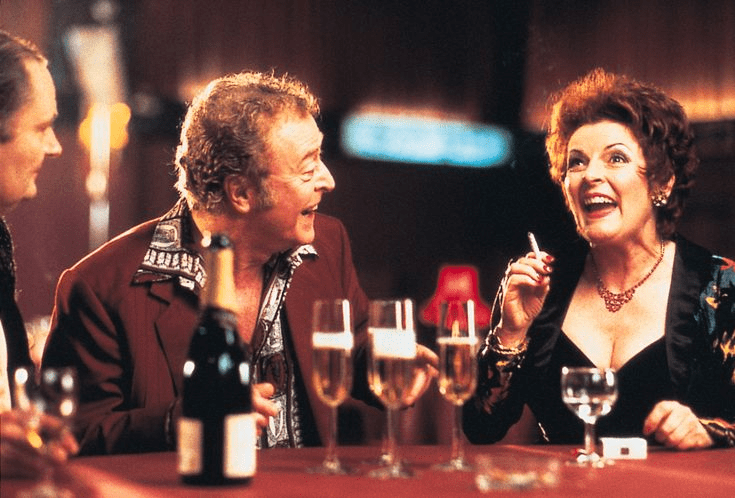
The other film that always sticks out in my mind as a failure to achieve consistent tone is Little Voice. This 1998 Mark Herman-directed vehicle features a quirky, charming romance between between Jane Horrocks and Ewan McGregor that would not have been out of place in a Bill Forsythe film. So far so good.
Meanwhile, Brenda Blethyn, Michael Caine, and Jim Broadbent give dark, powerhouse performances portraying desperate people in a declining, gritty, town in Yorkshire. But switching back and forth between gritty noir and Walt Disney-level fantasy is a bit of a wrench. I would have enjoyed watching the gentle romance film Little Voice sometimes is on its own, and even moreso the powerful drama Little Voice sometimes is on its own, but the mashup of the “two movies” was nowhere near as pleasing.
 All Good Movies