Categories
Action/Adventure Science Fiction / Fantasy

War of the Worlds **Double “Feature”**

Did the 1938 Radio Broadcast of 'War of the Worlds' Cause a Nationwide  Panic?

I often recommend multiple movie adaptations of the same story (e.g., The Lodger, Dracula, The Hands of Orlac) for the enjoyment and education that comes from comparing how the same material has been filmed by different artists in different eras. H.G. Well’s classic novel War of the Worlds presents an opportunity to make a different type of comparison, namely between strong adaptations in two different media: radio and film.

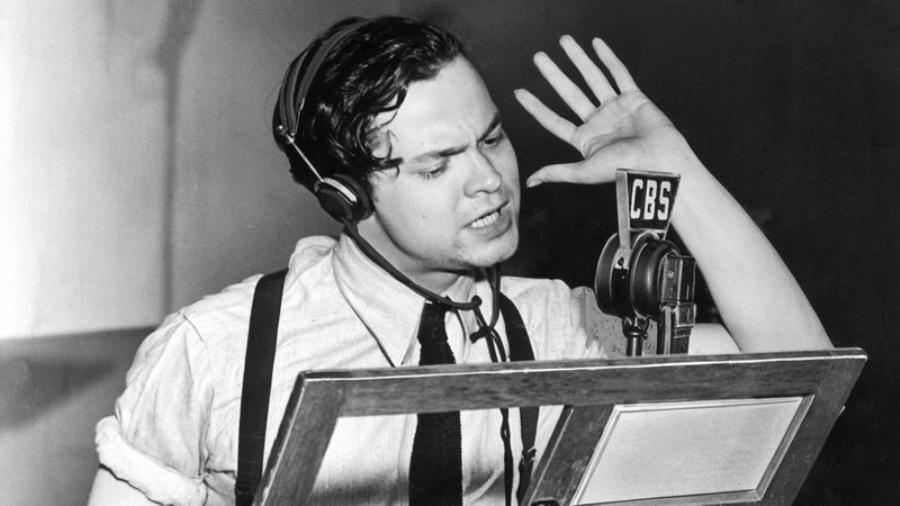
I’ll begin by recommending the 1938 radio adaptation (click here to listen). To the extent people have heard of it at all, they know it as the show that allegedly drove America into a national panic about invading Martians (in truth, very few people actually listened to the broadcast). What it ought to be remembered for is its high level of artistic achievement.

Too Much Johnson Is Never Enough Orson: The 'Lost Film' of Orson Welles |  lokke heiss

The radio play was performed by the Mercury Theater troupe founded by two wildly talented people: Orson Welles and John Houseman. Howard Koch, who later became justly famous as the co-scripter of Casablanca, gets the credit for brilliantly adapting H.G. Wells’ novel to radio in a fashion that took advantage of everything the medium and the Mercury Theater company could do. The novel’s rather lengthy set-up chapters and some of its clunky plot development (i.e., having the narrator run into someone who provides crucial information) were a function of the book being told through the eyes of a single narrator. In contrast, staged as a fake news broadcast with scattered, breathless, reports coming in as the Martians wreak havoc, the radio play grips the audience by the lapels immediately, giving a range of details from different geographic locations in an utterly realistic fashion.

Radio also of course opens up opportunities to accentuate the power of sound — the screams and footfalls of panicked crowds, the horrible, metallic, unscrewing of the Martian cylinders, and the terrifying zzzaaapppp of those heat rays! It’s high craftmanship that still leaves us the fun of imagining how it all looked

Last, but not least, what an explosion of talent this troupe of actors represented! Not just the big names, but also people like Ray Collins, Dan Seymour, Kenny Delmar, and Frank Readick. They are all masterful at creating characters with voice alone, each of whom seems like a real human being responding to out of this world events. Some New York theater fans were disappointed when talented, stage-trained actors they admired began transferring to new, middle brow, media like radio and film, but the upside was that the whole country and indeed the whole world got to enjoy the dramatic gifts and skills of companies like the Mercury Theater.

Orson Welles - War Of The Worlds (1969, Gatefold, Vinyl) | Discogs

I loved listening to radio play as a kid (the image here is of the record album of it my parents owned) and it’s just as suspenseful and exciting for me today. The radio adaptation of War of the Worlds is in the public domain so you can give it a listen anytime.

The most widely known cinematic version of the same story is probably the Steven Spielberg/Tom Cruise mega-buck 2005 adaptation. But the sci-fi magic that duo summoned in the superb Minority Report was nowhere in evidence in their dreary, weirdly lifeless, take on H.G. Wells. You’d be far better off revisiting the work of another talented pair of frequent collaborators, producer George Pal and Director Byron Haskin, who made a groundbreaking version of War of the Worlds in 1953.

Tuesday Movie: The War of the Worlds (1953) - DeKalb County Convention and  Visitors Bureau

Barré Lyndon, like Orson Welles, took creative license with the original material to create a story telling style that worked well in a new medium. The film opens with two set up narrations, the longer of which, by Sir Cedric Hardwicke, is coupled with an imaginative tour of the planets in our solar system (at least as understood long ago). We then get straight into the action, with the crash landing of a mysterious meteor near an all-American small town (this time, in California). The townspeople are curious, the aliens are aggressive, the military is helpless, but luckily a sturdy Gene Barry as the heroic scientist and a believable Ann Robinson as his love interest and fellow crusader against Martians, are on the job. The quick-moving plot has many parallels with the original work, with the addition of some religious themes that likely played well in the 1950s America.

In addition to the exciting story, what wowed audiences about this movie were the trend-setting, Oscar-winning, special effects. Force fields, laser guns, exploding landmarks, devastated cities, and creepy Martians are among the sights on which to feast your eyes and ears. Of course modern computer-created effects are slicker, but for 1953, this was gobsmacking stuff that showed what movie magic could add to a Victorian English novel.

Categories
Action/Adventure Horror/Suspense

Three Adaptations of I Am Legend

One of the best books I read in 2018 was the sci-fi/horror classic I am Legend by Richard Matheson. Matheson wrote it in 1954, years before he became famous as one of the creative forces behind The Twilight Zone. It’s a grim, powerful, novel about isolation and trauma, centering on Robert Neville, the last surviving human being. A global pandemic has turned the rest of humanity into vampire-like creatures who persecute Neville by night whereas he slaughters them by day. As the years go by, Neville is increasingly consumed by loneliness, sexual frustration, grief at the loss of his family, suicidal urges, and an ongoing angry dialogue in his own head, which he tries to extinguish with a river of alcohol. The book concludes with a psychically weighty twist worthy of the best Twilight Zone episodes.

Many of Matheson’s works were successfully adapted for the big and small screen. I have recommended a number of the excellent results, including Night of the Eagle, Tales of Terror, Dracula, and the Amelia segment from Trilogy of Terror. Given that track record, it’s not surprising that movie makers thought that I am Legend could be spun into cinematic gold. This week I examine three of these adaptations.

Producer Robert Lippert was the first to have a go at Matheson’s novel and managed to land the man himself to work on the screenplay. Initial plans were for Hammer Studios to make the film under the title The Last Man on Earth, with the legendary Fritz Lang being mentioned as a possible director. Unfortunately, financial problems and British censors got in the way, turning it into a low budget 1964 Italian production directed by Stanley Salkow. For Matheson and for many viewers as well, the resulting cheap production values and bad dubbing of Italian actors were enough to sink it, but I feel more kindly toward the film than that.

Vincent Price got to me as a glum Robert Neville, proceeding through a regime of staking vampires and burning bodies by day, and getting drunk and moody at night. Price often hammed it up on screen, but to the extent he does that here it fits with how Neville is portrayed in the novel. The vampires in the film (who are more reminiscent of the zombies that George Romero later made famous after being inspired by this movie) are simply not scary enough to make the suspenseful part of Neville’s dilemma sufficiently frightening, but the alienating and agonizing parts come through very well. Also, The Last Man on Earth deserves praise for being the only adaptation to keep the morally complex twist ending of the novel. Warts and all, I give thumb’s up to this version of Matheson’s book even though it’s certainly not at a level to make one stand up and cheer.

Seven years later, the book was re-adapted with a more respectable budget for Charlton Heston, who had a following among science fiction fans based on Planet of the Apes. In this version, titled The Omega Man and directed by Boris Sagal, the vampires have been replaced by an albino mutant cult who hate modern technology as personified by Army scientist Neville. Unlike in the novel, the film is packed from the first with comic book action scenes laced with explosions, stunts, and machine gun fire. Also unlike the novel, the character nuance and twist ending were removed, leaving a crusading hero versus bad guys storyline. That said, the few scenes showing Heston alone in his fortress apartment, trying to hold his sanity together as the mutants torment him each night, are really well done.

No one could mistake this for anything other than a 1970s movie, from the Manson Family-esque mutants to the painfully stereotypical African-American characters, who feel like they wandered off the set of a blaxploitation flick shooting on the next lot. Indeed, the whole thing could have lapsed into camp if not for Heston’s credible, strong-jawed performance (which at times recalls not only his role in Planet of the Apes but some of his religious movie roles as well), matched nicely by Anthony Zerbe as the leader of the mutants. It sticks less closely to the novel than does Last Man on Earth, but it’s more exciting to watch without being dumbed down.

The third adaptation of I am Legend kept the same title. This 2007 film is a mega-buck Hollywood blockbuster starring Will Smith. The film dispenses with the emotional core of the novel from the very first scene, giving Robert Neville a dog companion to give him comfort and to whom he can talk. The dog in the book shows up only halfway through and dies soon thereafter, painfully raising and then dashing Neville’s hopes of an end to his isolation. The canine companion here is used well to motivate some suspenseful encounters and also to give us one scene with real emotional power (kudos to Smith there), but its presence insulates the audience from experiencing the sense of isolation that made the book so haunting. The vampires here are bad CGI creations who act like the super zombies in World War Z, so filmgoers are protected from experiencing any complexities there as well. The filmmakers shot an ending that introduced a slight note of ambiguity about the vampires in the final scene, but when it didn’t “test well” with audiences (apparently someone reported experiencing an independent thought) the producers replaced it with an uncomplicated heroic end for Neville and a happy clappy conclusion for the audience. Naturally, this slick cop out of a movie made a mint at the box office.

So there you have it: Three films which were just not as great as the book on which they were based. Some novels are very hard to bring effectively to the big screen. Much of the power of Matheson’s book comes from Neville’s internal fulminations and struggles, and if you turned all that into first-person narration it would be an incredibly clunky film script. Because Neville is alone almost all of the novel, a screenwriter is also deprived of the usual opportunities for dramatic tension and dialogue between characters. It’s also a downbeat novel with psychic nuance, and that’s unlikely to please millions of film goers who come to the theater expecting simple up-with-people stories that they can stare at while stuffing their face with popcorn. It’s not an accident that as the adaptations got further and further away from Matheson’s book, they made more and more money at the box office.

So my strongest recommendation this week is not a film but a book: The only way to appreciate Matheson’s excellent novel is to actually read it. If I had to watch one of the three adaptations again, I would choose The Omega Man on balance. Yet I remain part of the cult following who sees significant strengths in The Last Man on Earth (which is in the public domain you can watch it here).

Categories
Action/Adventure Mystery/Noir

Marlowe

Immediately after reading Raymond Chandler’s splendid The Little Sister, I decided to revisit a 1969 adaptation of the book I remembered liking many years ago. I am happy to report that having read the source material made me appreciate the movie version even more than I did the first time through. Therefore I give you this film recommendation: Marlowe.

The plot: Orfamay Quest, a woman from the sticks who is less innocent and prudish than she at first seems (Sharon Farrell, very good here) comes to Los Angeles and hires private investigator Phillip Marlowe (James Garner) to find her brother Orrin. Meanwhile, in an ostensibly distinct plot thread which you know will get woven in because it’s Raymond Chandler, someone has taken some compromising photos of a vicious gangster (H.M. Wyant) with an alluring starlet (Gayle Hunnicutt, who as ever is nothing if not alluring). Meanwhile, the starlet’s fellow actress and friend Dolores Gonzales (Rita Moreno) tries to help Marlowe while also liking the look of him. The famous PI is soon enmeshed in a net of murder and intrigue.

The prolific and talented Stirling Siliphant had the most important job in this film, namely converting Chandler’s long, complicated, novel into an hour and a half of cinema. Siliphant did many things right by the famous author. He ditched all the opening exposition involved with Marlowe and Orfamay meeting (I am a big fan of this in movies) and started the movie with the first of the many murders, gripping the audience right off the bat. He also preserved much of Chandler’s terrific dialogue and simplified the plot without making the story less compelling.

Siliphant also added two elements of his own, one of which works and one of which doesn’t. What works is introducing American audiences to his friend and martial arts teacher Bruce Lee. When Lee unleashes his Jeet Kune Do in Marlowe’s office the results are both amazing, and, with a droll assist from Garner, very funny. What doesn’t work is giving Marlowe a stable, bland, girlfriend. This fish-with-a-bicycle move eliminates the sexual tensions and possibilities that are central to Marlowe’s character and the novel.

James Garner is well-cast as Marlowe, which no Rockford Files fan will be surprised to hear. Indeed, as Garner blearily answers a knock at his front door while dressed in his bathrobe, that trailer on the beach will come to your mind’s eye. Matching his on screen presence, charm, and sex appeal is Rita Moreno, who gets to show off both her acting and dancing chops.

Chandler’s work really belongs in the 1940s, so I tend to like period adaptations such as Farewell My Lovely a bit more than films like Marlowe that move him out of his natural era. But I greatly enjoyed Marlowe because it’s well acted and exciting, and has a plot structure that is agreeably easier to grasp than that of novel.

p.s. Two trivia notes on the incomparable Rita Moreno. She is among very few performers in the EGOT club (Won an Emmy, Grammy, Oscar, and Tony Award). She was close friends with Garner, and appeared in three episodes of The Rockford Files.

p.p.s. Director Paul Bogart and James Garner would work together again two years later on another film I commend to you: Skin Game.

Categories
Action/Adventure Drama Mystery/Noir

Across 110th Street

Blaxploitation films are often described as sloppily produced, overly violent, sexist, racist, and demeaning to their audiences. Those gibes definitely apply to many entries in the genre, but roses exist among the thorns, particularly when a film had a bit more budget than usual and drew on other genres in creative ways (e.g., Blacula, for which I have long had a soft spot). Accordingly, I am recommending a 1972 blaxpolitation-film noir blend which is usually remembered today only as a Bobby Womack song: Across 110th Street.

The plot: The long-entrenched Italian mob is struggling to maintain the upper hand over the rising African-American gangs who rule the underworld across 110th street (i.e., Harlem’s boundary). Some small-time black criminals execute — and I do mean execute — a bold robbery of both criminal organizations, netting a massive haul of cash. The big-time criminals set out for vengeance, led by an arrogant, racist, Mafioso (Anthony Franciosa). But the robbers’ leader (Paul Benjamin) is nobody’s fool, and also knows how to handle a machine gun. Meanwhile, an honest African-American police detective (Yaphet Kotto) and a much less honest old school Italian-American police captain (Anthony Quinn) spar with each other as they try to round up all three criminal gangs.

Probably the best thing about the blaxploitation genre is the opportunities it afforded African-American actors to strut their stuff. Paul Benjamin carries the emotional heart to what otherwise would have been a routine crime melodrama. He conveys the power of friendship in his scenes with his fellow thieves, and even moreso expresses quite movingly how the degrading life of being a black ex-con in America drove him to crime as his only apparent option. True to his character’s cynicism, Benjamin sadly never became a big star in white-controlled Hollywood despite his evident talent. Where Benjamin brings the passion, Yaphet Kotto radiates intelligence here, as he was always able to do even when cast in cardboard roles (e.g., the James Bond villain in Live and Let Die, for which he was recruited while making this movie). Quinn as usual gives a blowy performance trying to dominate the screen, but in those same scenes you can’t stop looking at Kotto quietly thinking about what the hell he’s going to do next to crack the case.

Although many of its plot elements are straight from noir (cops being as crooked as criminals, small time crooks robbing big-time mobsters), the film retains the action-packed, violent, sensibility of the blaxploitation genre. The sadism of Franciosa’s character is hard to watch, but it’s central to the plot rather than being gratuitous: He’s such a racist that he enjoys torturing black people even to the point that his murderous black criminal allies are repulsed by him.

Across 110th Street’s modest budget shows here and there. At a few points, the plot jumps forward as if an intervening scene were missing, and there are some visible goofs (including two howlers in the first 10 minutes that I won’t ruin for you). But for the most part the unadorned sets and Naked City veteran Jack Priestly’s unvarnished cinematography are assets for a grim, gripping, story set in the rotting big apple that was 1970s New York City.

p.s. After watching this film, you will laugh very hard seeing Antonia Fargas send up his character 16 years later in I’m Gonna Git You, Sucka.

p.p.s. I don’t have a lot of company on this recommendation. Wikipedia summarizes contemporary critical reaction thus: Roger Greenspun of  The New York Times wrote, “It manages at once to be unfair to blacks, vicious towards whites and insulting to anyone who feels that race relations might consist of something better than improvised genocide … By the time it is over virtually everybody has been killed—by various means, but mostly by a machine gun that makes lots of noise and splatters lots of blood and probably serves as the nearest substitute for an identifiable hero.” Variety wrote that “Those portions of it which aren’t bloody violent are filled in by the squalid location sites in New York’s Harlem or equally unappealing ghetto areas leaving no relief from depression and oppression. There’s not even a glamorous or romantic type character or angle for audiences to fantasy-empathize with.” Gary Arnold of The Washington Post slammed the film as “a crime melodrama at once so tacky and so brutal that one feels tempted to swear out a warrant for the arrest of the filmmakers.” Kevin Thomas of the Los Angeles Times wrote that the film “self-destructs by consistently selling out to stomach-churning displays of unrelieved violence.” Yet I stand by my recommendation, because I’m a complicated man and no one understands me but my woman.

Categories
Action/Adventure British Horror/Suspense Mystery/Noir

The Hound of the Baskervilles (1959)

Hound of the Baskervilles has a special place in The Sherlock Holmes canon. Arthur Conan Doyle’s story is substantially longer than the typical Holmes outing, allowing him to weave two distinct mystery tales together. It’s also remarkable for putting Watson at center stage for a significant part of the book, allowing the sidekick a turn as the protagonist. And last but not least, it has been adapted as a movie more than any other Holmes tale, beginning with a silent version made in Germany in 1914. One of the better adaptations, and the first to be shot in color, is the 1959 Hammer Films version.

The plot of the book concerns Holmes’ investigation of the ancient, wealthy, Baskerville family, and the curse of a demonic hound which has allegedly brought ruin upon them for generations. Holmes and Watson must solve the mystery about how the latest Baskerville has died, protect the new heir (Sir Henry Baskerville), and also cope with a mentally ill mass murderer named Selden who has broken out of prison and roams the moors near Baskerville Hall. I won’t ruin it for you in case you haven’t read it, but it’s a compelling mystery with more suspense and horror elements than most of Doyle’s shorter Holmes stories.

The 1959 version, playing to the studio’s strengths, puts the accent on the horror elements of the novel. Who better than Hammer to give us fog-shrouded moors and ruined abbeys in the English countryside? And who at Hammer better than Terence Fisher to direct? As in another of my recommendations, The Devil Rides Out, Fisher deftly moves from realistic treatment of interpersonal relationships to the more fantastic elements of the story.

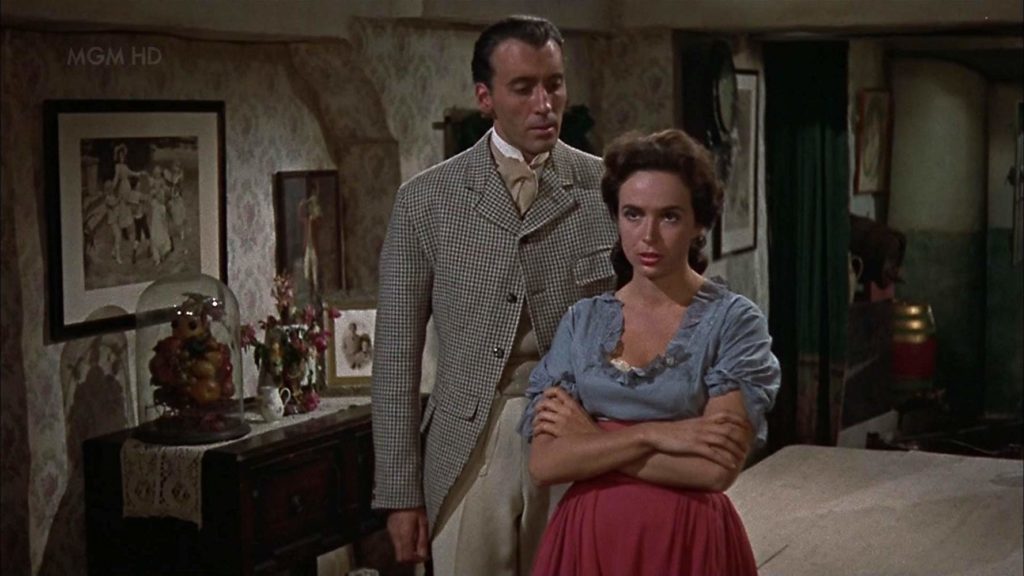
Hammer also wisely cast their most reliable stars, Peter Cushing and Christopher Lee, in the major roles of Sherlock Holmes and Sir Henry Baskerville, respectively. Cushing’s interpretation of Holmes is true to the book, rendering the detective as eccentric, brilliant, and not particularly warm. Lee’s performance as well as Peter Bryan’s strong script make Sir Henry a more substantial and engaging character than he is in the book. As mentioned, this particular story also needs a strong Doctor Watson, and André Morell is well up to the task. He eschews the comic elements that Nigel Bruce injected into his portrayal of Watson and instead coveys gravitas, as he also did in some other good Hammer films (e.g., The Plague of the Zombies).

Being a Hammer film, the 1959 version also throws in some décolletage and sex in the person of Maria Landi. Bryan’s script also changes her character’s role from what it was in the book, which may be objectionable to Holmes purists. But I found it a refreshing take, and one that gives the film a more jaundiced take on the aristocracy than did the book and other film adaptations of it.

You can watch this worthy adaptation of a beloved novel for free and legally on Dailymotion.

Some other adaptations which are worth your time: The handsomely produced 1939 version with Basil Rathbone as the great detective; the Livanov/Solomin adaptation from the utterly brilliant Soviet cycle of Holmes films; the little known Sy Weintraub production starring Ian Richardson; and the justly respected Granada Television version starring Jeremy Brett.

And a few to avoid: The disappointing 2002 version with Richard Roxburgh as Holmes; the yet worse Stewart Granger/William Shatner 1972 television version; and the execrable 2000 version starring the guy who played Max Headroom.

Categories
Action/Adventure British

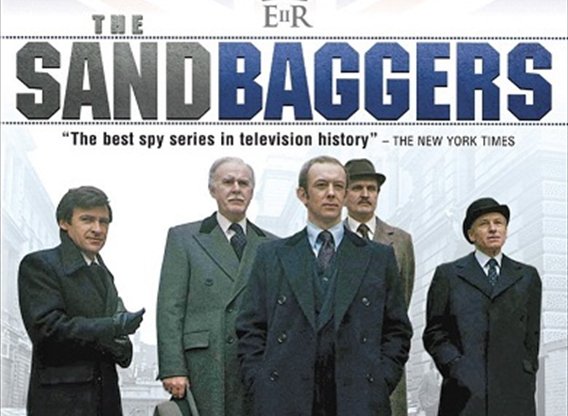
The Sandbaggers

Britain has long managed to turn out espionage films at all points along the dimension that has escapist fare like James Bond and The Avengers at one pole and grey-shaded, unglamorous, works like Smiley’s People at the other. I can enjoy the fantasies as much as the next moviegoer, but the Brit spy films that stay with me and thereby end up as my film recommendations are all from the grimy, realistic, end of the spectrum: The Spy Who Came In From the Cold, Charlie Muffin, Callan, Tinker, Tailor, Soldier, Spy, and the subject of this essay: The Sandbaggers.

Like Callan’s “The Section” this television series focuses on a small team of agents you’ve never heard of: the “Sandbaggers”. These trouble-shooting spies are led by a former sandbagger, the dour, workaholic, Neil Burnside (Roy Marsden, in a magnificently austere performance). Burnside spends as much time fighting Whitehall bureaucracy and careerism as he does his opposite numbers in The Soviet Union, a process that is complicated by his ex-wife being the daughter of the Permanent Secretary at the Foreign Office! (Alan MacNaughtan, succeeding in a markedly different role than he played in the satisfying To Serve Them All My Days).

The cast (including Richard Vernon as “C” looking every bit as much a middle-aged establishment figure as he did in his youth) never put a foot wrong, which is a credit to their own talents as well as that of the primary directors, Michael Ferguson and Peter Cregeen. The show was produced by Yorkshire Television from 1978-1980, and has an unmistakably Northern English chip on its shoulder about London, HMG, and people who went to Eton, which productively accentuates the cynical viewpoint of the series.

The Sandbaggers was scripted by Ian Mackintosh, a former Naval Officer who may have been in the game himself, and who (almost too perfectly) mysteriously disappeared in 1979. Every bit of the show feels real, from the civil service backbiting and hassles (I cringe in recognition at the ongoing subplot of British secret agents having to fly in economy) to the exciting front-line missions of the sandbaggers. And as in real life, virtue often goes unrewarded, many missions fail, and death does not look pretty.

As with many modestly budgeted British television shows of this era, there is no soundtrack or incidental music, only an opening and closing theme over the credits. Luckily, they got Roy Budd (who wrote the immortal music to another of my recommendations, Get Carter) to compose it. As usual, Budd hit it for six.

As a complete work, the first season is the best for overall narrative arc, especially the evolution of the relationship between Burnside and the first female sandbagger, Laura Dickens (Well-played by Diane Keen). But for a single episode that gives you the flavor of the series, I would recommend from Season 2 the nail-biting Decision by Committee.

The Sandbaggers is a 40-year old show and Yorkshire Television doesn’t exist anymore, so I don’t know if it’s still copyrighted or not. But I will channel Neil Burnside and take the risk to tell you that whatever the rules are, an agent with initiative can find almost every episode of the brilliant series on Youtube.

Categories
Action/Adventure Comedy Foreign Language

Ernest & Celestine

I received some nice notes from parents who enjoyed watching my recommendation A Cat in Paris with their kids (as well as from some non-parents who enjoyed it just for themselves). So I return this week to the same terrain with another absolutely charming French-language animated film that was re-dubbed for American audiences: Ernest & Célestine (French/Belgian title Ernest et Celestine).

Based on the popular illustrated children’s books by Gabrielle Vincent, the film relates the tale of two communities that fear and distrust each other. Above ground live the bears, who tell their little children about the mouse tooth fairy who will leave them a coin under their pillow in exchange for a lost tooth, but in their hearts loathe mice (except of course when they want to eat them). Below ground live the mice, who steal the bear teeth to compensate for the loss of their precious incisors. A soulful young mouse named Celestine rebels against a mandated career in dentistry, dreaming instead of becoming an artist. Meanwhile, a ne’er do well bear named Ernest is struggling to make ends meet. Fate brings this mis-matched pair together in a daring robbery spree that advances both of their goals, but also puts the police forces of both worlds on their track.

The film has multiple laugh out loud moments, but mainly it’s a sweet 79 minute smile fest. The joy of friendship and the thrill of rebelling against unfairness take center stage. The animation is marvelous, particularly the surge of color that erupts as Ernest and Celestine’s friendship grows concurrent with the coming of spring.

Although its heroes are a pair of robbers, the film is highly moral. Their victims are an avaricious married couple for whom we feel no sympathy (He sells little bears sugary candy and she sells them replacement teeth after their originals rot away). Even more importantly, the film sends a wonderful message about the power of friendship and understanding to overcome prejudice between groups.

As with a Cat in Paris, the dubbers of the American version did not spare expense in picking the voice actors: Lauren Bacall, Paul Giamatti, William H. Macy, Megan Mullally, Nick Offerman, Forest Whitaker and Jeffrey Wright all essay their parts with gusto. Also on hand is a rising 12-year old talent, namely a pre-Interstellar Mackenzie Foy, who voices our heroine. At the other end of life’s journey, with sadness I note that this was my beloved Bacall‘s last film.

This warm and entertaining movie deservedly carried off a boatload of awards. It’s superlative viewing for the whole family.

Categories
Action/Adventure Mystery/Noir

Plunder Road

Some decades ago, after being up all night playing cards with a Papua-New Guinean family on their first train journey across America, I sat down in the observation car to watch the sun rise over the Utah Salt Flats. A tired-looking middle-aged woman sat down directly opposite me but looked away, as if she had just entered a confessional. She may have been a little drunk or a little hungover, and I may have been too.

“I was a vote counter under Ferdinand Marcos, so I had to flee The Philippines”, she wearily intoned.

Because we were alone in the car, this cryptic remark was clearly an invitation to me. I did not know her name, her background, her motives or even her veracity. But I didn’t need to know them either. She was offering to tell me a story, take it or leave it.

“Tell me about it”, I said.

An extraordinary, tortuous tale followed, commanding my complete attention for some lost amount of time. When she was done relating it, she left the car and I never saw her again. But I have thought about that interaction many times when analyzing movies because it illustrates something important: All an audience really needs is a good story. All the ponderous scripts, lax direction and flabby editing in movies that results in 20-30 tiresome minutes spent telling us about all the characters’ childhoods and marriages and personalities and little quirks before getting to the story can almost always be condensed or eliminated entirely if the filmmakers fundamentally have a good tale to tell. That lesson is beautifully illustrated by the criminally forgotten 1957 crime caper Plunder Road.

The films opens with the execution of what is clearly a meticulously planned robbery of a train carrying gold bars from the U.S. Mint. The four men who pull off the heist barely speak to each other so the audience knows almost nothing about them, not even their names. The audience’s sole insight into their characters comes from brief voice overs of each of their racing thoughts. The thieves move with precision despite the pitch-black night and unexpected driving rainstorm, escaping the scene of the crime and transferring their weighty loot into three separate trucks which they start driving south, hoping to elude a growing police cordon.

Categories
Action/Adventure Mystery/Noir

Farewell, My Lovely

A film critic once wrote of one of my recommendations, the 1998 retro-noir Twilight, that you might have to be over 35 to really enjoy it. That may also be true of this week’s film recommendation, a reverent revival of detective noir starring an old hand at the genre: 1975’s Farewell, My Lovely.

The plot is from a Raymond Chandler novel, so in some sense there is no point in explaining it because his books are more about language and character than storyline (indeed, it didn’t even bother him to realize that he himself didn’t know who committed one of the murders in The Big Sleep). But anyway, private eye Phillip Marlowe is hired by Moose Malloy, a mountain of a man with rice pudding for brains (ex-heavyweight boxer Jack O’Halloran, perfectly cast in his acting debut). Moose lost track of his girlfriend Velma after he went to prison, and now that he is out he wants Marlowe’s help in tracking her down. But every time Marlowe starts to get close to locating her, there is a violent backlash against him, Moose or both. Powerful forces clearly don’t want Velma found, but who are they and what is their motive?

The most famous and lionized adaptation of Chandler’s novel was made in 1944 under the name Murder, My Sweet, with Dick Powell as Marlowe. I have written about how I never quite bought Powell’s transformation from pre-war light comedy/song and dance man to noir tough guy (His contemporary John Payne was more successful). In contrast, the star of the 1975 version, Robert Mitchum, was born for this kind of stuff.

As a world-weary, cynical, Phillip Marlowe, Mitchum carries the 1975 adaptation end to end with aplomb. Many movie tough guys tried to play the invulnerable hero in their autumn years and looked a bit silly or even embarrassing. Mitchum, in his mid-50s, is playing a guy in his mid-50s and he’s just not that tough anymore. Indeed, in this movie, he takes way more physical punishment from the bad guys than he can dish out.

Sylvia Miles received a supporting actress Oscar nomination for solid work here as a boozy floozy, but it just as well might have gone to little known Kate Murtagh for her ferocious performance as a tough-as-nails madam. It’s also fun to see John Ireland, so often the bad guy in the heyday of noir (see for example my recommendation of Railroaded!), playing the “one honest cop” role here. Charlotte Rampling makes a sultry, Bacall-esque femme fatale whose hair is the color of gold in old paintings and who gives a man a smile that he can feel in his pocket (Added fun for noir fans: her screen entrance mirrors Barbara Stanwyck’s in Double Indemnity). Also look fast for a young Sylvester Stallone in a small part.

Director Dick Richards really took a chance in making this old story in the 1970s with no condescension or trendy upgrades. The whole look of the film is a throwback, particularly the almost Sepia Tone color scheme created by the set and costume designers and cinematographer John Alonzo (who also shot Chinatown). If this had been shot in black and white, it could have been released to praise in the 1940s or 1950s. Some critics found that tiresome and affected, but for me this retelling of the classic story is as honest as you can expect a man to be in a world where it’s going out of style.

Categories
Action/Adventure Horror/Suspense Mystery/Noir

Kiss Me Deadly

They? A wonderful word. And who are they? They’re the nameless ones who kill people for the Great Whatsit. Does it exist? Who cares? Everyone everywhere is so involved in the fruitless search for what?

In 1955, detective film noirs were nearing the end of their magnificent cycle, with seemingly little fresh to say. But just before the lights went out, Director Robert Aldrich and Screenwriter A.I. Bezzerides went for broke with a brutal pulp masterpiece which blended crime drama with 1950s political paranoia and some science fiction to boot: Kiss Me Deadly.

Ostensibly based on one of Mickey Spillane’s wildly popular Mike Hammer novels, Kiss Me Deadly (which Spillane hated) mocks the genre as much as embodies it, amping up the main character’s sliminess, cruelty and misogyny to absurd levels — and Hammer’s ostensibly the hero! From its arresting opening shot of Cloris Leachman desperately running barefoot down a highway, followed by a perversely upside down credit sequence, this is a movie of extremes in every respect, right up to its atomic conclusion.

Ralph Meeker, in the most memorable film work of his career, is aces as a cold, scheming and domineering Mike Hammer. It’s a fine example of how an actor and director can make a fairly unlikable character magnetic on screen, which is one of a number of ways this movie recalls another film I recommended, Pickup on South Street.

Most American critics considered Kiss Me Deadly a seamy low-budget piece of trash when it was released, and moralists condemned it outright for allegedly corrupting the nation’s youth. But it found a following in France and eventually among some American directors as well, who cherished the brash artistry and attitude the film exudes. Decades later, Kiss Me Deadly became fully respectable, being selected for inclusion in the National Film Registry as an utterly original American classic.

p.s. In the decades between my first and second viewing of Kiss Me Deadly, the original ending was discovered. When the film was originally released, some audiences saw the intended ending and some saw a mutilated version which only slightly shortens the film but does alter its meaning. If you want to know more about this unusual piece of film history after you’ve seen the film, check out this fascinating article.