Categories
Action/Adventure Comedy Drama

The Stunt Man

If God could do the tricks that we can do, he’d be a happy man.

The late Peter O’Toole signed on to many over the top, unconventional films (no small number of them when he was intoxicated). This resulted in him headlining some legendary stinkers (e.g., Caligula). But it also landed him plum roles in off-beat masterworks such as The Ruling Class (recommended here) and The Stunt Man.

The film was released to only a handful of theaters in 1980 (In O’Toole’s words, “it wasn’t released, it escaped”) because the studios had no faith in it. Some critics found the film pretentious, manipulative and tiresome, yet it ended up on other critic’s best of the year lists and landed three Oscar nominations. Over time it has attracted a cult following, which it very much deserves, despite its flaws.

The Stunt Man is a film that messes with the minds of the characters — and with the audience’s as well — by relentlessly mixing movie fantasy with reality. The unreality is embedded in the plot from the first. An alienated Viet Nam veteran named Cameron (Steve Railsback) is wanted for an unknown crime and flees the police, only to find himself in what seems to be World War I. But it’s actually a war movie being directed by Eli Cross (O’Toole). Cameron has a run in with a man he thinks is trying to kill him, but who turns out to be a stunt man shooting a scene. The stunt man dies, and Cameron may or may not be responsible: only the film shot of the event by Cross could reveal the truth. As the police close in, Cross makes Cameron a bizarre offer: to hide within the movie company as a replacement stunt man so that Cross can complete the movie! Cameron agrees, and from then on is manipulated, tricked and exploited while simultaneously trying to romance the lovely starlet Nina Franklin (Barbara Hershey), who seems to have genuine feelings for him…or is that just a manipulation too?

Yes, it’s one hell of a set up. But then again, the script is adapted from a novel in which all the lead characters are insane. The writer/director was Richard Rush, an eccentric, talented but ultimately unsuccessful Hollywood figure whose erratic career path is probably worth a novel of its own. If everyone has one great movie in him, this is Rush’s, and he went for broke, mixing black comedy, action, romance, suspense and satire with largely successful results.

The best thing about the film is Peter O’Toole, who turns in another of his unrestrained, arch performances as Eli Cross. His part is written to be larger than life, and he plays it to the hilt. They say the best roles for British actors are kings and drunks. O’Toole played many of both in his career, and was in real life a King among Drunks. It wasn’t happenstance that he was nominated for an acting Oscar 8 times yet could never quite seal the deal with Academy Award voters (The Stunt Man was one of those disappointments). His distinctive style and obvious talent draws most of us in, but at the same time his flamboyant performances put a significant minority of people off because they feel that he is just playing Peter O’Toole again.

Other strengths of the film are the memorable score by Dominic Frontiere and some vivid supporting performances which help compensate for Railsback being rather one-note as the film’s hero. Also, true to its name, this film is full of jaw-dropping stunts.

The script, with its movie-in-a-movie, riddle-in-a-riddle structure is a matter of taste. I found it a work of near-genius, but I can understand why other viewers consider it exhausting and even alienating. This scene from the film gives a sense of the proceedings, and the compelling nature of O’Toole’s appropriately theatrical portrayal of a mad genius filmmaker. Give this unusual film a chance and make your own judgement.

Categories
Action/Adventure Horror/Suspense Mystery/Noir

The Parallax View


The horrifying assassinations of the 1960s generated countless conspiracy theories that continued to rattle about in the 1970s, particularly after Watergate further damaged the public’s faith in once-respected institutions. During this period, Alan J. Pakula was arguably the film maker who most effectively translated the public’s anxieties onto the screen. The two best known of his “paranoia triology” are the Oscar winners Klute and All the President’s Men. But don’t overlook the less commonly recalled but very fine member of the troika: 1974’s unnerving The Parallax View.

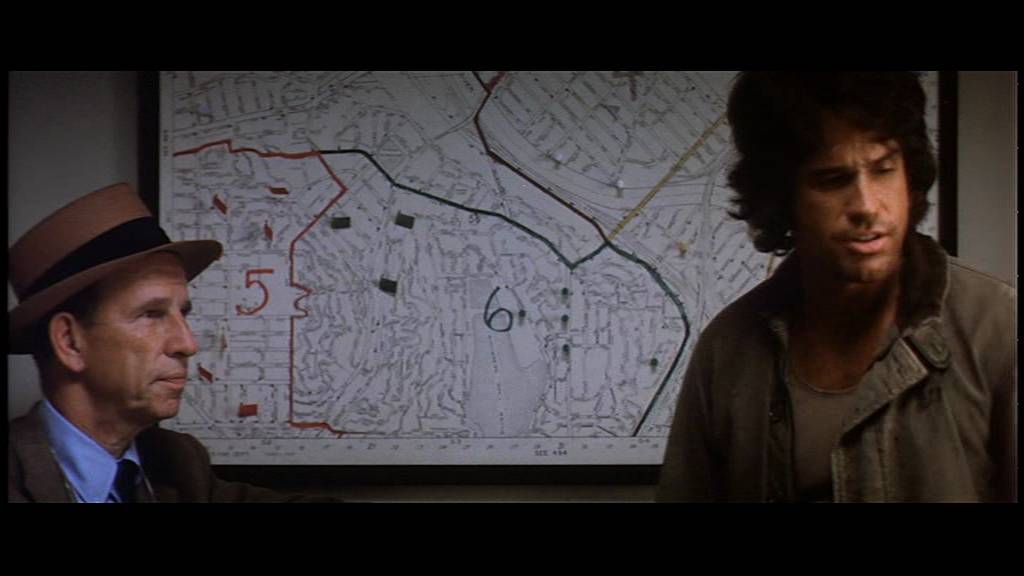
The film’s opening sequence, set at the top of Seattle’s space needle, grabs viewers by the throat. What seems a banal political event suddenly turns violent, and through a series of rapid cuts the audience is as disoriented as the terrified characters on screen as they wonder what exactly they just saw. In the ensuing months, many of the witnesses come to premature ends, leading raffish journalist Joe Frady (Warren Beatty) to investigate, against the advice of his hard-headed, fatherly editor (Hume Cronyn, effortlessly at home in his role). Frady discovers that a mysterious corporation is recruiting sociopathic killers and goes undercover to investigate. He seems to be making progress in infiltrating the nefarious cartel, but is he really just walking into the web of a hungry spider who is spinning all the strands?

Alan J. Pakula's “The Parallax View” | Wonders in the Dark

The Parallax View provides moments of high suspense and also carries off well that essential of paranoia films: The exchanges between the lead character and the trusted friend who thinks the “conspiracy” is all imagined (Nice touch: Cronyn’s office is crammed with memorabilia from his work with the Boy Scouts). The performances are believable throughout, which helps the film survive its more credibility-straining moments.

The late Gordon Willis, one of the most respected cinematographers of the 1970s, gives the film a distinctive look appropriate to its tone. There are many long, lonely shots taken far from the action, along with Willis’ signature fondness for shadows. The opening and closing shots, of government investigatory commissions proclaiming “nothing to see here, move along, there’s no conspiracy” as the camera moves in and out, ultimately arriving at a dark, distorted anamorphic image, are perfect bookends for the film. Combined with the movie’s minimalist use of sound, Willis’ superb work suffuses the movie with a sense of unease.

The film is not without shortcomings. As in some other Pakula films (e.g., Consenting Adults), certain plot elements can’t survive strict logical scrutiny. How can second-rate journalist Joe Frady drive like a NASCAR champion and fight like James Bond? Why doesn’t he ever have deadlines at his newspaper and why, beyond the needs of the script, does his editor keep handing him piles of cash to pursue his story? Another potential weakness: Joe Frady is not that appealing of a person, so if you really don’t like Warren Beatty as a star, you may not feel much sympathy for the protagonist.

Flaws notwithstanding, Parallax View is an effective, disturbing piece of cinema. Its perspective is ultimately gloomy, but that doesn’t diminish its entertainment value or emotional impact one iota. This is a movie that stays with you, like a microphone the CIA has attached to your cell phone.

p.s. For those of you who are not old enough to remember and therefore might find one key scene of this film unbelievable: In the 1970s, you really could board an airplane without a ticket and check luggage onto a flight on which you were not yourself a passenger. Also, there was good service in coach. Really.

Categories
Action/Adventure British Mystery/Noir

Defence of the Realm

David Drury’s thriller Defence of the Realm is a taut British conspiracy tale set on Fleet Street. This 1986 film embodies the left-wing paranoia of the Thatcher years, with its deep scepticism of nuclear weapons, the US-British alliance, and grey men in dark suits secretly controlling society from their Whitehall back offices and private gentleman’s clubs (It’s of a piece with A Very British Coup, The Whistle Blower, and Edge of Darkness in all those respects).

The story begins somewhat obliquely, with two juvenile delinquents fleeing the police until they come to a British airbase used by the American military (Presumably RAF Lakenheath, hint hint). One of them clambers over the fence, triggering an unexplained event that leads to an evacuation. An investigation is announced by Dennis Markham, MP, who is played by Ian Bannen (An actor I praise here, and here and here). But before Markham can pursue his enquiry, he is forced to resign over a Profumo-esque sex scandal. Coincidence? Brash young investigative journalist Nick Mullen (Gabriel Byrne) begins to pull at the threads of the story, despite the warnings of his shrewd, if crapulous, senior colleague (Denholm Elliott). Pretty soon, Nick becomes aware that powerful forces do not want the truth to come out and will do anything to keep it quiet.

The movie’s perspective is pretty bleak and in that sense one could consider it a British cousin of another of my recommendations, The Parallax View. Byrne, with his dark looks and demeanor, is almost a physical expression of the film’s outlook, which is only further enhanced by the moody cinematography and music.

In addition to its suspenseful and exciting moments, this film has two towering virtues. The first is the performance of Elliott, who steals the movie as a wiser, sadder journalist with a core of integrity. It’s as good as anything this fine actor has carried off in his impressive career. The movie’s other principal pleasure is its evocation of a now-vanished Fleet Street culture, with heavy drinking at lunch, late nights at the office, and some peculiar and charming traditions (e.g., the scene where an ink-stained wretch’s retirement is marked by the sound of pounding printing blocks).

This isn’t a perfect movie. Greta Scacchi, in the sort of role that seemed intended to have critics say “See she’s not just a sex symbol, she can really act!”, is in fact pretty flat as Markham’s assistant and there is zero chemistry between her and Byrne. Also, some viewers may find the film too confusing or downbeat at least some of the time.

That said, Defence of the Realm is a worthy entry into the political paranoia genre that improves with repeated viewing. It will not make you trust your government more, but it will command your attention and keep you on the edge of your seat.

A final trivial note on the film: Prior to the big showdown with nefarious forces, Byrne walks through the same club library in which Daniel Craig and Michael Gambon made a drug deal in another of my recommendations, Layer Cake, which is also the room where I wrote that recommendation and this one too.

Categories
Action/Adventure British

Night Train to Munich

I love The Lady Vanishes, Alfred Hitchcock’s classic tale of suspense and romance. If you share my affection, you’d do well to watch a quasi-sequel made without The Master, who had by then decamped to Hollywood: 1940’s Night Train to Munich.

Released two years after The Lady Vanishes, the film features the same female lead (Margaret Lockwood), the same scriptwriters (Frank Launder and Sidney Gilliat), the same setting (a European train journey taken on the brink of war), and even two of the same supporting characters (Charters and Caldicott). The director this time around, Carol Reed, was clearly to some extent aping Hitchcock’s style, but Reed’s distinctive touches are in evidence throughout.

Relative to The Lady Vanishes, the major disadvantage of Night Train to Munich is that it doesn’t give the talented Lockwood enough to do beyond looking lovely and in peril. On the other hand, that omission gives more screen time to Rex Harrison, in a remarkable example of off-beat casting working shockingly well. Sir Rex, who would later be credible as Dr. Doolittle and Professor Henry Higgins, carries off a Nazi uniform with panache. The ease with which he infiltrates Nazi headquarters through sheer bravado is one of the film’s many funny observations about bureaucracies: Everyone thinks that someone else must have authorized this unknown German officer’s mission, so they don’t question him for fear of angering a superior somewhere else in the organization.

Night Train to Munich | Trailers From Hell

The world had gotten much darker between the making of the two films, and Night Train to Munich reflects that by having more suspense and less humor than The Lady Vanishes. The film opens grimly with the people of Prague being terrorized by the arrival of German storm troopers. Professor Bomasch (James Harcourt), whose scientific expertise can aid the war effort, must flee the Nazis without his daughter (Lockwood), who is subsequently interned in a concentration camp. She is befriended there by a handsome, idealistic Czech national (Paul Henried, then called Paul von Hernried, in a strong performance that almost surely led to him being cast later as Victor Laszlo in Casablanca). The two flee to London and reunite with Professor Bomasch, but he and his daughter are almost immediately kidnapped back again to Germany! Enter a brave, resourceful spy (Rex Harrison!!!) who goes undercover in Germany to rescue the Professor and the lovely daughter whom he clearly fancies.

The film took advantage of Charters and Caldicott’s (Basil Radford and Naunton Wayne) reputation as comic, out of touch Englishmen. Initially, they are played for laughs, but in a key scene they are humiliated by a German officer and realize that the time for joking is past and they must become engaged in the fight. They then perform bravely in the struggle against the Germans, who have clearly underestimated them. All of this was no doubt a stirring message for British audiences in 1940.

After a series of Hitchcock-level plot contrivances, the film concludes with a nail-biting closing act in which our heroes try to escape using a cable car across a Swiss gorge. What the climax lacks in realism (those 15 shot pistols only run out of bullets when it would be maximally agonizing to do so) it more than makes up for in thrills. I also loved the final shot of the key bad guy (whose identity I will not reveal) which is sympathetically done. It’s a moment that shows how Reed’s artistic sensibility was different than Hitchcock’s, and establishes that despite being to some extent an homage to Hitch, this superb movie is at the same time very much Reed’s own.

Although not quite in the same class as The Lady Vanishes, Night Train to Munich is an exciting and enjoyable film. If you have the stamina for a double feature, it’s tremendous fun to watch it back to back with the movie that inspired it.

Categories
Action/Adventure Mystery/Noir

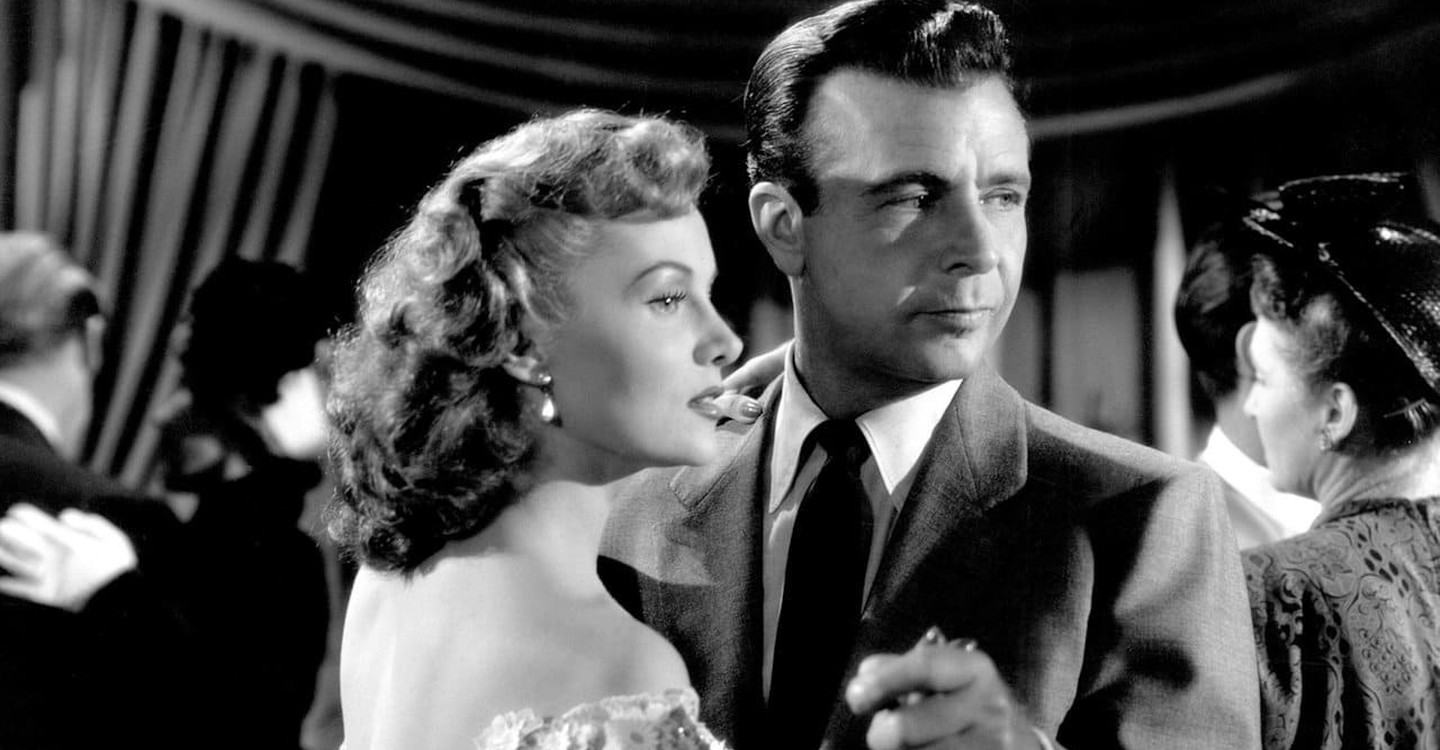
Cry Danger

What the difference between a first time directorial outing by a former film editor versus that of a movie star? In general, about 10-20 minutes of unnecessary footage. As directors/producers, movie stars tend to have too much sympathy with the actors (especially if they have cast themselves in the film) and not enough with the audience. A number of good films with actor-directors, for example Denzel Washington’s The Great Debaters, Ed Harris’ Pollock and Jack Nicholson’s The Two Jakes, did not achieve greatness simply because they were far too long.

Former film editors tend to understand that most movie scenes can be shorter and some movie scenes can be eliminated entirely. That doesn’t stop them from making long movies (David Lean was a former film editor) but it usually prevents them from making flabby ones. A background as an editor was thus ideal for making an economical film noir in just 22 days, which is what Robert Parrish did in Cry Danger. I highlighted Parrish’s Oscar-winning editing in my recommendation of Body and Soul and am happy to report that he also clearly knew what to do behind the camera.

Cry Danger streaming: where to watch movie online?

The plot of the 1951 film is near-boilerplate for these sorts of cinematic outings. Two noir staple characters, an ex-con named Rocky Mulloy who was wrongly convicted of a crime (Dick Powell, which some sources credit to contributing uncredited to the direction as well) and a disillusioned ex-GI (Richard Erdman), team up to find the still-hidden loot from the robbery for which Rocky was framed. They tussle with the crime boss whom they suspect of being behind the original job (William Conrad, as usual a welcome film noir presence). Meanwhile, Rocky comforts his ex-girlfriend (Rhonda Fleming), who is now married to his best friend, who was sent upriver with Rocky and still remains in the Big House. Rocky is tempted by his alluring ex- in more ways than one, but never lets himself be dissuaded from his mission of taking vengeance on those who framed him.

I have written about how former song-and-dance men Dick Powell and John Payne repackaged themselves as noir tough guys after the war, and how Payne did so more credibly. Powell always seemed to me too Father’s Knows Best-ish to carry off morally murky or cynical noir roles, and his mien of near-continual faint amusement undermined his efforts to be an intimidating tough guy. But those problems are irrelevant here due to Erdman’s well-scripted part as Powell’s alcoholic friend, which in Erdman’s hands is extremely funny (Fans of the TV show Community will not be surprised). Powell’s efforts to get his friend to sober up, and to be wary of the floozy (Jean Porter) who keeps stealing his wallet, turn Powell’s paternal demeanor into a strength rather than an annoyance, and the humor of these exchanges is only better for Powell’s frequent smirks.

Despite those light elements, there is still plenty of noirish content and mood on display here, as well as some pleasing mystery and action elements. The “surprise resolution” of the story is not hard to guess, but that will not diminish enjoyment of this tightly-constructed, well-directed crime melodrama.

Categories
Action/Adventure Mystery/Noir Romance

Notorious


Nazis in hiding! Smuggled uranium! Espionage! All minor distractions from the central tantalizing mystery that keeps the audience in delicious suspense: Does Cary Grant’s character really love Ingrid Bergman’s or not? It’s all there in Alfred Hitchcock’s 1946 classic Notorious.

The plot: Alicia Huberman (Ingrid Bergman, in one of her career-defining roles) is the alluring daughter of a Nazi sympathizer. She has a notorious reputation as a drinker, party-goer, and sexual libertine. After the war ends, her father is convicted of aiding the Nazis. At a party where she deep in her cups and flirting with all the men, she meets a handsome, mysterious secret agent who is appropriately named Devlin (Cary Grant, just perfect…again). Devlin eventually persuades Alicia to go investigate Nazis who are now hiding out in South America. Does she agree out of patriotism, guilt over her father’s crimes or growing love of Devlin? He seems at times to love her back, by why then does he seem not to care when her assignment requires her to bed and wed an old friend of her father’s (Claude Rains)? The mystery of the Nazi plot and the maddening complexities of Devlin and Alicia’s relationship become intertwined as the thrilling story unfolds.

This movie vividly demonstrates how the presence of stars can shape how audiences react to characters. Without Bergman’s high-wattage stardom, audiences might have viewed Alicia as a pathetic, boozy, scrubber. Without Grant’s fame and on screen magnetism, audiences might have viewed Devlin as a cold, calculating bastard (Indeed, if Claude Rains weren’t a Nazi, the audience might have rooted for him to get the girl — after all, at least he loves her unreservedly). The instinctive liking the audience had for the stars allows the two film icons to develop multi-layered characters rather than having them rejected out of hand. Quite simply, Bergman and Grant tear up the screen here and they get tremendous support from Rains and from Leopoldine Konstantin as a memorably terrifying mother (even by Hitchcockian standards!).

Notorious (1946, Alfred Hitchcock) | Slices of Cake

In the eyes of many film buffs, Notorious is the pivotal film in Hitchcock’s career, and not just because he famously managed to make Grant and Bergman’s Production Code-allowed three second kiss last for several minutes. When David O. Selznick sold the film to RKO to deal with a money crunch, Hitchcock finally didn’t have to choose between a big budget and production control. From this film onward through the rest of his U.S. career, he was able to be producer-director of marquee projects with A-list stars. Notorious also showcased The Master’s maturing ability to handle grown-up romantic story lines. There were love stories in his earlier films (for example The 39 Steps which I recommended here) but they were generally frothy and light-hearted. The love triangle in Notorious — scripted by the brilliant and prolific Ben Hecht — has much more psychic weight, adding a new dimension to Hitchcock’s work to accompany his already matchless ability to keep an audience on the edge of their seats. Last but not least, Hitch’s visual style, already impressive, took a major leap forward with this film: It’s enthralling to look at and comprises some of his most memorable images.

There’s only one Hitch, and Notorious is among his best works. Do not miss this classic romantic thriller!

p.s. Watch VERY carefully as Cary Grant ascends the stairs to Bergman’s room and compare what you see to the nerve-wracking conclusion as he and Bergman descend the same staircase. Why are there more steps on the staircase in the latter? Because Hitchcock knew how to string out excruciating tension.

Categories
Action/Adventure British Drama

The Scarlet Pimpernel

Leslie Howard was a multi-talented actor/director/producer as well as a true patriot who was taken from us too soon in 1943 when he was murdered along with 16 other defenseless people by the German Luftwaffe. Can a film star be so appealing that the audience will root for a die-hard one-percenter who is battling the cruelty of ignorant poor people in an adaptation of book by a Pro-Imperialist, Pro-Aristocrat author? Well, sink me if Leslie Howard can’t, as you will see in this week’s film recommendation: The 1934 version of The Scarlet Pimpernel.

The film is set during The Reign of Terror, during which déclassé French mobs cheer as the guillotine ceaselessly beheads tumbril-full after tumbril-full of upper class men, women and children. Enter our brave and dashing British hero, The Scarlet Pimpernel (Leslie Howard), to rescue his fellow nibs and show the Froggies a thing or two along the way, hey wot? In private life this crusader hides behind a foppish, effete image as Sir Percy Blakeney, leading his wife (Merle Oberon) to worry that her husband is incapable of manly action. Meanwhile, a tough, clever French agent named Chauvelin (Raymond Massey) blackmails Lady Blakeney over a past transgression in the hopes that she will ferret out the true identity of The Scarlet Pimpernel.

Although the movie contains some exciting action scenes in the early going, it’s really more of a three-handed melodrama (Indeed, the film would have benefited from just a bit more swash in its buckle). Percy doubts his wife’s political loyalty, she despairs of his evident lack of virility and seriousness, and Chauvelin tries to exploit the situation to bring about the death of his hated enemy. What might otherwise have been an overly serious or plodding story is enlivened throughout by Howard’s nearly over-the-top performance as Sir Percy, which he wisely plays for every possible laugh. Sink me, he’s a delight, as is Nigel Bruce in a supporting role as a buffoonish Prince of Wales (Later he would play a similarly comic Dr. Watson in another of my film recommendations).

scarletpimpernel

Raymond Massey, with his dark looks and intense acting, makes a memorable villain as Chauvelin. And 1930s movie icon Merle Oberon is at the peak of her allure. Shortly after this film was made the Hays Code came in to cover up her décolletage with burlap, thereby saving America’s wayward youth from unclean thoughts and perilous temptation. Sadly, Oberon was then in a serious car accident that permanently scarred her lovely face. She did though go on in 1939 to anchor an all-time classic, Wuthering Heights (She also, funnily enough, married The Scarlet Pimpernel’s producer, Alexander Korda, that same year). As a sign of the times and the business in which she worked, this mixed-race actress spent her entire life trying to deny her Indian heritage by invoking the risible claim that she was Tasmanian!

As for the politics of this film, well, only once does an aristocrat (Count de Tornay) in the movie acknowledge that The Terror never would have happened if the rich hadn’t been so out of touch. The author of the novel (a curio to be sure), Baroness Orczy, criticized French aristos for forgetting the code of noblesse oblige and abusing the poor. But neither she nor this film objects to aristocracy in principle, only aristocracy done badly. Should this bother you? Not unless you take this movie way too seriously. This is a Saturday afternoon matinee, not a political science lecture, and it succeeds on those light-hearted terms, particularly because of the standout work of the wonderful Leslie Howard. Best of all, it’s in the public domain (take that, you indolent landed gentry!) so even if you haven’t two farthings to rub together you can see this film for free right here.

Categories
Action/Adventure Drama

Seven in Darkness

SEVEN IN DARKNESS (TV), 1969 DVD: modcinema*

TV movies usually are not very good, but ABC’s Movie of the Week was an exception to the rule. To complement the other films from this series I have recommended, let me endorse the entry that kicked it off in 1969: Seven in Darkness.

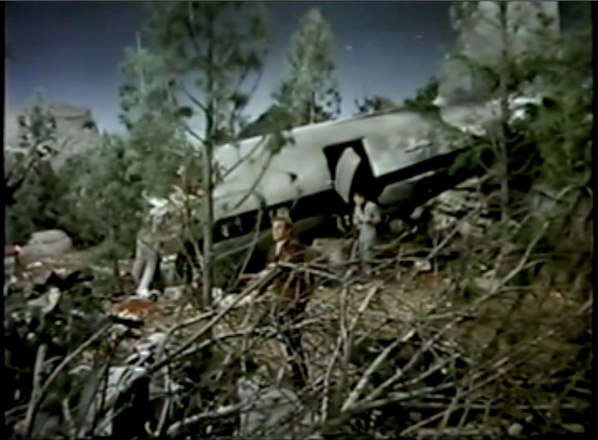
The plot is at one level entirely stale: A group of disparate characters (each with their own dramatic back story, natch) are in peril and must work together to survive. But the movie enlivens the old chestnut by making all of the characters blind! After surviving a plane crash on the way to a convention of blind people, seven people realize that the pilots are dead and therefore no one can guide them out of the wilderness to safety.

Terrifying new possibilities emerge within this genre when no one is sighted, making trivial challenges harrowing: Crossing a rotted railway trestle, evading wolves, climbing steep hillsides and determining who in the band of seven has been secretly stealing food. The most effective twist comes as viewers watch in agony as the characters take enormous risks to cross a river because they can’t see that there is a serviceable bridge right over their heads (As your heart sinks watching their struggle, you might find yourself yelling advice). There is also a nice cinematic virtue to the plot set-up: Instead of needing night shoots that are hard to do well and sometimes leave viewers unsure as to what is happening, the film could be shot entirely in daylight because to the characters, it of course might as well be dark out.

Human drama is also woven into the story, some of which works well (e.g., The complex motives of Barry Nelson’s psychotherapist character) and some of which falls flat (e.g., Lesley Ann Warren’s hysterics). But the cast generally does a fine job, and fans of Milton Berle will enjoy him as a cranky, selfish man who dreams of having his sight restored by a new medical procedure.

It’s a TV movie, so there are no big stars or fancy special effects, and much of it looks like it was shot on a sound stage. But as in another of my recommendations, Devil in a Blue Dress, the filmmakers got the most from adding a novel element to old tropes. The result is 70 minutes of suspense and entertainment which deservedly encouraged ABC to continue with this format for an extended series of above-average made-for-TV movies.

Categories
Action/Adventure British Drama Romance

The Life and Death of Colonel Blimp

Have you ever seen a movie that stuck in your head for reasons you couldn’t fully explain? A film that you eventually realized had a much bigger impact on you than it seemed to when you were sitting in the theater? That was my experience of 1943’s The Life and Death of Colonel Blimp.

Made during the war by the legendary team of Michael Powell and Emeric Pressburger (aka “The Archers”), the film tells the eventful life story of Clive Candy (Roger Livesey) over a more than 4-decade span. The borderline-bizarre opening sequence, which might just as easily have presaged a big-budget MGM musical, introduces us to Candy in the winter of his life, where he has taken on the unappealing characteristics of the self-satisfied, out of touch cartoon character known as Colonel Blimp. But with a nice bit of camera trickery, Candy recalls the memory of his salad days, and is transformed into the markedly different young man that he was: Handsome, kind, brave, and in some ways boyishly innocent. The film then portrays his adventures through heroic moments, comic situations, romance and friendship, with two other other figures serving as foils. One is a noble German officer whom he meets in World War I (Anton Walbrook) and the other is the eternal feminine: Three different characters all played by Deborah Kerr who stay the same age as Candy ages through life.

There is much to love about this long, multi-layered and richly rewarding film. The craft and humanity of the producer-director-screenwriting team is on full display, making it surprising that this movie is not remembered as often as their other triumphs such as The Red Shoes and Black Narcissus. Powell and Pressburger’s characters are unusually well rounded and evolve over time, which was rare for movies of this period. Indeed, Winston Churchill allegedly opposed the release of The Life and Death of Colonel Blimp because it portrayed a German soldier so movingly that the British public might sympathize with their current enemy (once you have seen the movie, you will realize how ludicrous this fear was).

The thematic latticework of the film is truly compelling. On the surface, the movie can be enjoyed as an exciting life story full of moments of humor and action. But at a deeper level, the film explores how old-fashioned values were unable to meet the demands of the mid 20th-century, how the young can grow up to be very different older people than ever they planned, how loving one’s country has rewards and limits, how men may think they are smarter than women but are almost always wrong, and how we don’t always understand what we long for until it is gone. Wonderfully, the film never preaches a particular simple message about any of these themes. Rather, it gives each character and viewpoint its due, sympathetically and sometimes sadly, without ever taking sides.

Visually, this brilliantly restored film is Technicolor at its best, with Georges Périnal painting the screen with one stunning shot after the other. The anchoring performances by Livesey, Walbrook and Kerr are also magnificent, not just individually but in the way they play off each other. Indeed, the performances (and the well-scripted characters) make the film even better than a similar epic movie made in the same era: Cavalcade. That fine movie at times kept the viewer at some emotional distance because its toffy characters were a bit inaccessible; here one can’t help but be drawn into the emotional lives of the people on screen.

There could be no better closing to this review that Martin Scorsese’s description of how this landmark movie inspired him. Scorsese is not just a brilliant filmmaker in his own right; he is also a lifelong student of cinema and a champion of preserving its past. He first saw The Life and Death of Colonel Blimp as a child. Even though it was a mutilated version with over 40 minutes cut out and the rest of the scenes re-arranged, and even though he watched it on a small black and white television, he could still perceive Powell and Pressburger’s genius.

p.s. For another perspective on this classic movie, let me recommend my friend Hans Kundnani’s analysis of what the film has to say about Englishness and the relationship between Powell and Pressburger.

Categories
Action/Adventure British Mystery/Noir

They Made Me a Fugitive


Despite the end of the war, food, clothing and other essentials were rationed in Britain throughout the late 1940s, a policy so hated that it ultimately lead the voters to dump Atlee’s Labour government. Because post-war rationing was not seen as legitimate, many otherwise law-abiding people began buying goods on the black market. The spivs who ran the black market soon became the subject of a series of films. Like another of my recommendations (Brighton Rock), 1947’s They Made Me a Fugitive weds a story about spivs and the conventions of film noir with tremendous success.

Because much of the respectable British public was happily doing business with spivs, it was possible in this era to portray at least some of them as admirable, and that is the case with the protagonist here, Clem Morgan. Played with grit and style by Trevor Howard, Clem is that durable noir archetype, the embittered ex-soldier. Drinking heavily and out of work, he is drawn into a black market operation by his much nastier acquaintance Narcy (A superbly chilling Griffith Jones, whose film career inexplicably never really took off). Narcy, filled with class resentment, realizes that Clem’s upper class manners may come in handy and he also has his eye on Clem’s lovely girlfriend (Sally Gray, whose talents I highlighted in my recommendation of Obsession). Clem has no qualms about smuggling nylons and coffee, but when he finds that Narcy is also moving “sherbet”, he draws a moral line, and Narcy decides to frame him for a horrible crime. The struggle between the two men provides the meat of the rest of film, up to and including an appropriately unhappy ending.

They Made me a Fugitive is a well-acted, tough, thrilling tale of crime and vengeance which Director Cavalcanti and cinematographer Otto Heller carry off with many memorable visual flourishes. Narcy’s distorted face in a mirror as he metes out savage violence is one of several sequences that recall noir’s origins in German expressionism. Noel Langley’s screenplay, based on a novel by Jackson Budd, is another strength of the movie. There’s some terrific dialogue, nice touches of black humor and some hair-raising moments of unblinking cruelty. The sequence in which Clem, fleeing from the cops, gets help from a stranger who has her own grim motive perfectly conveys the dark, cynical outlook on humanity from which the best noirs draw their lifeblood.

The one disappointment in this film is that the final fight scene is poorly choreographed to the point of being almost unintentionally comic. Fortunately, this is immediately compensated for with a rooftop showdown between Clem and Narcy that is Hitchcock-level suspenseful (and has a Hitchcock-level joke embedded: Look at those three letters!).

Some elevated types in Britain hated movies like this for their “morbid burrowing” into the dark reaches of the human psyche…but that’s precisely where drama, excitement, and intrigue are often found.