Categories
Action/Adventure British Mystery/Noir

The Adventures of Sherlock Holmes

Beginning with a Mutoscope adaptation made in 1900, Sherlock Holmes has been one of the most oft-portrayed roles in world cinema. Among the most handsome of the countless movie productions featuring the world’s greatest consulting detective were made by 20th Century Fox in 1939. The first of these was the excellent Hound of the Baskervilles and the second is the even better The Adventures of Sherlock Holmes.

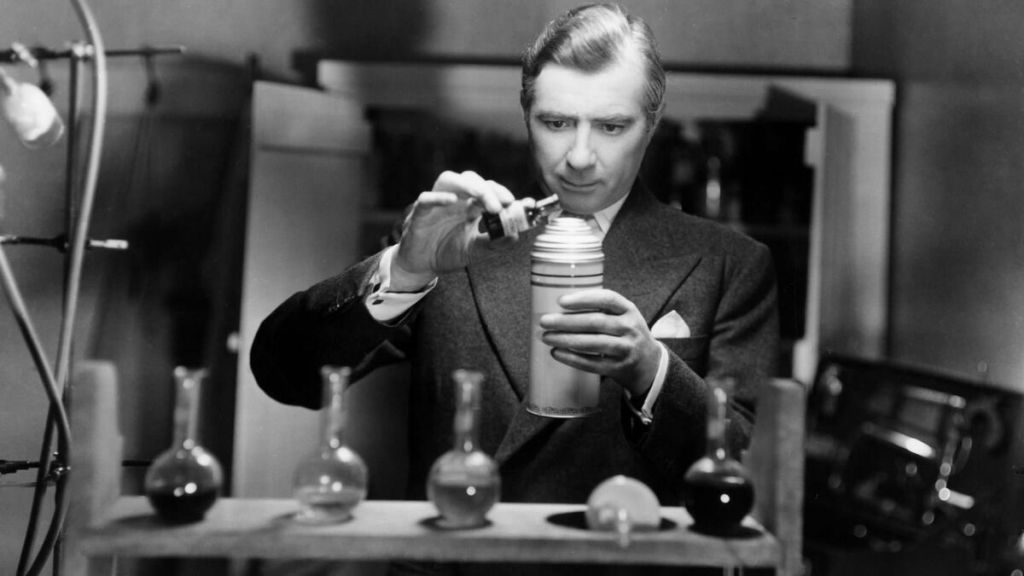
The plot of the film owes little to any of Arthur Conan Doyle’s classic stories, and indeed is one that had been used many times before and still gets a workout in movies today: A brilliant champion of justice matches wits with an equally gifted master criminal who has announced that he will soon commit “the crime of century”. But when the hero is Sherlock Holmes played by Basil Rathbone in his signature role and the villain is Professor Moriarty played with comparable verve by George Zucco, everything old is first-rate entertainment again.

As Zucco and Rathbone circle each other in their battle of wits, two supporting players bring added energy to the proceedings. Many Holmes fans do not care for Nigel Bruce’s comic take on Dr. Watson, as it goes against his portrayal in the canon. But I am with those who find it endearing, in part because it adds some sweetness to the films that sets off Rathbone’s appropriately rationalistic and at times even cold Sherlock. As the woman around whom much of the mystery centers, a then unknown Ida Lupino also strengthens the film by giving the audience vulnerability leavened with strength and intelligence (Lupino would go on to become a pivotal figure in women’s advance in Hollywood, as I describe here).

Fox rolled out the budget for its Holmes films, which shows in the excellent production values throughout. These are enhanced by the legendary Leon Shamroy’s cinematography, which has effective film noir/horror overtones. Last but not least, this is the one and only film in which I can honestly compliment Alfred Werker’s direction (I recommended He Walked by Night previously, but recall that despite the credit going to Werker, that film was mostly directed by a true master, Anthony Mann). If every journeyman director has one great film in him, this well-paced, exciting and suspenseful treat is Alfred Werker’s.

p.s. Even though both of Fox’s 1939 Sherlock Holmes films were excellent, they were not critically well-received at the time and also led to some grousing from Doyle’s descendants, who controlled the rights to his stories. After promising to make this a long-running series, Fox abandoned the enterprise after the Adventures of Sherlock Holmes. However, a new series of lower-budget Rathbone-Bruce Holmes movies set in the modern era was launched at Universal immediately thereafter. That turned out to be one of Hollywood’s very best film series. If you want to explore those films, I recommend my favorite of them, The Scarlet Claw.

Categories
British Horror/Suspense

Night of the Eagle

Fritz Leiber Jr. was a talented fantasy, science fiction and horror writer who is mainly remembered for the Fafhrd and the Gray Mouser books, which surprisingly have never been adapted for the cinema. In contrast, Leiber’s Conjure Wife has served as the basis of multiple movies, including the fine 1962 film Night of the Eagle (later re-titled Burn Witch Burn).

Peter Wyngarde stars as a hard-headed college professor who thinks that the supernatural is bunk. Imagine his surprise when he discovers that his wife (Janet Blair) has been a practicing witch for years, and claims that her magic has been advancing his career and protecting the couple’s well-being! He makes her promise to abandon her childish hobby, and almost immediately regrets it when a series of horrifying happenings befall the two of them. Could witchcraft be real, and is another witch in the college community out to get them?

The script is by two masters of economical, intelligent, unpretentious horror: Richard Matheson (who also wrote my recommended film Amelia) and Charles Beaumont (who also penned my recommendations The Intruder and Masque of the Red Death). They pace the plot and the scares professionally, and slyly weave a feminist subtext into the proceedings.

I have to admit that I can’t name another movie of director Sidney Hayers, but his low profile wasn’t due to lack of talent. He keeps things suspenseful and crisp, gets solid performances from all the actors and brings in the good-for-the-time special effects at just the right moments. The pleasing result recalls Roger Corman’s many solid low budget horror films, such as those he adapted from Edgar Allen Poe stories (including my recommended film Tales of Terror). Not surprisingly, Night of the Eagle was released by Anglo-Amalgamated, the British partner of Corman’s company AIP.

This suspenseful sleeper is available to watch for free at the Internet Archive, just click here. As a taster, I embed the trailer below.

p.s. This film would make a fine double feature with an ever better film based on the same themes: Curse of the Demon. My recommendation of that film is here.

Categories
British Horror/Suspense

Masque of the Red Death

Low budget film genius Roger Corman once said the two films he was proudest of were The Intruder (a searing film about racism and civil rights which I recommended here) and the superb horror movie Masque of the Red Death.

Corman had been enchanted by Edgar Allen Poe stories since reading The Fall of the House of Usher at age 11. After directing a number of schlock black-and-white films made in 10 day shoots, he persuaded James Nicholson and Samuel Z. Arkhoff to let him do a Poe adaptation and to make it a “big budget” movie: Not only would it be in color, but he would have 15 whole days to shoot it! With his usual brilliance at spotting affordable talent, Corman cast as the lead Vincent Price, an actor who otherwise might have faded into obscurity along with his youthful good looks. The Fall of the House of Usher proved a big money maker, and an enduring cinematic collaboration was born (Corman, Price and Poe, often joined by other terrific horror actors and writers).

I have recommended the Corman-Price-Poe film Tales of Terror, which while a lot of fun is not as impressive cinematically as Masque of the Red Death. The latter was filmed in the United Kingdom because the government at the time had a film production subsidy policy, giving Corman more to work with financially than usual. The film also benefited from the cinematographer being the gifted Nicholas Roeg, one of the many soon to be famous film artists who was nurtured in the university of Roger Corman. Couple those virtues with Corman’s scrounging ability — he recycled much of the opulent set of Becket here — and you have the best looking of any of the Corman-Price-Poe films.

The plot of this 1964 release comes from the Poe story of the same name, with a subplot drawn from Poe’s Hop-Frog. The story opens in a foggy forest in Medieval Italy, where a mysterious figure cloaked in red foretells of a coming plague (His face is never seen, and I assumed his wonderfully sonorous voice was provided by the late Christopher Lee, but it turns out to be John Westbrook). Meanwhile, the rich, cruel, Satan-worshiping Prince Prospero terrorizes the peasants, and casts a lustful eye in particular on a lovely, impoverished lass named Francesca (played by Paul McCartney’s one-time beau Jane Asher). As the plague spreads through the land, Prospero’s castle fills up with both his greedy courtiers and his unwilling prisoners. Debauchery and nastiness ensue, coupled with ample surrealism and existential dread for good measure.

Corman was utterly in command of his material by this penultimate entry of his Poe cycle, and benefited from a strong script by R. Wright Campbell and the legendary Charles Beaumont (co-creator of the Twilight Zone). The almost hallucinatory ambiance of the film makes it both uniquely unnerving and a foreshadowing of the more experimental film style that would flower as the 1960s went along (including the moments when Corman strains for artiness a bit too much). As for the actors, this may be Vincent Price’s most impressive horror performance: he dominates every one of his scenes. Of the many good supporting performances, particular praise is in order for the little-known Skip Martin. As Hop-Toad, a wronged dwarf who seeks revenge, Martin conveys impressive emotional power. He had the bad luck to work in the pre-Peter Dinklage era where good parts for little people were virtually never written into films, but at least he made the most of his opportunity to shine here.

Masque of the Red Death succeeds as a horror film and also as an art house drama. Congratulations to Corman and his crew, as well of course to the magnificent Edgar Allen Poe.

Categories
British Drama Mystery/Noir

Seance on a Wet Afternoon

Fleabag & Killing Eve Director Helming Seance on a Wet Afternoon ...

Most movies fit into particular genres, with plots that in at least some respects are recycled. There is nothing inherently wrong with this: The same thing could after all be said of almost all of Shakespeare’s plays. But just as The Tempest is refreshing because of its novelty, so too are films with unique stories that one can’t really analogize or trace back to any earlier films, or even to a cinematic genre. Love and Death on Long Island and Junior Bonner are two of my favorite movies of this highly original kind. Another is this week’s film recommendation: Seance on a Wet Afternoon.

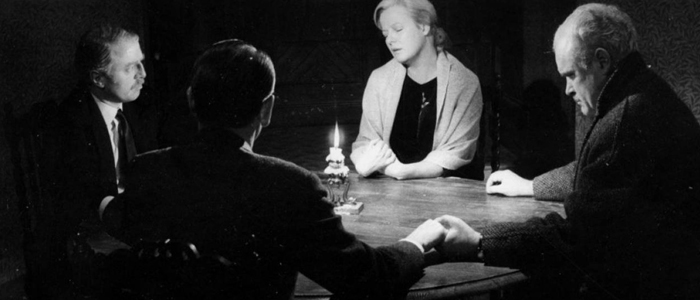
The film opens as a two-handed play about a strange and strangely compelling married couple. Myra (Kim Stanley) holds seances for her credulous neighbors and is convinced that she has remarkable psychic gifts. Her asthmatic husband Billy (Richard Attenborough) seems afraid to disagree with her. It soon becomes apparent that the two are hatching some sort of bizarre kidnapping and ransom plot, though it would be better said that Myra has hatched it and Billy is too uxorious to resist. Despite the ransom demand, the motive for the planned crime is nothing so simple as money. Many twists of story and anguished human psychology follow, taking the audience on a journey that is suspenseful, dramatic, and ultimately, quite sad.

This 1964 film is the most artistically impressive product of the highly successful, long-running collaboration between British cinema worthies Richard Attenborough and Bryan Forbes. The two men took on different roles in their various films; in this case Forbes wrote and directed and Attenborough acted and shared producer duties with Forbes.

rideau-de-brume-1964-02-g

As producers, the team’s masterstroke was reaching across the pond to cast Kim Stanley, who was then a stage and television actress barely known outside of New York City. As Myra, Stanley gives one of the outstanding performances of the 1960s as the sort of person who is deeply disturbed and fragile yet at that same time exerts enormous power over those around her. Stanley was dubbed The Female Brando by her biographer and she puts on a method acting clinic here in what sadly turned out to be one of few opportunities movie audiences got to see her masterful work. After being nominated for an Oscar for Seance on a Wet Afternoon, she returned to the stage and virtually disappeared from films until 1982, when she garnered another Oscar nomination for Frances.

Forbes’ direction and Stanley and Attenborough’s performances are truly above reproach. The way Billy is lacerated by Myra’s every critical remark and disapproving look, yet also clearly loves her and feels protective of her, is beautifully, painfully brought out. Their marriage is not quite a folie à  deux because Billy retains some grip on reality and decency, which serves to create tension in the relationship and the plot that propels the film forward.

Though the script could have been slightly tightened, every line of dialogue rings true and the plot is consistently compelling. Gerry Turpin’s photography is also a virtue, both in the interiors of Myra and Billy’s house but also in, around, and underneath bustling 1960s London. Overall, one gets the sense of a production in which every professional in front of and behind the camera knew exactly what they were doing.

Billy and even moreso Myra will haunt your imagination after you see this movie. Don’t miss it.

Categories
Action/Adventure British Mystery/Noir

Defence of the Realm

David Drury’s thriller Defence of the Realm is a taut British conspiracy tale set on Fleet Street. This 1986 film embodies the left-wing paranoia of the Thatcher years, with its deep scepticism of nuclear weapons, the US-British alliance, and grey men in dark suits secretly controlling society from their Whitehall back offices and private gentleman’s clubs (It’s of a piece with A Very British Coup, The Whistle Blower, and Edge of Darkness in all those respects).

The story begins somewhat obliquely, with two juvenile delinquents fleeing the police until they come to a British airbase used by the American military (Presumably RAF Lakenheath, hint hint). One of them clambers over the fence, triggering an unexplained event that leads to an evacuation. An investigation is announced by Dennis Markham, MP, who is played by Ian Bannen (An actor I praise here, and here and here). But before Markham can pursue his enquiry, he is forced to resign over a Profumo-esque sex scandal. Coincidence? Brash young investigative journalist Nick Mullen (Gabriel Byrne) begins to pull at the threads of the story, despite the warnings of his shrewd, if crapulous, senior colleague (Denholm Elliott). Pretty soon, Nick becomes aware that powerful forces do not want the truth to come out and will do anything to keep it quiet.

The movie’s perspective is pretty bleak and in that sense one could consider it a British cousin of another of my recommendations, The Parallax View. Byrne, with his dark looks and demeanor, is almost a physical expression of the film’s outlook, which is only further enhanced by the moody cinematography and music.

In addition to its suspenseful and exciting moments, this film has two towering virtues. The first is the performance of Elliott, who steals the movie as a wiser, sadder journalist with a core of integrity. It’s as good as anything this fine actor has carried off in his impressive career. The movie’s other principal pleasure is its evocation of a now-vanished Fleet Street culture, with heavy drinking at lunch, late nights at the office, and some peculiar and charming traditions (e.g., the scene where an ink-stained wretch’s retirement is marked by the sound of pounding printing blocks).

This isn’t a perfect movie. Greta Scacchi, in the sort of role that seemed intended to have critics say “See she’s not just a sex symbol, she can really act!”, is in fact pretty flat as Markham’s assistant and there is zero chemistry between her and Byrne. Also, some viewers may find the film too confusing or downbeat at least some of the time.

That said, Defence of the Realm is a worthy entry into the political paranoia genre that improves with repeated viewing. It will not make you trust your government more, but it will command your attention and keep you on the edge of your seat.

A final trivial note on the film: Prior to the big showdown with nefarious forces, Byrne walks through the same club library in which Daniel Craig and Michael Gambon made a drug deal in another of my recommendations, Layer Cake, which is also the room where I wrote that recommendation and this one too.

Categories
British Mystery/Noir Romance

The Lady Vanishes

the-lady-vanishes-4

As the British phase of his magnificent career was winding down, Alfred Hitchcock turned in a film as entertaining as anything he would make in America: 1938’s The Lady Vanishes.

For the first 25 minutes, the movie is a light-hearted romantic comedy featuring an utterly charming Margaret Lockwood and Michael Redgrave as, respectively, a wealthy American heiress bound for a loveless marriage with a penurious but titled aristo and a footloose music scholar manqué who clearly has some growing up to do. That they will fall in love is never in doubt, but intrigue and murder intrude as they make a train journey across the fictional central European country of Mandrika. An elderly, kindly, British-as-Sunday-roast governess named Miss Froy (Dame May Whitty, effortlessly fine) is at the center of events. After our heroine is coshed on the head by a falling flower pot, Miss Froy befriends her. But soon Miss Froy vanishes without trace and everyone denies that she ever existed! As in so many other films of this sort, the central character must struggle with whether her fears are real or are imagined (as everyone around her keeps saying).

As you might guess from the above description, the plot contrivances in this film are many, even by Hitchcockian standards. Most notably, if you watch the final few scenes carefully, you may wonder why the film wasn’t titled “The gun-toting bad guy vanishes”. But Hitchcock was aiming for a romp, not a piece of cinéma vérité, and a tremendously entertaining romp it is. Even some of the wonderful visual effects seem as much intended to invoke mirth as tension (e.g., the opening miniature shot). Screenwriters Frank Launder and Sidney Gilliat (who also scripted another of recommendations, Green for Danger) produced a pearl of a script, with laugh out loud humor, cleverly constructed comic bits and suspenseful situations, cute late 1930s style sexual innuendo, and some lovely character sketches.


The most famous of the latter are Caldicott and Charters. Naunton Wayne and Basil Radford were born to play the parts of the two cricket-obsessed, faintly barmy Englishmen abroad and they just about made a career of it from here on out, both in movies and television. Their timing is on the same level as Bob and Ray, but their sensibility is unmistakably English (not British mind you, English). It’s a testament to the actors and the writers that they were able to create characters that audiences could laugh at even though they were themselves being mocked to some extent (Decades later, The Simpsons would pull off the same trick on American television).

Hitchcock fans argue over whether this film or another of my recommendations, The 39 Steps represents his best British work. I tend toward the latter by an eyelash, but why choose when both hold up so well three-quarters of a century after they were made? If you like one, you will like the other as the plot elements are similar and in both cases, the heroes have none of the darker shades that Hitchcock favored more as he aged. Lockwood and Redgrave are uncomplicated young people who are brave, smart, funny and in love.

The Lady Vanishes was such a success that the same writing team and a number of the actors were reunited to make another movie of the same sort, this time directed by Carol Reed. My recommendation of that movie is here.

The Lady Vanishes is in the public domain, and there is a a perfectly nice print from The Internet Archive you can watch here. The Criterion Collection version, available for purchase, looks even better and also includes some wonderful extras.

Categories
Action/Adventure British

Night Train to Munich

I love The Lady Vanishes, Alfred Hitchcock’s classic tale of suspense and romance. If you share my affection, you’d do well to watch a quasi-sequel made without The Master, who had by then decamped to Hollywood: 1940’s Night Train to Munich.

Released two years after The Lady Vanishes, the film features the same female lead (Margaret Lockwood), the same scriptwriters (Frank Launder and Sidney Gilliat), the same setting (a European train journey taken on the brink of war), and even two of the same supporting characters (Charters and Caldicott). The director this time around, Carol Reed, was clearly to some extent aping Hitchcock’s style, but Reed’s distinctive touches are in evidence throughout.

Relative to The Lady Vanishes, the major disadvantage of Night Train to Munich is that it doesn’t give the talented Lockwood enough to do beyond looking lovely and in peril. On the other hand, that omission gives more screen time to Rex Harrison, in a remarkable example of off-beat casting working shockingly well. Sir Rex, who would later be credible as Dr. Doolittle and Professor Henry Higgins, carries off a Nazi uniform with panache. The ease with which he infiltrates Nazi headquarters through sheer bravado is one of the film’s many funny observations about bureaucracies: Everyone thinks that someone else must have authorized this unknown German officer’s mission, so they don’t question him for fear of angering a superior somewhere else in the organization.

Night Train to Munich | Trailers From Hell

The world had gotten much darker between the making of the two films, and Night Train to Munich reflects that by having more suspense and less humor than The Lady Vanishes. The film opens grimly with the people of Prague being terrorized by the arrival of German storm troopers. Professor Bomasch (James Harcourt), whose scientific expertise can aid the war effort, must flee the Nazis without his daughter (Lockwood), who is subsequently interned in a concentration camp. She is befriended there by a handsome, idealistic Czech national (Paul Henried, then called Paul von Hernried, in a strong performance that almost surely led to him being cast later as Victor Laszlo in Casablanca). The two flee to London and reunite with Professor Bomasch, but he and his daughter are almost immediately kidnapped back again to Germany! Enter a brave, resourceful spy (Rex Harrison!!!) who goes undercover in Germany to rescue the Professor and the lovely daughter whom he clearly fancies.

The film took advantage of Charters and Caldicott’s (Basil Radford and Naunton Wayne) reputation as comic, out of touch Englishmen. Initially, they are played for laughs, but in a key scene they are humiliated by a German officer and realize that the time for joking is past and they must become engaged in the fight. They then perform bravely in the struggle against the Germans, who have clearly underestimated them. All of this was no doubt a stirring message for British audiences in 1940.

After a series of Hitchcock-level plot contrivances, the film concludes with a nail-biting closing act in which our heroes try to escape using a cable car across a Swiss gorge. What the climax lacks in realism (those 15 shot pistols only run out of bullets when it would be maximally agonizing to do so) it more than makes up for in thrills. I also loved the final shot of the key bad guy (whose identity I will not reveal) which is sympathetically done. It’s a moment that shows how Reed’s artistic sensibility was different than Hitchcock’s, and establishes that despite being to some extent an homage to Hitch, this superb movie is at the same time very much Reed’s own.

Although not quite in the same class as The Lady Vanishes, Night Train to Munich is an exciting and enjoyable film. If you have the stamina for a double feature, it’s tremendous fun to watch it back to back with the movie that inspired it.

Categories
British Drama

Victim

The 1957 Wolfenden Report kicked off a decade-long debate in Britain over whether consensual sex between men should be illegal. In that era, British police regularly jailed gay men on charges such as “gross indecency” and “homosexual acts”. Men with economic means and status were rarely among the arrested, but they were soft targets for blackmailers. In this environment, it was nothing less than daring to make 1961’s Victim.

The plot of the film concerns a barrister named Melville Farr (Dirk Bogarde), so successful in his profession that he has been asked to take silk at the tender age of 40. His life radiates conventional respectability: Cambridge education, comfortable house in an upper-middle class neighborhood, lovely and devoted wife (Sylvia Sims, very strong in a complicated role). But everything comes unraveled when the police inform him that a young gay construction worker named “Boy” Barrett (Peter McEnery) has hanged himself, and has left behind a series of photos and news clippings which suggest that he and Farr had a strong emotional attachment. The police tell Farr that Barrett was being blackmailed, leading Farr on a righteous hunt for the perpetrators. But the risk to everything Farr possesses is enormous, for the blackmailers have a photo that can reveal his sexuality to the world.

Dirk Bogarde, who was gay in real life, personally lifts Victim from good to great. The handsome star was a screen idol of the teeny-bopper set in the 1950s, but with this movie he turned his back on all that to begin a far more artistically remarkable career in offbeat and challenging movies. Even though Janet Green and John McCormick’s script designs Farr to be as unthreatening to audiences as possible (He is married, resists his homosexual urges and, like Bogarde himself, stays in the closet), taking the role was a risk to Bogarde’s emerging stardom. And the performance itself, with thick layers of British composure hiding surging rage and sexual desire, hits discerning viewers like a thunderbolt.

The script has two other important virtues. The first is its unwinding of the blackmail mystery, which includes a superb bit of misdirection followed by a most intriguing portrayal of the criminals’ motives. Second, the script is sensitive to how different heterosexuals come to a position of tolerance of gay people. A friend of Barrett’s tells him sympathetically “It used to be witches” who were persecuted, and we find out later his sympathy comes more from pity for gays than respect. In contrast, in an understated and moving exchange, Farr’s law clerk tells him simply that he has always respected Farr’s integrity and sees no reason to change his mind upon learning that Farr is gay. Unlike Barrett’s friend, the clerk sees Farr as an equal, indeed even a role model.

Victim is one of many films made after the war by the team of Director Basil Dearden and Producer Michael Relph. The two were recently awarded the distinction of a Criterion Collection boxed set, and there has been an effort by some critics in recent years to say that their talents have been grossly underrated. I recently went on a little binge of watching their films, and I must say that Dearden and Relph strike me as justly underrated filmmakers. I often find myself drumming my fingers because of the leaden pacing of most of their films (e.g., Woman of Straw). I also dislike their occasional lapses into heavy-handed music, speechifying and camerawork and I sometimes suspect that they didn’t have sufficient emotional understanding of the controversial material with which they were often working. Their filmmaking is serviceable, but I suspect a more talented producer-director team could have made every one of their movies better.

It is thus not surprising to me to have read that it was Bogarde who demanded the key scene of the Victim, in which he speaks passionately of his desire for another man (a mainstream movie first) and explains so movingly to his wife the emotional vice that his closeted life places on him. Bogarde personally gives psychic weight to Victim that was lacking in, for example, Sapphire, a less successful Relph-Dearden effort to make a social message film (That one was about race — not bad really — but just not in the same league as Victim).

Given the talent of a remarkable lead actor and a strong script, even a middling producer-director team can make a classic movie, and that is what we have in Victim. It succeeds both as social message and as art, and also may have contributed to the decriminalization of homosexuality in Britain in 1967.

p.s. Kudos as well to another gay actor — Dennis Price — for taking the risk to play another prominent victim of the blackmailers.

Categories
British Drama

Traffik

I saluted the Tinker, Tailor, Soldier, Spy mini-series as the summit of BBC programming. The 1989 mini-series Traffik is in the same league. Most Americans remember Steven Soderbergh’s Oscar-winning adaptation of this series, but far too few have seen the British original, which at just over 5 hours allows much more character and plot development than could Soderbergh’s excellent movie.

Simon Moore’s masterful script anchors what could have been a sprawling, confusing series in the lives of a small number of characters: A UK Home Office drugs minister (Bill Paterson) whose daughter is a heroin addict (Julia Ormond), a dogged German cop (Fritz Müller-Scherz) who relentlessly pursues an ice queen (Lindsay Duncan) who steps into the drug trafficking business when her husband (George Kukura) is indicted, and a desperate Pakistani poppy farmer (Jamal Shah) who finds work with a ruthless drug lord (Talat Hussain). As events buffet the protagonists and their respective story arcs cross, Moore’s narrative skills and Alastair Reid’s deft direction ensure that the viewer is irresistibly drawn in emotionally and able to track the complexities of the plot.

The performances by the actors range from good to amazing. Though it is hard to choose some to single out for praise, Müller-Scherz completely inhabits his role as a working class police detective who seems to hate traffickers as much for their wealth as their drugs. Paterson (best known to US audiences from Fleabag) is marvelous in a tragic role, playing a rigid man who desperately wants to do good at home and at work yet almost always fails in both domains. Lindsay Duncan is also impressive, beginning the film as a woman accustomed to wealth and knowing yet not wanting to know where the money comes from. After her husband’s arrest, Duncan makes credible her character’s transformation into someone even more cold-hearted than he, revealing the greed and entitlement that was lurking in her all along. Her character, along with Talat Hussain’s Pakistani drug lord, are used by the film to portray the drug trade much as socialists tend to see all of capitalist enterprise: A system with a few rich sociopaths on the top and countless marginal people (whether in the drug trade or addicted to its products) scraping by and suffering at the bottom.

The cinematic team behind Traffik took a somewhat subjective approach in their portrayal of drug production and daily life in Pakistan. Home Office minister Jack Lithgow (Paterson), improbably, roams around Pakistan unstaffed, not unlike Macbeth lost in the haunted forest. His encounters with the locals are more emblematic than realistic, including his somehow running into Fazal, the farmer who will be a hub of the story that unfolds. Coupled with dreamlike, sun dappled shots of the countryside by cinematographer Clive Tickner, the whole effect of the Pakistan sequences is akin to watching a surrealist play. Yet it works because Lithgow is on a mission of unreality, trying to stop drug production with a feeble crop substitution program and more generally trying to control a culture that he can barely even understand.

In contrast, the scenes set in Europe are more gritty and realistic, particularly Ormond’s descent into addiction. The skies are darker, the shadows longer and the cinematic look grimier. And over both the European and Pakistani scenes hangs Tim Souster’s music, a quasi-mystical threnody that accentuates the emotional anguish that the film creates. You won’t get his score out of your head quickly nor will not want to.

Traffik is a powerful, mournful film that doesn’t speechify or offer easy answers about drugs. Both artistically and as an education about its subject, it’s a triumph from start to finish.

Categories
British Horror/Suspense Mystery/Noir

Obsession

In my recommendation of Dear Murderer, I described my fondness forBritish films in which brutal people say awful things with perfect manners and diction. Another fine example of the “Terribly sorry old chap, but I’m afraid I’m going to have to kill you” school of Brit Noir is 1949’s Obsession.

Like Dear Murderer, the film revolves around a beautiful, faithless wife (Sally Gray) whose urbane, intelligent cuckold (Robert Newton) seeks indirect vengeance by trying to kill one of her lovers in a fashion that the police will never uncover. Gray is at her most alluring…and her most cold. If there were any doubt as the film progresses, the final scene makes clear her character’s utter selfishness, and she puts it over in a manner worthy of noir’s most memorable femme fatales.

Robert Newton, as a calculating, vindictive psychiatrist plotting the perfect murder, is even better. It’s hard to believe that his suave, perfectly tailored character is the creation of the same actor who made “Arrrrhhh!” the byword of would be pirates everywhere (see my recommendation Treasure Island for details). Because he is ostensibly the victim of his wayward wife and conducts himself so politely, it’s possible to feel sorry for him until about half way through the film, when a critical scene with a little dog makes you realize that he is, like his spouse, a thoroughly nasty piece of work.

Obsession (1949) British Politeness, A Hot Water Bottle & A ...

Phil Brown, remembered today only as Luke Skywalker’s Uncle Owen in Star Wars, is serviceable as the doomed lover, though a stronger actor might have been able to do more in the many face-offs he has with Newton. Naunton Wayne — for once not co-cast with Basil Radford — comes off better as a dogged Columbo-type detective, and also skillfully injects some comic relief into the otherwise grim story.

The other key presence here is director Edward Dmytryk, who was essentially exiled to Britain during the McCarthy witch hunts. He had a smaller budget to work with than what he was no doubt used to in Hollywood, but he gets everything possible out of the small cast and few sets as the film unfolds.

If you have trouble finding a copy of Obsession, look for it under an alternate title that was adopted at some point after its release: The Hidden Room. Any required extra hunting effort on your part will be well-rewarded by this finely-crafted piece of cruel and suspenseful entertainment.

p.s. Look fast for Stanley Baker (whose films I recommended here, here and here) as a cop on the beat.