Categories
Documentaries and Books

Hollywood Enigma: Dana Andrews

I take a break from recommending movies in favor of recommending the next best thing: A book about the movies! I have always found Dana Andrews intriguing because he was such a towering star in the 1940s, anchoring films of superlative quality that were also wildly popular with audiences, including A Walk in the Sun, Laura and of course The Best Years of Our Lives. But beginning in the 1950s his career dissipated very rapidly and few people today even remember his name. What happened to this talented and toothsome actor, who seemed poised to dominate the screen for decades as did similar performers such as Henry Fonda and Gregory Peck?

That’s one of the central questions addressed by Carl Rollyson’s fine recent biography Hollywood Enigma: Dana Andrews. Nothing else written about Andrews over the years pulls together so many sources of information so skillfully, making this likely the definitive biography of the man for all time. Crucially, Rollyson obtained the support of Andrews’ family and with it access to home movies, letters and anecdotes that get beneath the glossy images that the Hollywood publicity machine creates for its stars.

Rollyson makes clear that Andrews’ path to Hollywood was neither certain nor easy. Dana’s domineering, colorful father was a Baptist preacher in Texas and money was at times tight in the large Andrews clan. Dana and his siblings worked at odd jobs to keep the family afloat, and even as he was later getting a foothold in Southern California theater, he was still driving trucks to make ends meet during The Great Depression. His humble origins may have accounted for why, throughout his life, he remained an unpretentious regular guy more comfortable with the average person on the street than the glitzy Hollywood types who came to surround him when he became a star. It also helped account for him later becoming an avid New Dealer who loathed the political rise of Ronald Reagan (Both Reagan and Andrews would serve as President of the Screen Actors Guild).

Through extracts from love letters Rollyson movingly conveys the central conflict of Andrews’ young adult life. He had moved to California and was excited by what he might achieve there. But he was still strongly attached to his long-time girlfriend back in Texas. A painful choice had to be made and he ultimately broke off the engagement with the girl-next-door and married a woman he had met in his new life. Yet he stayed lifelong friends with his first girlfriend, whom he probably recognized understood him and loved him in a way that the many women who later swooned over the famous star never would.

After success in theater, Andrews began to land movie parts of growing significance. He was the epitome of a certain kind of masculinity that was cherished in that era. Outwardly strong, noble and fearless on screen, he simultaneously conveyed, in a minimalistic and naturalistic way, churning emotion underneath. Clearly, he had a handsome face, but it was what was going on underneath that transfixed most movie-goers. Rollyson dissects Andrews’ most critical roles well, helping the reader understand both Andrews’ talents and how some directors (but not others) knew how to maximize them.

In the mid-to-late 1940s, Andrews was one of the most beloved, most highly-paid movie actors in the world. But how many people remember him today compared to Bogart, Peck and Fonda, or even Fred MacMurray, who attained similar heights in that era? Andrews’ steep decline fascinates Rollyson and he goes a long way towards sorting out why it happened.

Categories
Documentaries and Books Drama

Nanook of the North

I admire Robert Flaherty and Neil Sheehan for the same reason: Their persistence in the pursuit of creation. Sheehan’s Pulitzer Prize winning book A Bright Shining Lie was almost never published because he lost 8 months of work in a computer hard drive crash and was so depressed that he nearly quit. Flaherty shot 30,000 feet of film in the Arctic in 1914 and 1915, but lost it all when he dropped a lit cigarette (This was in the days of nitrate). He too somehow persisted, returning to Northern Canada with a Bell & Howell camera and making one of the most influential films of the 20th century: 1922’s Nanook of the North.

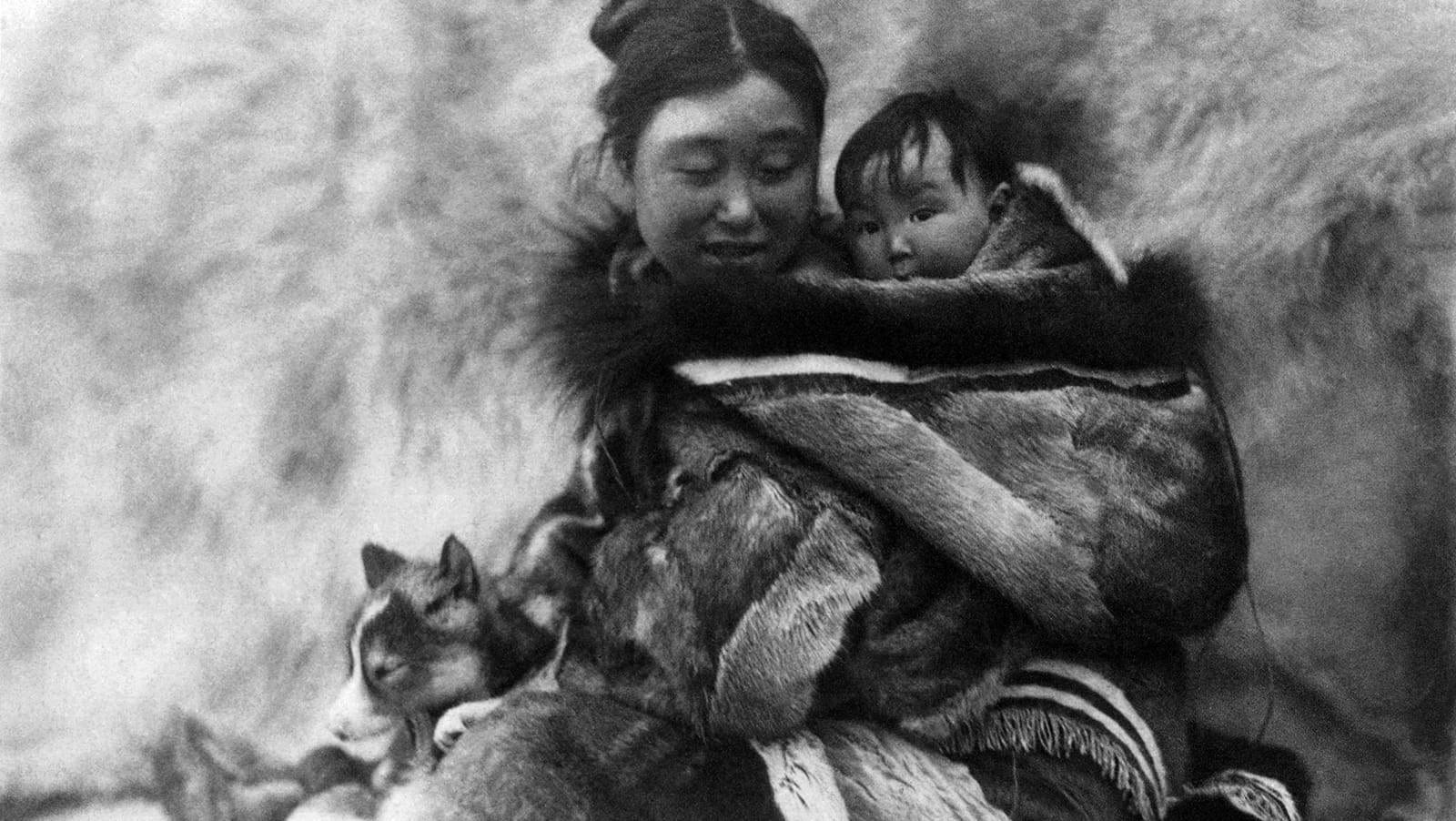
The story: In an area of land as large as England that abuts the Hudson Bay of Canada, only a few hundred human beings scratch out an existence. Nanook and his family are among the Inuits who live in this bleak, deadly, yet beautiful environment. We see them fishing, hunting walrus, building igloos and interacting with white traders. We also see them laughing and playing and being a family. The tone is partly anthropological and partly human drama, and viewers find themselves fascinated by the lives of the Inuit family as well as rooting very much for their survival.

Nanook of the North | The Current | The Criterion Collection

Generally hailed as the first documentary, it might better be termed the first docu-drama because it is assembled in a narrative form and because some of the sequences were staged. The family were not really a family; indeed the wife Nyla was Flaherty’s wife. The amazing walrus hunt sequence is real, but Flaherty asked the Inuit to use traditional spears when by this point in history they had firearms.

Cinéma vérité enthusiasts have raked Flaherty over the coals for the above and many other liberties he took with the “documentary” form. But in fairness to him, there was no documentary form at the time, so it’s not as if he overturned conventions upon which the audience had long ago come to rely. And whatever sins he committed as a story teller, it was a remarkable feat with 1916 technology to be shooting and developing film in such an unforgiving place.

Despite being known mainly for its historical significance, this movie is not “film school medicine” (in contrast, say, to the first 15 minutes of Häxan). There is something extraordinarily moving about watching fellow members of our species hanging on by the skin of their teeth yet also finding joy and love in an unimaginably remote, dangerous part of the planet. It is hard to imagine the sensation the film must have caused when it debuted, and it still has psychic weight today.

Nanook of the North is in the public domain and you can watch it for free here. This version has a lovely soundtrack which the original print did not (music was added in 1939).

Categories
Documentaries and Books

The Kid Stays in the Picture

In Vincente Minnelli’s brilliant The Bad and the Beautiful, Kirk Douglas gives one of his best performances as Hollywood Producer Jonathan Shields. Shields is self-destructive, ruthless and a user of people, yet he is also so talented and understands film so well that everyone in Hollywood wants to work with him anyway. I thought of Shields frequently as I watched the absolutely mesmerizing 2002 documentary about Robert Evans: The Kid Stays in the Picture.

This is MUST viewing for film buffs, as the raconteur/rascal/genius recounts his unique career from his discovery by Norma Shearer to his failed acting career to his shockingly successful transformation into a producer, to disaster, to saving Paramount, to more disaster, and to a late-life return to the business. Evans knew everybody (Steve McQueen, Ali MacGraw, Francis Ford Coppola, Jack Nicholson, and on and on) and may understand Hollywood as well as anyone.

You do not have to believe Evans is a factually reliable narrator to enjoy this film. He was clearly born to seduce other people, as his seven ex-wives could attest, and his stories glow from the luster of repeated tellings. But his love of cinema and his deep knowledge of stars and studios are unmistakable. There is also a great deal of humor in the movie, including a hilarious extended parody of Evans by Dustin Hoffman, who later went even further in that vein in Wag the Dog.

The other impressive thing about this documentary is that Producer/Co-Director Nanette Burnstein and her team created a kinetic, eye-catching film despite working heavily from still photos and old clips. The arresting look of this movie is almost as captivating as the content.

Categories
Documentaries and Books

Hoop Dreams

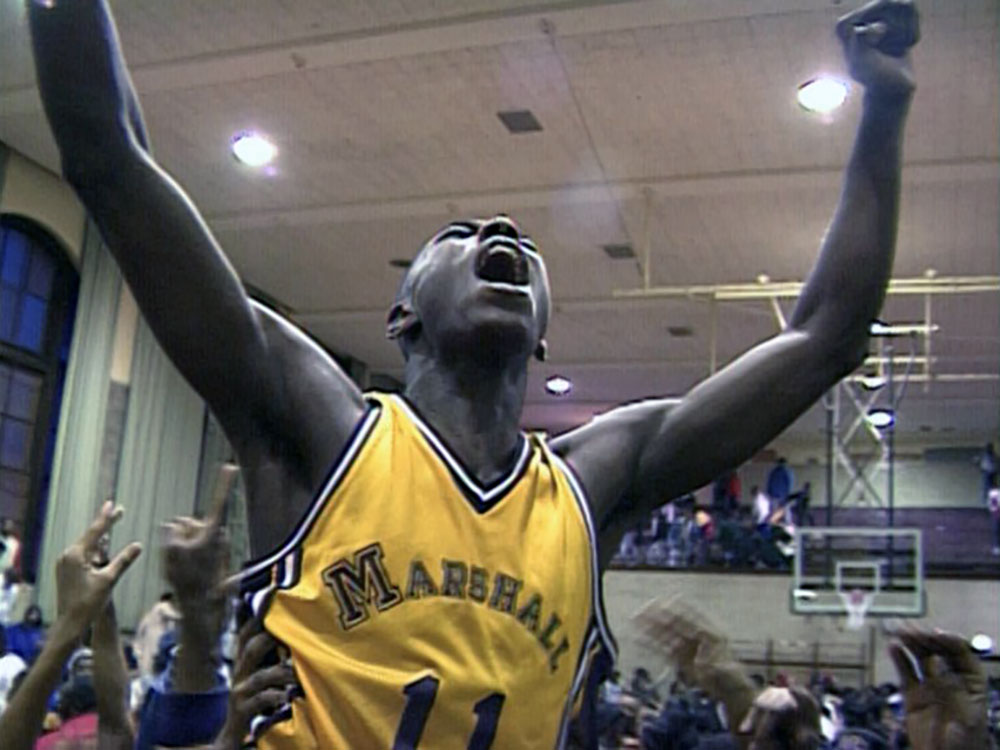
Filmmakers Steve James and Peter Gilbert started with the idea of making a 30 minute TV show about kids playing basketball at an urban playground. Instead they got pulled into the lives of two remarkable families and you will be too by the astounding 1994 documentary Hoop Dreams.

The film follows two African-American basketball players for five years as they grow from boys to men in Chicago. Both have been scooped up as potential basketball stars by an ambitious coach at a white suburban high school (Is this an opportunity or just exploitation? The film doesn’t flinch from this question.). When one of them, Arthur Agee, doesn’t do well academically (or is it just that his white coach thought he wasn’t a good enough player?) he is sent back to his local high school where his sports career prospers in new ways. The other, William Gates, fares better in the burbs at first but then his life takes some turns that I will not ruin for you by telegraphing them.

Among the things that amaze about Hoop Dreams is the access everyone gave to the filmmakers. The boys themselves, the coaches and their friends are all remarkably candid in the interviews. And the Agee and Gates families open up their personal lives to an almost unbelievable extent. The amount of intimacy they let the viewer have at some of the most critical moments of their lives is a true gift.

The other impressive thing about Hoop Dreams is that despite an almost three hour running time (edited down from a reported more than 250 hours of footage!) it holds your interest at every moment. Personally, I tend to be pretty hard on movies that run more than two hours without an exceptional reason. Here, I was riveted throughout and indeed would have loved more.

Hoop Dreams is sometimes referred to as a great film about inner-city existence or low-income Black Americans. Yes, it is those wonderful things but it’s also more than that, it’s a film about life, family and growing up with which anyone with a heart and a mind can connect emotionally. That’s why it’s not just one of best documentaries of my lifetime; it’s a great work of art.

Finally, just as a comment on inner city life, which this film so well captures, it is quite sad that a number of people in this film have been murdered since the film’s release, including William’s older brother and Arthur’s father-in-law.

p.s. Even some fans of this film sometimes underestimate its worth. They are angry that it wasn’t nominated for a best documentary Oscar. That was indeed an outrage, but in a year when Forrest Gump won Best Picture, the nominators in that category should have hung their heads too. Props to Siskel and Ebert for using their platform to boost this movie and to blast the Academy for their disgraceful decision.

Categories
Documentaries and Books

American Movie

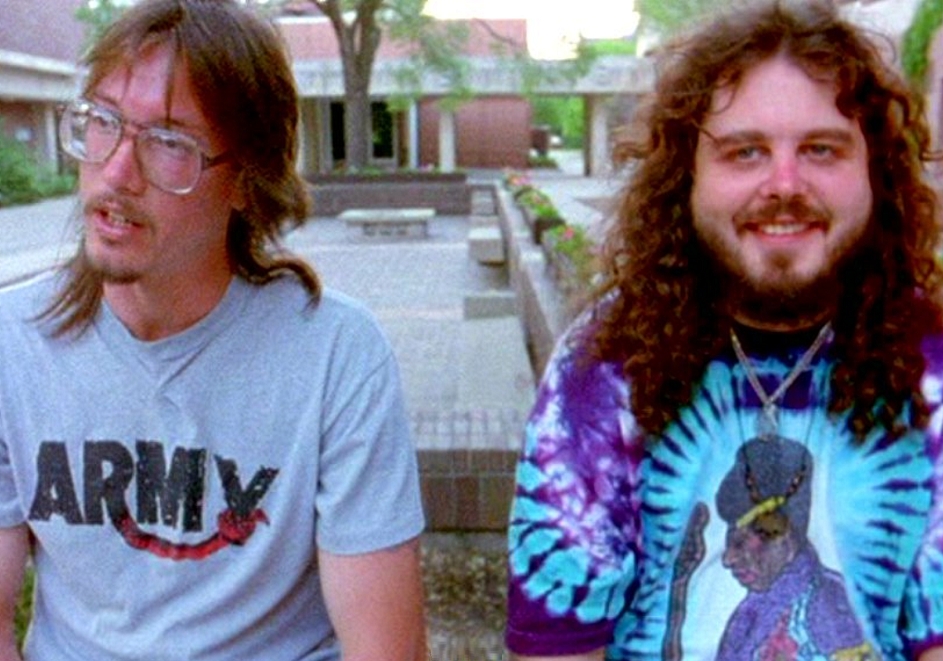
Chris Smith was an unknown would-be director attending film school in Milwaukee when he met a fellow would-be filmmaker named Mark Borchardt, whose career could not have looked very promising. Smith wisely made the decision to make Borchardt the subject of a documentary, and the result is a movie that succeeded artistically and financially more than either of them could have imagined: 1999’s American Movie (sometimes listed as “American Movie: The Making of Northwestern”).

The documentary follows Borchardt’s painfully unsuccessful effort to make “Northwestern”, which he envisions as a cinematic masterpiece. As the shoestring production collapses around him, Borchardt decides instead to resurrect his half-finished horror film “Coven”, the proceeds of which he hopes will finance his dream project. With money from his dotty Uncle, and, volunteer acting and production by his family and aspiring local actors, Coven fitfully begins to turn into something of which Borchardt hopes he can be proud. Meanwhile, the rest of his life is a mess. He is unemployed, lives at home with his parents, drinks too much, and is estranged from his children. The emotional anchor of his life is less so his family than his best friend Mike Schank, a recovering alcoholic with a taste for gambling and a peaceful stoner/Buddhist-esque demeanor.

Never mocking or exploitative, the movie takes its subjects seriously just as they take themselves and their art seriously. As with Hoop Dreams, the families involved gave a remarkable level of access to the documentary makers. The affecting result is a true slice of American life, as lived by white lower middle class people in Milwaukee.

And remember, “Coven” does not rhyme with oven. Should’ve kept the umlaut….

Categories
Documentaries and Books

A Perfect Candidate

Every election season, I revisit R.J. Cutler and David Van Taylor’s revealing 1996 documentary A Perfect Candidate. The setting is the 1994 Virginia Senate race between incumbent Chuck Robb and challenger Oliver North, which one voter likens to a choice between “the flu and the mumps”. The principal players in the movie are Washington Post report Don Baker and North’s campaign manager Mark Goodin (a Lee Atwater mentee). Their candor and insight are nothing less than disturbing, as this set of clips with Goodin shows.

As the movie unfolds, both campaigns lurch from the trivial to the ugly, and no one comes out looking very good at the end. The fact that the outcome of the election is known in advance by the audience does nothing to limit the fascination this movie generates as it documents how campaigns operate. There is nothing inspiring here about the electoral process, unless it is to inspire us to change it. But that’s why A Perfect Candidate is an outstanding documentary: It shows life unvarnished and in an emotionally compelling way. It’s a raw, remarkable must-see film for political junkies and for anyone who wonders why we get the candidates we do in our elections.