Categories
Foreign Language Horror/Suspense

La Maschera del Demonio

American film fans probably associate Italy first with spaghetti westerns, and next with romances or white telephone films. Few realize that Bel Paese is also the source of some chilling horror fare, including the 1960 film that put Mario Bava on the map: La Maschera del Demonio.
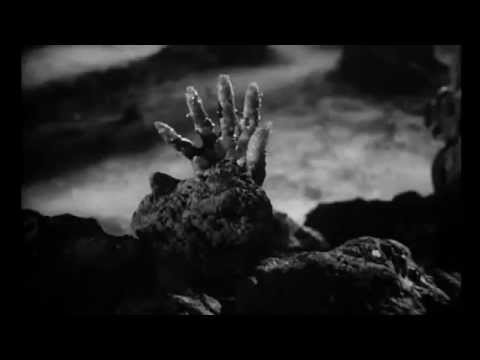
The story opens with a witch (Barbara Steele, in the role that launched her as a genre star) being burned at the stake by a mob of pious, torch wielding, medieval villagers who seem like many other things in this movie to have escaped from a 1930s Universal monster picture (which Bava visibly adores). In a horrific sequence, they brand her with Satan’s mark and then nail a metal mask on her face and also on that of her malevolent henchman. She of course promises that she will rise again to take vengeance. Centuries later, two men stumble into a crypt and discover an ancient stone coffin and, well, you can guess much of the plot from there (again, especially if you watched the 1930s Universal monster movies).

Bava had done uncredited directing by this point in his career, but was mainly known as a cinematographer. Here, he is officially the director, and turns in one of the most atmospheric, visually stunning entries in the horror genre. He respectfully echoes the classics but adds his own sensibility and enormous technical skill to create a landmark in the genre and in Italian cinema more generally.
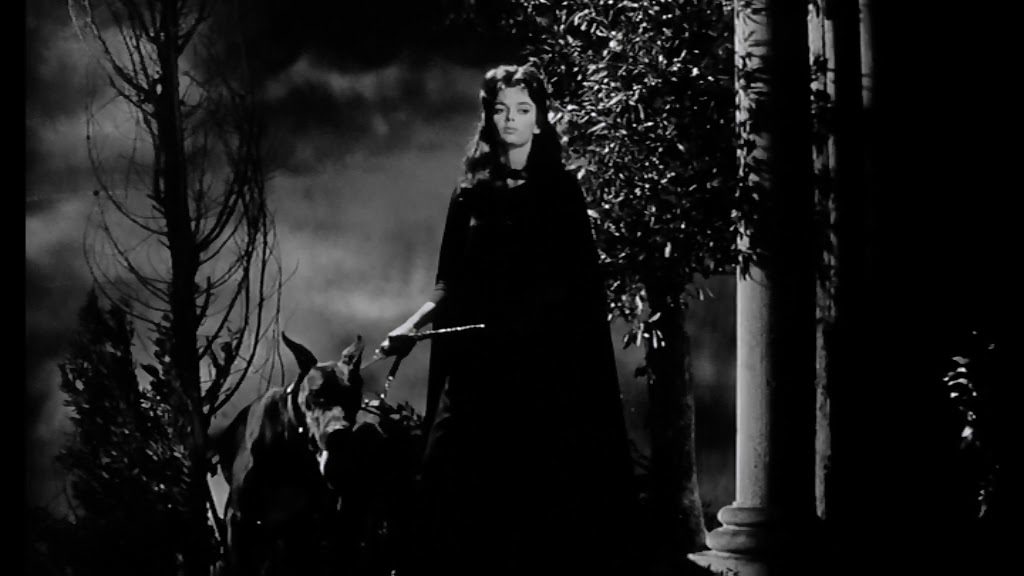
The best way to recommend La Maschera del Demonio might be to simply post dozens of photos. Part of why Bava influenced so many directors was his world-class visual sense: where to put the camera, where and when to move it, and how to create images that rivet an audience. In this respect, La Maschera del Demonio recalls two of my other film recommendations in the horror/thriller genre, Les Yeux Sans Visage and Vampyr. The movie is also flat out scary, with suspenseful moments where you want to look away yet also can’t not watch.

There are multiple versions of this film, for two reasons. First, some of the violence — jolting even by today’s standards — was edited out in some countries (indeed, the UK banned the film entirely). Second, it’s an Italian film, so there was no sound recording on set. The actors were likely speaking different languages, and the language for each target audience was inserted in post-production (The multiple English “dubbed” versions of the film are pretty smooth, so it appears that many of the actors were doing their lines in that language on set). Probably the best version to watch is the completely unedited Italian language version, but the next best is the only slightly edited US version that Samuel Z. Arkoff and Roger Corman released under the titles “Black Sunday” and “Mask of Satan”. You can watch that version legally and for free right here.
Categories
British Horror/Suspense Mystery/Noir

The Innocents

The Innocents 1961, directed by Jack Clayton | Film review

Many an eerie film has been described as a “spine-tingling” experience, but few live up to that description literally for most cineastes. The movie that did that to me more than any other, giving me physical shivers like a bucket of ice down my back, is The Innocents.

Producer/Director Richard Clayton’s 1961 art house thriller demonstrates that a skilled director can jangle nerves without spattering the screen with blood. Clayton started with ideal source material: Henry James’ psychological horror masterpiece, The Turn of the Screw (Although the film’s title comes from William Archibald’s prior effort to adapt the novel to the stage). But Clayton was wise enough to bring in a modern master, Truman Capote, to write most of the script. Capote kept the best elements of the Victorian English novel and suffused them with Freudian overtones and a dose of American Southern Gothic, rotting blossoms and all.

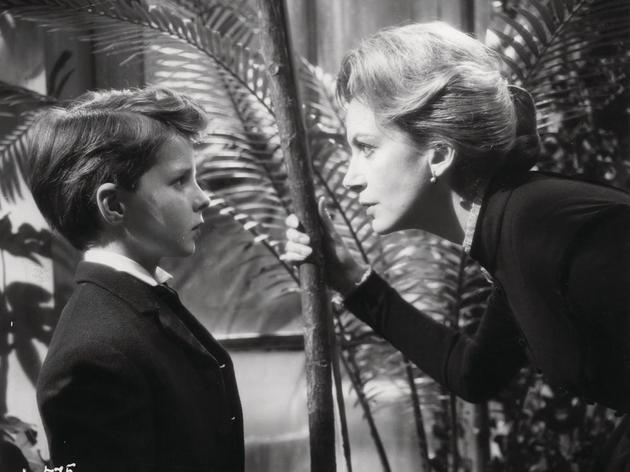
The plot sounds deceptively unoriginal on the surface. A wealthy man uninterested in two child relations (Michael Redgrave) hires a sheltered, rather jejune woman (Deborah Kerr) to be their governess. She moves in to care for them in a Gothic mansion, and the children at first seem wonderful. But strange passions and mysterious events arise which plunge the woman into a terrifying experience. The film, like the novel, leaves the central question of the plot a matter of some ambiguity, making it almost as enjoyable to analyze and discuss as it is to watch.

I don’t know how the 40-year old Deborah Kerr was cast as the lead in this film (unless her governess role in The King and I typecast her), because James’ governess character was originally conceived as a naive woman barely into adulthood who had never been away from home before. Yet Kerr turns in one of the best performances of her storied career, steadily unraveling before our eyes. To the extent the film is interpreted as portraying the psychologically deleterious effects of loneliness and sexual frustration, a 40-year virgin gave Kerr lots of material with which to work her magic.

Astonishingly, the veteran Kerr is matched step for step by the riveting acting of a 12-year old, Martin Stephens. He was already a star in Britain, based in part on his similarly unnerving turn in Village of the Damned. His role here is even more challenging because not only does he need to mix childlike moments with menacing ones, he also has to convey sexual awareness well beyond his years. He manages it all brilliantly.

This is also an amazing looking film, with the gardens and house exteriors (Sheffield Park), and the custom built interior sets contributing to the atmosphere. Even more important is the camerawork of superstar cinematographer Freddie Francis. From the very first shot, he pulls off an impressive array of visual feats, including blackening the edges of many of his interior shots to create a claustrophobic effect, as well amping up the central lighting when needed to get depth of field shots in CinemaScope’s otherwise flat look. Without spoiling the movie, I will just offer that the images from the most frightening scenes of The Innocents have stayed with me forever.

This movie didn’t quite land with audiences or critics when it was released. It was too arty and reserved for fans of more typical horror films of the period, and too traditionally haunted house bound for the arty set. I’m not going to embed the trailer for this reason, because all it does is show that even a major studio with a big promotions department could not figure out how to effectively market The Innocents. Fortunately, as magnificent films sometimes can do, The Innocents gained a larger and larger following as the years went by, until today it deservedly wins a place on virtually every “best horror films of all time” list.

Categories
Action/Adventure Horror/Suspense Mystery/Noir

Kiss Me Deadly

They? A wonderful word. And who are they? They’re the nameless ones who kill people for the Great Whatsit. Does it exist? Who cares? Everyone everywhere is so involved in the fruitless search for what?

In 1955, detective film noirs were nearing the end of their magnificent cycle, with seemingly little fresh to say. But just before the lights went out, Director Robert Aldrich and Screenwriter A.I. Bezzerides went for broke with a brutal pulp masterpiece which blended crime drama with 1950s political paranoia and some science fiction to boot: Kiss Me Deadly.

Ostensibly based on one of Mickey Spillane’s wildly popular Mike Hammer novels, Kiss Me Deadly (which Spillane hated) mocks the genre as much as embodies it, amping up the main character’s sliminess, cruelty and misogyny to absurd levels — and Hammer’s ostensibly the hero! From its arresting opening shot of Cloris Leachman desperately running barefoot down a highway, followed by a perversely upside down credit sequence, this is a movie of extremes in every respect, right up to its atomic conclusion.

Ralph Meeker, in the most memorable film work of his career, is aces as a cold, scheming and domineering Mike Hammer. It’s a fine example of how an actor and director can make a fairly unlikable character magnetic on screen, which is one of a number of ways this movie recalls another film I recommended, Pickup on South Street.

Most American critics considered Kiss Me Deadly a seamy low-budget piece of trash when it was released, and moralists condemned it outright for allegedly corrupting the nation’s youth. But it found a following in France and eventually among some American directors as well, who cherished the brash artistry and attitude the film exudes. Decades later, Kiss Me Deadly became fully respectable, being selected for inclusion in the National Film Registry as an utterly original American classic.

p.s. In the decades between my first and second viewing of Kiss Me Deadly, the original ending was discovered. When the film was originally released, some audiences saw the intended ending and some saw a mutilated version which only slightly shortens the film but does alter its meaning. If you want to know more about this unusual piece of film history after you’ve seen the film, check out this fascinating article.

Categories
British Horror/Suspense Mystery/Noir

The Lodger **Double Feature**

I had long wanted to experience Alfred Hitchcock’s first foray into suspense, 1927’s The Lodger (sometimes subtitled “A Story of the London Fog”), but could never get through the film because the available prints were so beat up as to make it virtually unwatchable. To the rescue came British Film Institute, which despite the lack of the negative managed to restore the movie beautifully using a tinted print that had been maintained in excellent condition. Hitchcock’s version of the Belloc Lowndes tale as well as the best of the many subsequent efforts to remake it constitute my double feature film recommendation.

The story is set during a series of Jack the Ripper-like murders in London. One of the respectable families in the neighborhood takes in a mysterious lodger played evocatively in the 1927 version by early 20th century entertainment superstar Ivor Novello. His manner is strange, his habits are out of the common and he always seems to be out in the fog when the murders happen. Both the police and the family hosting him begin to suspect that a wolf has found its way into the fold. Hitchcockian magic ensues.

I embed here the restored version, which looks marvelous (Though BFI earns only an A minus because of a bone-headed decision to insert some jarring pop love songs in at particular moments of the new score). But the real attraction here is Hitchcock, who even this early in his career shows how he will come to define with unbounded creativity the suspense film genre. His origins in the silent era no doubt helped him develop his “pure cinema” style of storytelling because of course without sound it’s all about shots, images and editing. What can also be seen in The Lodger is his impish ability to break tension with humorous moments. He and Eliot Stannard also changed the original story in a way that increases tension up to the very end. All in all, the movie serves both as entertainment and an education in the early years of The Master.

Novello went to Hollywood in 1934 and made an ill-fated talkie version of the same film without Hitchcock, but the story was taken up again to much better effect by a different group of filmmakers in 1944, and I recommend it as the second half of a double feature with the 1927 version.

This version keeps closer to the original story, making it as much a character study as a mystery/thriller. This provides a chance for the sadly short-lived Laird Cregar to showcase his considerable talents as an actor. He’s near-perfect as a man whose proper British exterior hides a roiling mass of emotion and need. The rest of the cast is also strong, particularly Sara Allgood as the woman of the house and George Sanders as a police detective. The production values are first rate, with much of the budget apparently spent by respected costumer designer Rene Hubert on a series of flouncy outfits for the bewitching Merle Oberon (More information about her career is in my recommendation of The Scarlet Pimpernel). The result is a movie that if not at the level of Hitchcock’s work is still a handsome and gripping piece of cinema.

p.s. The same story was made again in 1953 as The Man in the Attic and yet again in 2009 as The Lodger. As the man once said, “In Hollywood they don’t make movies, they re-make them”.

p.p.s. In Robert Altman’s fine film Gosford Park, Ivor Novello was portrayed by Jeremy Northam.

Categories
Comedy Horror/Suspense

House on Haunted Hill

Producer/director William Castle was part film maker and part carnival barker, being famous for gimmicks such as placing nurses in theater lobbies ostensibly to aid any viewers who were overcome with fright, wiring seats to give mild shocks when a monstrous “Tingler” came on the screen, and, for this week’s film, pioneering “Emergo” technology which released a skeleton on a wire to sail over the audience. In 1959, he made what I consider his best film as a director: House on Haunted Hill.

Set at the historic Ennis House in Los Angeles, the film’s agreeably silly plot features menacing millionaire Frederick Loren (Vincent Price) who has offered a disparate cast of characters $10,000 to spend one night surrounded by ghosties and ghoulies. The event is allegedly a party for his current, faithless, wife Annabelle (Carol Ohlmart), who herself fears sharing the fate of her mysteriously deceased predecessors. The guests are a mousy secretary in Loren’s company (Carolyn Craig), a handsome test pilot (Richard Long), a stuffy psychiatrist (Alan Marshal), a money-hungry newspaper columnist (Julie Mitchum, sister of the more famous Robert) and the alcoholic survivor of some of the people who have been murdered in the house (Elisha Cook Jr.). The closing credits also include another cast member, in typical Castle tongue-in-cheek style: a skeleton appearing as “himself”.

I first saw this film on television when I was about 5 years old, and it gave me nightmares for months. I could not appreciate then what I can now, namely that Castle always served his horror with side dishes of corn and ham. There are certainly creepy moments and shocks in the film, but there is also campy fun, much of it courtesy of old hands Price and Cook. It’s also progressively amusing over the course of the film that the majority of Carolyn Craig’s dialogue becomes “Eeeeeeeekkkk!!!!!!!”.

House on Haunted Hill is spooky fun in the best Castle tradition. I recommend it for strong entertainment value and as the high point of the movies Castle made himself.

I say “by himself” because Castle was later associated with one of the greatest horror films in Hollywood history, albeit with an assist. Not long before he died, Castle purchased the rights to Rosemary’s Baby and brought the project to Robert Evans at Paramount. Evans wisely agreed to let Castle produce the film only if Roman Polanski helmed the project, and a classic film was born.

p.s. In case you are wondering, here is the fun-loving Castle’s “Emergo” gimmick in action.

Categories
Foreign Language Horror/Suspense Mystery/Noir

The Hands of Orlac

The idea that a possession or even more creepily a body part of a dead person can take over the life of its living owner has appeared in fairy tales and ghost stories for centuries. In cinema, the touchstone story of this sort is Maurice Renard’s 1920 novel Les Mains d’Orlac, which has been adapted to the screen many times, including in both films I am recommending: The 1924 Austrian and 1935 US version of The Hands of Orlac (The latter is sometimes titled Mad Love).

The story concerns gifted pianist and composer Paul Orlac, whose hands are severely damaged in an accident. He survives his injuries, but the surgeon must replace his hands with those of a recently executed murderer. As Orlac and his devoted lady love Yvonne attempt to put their lives back together, the murders start again, and Orlac begins to suspect that his new hands are driving him to commit horrible crimes.

The 1924 version is a silent film directed by Robert Wiene and starring Conrad Veidt, who will be familiar as principals of the all-time cinema classic Cabinet of Dr. Caligari, which I recommended here. Like that famous film, the Hands of Orlac is skillfully made in the expressionist style and is anchored by striking visuals and Veidt’s uncanny ability to convey emotion without dialogue. The film was recently restored with a newly composed soundtrack and became deservedly popular on the classic film festival circuit.

The 1935 version is a talkie that changes the story substantially in an effective way. Here, the surgeon is the central character and is driven by his lust for Orlac’s wife rather than any desire to help the composer. This was Peter Lorre’s first American film and he’s magnetic as a villain who is loathsome in some ways and pitiable in others. I like this version even better than the original because of Lorre’s strong performance, director Karl Freund’s visual sensibilities and the tighter pacing.

Here is a short promotional film made for the US release of the 1935 version. It’s more than a traditional trailer because while Lorre was a big star in Germany, Hollywood had to introduce him to American audiences.

Categories
Action/Adventure Horror/Suspense

Tarantula

“Invasion of the Giant-Sized X” films were almost their own genre in the 1950s. Many of them were wretched (Attack of the 50 Foot Woman being generally considered the nadir), but some of them stand the test of time. If forced to choose my favorite giant insect film I would go with Them!, but since spiders are not insects I feel I have the right to also have a favorite giant spider movie: 1955’s Tarantula.

I preface this recommendation by expressing an opinion about B-movies, which is no one should be ashamed of making one as long as they know that is what they are doing. B-movies that pretend to be A-movies are typically an agony to view, but films that use a modest budget to achieve modest ambitions can be highly satisfying for the audience. The Frightened City, which I recommend here, is one such worthy B-movie, and Tarantula is another. The makers’ goal was to tell an entertaining, scary monster story, and they pulled it off.

Like most of the giant critter films, this one begins with science gone awry, in the person of reclusive Professor Gerald Deemer (the wily old pro, Leo J. Carroll). He is concerned about the world’s food supply because he projects that by the year 2000, the Earth’s population will be — wait for it — 3.6 billion! Injections of a radioactive nutrient seem like a sensible alternative to traditional food: just look at how quickly Deemer’s test animals are growing. In the meantime, no one is trying the nutrient on humans, are they?

Categories
Horror/Suspense Mystery/Noir

The Little Girl Who Lives Down the Lane

Hollywood superstar Jodie Foster had a remarkable 1976, with five movies hitting the theaters. They showcased her talent and poise — both startling for an actress who has just become a teenager — and also the tendency of 1970s cinema to lionize teenage liberation while at the same time exploiting it through sexualization. Foster’s Oscar-nominated turn as a child prostitute in Taxi Driver is the best known example, and the same themes are present in an effective low-budget shocker that was released the same year: The Little Girl Who Lives Down the Lane.

Appropriate to its mood, the movie opens with its central character, Rynn Jacobs (Foster) walking on a deserted beach. As the film progresses, we learn that Rynn’s independence and isolation are in some mysterious way connected to her poet father, who purchased them a house together in a small town but has never been seen by the locals. Rynn manages the finances, cooks her own food, sets her own schedule and makes her own way in the world.

What could possibly impinge on her freedom? Horrible adults of course. Most particularly the vile local family of influence, led by a frosty, bigoted WASP named Mrs. Hallet who has the town and her pedophile son Frank under her thumb (Alexis Smith and Martin Sheen, both credibly menacing). The only kindness available to Rynn comes from the Italian immigrants that the Hallets despise, specifically a creative, polio-stricken, local lad who falls in love with her (Scott Jacoby) and a friendly police officer who tries to shield her from harm (well-played by famous songwriter Mort Shuman!).

This movie works well on two levels. First, it’s a character study exploring the tension between children’s desire to be independent and adults’ desire to control and/or protect them. Foster’s emerging greatness is a major asset here, particularly as she holds her own in her scenes with seasoned adult actors. Second, this is a suspenseful tale in the mystery/horror vein, both because of Sheen’s unnerving performance and the enticing nature of the film’s central riddle: Where is Rynn’s father, and for that matter her mother? The resolution to Laird Koenig’s macabre story is easy to guess wrong, which only makes the film more engrossing.

The small budget of this Canadian film shows, both in the limited number of sets (which makes one think incorrectly that it is an adaptation of a play rather than a novel), the by-the-numbers production and camerawork, and the cheap wig on Foster’s head. But that doesn’t stop the Little Girl Who Lives Down The Lane from holding viewers’ interest and the edge of their seat as well.

p.s. There was some controversy about young Foster allegedly appearing nude in this movie, and that brief scene was cut by censors in some countries. However, as in her character’s sexual scenes in Taxi Driver, Foster’s older sister body doubled her for the shot.

Categories
Horror/Suspense

Trilogy of Terror – Amelia

“Doll horror” is almost its own cinematic sub-genre. Villains like the murderous clown doll in Poltergeist, the knife-wielding Chucky, and the ventriloquist’s dummy in Dead of Night, all scared the pants off of audiences. Let me recommend another triumph of the subgenre: The Amelia segment of the 1975 movie Trilogy of Terror.

Trilogy of Terror was an entry in a high-quality ABC Movie of the Week series. The series was a playground for rising directors and future stars as well as a chance for some old pros to enjoy a last hurrah. I have recommended multiple films from this series of made for television films: Seven in Darkness, Night Slaves, and The Screaming Woman. But Trilogy of Terror is better remembered than any of those films, probably because of the nightmares a generation of Americans experienced about “that doll”.

The movie comprises three distinct stories, all starring Karen Black. The first two are about as good as any average-quality episode of Night Gallery, Twilight Zone or Outer Limits, i.e., serviceable but unremarkable entertainment. But the third, titled Amelia, is a grab-you-by-the-throat masterpiece. The plot is simple: A young woman has purchased a Zuni hunting fetish which is alleged to contain the spirit of a savage warrior who will be contained as long as the gold chain around the doll is never removed. Guess what happens!

Karen Black’s acting gifts are essential to making this segment of the trilogy work. In a single phone call to her mother, she reveals Amelia to be a woman who has trouble asserting herself, is easily bullied and wants to avoid confrontations. Black’s establishment of her character makes what happens next more emotionally intense. Black also does an excellent job selling the physical confrontations with her foe, which very easily could have been too campy to be scary.

The segment was made by horror masters Dan Curtis and Richard Matheson, many of whose works I have recommended (e.g., Dracula). As a director-writer team they were consistently creative yet simple in their artistic goals: They aspired only to scare and entertain people, and they were very good at it. Amelia also benefits enormously from creative camerawork by Paul Lohmann and terrific editing by Les Green, which never lets the audience catch its breath.

Amelia is 16 minutes of tension and a bloody scary good time. I embed this minor classic of the horror genre below for you to enjoy.

Categories
British Horror/Suspense

Night of the Eagle

Fritz Leiber Jr. was a talented fantasy, science fiction and horror writer who is mainly remembered for the Fafhrd and the Gray Mouser books, which surprisingly have never been adapted for the cinema. In contrast, Leiber’s Conjure Wife has served as the basis of multiple movies, including the fine 1962 film Night of the Eagle (later re-titled Burn Witch Burn).

Peter Wyngarde stars as a hard-headed college professor who thinks that the supernatural is bunk. Imagine his surprise when he discovers that his wife (Janet Blair) has been a practicing witch for years, and claims that her magic has been advancing his career and protecting the couple’s well-being! He makes her promise to abandon her childish hobby, and almost immediately regrets it when a series of horrifying happenings befall the two of them. Could witchcraft be real, and is another witch in the college community out to get them?

The script is by two masters of economical, intelligent, unpretentious horror: Richard Matheson (who also wrote my recommended film Amelia) and Charles Beaumont (who also penned my recommendations The Intruder and Masque of the Red Death). They pace the plot and the scares professionally, and slyly weave a feminist subtext into the proceedings.

I have to admit that I can’t name another movie of director Sidney Hayers, but his low profile wasn’t due to lack of talent. He keeps things suspenseful and crisp, gets solid performances from all the actors and brings in the good-for-the-time special effects at just the right moments. The pleasing result recalls Roger Corman’s many solid low budget horror films, such as those he adapted from Edgar Allen Poe stories (including my recommended film Tales of Terror). Not surprisingly, Night of the Eagle was released by Anglo-Amalgamated, the British partner of Corman’s company AIP.

This suspenseful sleeper is available to watch for free at the Internet Archive, just click here. As a taster, I embed the trailer below.

p.s. This film would make a fine double feature with an ever better film based on the same themes: Curse of the Demon. My recommendation of that film is here.