
Categories
British Drama

Parade’s End

Many movies have attempted to tell sweeping narratives about historical and cultural change combined with an intimate love story to which the audience can more easily relate. Most of such ambitious films fail because they are attempting something very difficult, but when they get everything right, like, say, Dr. Zhivago, we remember them forever. That’s how I feel about the 2012 mini-series Parade’s End.

Based on a tetralogy of novels by Ford Maddox Ford, the story was adapted for television by the estimable Sir Tom Stoppard. The protagonist is a well-born, brilliant, kind, and rigid Englishman named Christopher Tietjens (Benedict Cumberbatch) who is firmly committed to the fading morality of the Edwardian Period. Unfortunately for him, the story’s antagonist is his wife Sylvia (Rebecca Hall), a vain, selfish and impulsive woman he married to save from disgrace when she fell pregnant, even though the child is almost certainly not his own. The two circle each other in endless combat, with Sylvia at times making efforts to live up to Christopher’s values, but more often torturing him with infidelity and other indignities. Christopher meanwhile evidences superhuman tolerance which irritates Sylvia all the more. Into this stalemate comes a spirited, intelligent suffragette named Valentine Wannop (Adelaide Clemens) who falls in love with Christopher. He shares her feelings but feels honor-bound not to act on them. Mutual heartache, trembling upper lips, and World War I ensue.

This series compels attention because it does not oversimplify its central characters. Sylvia is sometimes thought of as one of English literature’s most contemptable females, but with Stoppard’s script, Susanna White’s direction, and an exquisitely balanced performance by Hall, she is a fully rounded person. Not someone you’d likely want to spend time with, but capable of love, and longing to better herself even though she never quite gets there.

Christopher Tietjens is also agreeably complex, and beautifully played by a highly talented actor. Thematically, Christopher’s story parallels Dostoevsky’s The Idiot, a book that Ford Maddox Ford knew well. The people around Christopher repeatedly assume that he is less trustworthy, decent, public-spirited, and loving than he in fact is because they no longer accept the moral framework under which he lives. Cumberbatch movingly conveys the loneliness of doing the right thing when no one sees value in it, or even recognizes that you are doing it because you believe it is right not because you expect some advantage. But this isn’t simple-minded nostalgia or a jeremiad because it makes clear the terrible human cost of Christopher being unwilling to let go of traditional morals: Keeping an awful marriage together and preventing what would be a much happier and loving one from forming (and it is a nice touch that Sylvia appreciates this more than Christopher).

The bravura performances of the two leads are complimented by Clemens as the third point in the story’s love triangle. Many of the smaller roles are also acted exceptionally well, including Rufus Sewell as a sexually obsessed, barmy churchman and Anne-Marie Duff as his distressed and ever-scheming wife. And what is it about Rupert Everett that no matter how immoral or callous his character is, he somehow manages, like Claude Rains before him, to leave the audience charmed?

BBC and HBO also deserve credit for the production values, particularly the World War I trench combat scenes which are hard to make credible on a TV film and budget. The costumes and sets are also as expertly assembled as you would expect from BBC.

In sum, Parade’s End is a brilliantly written, acted and directed mini-series that sets a high bar for itself and clears it with room to spare. As both a grand historical narrative and a love story it’s a triumph for everyone involved and an absolute pleasure to watch
Categories
Documentaries and Books Mystery/Noir

The Mask of Dimitrios (plus an appreciation of Eric Ambler)

I had the recent pleasure of discovering the once-famous novels of Eric Ambler. Although many people think of writers like Graham Greene and John le Carré as the creators of English language thriller/espionage novels, those giants themselves would point to Ambler as the font from which it all flowed. His crisply-paced books employ what later became a staple of Alfred Hitchcock’s films (Ambler knew Hitch and indeed married his secretary): creating suspense by putting an ordinary person into perilous only half-understood situations swarming with secret agents and international conspiracies. His best-remembered book, 1939’s The Mask of Dimitrios (aka A Coffin for Dimitrios), is a pluperfect example. In 1944, Warner Brothers did film noir lovers a favor by turning it into a fine film of the same name.

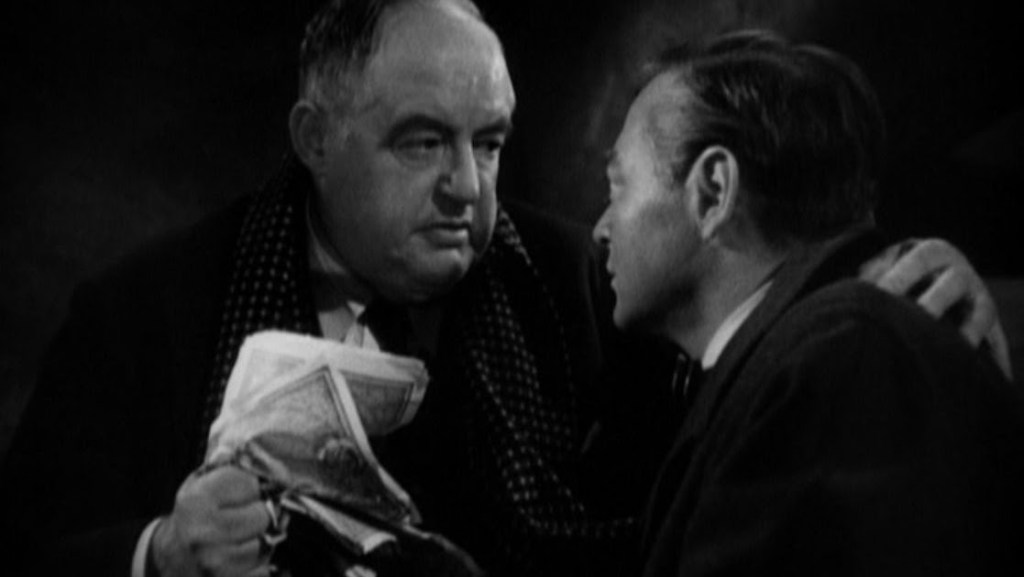
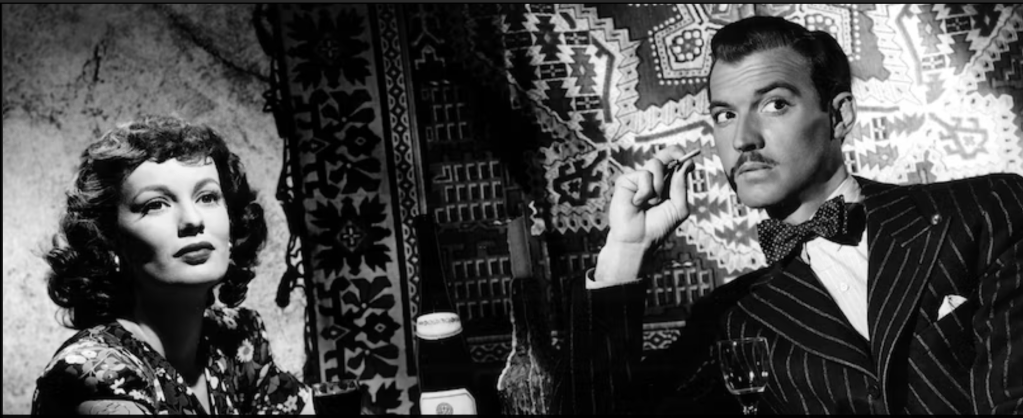
The plot: Cornelius Lyden (Peter Lorre) is an academic turned thriller writer who while travelling in Istanbul is befriended by secret police chief Colonel Haki (Kurt Katch, more compelling than Orson Welles was playing the same character in Journey Into Fear). Haki tells Lyden the story of a Basil Zarahoff-type villain named Dimitrios Makropoulos (Zachary Scott, in his debut role) that the authorities had been pursuing for years until his murdered body washed up on the beach. Lyden is intrigued by someone who might well have appeared as the bad guy in one of his books, and embarks, Citizen Kane-style to uncover the true life story of the shadowy Dimitrios. Along the way he meets the mysterious Mr. Peters (Sydney Greenstreet) who seems to know more about Dimitrios and Lyden than he is telling.

The movie in one sense lacks a big name star, but in another sense it doesn’t. Although audiences saw Lorre and Greenstreet as character actors as individuals, they could not get enough of the “Little Pete-Big Syd” double act that began when John Huston paired them in The Maltese Falcon. The Mask of Dimitrios is the mid-point of their nine movie run, and between them is a chemistry on par with a world class gin and tonic.

Screenwriter Frank Gruber should be grateful that he was paid well for easy work, because his script follows Ambler’s novel almost point for point, with a significant amount of dialogue adapted verbatim. Surely, Ambler could have done that himself. Ambler did eventually become a superb screenwriter, including of two of my most heartfelt recommendations: The Cruel Sea and A Night to Remember. But in any event, Gruber delivers here a fine, suspenseful script about human frailty and ugliness, leavened by a main character who tries mightily to do the right thing.

This movie was director Jean Negulesco’s big break, and he makes the most of it, getting strong performance from actors in parts large and small. His background as a painter shows in his keen visual sense about set dressing, camera angles, and lighting (hat tip also here to cinematographer Arthur Edeson, who had established his noir chops on The Maltese Falcon).

Many film buffs would argue that if I were going to highlight a movie based on an Ambler novel, I should have picked 1943’s Journey Intro Fear. It’s an above average movie, but I think it was strange for Welles and Cotten to throw out a script by the legendary Ben Hecht and do their own instead. Particularly, they moved away from the emotional driver of Ambler’s book, namely the main character’s repeatedly thinking he can trust someone and then having it all go pear-shaped such that he is eventually whittled down to trying desperately to save himself. Cotten and Welles did make two small improvements to Ambler’s story (SPOILER ALERT): Having the main character being witnessed by the villains being handed a gun explained how they knew to steal it from his cabin, and making the ship’s captain alcoholic helped explain better why he would not listen to reason. In terms of acting, Welles is a bit hammy, but I did love the wordless, menacing performance of Jack Moss (Welles’ agent rather than a professional actor) as one of the killers. Like many of Welles’ projects, he either didn’t or couldn’t finish Journey Into Fear himself and it was chopped up by studio editors, in this case to a badly rushed (no pun intended) 71 minutes. It’s definitely still worth a look, but if you want a film with Welles, Cotten and other Mercury theater stalwarts about a moral and somewhat naive American intoxicated by a European beauty while coping with international intrigue and ever present danger, I would recommend instead the genuinely magnificent The Third Man.

Back to Ambler. I am glad he eventually got to do some screenwriting, though disappointed his collaborations with Hitchcock were limited to an episode of the latter’s TV show. His most famous novels, including The Mask of Dimitrios and Journey Into Fear remain fresh, exciting, and full of endlessly quotable dialogue (“I am old and have the luxury of despair”). He deserves an audience today. Reading and then watching The Mask of Dimitrios — or the other way round, if you like — is an excellent way to introduce yourself to Ambler’s oeuvre.

p.s. In an effort to cash in on the huge success of Casablanca, Warner Brothers quickly and cheaply cranked out another Lorre-Greenstreet film based on the Ambler novel Uncommon Danger in 1943 (The most slavish element being an opening montage that nearly copies Casablanca’s, including having the same director and narrator). Background to Danger was undone by star George Raft, who with the boneheaded judgment for which he was famous, insisted on changing Ambler’s everyman protagonist into a tough, streetwise federal agent! The screenwriter, W.R. Burnett said he worried about running into Ambler after the movie came out. Lorre and Greenstreet are both fine as usual, but it’s a forgettable film that is a million miles from the spirit of the novel on which it is based. Would avoid.