Categories
Action/Adventure Mystery/Noir

Marlowe

Immediately after reading Raymond Chandler’s splendid The Little Sister, I decided to revisit a 1969 adaptation of the book I remembered liking many years ago. I am happy to report that having read the source material made me appreciate the movie version even more than I did the first time through. Therefore I give you this film recommendation: Marlowe.

The plot: Orfamay Quest, a woman from the sticks who is less innocent and prudish than she at first seems (Sharon Farrell, very good here) comes to Los Angeles and hires private investigator Phillip Marlowe (James Garner) to find her brother Orrin. Meanwhile, in an ostensibly distinct plot thread which you know will get woven in because it’s Raymond Chandler, someone has taken some compromising photos of a vicious gangster (H.M. Wyant) with an alluring starlet (Gayle Hunnicutt, who as ever is nothing if not alluring). Meanwhile, the starlet’s fellow actress and friend Dolores Gonzales (Rita Moreno) tries to help Marlowe while also liking the look of him. The famous PI is soon enmeshed in a net of murder and intrigue.

The prolific and talented Stirling Siliphant had the most important job in this film, namely converting Chandler’s long, complicated, novel into an hour and a half of cinema. Siliphant did many things right by the famous author. He ditched all the opening exposition involved with Marlowe and Orfamay meeting (I am a big fan of this in movies) and started the movie with the first of the many murders, gripping the audience right off the bat. He also preserved much of Chandler’s terrific dialogue and simplified the plot without making the story less compelling.

Siliphant also added two elements of his own, one of which works and one of which doesn’t. What works is introducing American audiences to his friend and martial arts teacher Bruce Lee. When Lee unleashes his Jeet Kune Do in Marlowe’s office the results are both amazing, and, with a droll assist from Garner, very funny. What doesn’t work is giving Marlowe a stable, bland, girlfriend. This fish-with-a-bicycle move eliminates the sexual tensions and possibilities that are central to Marlowe’s character and the novel.

James Garner is well-cast as Marlowe, which no Rockford Files fan will be surprised to hear. Indeed, as Garner blearily answers a knock at his front door while dressed in his bathrobe, that trailer on the beach will come to your mind’s eye. Matching his on screen presence, charm, and sex appeal is Rita Moreno, who gets to show off both her acting and dancing chops.

Chandler’s work really belongs in the 1940s, so I tend to like period adaptations such as Farewell My Lovely a bit more than films like Marlowe that move him out of his natural era. But I greatly enjoyed Marlowe because it’s well acted and exciting, and has a plot structure that is agreeably easier to grasp than that of novel.

p.s. Two trivia notes on the incomparable Rita Moreno. She is among very few performers in the EGOT club (Won an Emmy, Grammy, Oscar, and Tony Award). She was close friends with Garner, and appeared in three episodes of The Rockford Files.

p.p.s. Director Paul Bogart and James Garner would work together again two years later on another film I commend to you: Skin Game.

Categories
British Documentaries and Books

They Shall Not Grow Old

Americans understandably think of World War I as a far less severe conflict than World War II. But for most European nations, the slaughter was on a larger scale in The Great War, making the 2018 Armistice centennial a major cultural and historical event. The British Imperial War Museum’s contribution to the commemoration was to open their film archive to Peter Jackson, who in addition to being a famous filmmaker is also a Great War buff. The astounding result is They Shall Not Grow Old.

Jackson and his team began with unpromising visual material: scratchy, battered, over and underexposed, silent, film footage taken during the war with hand crank cameras. The audio material — interviews with many veterans long after the war ended — was in better physical shape but had no essential connection to the images. With remarkable technical skill and artistic vision, Jackson spun dross into gold.

Computer scanning was used to counterbalance for light exposure problems, add vivid color, and impute missing frames (the latter of which eliminates the herky-jerky motion produced by the slow pace of filming in this period). Professional lip readers were employed to determine what the soldiers in the film were saying and actors were hired to voice the lines. And an array of preserved WWI tanks, rifles, artillery, and other equipment were recorded and the resulting sound track synced up seamlessly to the original footage. The stories of soldiers were then skillfully assembled to narrate the film entirely in the words of “ordinary” people.

The resulting film is a technical marvel and an emotional wallop at the same time. Watching so many young men marching cheerfully from the recruiting station to the front line, and seeing them later dying in the muck and staring shell shocked into the camera is a devastating experience for the audience. And the stories told by the veterans, which range from the lighthearted (e.g., fishing soldiers out of the latrine when the bench broke) to the gut wrenching (e.g., seeing horrific injuries…and smelling them too), are utterly compelling. The banal aspects of military life are interspersed between the terrifying moments, including the shattering climax when the troops go over the top into the teeth of machine gun fire.

Many film makers would have had the impulse to have some authority figure add narration regarding “What it all means morally” either to (a la Stanley Kramer) “make sure the audience drew the correct conclusions” or to signal their own virtue. Peter Jackson is wiser than that: he lets the soldiers speak for themselves and the audience to draw their own lessons. The overpowering result is a unique cinematic achievement. Indeed, it even made me forgive Jackson for The Hobbit.

Categories
Action/Adventure Drama Mystery/Noir

Across 110th Street

Blaxploitation films are often described as sloppily produced, overly violent, sexist, racist, and demeaning to their audiences. Those gibes definitely apply to many entries in the genre, but roses exist among the thorns, particularly when a film had a bit more budget than usual and drew on other genres in creative ways (e.g., Blacula, for which I have long had a soft spot). Accordingly, I am recommending a 1972 blaxpolitation-film noir blend which is usually remembered today only as a Bobby Womack song: Across 110th Street.

The plot: The long-entrenched Italian mob is struggling to maintain the upper hand over the rising African-American gangs who rule the underworld across 110th street (i.e., Harlem’s boundary). Some small-time black criminals execute — and I do mean execute — a bold robbery of both criminal organizations, netting a massive haul of cash. The big-time criminals set out for vengeance, led by an arrogant, racist, Mafioso (Anthony Franciosa). But the robbers’ leader (Paul Benjamin) is nobody’s fool, and also knows how to handle a machine gun. Meanwhile, an honest African-American police detective (Yaphet Kotto) and a much less honest old school Italian-American police captain (Anthony Quinn) spar with each other as they try to round up all three criminal gangs.

Probably the best thing about the blaxploitation genre is the opportunities it afforded African-American actors to strut their stuff. Paul Benjamin carries the emotional heart to what otherwise would have been a routine crime melodrama. He conveys the power of friendship in his scenes with his fellow thieves, and even moreso expresses quite movingly how the degrading life of being a black ex-con in America drove him to crime as his only apparent option. True to his character’s cynicism, Benjamin sadly never became a big star in white-controlled Hollywood despite his evident talent. Where Benjamin brings the passion, Yaphet Kotto radiates intelligence here, as he was always able to do even when cast in cardboard roles (e.g., the James Bond villain in Live and Let Die, for which he was recruited while making this movie). Quinn as usual gives a blowy performance trying to dominate the screen, but in those same scenes you can’t stop looking at Kotto quietly thinking about what the hell he’s going to do next to crack the case.

Although many of its plot elements are straight from noir (cops being as crooked as criminals, small time crooks robbing big-time mobsters), the film retains the action-packed, violent, sensibility of the blaxploitation genre. The sadism of Franciosa’s character is hard to watch, but it’s central to the plot rather than being gratuitous: He’s such a racist that he enjoys torturing black people even to the point that his murderous black criminal allies are repulsed by him.

Across 110th Street’s modest budget shows here and there. At a few points, the plot jumps forward as if an intervening scene were missing, and there are some visible goofs (including two howlers in the first 10 minutes that I won’t ruin for you). But for the most part the unadorned sets and Naked City veteran Jack Priestly’s unvarnished cinematography are assets for a grim, gripping, story set in the rotting big apple that was 1970s New York City.

p.s. After watching this film, you will laugh very hard seeing Antonia Fargas send up his character 16 years later in I’m Gonna Git You, Sucka.

p.p.s. I don’t have a lot of company on this recommendation. Wikipedia summarizes contemporary critical reaction thus: Roger Greenspun of  The New York Times wrote, “It manages at once to be unfair to blacks, vicious towards whites and insulting to anyone who feels that race relations might consist of something better than improvised genocide … By the time it is over virtually everybody has been killed—by various means, but mostly by a machine gun that makes lots of noise and splatters lots of blood and probably serves as the nearest substitute for an identifiable hero.” Variety wrote that “Those portions of it which aren’t bloody violent are filled in by the squalid location sites in New York’s Harlem or equally unappealing ghetto areas leaving no relief from depression and oppression. There’s not even a glamorous or romantic type character or angle for audiences to fantasy-empathize with.” Gary Arnold of The Washington Post slammed the film as “a crime melodrama at once so tacky and so brutal that one feels tempted to swear out a warrant for the arrest of the filmmakers.” Kevin Thomas of the Los Angeles Times wrote that the film “self-destructs by consistently selling out to stomach-churning displays of unrelieved violence.” Yet I stand by my recommendation, because I’m a complicated man and no one understands me but my woman.

Categories
Action/Adventure British Horror/Suspense Mystery/Noir

The Hound of the Baskervilles (1959)

Hound of the Baskervilles has a special place in The Sherlock Holmes canon. Arthur Conan Doyle’s story is substantially longer than the typical Holmes outing, allowing him to weave two distinct mystery tales together. It’s also remarkable for putting Watson at center stage for a significant part of the book, allowing the sidekick a turn as the protagonist. And last but not least, it has been adapted as a movie more than any other Holmes tale, beginning with a silent version made in Germany in 1914. One of the better adaptations, and the first to be shot in color, is the 1959 Hammer Films version.

The plot of the book concerns Holmes’ investigation of the ancient, wealthy, Baskerville family, and the curse of a demonic hound which has allegedly brought ruin upon them for generations. Holmes and Watson must solve the mystery about how the latest Baskerville has died, protect the new heir (Sir Henry Baskerville), and also cope with a mentally ill mass murderer named Selden who has broken out of prison and roams the moors near Baskerville Hall. I won’t ruin it for you in case you haven’t read it, but it’s a compelling mystery with more suspense and horror elements than most of Doyle’s shorter Holmes stories.

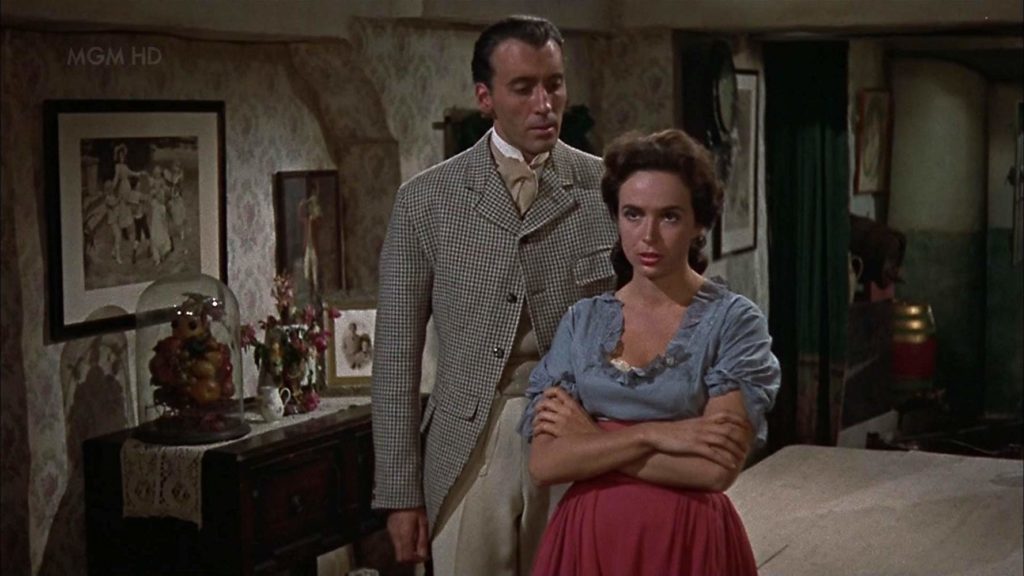
The 1959 version, playing to the studio’s strengths, puts the accent on the horror elements of the novel. Who better than Hammer to give us fog-shrouded moors and ruined abbeys in the English countryside? And who at Hammer better than Terence Fisher to direct? As in another of my recommendations, The Devil Rides Out, Fisher deftly moves from realistic treatment of interpersonal relationships to the more fantastic elements of the story.

Hammer also wisely cast their most reliable stars, Peter Cushing and Christopher Lee, in the major roles of Sherlock Holmes and Sir Henry Baskerville, respectively. Cushing’s interpretation of Holmes is true to the book, rendering the detective as eccentric, brilliant, and not particularly warm. Lee’s performance as well as Peter Bryan’s strong script make Sir Henry a more substantial and engaging character than he is in the book. As mentioned, this particular story also needs a strong Doctor Watson, and André Morell is well up to the task. He eschews the comic elements that Nigel Bruce injected into his portrayal of Watson and instead coveys gravitas, as he also did in some other good Hammer films (e.g., The Plague of the Zombies).

Being a Hammer film, the 1959 version also throws in some décolletage and sex in the person of Maria Landi. Bryan’s script also changes her character’s role from what it was in the book, which may be objectionable to Holmes purists. But I found it a refreshing take, and one that gives the film a more jaundiced take on the aristocracy than did the book and other film adaptations of it.

You can watch this worthy adaptation of a beloved novel for free and legally on Dailymotion.

Some other adaptations which are worth your time: The handsomely produced 1939 version with Basil Rathbone as the great detective; the Livanov/Solomin adaptation from the utterly brilliant Soviet cycle of Holmes films; the little known Sy Weintraub production starring Ian Richardson; and the justly respected Granada Television version starring Jeremy Brett.

And a few to avoid: The disappointing 2002 version with Richard Roxburgh as Holmes; the yet worse Stewart Granger/William Shatner 1972 television version; and the execrable 2000 version starring the guy who played Max Headroom.

Categories
Action/Adventure British

The Sandbaggers

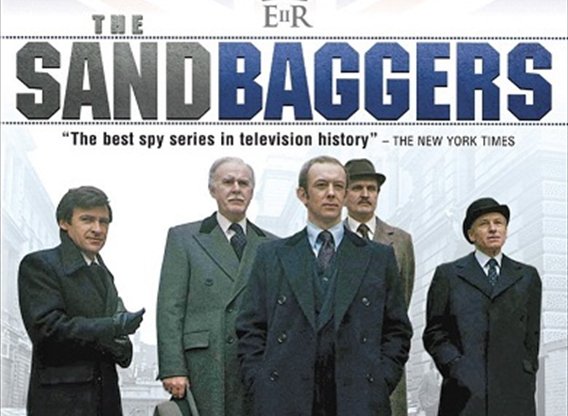
Britain has long managed to turn out espionage films at all points along the dimension that has escapist fare like James Bond and The Avengers at one pole and grey-shaded, unglamorous, works like Smiley’s People at the other. I can enjoy the fantasies as much as the next moviegoer, but the Brit spy films that stay with me and thereby end up as my film recommendations are all from the grimy, realistic, end of the spectrum: The Spy Who Came In From the Cold, Charlie Muffin, Callan, Tinker, Tailor, Soldier, Spy, and the subject of this essay: The Sandbaggers.

Like Callan’s “The Section” this television series focuses on a small team of agents you’ve never heard of: the “Sandbaggers”. These trouble-shooting spies are led by a former sandbagger, the dour, workaholic, Neil Burnside (Roy Marsden, in a magnificently austere performance). Burnside spends as much time fighting Whitehall bureaucracy and careerism as he does his opposite numbers in The Soviet Union, a process that is complicated by his ex-wife being the daughter of the Permanent Secretary at the Foreign Office! (Alan MacNaughtan, succeeding in a markedly different role than he played in the satisfying To Serve Them All My Days).

The cast (including Richard Vernon as “C” looking every bit as much a middle-aged establishment figure as he did in his youth) never put a foot wrong, which is a credit to their own talents as well as that of the primary directors, Michael Ferguson and Peter Cregeen. The show was produced by Yorkshire Television from 1978-1980, and has an unmistakably Northern English chip on its shoulder about London, HMG, and people who went to Eton, which productively accentuates the cynical viewpoint of the series.

The Sandbaggers was scripted by Ian Mackintosh, a former Naval Officer who may have been in the game himself, and who (almost too perfectly) mysteriously disappeared in 1979. Every bit of the show feels real, from the civil service backbiting and hassles (I cringe in recognition at the ongoing subplot of British secret agents having to fly in economy) to the exciting front-line missions of the sandbaggers. And as in real life, virtue often goes unrewarded, many missions fail, and death does not look pretty.

As with many modestly budgeted British television shows of this era, there is no soundtrack or incidental music, only an opening and closing theme over the credits. Luckily, they got Roy Budd (who wrote the immortal music to another of my recommendations, Get Carter) to compose it. As usual, Budd hit it for six.

As a complete work, the first season is the best for overall narrative arc, especially the evolution of the relationship between Burnside and the first female sandbagger, Laura Dickens (Well-played by Diane Keen). But for a single episode that gives you the flavor of the series, I would recommend from Season 2 the nail-biting Decision by Committee.

The Sandbaggers is a 40-year old show and Yorkshire Television doesn’t exist anymore, so I don’t know if it’s still copyrighted or not. But I will channel Neil Burnside and take the risk to tell you that whatever the rules are, an agent with initiative can find almost every episode of the brilliant series on Youtube.

Categories
Foreign Language Horror/Suspense

La Maschera del Demonio

American film fans probably associate Italy first with spaghetti westerns, and next with romances or white telephone films. Few realize that Bel Paese is also the source of some chilling horror fare, including the 1960 film that put Mario Bava on the map: La Maschera del Demonio.

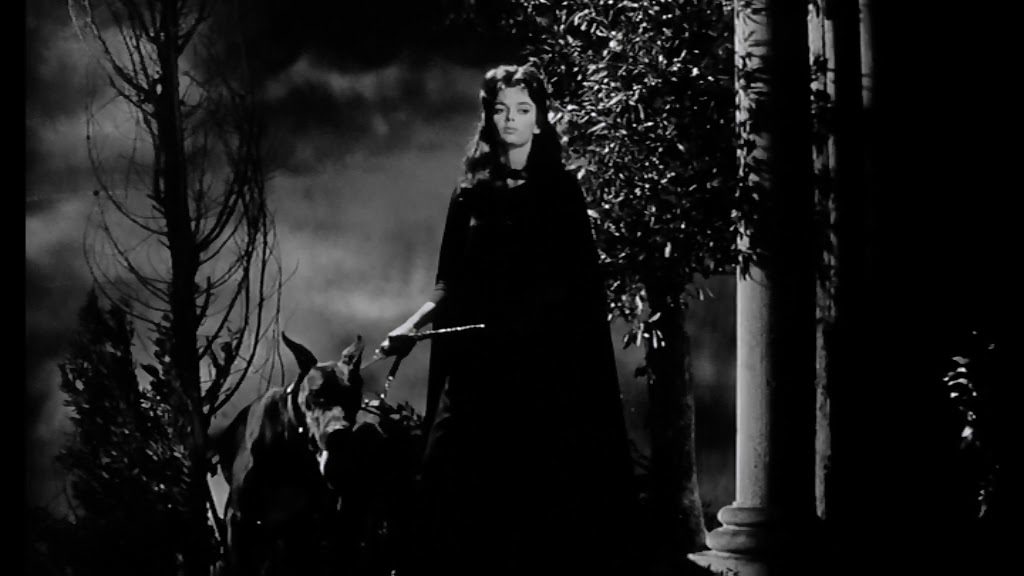
The story opens with a witch (Barbara Steele, in the role that launched her as a genre star) being burned at the stake by a mob of pious, torch wielding, medieval villagers who seem like many other things in this movie to have escaped from a 1930s Universal monster picture (which Bava visibly adores). In a horrific sequence, they brand her with Satan’s mark and then nail a metal mask on her face and also on that of her malevolent henchman. She of course promises that she will rise again to take vengeance. Centuries later, two men stumble into a crypt and discover an ancient stone coffin and, well, you can guess much of the plot from there (again, especially if you watched the 1930s Universal monster movies).

Bava had done uncredited directing by this point in his career, but was mainly known as a cinematographer. Here, he is officially the director, and turns in one of the most atmospheric, visually stunning entries in the horror genre. He respectfully echoes the classics but adds his own sensibility and enormous technical skill to create a landmark in the genre and in Italian cinema more generally.

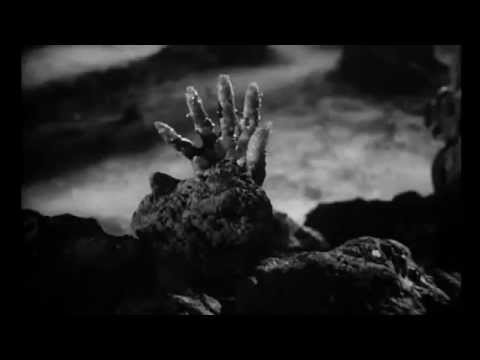
The best way to recommend La Maschera del Demonio might be to simply post dozens of photos. Part of why Bava influenced so many directors was his world-class visual sense: where to put the camera, where and when to move it, and how to create images that rivet an audience. In this respect, La Maschera del Demonio recalls two of my other film recommendations in the horror/thriller genre, Les Yeux Sans Visage and Vampyr. The movie is also flat out scary, with suspenseful moments where you want to look away yet also can’t not watch.

There are multiple versions of this film, for two reasons. First, some of the violence — jolting even by today’s standards — was edited out in some countries (indeed, the UK banned the film entirely). Second, it’s an Italian film, so there was no sound recording on set. The actors were likely speaking different languages, and the language for each target audience was inserted in post-production (The multiple English “dubbed” versions of the film are pretty smooth, so it appears that many of the actors were doing their lines in that language on set). Probably the best version to watch is the completely unedited Italian language version, but the next best is the only slightly edited US version that Samuel Z. Arkoff and Roger Corman released under the titles “Black Sunday” and “Mask of Satan”. You can watch that version legally and for free right here.

Categories
British Horror/Suspense Mystery/Noir

The Innocents

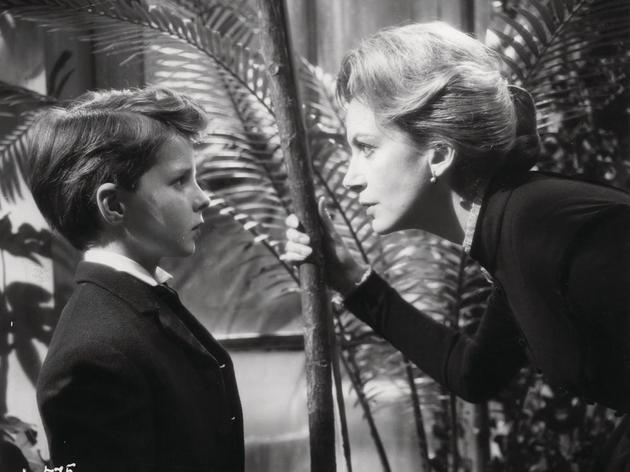
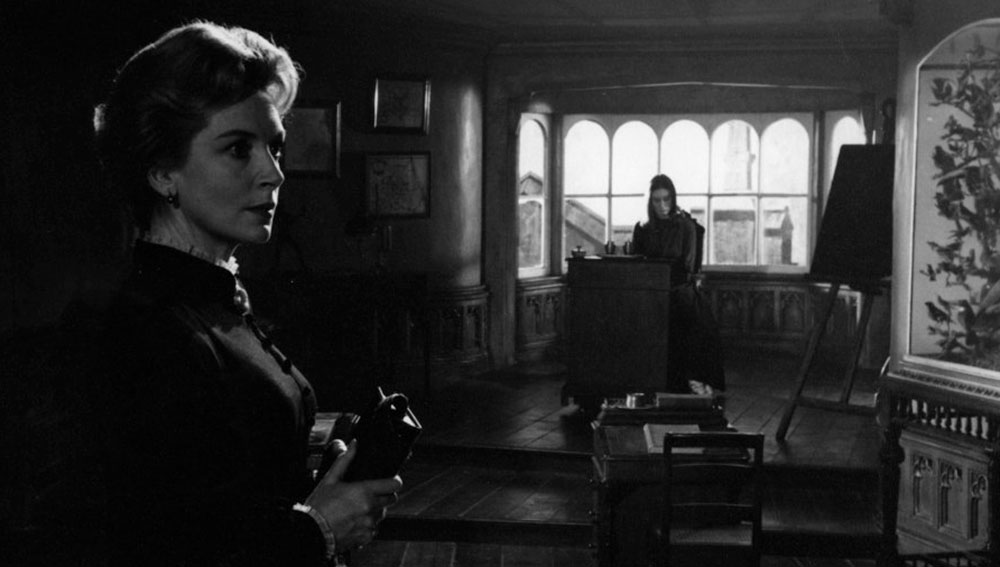
The Innocents 1961, directed by Jack Clayton | Film review

Many an eerie film has been described as a “spine-tingling” experience, but few live up to that description literally for most cineastes. The movie that did that to me more than any other, giving me physical shivers like a bucket of ice down my back, is The Innocents.

Producer/Director Richard Clayton’s 1961 art house thriller demonstrates that a skilled director can jangle nerves without spattering the screen with blood. Clayton started with ideal source material: Henry James’ psychological horror masterpiece, The Turn of the Screw (Although the film’s title comes from William Archibald’s prior effort to adapt the novel to the stage). But Clayton was wise enough to bring in a modern master, Truman Capote, to write most of the script. Capote kept the best elements of the Victorian English novel and suffused them with Freudian overtones and a dose of American Southern Gothic, rotting blossoms and all.

The plot sounds deceptively unoriginal on the surface. A wealthy man uninterested in two child relations (Michael Redgrave) hires a sheltered, rather jejune woman (Deborah Kerr) to be their governess. She moves in to care for them in a Gothic mansion, and the children at first seem wonderful. But strange passions and mysterious events arise which plunge the woman into a terrifying experience. The film, like the novel, leaves the central question of the plot a matter of some ambiguity, making it almost as enjoyable to analyze and discuss as it is to watch.

I don’t know how the 40-year old Deborah Kerr was cast as the lead in this film (unless her governess role in The King and I typecast her), because James’ governess character was originally conceived as a naive woman barely into adulthood who had never been away from home before. Yet Kerr turns in one of the best performances of her storied career, steadily unraveling before our eyes. To the extent the film is interpreted as portraying the psychologically deleterious effects of loneliness and sexual frustration, a 40-year virgin gave Kerr lots of material with which to work her magic.

Astonishingly, the veteran Kerr is matched step for step by the riveting acting of a 12-year old, Martin Stephens. He was already a star in Britain, based in part on his similarly unnerving turn in Village of the Damned. His role here is even more challenging because not only does he need to mix childlike moments with menacing ones, he also has to convey sexual awareness well beyond his years. He manages it all brilliantly.

This is also an amazing looking film, with the gardens and house exteriors (Sheffield Park), and the custom built interior sets contributing to the atmosphere. Even more important is the camerawork of superstar cinematographer Freddie Francis. From the very first shot, he pulls off an impressive array of visual feats, including blackening the edges of many of his interior shots to create a claustrophobic effect, as well amping up the central lighting when needed to get depth of field shots in CinemaScope’s otherwise flat look. Without spoiling the movie, I will just offer that the images from the most frightening scenes of The Innocents have stayed with me forever.

This movie didn’t quite land with audiences or critics when it was released. It was too arty and reserved for fans of more typical horror films of the period, and too traditionally haunted house bound for the arty set. I’m not going to embed the trailer for this reason, because all it does is show that even a major studio with a big promotions department could not figure out how to effectively market The Innocents. Fortunately, as magnificent films sometimes can do, The Innocents gained a larger and larger following as the years went by, until today it deservedly wins a place on virtually every “best horror films of all time” list.

Categories
Action/Adventure Comedy Foreign Language

Ernest & Celestine

I received some nice notes from parents who enjoyed watching my recommendation A Cat in Paris with their kids (as well as from some non-parents who enjoyed it just for themselves). So I return this week to the same terrain with another absolutely charming French-language animated film that was re-dubbed for American audiences: Ernest & Célestine (French/Belgian title Ernest et Celestine).

Based on the popular illustrated children’s books by Gabrielle Vincent, the film relates the tale of two communities that fear and distrust each other. Above ground live the bears, who tell their little children about the mouse tooth fairy who will leave them a coin under their pillow in exchange for a lost tooth, but in their hearts loathe mice (except of course when they want to eat them). Below ground live the mice, who steal the bear teeth to compensate for the loss of their precious incisors. A soulful young mouse named Celestine rebels against a mandated career in dentistry, dreaming instead of becoming an artist. Meanwhile, a ne’er do well bear named Ernest is struggling to make ends meet. Fate brings this mis-matched pair together in a daring robbery spree that advances both of their goals, but also puts the police forces of both worlds on their track.

The film has multiple laugh out loud moments, but mainly it’s a sweet 79 minute smile fest. The joy of friendship and the thrill of rebelling against unfairness take center stage. The animation is marvelous, particularly the surge of color that erupts as Ernest and Celestine’s friendship grows concurrent with the coming of spring.

Although its heroes are a pair of robbers, the film is highly moral. Their victims are an avaricious married couple for whom we feel no sympathy (He sells little bears sugary candy and she sells them replacement teeth after their originals rot away). Even more importantly, the film sends a wonderful message about the power of friendship and understanding to overcome prejudice between groups.

As with a Cat in Paris, the dubbers of the American version did not spare expense in picking the voice actors: Lauren Bacall, Paul Giamatti, William H. Macy, Megan Mullally, Nick Offerman, Forest Whitaker and Jeffrey Wright all essay their parts with gusto. Also on hand is a rising 12-year old talent, namely a pre-Interstellar Mackenzie Foy, who voices our heroine. At the other end of life’s journey, with sadness I note that this was my beloved Bacall‘s last film.

This warm and entertaining movie deservedly carried off a boatload of awards. It’s superlative viewing for the whole family.

Categories
Action/Adventure Mystery/Noir

Plunder Road

Some decades ago, after being up all night playing cards with a Papua-New Guinean family on their first train journey across America, I sat down in the observation car to watch the sun rise over the Utah Salt Flats. A tired-looking middle-aged woman sat down directly opposite me but looked away, as if she had just entered a confessional. She may have been a little drunk or a little hungover, and I may have been too.

“I was a vote counter under Ferdinand Marcos, so I had to flee The Philippines”, she wearily intoned.

Because we were alone in the car, this cryptic remark was clearly an invitation to me. I did not know her name, her background, her motives or even her veracity. But I didn’t need to know them either. She was offering to tell me a story, take it or leave it.

“Tell me about it”, I said.

An extraordinary, tortuous tale followed, commanding my complete attention for some lost amount of time. When she was done relating it, she left the car and I never saw her again. But I have thought about that interaction many times when analyzing movies because it illustrates something important: All an audience really needs is a good story. All the ponderous scripts, lax direction and flabby editing in movies that results in 20-30 tiresome minutes spent telling us about all the characters’ childhoods and marriages and personalities and little quirks before getting to the story can almost always be condensed or eliminated entirely if the filmmakers fundamentally have a good tale to tell. That lesson is beautifully illustrated by the criminally forgotten 1957 crime caper Plunder Road.

The films opens with the execution of what is clearly a meticulously planned robbery of a train carrying gold bars from the U.S. Mint. The four men who pull off the heist barely speak to each other so the audience knows almost nothing about them, not even their names. The audience’s sole insight into their characters comes from brief voice overs of each of their racing thoughts. The thieves move with precision despite the pitch-black night and unexpected driving rainstorm, escaping the scene of the crime and transferring their weighty loot into three separate trucks which they start driving south, hoping to elude a growing police cordon.

Categories
Action/Adventure Mystery/Noir

Farewell, My Lovely

A film critic once wrote of one of my recommendations, the 1998 retro-noir Twilight, that you might have to be over 35 to really enjoy it. That may also be true of this week’s film recommendation, a reverent revival of detective noir starring an old hand at the genre: 1975’s Farewell, My Lovely.

The plot is from a Raymond Chandler novel, so in some sense there is no point in explaining it because his books are more about language and character than storyline (indeed, it didn’t even bother him to realize that he himself didn’t know who committed one of the murders in The Big Sleep). But anyway, private eye Phillip Marlowe is hired by Moose Malloy, a mountain of a man with rice pudding for brains (ex-heavyweight boxer Jack O’Halloran, perfectly cast in his acting debut). Moose lost track of his girlfriend Velma after he went to prison, and now that he is out he wants Marlowe’s help in tracking her down. But every time Marlowe starts to get close to locating her, there is a violent backlash against him, Moose or both. Powerful forces clearly don’t want Velma found, but who are they and what is their motive?

The most famous and lionized adaptation of Chandler’s novel was made in 1944 under the name Murder, My Sweet, with Dick Powell as Marlowe. I have written about how I never quite bought Powell’s transformation from pre-war light comedy/song and dance man to noir tough guy (His contemporary John Payne was more successful). In contrast, the star of the 1975 version, Robert Mitchum, was born for this kind of stuff.

As a world-weary, cynical, Phillip Marlowe, Mitchum carries the 1975 adaptation end to end with aplomb. Many movie tough guys tried to play the invulnerable hero in their autumn years and looked a bit silly or even embarrassing. Mitchum, in his mid-50s, is playing a guy in his mid-50s and he’s just not that tough anymore. Indeed, in this movie, he takes way more physical punishment from the bad guys than he can dish out.

Sylvia Miles received a supporting actress Oscar nomination for solid work here as a boozy floozy, but it just as well might have gone to little known Kate Murtagh for her ferocious performance as a tough-as-nails madam. It’s also fun to see John Ireland, so often the bad guy in the heyday of noir (see for example my recommendation of Railroaded!), playing the “one honest cop” role here. Charlotte Rampling makes a sultry, Bacall-esque femme fatale whose hair is the color of gold in old paintings and who gives a man a smile that he can feel in his pocket (Added fun for noir fans: her screen entrance mirrors Barbara Stanwyck’s in Double Indemnity). Also look fast for a young Sylvester Stallone in a small part.

Director Dick Richards really took a chance in making this old story in the 1970s with no condescension or trendy upgrades. The whole look of the film is a throwback, particularly the almost Sepia Tone color scheme created by the set and costume designers and cinematographer John Alonzo (who also shot Chinatown). If this had been shot in black and white, it could have been released to praise in the 1940s or 1950s. Some critics found that tiresome and affected, but for me this retelling of the classic story is as honest as you can expect a man to be in a world where it’s going out of style.