Categories
Comedy Drama

The Bingo Long Traveling All Stars & Motor Kings

Hollywood has made many beloved films about baseball from Field of Dreams to The Pride of the Yankees. 1976’s The Bingo Long Traveling All Stars & Motor Kings is a lively, enjoyable movie about America’s pastime that like the era it portrays is often forgotten today.

The plot: In the waning days of the Negro League, a free-spirited Satchel Paige-esque pitcher named Bingo Long (Billy Dee Williams, at the peak of his considerable charisma) chafes under the exploitative tactics of his team’s owner. He persuades a fearsome slugger (the ever-impressive James Earl Jones) and a number of other Black players to form their own barnstorming baseball team. Bingo’s motley group includes a slow-witted outfielder (A quite funny Richard Pryor) who thinks he can play in the Major Leagues if he can just persuade white people that he is Cuban or Native American. After the Negro League owners close off the Traveling All Stars & Motor King’s access to other black teams, they begin to play white teams instead. The teammates thus must confront the question that every Black entertainer of the era faced: Is it morally acceptable to clown around in front of white audiences in order to appease the bigots and thereby stay employed?

This is mainly a bright comedy that delivers a few big laughs and many smaller smiles. There are dramatic themes as well. For a Hollywood film, there is more Marxism than one would expect. The white baseball teams of this era were owned by wealthy white people who generally treated their players like serfs. The black teams in this film are owned by wealthy black people who generally treat their players like…serfs. As Jones’ character tells Bingo Long, their team’s struggle for economic independent is not so much about race as it is about how the “workers can seize the means of production”. The story also includes some intriguing (if underdeveloped) observations on race, most particularly in a subplot involving a Jackie Robinson-like member of Bingo’s team (earnestly portrayed by Stan Shaw) who attracts the interest of a white team. Bingo wants the best for him, but also knows that the breaking of Major League baseball’s color line will destroy the all-Black baseball world which he loves.

mqdefault

The only significant weakness of the movie is its uneven tone. First-time director John Badham didn’t quite decide whether he was fundamentally making a comedy or a drama, and he shifts gears back and forth pretty roughly at times. For example, the owners of the black teams are buffoonish villains at one moment, but then order that someone be slashed with a razor the next. As a result, if you look over the careers of the three leads, you will note some more consistently funny comedies and some more consistently weighty dramas than this film.

That said, the entertainment value of this movie is very high end-to-end, and the art direction and set design bring its historical period alive. There are films that are very hard to like, and films that are very hard to dislike. Thanks to its irresistible leads and the window it opens into an aspect of baseball history that Hollywood usually ignores, this film falls decisively into the latter camp.

Categories
Horror/Suspense

Grip of the Strangler

When Jean Kent died, I decided to watch one of her films that I had never seen, and came away happy that I did. In one of her many roles as a naughty British lass, Kent is a chanteuse/madam threatened by a serial killer apparently risen from the grave in this week’s film recommendation: Grip of the Strangler (aka The Haunted Strangler).

This 1958 film has a wonderful backstory involving Boris Karloff. Alex and Richard Gordon grew up loving Karloff in the classic Universal horror films made before the war. When the Gordons were young adults, Karloff’s cinema stardom had faded but he was still working on the London stage. The two fanboys approached their idol, and ever the gentlemen, Karloff treated them kindly. When the great man was 70, the Gordons had the chance they had always dreamed of to produce a movie for him.

The plot is spooky and engaging, mixing elements of Dr. Jekyll and Mr. Hyde, Jack the Ripper and even Frankenstein. You can also see the beginnings of a return to sexual explicitness in British cinema here, particularly in the scenes in Kent’s bawdyhouse (the champagne spill scene with pinup model Vera Day has to be seen to be disbelieved). But those elements work well in the story, which concerns a moralistic late-Victorian Era social reformer (Karloff) who believes a strangler of attractive women is still at large in the streets of London. He’s a hothouse flower of a man who faints when he sees abuse of prisoners, is terrified of rats and is extremely ill at ease interacting with a woman of Kent’s sensually confident ilk. Yet he is also unaccountably obsessed with the strangler’s brutal sex crimes.

It’s not a big budget film, but you largely wouldn’t know it. Director Robert Day started his career as a cinematographer and clearly learned how to use shadows, fog and lighting to keep the audience from noticing any economies in set design and art direction. The professionalism of the cast helps a good deal too. There are some actors who can’t seem to do a B-movie without somehow conveying to their fans “wink wink, I’m phoning in my part just so you know I’m above all this”. But such self-indulgence was unheard of in this era of British film and the result is a much better movie.

Kent is clearly at home in her showy part, even though it is unfortunately smaller than it could have been. Karloff is nothing less than brilliant, conveying his character’s admixture of desire and repression, rage and sadness.

This is not a widely-known film outside of the horror film buff community. But it has captured some important supporters, most notably The Criterion Collection, who have made a pristine print available for you to enjoy.

p.s. SPOILER ALERT: Karloff’s physical transformation is even more impressive when you learn that he did it without makeup!

p.p.s. If you like Jean Kent, I would also recommend Anthony Asquith’s 1950 Rashomon-meets-noir movie The Woman in Question, in which she does well playing the “same” character as perceived very differently by the other main characters.

Categories
Horror/Suspense

Murder by the Clock

In its early days, Hollywood turned out some engaging films about ghoulies, ghosties, long-legged beasties and things that go bump in the night. Let me offer an admittedly off-beat film recommendation from the early days of talkies: 1931’s Murder by the Clock.

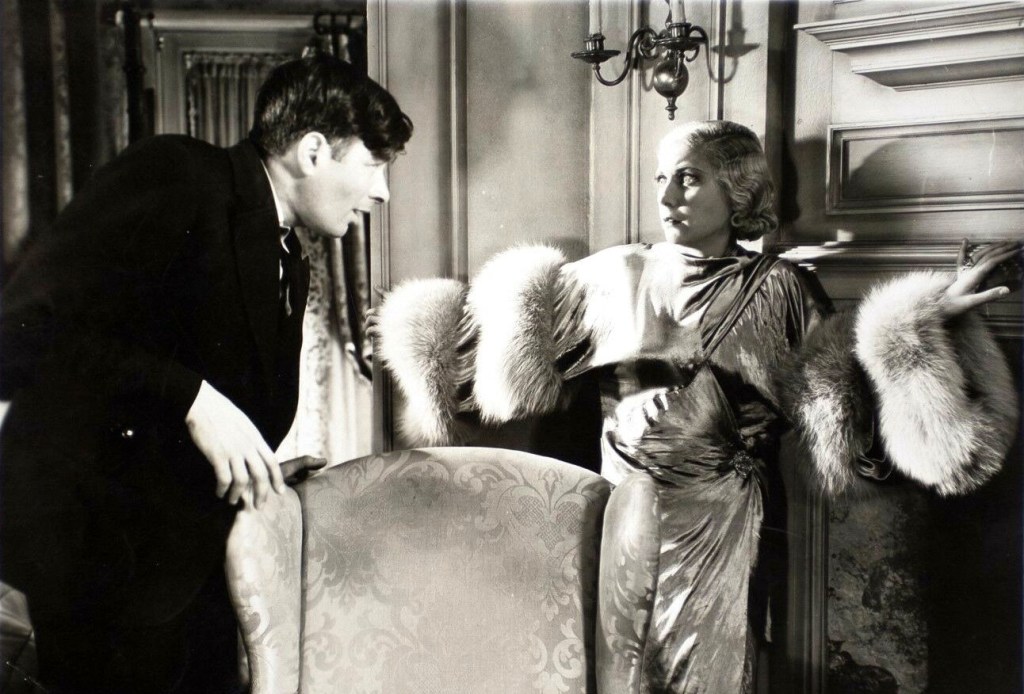
The plot centers on the Endicotts, a wealthy family in decline. The parsimonious matriarch of the clan, Julia Endicott (Blanche Friderici), lives in fear of a Poe-style premature burial and laments the fact that her direct heir is a musclebound half-wit (Irving Pichel, in a quasi-Frankenstein Monster sort of role). Julia reluctantly decides to leave the family fortune to her drunken, ne’er do well nephew (Walter McGrail). But his scheming, sexually voracious wife (Lilyan Tashman) isn’t in a mood to wait for Julia to die of natural causes, and begins using her considerable feminine wiles to get multiple men to work her evil will. Murders and mystery ensue.

Fair warning: Movie sound technology was not well-developed when this film was made. Microphones on the set were few in number, often in fixed positions and of low quality. As a result, actors had to talk more slowly and clearly and not move around too much as they did so. This understandably comes across as stilted to modern audiences. But as with the famous Lugosi/Browning Dracula which came out the same year, if you can let those limits of early talkies go and just enjoy a scary story well told, Murder by the Clock will greatly entertain you.

In style and plot, this film is an agreeable cross between the haunted house pictures of prior years and the monster movies that were just becoming popular (like Dracula, Frankenstein also came out in 1931). The other enormous appeal of the movie is the campy, vampy work of Tashman, in a part that screams “pre-Hays Code”. Dressed in a series of outfits that leave little to the imagination, she sexually disables virtually every male character in the story (Tashman was apparently a sexual dynamo in real life as well, though her energies were usually directed at women rather than men, allegedly including Greta Garbo). Tashman has a lot of fun going way over the top and it’s intentionally funny for the audience too, as were many of the classic monster movies of the 1930s.

The atmospheric photography is another asset of Murder by the Clock, and amplifies the mood effectively. That’s a credit to Karl Struss, one of the first famous cinematographers, who worked with many of the early giants: Murnau, Griffith, DeMille and Chaplin. Struss gives fans of scary movies what they want: eerie shots of dusty secret corridors, foggy graveyards, and killers skulking through abundant shadows

If you just can’t stand the technically-imposed limitations of early talkies, this movie is not for you. But otherwise Murder by the Clock offers creepy, campy fun as well as being of historical interest for its look and pre-Hays code salaciousness.

p.s. Pachel went on to direct an ever better pre-Hays code film that I recommended here two years ago, The Most Dangerous Game. Note also that Murder by the Clock is in the public domain, and you ought to be able to find it for free online.

Categories
Horror/Suspense

Suspiria

Italian producer/director/writer Dario Argento has been an international force in horror films for half a century. His “art house slasher movies” began incorporating supernatural elements in the mid-1970s (e.g., the psychic character in Deep Red) and went further in that direction in his best film, the ultra-stylish, ultra-bloody, and ultra nerve-jangling Suspiria.

The plot: American dancer Suzy Bannion (An intrepid and likeable Jessica Harper) arrives in Germany to attend an exclusive ballet school. Everything at the bizarrely designed and decorated school is wrong from the very first, with students disappearing, teachers engaging in strange behavior and an atmosphere of menace suffusing every room. As Suzy begins to investigate her mysterious surroundings, she comes to suspect that some supernatural evil is at the heart of the school and that it will not rest until she is destroyed.

If you judge horror films in the most elemental way, i.e., how scared will I be?, this 1977 movie is a triumph of the genre. In ways large and small, Argento keeps the audience on edge with very little relief. As in his other films, there is some astonishingly over-the-top gore. But the unique, suspenseful mood of this film is created mainly by an invasive, eerie score, extensive use of anamorphic lenses and other camera trickery, madcap set design and a vivid color scheme (with the accent on red of course…). Even the second time through when I knew what was going to happen, I was still holding my breath and tensing my muscles as I rooted for Suzy to overcome the extraordinary dangers she confronts.

Argento made his bones in a subgenre of Italian film called giallo. One can see those influences here, but its a significant departure from giallo traditions that elevates Suspiria. Giallo typically features strong male characters while portraying women as either psychologically disturbed and dangerous, or, stupid and helpless (the latter type is often murdered in graphic and sometimes sexualized fashion). Argento’s first film, The Bird with the Crystal Plumage, was a big hit in Italy in 1970 and was stylishly made (of course), but its misogyny is off-putting. By 1975’s Deep Red, which more or less reworked the same plot, his protagonist is still male but the female co-lead has gone from being pathetic to competent. In Suspiria, we get an Argento film in which every redoubtable character — good and bad — is a woman. This may sound a strange thing to say about a guy who made slasher movies, but becoming more feminist made Argento and even better filmmaker.

Suspiria (1977) Drinking Game and Podcast | Alcohollywood

All that said, the script of the film is remarkably uneven. Certain scenes emerge from nowhere and plot points come and go. For example, a young man at the school shows interest in Suzy and the audience wonders whether a romance will develop. Will he help her survive the terrors she faces? But like other story threads in the film, this one vanishes with no explanation. Maybe the editor was in a slashy mood himself, but I suspect these discontinuities are simply the result of Argento being more interested in theatrics than the underlying story.

In that respect, Suspiria reminds me of no film more than John Stahl’s famous “Technicolor noir” Leave Her to Heaven. Both movies overcome numerous script problems with incredible sets, atmospheric music, intentionally overstated color schemes and a strong leading female performance. Though different in other ways, both prove that sometimes in cinema, style really can triumph over substance. That’s certainly the case for Suspiria, making it ideal horror viewing for those who are not faint of heart.

Categories
Drama Foreign Language Horror/Suspense

Onibaba


When movie aficionados think of Japan, their minds typically turn to Akira Kurosawa. That’s understandable, as one could make a plausible case for him being the best director in the history of cinema. But Kurosawa is far from the only brilliant filmmaker to hail from the Land of the Rising Sun. Another is writer-director Kaneto Shindô, the creative force behind Onibaba.

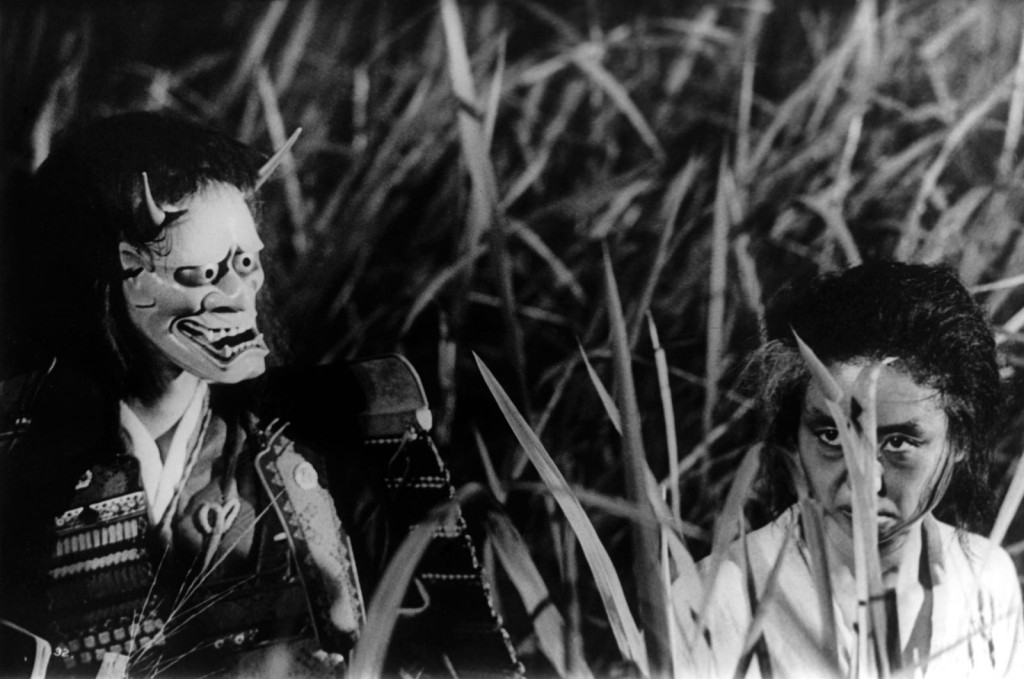
Shot in lustrous black and white under demanding conditions in 1964, Onibaba is a primal, sensual and eerie story of human beings struggling to survive. Emphasizing the mythological nature of the tale and its universal themes, the two central characters do not even have names. The older woman and her young daughter-in-law eke out a living in a swamp by murdering unfortunate soldiers who are lost or are fleeing the battles that rage across 14th century Japan. Strong, complex women characters were one of Shindô’s hallmarks, and he chose brilliant actors here to essay the roles: Nobuko Otowa (his real-life wife) and Jitsuko Yoshimura.

Onibaba (1964) | The Criterion CollectionInto this small, brutal world eventually comes a disruptive force, an ex-soldier played by Kei Satô who informs the women that the link between them is gone: the older woman’s son is dead and the younger woman is therefore now a widow. The ex-soldier moves into the swamp, while keeping a lustful eye on the young woman, whose own uncontrollable sexual yearnings are memorably dramatized by her racing through the tall, undulating susuki grass (truly, the grass forest is the film’s fourth character). The older woman is consumed both by her own sexual frustration and her fear that the young woman will leave her, ending the bloody partnership that allows her to survive. So she concocts an unusual scheme to disrupt the relationship, which backfires as the movie takes a supernatural turn that will resonate with those viewers who are familiar with Buddhist folklore.
myReviewer.com - Review for Onibaba (Masters of Cinema)This is a raw film about how human beings’ animal nature emerges under harsh conditions. On display are unbridled lust, jealousy, greed and violence. Even the way the characters eat suggests animality. Hikaru Hayashi’s one-in-a-million score, a mix of Taiko, jazz and ghostly notes from wind instruments, is the perfect marriage of music with celluloid. Kudos are also in order for cinematographer Kiyomi Kuroda for achieving technical brilliance on a hot, rainy and swampy set (It was so brutal that Shindô allegedly refused to pay the rebellious crew unless they finished the shoot). Like Saed Nikzat, Kuroda has the confidence to hold a still long shot and let the audience experience the environment and characters rather than forcibly directing our attention by moving from one quick cut to another. This is especially effective in his hypnotic, sensual images of the ever-swaying susuki grass forest.

Although the film is perhaps 10 minutes too long, Onibaba is completely original and fascinating. It’s also rather unsettling in the best artistic sense of that word. To fully enjoy this classic of Japanese cinema, try to get your hands on the gorgeous Criterion Collection re-issue.

Categories
Drama Foreign Language

A Time for Drunken Horses

A Time For Drunken Horses review | GamesRadar+

I remember the Kurdish area on the Iran/Iraq border as a land of stunning beauty and inordinate risk. No movie captures both realities better than A Time for Drunken Horses. Made by then-unknown Iranian director Bahman Ghobadi in 2000, it’s the first widely-released film in the Kurdish language, one of many virtues that help it bring alive this part of the world in an authentic way.

The Kurdish villagers (most of whom Ghobadi had play themselves on screen) eke out an existence by smuggling goods back and forth across the snowy, mountainous border. In addition to avoiding border guards who mete out lethal summary punishments, the smugglers must also scramble to evade armed bandits who raid their caravans. Crushing poverty is the lot even of those smugglers who succeed, but they are too economically desperate to abandon their dangerous business. The film’s plot centers on an orphaned family led by a heroic 12-year old boy named Ayoub. He provides for his siblings by smuggling, but his profits are too small to save his deformed, pained, and ill brother Medi. Though an operation will only extend rather than save Medi’s life, Ayoub takes on increasingly dangerous work out of love for his sickly brother.

This is an achingly sad film that tells a painful story in an unsparing fashion (Analogies to Vittorio De Sica’s Bicycle Thieves are inevitable and accurate). But it’s watchable because of the astonishing performances of the young actors and the inspirational courage and love of the family upon whom the story centers. As a director, Ghobadi is wise enough to never descend into mawkishness or to idealize the moral character of the poor, some of whom are portrayed here as greedy and conniving. Nor does he make the mistake of some films of this sort by lecturing the audience (e.g., by having some character deliver an earnest speech about the callousness of wealthy Westerners). Rather, he lets the audience feel their own emotions and draw their own conclusions about the characters’ bleak lives.

The Film Sufi: "A Time for Drunken Horses" - Bahman Ghobadi (2000)

Saed Nikzat’s cinematography captures the harsh gorgeousness of the region. Nitzat also, wonderfully, lets the camera linger in extended shots so that viewers can immerse themselves in the events portrayed rather than have their attention jerked around by constant jump cuts and close ups. The camerawork makes watching this film at times feels like a melancholy form of meditation.

A Time for Drunken Horses is a powerful piece of cinematic art that deservedly raised the profile of Iranian film worldwide. It will not make you happy, but it will stay with you in a way that is precious beyond words.

Categories
Drama

The Intruder

It is pretty hard to imagine a Hollywood Producer sitting in a meeting in 1962 and saying “I want a daring and powerful film about racism in the civil rights era…get Roger Corman and Bill Shatner on the phone pronto!”. Yet the B-Movie king and television’s most beloved overactor did indeed make such a movie, and The Intruder still packs a punch today. .

The story opens with an angelic-looking charmer (Shatner) named Adam Cramer arriving at a small Southern town for the purpose of “social work”. He is boyish and innocent-seeming at first, but it quickly becomes apparent that he is a member of a John Birch-type society and intends to stir up racial animosity concurrent with the arrival of school integration. He preys on weakness in all its forms and foments hatred and violence which spins out of control. Disgusted by Cramer, a fence-sitting newspaper editor (Frank Maxwell) has an attack of conscience and moves to side decisively with integration, at horrible cost to himself and his family.

Maybe because it was his first movie leading role or because Corman kept him under control, Shatner is unusually restrained here and it really works well for him. Then young and handsome, he is particularly effective at portraying seductive yet smarmy sexuality. Most of the extras and small roles were people of the town in which the crew filmed and were eventually chased out of because of the dirty laundry the movie was airing. Charles Barnes as the high school senior leading the first Black students into the previously segregated school movingly conveys strength, dignity and sadness all at once. This was a role from the heart for him as the prior year he had actually done the same thing in real life.

Although The Intruder can be experienced as a film about racism, it can be even better appreciated as a mesmerizing character study. Adam Cramer is a blend of the calm salesman and someone desperate to obtain, a bully and a weakling, an Adonis who is deeply ugly. The development of this strange yet realistic character is the best thing about Charles Beaumont’s script. For someone with a tragically short life, Beaumont had significant artistic impact, including co-creating The Twilight Zone with Rod Serling and going on with Corman and much of the cast here to make the first adaptation of H.P. Lovecraft’s work for the big screen (The above-average horror film, The Haunted Palace).

Corman was known for making cheap, unpretentious grindhouse films about motorcycles, monsters and mayhem (Including Edgar Allen Poe adaptations I recommend here and here). He also, famously, never lost money on a movie. Until The Intruder that is, which was denied bookings in much of The South and in other parts of the country where the film was considered too controversial. It was re-titled multiple times to try to get it into theaters (as “Shame” and later with the cringe worthy exploitation title “I Hate Your Guts!”), but with minimal success. As the film’s reputation grew and it was the subject of some documentaries and festivals, it finally broke even four decades after its release.

The only thing I didn’t love about The Intruder was the climax, which though still downbeat comes out a bit happier than I expect it would have in real life. But if Corman had gone for complete realism his film would never have been released at all. This was daring stuff for its time, and both for its themes and character development The Intruder remains an impressive piece of cinema over 50 years later.

The Intruder is in the public domain and you will be able to find it online pretty easily. It took only the first six minutes for me to be completely hooked.  After you have watched it, you might enjoy this short film about the making of the movie (spoilers).

Categories
Action/Adventure Comedy Mystery/Noir

And Then There Were None


Agatha’s Christie’s tale of 10 strangers on a remote island who are mysteriously killed off one by one has been adapted countless times on stage, on television and on the big screen. But it will be hard to ever top the 1945 version that was the highlight of the otherwise forgettable English-language phase of French film director Rene Clair’s career: And Then There Were None.

The story opens with a wonderful extended non-verbal sequence in which a group of disparate people eye each other curiously on a rowboat that is making its way to a lonely island. They soon discover that they have been invited for a weekend trip from which they are not expected to return. The owner of the mansion in which they are staying had pledged to kill them all as vengeance for their past misdeeds. Who is the killer, and is he — or she — actually one of the guests?

Christie’s story is contrived beyond belief but is so much fun twist by twist that audiences have never cared. The mordant wit is a particular plus throughout, and keeps the audience smiling even as the bodies pile up. The film version uses the more upbeat ending from the stage version rather than the tenebrous wrap up from the book, which was probably a good decision given the wartime audience.

Clair turns in near-Hitchcock level direction in the comedy-romance-suspense vein, and the cast is roses. Barry Fitzgerald and Walter Huston sparkle as the leads, Judith Anderson is brilliant as always as one of the guest/victim/suspects, C. Aubrey Smith offers an agreeably demented take on his Commander McBragg routine, and Roland Young (who was hilarious in my friend Jean O’Reilly’s recommendation of Ruggles of Red Gap) is a hoot as a private detective whose brain works at half speed.

Last but not least among its virtues, this film appeals to a broad age range of audience. I know myself because I watched it twice with a gap of 30 years in between and loved it both times.

And Then There Were None is in the public domain so I embed it here for your viewing pleasure.

Categories
Documentaries and Books

Hollywood Enigma: Dana Andrews

I take a break from recommending movies in favor of recommending the next best thing: A book about the movies! I have always found Dana Andrews intriguing because he was such a towering star in the 1940s, anchoring films of superlative quality that were also wildly popular with audiences, including A Walk in the Sun, Laura and of course The Best Years of Our Lives. But beginning in the 1950s his career dissipated very rapidly and few people today even remember his name. What happened to this talented and toothsome actor, who seemed poised to dominate the screen for decades as did similar performers such as Henry Fonda and Gregory Peck?

That’s one of the central questions addressed by Carl Rollyson’s fine recent biography Hollywood Enigma: Dana Andrews. Nothing else written about Andrews over the years pulls together so many sources of information so skillfully, making this likely the definitive biography of the man for all time. Crucially, Rollyson obtained the support of Andrews’ family and with it access to home movies, letters and anecdotes that get beneath the glossy images that the Hollywood publicity machine creates for its stars.

Rollyson makes clear that Andrews’ path to Hollywood was neither certain nor easy. Dana’s domineering, colorful father was a Baptist preacher in Texas and money was at times tight in the large Andrews clan. Dana and his siblings worked at odd jobs to keep the family afloat, and even as he was later getting a foothold in Southern California theater, he was still driving trucks to make ends meet during The Great Depression. His humble origins may have accounted for why, throughout his life, he remained an unpretentious regular guy more comfortable with the average person on the street than the glitzy Hollywood types who came to surround him when he became a star. It also helped account for him later becoming an avid New Dealer who loathed the political rise of Ronald Reagan (Both Reagan and Andrews would serve as President of the Screen Actors Guild).

Through extracts from love letters Rollyson movingly conveys the central conflict of Andrews’ young adult life. He had moved to California and was excited by what he might achieve there. But he was still strongly attached to his long-time girlfriend back in Texas. A painful choice had to be made and he ultimately broke off the engagement with the girl-next-door and married a woman he had met in his new life. Yet he stayed lifelong friends with his first girlfriend, whom he probably recognized understood him and loved him in a way that the many women who later swooned over the famous star never would.

After success in theater, Andrews began to land movie parts of growing significance. He was the epitome of a certain kind of masculinity that was cherished in that era. Outwardly strong, noble and fearless on screen, he simultaneously conveyed, in a minimalistic and naturalistic way, churning emotion underneath. Clearly, he had a handsome face, but it was what was going on underneath that transfixed most movie-goers. Rollyson dissects Andrews’ most critical roles well, helping the reader understand both Andrews’ talents and how some directors (but not others) knew how to maximize them.

In the mid-to-late 1940s, Andrews was one of the most beloved, most highly-paid movie actors in the world. But how many people remember him today compared to Bogart, Peck and Fonda, or even Fred MacMurray, who attained similar heights in that era? Andrews’ steep decline fascinates Rollyson and he goes a long way towards sorting out why it happened.

Categories
Action/Adventure Mystery/Noir

Where the Sidewalk Ends

In 1944, Andrews and his frequent co-star Gene Tierney, Director/Producer Otto Preminger and Cinematographer Joseph LaShelle made Laura, a classic film of high society longing, love and murder. Take that same foursome, move the story setting down significantly in economic strata and add a dose of brutality and you have 1950’s Where the Sidewalk Ends.

The story, as conveyed through one of Ben Hecht’s many outstanding scripts, centers on Police Detective Mark Dixon (Andrews). Dixon’s hatred of gangsters is legendary, and leads him to relentlessly un-Miranda-type behavior toward thugs. He has a particular grudge against mob boss Tommy Scalise (an oleaginous Gary Merrill), for reasons that are revealed during the film. While investigating a murder in which Scalise is involved, Dixon loses his temper one time too many, resulting in a tragic death which he tries to cover up. He hopes to frame Scalise, but suspicion instead falls on an innocent man (sweetly played by Tom Tully) whose dishy daughter (Tierney) turns Dixon’s head. The dark story twists like a knife from there, up to and including the very last scene.

The film has some superb noir cinematography, with the standout shot being a long, fixed point take of a car with Dixon and some mobsters in it approaching and entering a car elevator (in which LaShelle cannily placed the camera) and then rising up off the screen as the men in the car eye each other suspiciously. There are also a number of arresting shots that draw the viewers’ attention to two distinct points on the screen. My favorite is when Andrews is about to tell Tierney the truth but then turns toward the viewer, his face partly shaded. She then talks over his shoulder at the camera, as his face is transfixed with shame and doubt. Preminger set up many scenes this way in his career, challenging the viewer to track both external action and internal reactions in the same shots.

Who gets the credit for these effective framings and the movie’s overall cool look? I have written about how some directors are more controlling than others of the camerawork. Preminger was a legendary martinet on the set, so one can presume at least some of the photography set ups were his idea. On the other hand, LaShelle was an excellent cinematographer not just in the half dozen films he made with Preminger but also without him: He was nominated for an Oscar nine times! So credit both of them for an effective collaboration, especially LaShelle because Preminger could be such a domineering artist.