Categories
Action/Adventure Drama

Breaker Morant

The Clear Eyed Cynicism of Breaker Morant | The Curb

Arguably the best movie of Australia’s New Wave is 1980’s Breaker Morant. As the title character in Director Bruce Beresford’s movie, Woodward delivers a performance with such psychic weight and that it will stay in your mind and heart long afterwards.

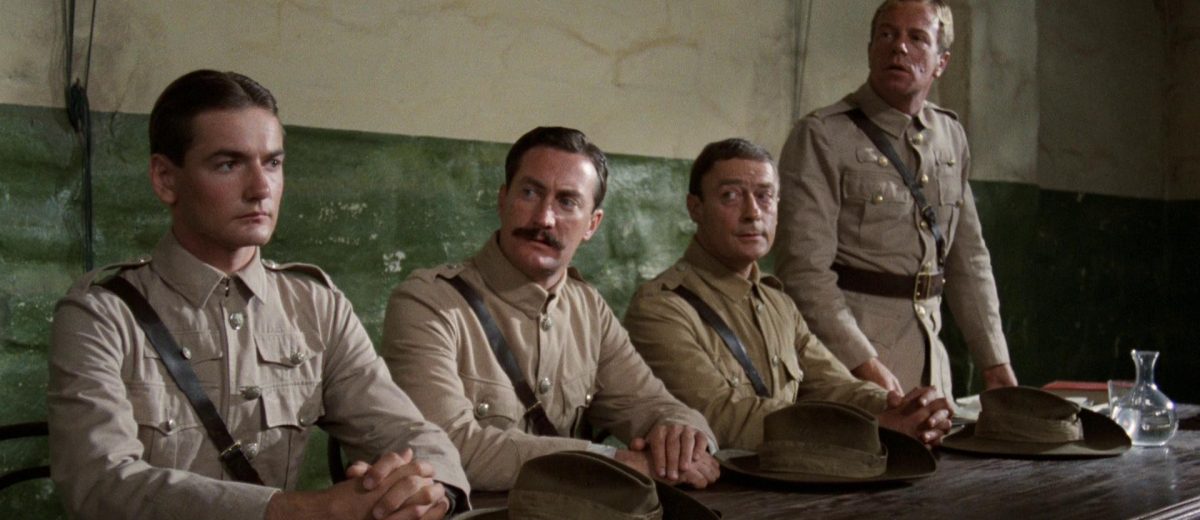
The story takes place in the waning days of the Boer War, where the battered but still undefeated Dutch immigrant guerrillas continue to resist a much larger British force. To face down the remaining renegades and their ungentlemanly military tactics, the British create an unconventional counter-insurgency force called the Bushveldt Carbineers. The Carbineers are mainly colonials, and include the poetry-writing, cynical and heroic Lt. Morant (Woodward), the free-spirited and lusty Lt. Hancock (Bryan Brown), and idealistic junior officer George Witton, who believes in the goodness of The Empire (Lewis Fitz-Gerald). As the film opens, these three Australians are being court-martialled for shooting Boer prisoners. That they committed the act is never in doubt, but they claim they were following orders from the British high command. Meanwhile, because the British see a conviction as essential for facilitating a peace settlement, they deny complicity and stack the proceedings against the defendants in every way possible.

This is the movie that brought Bruce Beresford to the attention of Hollywood, where he later directed Tender Mercies and Driving Miss Daisy. There are a few overly theatrical moments in the film, but overall this is highly accomplished directorial work by Beresford. He also contributed to the superb screenplay, along with Kenneth Ross (who wrote the play), Jonathan Hardy and David Stephens.

Under Beresford’s watchful eye, the entire cast is riveting, including the three actors playing the accused and Jack Thompson as their initially unpromising but ultimately crafty defense counsel. The smaller parts are also well-turned, with not a weak performance anywhere.

Woodward, though British by birth, had a long lasting affinity for Australia and could claim many fans there (including from his music hall tours as a singer) before he made this film. He deservedly expanded that fan base with his bravura performance in Breaker Morant, not just in Australia but world wide. His acting here recalls Michael Kitchen’s style in that he is the most magnetic when he is not speaking. Sadness, pain and well-earned disillusionment are visible in his gestures, his eyes, and his weather-beaten mien. Foreknowledge of doom hangs over his every scene in this film.
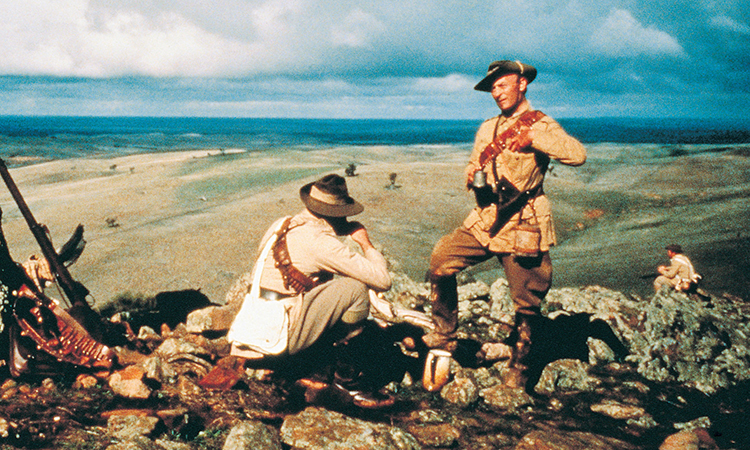
Donald McAlpine’s cinematography, with Australia standing in for South Africa, is also a major asset. Shooting in lovely physical terrain, he did everything he could with lenses, filters and exposures to emphasize its bleakness. Lush and colorful outdoor scenes would have otherwise contrasted too much with the downbeat tone of the story.

The film also contains intriguing historical nuggets about the Boer War, the conflict that opened the bloodiest century of military conflict in human history. The war gave us the word “commando” and the term “concentration camp”. The Carbineers were the first special forces unit to employ COIN tactics. And the court-martial portrayed actually happened, although the film is based on a book (“Scapegoats of the Empire”) which told the story entirely from the side of the accused and therefore may not be completely accurate.

Breaker Morant is a devastating, brilliant piece of cinema, a Caine Mutiny of its time. Australia cinema has clearly arrived on the world stage.

Categories
Action/Adventure Mystery/Noir

Timetable

Many movies start out creative and intriguing but then at some point lapse into formulaic filmmaking, thereby disappointing the viewer. Mark Stevens’ 1956 film noir Timetable is an admirable example of the reverse phenomenon, a movie that starts out in familiar territory but ends up somewhere far more engaging: .

The film opens with an ingeniously plotted robbery on a train, pulled off by an icily calm physician (Wesley Addy, a durable TV actor who is very good here in a rare big screen appearance). The case is investigated by a seasoned by-the book police detective (played Joe Friday-style by King Calder) and an eminently respectable insurance investigator named Charlie Norman (Mark Hopkins). For the first 20 minutes, Timetable is a solid but unremarkable police procedural as the two heroes track down the robbers. But then comes a superb twist that drives the story into deep film noir territory, allowing Aben Kandel’s script to dig into themes of lust, middle-class alienation and deceit. The next hour of the film is thus unexpectedly suspenseful and powerful, raising the movie into recommendation-worthy territory.

I admire the control Mark Stevens took over his career in the 1950s. He was stuck in a “road company leading man” spot with the big studios, so much so that even when he anchored a good film he got fourth billing! (The Dark Corner). So he struck out on his own by directing, producing and starring in his own movies, including Timetable, where he does good work in all three capacities.

A few other notes about the film. Jack Klugman, as a luckless criminal named Frankie Page, made his big screen debut here. This is also Felicia Farr’s first film, but she was underutilized I think. Finally, on a silly note, this movie inspired an essay on how little money weighs in the movies.

My belief is that Timetable is in the public domain, so I am going to post it right here for you to enjoy. It’s 80 minutes well-spent.

Categories
Drama Mystery/Noir

Gilda

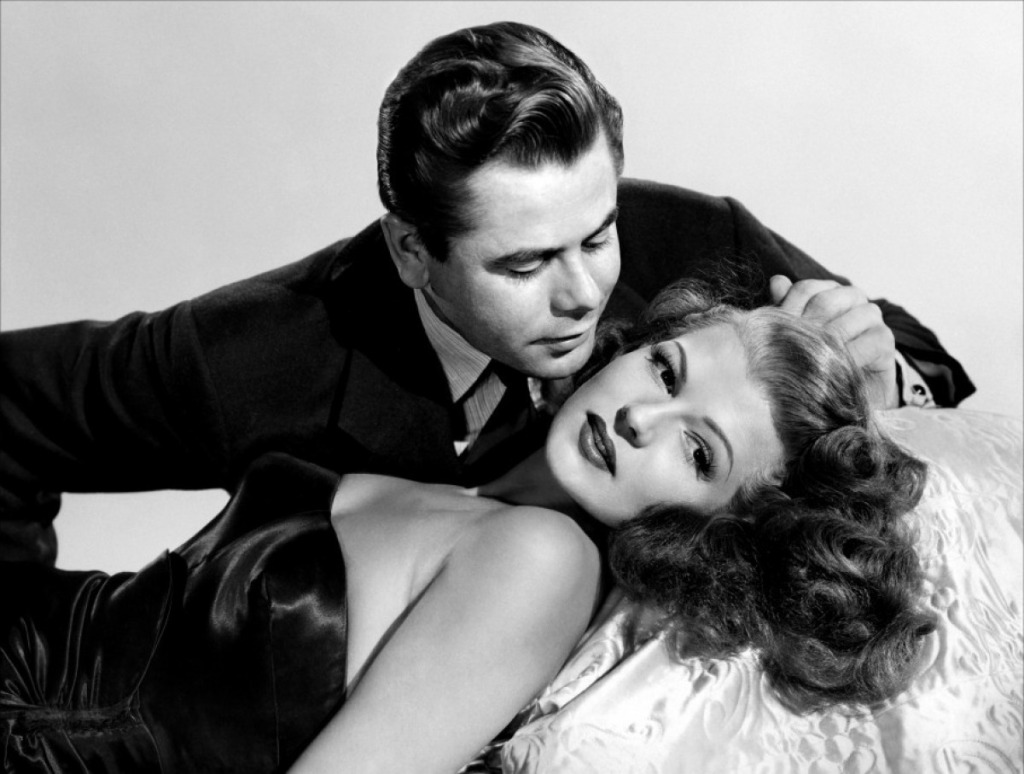
Rita Hayworth was a big singing and dancing star of musicals in the early 1940s, but the film that made her an international sex bomb (literally) wasn’t released until 1946: Gilda.

The plot, which echoes Casablanca in a number of respects, concerns a love triangle in a faraway land, in this case, Argentina. Johnny Farrell (Glenn Ford) is a cocky grifter who is on his uppers. He is saved from a mugging by a mysterious and rather menacing casino owner named Ballin Mundson (George Macready) whom he subsequently manages to talk into hiring him as an aide-de-camp. All is well for a time, though Johnny suspects that the casino is only a front for Mundson’s other, more shady, business. But before you can say cherchez la femme, their relationship changes for the worse when Mundson marries a sizzling beauty named Gilda (Hayworth), with whom Johnny has an unhappy history. Thus commences a love-hate-love relationship in which Johnny and Gilda torment each other while Ballin begins to suspect the truth about their former relationship. Meanwhile, both the police and Ballin’s criminal associates are closing in on his other lucrative but illegal line of work.

This is a star vehicle for Hayworth from the famous moment she first appears on screen with a sensual toss of her hair. She gets to sing and dance as well as act, most legendarily in her striptease style number “Put the Blame on Mame”. Countless American men (and no doubt some women) were sexually enthralled with her forever after.

I know too much about Hayworth to have such an uncomplicated reaction. I feel sorry for Margarita Cansino, the pudgy Hispanic girl and incest victim whom Hollywood turned — at the cost to her of physical and emotional pain — into Rita Hayworth. She never got to be who she really was and virtually every man in her life, starting with her father, exploited her. It’s a credit to her strength that despite understandable, significant emotional troubles she managed to always pull things together on screen throughout the 1940s and be a terrific movie star. Gilda is generally considered her finest hour, and with good reason.

Even though it’s Hayworth’s film, two other aspects of it are extremely compelling. The first is Glenn Ford. He’s kinetic on screen, a man always appraising every angle in search of some advantage. He also manages, despite not having classically handsome Hollywood-type features, to convey enough sexual attractiveness that Hayworth’s desire for him is entirely believable.

The other thing I adore about this movie is Rudolph Maté’s camerawork, which is completely arresting beginning with the opening, rising shot of those big rolling dice. I have praised him before for his work on Vampyr, but the tools of cinematography came a long way technically since that early film. And boy, does Maté take advantage. Perfect use of light and shadow, deep focus shots, close-ups at critical moments, it’s all here in the hands of a master. And thank you again UCLA Preservation team for this crystal clear, gorgeous restoration of the print.

The performances and the cinematography help make up for an uneven script, which may simply have had too many cooks. There are some lines to die for, and some sharp dialogue, but the plot structure of the last third is unnecessarily clunky in some respects and too pat in others. Still, Gilda is a very fine film noir that completely holds up almost 70 years later.

p.s. The conventional take on Bosley Crowther’s career as a NYT film reviewer is that he lost touch with modern tastes in the late 1960s (His repeated trashing of Bonnie and Clyde being the death-knell) after a long and distinguished career. But if you read his obtuse, inept review of Gilda twenty years earlier, you will see that he never really knew what he was talking about.

Categories
Drama

The Bishop’s Wife

The only people who grow old were born old to begin with.

If you were asked to recall a 1947 Christmas movie that was nominated for a best picture Oscar, you would probably come up with the famous Miracle on 34th Street. But remarkably, it was only one of two Christmas films so honored that year. The other was The Bishop’s Wife.

Anglican Bishop Henry Brougham (A miscast but appealing David Niven) is under strain as he attempts to raise money for a new cathedral. Donations are not arriving, and the wealthiest woman in town (Gladys Cooper) will only help if the building is made into a tasteless monument to her late husband. Meanwhile, since becoming an Archbishop consumed with finances and grandiose plans, Henry has been drifting apart from his long-suffering wife Julia (the ever-luminous Loretta Young). He prays to God for aid and a friendly, dashing, sharply dressed fellow arrives at his office (Who else but Cary Grant?). Calling himself Dudley, the new arrival says he is here to help, which Henry takes to mean help raising money. But Dudley spends most of his time trying to restore Julia’s happiness instead, much to Henry’s irritation.

Some films live or die on the strength of a star’s charm, and this is an example of a film living, indeed thriving, on the charm of the inimitable Grant. Director Henry Koster seems to have instructed every female member of the cast to swoon upon meeting him, and it’s utterly believable given with warmth and gentleness that the handsome Grant radiates in ever scene. Loretta Young’s devout-and-goodly performance is perfectly matched to Grant’s, as the story requires their relationship to be intimate but at the same time innocent. She was at the peak of her powers in 1947, during which she not only garnered raves for her role in the Bishop’s Wife but also won a Best Actress Oscar for The Farmer’s Daughter.

Grant and Young get strong support from the rest of cast, particularly Monty Woolley as an atheistic retired college professor who is an old friend of Julia and Henry’s. The Robert Mitchell Boy Choir are also on hand for a mellifluous number in Henry’s former and very poor church, a symbol of the simpler faith and life that he has lost.

The Bishop’s Wife rewards the eye as well as the heart, thanks to Gregg Toland being behind the camera. The town looks lovely, peaceful and Christmassy as can be. And Toland gets to be Toland: in my favorite shot in the movie (above), the characters slowly accrue at different depths away from Grant, who is making an emotional and religious connection to Henry and Julia’s little girl (played by Karolyn Grimes, who essayed a similar role in It’s a Wonderful Life).

The Bishop’s Wife is not a film for the cynical nor for those hostile to religious messages. But if the Christmas spirit ever animates your heart, you will find much to love in this extraordinarily sweet movie.

I embed below the amusing “un-trailer” of the film, featuring the three leads and absolutely, positively no spoilers.

Categories
Comedy Romance

L.A. Story

Ever wonder what the result would be if Steve Martin tried to make a Woody Allen movie? You will wonder no longer after watching 1991’s L.A. Story.

The plot concerns wacky L.A. weatherman Harris Telemacher, who is in a mid-life rut. His extremely high-maintenance girlfriend (Marilu Henner, just perfect) is emotionally distant, his TV job is empty-headed, and something is missing at the heart of his life. But then he gets some mysterious advice from an electronic billboard(!) and wild events of a meteorologic and romantic nature ensue, centered upon a lovely British journalist whom he find irresistible (Victoria Tennant). Meanwhile, L.A. is L.A., and is as much a character as any of the actors in this sweet and funny film.

Martin shines here both as a screenwriter and actor. His script is filled with laughs, including a number of literate in-jokes. It also includes a surprising amount of warmth, which Martin and his then-wife Tennant bring across beautifully as their love develops. Life in L.A. is parodied well, but Martin isn’t as bitter as Woody Allen. The result is more gentle fun-poking than lacerating humor.

This film was an early career success for Sarah Jessica Parker, who is appealing as SanDeE* (Not a typo). People who think that Zoey Deschanel invented the manic pixie dream girl need to see Parker in this film. In the first-rate supporting cast, Patrick Stewart does particularly well as the contemptuous head waiter at L’idiot, Woody Harrelson makes a fine boss/jerk and Richard Grant is sympathetic as Tennant’s lonely ex-husband.

But the producers made one TERRIBLE judgement, which is that they cut for running time’s sake the most funny supporting performance in the film: John Lithgow as agent Harry Zell. His scene re-emerged on cable rebroadcasts and the 15th anniversary DVD re-issue, so try if you can to get your hands on those because Lithgow is absolutely gutbusting.

There are moments when the film may strike some viewers as slowly paced or a bit precious, but it always gets back on track comically and dramatically in short order. Hooray for Steve Martin, who worked on the script for a number of years and managed to capture the foibles and virtues of Los Angeles and its denizens in an affectionate and highly entertaining way.

Categories
Action/Adventure British Drama Mystery/Noir

The Spy Who Came in From the Cold

What the hell do you think spies are? Moral philosophers measuring everything they do against the word of God or Karl Marx? They’re not! They’re just a bunch of seedy, squalid bastards like me: little men, drunkards, queers, hen-pecked husbands, civil servants playing cowboys and Indians to brighten their rotten little lives.

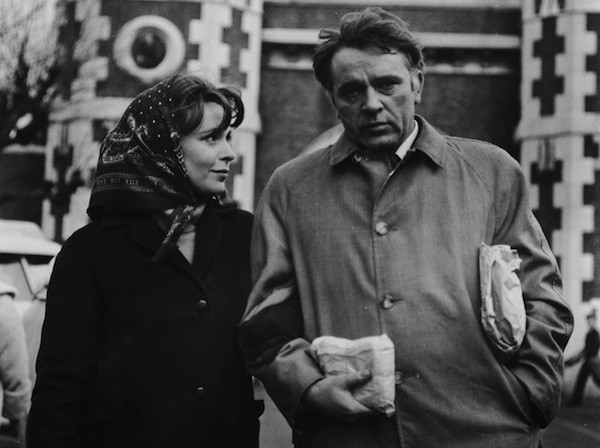
So says disillusioned British secret agent Alec Leamas (Richard Burton) in perhaps the best effort to adapt a John le Carré novel to the big screen: 1965’s The Spy Who Came in From the Cold. The serpentine plot concerns a burnt-out spook who enters a downward spiral of booze, self-hatred and lost faith after a disastrous mission in Berlin. But then it turns out that Leamas’ decline and despair is a ruse (?) play-acted at the behest of his superiors. As planned, he is recruited by the other side and ends up trying to discredit East German intelligence head Hans-Dieter Mundt (A cold, effective Peter van Eyck). Leamas undermines the ex-Nazi by feeding false (??) information to Mundt’s ambitious, Jewish deputy Fiedler (Oskar Werner, very strong here). It’s a difficult, high-risk mission, but Leamas knows that his boss back home is 100% behind him (???).

This may be the most magnificent performance in Richard Burton’s career, and will definitely please all fans of rotting charm. Drinking heavily in real life at the time, he was willing to expose his own capacity for ugliness and decay in a way that many glamorous stars of his era would not have dared to do. He exudes bone crunching hopelessness and isolation in shot after shot: Leamas alone on a park bench, alone in a bar, alone in his bed, alone chained in a cell. He’s devastated and devastating.

A 15 minute sequence of scenes in Britain is a masterclass in cinematic storytelling. It’s unsettling yet fascinating as Leamas repeatedly gets pissed and wanders through empty streets. Ultimately, he savagely beats an innocent man (Did the filmmakers cast for this part Bernard Lee — M from the flashy, unrealistic James Bond series — to make a point?). His copybook blotted, Leamas is judged “turnable” by the other side. After being released from jail, he is recruited by the Soviets in a sleazy men’s club by an unctuous businessman and a pathetic, gay procurer (Robert Hardy and Michael Hordern, respectively, terrific actors who clearly understood that there are no small roles).

The romantic aspects of the story also work well and become more important as le Carré’s ingenious plot unfolds. Claire Bloom is credible and sympathetic as the British would-be communist, who as Leamas puts it believes “in free love, the only kind I could afford at the time”. Leamas’ lacerating disdain for her naiveté reveals the depths of his own self-contempt: She may be immature in her politics but who after all is the one risking his life and doing horrible things in a struggle over the very same politics?

And Then There Were None, The Spy Who Came In from the Cold ...

Rarely has the look of a movie more perfectly captured its mood, and that’s a credit to Oswald Morris. Without any conscious intention, I think I have recommended more films shot by Morris than any other cinematographer. He was a remarkably unpretentious professional who maintained an astonishingly consistent quality in his work for 6 decades (He lived to age 98). It was a bold and brilliant choice to make this movie in black and white, which let Oswald create a washed out look that matches the bleak tone of the story. As much as the excellent acting, what stays with the viewer are Oswald’s shots of complete desolation both during Leamas’ alcoholic, putatively free, British wanderings and his time in East German captivity.

The other delight of this film is that it never condescends to the audience by over-explaining. With each double and triple cross, rather than clumsy exposition, director Martin Ritt simply gives us Burton’s face, as the mind behind it struggles frantically to make sense of the latest shift in the icy wind. A small example of the film’s understated, even at times cryptic, storytelling style is the scene where Fiedler asks for some paperwork from his underling Peters (Sam Wanamaker, memorably creepy). The seated, lame, Wanamaker extends his hand but not far enough. Rather than step forward, Fiedler waits until Peters struggles to his feet and hands it to him. Leamas chuckles derisively. The subtext which the film expects you to understand: Fiedler is the boss but as a Jew, he will never be fully respected by his German underlings. A small moment, a sly moment, a powerful moment, brought across with no comment other than Leamas’ mad laughter at Peters’ expense.

Touches like that are a key reason why The Spy who Came in from the Cold is completely engrossing. Fans of espionage films simply cannot miss this landmark movie.

p.s. If you like this movie, you might enjoy two of my other recommendations. Though not as good as this film The Deadly Affair is a solid effort to adapt le Carré’s first novel to the big screen. And the astoundingly brilliant Tinker, Tailor, Soldier, Spy is the best effort to adapt le Carré to television.

p.p.s. I also recommend Antonia Quirke’s elegiac FT essay on the battered, shattered Richard Burton and his iconic dingy overcoat.

Categories
Action/Adventure Mystery/Noir

Railroaded!

Anthony Mann is justly revered by film buffs for his noir westerns with Jimmy Stewart, but he alo essayed more traditional urban noirs. One of the best is his 1947 low-budget triumph, Railroaded!.

The film opens with a high-voltage portrayal of a blown stickup, as some luckless bad guys fail to get away clean while robbing a gambling joint, despite having inside help. But the heart of the story comes after the opening fireworks, as the lead gunman (John Ireland) and his boozy floozy (Jane Randolph, who excelled in these kinds of roles) frame an innocent man (a sympathetic Ed Kelly) for the crime. A police detective (a pre-Leave it to Beaver Hugh Beaumont) at first isn’t convinced that the guy in the frame is innocent, but is persuaded to investigate by the attractive, goodly sister of the accused (Sheila Ryan). Action, suspense and romance ensue.

This film was made on Poverty Row, which churned out low-budget B-movies until its business underpinnings were destroyed by the Paramount Supreme Court Case, which I have written about before. The budgets of Poverty Row studios were too small and the films were shot too quickly to consistently achieve quality, but these studios were also a playground for talented people who went on to better opportunities later, including Anthony Mann. The Poverty Row studios were also more comfortable pushing the envelope with the censors, an example in Railroaded! is that when the slatternly Randolph and the saintly Ryan meet in this movie, they get into an extended brawl! (Nice touch by the way: They were dressed in inverted colors for the fight, Ryan all in sinful black, Randolph in angelic white).

Railroaded!, in addition to being an exciting story on its own terms, shows how creative filmmakers can overcome low budgets. They were smart enough to cast the tough and credible up-and-comer John Ireland when he was still a cheap date, just before his star was about to shine in Red River and All The King’s Men. The noir lighting and plenty of closeups keep the viewers from contemplating the cheap props and sets. And Mann’s brisk pace (the film is not much more than an hour long) stops anyone from thinking too hard about some of the less plausible aspects of a script, which would have benefited from one more rewrite to iron out some plot contrivances.

By the way, Hugh Beaumont isn’t the only person in this tough, dark crime movie who went on to inordinately wholesome TV stardom. Ellen Corby, who later became Grandma Walton, appears uncredited as Mrs. Wills.

In summary, this is a remarkably solid and entertaining movie given that its budget was probably around two bits. I believe the poverty row studio movies are in the public domain at this point, so I am posting Railroaded! right here for you to enjoy.

Categories
Action/Adventure British Mystery/Noir

The Scarlet Claw

Of the many film series of the 1930s and 1940s, Sherlock Holmes stood out both for its watchability and its unusual provenance. It was launched at 20th Century Fox in 1939 as a high-end period production. But after two very strong films, The Hound of the Baskervilles and The Adventures of Sherlock Holmes (my recommendation here), Fox unaccountably dropped the series. Enter Universal Studios, who retained the lead actors and moved the series to modern times (Partly for WWII morale building and partly as a cost-cutting measure). Universal made a dozen modestly budgeted Holmes films in rapid succession over the next four years. Financial constraints and breakneck speed of production were no barrier to quality in this case. None of the films are bad and several are outstanding, including 1944’s The Scarlet Claw.

The plot: Holmes and Watson are in Canada, participating in a conference about the occult. Holmes’ open skepticism about the supernatural irritates the organizer, Lord Penrose (Paul Cavanagh). Penrose gets a message that his wife has been murdered, and the meeting is abruptly adjourned. Holmes presently receives a telegram sent by Penrose’s wife just before her death, saying that she feels she is in grave danger and wants Holmes to help her. Despite Lord Penrose’s hostility to him, Holmes sets off for the fog shrouded town of La Mort Rouge, where the locals believe a monster is ripping the throats out of livestock and also people. The monster is targeting particular individuals for some mysterious reason…can Holmes discover the motive behind the grisly crimes and save the next intended victim?

The heart of the Universal series are the triumvirate of Producer-Director (and in the case of The Scarlet Claw, co-screenwriter) Roy William Neill and stars Basil Rathbone and Nigel Bruce. With his mien, delivery and intelligence, Rathbone was born to play the king of detectives and he defined the role for a generation through appearances on radio, television, film and stage. Neill and Bruce decided to make Watson much more comic than he was Doyle’s stories, which irritated some Baker Street Irregulars. If you can let that go and just take the performance for what it is, you will appreciate that Bruce is indeed agreeably funny in the role and also contributes some moments of emotional warmth which balance out his calculating machine of a friend.

The Scarlet Claw (1944): Fear and Flannel | Nitrate Diva

The Scarlet Claw is a high point of the series in part because it feels like an old-fashioned Victorian Holmes story even though it is set in the present day. Unlike in prior entries, Holmes is not battling Nazis but a killer who is (as in many of the films) a pastiche from the original stories. The moody, dark surroundings in rural Canada could easily pass for the Baskerville estate in Dartmoor. Also on display are some first rate make-up and special effects work, which is essential to the story for reasons I will not reveal. The film is also the career highlight of little-known British character actor Gerald Hamer, who makes the most of the opportunity to demonstrate his versatility as a performer. Cavanagh, a handsome, solid B-movie actor with aristocratic bearing who appeared in several films in the series (Including the House of Fear, which not incidentally recycles sets from Sherlock Holmes Faces Death) and also in another of my recommendations, (The Kennel Murder Case) is fully at ease in the role of Lord Penrose. The script is strong and Neill by this point in the series had mastered every aspect of how to create fine Holmesian cinema. The result is a skillfully made, suspenseful mystery.

More generally, as a body of work, the Universal Sherlock Holmes films depart too significantly from the original stories for some people’s tastes, but in performances and atmosphere they stand shoulder to shoulder with the tremendous Soviet Livanov-Solomin and British Granada television versions as high-quality, sustained efforts to adapt Conan Doyle’s beloved stories to the screen. Also, the prints of these films have been beautifully restored by the angels at the UCLA film preservation archive. Scarlet Claw is my favorite, but you could pick up almost any of the Universal series and have a fine evening watching the world’s greatest detective work his magic.

Categories
Action/Adventure Mystery/Noir

Point Blank

The above is one of the many memorable shots (accompanied by even more memorable sound!) in this week’s film recommendation, Director John Boorman’s outstanding 1967 US debut film: Point Blank. Point Blank weds the style and techniques of 1960s experimentalism with the traditional gangster/crime melodrama, with unique and unforgettable results.

The film begins with a literal bang, pulling us into a world of brutality and revenge. And then a strange, almost unbelievable story begins as a criminal named Walker who by all rights should be dead (Lee Marvin, in a powerhouse performance) somehow overcomes his fate and launches a ferocious, violence-filled pursuit of former navy buddy Mal Reese (John Vernon, in a strong cinema debut) and his own faithless wife (Sharon Acker, also very good) who betrayed him during a stick-up. He is aided by the mysterious Mr. Yost (Keenan Wynn) who appears at odd moments to provide advice, speaking to no one but Walker. Is Yost a ghost? Is what we are seeing all the fantasy of a dying man, or is it real? I’ve seen this film multiple times and I still can’t decide; I also can’t stop re-watching this magnetic piece of art.

Adding to the atmosphere is radical use of color that recalls Red Desert. Watch carefully the progression of monochromatic scenes in this film (at left is one of the “yellow” scenes with screen siren Angie Dickinson playing Walker’s sister-in-law), which resonate with Walker’s emotions and the state of his quest. Distorted microphone effects, camera shots and the like are also used to tremendous effect, as are dreamlike scenes without any dialogue (or in one case, only half of a conversation, an amazing improvisation by Marvin). Phillip Lathrop contributes many moody, lonely camera shots that further accentuate the film’s tone. The story, which was based on a Donald Westlake novel, also pushes the boundaries of the period, with graphic violence and the strong suggestion of a sexual link between the two male leads.

The studio executives hated the movie that their young director had created, but Lee Marvin used his enormous star power to ram it down their throats as is. There was clearly more to the man than his drunken brawler image. I can’t say enough good things about what he and Boorman created…don’t miss this one, and have fun analyzing it afterwards!

p.s. Intriguing interview with Boorman about his career available here.

Categories
Action/Adventure Mystery/Noir

The Chase

The Chase is an obscure, strange, yet compelling 1946 film noir. Made through low budget studio Monogram but released by United Artists, this off-beat movie is not for all tastes, but has developed a cult following among fans of the genre.

Based on a Cornell Woolrich’s pulp crime novel, the film tells the story of Chuck Scott (Robert Cummings), a down-on-his-luck ex-GI who finds a wallet full of lolly on the street. After enjoying a hearty, much-needed breakfast, he nobly returns the wallet to its owner, a psychopathic gangster named Eddie Roman (played with presence and menace by Steve Cochran). He is such a boy scout that he even confesses his use of some of the money to eat. Roman is impressed and amused, and hires “Scotty” to be his driver, over the reservations of his sinister right-hand man Gino (Peter Lorre). But nothing in noir is ever that simple, especially once Scotty meets Eddie’s glamorous, lonely and desperate wife Lorna (Michèle Morgan, in an alluring and elusive performance). In their extended drives together, she tells Scotty that she longs from escape from her brutish husband…if only some man would take her away from all this…

The key development of the story is a twist that has delighted some viewers over the years, and confused and disappointed others. I am in the former camp, as everything that happens is consistent with the central character’s personality and motivation, and because expressionism, darkness, forbidden fantasies and dream-like atmosphere are as noir as noir can be.

There is much to enjoy in this film, including some thrilling high-speed driving sequences in an unusual car that instantiates the sadomasochistic, dominating nature of Eddie Roman. Peter Lorre, in a role few people remember, steals every scene he is in as Roman’s aide-de-camp. Franz Planer’s tenebrous photography, particularly in Roman’s house (including a wine cellar you’d be well advised not to enter…) establishes the mood of doom in which the film revels. Also fun for film buffs: The Chase is a perfect film to analyze and argue about over unfiltered cigarettes and bourbon afterwards.

The Chase is in the public domain, so you can legally watch it for free right here.

p.s. Many people know that the train station gun battle in Brian De Palma’s The Untouchables is an homage to the spectacular Odessa Steps sequence in Battleship Potemkin. It could well be that De Palma’s opening sequence with gangster Al Capone and the barber was inspired by a similar scene early in The Chase.

p.p.s. SPOILER ALERT: While the extended dream sequence is occurring, there is a tip-off, namely Cummings’ suit. Running through the streets of steamy Havana, battling bad guys and being chased by the cops, his white suit, shirt and tie are immaculate in every scene. No wrinkles, no perspiration, no dirt. You could think of this as the character’s fantasy of himself as a rescuing hero/angel, particularly when contrasted to the demeaning outfit the former solider wears as the chauffeur to a hoodlum.