Categories
Horror/Suspense

The Howling (Plus a Trivia Quiz!)

There may be only one film that’s more packed with references to other horror films than Scream: Joe Dante’s 1981 cult favorite, The Howling.

Originally intended as a straight-ahead werewolf film, it was changed significantly in tone by a late-arriving co-screenwriter, the ever-creative John Sayles. Sayles kept the scary bits, but added a pile of in jokes and satiric moments (including one with himself as a coroner). The result was unsatisfying to some viewers, but the movie returned its modest budget many times over as horror fans embraced it enthusiastically.

The story opens with earnest, All-American TV reporter Karen White (Dee Wallace) putting herself in danger to help capture a serial killer who has developed an obsession with her. Despite police backup (actually, BECAUSE of police backup), things go horribly awry and she is psychologically traumatized. With the support of her ex-Stanford football star husband Bill Neill (Christopher Stone) she seeks treatment from a pompous psychiatrist who emphasizes the need to release the beast within (Patrick Macnee). He sends Karen and Bill to “the colony” an Esalen-type retreat, for healing. What the innocent couple don’t know is that the colony is a den of werewolves, and before you can say “Aaahooooooooo” they are both being terrorized by a motley assortment of lycanthropes!

The budget apparently prevented the casting of any A-listers, but the performers do a serviceable job, especially MacNee, who gamely spouts 1970s psychobabble, and the sultry Elisabeth Brooks, who memorably redefines the term “maneater”. But the real stars are Sayles’ parade of little gags (everyone eats Wolf Chili and drinks Wolf’s Liquor; look fast also for a copy of Ginsberg’s Howl), and the astonishing person-to-wolf transformations of Rob Bottin. Bottin leaves the CGI-dependent special effects artists of today in the dust with his extraordinarily scary work here.

The film has some flaws. After a gripping opening 20 minutes, it shifts the pace to neutral for too long before revving up a thrilling final act (In fairness, the film is over 30 years old, so perhaps a little flab in the middle is forgivable). I can understand also that the smart-alecky script may elude some viewers or seem to precious to others. But for horror movie buffs, The Howling is a fun screamfest that will enliven your Halloween.

And, now A TRIVIA QUIZ, with answers after the jump, with all the questions deriving from Sayles’ script flourishes.

  1. MacNee’s character is named George Waggner. The real Waggner directed what horror classic?
  2. One member of the colony is named Erle Kenton, after the director of the spooky 1945 movie House of the Dracula. The actor playing Kenton in The Howling was actually IN that movie. Who is he?
  3. Early in the film, when Karen White is in a phone booth waiting to meet serial killer Eddie Quist, a tall man stands just outside the door. Is he waiting to use the phone, or is he the killer, blocking her escape? Well, when he turns to face the camera he is revealed to be which famous horror movie director?
  4. Stone’s character is named after R. William Neill, who directed what great horror “team-up” movie?
  5. Noble Willingham plays a character named Charlie Barton. Barton directed what famous comedy-horror mashup?

ANSWERS

  1. The Wolf Man
  2. John Carradine
  3. Roger Corman.
  4. Frankenstein meets the Wolf Man
  5. Abbott and Costello meet Frankenstein

Categories
Action/Adventure Drama

The Untouchables

The Untouchables: A Search for Period Flavor - The American ...

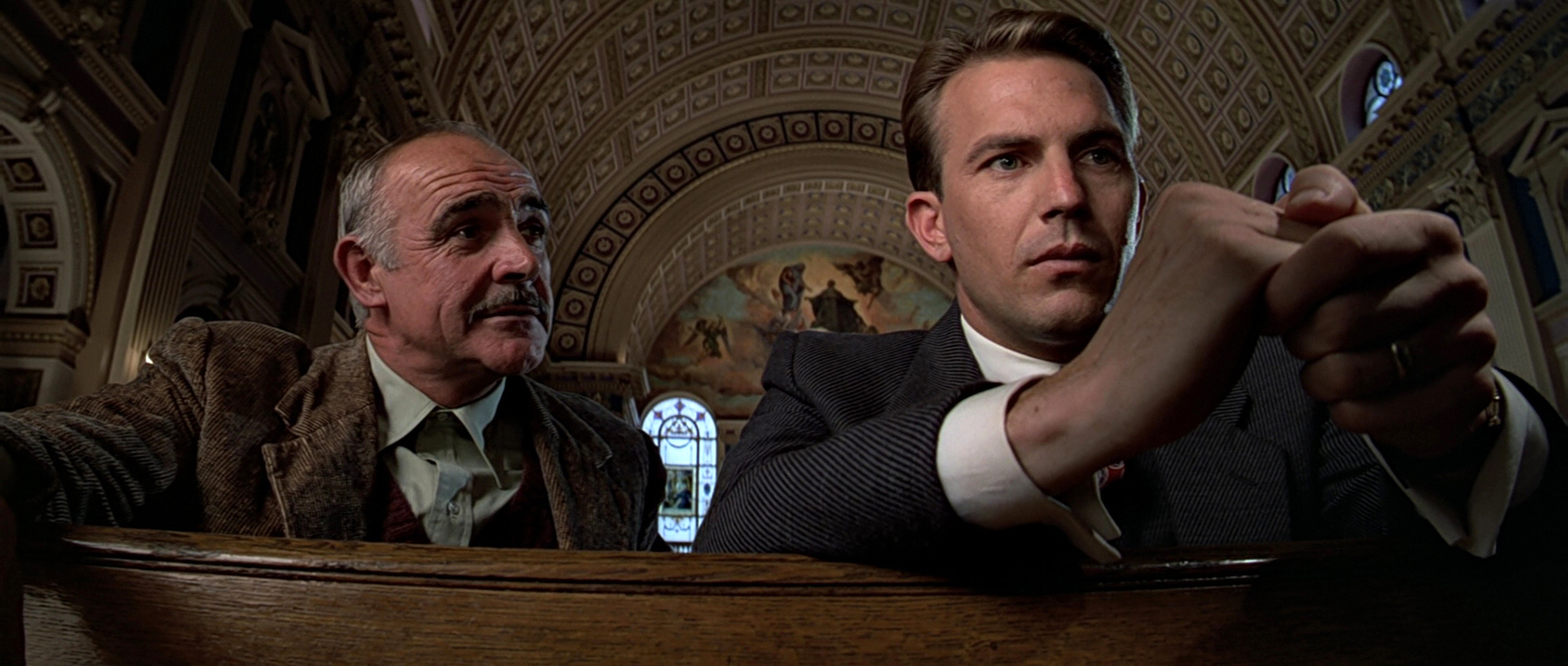
Many classic TV shows have been made into dreadful movies, but Brian De Palma came up aces in 1987 when he made The Untouchables.

The plot: Naive treasury agent Elliot Ness (Kevin Costner) comes to Prohibition-era Chicago to do battle with bootlegger, murderer and king of the gangsters Al Capone (Robert De Niro). Realizing that the police and politicians are all corrupted by Capone, Ness assembles his own team of “untouchable” agents who can’t be bought. His squad is anchored by a cynical, over-the-hill beat cop named Jim Malone (Sean Connery), who teaches him how the game is played in The Windy City. The two of them and their fellow untouchables embark on an epic confrontation with powerful, violent mobsters and a legal system that is rotten from top to bottom.

The key theme of the film is voiced by Connery, in one of the many scenes where he virtually acts the bland Costner right off the screen: What are you prepared to do? The basic tension of David Mamet’s crackerjack script derives from the fact that the good guys can’t win without breaking the rules they have sworn to uphold. This adds moral weight to a story that is also packed with thrilling action sequences and powerful dramatic moments.

De Palma often echoes classic films in his movies, and The Untouchables is no exception. A spectacularly executed shoot-out sequence in Union Station is an homage to the equally brilliant Odessa Steps sequence in Battleship Potemkin. Although I don’t know for sure, I believe the first scene of the movie, in which a terrified barber reacts to having nicked Capone’s face while shaving him, is an echo of one of the opening scenes of another of my recommendations, The Chase. De Palma makes these allusions is such a way that you don’t have to get them to enjoy the film, but if you do it’s even more fun.

This was a big budget Hollywood film and it shows in every scene. The set design and art direction are darbs, and the period cars, clothes and architecture are the cat’s meow. Producer Art Linson is a Chicago native, and clearly knew where to spend money to bring the Prohibition Era alive. To top it all off, Ennio Morricone contributes one of the most memorable and evocative scores of the 1980s.

Other than Costner, who is painfully weak here, the entire cast explodes. But even in that field, Connery and De Niro tower over everyone with powerhouse performances. Capone has been portrayed many times on film, but never in such a scary fashion. In De Niro’s hands, he is a man who can go from mirth and charm to murderous rage with no warning, and the viewer fully appreciates why all of his underlings tiptoe around him.

Connery, who won a long-overdue Oscar for playing Malone, also tears up the screen. His Malone is world-weary and tough yet also capable of wit and even a sort of gentleness (His big brother-little brother relationship to Andy Garcia’s rookie cop is perfectly played by the two actors). Because he became famous playing James Bond, it took Connery a long time to convince people that he really is a fine actor. I have commended his strong performances in my recommendations many times, including in The Hill, The Offence, and Outland. He triumphs again in The Untouchables, one of many reasons to see this near-perfect update of classic cops-versus-gangsters television shows and movies.

Categories
Action/Adventure British Drama

Callan: The Richmond Files

Many Americans know Edward Woodward only as The Equalizer from television, but his career started long before that. Woodward was an extraordinarily gifted actor who was equally comfortable with classic Shakespeare plays, light comedies and grim dramas. Unlike some stage-trained actors, his dramatic skills didn’t wane when he made the move first to television and then to the movies. Beyond all that, he was even an outstanding singer! (Check him out on this Morecambe & Wise clip, he starts crooning about two minutes in and he’s bloody marvelous).

Woodward became a star playing David Callan, a tough, moody and smart British espionage agent from a working class background who tussled with his plummy superiors as often as he did his Soviet counterparts. I recommend here The Richmond Files, the three-part conclusion to the Callan television series.The mood of the series was set by an evocative set of images and guitar notes:

The glum tone and stark themes of Callan put it squarely in the cynical Le Carre camp of British spy stories, which funnily enough co-existed easily in the 1960s with James Bond-mania. The writing was consistently strong (more so than on the Callan-inspired TV series The Equalizer, which was made in America decades later) and the acting and direction were effulgent. The budget was clearly not large but this was well-used to convey the show’s point of view: Callan and his colleagues were doing dirty, unglamourous work. It made sense that the entire suite of offices of “The Section” looked like they cost less than M’s desk.

Categories
Horror/Suspense

The Wicker Man

Not long after the Callan TV show ended (My recommendation here), Edward Woodward starred in an unconventional low-budget horror film that has no monsters or ghosts, includes almost no night time scenes, blood, gore or special effects, yet is unquestionably harrowing: 1973’s The Wicker Man.

The plot: Uptight, devout and dedicated Police Sergeant Howie (Edward Woodward) arrives alone by seaplane at a small Scottish island to investigate reports that a little girl has gone missing. He finds a strange community of back-to-nature types who claim never to have heard of the girl, much to Howie’s frustration. He is further inflamed by their paganistic world view, sexual expressiveness and apparent disregard for his authority as a representative of HMG. He eventually meets the head of the community, Lord Summerisle (Christopher Lee), who confounds him further even while ostensibly supporting his quest to find the missing girl. His anger and anxiety mounting, Howie presses his investigation to the limit, but matters become only more maddening and much, much more dangerous.

It’s easy to see why Christopher Lee, who has made almost 300 films, declared that this was the best one he was ever in. He, Woodward, and the actors in other key roles (Diane Cilento and Britt Ekland) give performances that are somehow both realistic and otherworldly at the same time. And Anthony Shaffer’s script has the perfect set-up for suspense: A man absolutely alone in a strange place that he cannot understand and in which no help is available.

In addition to being scary, The Wicker Man is also sensually pleasurable. It features among other sexually charged moments one of the most erotic and original seduction scenes in the history of film. The soundtrack is also rich and stimulating. It would have been easy to simply have the music of the islanders be a recycled collection of old Celtic folk songs, but instead Paul Giovanni composed authentic sounding music that adds immeasurably to the atmosphere.

Warning: This film had an unhappy history post-production, with many cuts being made both by studio suits who didn’t get the film and morality police who hated the sex. The lack of respect for the film at the time is best expressed by the fact that the negative ended up buried beneath the M4 motorway (not a joke, sadly). Work very hard to get as long a cut as you can; Wikipedia has an account of all the versions here.

I hope you will take the time to discover this cult classic of British horror cinema. After the jump, I offer an interpretational addendum for those of you who have already seen it.

SPOILER ALERTSPOILER ALERT READ NO FURTHER IF YOU HAVEN’T SEEN THE MOVIE

When I first saw The Wicker Man many years ago, I read it incorrectly. As Sergeant Howie yells out Biblical verses while being burned alive by Lord Summerisle and his happy, dancing pagan followers, I took the filmmakers to be implying moral equivalence, i.e., one religious zealot destroying another. But when I re-watched the film to prepare for this review, I realized I had misapprehended Anthony Shaffer’s script. Yes, Howie is judgmental, moralistic and a bit of a prig, but his goal is to save an innocent child, and he pursues it with bravery and intelligence. In contrast, the pagans are cold-blooded, calculating murderers. Shaffer’s protagonist thus dies a martyr’s death at the hands of his theological enemies, not as their equal, but as their moral better.

Categories
Action/Adventure Drama

Breaker Morant

The Clear Eyed Cynicism of Breaker Morant | The Curb

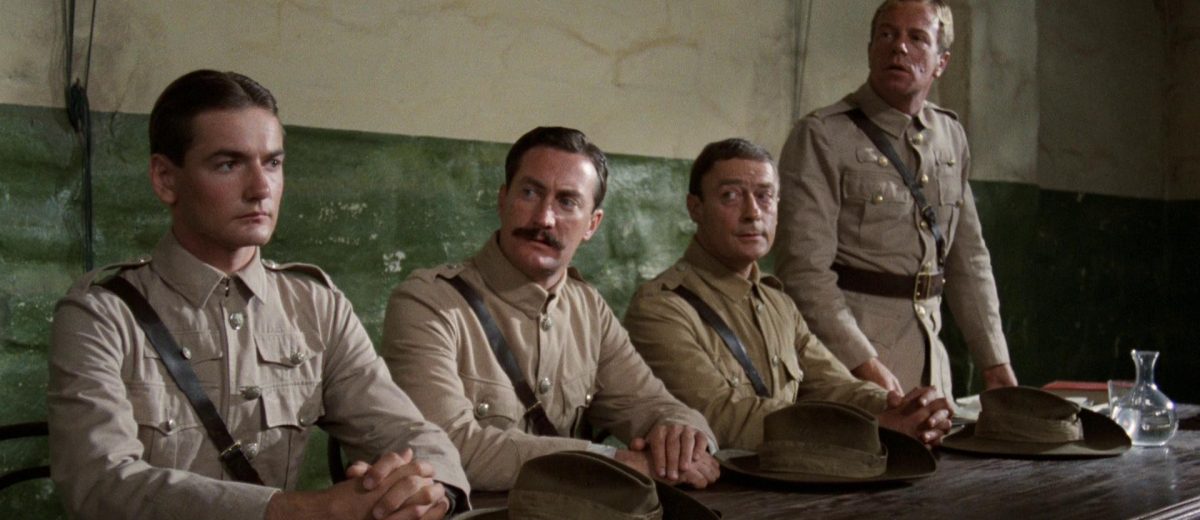
Arguably the best movie of Australia’s New Wave is 1980’s Breaker Morant. As the title character in Director Bruce Beresford’s movie, Woodward delivers a performance with such psychic weight and that it will stay in your mind and heart long afterwards.

The story takes place in the waning days of the Boer War, where the battered but still undefeated Dutch immigrant guerrillas continue to resist a much larger British force. To face down the remaining renegades and their ungentlemanly military tactics, the British create an unconventional counter-insurgency force called the Bushveldt Carbineers. The Carbineers are mainly colonials, and include the poetry-writing, cynical and heroic Lt. Morant (Woodward), the free-spirited and lusty Lt. Hancock (Bryan Brown), and idealistic junior officer George Witton, who believes in the goodness of The Empire (Lewis Fitz-Gerald). As the film opens, these three Australians are being court-martialled for shooting Boer prisoners. That they committed the act is never in doubt, but they claim they were following orders from the British high command. Meanwhile, because the British see a conviction as essential for facilitating a peace settlement, they deny complicity and stack the proceedings against the defendants in every way possible.

This is the movie that brought Bruce Beresford to the attention of Hollywood, where he later directed Tender Mercies and Driving Miss Daisy. There are a few overly theatrical moments in the film, but overall this is highly accomplished directorial work by Beresford. He also contributed to the superb screenplay, along with Kenneth Ross (who wrote the play), Jonathan Hardy and David Stephens.

Under Beresford’s watchful eye, the entire cast is riveting, including the three actors playing the accused and Jack Thompson as their initially unpromising but ultimately crafty defense counsel. The smaller parts are also well-turned, with not a weak performance anywhere.

Woodward, though British by birth, had a long lasting affinity for Australia and could claim many fans there (including from his music hall tours as a singer) before he made this film. He deservedly expanded that fan base with his bravura performance in Breaker Morant, not just in Australia but world wide. His acting here recalls Michael Kitchen’s style in that he is the most magnetic when he is not speaking. Sadness, pain and well-earned disillusionment are visible in his gestures, his eyes, and his weather-beaten mien. Foreknowledge of doom hangs over his every scene in this film.

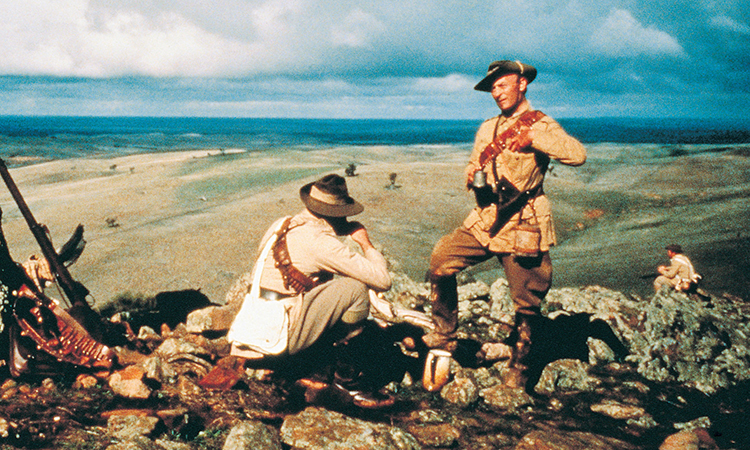
Donald McAlpine’s cinematography, with Australia standing in for South Africa, is also a major asset. Shooting in lovely physical terrain, he did everything he could with lenses, filters and exposures to emphasize its bleakness. Lush and colorful outdoor scenes would have otherwise contrasted too much with the downbeat tone of the story.

The film also contains intriguing historical nuggets about the Boer War, the conflict that opened the bloodiest century of military conflict in human history. The war gave us the word “commando” and the term “concentration camp”. The Carbineers were the first special forces unit to employ COIN tactics. And the court-martial portrayed actually happened, although the film is based on a book (“Scapegoats of the Empire”) which told the story entirely from the side of the accused and therefore may not be completely accurate.

Breaker Morant is a devastating, brilliant piece of cinema, a Caine Mutiny of its time. Australia cinema has clearly arrived on the world stage.

Categories
Action/Adventure Mystery/Noir

Timetable

Many movies start out creative and intriguing but then at some point lapse into formulaic filmmaking, thereby disappointing the viewer. Mark Stevens’ 1956 film noir Timetable is an admirable example of the reverse phenomenon, a movie that starts out in familiar territory but ends up somewhere far more engaging: .

The film opens with an ingeniously plotted robbery on a train, pulled off by an icily calm physician (Wesley Addy, a durable TV actor who is very good here in a rare big screen appearance). The case is investigated by a seasoned by-the book police detective (played Joe Friday-style by King Calder) and an eminently respectable insurance investigator named Charlie Norman (Mark Hopkins). For the first 20 minutes, Timetable is a solid but unremarkable police procedural as the two heroes track down the robbers. But then comes a superb twist that drives the story into deep film noir territory, allowing Aben Kandel’s script to dig into themes of lust, middle-class alienation and deceit. The next hour of the film is thus unexpectedly suspenseful and powerful, raising the movie into recommendation-worthy territory.

I admire the control Mark Stevens took over his career in the 1950s. He was stuck in a “road company leading man” spot with the big studios, so much so that even when he anchored a good film he got fourth billing! (The Dark Corner). So he struck out on his own by directing, producing and starring in his own movies, including Timetable, where he does good work in all three capacities.

A few other notes about the film. Jack Klugman, as a luckless criminal named Frankie Page, made his big screen debut here. This is also Felicia Farr’s first film, but she was underutilized I think. Finally, on a silly note, this movie inspired an essay on how little money weighs in the movies.

My belief is that Timetable is in the public domain, so I am going to post it right here for you to enjoy. It’s 80 minutes well-spent.

Categories
Drama Mystery/Noir

Gilda

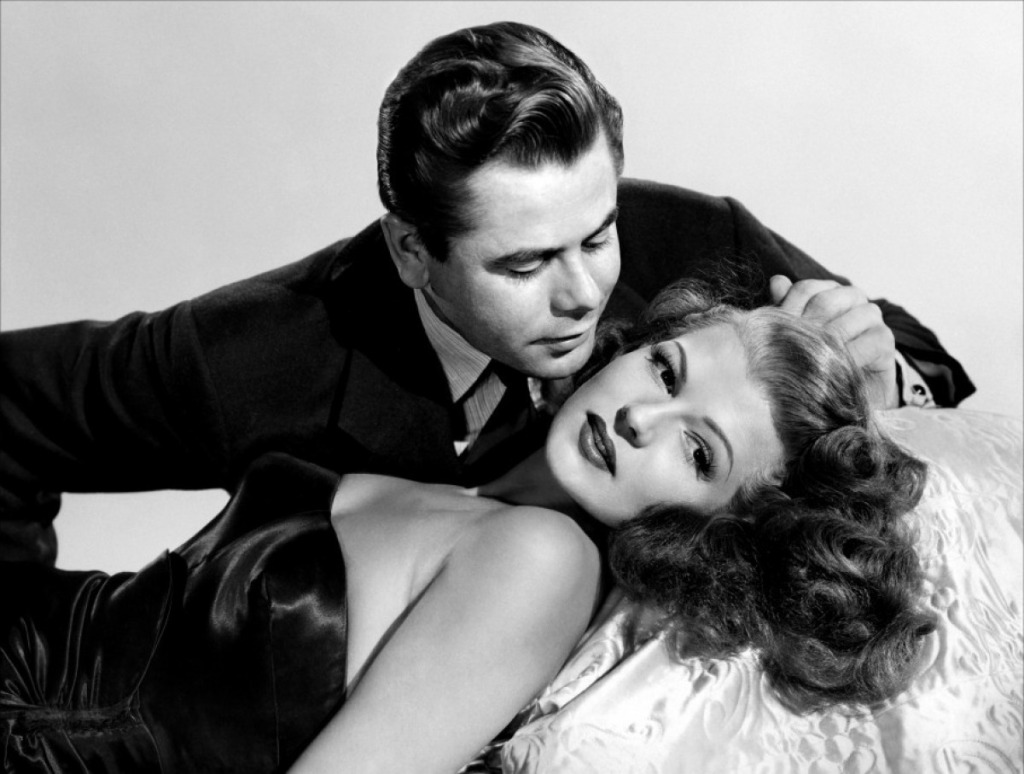
Rita Hayworth was a big singing and dancing star of musicals in the early 1940s, but the film that made her an international sex bomb (literally) wasn’t released until 1946: Gilda.

The plot, which echoes Casablanca in a number of respects, concerns a love triangle in a faraway land, in this case, Argentina. Johnny Farrell (Glenn Ford) is a cocky grifter who is on his uppers. He is saved from a mugging by a mysterious and rather menacing casino owner named Ballin Mundson (George Macready) whom he subsequently manages to talk into hiring him as an aide-de-camp. All is well for a time, though Johnny suspects that the casino is only a front for Mundson’s other, more shady, business. But before you can say cherchez la femme, their relationship changes for the worse when Mundson marries a sizzling beauty named Gilda (Hayworth), with whom Johnny has an unhappy history. Thus commences a love-hate-love relationship in which Johnny and Gilda torment each other while Ballin begins to suspect the truth about their former relationship. Meanwhile, both the police and Ballin’s criminal associates are closing in on his other lucrative but illegal line of work.

This is a star vehicle for Hayworth from the famous moment she first appears on screen with a sensual toss of her hair. She gets to sing and dance as well as act, most legendarily in her striptease style number “Put the Blame on Mame”. Countless American men (and no doubt some women) were sexually enthralled with her forever after.

I know too much about Hayworth to have such an uncomplicated reaction. I feel sorry for Margarita Cansino, the pudgy Hispanic girl and incest victim whom Hollywood turned — at the cost to her of physical and emotional pain — into Rita Hayworth. She never got to be who she really was and virtually every man in her life, starting with her father, exploited her. It’s a credit to her strength that despite understandable, significant emotional troubles she managed to always pull things together on screen throughout the 1940s and be a terrific movie star. Gilda is generally considered her finest hour, and with good reason.

Even though it’s Hayworth’s film, two other aspects of it are extremely compelling. The first is Glenn Ford. He’s kinetic on screen, a man always appraising every angle in search of some advantage. He also manages, despite not having classically handsome Hollywood-type features, to convey enough sexual attractiveness that Hayworth’s desire for him is entirely believable.

The other thing I adore about this movie is Rudolph Maté’s camerawork, which is completely arresting beginning with the opening, rising shot of those big rolling dice. I have praised him before for his work on Vampyr, but the tools of cinematography came a long way technically since that early film. And boy, does Maté take advantage. Perfect use of light and shadow, deep focus shots, close-ups at critical moments, it’s all here in the hands of a master. And thank you again UCLA Preservation team for this crystal clear, gorgeous restoration of the print.

The performances and the cinematography help make up for an uneven script, which may simply have had too many cooks. There are some lines to die for, and some sharp dialogue, but the plot structure of the last third is unnecessarily clunky in some respects and too pat in others. Still, Gilda is a very fine film noir that completely holds up almost 70 years later.

p.s. The conventional take on Bosley Crowther’s career as a NYT film reviewer is that he lost touch with modern tastes in the late 1960s (His repeated trashing of Bonnie and Clyde being the death-knell) after a long and distinguished career. But if you read his obtuse, inept review of Gilda twenty years earlier, you will see that he never really knew what he was talking about.

Categories
Drama

The Bishop’s Wife

The only people who grow old were born old to begin with.

If you were asked to recall a 1947 Christmas movie that was nominated for a best picture Oscar, you would probably come up with the famous Miracle on 34th Street. But remarkably, it was only one of two Christmas films so honored that year. The other was The Bishop’s Wife.

Anglican Bishop Henry Brougham (A miscast but appealing David Niven) is under strain as he attempts to raise money for a new cathedral. Donations are not arriving, and the wealthiest woman in town (Gladys Cooper) will only help if the building is made into a tasteless monument to her late husband. Meanwhile, since becoming an Archbishop consumed with finances and grandiose plans, Henry has been drifting apart from his long-suffering wife Julia (the ever-luminous Loretta Young). He prays to God for aid and a friendly, dashing, sharply dressed fellow arrives at his office (Who else but Cary Grant?). Calling himself Dudley, the new arrival says he is here to help, which Henry takes to mean help raising money. But Dudley spends most of his time trying to restore Julia’s happiness instead, much to Henry’s irritation.

Some films live or die on the strength of a star’s charm, and this is an example of a film living, indeed thriving, on the charm of the inimitable Grant. Director Henry Koster seems to have instructed every female member of the cast to swoon upon meeting him, and it’s utterly believable given with warmth and gentleness that the handsome Grant radiates in ever scene. Loretta Young’s devout-and-goodly performance is perfectly matched to Grant’s, as the story requires their relationship to be intimate but at the same time innocent. She was at the peak of her powers in 1947, during which she not only garnered raves for her role in the Bishop’s Wife but also won a Best Actress Oscar for The Farmer’s Daughter.

Grant and Young get strong support from the rest of cast, particularly Monty Woolley as an atheistic retired college professor who is an old friend of Julia and Henry’s. The Robert Mitchell Boy Choir are also on hand for a mellifluous number in Henry’s former and very poor church, a symbol of the simpler faith and life that he has lost.

The Bishop’s Wife rewards the eye as well as the heart, thanks to Gregg Toland being behind the camera. The town looks lovely, peaceful and Christmassy as can be. And Toland gets to be Toland: in my favorite shot in the movie (above), the characters slowly accrue at different depths away from Grant, who is making an emotional and religious connection to Henry and Julia’s little girl (played by Karolyn Grimes, who essayed a similar role in It’s a Wonderful Life).

The Bishop’s Wife is not a film for the cynical nor for those hostile to religious messages. But if the Christmas spirit ever animates your heart, you will find much to love in this extraordinarily sweet movie.

I embed below the amusing “un-trailer” of the film, featuring the three leads and absolutely, positively no spoilers.

Categories
Comedy Romance

L.A. Story

Ever wonder what the result would be if Steve Martin tried to make a Woody Allen movie? You will wonder no longer after watching 1991’s L.A. Story.

The plot concerns wacky L.A. weatherman Harris Telemacher, who is in a mid-life rut. His extremely high-maintenance girlfriend (Marilu Henner, just perfect) is emotionally distant, his TV job is empty-headed, and something is missing at the heart of his life. But then he gets some mysterious advice from an electronic billboard(!) and wild events of a meteorologic and romantic nature ensue, centered upon a lovely British journalist whom he find irresistible (Victoria Tennant). Meanwhile, L.A. is L.A., and is as much a character as any of the actors in this sweet and funny film.

Martin shines here both as a screenwriter and actor. His script is filled with laughs, including a number of literate in-jokes. It also includes a surprising amount of warmth, which Martin and his then-wife Tennant bring across beautifully as their love develops. Life in L.A. is parodied well, but Martin isn’t as bitter as Woody Allen. The result is more gentle fun-poking than lacerating humor.

This film was an early career success for Sarah Jessica Parker, who is appealing as SanDeE* (Not a typo). People who think that Zoey Deschanel invented the manic pixie dream girl need to see Parker in this film. In the first-rate supporting cast, Patrick Stewart does particularly well as the contemptuous head waiter at L’idiot, Woody Harrelson makes a fine boss/jerk and Richard Grant is sympathetic as Tennant’s lonely ex-husband.

But the producers made one TERRIBLE judgement, which is that they cut for running time’s sake the most funny supporting performance in the film: John Lithgow as agent Harry Zell. His scene re-emerged on cable rebroadcasts and the 15th anniversary DVD re-issue, so try if you can to get your hands on those because Lithgow is absolutely gutbusting.

There are moments when the film may strike some viewers as slowly paced or a bit precious, but it always gets back on track comically and dramatically in short order. Hooray for Steve Martin, who worked on the script for a number of years and managed to capture the foibles and virtues of Los Angeles and its denizens in an affectionate and highly entertaining way.

Categories
Action/Adventure British Drama Mystery/Noir

The Spy Who Came in From the Cold

What the hell do you think spies are? Moral philosophers measuring everything they do against the word of God or Karl Marx? They’re not! They’re just a bunch of seedy, squalid bastards like me: little men, drunkards, queers, hen-pecked husbands, civil servants playing cowboys and Indians to brighten their rotten little lives.

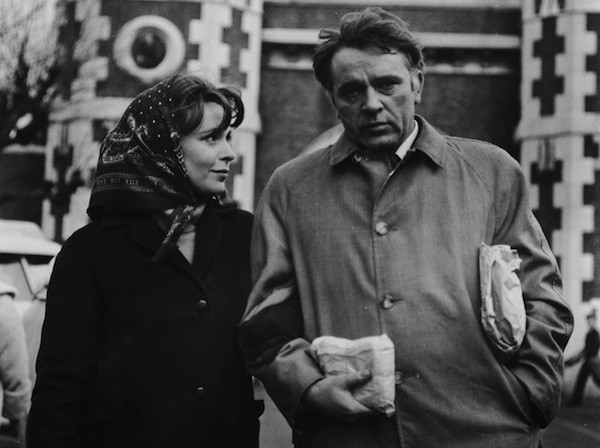
So says disillusioned British secret agent Alec Leamas (Richard Burton) in perhaps the best effort to adapt a John le Carré novel to the big screen: 1965’s The Spy Who Came in From the Cold. The serpentine plot concerns a burnt-out spook who enters a downward spiral of booze, self-hatred and lost faith after a disastrous mission in Berlin. But then it turns out that Leamas’ decline and despair is a ruse (?) play-acted at the behest of his superiors. As planned, he is recruited by the other side and ends up trying to discredit East German intelligence head Hans-Dieter Mundt (A cold, effective Peter van Eyck). Leamas undermines the ex-Nazi by feeding false (??) information to Mundt’s ambitious, Jewish deputy Fiedler (Oskar Werner, very strong here). It’s a difficult, high-risk mission, but Leamas knows that his boss back home is 100% behind him (???).

This may be the most magnificent performance in Richard Burton’s career, and will definitely please all fans of rotting charm. Drinking heavily in real life at the time, he was willing to expose his own capacity for ugliness and decay in a way that many glamorous stars of his era would not have dared to do. He exudes bone crunching hopelessness and isolation in shot after shot: Leamas alone on a park bench, alone in a bar, alone in his bed, alone chained in a cell. He’s devastated and devastating.

A 15 minute sequence of scenes in Britain is a masterclass in cinematic storytelling. It’s unsettling yet fascinating as Leamas repeatedly gets pissed and wanders through empty streets. Ultimately, he savagely beats an innocent man (Did the filmmakers cast for this part Bernard Lee — M from the flashy, unrealistic James Bond series — to make a point?). His copybook blotted, Leamas is judged “turnable” by the other side. After being released from jail, he is recruited by the Soviets in a sleazy men’s club by an unctuous businessman and a pathetic, gay procurer (Robert Hardy and Michael Hordern, respectively, terrific actors who clearly understood that there are no small roles).

The romantic aspects of the story also work well and become more important as le Carré’s ingenious plot unfolds. Claire Bloom is credible and sympathetic as the British would-be communist, who as Leamas puts it believes “in free love, the only kind I could afford at the time”. Leamas’ lacerating disdain for her naiveté reveals the depths of his own self-contempt: She may be immature in her politics but who after all is the one risking his life and doing horrible things in a struggle over the very same politics?

And Then There Were None, The Spy Who Came In from the Cold ...

Rarely has the look of a movie more perfectly captured its mood, and that’s a credit to Oswald Morris. Without any conscious intention, I think I have recommended more films shot by Morris than any other cinematographer. He was a remarkably unpretentious professional who maintained an astonishingly consistent quality in his work for 6 decades (He lived to age 98). It was a bold and brilliant choice to make this movie in black and white, which let Oswald create a washed out look that matches the bleak tone of the story. As much as the excellent acting, what stays with the viewer are Oswald’s shots of complete desolation both during Leamas’ alcoholic, putatively free, British wanderings and his time in East German captivity.

The other delight of this film is that it never condescends to the audience by over-explaining. With each double and triple cross, rather than clumsy exposition, director Martin Ritt simply gives us Burton’s face, as the mind behind it struggles frantically to make sense of the latest shift in the icy wind. A small example of the film’s understated, even at times cryptic, storytelling style is the scene where Fiedler asks for some paperwork from his underling Peters (Sam Wanamaker, memorably creepy). The seated, lame, Wanamaker extends his hand but not far enough. Rather than step forward, Fiedler waits until Peters struggles to his feet and hands it to him. Leamas chuckles derisively. The subtext which the film expects you to understand: Fiedler is the boss but as a Jew, he will never be fully respected by his German underlings. A small moment, a sly moment, a powerful moment, brought across with no comment other than Leamas’ mad laughter at Peters’ expense.

Touches like that are a key reason why The Spy who Came in from the Cold is completely engrossing. Fans of espionage films simply cannot miss this landmark movie.

p.s. If you like this movie, you might enjoy two of my other recommendations. Though not as good as this film The Deadly Affair is a solid effort to adapt le Carré’s first novel to the big screen. And the astoundingly brilliant Tinker, Tailor, Soldier, Spy is the best effort to adapt le Carré to television.

p.p.s. I also recommend Antonia Quirke’s elegiac FT essay on the battered, shattered Richard Burton and his iconic dingy overcoat.