Categories
British Drama

Prime Suspect

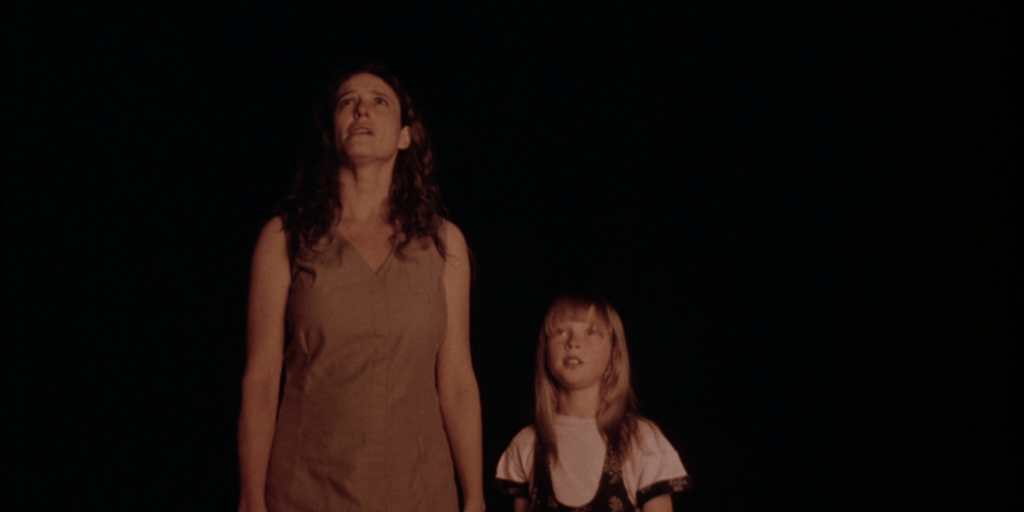
Not everything we love the first time we see it holds up over time. But I recently rewatched an ITV series I first enjoyed when it debuted in 1991 and it was every bit as suspenseful, and compelling as I remembered: Prime Suspect.

The first episode introduces us to Jane Tennison, one of British television’s immortal characters. Played by the estimable Dame Helen Mirren, at the opening of the series Tennison is a Detective Chief Inspector who is crushed against the glass ceiling. Neither the men above and below her in the hierarchy take her seriously, so much so that when a male DCI suddenly is unable to continue a murder investigation, she still has to fight her skeptical boss (John Benfield) not to be skipped over in favor of a male investigator from outside the nick.

On its face, the case she is assigned to crack looks a straightforward investigation of a prostitute murdered by a punter. When Tennison begins to suspect that there is more here than meets the eye, her male colleagues resist her conclusions. She is particularly challenged, undermined and mocked by Detective Sergeant Utley (a very credible Tom Bell), who at first seems motivated only by misogyny but things become more complex from there. As Tennison works relentlessly to solve the case and win over her male doubters, her romantic relationship with a divorced father (a pre-fame Tom Wilkinson) begins to suffer.

Prime Suspect is the work of many talented people, but its greatness derives mainly from two phenomenally talented women, namely Mirren and writer Lynda La Plante. Mirren shows enormous range as she brings across Tennison’s toughness, intelligence, ambition, vulnerability and isolation. Tennison is a flawed person, but Mirren makes you pull for her with all your might.

This is also a credit a course to La Plante, who created the character (based on real-life copper Jackie Malton) and the grim and twisty mystery that Tennison tries to solve. La Plante’s script is painfully realistic about what it’s like for the first women who venture into all-male preserves. Notably, she is too talented a writer to give us a Hollywoodized fairy tale of policework adopting a female-friendly work culture to accommodate Tenison. Rather, what happens over the course of the story is that Tennison becomes more like the men around her: ruthless, hard-bitten, neglectful of family and most crucially a heavy boozer (which takes an increasing toll in future episodes). La Plante knows that big organizations change the individuals within them far more the reverse. The development of that theme over the series is one of many reasons why Prime Suspect is widely regarded as a classic of British television.

p.s. This review focuses on the debut episode, but the series ultimately produced 6 more episodes over the next 15 years. All of the follow-up episodes are very good, with my favorite being The Scent of Darkness. In contrast, the spin-off 2017 prequel can’t hold a candle to the original.

p.p.s. Look fast for a pre-fame Ralph Fiennes as an ex-boyfriend of the deceased.
Categories
Action/Adventure Drama Mystery/Noir

Gun Crazy

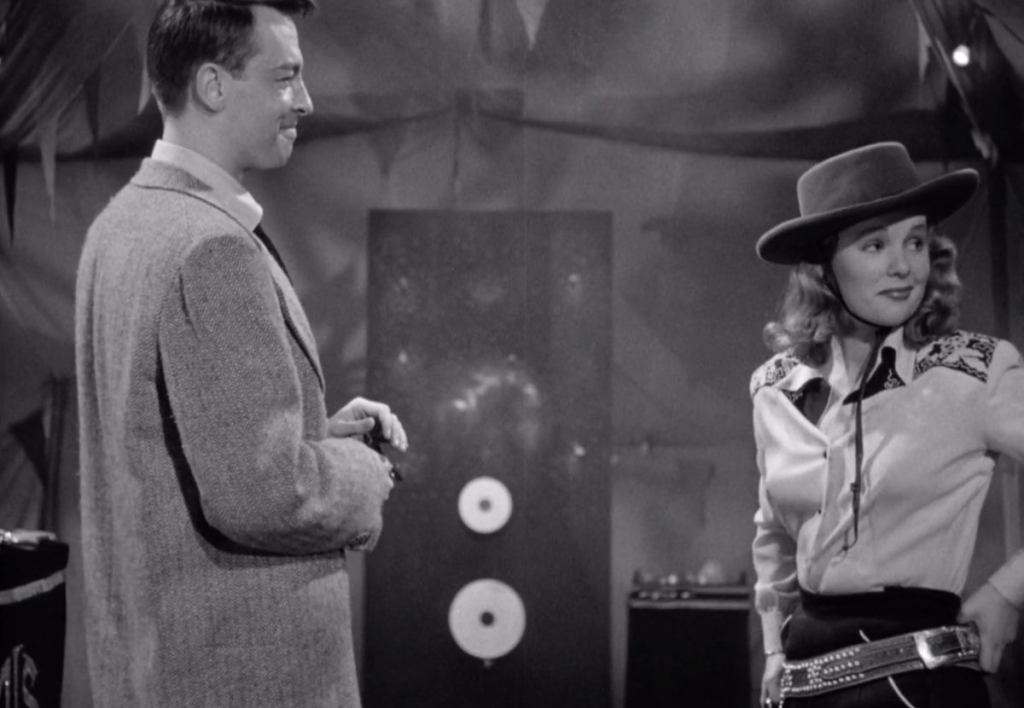
The excellent film Trumbo includes a colorful performance by John Goodman as the real-life raffish independent movie producer Frank King. King and his brothers (whose real family name was Kozinsky) were never respected by Establishment Hollywood but were daring in way the big studio suits were not. In what at first might have been an effort to move into prestige pictures, they purchased the rights to a story by MacKinlay Kantor, who had written the source material for the massively popular and Oscar-laden 1947 classic The Best Years of Our Lives. But Kantor proved unable to turn his story into a solid screenplay, leading the King Brothers to fall back on their common practice of secretly using blacklisted writers, in this case a prison-bound Dalton Trumbo. He turned Kantor’s draft script into the sexually-charged and violent cinematic miracle that is 1950’s Gun Crazy.

The plot: Bart Tare (John Dall) has been gun-obsessed from boyhood, which eventually lands him in reform school after he can’t resist committing a smash and grab robbery of a gun shop. After a tour in the army, where he thrives as a firearms instructor, he visits a travelling circus and is enthralled by the trick shooting show of the alluring Annie Starr (Peggy Cummins). Mutually besotted, they run away together, quickly burning through all of Bart’s savings. Annie suggests they turn their formidable skills to a career in armed robbery. Bart is scared someone will get hurt…Annie, not so much. But he can’t say no to her, leading to a Bonnie and Clyde-esque crime spree with shattering consequences.

In my recommendation of My Name is Julia Ross, I noted how that film’s 12-day shooting schedule was actually a luxury for Poverty Row veteran Joseph Lewis. Imagine how happy he must have been to have a whole month to direct this movie on a budget almost a third as big as a typical Hollywood film! He coached his compelling lead actors to express, as much as one could in 1950, wanton hunger for each other as well as, in Cummins’ case, a nearly orgasmic delight in violence.

Lewis and cinematographer Russell Harlan pursue a breathless, arresting style throughout this film. This includes, among other inspired camera placements, a deservedly legendary extended take with the camera in the back seat as the lovers commit and flee a bank robbery. As the audience, we are pulled along with the criminals by a fast-moving stream of images, wanting to pause for breath but afraid to let them out of our sight. It’s tough competition, but shot for shot, Gun Crazy ranks with the most visually stunning works in film noir history.

The story’s evolution and resolution turns on an implicit question: why are the two characters fundamentally different in their morals, despite their shared fascination with firearms? The early scenes of the film suggest that while Bart appears never to have had a relationship with his parents, he was at least raised by a loving older sister (Anabel Shaw) and had two childhood friends (Harry Lewis and Nedrick Young). Annie’s backstory is never told, leaving the audience to wonder if even that little love is more than she ever experienced on this earth. The movie never makes this femme fatale explain or justify her motivations, and in film noir that’s a feature, not a bug.

p.s. The black beret Faye Dunaway wears in another of my recommendations, Bonnie and Clyde, is a tribute to Gun Crazy by director Arthur Penn.

Categories
British Drama

A Night to Remember

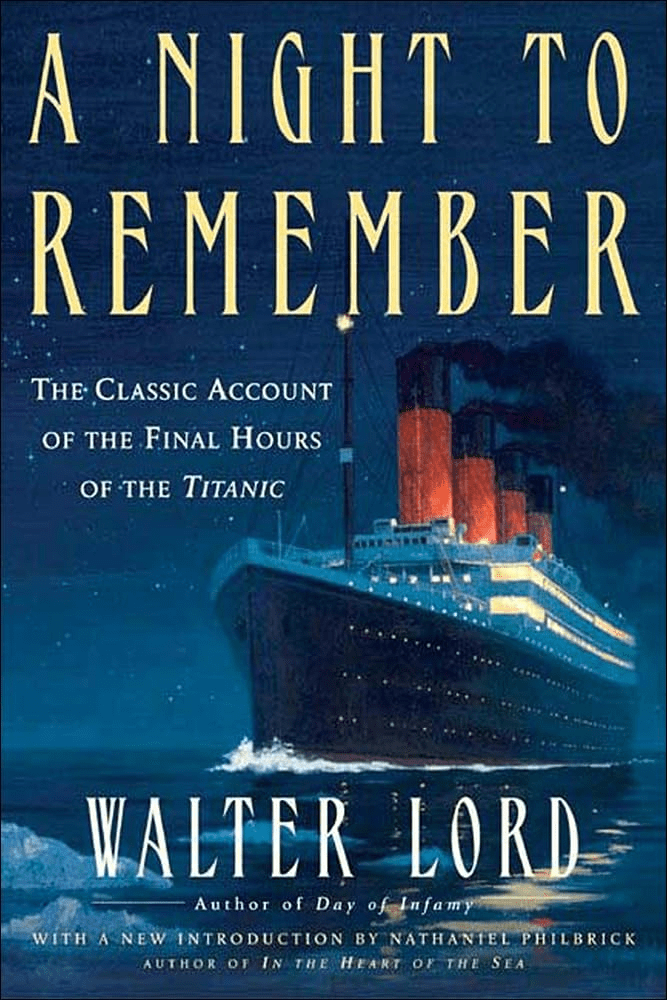
The story of the Titanic is so well-known today (not least due to James Cameron’s mega-budget mega-hit 1997 movie) that the The Onion could run the headline “World’s largest metaphor hits iceberg” confident that everyone would get the joke. But the modern cultural obsession with Titanic goes back less than 70 years. The liner’s sinking was worldwide news in 1912, but two world wars and four decades later, it had faded in popular memory. This changed in 1955, when a virtually unknown advertising copywriter named Walter Lord published a riveting minute by minute account of the disaster based on historical archives and interviews with survivors. A Night to Remember quickly became an international best-seller and has never been out of print since. Producer William MacQuitty, who had seen the launch of the mighty ship as a child, knew an opportunity when he saw it, and with input from Lord made one of the greatest films in British cinema history, 1958’s A Night to Remember.

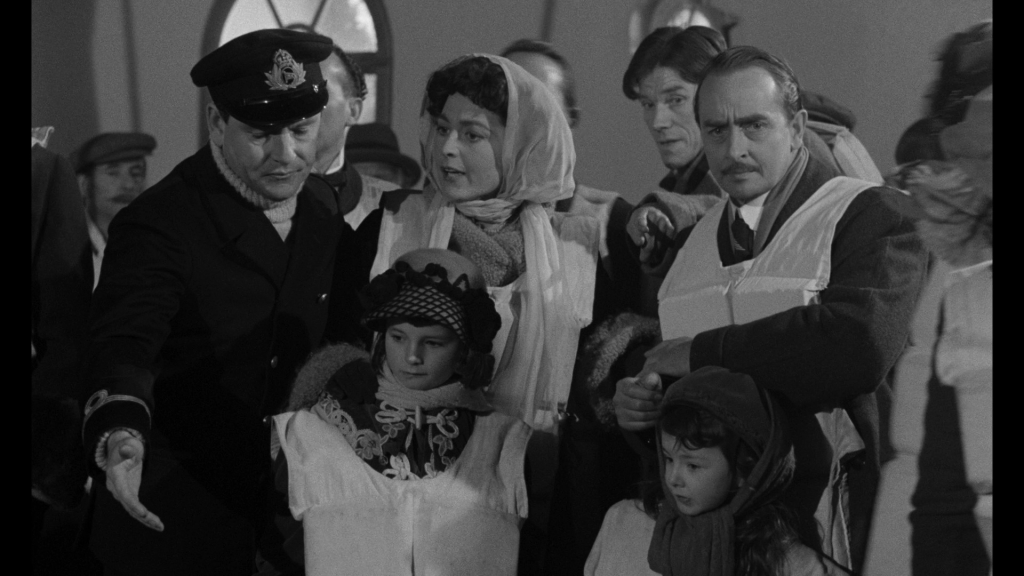
This would normally be the part of the review where I summarize the plot, but that would be supererogatory here. How the story unfolds in the excellent script by Eric Ambler (who also wrote the script for another of my seagoing recommendations, The Cruel Sea) is however worthy of description. Setting the template for countless subsequent disaster films, the movie intersplices the main event with small moments of human drama, brilliantly carried off by an army of British actors under the direction of Roy Ward Baker, who never rose to a greater height.

Kenneth More, perhaps Britain’s biggest movie star at the time, convincingly leads a matchless cast as the resourceful, brave, and dutiful Second Officer Lightoller (who was like most of the characters in this docudrama film, was a real person). I also admired Laurence Naismith’s turn as the captain of the doomed ship, particularly how much emotion and thought he conveys without words. Of the character parts, John Merivale as Robbie Lucas saying goodbye to his wife Liz (Honor Blackman) and their little children with false assurances that he will see them ripped my heart out. Another unforgettable moment: Ronald Allen leading fellow working class passengers from steerage in a desperate run for the boats until all of them stop in their tracks, dazzled by the sight of the opulent first-class dining room.

Of course a movie like this needs visual spectacle to work, and a Night to Remember is a huge success on that front. The budget was well-spent on lavish, realistic sets, including some that tilted with such convincing groans from their machinery that these sounds were left in the film to convey the heaving of the ship. The special effects are out of date of course, but still credible. And Geoffrey Unsworth, soon to become one of Britain’s most respected cinematographers, is in fine form (I have highlighted his other work here, here, and here) N.B. Be sure to see the Criterion Collection restored version and not one of the battered prints that circulated for decades.

A Night to Remember was a hit in Britain, but didn’t draw much of an audience in the United States, perhaps because it’s so very British in sensibility and also because it gave the American passengers little attention (the most visible being the Unsinkable Molly Brown, who is played by Tucker McGuire mainly as comic relief). But its critical reception was very warm indeed and it is today justly appreciated internationally as a cinematic masterwork.

p.s. Trivia for spy film fans: this film is packed with future espionage stars including Blackman (The Avengers and Goldfinger), David McCallum (The Man from U.N.C.L.E.) and no less than 4 men who went on to play Q in James Bond films.

Categories
Horror/Suspense

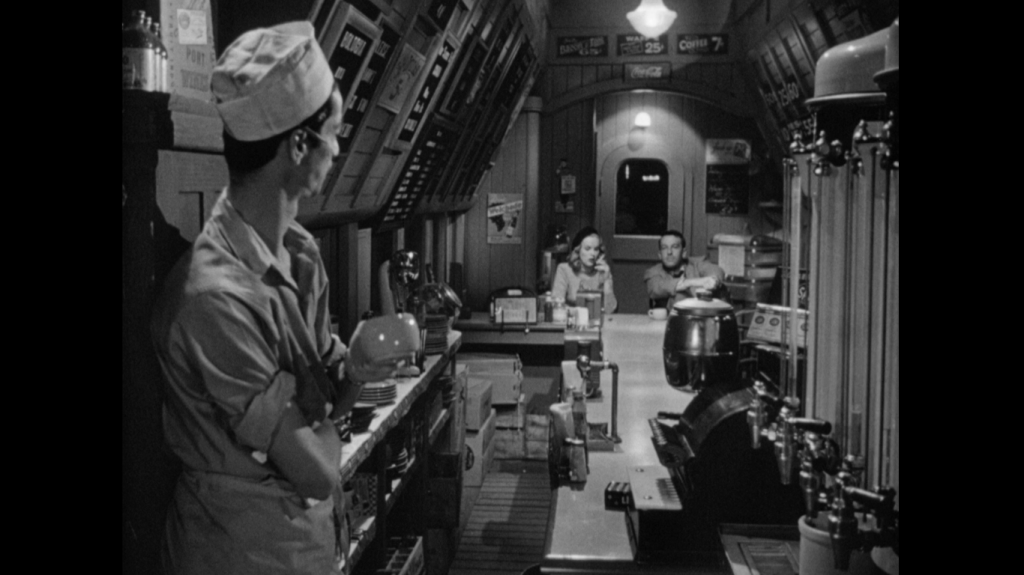
The Body Snatcher

At RKO during World War II, Ukrainian-American producer Val Lewton developed a signature horror film style that influenced many subsequent filmmakers and also helped launch some notable Hollywood careers (e.g., Directors Jacques Tourneur, Robert Wise, and Mark Robson). Lewton didn’t have the big budgets that let Universal Studios parade all those magnificent monsters across elaborate sets, so he often relied on the audience’s imagination of terrors they could only dimly see in the shadows (or just as often, only hear, for example in the famous swimming pool scene in Cat People). Boris Karloff, tired of making monster movies at Universal, admired Lewton’s work and made a trio of films with him. The first to be released features what is arguably the finest performance of Karloff’s career: The Body Snatcher.

The plot of this eerie 1945 film derives from the Robert Louis Stevenson story of the same name, which in turn was inspired by the Burke and Hare murders in 1820s Edinburgh. Dr. Wolfe McFarlane (Henry Daniell), a famous physician with a murky past, teaches medicine to would-be doctors, including the idealistic young student Donald Fettes (Russell Wade). Anatomical teaching requires the dissection of cadavers, which under the law are available in quite limited supply. This constrains the ability of physicians to acquire the skills that would allow them to help people like Georgina Marsh (Sharyn Moffett), a paralyzed little girl whose mother (Paula Corday) begs McFarlane and Fettes to operate on her daughter’s spine. But to attempt such a delicate operation would require careful study of a recently deceased person…maybe cabman John Gray (Karloff) could engage in a gruesome side hustle? Suspense, chills, and moral dilemmas ensue.

Lewton gave future multiple Oscar-winner Robert Wise his first chances to direct, and Wise’s ability to draw our good performances, maintain tone, and create a compelling storytelling canvas is evident even at this early point in his career. Wise and cinematographer Robert De Grasse give us an ominous looking Edinburgh, wreathed in shadow and dread (Funnily enough, in a budget-saving move that prefigured Roger Corman, the filmmakers re-used the sets of The Hunchback of Notre Dame, on which Wise had worked as an editor). The crisp script of Phillip MacDonald (with added polish by Lewton) artfully uses dialogue to reveal hidden emotions and motives, and builds tension well in the short running time that was a financial necessity.

Henry Daniell as usual gives a strong performance as a character with significant shortcomings who is also in many ways admirable. But the towering performance in the film comes from Karloff as the menacing, resentful Gray. When he’s not delivering malicious words with a cunning smile and a faux-unctuous manner he’s convincingly meting out sociopathic violence. Great horror performances, like great comic performances, are too often overlooked. Karloff didn’t even get a Oscar nomination for Best Actor for his stellar work here, so hang your head (again) Academy of Motion Picture Arts and Sciences.

The sole disappointment of this film is that Bela Lugosi, in his last pairing with Karloff, has only a small part, perhaps because his addictions were destroying his health. He is fine in his role as one of McFarlane’s servants and his scenes with Karloff crackle, but it’s still too bad this legend of horror wasn’t able to do more on screen at this point in his career.

It would be very unjust to close on that sad note, when there is so much to appreciate in this gripping and atmospheric tale of murder and medicine. The Body Snatcher is an excellent film both as entertainment and as a 78-minute showcase of the horrifying gifts of Val Lewton and Boris Karloff.

p.s. The story of Burke and Hare was re-told in the solid 1960 British film The Flesh and the Fiends starring Peter Cushing and Donald Pleasance (the more graphic “Continental Version” is the one to see).

Categories
British Horror/Suspense

Dr. Terror’s House of Horrors

Hammer Studies is deservedly admired for the generally fine horror and suspense movies it began producing in the 1950s (including my recommendations The Devil Rides Out and Taste of Fear). But a lesser known British studio, Amicus Productions, was also productively tilling the same soil. Most notably, it revived the horror anthology form created by the 1945 classic Dead of Night. Amicus’ founders Max Rosenberg and Milton Subotsky produced all seven of these films, and Subotsky also often wrote the scripts (though some were penned by the Robert Bloch of Psycho fame). None of the Amicus “portmanteau” movies were bad, and some of them were very good, including 1965’s fun and scary Dr. Terror’s House of Horrors.

Dr. Terror’s House of Horrors set the pattern for these films, bringing together horror movie stalwarts (Actors Cushing, Christopher Lee, Michael Gough and Director Freddie Francis), young actors looking to move up (Donald Sutherland, Roy Castle) as well as old hands familiar to the audience whose current asking price was within the modest budget (Max Adrian, Bernard Lee). Like all these films, a contrivance — in this case a shared train journey with a mysterious fortune teller named (ahem) Dr. Schreck (Peter Cushing) — links together segments that run about 15 minutes, each with a different storyline and main character.

Subotsky’s script gives us five stories to enjoy, a couple of which illustrate how horror and comedy can make a fine cocktail. The first features an architect (Neil McCallum) returning to the spooky old house in which he grew up at the request of the wealthy widow who purchased it from his family (Ursula Howells). In the course of planning a remodel for the widow, he makes a shocking discovery in the (naturally) dark and cobweb-filled basement…

The second story, about a family returning from holiday to discover a sentient and dangerous vine growing on their property, is lighter in tone particularly because Bernard Lee of Bond movie fame straight-facedly plays the head of what is apparently a government agency focused on botanical threats to civilization (I bet you didn’t even know such a thing existed). The third tale is also on the lighter side and features Roy Castle as a musician who learns the dangers of cultural appropriation. It mixes some lively musical numbers in with the voodoo.

The last two stories are the best. Lee is perfect as a condescending art critic who inflicts a serious injury on a painter he despises (Gough). But you have to “hand” it his victim for his ability to seek vengeance from beyond the greave. The mechanical effects in this story are unnerving, especially because Lee credibly sells the terror in what otherwise could have been farcical proceedings.

The final tale features Sutherland as a junior doctor whose new bride (Jennifer Jayne) has rather unusual tastes. The closing line of this story, uttered by Adrian, is laugh out loud funny.

Just as each individual segment ends with a kicker, so does the movie itself, tying the five tales together with a spectral bow. Citizen Kane it is not, but entertaining Dr. Terror’s House of Horrors definitely is.

p.s. Another horror anthology film with this title was released during the war, apparently with sketchy provenance including potentially violating copyright by inserting bits of other, better movies. No print survives, and everything I have read about that film indicates that’s for the best.

Categories
Action/Adventure

Sahara

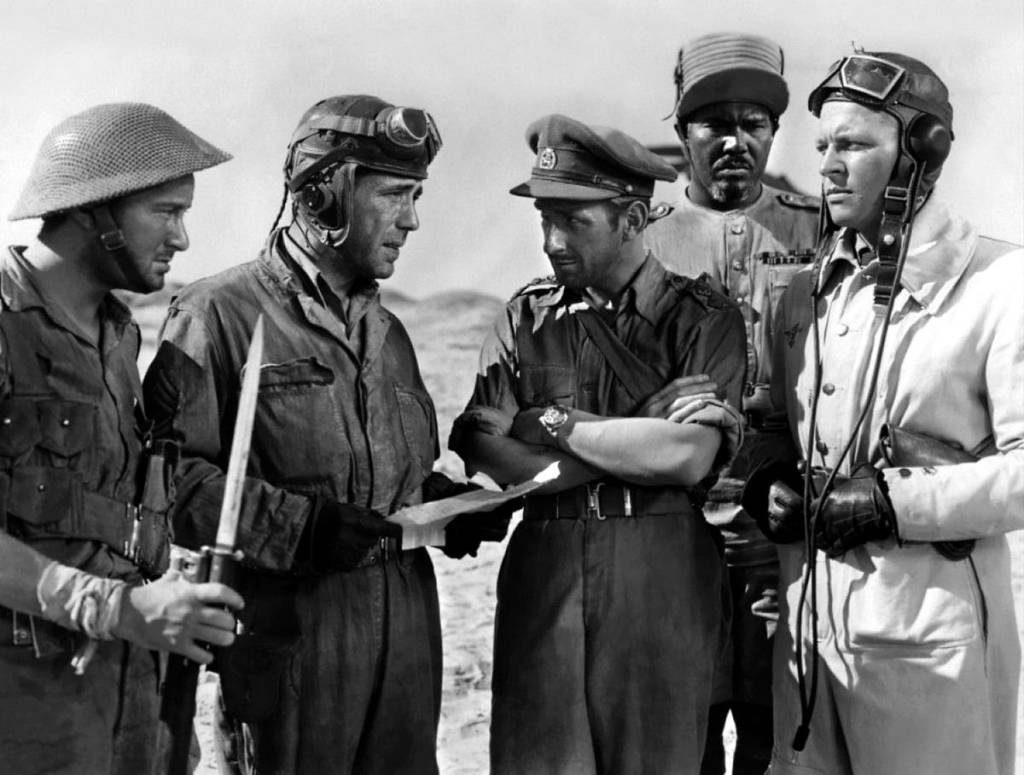
I recommend many famous films on this site, but I also try to call attention to high-quality films that have been largely forgotten.  A good example is Zoltan Korda’s desert combat classic Sahara. Lauded upon release, over time it has been eclipsed in most people’s memory by that other North Africa-set Humphrey Bogart movie that was also released in 1943 (Casablanca of course, the best movie produced by the Hollywood studio system – my analysis of its most important line is here).  But even in today’s time of a relative peace, this World War II story retains power to entertain and inspire viewers.

The plot: The allies are taking it on the chin in Libya, and a lone surviving tank from a destroyed batallion chugs south across the blazing desert, trying to avoid the Germans and link up with Western forces. The American tank crew is headed by Sergeant Joe Gunn (Bogart), and becomes internationalized as British, French, South African, and Sudanese soldiers separated from their units hitch a ride. The crew also take on an Italian prisoner who, being Italian, is thinking of switching sides (J. Carrol Naish, in an Oscar-nominated performance). Like the Germans who are all around them, this motley crew seeks not just military success but precious water.  They set out to find a ancient well, which a dramatically larger, equally parched German force also craves.  An electrifying, protracted siege composes the final act.

Part of the greatness of Sahara is how many ways there are to enjoy it. Sahara works as a thrilling combat film with soldiers slugging it out in harsh conditions. Like another or my recommendations, In Which We Serve, it also succeeds as propaganda, with both the dialogue and the performances conveying what was at stake in the war and why the Allies were the good guys and the Nazis were the bad guys (I know there is a school of thought that asks “really, weren’t they all equally bad?”…if that’s you, please go away forever as you are too stupid to appreciate my website). Finally, despite multiple characters bordering on stereotype, Sahara also delivers strong dramatic moments between people under pressure.

In the mid-20th century, when studio executives wanted to make a film about “an American everyman called to heroism by circumstance” they called Bogart. Sahara shows yet again the wisdom of that call. I was particularly moved by Bogart’s delivery of the “big speech before battle”, an absolutely un-King Henry V at Agincourt speech ungirded by democracy, decency, and courage. The rest of the cast, which is all-male (unless you count Lulubelle, the tank) is also strong, and includes several performers who would go on to impressive careers in movies and television (e.g., Lloyd Bridges, Dan Duryea)

I was also pleasantly surprised at the film having a Black hero (well-played by Rex Ingram). Like Casablanca, Sahara presents a world where democracies embrace cross-racial friendship and respect. In the 1940s, this was of course an idealized sentiment…but it’s good to have ideals, and they were certainly different than those of Nazi Germany. Not incidentally, if you listen carefully, you will hear a Nazi that our heroes take prisoner (Kurt Kreuger) refer to Ingram’s character with a racial slur.  If you aren’t cheering for Ingram in his final confrontation with Kreuger (which was so realistic that one of the actors was almost knocked unconscious) you don’t have a heart in your chest.

Plaudits go as well to James O’Hanlon, Korda and the soon to be blacklisted John Howard Lawson who wrote the taut, gritty script based on Phillip MacDonald’s novel. Also to love: one of my favorite cinematographers (see here and here), Rudolf Maté, again creates stunning visuals, including cascading sand dunes in bright yet bleak light.

Sahara is a melodramatic movie, but I have to say it got to me.  And of course its potency would have been much greater during the war when Americans were fighting and dying alongside Allied soldiers around the world. A beloved film in its era, it deserves broad viewership today.

p.s. This film is partly inspired by a Soviet movie The Thirteen, and has subsequently inspired other films including Last of the Comanches.

Categories
Drama

The Rapture

For decades, Hollywood movies that took Christianity seriously were nearly guaranteed to make money and to receive reverent reviews as well (sometimes deservedly so, e.g., Black Narcissus, Song of Bernadette). But in our more secular age, they often divide audiences and critics. Ebert and Siskel exemplified the split when they reviewed the 1991 film The Rapture. The former put it on his 10 best films of the year list, while the latter said he considered it “more preachy than provocative”. I am much more inclined to Ebert’s view of Michael Tolkin’s directorial debut.

The film opens with a Metropolis-level portrayal of soul-killing work: an evocative shot of a bevy of telephone operators who looked caged in their cubicles as they near-mindlessly answer request after request for directory assistance. One of them is named Sharon (none of the film’s characters have a last name). Sharon’s (Mimi Rogers) dreary daytime existence stands in sharp contrast to her nights, which she spends cruising hotels for group sex with her friend Vic (Patrick Bachau). One of the men she encounters, Randy, (a then little known David Duchovny) takes an enduring interest in her and they start to share their regrets and hopes.

Meanwhile, Sharon becomes aware of coworkers who, unlike her, seem happy, and learns they are involved in a religious community that dreams (literally) of the coming rapture in which the faithful will be raised to heaven. In a superbly executed scene, two door-knocking Christians also begin to shake her lack of faith. Like Augustine, she abandons her sexually wanton ways and begins praying and worshipping until she too is convinced that the end of the world is nigh. This precedes further astounding plot developments that you will turn over in your mind long after the final credits roll.

Tolkin has made a challenging movie that is absolutely not for all tastes, but I admire his courage for unflinchingly following a theme out to its conclusion. This is not an evangelical film: Tolkin portrays what it would it mean if people who believe a certain theology are in fact correct, but he neither endorses nor condemns it. His dialogue is searching and at times even searing as his characters struggle with what life means, whether God exists, and if so what he expects of humanity. His film weakens a bit in its unique concluding act, which was almost inevitable given his limited budget, but overall this is one of the most impressive debuts by a writer-director in recent decades.

Mimi Rogers deservedly received universal acclaim for her no holds barred performance. She is by turns sensual, sad, yearning, inspiring, frightening, damaged, and defiant. Taking the role of Sharon was a big risk and it pays off artistically in an Oscar-caliber performance. Sadly, it did not pay off in terms of box office receipts or wider recognition that she is much more than just another Hollywood sex bomb.

To return to where I began, let me close this review by quoting Roger Ebert: “Movies are often so timid. They try so little, and are content with small achievements. The Rapture is an imperfect and sometimes enraging film, but it challenges us with the biggest idea it can think of, the notion that our individual human lives do have actual meaning on the plane of the infinite.

p.s. Tolkin also wrote the story and co-wrote the screenplay of another of my recommendations, Deep Cover.

Categories
Blogs on Film British

The Perils of Uneven Tone

The estimable Sidney Pollack said that to make a movie, you have to know what it is fundamentally about and then make sure every element in the film grafts onto that theme (e.g., In Tootsie, it was that the central character had to live as a woman to understand what it meant to be a man). This includes understanding the genre and tone of the film and communicating it to the actors, i.e., are we making a drama or a comedy, is this material satirical or is it earnest? When thematic and tonal unity are attained you get satisfying movies like the ones for which Sidney Pollack is justly admired. But when that doesn’t happen, a film baffles and frustrates its audience as the director and/or writer wildly shifts gears without even bothering to depress the clutch.

A recent example is the 2023 Australian detective mini-series Deadloch. It begins by centering on a compelling lead character brought to life skillfully by Kate Box. Her relationship with her wife and the small town in which she lives draw the viewer in with a mixture of affection and comedy, even as a murder mystery starts to unfold.

But then in a literally jaw dropping scene, the second lead, another police detective appears. She is clownish, loud, and off-putting, a collection of Aussie stereotypes scripted with no wit or grace. After laying a gorgeous table for a dinner party, the filmmakers smash it to pieces with a sledgehammer. This happens over and over in ensuing episodes such that even when the many superb scenes are unfolding, they are hard to fully enjoy because the audience is cringing in expectation that the smashing would begin again (and it nearly always did).

The clownish co-lead character could have worked in a slapstick comedy with other buffoonish characters and a cartoonish plot, maybe “Dumb and Dumber go to Melbourne”, but it was disastrous in what could have been a superlative series (Indeed, if the whole series had been bad, it would have been less disappointing, because the filmmakers wouldn’t have been throwing away all the outstanding aspects of the series due to their failure to achieve consistent tone). And the tonal problems get even worse in a later episode, in which the story literally goes in a matter of seconds from wisecracks to torture porn of helpless people being mutilated. The series had many writers and directors who apparently didn’t agree on what they were doing, and it shows.

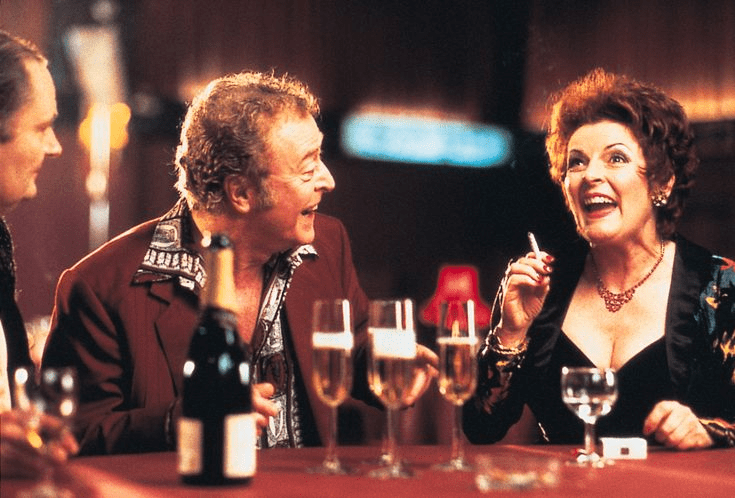
The other film that always sticks out in my mind as a failure to achieve consistent tone is Little Voice. This 1998 Mark Herman-directed vehicle features a quirky, charming romance between between Jane Horrocks and Ewan McGregor that would not have been out of place in a Bill Forsythe film. So far so good.

Meanwhile, Brenda Blethyn, Michael Caine, and Jim Broadbent give dark, powerhouse performances portraying desperate people in a declining, gritty, town in Yorkshire. But switching back and forth between gritty noir and Walt Disney-level fantasy is a bit of a wrench. I would have enjoyed watching the gentle romance film Little Voice sometimes is on its own, and even moreso the powerful drama Little Voice sometimes is on its own, but the mashup of the “two movies” was nowhere near as pleasing.

Categories
British Drama

Brideshead Revisited

I ventured that Tinker, Tailor, Solider, Spy is the best thing the BBC has ever put on television. If asked the same question for ITV, on most days I would plump for the 1981 mini-series Brideshead Revisited.

As everyone knows – or should know – the story is based on a semi-autobiographical novel by Evelyn Waugh. The plot is a series of recollections by Charles Ryder of his long, complicated, and life-changing relationship with a Catholic, aristocratic family who are the heriditary owners of a magnificant house and estate known as Brideshead. In the early 1920s, Charles (Jeremy Irons) is charmed by his eccentric, rich, and gorgeous Oxford classmate Lord Sebastian Flyte (Anthony Andrews). Despite their differences in religion and social class, an intimate friendship blossoms, to the point that Charles is eventually almost adopted into Sebastian’s family at Brideshead, which includes his glamorous sister Julia (Diana Quick).

But as the years roll by, Sebastian and Charles’ friendship founders on the former’s self-hatred, resentment of his family, and growing addiction to alcohol. Charles is pained by the loss of closeness with Sebastian, but comforted when Julia steps in to replace it. All of this unfolds as the country is enduring two tumultuous decades when old certanties were overturned and traditional hierarchies undermined.

All three leads sparkle throughout this sweeping series. Remarkably, Irons was originally cast as Sebastian, but agreed to switch roles at Andrews’ request. Their skills as actors is such that it’s now impossible to imagine the casting any other way. Remarkably, due to a technician’s strike bringing ITV to a halt in the middle of making the series, the original director (Michael Lindsay-Hogg) had to be replaced by Charles Sturridge, yet the acting and tone do not miss a beat across those episodes.

Appropriately for a multi-generational story, the cast includes leading lights of a prior era. Laurence Olivier appears as Lord Marchmain, though he isn’t given a great deal to do. Two other famous performers light up the proceedings much more. John Gielgud is both hilarious and a bit terrifying as Charles’ waspish father, who knows how to effortlessly and mercilessly inflict a withering remark. Claire Bloom (last seen on these pages in The Spy Who Came in From the Cold) is also quite effective as Lady Marchmane, the family matriarch. Bloom’s is a rich characterization, mixing virtues and vanities as she grapples with the decline of her son’s health, her religion, and her family’s fortunes.

The less-familiar cast members also shine, including Simon Jones as the stuffy family heir “Bridey”, Phoebe Nicholls as the compassionate youngest child Cordelia, and Nickolas Grace in an endearingly campy turn as Charles and Sebastian’s flamboyant friend Anthony Blanche.

Producer Derek Granger and his team at Granada Television also hit it for six with peerless sets, clothing, cars, makeup artistry, and locations. Geoffrey Burgon’s regal yet wistful baroque theme music is another asset.

What, in the end, is this 13-hour wonder about? Certainly more than one thing. In some respects it’s a nostalgic toff-a-logue like Downtown Abbey (except that it’s good). If you want sympathy for working people you will not find it here: the only mention of labor rights is when Charles helps put down a strike. The mini-series is also an exploration of Catholic life in Protestant-dominated England as well as a compelling narrative of how families change over time in response to marriages, deaths, and historical events.

Most of all, I consider Brideshead Revisited a story about friendship. You can read a pile of critical debates about whether Charles and Sebastian are lovers and indeed the series itself invites such discussion: a dance hall prostitute calls them gay and Lord Marchmain’s mistress (Stéphane Audran) delivers a speech about the English tradition of romantic but not sexual relationships between men. But it doesn’t in my opinion matter, because Irons and Andrews are so sympathetic and believeable as they illuminate how the friendships we make when we are young form and how they change us and then change themselves. And Quick dancing in and around their friendship while managing her love for both men feels utterly real.

Even with this longer than usual review, I really haven’t done complete justice to Brideshead Revisited. If you watch it yourself you will see more things to appreciate than I could cover here, and understand why it remains one of the most respected and beloved shows in British television history.

p.s. Were I asked what else in ITV’s history might compete for the top spot with Brideshead Revisited, I would include the superb mini-series Anthony Andrews starred in just before it: Danger UXB.

Categories
Comedy Drama

The Matador

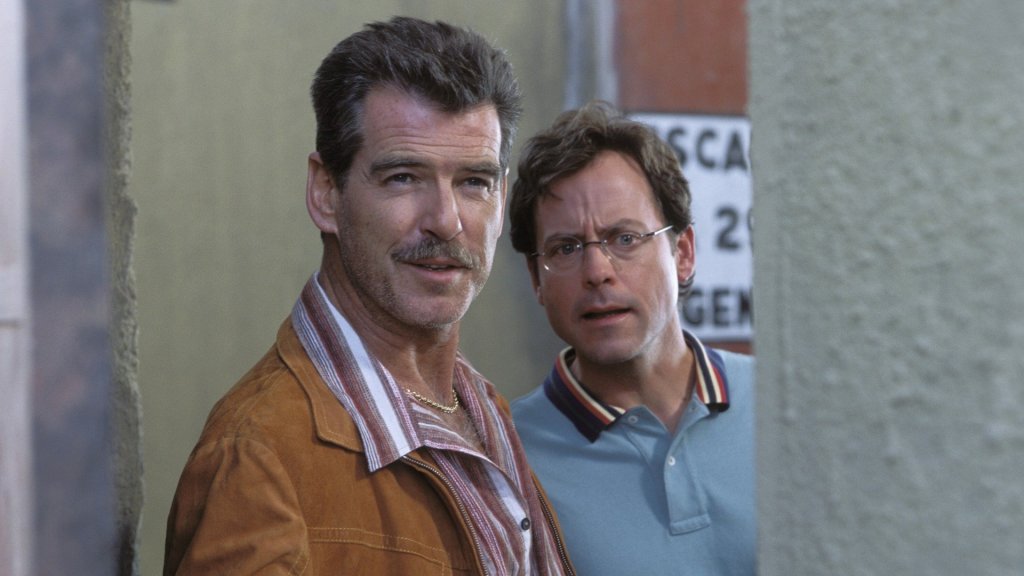
Because James Bond is one of the world’s most long-running and successful film franchises, any actor who essays agent 007 is to at least some extent stuck with the image for the rest of his career. Of all the ways to cope with this, Pierce Brosnan’s is my favorite: Playing parts that riff on the famous role. In The Tailor of Panama — a film I really must write a recommendation of someday — Brosnan gave a dark, sleazy, and unsentimental portrayal of the life of a foreign espionage agent (as you would expect in a John le Carré story). Even more fun is his brilliantly bizarre turn as a down at the heels hitman in writer/director Richard Shepard’s 2005 film, The Matador.

The plot: Two men who are on the surface completely different meet at bar in Mexico City. Danny Wright (Greg Kinnear) is a straight-laced, boring American suburbanite businessman whereas Julian Noble (Brosnan) is a once-dashing but now scruffy, dissolute contract killer whose only hobbies are visiting prostitutes and alcoholism. Yet both are similar in their desperation. Danny is still grieving the loss of his son, his marriage to his high school sweetheart (Hope Davis, perfect in a small but important part) is stressed, and this business trip is make or break for him financially. Julian, after years of globe-trotting wet work, is mentally and physically shaky, emotionally isolated from other people and himself, and losing the confidence of his boss Mr. Randy (Philip Baker Hall, good as ever). At first the men connect, but at a critical moment in the conversation (and arguably the critical moment of the film) Danny shows some vulnerability and Julian proves himself incapable of responding in a humane fashion. Danny stalks off and our story would seem at an end…but there’s so much more to come with these two characters which it would be a sin to spoil.

If Brosnan has to argue for his place in heaven, I would suggest he make his case with his portrayal of Julian Noble. At one level, he’s a terrifyingly cold killing machine. But simultaneously, he’s like a socially rejected school kid trying but failing to form a genuine human connection with anyone else. When he visits the Wrights’ home and sees how in love the couple is, he is visibly unable to understand what they experience together. But rather than conveying resentment or rivalry, Brosnan looks like a puppy who’s just been adopted from the pound.

Brosnan’s role is the showier of the lead parts, but don’t make the mistake of overlooking how effective Kinnear is here, in some ways also twisting his own screen image for comic and dramatic effect. He’s particularly good at bringing across the ambivalence we feel when we drive by a horrible traffic accident: We know it’s wrong to stare but we desperately want to…that’s his relationship with Julian in a nutshell.

The Matador is also a outstanding-looking movie. Along with top-flight work by cinematographer David Tattersall, the production and set designers outdo themselves across a range of eye-catching locations around the world.

Richard Shepard mainly works in television, and this is the first of his movies I have seen. Viewers might argue about whether Shepard is going mainly for black comedy, off-kilter drama, or character study here, but regardless of where you come down on that, you should agree that he’s created an utterly original movie and secured superb performances from his cast including career-best work from ex-Bond Pierce Brosnan.