Categories
Drama Mystery/Noir

Strange Impersonation

Let’s get one thing out of the way up front: The only plot elements in Strange Impersonation that are not utterly predictable are completely preposterous. But everything else is right in the under-appreciated Anthony Mann’s 1946 noirish tale of two formidable women locked in intellectual and romantic combat.

The film was made just after the war, and could be interpreted in light of women’s changed roles and the desire of some people to change them back. Our heroine, Nora Goodrich (Brenda Marshall, in a multi-faceted performance) is an independent, brilliant researcher. When her suitor, Dr. Steven Lindstrom (William Gargan) tries to kiss her in the lab she withholds her lips and admonishes “Please dear, science.” Her able assistant, Arline Cole (Hillary Brooke, in her best film role other perhaps than Woman in Green), is a different sort of woman. Arline can’t understand how Nora is putting her career ahead of marrying Dr. Lindstrom. During a dangerous experiment, Arline proves to be the ultimate frenemy; disfigurement, murder, plastic surgery, stolen identity, and romantic double dealing ensue.

Lindstrom’s character is actually too dull for these powerhouse women to be fighting over, so forget him and enjoy the sparks between the female leads. Hillary Brooke was a much better actress than her appearances on the Abbott and Costello show let her demonstrate, and her malicious charm is in full flower here. The film’s budget looks to have been about 50 cents, but Mann makes the most of it by setting up some intriguing camera shots and keeping the pacing brisk. Props to the UCLA Film Restoration team for their work on the now sharp-looking print of this old movie.

A great film? No. A good film that is worth 68 minutes of your time? Absolutely yes.

Categories
Blogs on Film

Over and Out: Another Odd Movie Trope

I have written about movie tropes such as the the tell-tale cough of death and the bullet that throws a 200 pound adult across a room. I was reminded of another while watching my sons play with hand held walkie-talkies.

The little boy on the other end says “Over and out!” after each transmission. He’s seen it on TV and movies a thousand times. Soldiers do it. Pilots do it. Secret agents do it.

But no one in real life does.

“Over” means that you have finished your message and are expecting a response. “Out” means you have finished your message and are ending the conversation. “Over and out” is thus an oxymoron.

Categories
Blogs on Film Uncategorized

Bob Hoskins’ Retirement

My sympathies to Bob Hoskins, who has been diagnosed with Parkinson’s Disease and will retire from acting. Although best known for tough guy roles, he was an actor of tremendous range who could also be endearing, gentle and funny on screen.

His breakout performance in “The Long Good Friday” is his best work, indeed one of the most potent star turns in the history of gangster films. I recommended it here, and recommend it again to all Hoskins fans who will be missing him on screen and wishing him well with his illness.

Categories
Action/Adventure British Drama

The Long Good Friday

British film director John “Frenzy” Mackenzie directed another of my recommendations, Unman, Wittering and Zigo, but will be best remembered for the thrilling, brutal gangster classic, The Long Good Friday.

Many American viewers struggle with the opening scenes of this 1980 film because the slang comes fast and some of the Cockney accents are thick. Also, the film’s only significant flaw is that its opening scenes are confusing as characters and plot elements are thrown at the viewer one after the other in overly rapid succession. (Indeed, even at the end, as with The Big Sleep, it is hard to tie up every loose end in your mind).

But you will forget all that the moment that Bob Hoskins arrives — or rather, explodes — onto the scene accompanied by Francis Monkman’s pulsating score. As mobster Harold Shand, Hoskins dominates his scenes, projecting power, ambition and the ever-present threat of violence. And he’s far more interesting than the typical mobster in that he fantasizes about being a captain of legitimate industry. Seeing his speech about the planned development of the Canary Wharf area as his boat moves down the Thames, his head framed perfectly by the Tower Bridge in the background, is like watching James Cagney play Margaret Thatcher.

The other thing that makes Harold interesting is that his gun moll is no dim-witted tart, even though her part was written that way in the original script. Helen Mirren is at her very best as the smarter, classier half of the criminal couple at the center of the movie. Thankfully the filmmakers realized that casting Mirren just for her looks would have been a gross under utilization of her intelligence and acting skills. She has a meaty, fascinating part and she makes the most of it.

As the film opens, Harold is trying to launch a legitimate business empire but is thwarted when his criminal empire suddenly comes under attack. But by whom? He has already killed everyone who could take him on, right? Or has he somehow created a powerful new enemy?

This is the best British gangster film since Get Carter and it’s even better the second time through once you understand the labyrinthine plot. Note for trivia fans: this was Pierce Brosnan’s first film – he had no lines and didn’t even meet the stars (He’s looking at the camera in the back seat, not Hoskins, in those knockout final scenes).

p.s. Like Monty Python’s Life of Brian, this film only made it to theaters through the support of rock legend George Harrison!

Categories
Action/Adventure British Drama Mystery/Noir

Get Carter

How appealing an actor is Sir Michael Caine? Put it this way: While watching him play Colonel Steiner in The Eagle Has Landed, a lot of otherwise sensible film goers find themselves rooting for the Nazis.

In the classic 1971 Brit gangster film, Caine’s likability and magnetism are in full flower, as he somehow makes us care about and even identify with Jack Carter, a thoroughly nasty mob enforcer bent on revenge. In the dreamlike opening of the film, we learn that Carter works for some sleazy, Kray-esque London crime lords who discourage him from investigating the death of his brother in Newcastle. Jack wasn’t close to his brother — indeed as the film progresses we find out he treated his brother horribly — yet something in Jack can’t accept his sibling’s mysterious death.

He heads to Newcastle on his own, a very risky proposition given the rough criminals who run the city (led by John Osborne — yes THAT John Osborne, in a quirkily effective performance). But it’s no more risky than seducing and planning to run off with his boss’ girlfriend (A stunning and believable Britt Ekland), which Carter is also doing as he tries to determine how and why his brother died. Indeed, Carter seems drawn to danger: The more threats he receives to drop his investigation the more determined he becomes to pursue it to its conclusion.

Carter also has to contend with an old rival named Eric (Ian Hendry). As a Newcastle criminal with “eyes like piss holes in the snow”, Hendry well portrays a mixture of fear and loathing of Carter, which is apparently what he felt for Caine. On the set, Hendry was sometimes drunk and openly bitter about Caine’s greater success as a star, and those emotions come out to advantage in the two men’s performances.

The other star of this film is the City of Newcastle, which is dear to me both because I lived there and because I grew up near Pittsburgh, Pennsylvania at a time when it too was a struggling industrial city on the skids. Newcastle is bleak and tough, but also has character and spirit. The feeling Geordies have for Get Carter is remarkable. A group of them even tried to stop the city from tearing down an old car park because it appeared in one of the movie’s many memorable confrontations (photo above) between Carter and the gangsters of Newcastle.

A young Mike Hodges came out of nowhere to brilliantly direct this gritty and involving film, one of only two great movies he made in his long and uneven career (the other is Croupier). Many directors would have overdone the violent scenes, but Hodges clearly understood that fewer and less graphic scenes actually have more impact, especially with a star like Michael Caine who can go from controlled cool to pure savagery and back at the drop of a hat. It makes his character, and the film, fraught with electrifying menace.

The clip I am posting is not strictly speaking a trailer. Rather, it’s the great Roy Budd playing his super-cool theme music, accompanied with scenes from the movie. If you have seen the film before, look fast for an important co-passenger on the train with Carter as he heads north.

Categories
Blogs on Film

Movie Trivia Quiz

Question 1: What famous movie includes the first film appearance of Jeff Goldblum (as a vicious thug), one of the first screen roles of Christopher Guest (as a police officer), and was long rumored — apparently incorrectly — to be the first screen appearance of Denzel Washington?

What a Character Blogathon: How Arthur Kennedy Changed my ...

Question 2: I have recommended the film noir Too Late for Tears, in which appeared Arthur Kennedy. Today he may be best remembered for playing the Lowell Thomas-inspired character of Jackson Bentley in Lawrence of Arabia, but he for decades gave good performances in films and on stage without ever becoming a classic leading man. What distinction does this talented actor share with Claude Rains? Hint: It makes them both markedly different from Walter Brennan.

Question 3: Internet Movie Database has brief descriptions of various films. Here is the one for Casablanca.

Set in unoccupied Africa during the early days of World War II: An American expatriate meets a former lover, with unforeseen complications.

Sometimes, the films described are so strange sounding I can hardly believe they are real, and that is the seed from which this quiz grows. Below are five short film descriptions of the horror/sci-fi genre. Three of them are real descriptions from IMDB whereas the other two I made up. Try to guess which is which.

A) A lesbian college couple becomes stranded in the middle of nowhere with a pack of orphaned Nazi zombie breeders hellbent on their demise.

B) When an island off the coast of Ireland is invaded by bloodsucking aliens, the heroes discover that getting drunk is the only way to survive.

C) Two awkward Martian teenagers infiltrate the Texas Chili Cook Off and try to reunite their squabbling parents at the same time.

D) After making a pact with a witch to win a high school tennis tournament, the class nerd is terrorized by blood-sucking tennis balls that can only be defeated by a magical silver racket.

E) Aliens resurrect dead humans as zombies and vampires to stop humanity from creating the Solaranite (a sort of sun-driven bomb).

ANSWERS ANSWERS ANSWERS ANSWERS ANSWERS

Question 1: They were all in the 1970 Charles Bronson vehicle, Death Wish.

Question 2: Both Kennedy and Rains endured the frustration of being nominated for a best supporting actor Oscar four times and never winning. Brennan was also nominated four times, but took home the Academy Award three times.

Question 3:

A) REAL. The film is Blood Soaked.

B) REAL. The film is Grabbers.

C) FAKE.

D) FAKE.

E) REAL. It’s Ed Wood’s so bad it’s good classic Plan 9 from Outer Space.

Categories
Blogs on Film

That Tell-Tale Cough in the Movies

Before the big romance scene, no one in the movies has to brush their teeth first to suppress halitosis. Before the big action scene, the hero never needs a pee break. And Henry Fonda, as the President, never passes gas.

The side-effect of the general exclusion of such realities of human biology from film is that when one of them appears, an experienced film goer knows it’s highly significant. One such example I have noticed a number of times is that if a movie character coughs for no apparent reason, they are going to die before the credits roll.

SPOILER ALERT

I was watching Finding Neverland a few years back. “Good movie” I thought as I watched, “but I wonder where the plot is going”.

And then Kate Winslet coughed.

The next hour unfolded entirely as expected. She died, Depp grieved.

Ditto the post-hack Julianne Moore in End of the Affair.

I am sure there are other instances of this phenomenon in the movies. It now awaits for some self-referential film buff director to really fool us by having a character cough for no good reason and then survive the movie in perfect health.

Categories
Blogs on Film

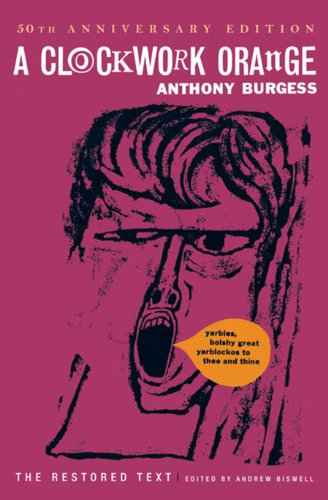
Understanding Clockwork Orange

On the 40th anniversary of Kubrick’s famous adaptation of the Burgess novel, Tim Robey analyzed the movie’s impact. I am surprised to see a British writer missing the critically important point that Kubrick’s version is not based on what Burgess actually wrote and what most Britons actually read.

The UK version of the book has 21 chapters. In the final chapter, Alex realizes the emptiness of his life, renounces violence and gets married (sounds Dickensian, does it not?). But the American publisher refused to publish the book in that form, making the book end after Chapter 20 with Alex still violent and sociopathic.

Kubrick read the US version and made the film based on that. He apparently saw the UK version much later and said he didn’t like it, but we will never know what would have been the cinematic result if the American publisher hadn’t imposed such a change in the book over the author’s objections.

Categories
Blogs on Film

My Second Favorite Fist Fight in the Movies

The Incredible Suit: BlogalongaBond / From Russia With Love: The ...

My preferred airline now has a channel of “classic films” which included the Bond outing From Russia with Love on my recent trip back home. And why not? It’s a very well made film and unlike the more silly and comic book-like Bond films that came along in the 1970s and 1980s, it’s fairly realistic and hence more engaging.

It also includes my second favorite fist fight in the movies, in which psychopath Donald Grant (played with convincing viciousness by Robert Shaw) and superagent James Bond (played by the inimitable Sean Connery) have it out on a train. The verbal build up is almost as good as the fisticuffs: It’s filled with class resentment, desperation and downright nastiness (“The first bullet won’t kill you, nor the second, not even the third…not until you crawl over here and you KISS MY FOOT”).

It helps a lot that Connery and Shaw were physically powerful men, and IIRC they didn’t like each other (I seem to remember that they almost got into a punch-up off camera). They attack each other with vigor, in an amazingly long scene shot in an eerie blueish light. And it’s not one of those pretty Marquess of Queensberry fights that Hollywood often serves up; there’s grappling and kicking and scrapping and brutal life or death struggle.

p.s. In case you are wondering why I describe it as my second favorite fistfight in film, it’s because cineastes have long recognized that unquestionably, the fight scene with the most energy, style, humanity and realism takes place in the wretched Mogumbo Bar on the Barbary Coast….

Categories
Blogs on Film

Physics and Bullets in the Movies

Trainstopping - TV Tropes

I watched Harry Brown a few years back, which the magnificent Sir Michael Caine personally lifts from forgettable to above-average. It does though feature a common movie trope, namely that a bullet can thrown a grown adult across a room (Presuming a powerful enough gun).

Mass and Speed are roughly interchangeble forces in comic books and in many films. If a superhero who weighs 200 pounds wants to stop a hurtling train or bus that weighs many tons, it’s entirely a matter of having his feet planted correctly and a good set of biceps.

In college I read in Soldier of Fortune magazine that if a bullet — which not only has small mass but penetrates upon impact — can throw a human being backwards 3 or 4 feet, then a regular feature of baseball games would be batters landing in the upper deck after being beaned by a pitcher.

My personal favorite guy-flying-improbably-backwards comes at the conclusion (at the 3:40 mark of this video of the gripping 1973 suspense film Day of the Jackal [SPOILER ALERT: this is the climax of the movie).