Categories
British Comedy

Kind Hearts and Coronets

It is so difficult to make a neat job of killing people with whom one is not on friendly terms.

Black comedy is the only genre of film that rivals my affection for film noir, which helps explain why my favorite of the thousands of movies I’ve seen is Dr. Strangelove. But if I had to choose a British black comedy as my most beloved, it would be Kind Hearts and Coronets.

This Edwardian tale begins with an imprisoned man facing hanging with aplomb. The cultured, impeccably dressed Duke Louis D’Ascoyne Mazzini (Dennis Price in his role of a lifetime) devotes his final night to writing his memoirs, thereby telling the audience in flashback of his extraordinary rise and impending doom. His mother was a member of the wealthy, aristrocratic D’Ascoyne family, but was cast out after she married a man who was not only a commoner, but Italian to boot (Imagine that — an Ealing Comedy about social class…). Raised in modest circumstances, Louis desired nothing more than to restore his mother — and of course himself — to the lofty social position which he is sure they deserve. The only problem is that a small army of D’Ascoynes (Alec Guinness. Yes, just Alec Guinness) stand in the way of the maternal line of succession to the family’s hereditary title. But if a chap is clever and ruthless enough, surely there’s some path he might cut to the top?

I’ve praised Robert Hamer in several other recommendations (It Always Rains on Sunday and School for Scoundrels) but he arguably never rose to a greater height than in this 1949 gem. As director and co-screenwriter (with John Dighton), he creates one of the drollest, driest, and delightful movies about social climbing by the two sexes (and how they get sex along the way too). In the process, he proves that movie characters do not have to be likable, only interesting. After all, about a third of the way through we are rooting for a serial killer to wipe out a perfectly gentle fellow, and are later pleased when our hero (?) begins courting the grieving widow.
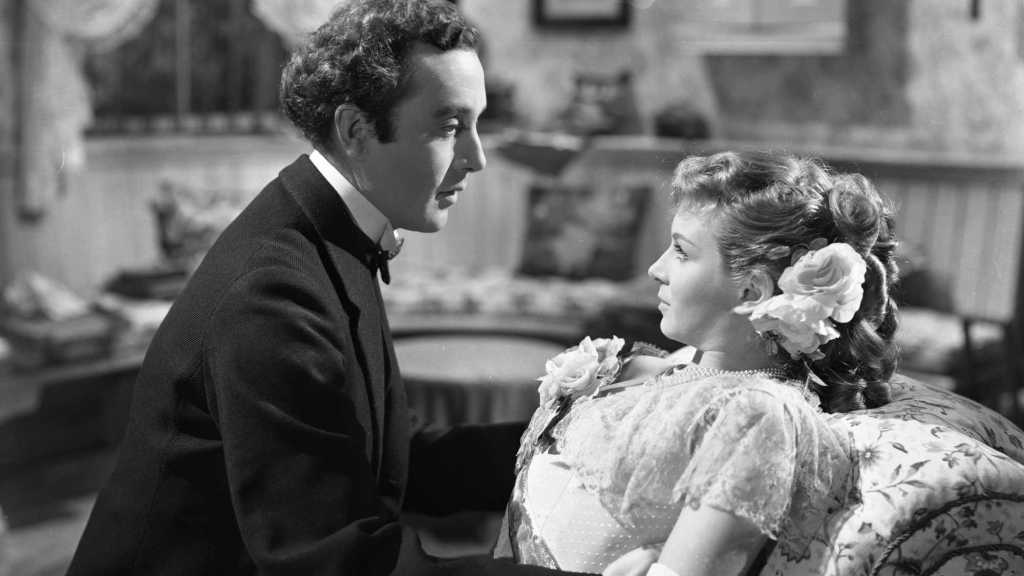
The movie is also famous for Alec Guinness’ legendary turn playing seven male and one female member of the same, relentlessly slaughtered, family. Of course we know it’s him each time, but with alterations in voice and movement, as well as some makeup and limited use of closeups, Sir Alec makes us glad to go along for the ride. Price is just as effective as Louis Mazzini, and while Valerie Hobson gets higher billing, Joan Greenwood as Mazzini’s lifelong friend and secret lover makes the stronger impression playing a woman who is just as committed to raising her station in life by any means necessary.

The film is brilliantly comic in its spree of absurd murders, juxtaposition of violent and sexual impulses with quintessentially British manners, and quotably humorous lines (I suspect we owe Hamer and Dighton for most of those, but I can’t say for sure because I haven’t read the Roy Horniman novel upon which the script is loosely based). The combined result is arguably one of the best films in British history, and is certainly the summit of black comedy cinema.

p.s. There is only one thing I would change in this film if I could, which is the reference made to the children’s rhyme, “Eeeny meeny miney moe”, which in the era included a racial slur.

p.p.s. Sadly, both Hamer and Price were addicted to alcohol, which led their careers go into premature decline before they died in their early 50s.
Categories
British Drama

Chariots of Fire

In Chariots They Ran

Some Best Picture Oscar winner selections are immediately recognized as mistakes by discerning viewers (American Beauty, Crash, Forrest Gump, Gladiator), others seem plausible contemporaneously but the bloom fades from their rose over time (Around the World in 80 Days, Dances with Wolves, Gigi). What a pleasure and a relief it is to revisit a Academy Award winner from 40 years ago and find that it hasn’t (ahem) lost a step: Chariots of Fire.

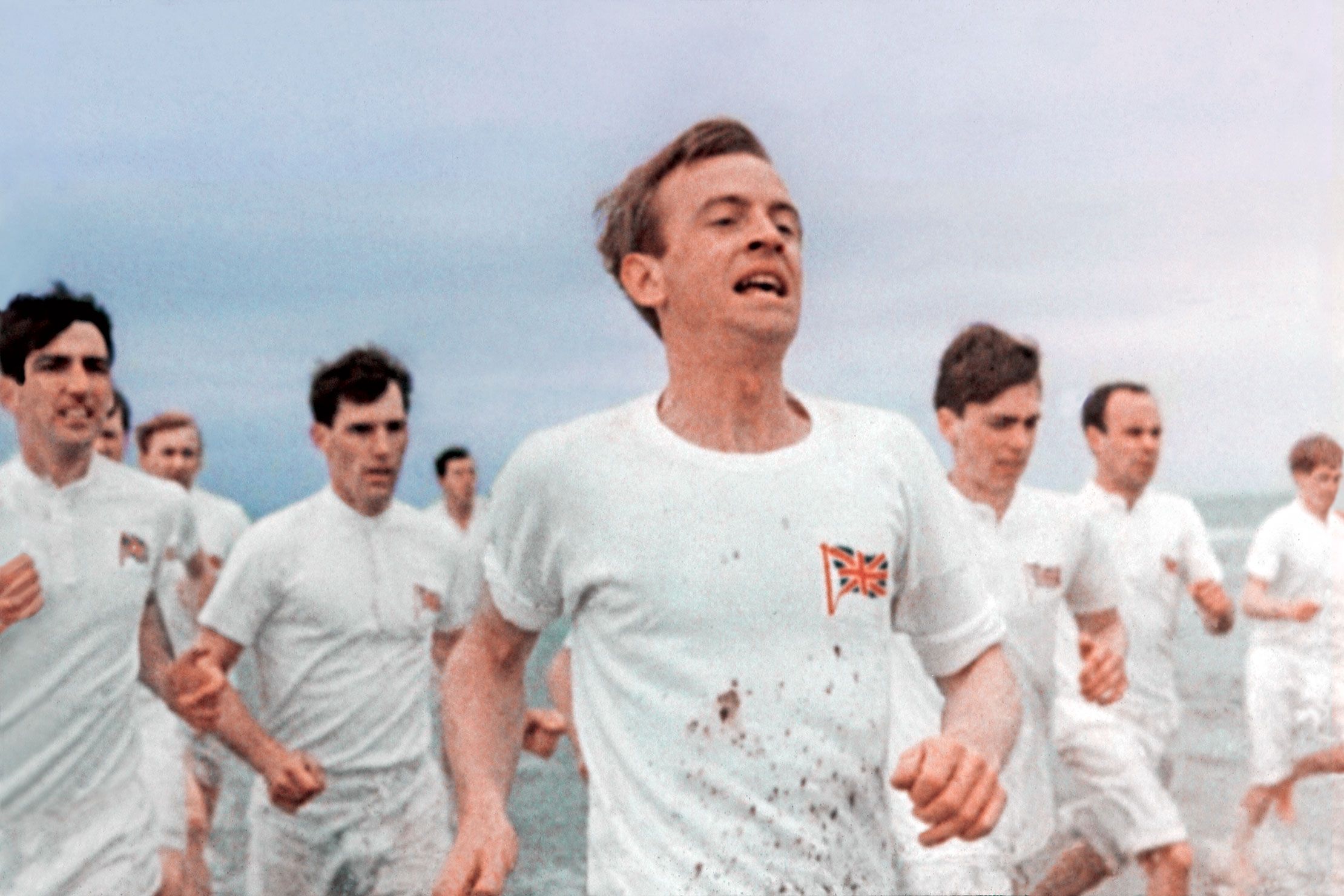
The plot: In the 1920s, two markedly different British men share a love of running and a desire to make a mark upon the world. Eric Liddell (Ian Charleson) is a devout Scottish Protestant who “feels God’s pleasure” when he runs whereas Harold Abrahams (Ben Cross) is an English Jew striving to be accepted by the Establishment. Both are seen as misfits in elite circles and struggle to balance their fierce athletic commitment with the rest of their lives and loves, yet both are talented, determined, and full of competitive fire. As opponents and teammates, they bring themselves and their nation to the pinnacle of tension and opportunity at the 1924 Olympics.

REVIEW: Chariots of Fire | The Viewer's Commentary

There are many ways to understand what Colin Welland’s skillfully crafted story is “really about”. Is this film about how sports can ennoble individuals and forge deep friendships? Is it about the changing nature of post-World War I Britain? Is it about how outsiders crave acceptance so strongly that they are driven to magnificent achievements? Is it about how young people find their purpose in life? Yes, yes, yes, and yes. This is a rare film that different viewers can appreciate — even be deeply moved by — for entirely different reasons.

Chariots of Fire is also a notable example of how even a little-known director can have at least one great movie in him. Hugh Hudson has been making documentaries and television commercials for years when he was tapped for Chariots of Fire, his first feature film. That doesn’t sound like a promising backstory, but Hudson proves a masterful storyteller, particularly in how he focuses more heavily on the human experience of athletes than on the races themselves (There is a limit to how intrigued most film goers can be by people running in a circle). Also to Hudson’s credit: There isn’t a bad performance or bad shot in the whole film.

The lead actors make a strong impression, as do the supporting players, including Ian Holm as Abrahams’ coach, Alice Krige as his lover, and Nigel Havers (who anchored another of my recommendations, The Charmer) and Nicholas Farrell as his Cambridge University friends and fellow athletes. The film is also famous for its innovative score by Vangelis…I am probably alone in not caring for it that much, but there is so much else to savor in this remarkable film that this in no way diminishes my admiration for Chariots of Fire.

The film takes some liberties with historical facts: Liddell’s refusal to run heats on Sundays did not create a last-second crisis for the British team at the Olympics because he had months of advance notice in which to prepare for a different event, and Abrahams’ family finding the Establishment impenetrable is hard to square with both of his brothers being knighted in real life. But the film isn’t a documentary, it’s a drama based on real events, and every scene is utterly true in psychological and emotional terms. Sometimes Oscar gets things exactly right.

Categories
Action/Adventure Horror/Suspense

The Silent Partner

Among bank heist movies are some gems that inject a clever plot twist or perspective that livens up the otherwise familiar contours of the subgenre, including Inside Man, Charley Varrick, and JCVD. In 1978, a small Canadian film earned a place among such worthies by crafting a story that is as much a character study as a caper film: The Silent Partner.

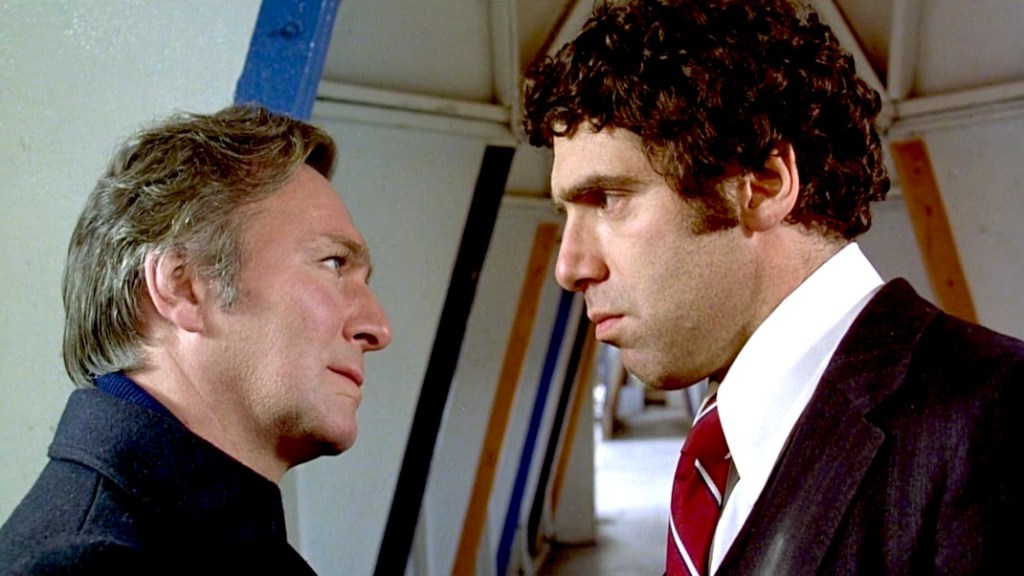
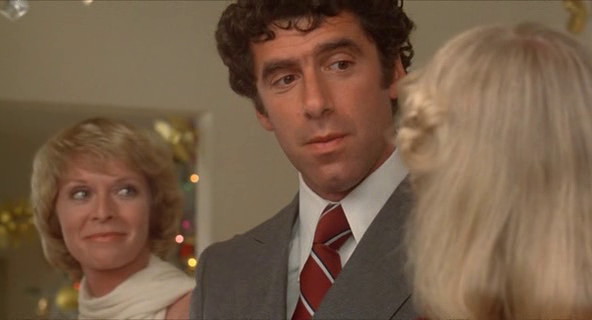
Like Charley Varrick, The Silent Partner features a bank robbery that hides another crime. In this case, that crime is pulled off by a seemingly mild-mannered bank clerk named Miles Cullen (Elliot Gould). When a hardened criminal Harry Reikle (Christopher Plummer) attempts a stick up, Miles gives the robber a pittance and secretly pockets most of the bank’s money himself! But the sadistic Harry doesn’t take kindly to being duped, commencing a tense and dangerous battle of wits between the two men.

Elliot Gould is in good form here playing a man who is continually underestimated by others. Gould makes credible Miles’ increasing confidence in his criminality and also his sexuality. He is matched by Plummer’s disturbingly good turn as a slightly fey yet clearly vicious sociopath. Susannah York, as a co-worker who is both romantically interested in yet confused by Miles, and Céline Lomez as a sexy woman of intrigue, add erotic sparks to the story. Indeed, there is a lot of sex laced throughout the film — including, Plummer makes us sense — some sexual fascination with Miles by Harry.

sunset gun: Elliott Gould on The Silent Partner

There’s a lot of talent around these actors. Daryl Duke, mainly a television director, makes the most of his chance to helm a motion picture. I felt he let the pace slacken a bit too much about 2/3 of the way through, but his storytelling skills and ability to establish tone are impressive. Screenwriter Curtis Hanson and cinematographer Billy Williams showcase the talent that would eventually bring them Oscars (For L.A. Confidential and Gandhi, respectively). Jazz legend Oscar Peterson provides a fine score.

It all adds up to one of most original and gripping bank heist movies ever made. The Silent Partner succeeds both as a thrilling crime film and also as a portrait of how an “ordinary” person can summon remarkable reserves when pushed to the limit.

p.s. Look closely for John Candy as a bank employee who pursues the office floozie.

p.p.s. There is one extremely violent scene in this movie (you will know it when you see it) that Daryl Duke hated so much that he refused to shoot, but the producers put it in anyway without him.

Categories
Horror/Suspense

The Changeling

Because haunted house movies have been a staple of cinema for nearly a century, it’s hard for filmmakers to find fresh ways to grip audiences with that mixture of cobwebs, dark hallways, creaking doors, and restless spirits that makes for an enjoyably horrifying night at the movies. In 1980, a Canadian film nevertheless managed to summon up some of that old black magic in a scary, effective thriller: The Changeling.

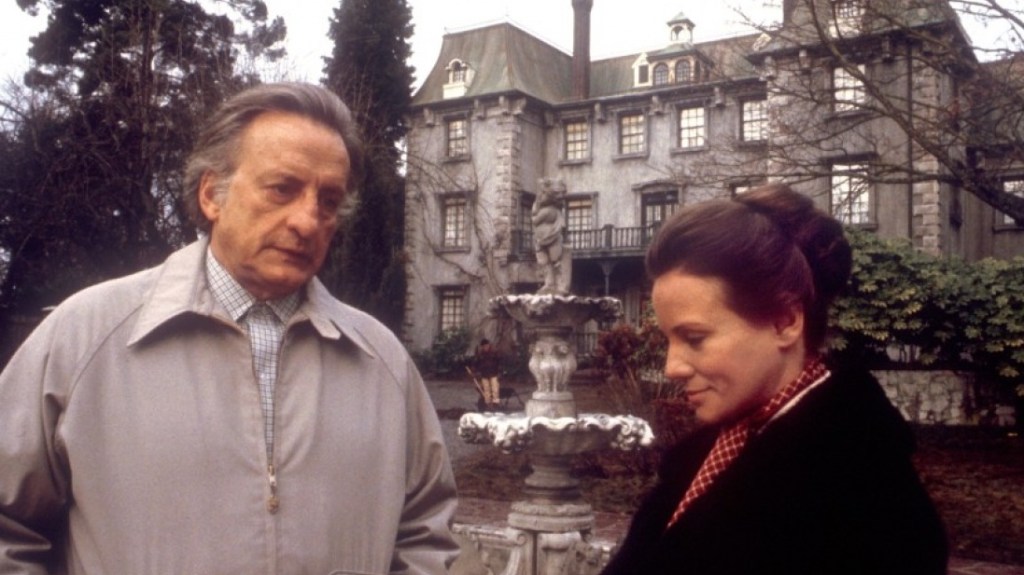
The story opens with composer John Russell (George C. Scott) undergoing an unspeakable family tragedy. Disoriented and wracked with grief, he retreats to an old mansion which is rented to him by a representative of the local historical society (Trish Van Devere). But before you can say “poltergeist” strange phenomenon evince themselves in the old dark house, unnerving Russell but also driving him to investigate a mystery every bit as unsettling as his own personal tragedy. What happened in this foreboding pile, and how does it connect to a wealthy and powerful politician (Melvyn Douglas)?

Director Peter Medak (who also helmed another of my recommendations, The Ruling Class) knows how to frighten an audience with style, pacing, and mood rather than cheap jump scares. He and cinematographer John Coquillon also effectively use a nice mix of extended trolley shots, deep focus, changes in camera perspective, and other techniques to keep the audience agreeably wound up and off-balance.

George C. Scott strikes the right emotional notes in the lead, as someone bewildered by loss and in need of a new purpose. He and Van Devere, who were married in real life, do a particularly fine job of portraying halting middle aged attraction. The audience senses they are both interested in each other but for their own reasons are unable to act on their feelings, and so they sublimate them into a shared quest into the supernatural. Melvyn Douglas, continuing the late life acting success he enjoyed (see for example my recommendation of I Never Sang For My Father) also registers in a role of a sort of villain who is also sort of sympathetic.

There are moments when Russell Hunter’s story, as scripted by William Grey and Diana Maddox is a bit confusing, but it’s fundamentally clever, creepy, and engaging. The result is a very worthy entry in the haunted house genre that scooped up many awards in its native country, including for production designer Trevor Williams, who gives us a haunted house set, to, uh, die for.

Categories
Drama

I Never Sang For My Father

I Never Sang for My Father (1970) - IMDb

Playwright Robert Anderson had a big Broadway hit in 1953 when he drew on his experience of young romance in Tea and Sympathy. He went back to the autobiographical well again with a 1968 play based on his family of origin. In 1970, Anderson and one of the producers of the play, Gilbert Cates, brilliantly translated it to the silver screen: I Never Sang For My Father.

The plot to this film is so spare that it belies the work’s impact. Gene Garrison (Gene Hackman) is a widower in New York City who struggles to connect emotionally with his successful yet domineering father Tom (Melvyn Douglas). Gene wants to move to California to live with his new lover (Elizabeth Hubbard) but feels guilty about leaving his mother (Dorothy Stickney); guilt which Tom actively reinforces. As the family faces a crisis, complications increase with the return from Chicago of Gene’s sister Alice (Estelle Parsons), who was disowned by Tom years ago for marrying a Jewish man. World-class acting and melancholy observations about aging, parenting, and families ensue.

What makes the movie a knockout is Anderson’s realistic, unadorned dialogue and the superb performances by the cast. Melvyn Douglas had a remarkably long career in Hollywood, and it’s easy to see here why he didn’t fade away after his success in the 1930s and 1940s. He doesn’t make Tom easy to hate or to like. Tom has accomplished great things in life, overcame a brutal upbringing, and can be quite charming. Yet he’s fundamentally narcissistic, seeing other people mainly as extensions of his own desires. Tragically, it’s less so unwillingness than inability to genuinely love that brings so much suffering on himself and his children. Hackman is also achingly good here, playing off of Douglas with a look, a change in posture, or a weakness in his voice that tells you everything you need to know about Gene’s relationship with Tom. It’s also terrific to see Hackman working so well with the magnificent Estelle Parsons again, after their star-making roles in Bonnie and Clyde. Her Alice is an anguished figure, who suffered mightily to marry whom she wanted and appears to be suffering since doing so nonetheless.

Gilbert Cates became a personage in Hollywood without making many movies: He directed the Academy Awards’ telecast for many years and was also the founding Dean of UCLA’s School of Theater, Film, and Television. Filming a play is hard because if you take an overly static approach, it looks like a play trapped in a movie, but if you overdo camera angles and movement, it can be gimmicky. As producer-director, Cates strikes the right balance, and when a cast gives such uniformly sterling performances, you know the director did their job well. My only gripe about Cates is his choice of music, which is too heavy-handed in places and includes a fairly wretched song early on that would better have been binned.

To close with an intriguing bit of trivia about this quiet gem of a film: You could consider it a credit to Hackman and Douglas that the former was nominated for a Best Supporting Actor Oscar even though he was on screen more, while the latter nominated for Best Actor. Too much credit going to the old man, his son’s achievements underappreciated..sometimes performances are so good that Oscar voters mix up actors with the characters they portray.

Categories
Drama Mystery/Noir

The Limey

Fresh off his success adapting the Elmore Leonard novel Out of Sight, Steven Soderbergh partnered with screenwriter Lem Dobbs in 1999 to produce another strong film that feels like an Elmore Leonard story: The Limey.

The plot: A greying but tough as nails Cockney career criminal known only as Wilson (Terence Stamp) finishes his latest stay in the Big House and comes to sun-soaked Los Angeles to investigate how his daughter Jennifer died (Melissa George). He is guilt-stricken over his considerable failures as a parent but loved Jennifer intensely, so much so that he can’t accept that her death was really due to an unremarkable automobile accident. Wilson’s charm is considerable, and he soon secures the assistance of two of Jennifer’s friends, an ex-con who’s gone straight (Luis Guzmán) and a modestly successful actress (Leslie Anne Warren). From them he learns that Jennifer was in a relationship with a hot shot record producer named Valentine (Peter Fonda), who has a sleazy side hiding behind his perfect tan and aggressively whitened teeth. As Wilson starts to investigate, he finds himself tangling with Valentine’s head of security (Barry Newman), assorted thugs, and federal agents who are also on Valentine’s trail. A noirish tale of vengeance and regret follows.

Steven Soderbergh on the 20th Anniversary of 'The Limey' - Rolling Stone

The Limey can be enjoyed simply as a professionally produced and performed rendition of a familiar movie story line. It includes exciting action scenes and some good dramatic moments. There are also some laughs, the biggest of which comes from Stamp’s theatrical Cockney slang-filled speech delivered to a calmly befuddled Bill Duke (the director of one of my recent recommendations, Deep Cover). There’s nothing wrong with making a purely entertaining movie, but many people, including me, see something more in this film.

What is The Limey “really about”? After Gene Siskel died, Roger Ebert tried out a number of co-hosts on his television show At The Movies, my favorite of whom was B. Ruby Rich (who alas, did not get the job permanently). In their discussion here, Rich sees the movie as being a father-daughter story, whereas Ebert says its about the contrast between the genuinely tough central character and soft Californians who think they’re tough, but aren’t. Those are intriguing takes; personally I saw The Limey as being about the lingering remains of the 1960s.

Stamp and Fonda were both 1960s icons, and seeing them duel it out here in their declining years and come to terms with the harm they did along the way, makes a mournful statement on that era, particularly when Valentine says the 1960s “were just 66 and early 67 — that’s all it was”. Newman, of Vanishing Point fame, another cult figure from that era (There was also a scene with sex kitten Ann-Margret that was cut from the final film) adds to the throwback feel, as does Soderbergh splicing in flashback scenes of Stamp from the 1967 film Poor Cow. Stylistically, the adventurous editing, repetition of key images, and violation of linear chronology recalls the experimentalism of cinema in that era (Even though Soderbergh didn’t add all that in until post-production when he saw that a more conventional structure didn’t work). It all gives the film an elegiac meta-theme on top of that of the main story, making it stick with you for much longer than other films of its genre.

p.s. The DVD release of includes in its special features menu an audio commentary track that is legendary among film buffs. Rather than do the usual dull nodding along saying how great each scene and actor was, Soderbergh and Dobbs argue intensely and intelligently about how the film turned out. It’s fascinating both for what it reveals about them as people and also about how directors and screenwriters think.

Categories
Drama Mystery/Noir

Deep Cover

Deep Cover | Wonders in the Dark

Many hip-hop music fans know the hit soundtrack of Deep Cover because it featured a pre-mega fame Dr. Dre and Snoop Doggy Dogg. In this recommendation, I want to make a case for Deep Cover as a movie. It was a modest money maker in 1992, but got a bit lost in the avalanche of drugs and crime flicks that Hollywood put out in that era. I re-watched it recently for the first time since in debuted in theaters, and was struck by how it laid to waste its competition in the genre.

Based on a story by accomplished screenwriter Michael Tolkin, the film centers on an apparently straight-laced cop named Russell Stevens Jr. (Laurence Fishbourne) whose father was a drug-addicted criminal and met a violent end. A shifty DEA official (Charles Martin Smith) sees in Stevens the ideal personality for an undercover agent in the drug trade. Stevens agrees, and under the name John Hull begins penetrating the seamy, violent underworld of Los Angeles. But he develops doubts not just about whether the investigation is morally justifiable but also about his own nature.

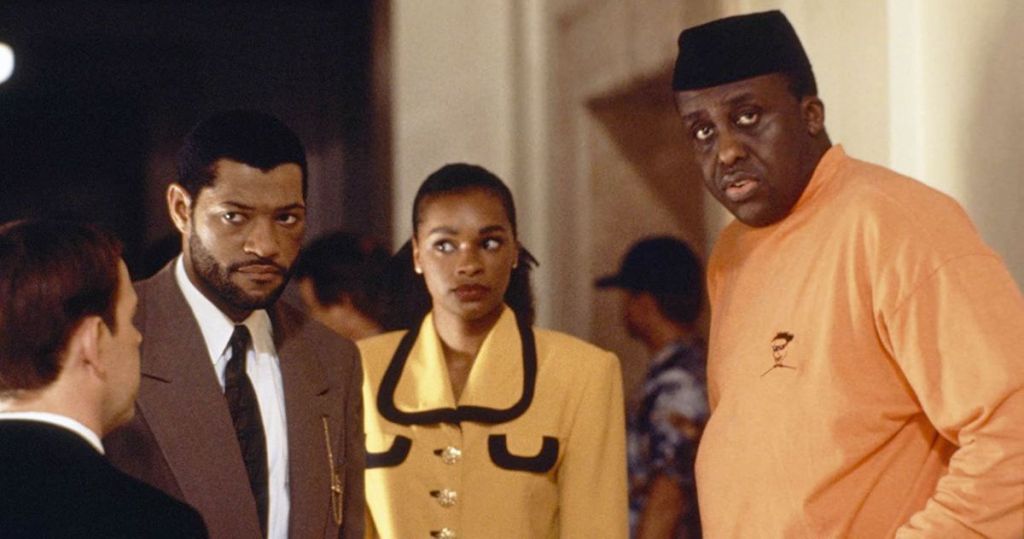
Director Bill Duke (on the right in this photo taken on the set) is one of many talented artists who have a higher profile among Blacks than whites. To the extent white filmgoers know him at all, it’s mainly as a portrayer of fearsome tough guys in the Arnold Schwarzenegger movies Predator and Commando. But he’s also a skilled director who has focused his cinema work on Black-centered stories (e.g., A Rage in Harlem, Dark Girls). What he achieves in Deep Cover is unique to my knowledge, namely crossing conventions of 1970s Blaxploitation with mid-20th century film noir. That could have easily crashed and burned because the former genre embraced more traditional morality tales (evidenced here in the parable-like opening sequence with Stevens’ father, Smith’s role as a white-as-rice boss with an dirty agenda, and Clarence Williams III’s role as a righteous cop/pastor blend) and the latter cherished murky gray morality and characters like Russell Stevens Jr.. But Duke mixes these potentially competing cinematic traditions into a potent cocktail with a smooth finish.

And speaking of underappreciated African-American artists, how did it take so long for Hollywood to give Laurence Fishburne a leading role? His anguished performance as a man trying to atone for his father’s sins while stomaching the rot around him gives Deep Cover psychic weight to accompany its effective action sequences. Fishburne also strikes sparks with Victoria Dillard, who plays an African art dealer who launders drug money on the side (or maybe other way around). In a wonderfully screwy yet scary role, Jeff Goldblum gives Fishburne first-class support, including providing some comic relief in this otherwise tense drama.

p.s. Michael Tolkin was also writer/director of another of my recommendations, The Rapture.

Categories
Documentaries and Books

The Inventor: Out For Blood in Silicon Valley

I direct a speakers series at Stanford Medical School which features prominent thinkers and policymakers in health. In 2015, as I huddled with advisors to choose our upcoming guests, I heard the name Elizabeth Holmes for the first time. Smart people I respect told me that she was upending the diagnostic testing industry and that she was being advised by luminaries like former cabinet Secretaries George Schultz and Jim Mattis. I didn’t really understand what her company did, but judging how many impressive people were impressed with her, I joined the rational herd and assumed she’d be a terrific guest. It was just dumb luck that I didn’t invite her before a brilliant investigative reporter exposed the fraud for which she was eventually convicted. The story of this strange, beguiling, person and the company she founded is expertly told in Alex Gibney’s 2019 documentary The Inventor: Out For Blood in Silicon Valley.

As he showed in his documentary on Enron (my recommendation here) Alex Gibney has a talent for telling complex stories of corporate malfeasance in a clear and compelling fashion. With his trademark superb editing of his own interviews with principals, candid footage provided by insiders, and news stories, Gibney introduces us to the weirdly unblinking, suspiciously baritone-voiced, black turtleneck-wearing Stanford dropout who transfixed my local community and the world for a few years with the claim that myriad diseases could be detected in the tiniest drops of blood: Elizabeth Holmes. Gibney makes clear how Holmes’ boundless confidence in her own ideas likely made her more effective at persuading employees, journalists, investors, and politicians to aid her cause.

The gender dynamics Gibney illuminates are one of the more fascinating aspects of the film. Stanford Professor Phyllis Gardner, who was never fooled, notes that Holmes had a particular talent at getting old, highly accomplished men to see her as surrogate daughter or granddaughter, and to trust and protect her as such. Much of the media and political world, desperate to have a female Silicon Valley star to promote, also gave her a pass she did not deserve.

Even though some journalists are shown in a poor light, overall this movie made me feel better about the enterprise. Roger Parloff is candid about how he was initially taken in by Holmes and then to his great credit, publicly recanted. John Carreyrou’s investigative instincts and determination are impressive, as is the fact that his employer, the Wall Street Journal didn’t cave under pressure despite the fact that Rupert Murdoch invested in Theranos (That pressure by the way was applied by David Boies, who between representing Theranos and Harvey Weinstein serves as an object lesson in how to torch a hard-won reputation in late life).

The Inventor is not the most visually interesting movie. Gibney does the best he can, but there are only so many shots of blood testing equipment and corporate headquarters that the human eye can stand. Yet even after having read Carreyrou’s excellent book Bad Blood and knowing a number of the people in this movie, it still taught me new things and engaged me throughout. Bravo to Gibney, who again fulfills his reputation as one of the world’s leading documentary makers.

Categories
Action/Adventure Horror/Suspense Science Fiction / Fantasy

Them!

Before Aliens, before Starship Troopers, before The Swarm, even before Tarantula (my recommendation here), Hollywood discovered that bigging up bugs into a threat to humanity could translate a prevalent human anxiety into a nerve-jangling cinematic experience. The year was 1954 and the movie has since became revered as a trendsetting sci-fi classic: Them!

As I have said many times on the site, I love films that put the audience immediately into the story without ponderous context-setting. Them! is a master class in the art. The film opens with a little girl (Sandy Descher), visibly in shock, walking mutely across the New Mexico desert. She is rescued by police, led by the brave and compassionate Sgt. Ben Peterson (James Whitmore). The cops investigate, finding homes torn open, people dead or missing, and a suspicious quantity of spilled sugar. When the horrifying nature of their atomically-charged adversary becomes apparent, the authorities call in a stout FBI agent (James Arness), an eccentric, elderly myrmecologist (Edmund Gwenn), and his equally scientifically gifted daughter, who is also a dish (Joan Weldon). A thrilling humanity vs. super-insect war ensues.

48. Them! (1954) | Wonders in the Dark

Hollywood has always had prestige directors who make big budget, A-list films. But in the era when many people went to the movies every week, the studios also needed competent, no name directors who could efficiently deliver movies of all forms on a tight schedule. Gordon Douglas was cut from that cloth: he directed 27 films for Warner Brothers in the 1950s alone, most of which were modestly budgeted films destined to be second features in theaters for a couple weeks and then be forgotten. But he could make a very good movie when he was given the tools, as was here courtesy of original story writer George Worthing Yates, adapter Russell Hughes, and screenwriter Ted Sherdeman. His artistically outstanding decision was to direct the first 30 minutes of this movie like a ghost story set in the eerie expanses of sand-swirled desert. After one of the most famous big reveals in sci-fi film history, the story then becomes a more conventional “bug hunt”, but Douglas handles that form well enough to bring the audience along with him.

Them! (1954)

Whitmore and Arness’s characters don’t make much sense, in that they start out as a highway patrolman and FBI agent and end up practically running the U.S. military’s anti-ant operations. But they are strong-jawed enough to be upstanding and believable action heroes. As a daffy but brilliant professor, Gwenn adds some welcome humor, and Weldon is credible as a confident and intelligent woman (not many of those in movies of this period) who catches Arness’ eye while also helping save our species.

The other attraction here are the Oscar-nominated special effects. By modern CGI standards, they are of course laughable. But at the time, they were pathbreaking. And in any event, part of appreciating old monster movies is finding the charm of the craft of SPFX creators in a pre-high-tech environment.

Categories
Action/Adventure Comedy

To Be Or Not To Be

Long before Mel Brooks got everyone laughing at Nazis, a Hungarian-born producer (Alexander Korda) and German-born director (Ernst Lubitsch) somehow persuaded Hollywood to take a major risk at the height of World War II: Combine an espionage thriller with screwball comedy! The resulting film met a decidedly mixed reception in 1942, but over time has become recognized as one of the great movies of the 20th century: To Be Or Not To Be.

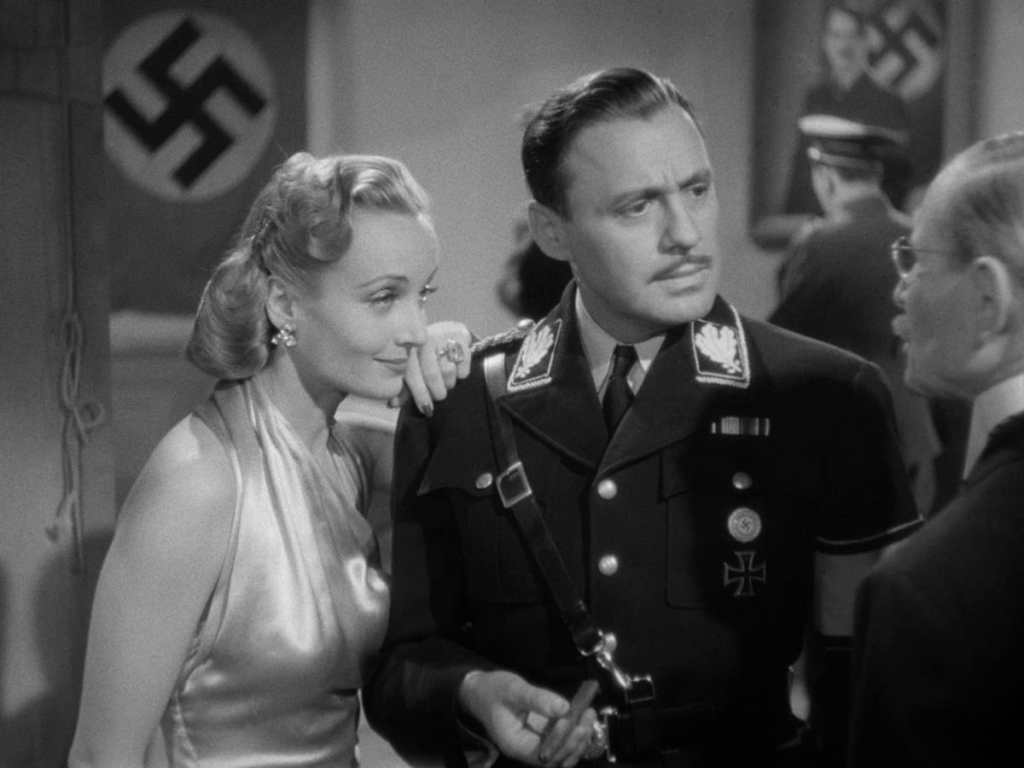
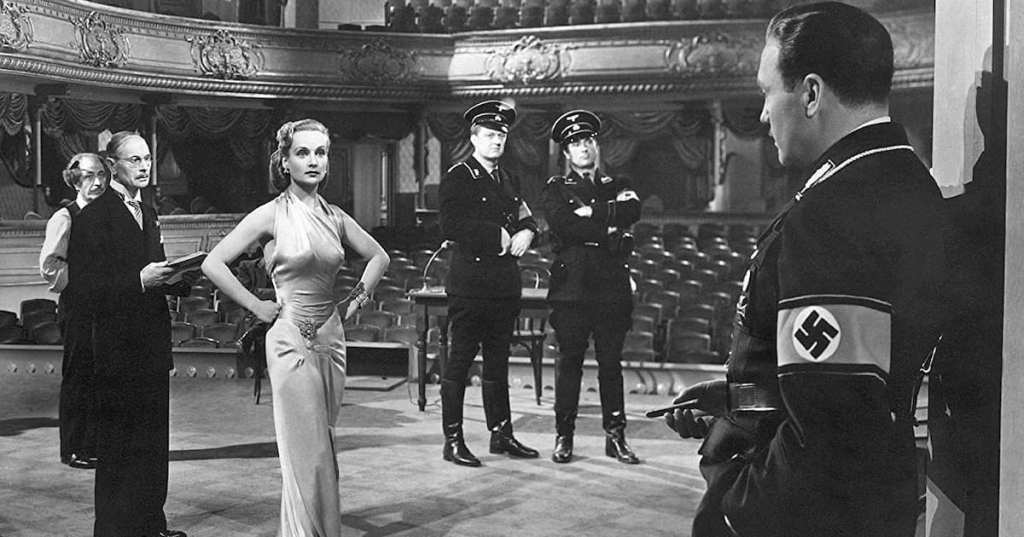
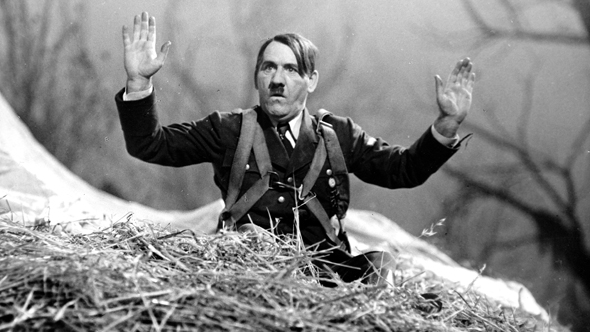
The plot: A Polish acting troupe anchored by Maria Tura (Carole Lombard) and her hammy husband Joseph (Jack Benny) have little to concern them other than Shakespeare and ardent fans — too ardent for Joseph in the case of a handsome young admirer of Maria’s (Robert Stack, in his film debut). But their lives, like the film itself, turn gravely serious when the Nazis invade Poland. When the Polish underground is threatened with exposure by a clever double agent (Stanley Ridges), they realize that their theatrical abilities must be called upon to pull off the deceptive performance of a lifetime. Can they fool the Nazis to save the underground, even if one of them has to impersonate you know who? An utterly original combination of adventure and laughter ensue.

This movie could have been a disaster, even offensive, given how it switches from farce to suspense to lightness to moral gravity and back. That it works so brilliantly is a powerful testament to Edwin Justus Mayer’s superb screenplay, a uniformly stellar cast, and Lubitsch’s directorial magic.

Lubitsch died suddenly in 1947 and had less enduring artistic impact than one might expect, perhaps because his comedic and romantic style were seen by post-war filmmakers as dated. But he was remarkably talented (His friend Billy Wilder has a charming explanation here of “the Lubitsch touch”) and his best films remain highly entertaining today. To Be Or Not To Be is particularly impressive because effectively combining such emotionally different tones would challenge a director in any era, but even moreso at a time of national peril (and indeed, some critics and audiences were put off by this film in 1942). I admire how Lubitsch slams down the gas pedal without fear. In particular, I have mentioned a number of times on this site that I appreciate films that don’t dawdle and explain too much at the beginning; on that principle I admire the outrageous, ludicrous, gut busting way Lubitsch starts To Be Or Not To Be.

I can’t end this review without paying tribute to another Hollywood legend. With all the world’s women throwing themselves at him, why did Clark Cable marry Carole Lombard? Asked no one ever. In her last film, she is luminous in her beauty, style, wit, and intelligence. The script gave Benny most of the explicitly funny lines and a tailor-made part, and he’s does well with it. Yet Lombard somehow outshines him just the same. Hollywood lost one of best performers of the era when she tragically died serving the war effort, but she’s still triumphing over her enemies today every time someone else watches this classic film and guffaws at a Nazi’s expense.