Categories
Action/Adventure Drama Mystery/Noir

D.O.A.

I have recommended The Turning Point, starring Edmond O’Brien and featuring Neville Brand in a small part as a vicious killer. For a change of pace, let me also recommend a film starring Edmond O’Brien, featuring Neville Brand in a somewhat larger part as a vicious killer: 1950’s D.O.A.

D.O.A. has one of best opening premises in the history of film noir. A man stumbles down an impossibly long, shadowy hallway at the police station, followed by a tracking camera. Upon meeting the officer in charge of homicide investigation, he announces that he wants to report a murder: His own. What follows is partly a mystery/action story and partly an existential meditation.

The central character, Frank Bigelow (O’Brien) has a life that screams conventionality. He’s an accountant in a small town with a small town girlfriend (Pamela Brittan) who is nagging him to do the decent thing by marrying her, settling down, and having a conventional family. This is a noir film, so naturally Bigelow wants nothing more than to flee. He goes for a wild weekend in San Francisco, where he ogles sophisticated urban beauties and swills liquor until for an inexplicable reason, someone covertly poisons him with a lethal, slow-acting toxin. After the terminal diagnosis is confirmed, a justly famous film noir sequence commences as Bigelow races madly through the crowded streets until, exhausted, he looks up to heaven and then down to see a little girl’s ball at his feet. He returns the ball to the girl and then sadly stands up, knowing that he will never be carefree as a child again for he is doomed to die, and very soon at that (Nice touch: Look at the particular magazine arrayed next to him in the shot above).

Although Bigelow cannot save his life, he is driven to understand why he will die, and thus spends his final precious days not enjoying what remains, but ruthlessly pursuing his killer. With his death in no doubt, he transforms from a mild-mannered accountant into a fearless, even brutal, angel of vengeance. He doesn’t fear death from the assorted villains he encounters, just the prospect of dying before he can find out why a nobody accountant from a nothing small town was worthy of cold-blooded, calculated murder.

As you would guess, D.O.A. offers much to chew on thematically. It can be enjoyed at one level as an exciting (if overly complicated) crime mystery, but at another level it’s a philosophically engaging take on venerable film noir themes of isolation, futility and the cruelty of fate.

Director Rudolph Maté earned his place in movie heaven as a cinematographer, including in my recommendations Vampyr and Gilda. He directed much less often, and that’s a good thing because he didn’t attain the same level of excellence in that role. Here, he allows some of the actors to go over the top too often, and there is also an embarrassingly puerile use of a “Va Va Voom” sound effect when O’Brien sees attractive women that is completely inconsistent with the noir mood.

I would say I wish Maté had been director of photography instead, but that wouldn’t be fair to Ernest Laszlo, who gives the film a stunning look, especially in the street scenes in San Francisco and Los Angeles. The crowded street shots must have been particularly challenging from a technical viewpoint.

Neville Brand, in a role that helped make his fairly successful if completely typecast career, is admirably scary here as a psychopath, and Luther Adler makes a smooth, cultured, but ultimately nasty villain. As mentioned, some of the other performances — including O’Brien’s — are uneven, but all the main actors have their moments.

The basic existential conceit of D.O.A. is not about a man trying to prevent his death; he doesn’t have that power. Rather, it’s all about the desire to know why — why me and why this fate? The best noirs never answer this question, but bathe the audience in the agony of being unable not to ask it nonetheless. D.O.A. is a noble example of this tradition.

D.O.A. is in the public domain, so you can watch it for free on Internet Archive. However, that print looks nowhere near as good as the digitally remastered version, which you can probably find on a paid streaming service.

Categories
Action/Adventure Mystery/Noir

The Crooked Way

Amnesia is one of the most overused and hokey plot devices in film. Yet if the rest of the elements of a good movie are wrapped around it, viewers can suspend disbelief and really enjoy themselves. A perfect example is 1949’s The Crooked Way.

The plot: A war veteran who thinks his name is Eddie Rice (John Payne, again playing a noir archetype, the ex-GI) is being treated for a head injury in a San Francisco military hospital after a heroic career as a soldier. Eddie’s physical function has returned, but he can’t recall anything about his life in Los Angeles before the war. Hoping to recapture his memories, he leaves the Bay Area for L.A. (as in real life, always a bad idea). He is immediately recognized by cops, gangsters and a dishy B-Girl (Ellen Drew) and finds himself hip deep in a world of trouble that he can’t understand because the events of his former life are all lost in a fog of failed memory.

The credibility-straining premise aside, this is a superb film noir. As the anchor of the movie, John Payne does well in the romantic and action scenes and puts over the premise of the story by eliciting sympathy from the audience for his amnestic plight. I have written before about Payne’s successful reinvention of himself as a tough guy after the war (see my recommendations here and here), and this was one of the high points of that second phase of his career. Another former All-American song and dance man, Dick Powell, made the same transition and his noirs are better remembered, but Powell didn’t have the physical presence and hard emotional edge that works so well for Payne in these types of films.

But even more important than Payne is noir legend John Alton, who gives a photography masterclass here. Gordon Willis is sometimes referred to among cinematographers as the Prince of Darkness; Alton was the King (I sometimes wonder if he even owned a fill light). In a wide range of L.A. locations he dazzles and entrances viewers with memorable visuals, my two favorites being of Payne getting worked over by thugs in his hotel room as a light flashes through the shutters, and, later in the film, a car driving straight away from the camera, progressively being swallowed by utter blackness.

There are no bad performances in the movie — which is saying something when Sonny Tufts is in the cast — so props to director Robert Florey for his efforts. Florey also deserves credit for keeping things moving crisply, building tension as he goes along but never making viewers wait too long for the next violent confrontation. Another plus: Amidst the vengeance and killing comes a wonderful comic relief scene when Payne, fleeing through the night, hitches a ride with an eccentric undertaker played by Garry Owen.

The Crooked Way is a suspenseful, exciting and gorgeously shot movie. I am amazed how few people know of this fine film. Please take a look at it, and then share the secret with another movie lover, so that it can acquire the reputation it deserves.

Categories
Action/Adventure Comedy Mystery/Noir

And Then There Were None


Agatha’s Christie’s tale of 10 strangers on a remote island who are mysteriously killed off one by one has been adapted countless times on stage, on television and on the big screen. But it will be hard to ever top the 1945 version that was the highlight of the otherwise forgettable English-language phase of French film director Rene Clair’s career: And Then There Were None.

The story opens with a wonderful extended non-verbal sequence in which a group of disparate people eye each other curiously on a rowboat that is making its way to a lonely island. They soon discover that they have been invited for a weekend trip from which they are not expected to return. The owner of the mansion in which they are staying had pledged to kill them all as vengeance for their past misdeeds. Who is the killer, and is he — or she — actually one of the guests?

Christie’s story is contrived beyond belief but is so much fun twist by twist that audiences have never cared. The mordant wit is a particular plus throughout, and keeps the audience smiling even as the bodies pile up. The film version uses the more upbeat ending from the stage version rather than the tenebrous wrap up from the book, which was probably a good decision given the wartime audience.

Clair turns in near-Hitchcock level direction in the comedy-romance-suspense vein, and the cast is roses. Barry Fitzgerald and Walter Huston sparkle as the leads, Judith Anderson is brilliant as always as one of the guest/victim/suspects, C. Aubrey Smith offers an agreeably demented take on his Commander McBragg routine, and Roland Young (who was hilarious in my friend Jean O’Reilly’s recommendation of Ruggles of Red Gap) is a hoot as a private detective whose brain works at half speed.

Last but not least among its virtues, this film appeals to a broad age range of audience. I know myself because I watched it twice with a gap of 30 years in between and loved it both times.

And Then There Were None is in the public domain so I embed it here for your viewing pleasure.

Categories
Action/Adventure Mystery/Noir

Where the Sidewalk Ends

In 1944, Andrews and his frequent co-star Gene Tierney, Director/Producer Otto Preminger and Cinematographer Joseph LaShelle made Laura, a classic film of high society longing, love and murder. Take that same foursome, move the story setting down significantly in economic strata and add a dose of brutality and you have 1950’s Where the Sidewalk Ends.

The story, as conveyed through one of Ben Hecht’s many outstanding scripts, centers on Police Detective Mark Dixon (Andrews). Dixon’s hatred of gangsters is legendary, and leads him to relentlessly un-Miranda-type behavior toward thugs. He has a particular grudge against mob boss Tommy Scalise (an oleaginous Gary Merrill), for reasons that are revealed during the film. While investigating a murder in which Scalise is involved, Dixon loses his temper one time too many, resulting in a tragic death which he tries to cover up. He hopes to frame Scalise, but suspicion instead falls on an innocent man (sweetly played by Tom Tully) whose dishy daughter (Tierney) turns Dixon’s head. The dark story twists like a knife from there, up to and including the very last scene.

The film has some superb noir cinematography, with the standout shot being a long, fixed point take of a car with Dixon and some mobsters in it approaching and entering a car elevator (in which LaShelle cannily placed the camera) and then rising up off the screen as the men in the car eye each other suspiciously. There are also a number of arresting shots that draw the viewers’ attention to two distinct points on the screen. My favorite is when Andrews is about to tell Tierney the truth but then turns toward the viewer, his face partly shaded. She then talks over his shoulder at the camera, as his face is transfixed with shame and doubt. Preminger set up many scenes this way in his career, challenging the viewer to track both external action and internal reactions in the same shots.

Who gets the credit for these effective framings and the movie’s overall cool look? I have written about how some directors are more controlling than others of the camerawork. Preminger was a legendary martinet on the set, so one can presume at least some of the photography set ups were his idea. On the other hand, LaShelle was an excellent cinematographer not just in the half dozen films he made with Preminger but also without him: He was nominated for an Oscar nine times! So credit both of them for an effective collaboration, especially LaShelle because Preminger could be such a domineering artist.

Categories
Action/Adventure Drama Romance

Canyon Passage

Image result for canyon passage 1946

Between making bettered remembered films, Dana Andrews starred in an underappreciated 1946 frontier yarn made in glorious Technicolor by an extraordinarily unlikely director: Black and white film noir master Jacques Tourneur! The result is an entertaining, highly original (if blandly titled) Western: Canyon Passage.

The plot, set in mid-19th century Oregon, is not easy to summarize, which turns out to be one of the film’s virtues. Throughout there is a movie-length story thread concerning whether brave, restless entrepreneur Logan Stuart (Andrews) will marry a sweet, stay-at-home woman (Patricia Roc) or end up with the sassy, adventurous flame-haired beauty the audience knows is made for him (Susan Hayward) if only she were not engaged to his friend (Brian Donlevy). But there is much more to the film than that. It’s a slice of frontier life, told through different lenses. Indeed, the film’s highlight is an extended sequence of slight relevance to the love triangle storyline in which the pioneers raise a cabin for a newly married couple. The panoramic tale also includes subplots about the cruelty of “justice” in towns where no police or courts exist, the workings and risks of gold mining-based economic systems and how boredom leads small town dwellers to seek out destructive entertainments (e.g., egging on fistfights, engaging in compulsive gambling). Some critics found Canyon Passage too “plotty” but if you step back from the details and see it more as the story of a entire frontier community, it’s unified and not a bit overstuffed.

That style of storytelling is one sign that Tourneur clearly didn’t want to make a typical Western. Another is that the first closeup doesn’t occur until 15 minutes into the movie! Throughout the film, Tourneur keeps the camera at a distance from his stars (thereby driving producer Walter Wanger batty), which makes the audience think about the many characters in the town as a whole rather than just seeing them as background for the leads.

What makes Andrews’ commanding performance so enjoyable is the way he plays off three other talented actors. His flirty, forbidden jousting with Hayward has palpable electricity, his dedication to his flawed friend Donlevy is both inspiring and sad, and his conflict with a vicious local bully (Ward Bond) is gripping. Bond was a physical powerhouse, and his brutal character here is what Jud Fry would have been in Oklahoma! if he had regularly consumed steroids. The physical confrontation between Andrews and Bond, one of the film’s highlights, left both men bruised and in need of stitches (that’s an juicy detail in the engaging Carl Rollyson biography about Andrews that I recommended here). Other fine performances in the film are turned in by Andy Devine, Halliwell Hobbes and a then-unknown Lloyd Bridges. When such a large cast is uniformly good, you should credit the director, so hats off to Tourneur for his skill.

Whether you find this film to be outstanding or just pretty good may well turn on whether you are a fan of Hoagy Carmichael, who had an enormously successful and unique multi-decade career in Hollywood. He is primarily remembered for his music, but also acted in some movies in the 1940s and early 1950s including in the Andrews-anchored classic The Best Years of Our Lives (my favorite Carmichael role in is one of my recommendations, To Have and Have Not). Here he plays (what else?) a musically inclined shopkeeper and performs several original songs which he wrote for the movie, including Ole Buttermilk Sky and Silver Saddle. I think his music is pleasing in any event and also fits the movie particularly well, but see what you think.

Categories
Action/Adventure Drama

The Untouchables

The Untouchables: A Search for Period Flavor - The American ...

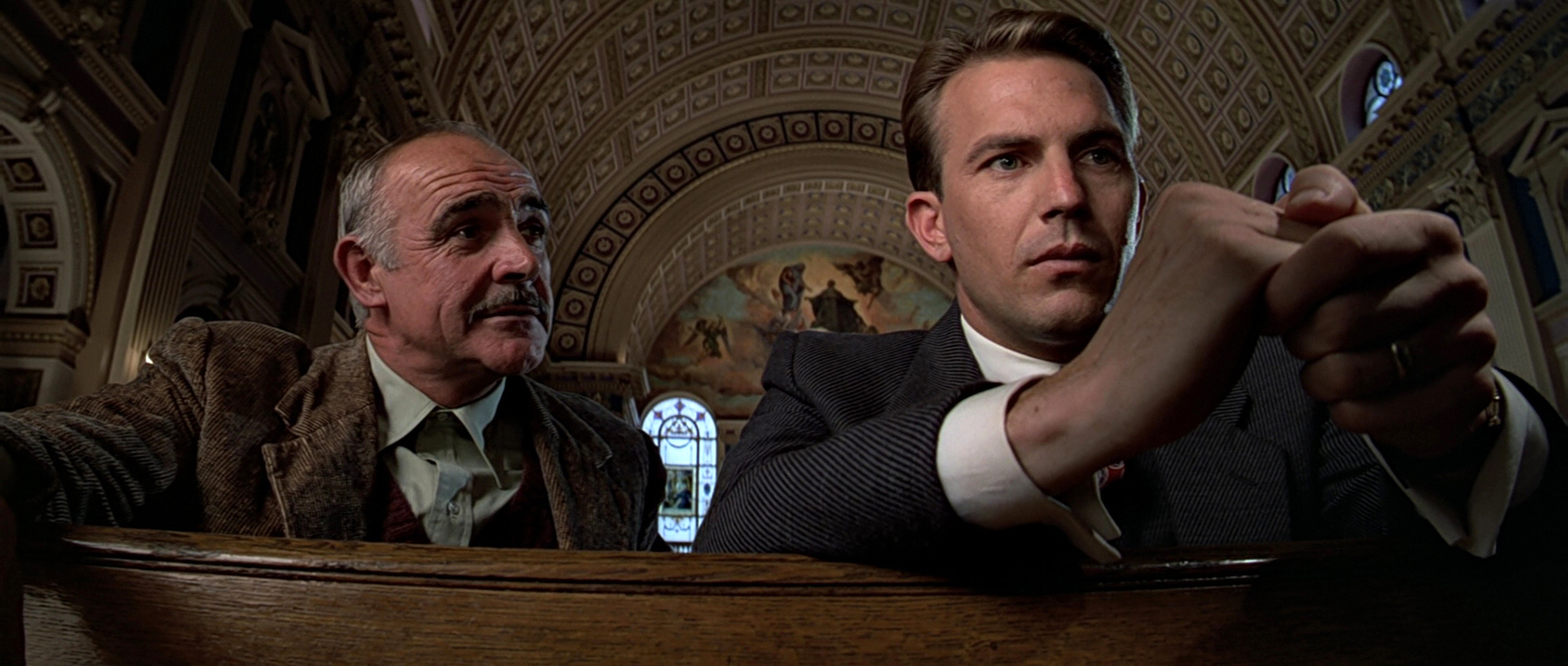
Many classic TV shows have been made into dreadful movies, but Brian De Palma came up aces in 1987 when he made The Untouchables.

The plot: Naive treasury agent Elliot Ness (Kevin Costner) comes to Prohibition-era Chicago to do battle with bootlegger, murderer and king of the gangsters Al Capone (Robert De Niro). Realizing that the police and politicians are all corrupted by Capone, Ness assembles his own team of “untouchable” agents who can’t be bought. His squad is anchored by a cynical, over-the-hill beat cop named Jim Malone (Sean Connery), who teaches him how the game is played in The Windy City. The two of them and their fellow untouchables embark on an epic confrontation with powerful, violent mobsters and a legal system that is rotten from top to bottom.

The key theme of the film is voiced by Connery, in one of the many scenes where he virtually acts the bland Costner right off the screen: What are you prepared to do? The basic tension of David Mamet’s crackerjack script derives from the fact that the good guys can’t win without breaking the rules they have sworn to uphold. This adds moral weight to a story that is also packed with thrilling action sequences and powerful dramatic moments.

De Palma often echoes classic films in his movies, and The Untouchables is no exception. A spectacularly executed shoot-out sequence in Union Station is an homage to the equally brilliant Odessa Steps sequence in Battleship Potemkin. Although I don’t know for sure, I believe the first scene of the movie, in which a terrified barber reacts to having nicked Capone’s face while shaving him, is an echo of one of the opening scenes of another of my recommendations, The Chase. De Palma makes these allusions is such a way that you don’t have to get them to enjoy the film, but if you do it’s even more fun.

This was a big budget Hollywood film and it shows in every scene. The set design and art direction are darbs, and the period cars, clothes and architecture are the cat’s meow. Producer Art Linson is a Chicago native, and clearly knew where to spend money to bring the Prohibition Era alive. To top it all off, Ennio Morricone contributes one of the most memorable and evocative scores of the 1980s.

Other than Costner, who is painfully weak here, the entire cast explodes. But even in that field, Connery and De Niro tower over everyone with powerhouse performances. Capone has been portrayed many times on film, but never in such a scary fashion. In De Niro’s hands, he is a man who can go from mirth and charm to murderous rage with no warning, and the viewer fully appreciates why all of his underlings tiptoe around him.

Connery, who won a long-overdue Oscar for playing Malone, also tears up the screen. His Malone is world-weary and tough yet also capable of wit and even a sort of gentleness (His big brother-little brother relationship to Andy Garcia’s rookie cop is perfectly played by the two actors). Because he became famous playing James Bond, it took Connery a long time to convince people that he really is a fine actor. I have commended his strong performances in my recommendations many times, including in The Hill, The Offence, and Outland. He triumphs again in The Untouchables, one of many reasons to see this near-perfect update of classic cops-versus-gangsters television shows and movies.

Categories
Action/Adventure British Drama

Callan: The Richmond Files

Many Americans know Edward Woodward only as The Equalizer from television, but his career started long before that. Woodward was an extraordinarily gifted actor who was equally comfortable with classic Shakespeare plays, light comedies and grim dramas. Unlike some stage-trained actors, his dramatic skills didn’t wane when he made the move first to television and then to the movies. Beyond all that, he was even an outstanding singer! (Check him out on this Morecambe & Wise clip, he starts crooning about two minutes in and he’s bloody marvelous).

Woodward became a star playing David Callan, a tough, moody and smart British espionage agent from a working class background who tussled with his plummy superiors as often as he did his Soviet counterparts. I recommend here The Richmond Files, the three-part conclusion to the Callan television series.The mood of the series was set by an evocative set of images and guitar notes:

The glum tone and stark themes of Callan put it squarely in the cynical Le Carre camp of British spy stories, which funnily enough co-existed easily in the 1960s with James Bond-mania. The writing was consistently strong (more so than on the Callan-inspired TV series The Equalizer, which was made in America decades later) and the acting and direction were effulgent. The budget was clearly not large but this was well-used to convey the show’s point of view: Callan and his colleagues were doing dirty, unglamourous work. It made sense that the entire suite of offices of “The Section” looked like they cost less than M’s desk.

Categories
Action/Adventure Drama

Breaker Morant

The Clear Eyed Cynicism of Breaker Morant | The Curb

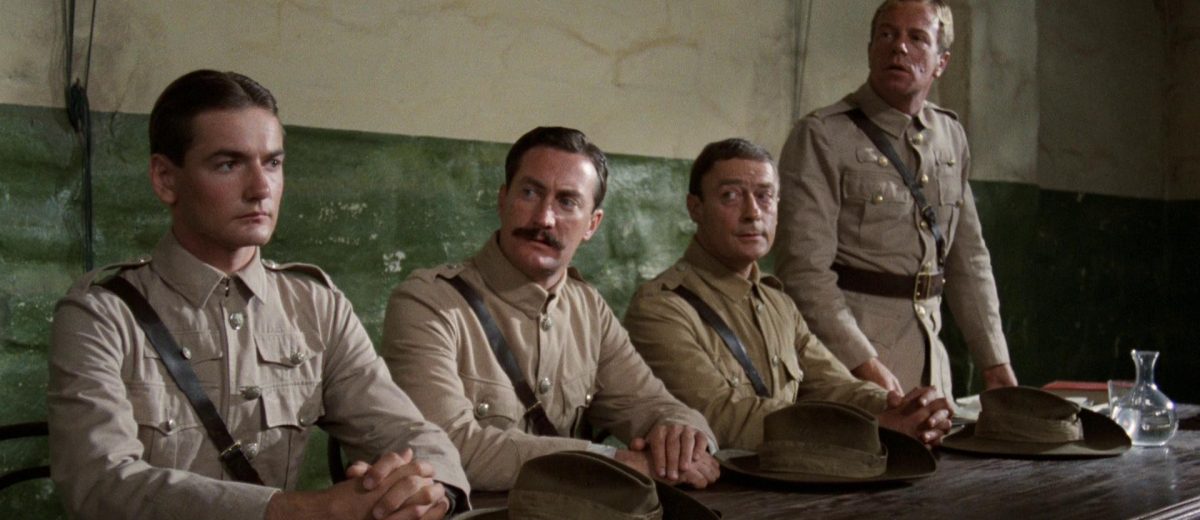
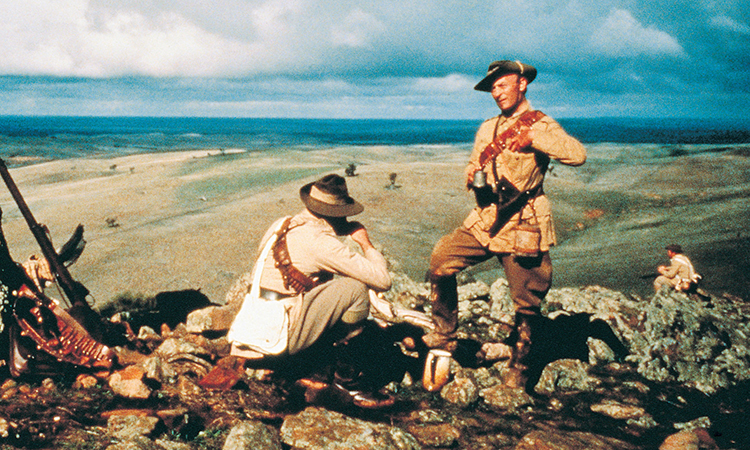
Arguably the best movie of Australia’s New Wave is 1980’s Breaker Morant. As the title character in Director Bruce Beresford’s movie, Woodward delivers a performance with such psychic weight and that it will stay in your mind and heart long afterwards.

The story takes place in the waning days of the Boer War, where the battered but still undefeated Dutch immigrant guerrillas continue to resist a much larger British force. To face down the remaining renegades and their ungentlemanly military tactics, the British create an unconventional counter-insurgency force called the Bushveldt Carbineers. The Carbineers are mainly colonials, and include the poetry-writing, cynical and heroic Lt. Morant (Woodward), the free-spirited and lusty Lt. Hancock (Bryan Brown), and idealistic junior officer George Witton, who believes in the goodness of The Empire (Lewis Fitz-Gerald). As the film opens, these three Australians are being court-martialled for shooting Boer prisoners. That they committed the act is never in doubt, but they claim they were following orders from the British high command. Meanwhile, because the British see a conviction as essential for facilitating a peace settlement, they deny complicity and stack the proceedings against the defendants in every way possible.

This is the movie that brought Bruce Beresford to the attention of Hollywood, where he later directed Tender Mercies and Driving Miss Daisy. There are a few overly theatrical moments in the film, but overall this is highly accomplished directorial work by Beresford. He also contributed to the superb screenplay, along with Kenneth Ross (who wrote the play), Jonathan Hardy and David Stephens.

Under Beresford’s watchful eye, the entire cast is riveting, including the three actors playing the accused and Jack Thompson as their initially unpromising but ultimately crafty defense counsel. The smaller parts are also well-turned, with not a weak performance anywhere.

Woodward, though British by birth, had a long lasting affinity for Australia and could claim many fans there (including from his music hall tours as a singer) before he made this film. He deservedly expanded that fan base with his bravura performance in Breaker Morant, not just in Australia but world wide. His acting here recalls Michael Kitchen’s style in that he is the most magnetic when he is not speaking. Sadness, pain and well-earned disillusionment are visible in his gestures, his eyes, and his weather-beaten mien. Foreknowledge of doom hangs over his every scene in this film.

Donald McAlpine’s cinematography, with Australia standing in for South Africa, is also a major asset. Shooting in lovely physical terrain, he did everything he could with lenses, filters and exposures to emphasize its bleakness. Lush and colorful outdoor scenes would have otherwise contrasted too much with the downbeat tone of the story.

The film also contains intriguing historical nuggets about the Boer War, the conflict that opened the bloodiest century of military conflict in human history. The war gave us the word “commando” and the term “concentration camp”. The Carbineers were the first special forces unit to employ COIN tactics. And the court-martial portrayed actually happened, although the film is based on a book (“Scapegoats of the Empire”) which told the story entirely from the side of the accused and therefore may not be completely accurate.

Breaker Morant is a devastating, brilliant piece of cinema, a Caine Mutiny of its time. Australia cinema has clearly arrived on the world stage.

Categories
Action/Adventure Mystery/Noir

Timetable

Many movies start out creative and intriguing but then at some point lapse into formulaic filmmaking, thereby disappointing the viewer. Mark Stevens’ 1956 film noir Timetable is an admirable example of the reverse phenomenon, a movie that starts out in familiar territory but ends up somewhere far more engaging: .

The film opens with an ingeniously plotted robbery on a train, pulled off by an icily calm physician (Wesley Addy, a durable TV actor who is very good here in a rare big screen appearance). The case is investigated by a seasoned by-the book police detective (played Joe Friday-style by King Calder) and an eminently respectable insurance investigator named Charlie Norman (Mark Hopkins). For the first 20 minutes, Timetable is a solid but unremarkable police procedural as the two heroes track down the robbers. But then comes a superb twist that drives the story into deep film noir territory, allowing Aben Kandel’s script to dig into themes of lust, middle-class alienation and deceit. The next hour of the film is thus unexpectedly suspenseful and powerful, raising the movie into recommendation-worthy territory.

I admire the control Mark Stevens took over his career in the 1950s. He was stuck in a “road company leading man” spot with the big studios, so much so that even when he anchored a good film he got fourth billing! (The Dark Corner). So he struck out on his own by directing, producing and starring in his own movies, including Timetable, where he does good work in all three capacities.

A few other notes about the film. Jack Klugman, as a luckless criminal named Frankie Page, made his big screen debut here. This is also Felicia Farr’s first film, but she was underutilized I think. Finally, on a silly note, this movie inspired an essay on how little money weighs in the movies.

My belief is that Timetable is in the public domain, so I am going to post it right here for you to enjoy. It’s 80 minutes well-spent.

Categories
Action/Adventure British Drama Mystery/Noir

The Spy Who Came in From the Cold

What the hell do you think spies are? Moral philosophers measuring everything they do against the word of God or Karl Marx? They’re not! They’re just a bunch of seedy, squalid bastards like me: little men, drunkards, queers, hen-pecked husbands, civil servants playing cowboys and Indians to brighten their rotten little lives.

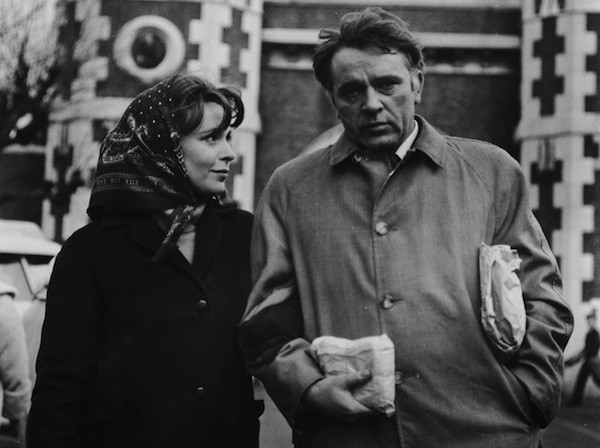
So says disillusioned British secret agent Alec Leamas (Richard Burton) in perhaps the best effort to adapt a John le Carré novel to the big screen: 1965’s The Spy Who Came in From the Cold. The serpentine plot concerns a burnt-out spook who enters a downward spiral of booze, self-hatred and lost faith after a disastrous mission in Berlin. But then it turns out that Leamas’ decline and despair is a ruse (?) play-acted at the behest of his superiors. As planned, he is recruited by the other side and ends up trying to discredit East German intelligence head Hans-Dieter Mundt (A cold, effective Peter van Eyck). Leamas undermines the ex-Nazi by feeding false (??) information to Mundt’s ambitious, Jewish deputy Fiedler (Oskar Werner, very strong here). It’s a difficult, high-risk mission, but Leamas knows that his boss back home is 100% behind him (???).

This may be the most magnificent performance in Richard Burton’s career, and will definitely please all fans of rotting charm. Drinking heavily in real life at the time, he was willing to expose his own capacity for ugliness and decay in a way that many glamorous stars of his era would not have dared to do. He exudes bone crunching hopelessness and isolation in shot after shot: Leamas alone on a park bench, alone in a bar, alone in his bed, alone chained in a cell. He’s devastated and devastating.

A 15 minute sequence of scenes in Britain is a masterclass in cinematic storytelling. It’s unsettling yet fascinating as Leamas repeatedly gets pissed and wanders through empty streets. Ultimately, he savagely beats an innocent man (Did the filmmakers cast for this part Bernard Lee — M from the flashy, unrealistic James Bond series — to make a point?). His copybook blotted, Leamas is judged “turnable” by the other side. After being released from jail, he is recruited by the Soviets in a sleazy men’s club by an unctuous businessman and a pathetic, gay procurer (Robert Hardy and Michael Hordern, respectively, terrific actors who clearly understood that there are no small roles).

The romantic aspects of the story also work well and become more important as le Carré’s ingenious plot unfolds. Claire Bloom is credible and sympathetic as the British would-be communist, who as Leamas puts it believes “in free love, the only kind I could afford at the time”. Leamas’ lacerating disdain for her naiveté reveals the depths of his own self-contempt: She may be immature in her politics but who after all is the one risking his life and doing horrible things in a struggle over the very same politics?

And Then There Were None, The Spy Who Came In from the Cold ...

Rarely has the look of a movie more perfectly captured its mood, and that’s a credit to Oswald Morris. Without any conscious intention, I think I have recommended more films shot by Morris than any other cinematographer. He was a remarkably unpretentious professional who maintained an astonishingly consistent quality in his work for 6 decades (He lived to age 98). It was a bold and brilliant choice to make this movie in black and white, which let Oswald create a washed out look that matches the bleak tone of the story. As much as the excellent acting, what stays with the viewer are Oswald’s shots of complete desolation both during Leamas’ alcoholic, putatively free, British wanderings and his time in East German captivity.

The other delight of this film is that it never condescends to the audience by over-explaining. With each double and triple cross, rather than clumsy exposition, director Martin Ritt simply gives us Burton’s face, as the mind behind it struggles frantically to make sense of the latest shift in the icy wind. A small example of the film’s understated, even at times cryptic, storytelling style is the scene where Fiedler asks for some paperwork from his underling Peters (Sam Wanamaker, memorably creepy). The seated, lame, Wanamaker extends his hand but not far enough. Rather than step forward, Fiedler waits until Peters struggles to his feet and hands it to him. Leamas chuckles derisively. The subtext which the film expects you to understand: Fiedler is the boss but as a Jew, he will never be fully respected by his German underlings. A small moment, a sly moment, a powerful moment, brought across with no comment other than Leamas’ mad laughter at Peters’ expense.

Touches like that are a key reason why The Spy who Came in from the Cold is completely engrossing. Fans of espionage films simply cannot miss this landmark movie.

p.s. If you like this movie, you might enjoy two of my other recommendations. Though not as good as this film The Deadly Affair is a solid effort to adapt le Carré’s first novel to the big screen. And the astoundingly brilliant Tinker, Tailor, Soldier, Spy is the best effort to adapt le Carré to television.

p.p.s. I also recommend Antonia Quirke’s elegiac FT essay on the battered, shattered Richard Burton and his iconic dingy overcoat.