Categories
British Drama

Parade’s End

Many movies have attempted to tell sweeping narratives about historical and cultural change combined with an intimate love story to which the audience can more easily relate. Most of such ambitious films fail because they are attempting something very difficult, but when they get everything right, like, say, Dr. Zhivago, we remember them forever. That’s how I feel about the 2012 mini-series Parade’s End.

Based on a tetralogy of novels by Ford Maddox Ford, the story was adapted for television by the estimable Sir Tom Stoppard. The protagonist is a well-born, brilliant, kind, and rigid Englishman named Christopher Tietjens (Benedict Cumberbatch) who is firmly committed to the fading morality of the Edwardian Period. Unfortunately for him, the story’s antagonist is his wife Sylvia (Rebecca Hall), a vain, selfish and impulsive woman he married to save from disgrace when she fell pregnant, even though the child is almost certainly not his own. The two circle each other in endless combat, with Sylvia at times making efforts to live up to Christopher’s values, but more often torturing him with infidelity and other indignities. Christopher meanwhile evidences superhuman tolerance which irritates Sylvia all the more. Into this stalemate comes a spirited, intelligent suffragette named Valentine Wannop (Adelaide Clemens) who falls in love with Christopher. He shares her feelings but feels honor-bound not to act on them. Mutual heartache, trembling upper lips, and World War I ensue.

This series compels attention because it does not oversimplify its central characters. Sylvia is sometimes thought of as one of English literature’s most contemptable females, but with Stoppard’s script, Susanna White’s direction, and an exquisitely balanced performance by Hall, she is a fully rounded person. Not someone you’d likely want to spend time with, but capable of love, and longing to better herself even though she never quite gets there.

Christopher Tietjens is also agreeably complex, and beautifully played by a highly talented actor. Thematically, Christopher’s story parallels Dostoevsky’s The Idiot, a book that Ford Maddox Ford knew well. The people around Christopher repeatedly assume that he is less trustworthy, decent, public-spirited, and loving than he in fact is because they no longer accept the moral framework under which he lives. Cumberbatch movingly conveys the loneliness of doing the right thing when no one sees value in it, or even recognizes that you are doing it because you believe it is right not because you expect some advantage. But this isn’t simple-minded nostalgia or a jeremiad because it makes clear the terrible human cost of Christopher being unwilling to let go of traditional morals: Keeping an awful marriage together and preventing what would be a much happier and loving one from forming (and it is a nice touch that Sylvia appreciates this more than Christopher).

The bravura performances of the two leads are complimented by Clemens as the third point in the story’s love triangle. Many of the smaller roles are also acted exceptionally well, including Rufus Sewell as a sexually obsessed, barmy churchman and Anne-Marie Duff as his distressed and ever-scheming wife. And what is it about Rupert Everett that no matter how immoral or callous his character is, he somehow manages, like Claude Rains before him, to leave the audience charmed?

BBC and HBO also deserve credit for the production values, particularly the World War I trench combat scenes which are hard to make credible on a TV film and budget. The costumes and sets are also as expertly assembled as you would expect from BBC.

In sum, Parade’s End is a brilliantly written, acted and directed mini-series that sets a high bar for itself and clears it with room to spare. As both a grand historical narrative and a love story it’s a triumph for everyone involved and an absolute pleasure to watch
Categories
British Drama Horror/Suspense

Cash on Demand

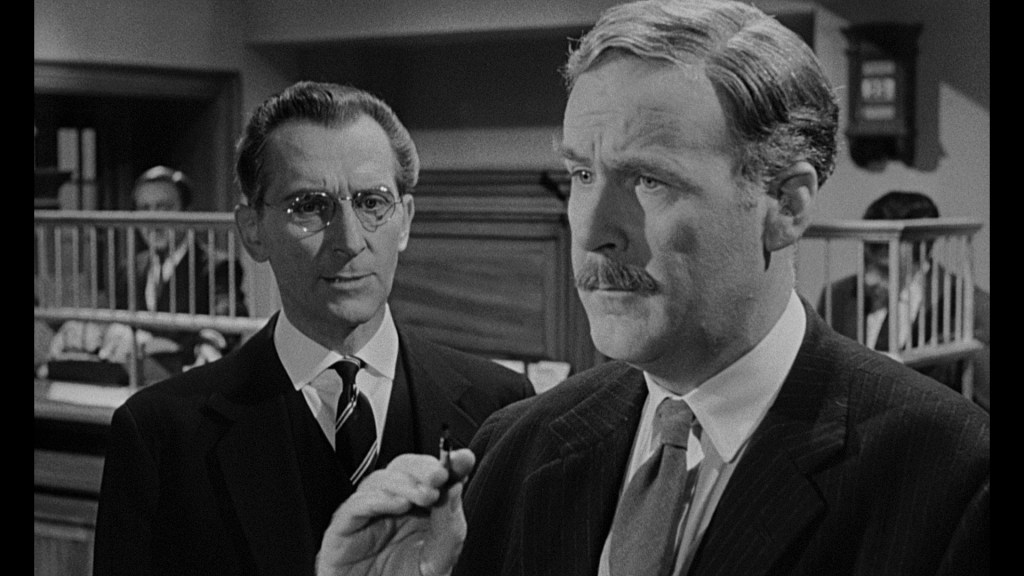
Hammer Studios sometimes ventured out of the horror genre with impressive results, as I described in my recommendation of Taste of Fear, Another fine example, which ranks as one of the best B-movies in British history in any genre, is the suspenseful bank heist picture Cash on Demand.

Made as cheaply as chips in 1961, the story centers on small town British bank manager Harry Fordyce (Peter Cushing). Harry is tight as wax in his work, and cold and demanding towards his staff. His only evident humanity is his love for his wife and young son. When the smooth, well-dressed Colonel Gore Hepburn (André Morell) of the bank’s insurer visits to conduct a surprise security inspection just before Christmas, Harry is initially confident that his operation will pass with flying colors. But he could not be more wrong about what is to unfold, both for the bank and also for himself and his family.

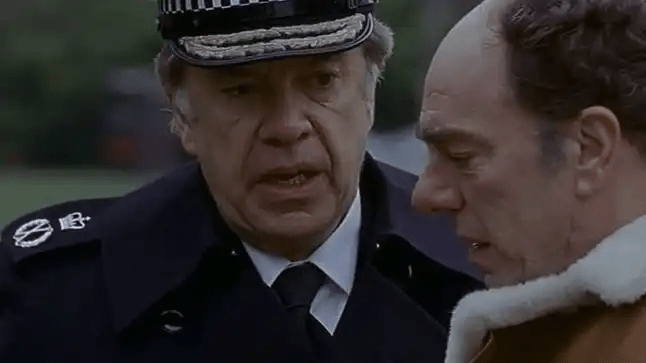
Hammer benefited from the British tradition of actors taking seriously small parts in low-budget films in a way Hollywood stars often would not. Cushing digs into his role with professionalism, allowing us to care about and eventually even to feel sorry for someone who at first seems hard to take. The rest of the cast is also very good, and it’s a particular pleasure to see Richard Vernon, usually slotted into one-dimensional Establishment roles (at which he excelled, including in Goldfinger and A Hard Day’s Night), essay a character with more depth. As Fordyce’s underling Pearson, Vernon is still of course playing a respectable type, but his junior bank manager has vulnerability and dignity, particularly in his loyalty to his co-workers.

Consistent with its modest budget and origins as a TV play, the entire movie is shot in just a few rooms of the bank. But the cast and little known director Quentin Lawrence use the claustrophobia to amp up the tension as a clever and malicious plot unfolds. It’s another fine demonstration that you don’t need a hundred millions dollars to make a good movie: In the case of this superb film, it was less than 40,000 pounds.

Categories
British Drama

Prime Suspect

Not everything we love the first time we see it holds up over time. But I recently rewatched an ITV series I first enjoyed when it debuted in 1991 and it was every bit as suspenseful, and compelling as I remembered: Prime Suspect.

The first episode introduces us to Jane Tennison, one of British television’s immortal characters. Played by the estimable Dame Helen Mirren, at the opening of the series Tennison is a Detective Chief Inspector who is crushed against the glass ceiling. Neither the men above and below her in the hierarchy take her seriously, so much so that when a male DCI suddenly is unable to continue a murder investigation, she still has to fight her skeptical boss (John Benfield) not to be skipped over in favor of a male investigator from outside the nick.

On its face, the case she is assigned to crack looks a straightforward investigation of a prostitute murdered by a punter. When Tennison begins to suspect that there is more here than meets the eye, her male colleagues resist her conclusions. She is particularly challenged, undermined and mocked by Detective Sergeant Utley (a very credible Tom Bell), who at first seems motivated only by misogyny but things become more complex from there. As Tennison works relentlessly to solve the case and win over her male doubters, her romantic relationship with a divorced father (a pre-fame Tom Wilkinson) begins to suffer.

Prime Suspect is the work of many talented people, but its greatness derives mainly from two phenomenally talented women, namely Mirren and writer Lynda La Plante. Mirren shows enormous range as she brings across Tennison’s toughness, intelligence, ambition, vulnerability and isolation. Tennison is a flawed person, but Mirren makes you pull for her with all your might.

This is also a credit a course to La Plante, who created the character (based on real-life copper Jackie Malton) and the grim and twisty mystery that Tennison tries to solve. La Plante’s script is painfully realistic about what it’s like for the first women who venture into all-male preserves. Notably, she is too talented a writer to give us a Hollywoodized fairy tale of policework adopting a female-friendly work culture to accommodate Tenison. Rather, what happens over the course of the story is that Tennison becomes more like the men around her: ruthless, hard-bitten, neglectful of family and most crucially a heavy boozer (which takes an increasing toll in future episodes). La Plante knows that big organizations change the individuals within them far more the reverse. The development of that theme over the series is one of many reasons why Prime Suspect is widely regarded as a classic of British television.

p.s. This review focuses on the debut episode, but the series ultimately produced 6 more episodes over the next 15 years. All of the follow-up episodes are very good, with my favorite being The Scent of Darkness. In contrast, the spin-off 2017 prequel can’t hold a candle to the original.

p.p.s. Look fast for a pre-fame Ralph Fiennes as an ex-boyfriend of the deceased.

Categories
British Drama

A Night to Remember

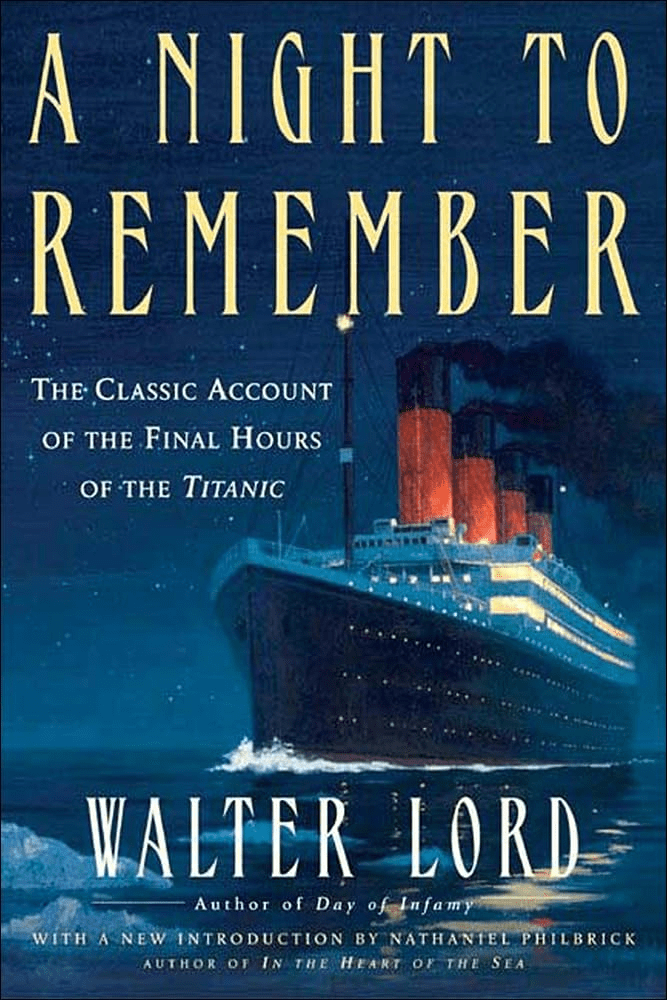
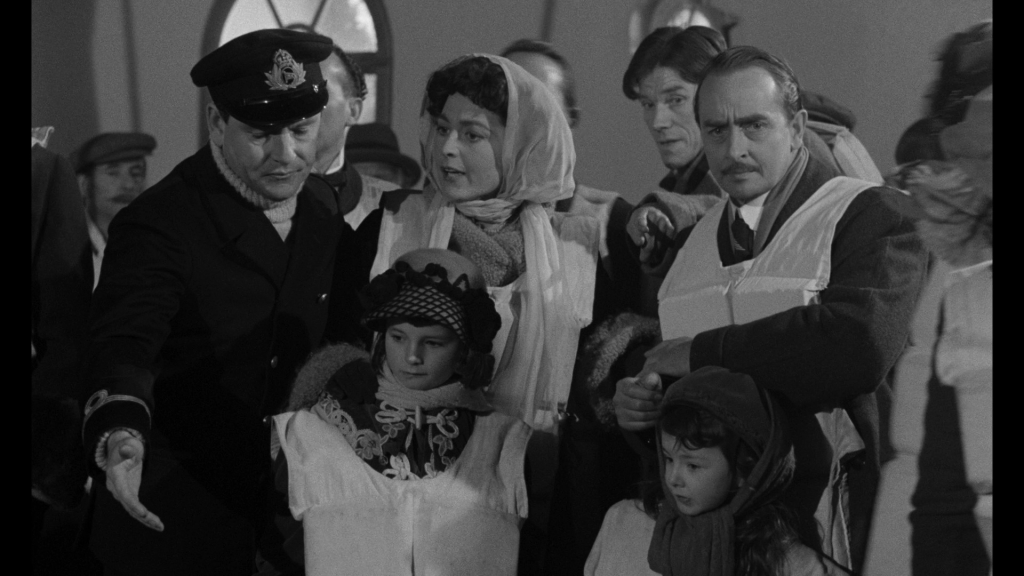
The story of the Titanic is so well-known today (not least due to James Cameron’s mega-budget mega-hit 1997 movie) that the The Onion could run the headline “World’s largest metaphor hits iceberg” confident that everyone would get the joke. But the modern cultural obsession with Titanic goes back less than 70 years. The liner’s sinking was worldwide news in 1912, but two world wars and four decades later, it had faded in popular memory. This changed in 1955, when a virtually unknown advertising copywriter named Walter Lord published a riveting minute by minute account of the disaster based on historical archives and interviews with survivors. A Night to Remember quickly became an international best-seller and has never been out of print since. Producer William MacQuitty, who had seen the launch of the mighty ship as a child, knew an opportunity when he saw it, and with input from Lord made one of the greatest films in British cinema history, 1958’s A Night to Remember.

This would normally be the part of the review where I summarize the plot, but that would be supererogatory here. How the story unfolds in the excellent script by Eric Ambler (who also wrote the script for another of my seagoing recommendations, The Cruel Sea) is however worthy of description. Setting the template for countless subsequent disaster films, the movie intersplices the main event with small moments of human drama, brilliantly carried off by an army of British actors under the direction of Roy Ward Baker, who never rose to a greater height.

Kenneth More, perhaps Britain’s biggest movie star at the time, convincingly leads a matchless cast as the resourceful, brave, and dutiful Second Officer Lightoller (who was like most of the characters in this docudrama film, was a real person). I also admired Laurence Naismith’s turn as the captain of the doomed ship, particularly how much emotion and thought he conveys without words. Of the character parts, John Merivale as Robbie Lucas saying goodbye to his wife Liz (Honor Blackman) and their little children with false assurances that he will see them ripped my heart out. Another unforgettable moment: Ronald Allen leading fellow working class passengers from steerage in a desperate run for the boats until all of them stop in their tracks, dazzled by the sight of the opulent first-class dining room.

Of course a movie like this needs visual spectacle to work, and a Night to Remember is a huge success on that front. The budget was well-spent on lavish, realistic sets, including some that tilted with such convincing groans from their machinery that these sounds were left in the film to convey the heaving of the ship. The special effects are out of date of course, but still credible. And Geoffrey Unsworth, soon to become one of Britain’s most respected cinematographers, is in fine form (I have highlighted his other work here, here, and here) N.B. Be sure to see the Criterion Collection restored version and not one of the battered prints that circulated for decades.

A Night to Remember was a hit in Britain, but didn’t draw much of an audience in the United States, perhaps because it’s so very British in sensibility and also because it gave the American passengers little attention (the most visible being the Unsinkable Molly Brown, who is played by Tucker McGuire mainly as comic relief). But its critical reception was very warm indeed and it is today justly appreciated internationally as a cinematic masterwork.

p.s. Trivia for spy film fans: this film is packed with future espionage stars including Blackman (The Avengers and Goldfinger), David McCallum (The Man from U.N.C.L.E.) and no less than 4 men who went on to play Q in James Bond films.

Categories
British Horror/Suspense

Dr. Terror’s House of Horrors

Hammer Studies is deservedly admired for the generally fine horror and suspense movies it began producing in the 1950s (including my recommendations The Devil Rides Out and Taste of Fear). But a lesser known British studio, Amicus Productions, was also productively tilling the same soil. Most notably, it revived the horror anthology form created by the 1945 classic Dead of Night. Amicus’ founders Max Rosenberg and Milton Subotsky produced all seven of these films, and Subotsky also often wrote the scripts (though some were penned by the Robert Bloch of Psycho fame). None of the Amicus “portmanteau” movies were bad, and some of them were very good, including 1965’s fun and scary Dr. Terror’s House of Horrors.

Dr. Terror’s House of Horrors set the pattern for these films, bringing together horror movie stalwarts (Actors Cushing, Christopher Lee, Michael Gough and Director Freddie Francis), young actors looking to move up (Donald Sutherland, Roy Castle) as well as old hands familiar to the audience whose current asking price was within the modest budget (Max Adrian, Bernard Lee). Like all these films, a contrivance — in this case a shared train journey with a mysterious fortune teller named (ahem) Dr. Schreck (Peter Cushing) — links together segments that run about 15 minutes, each with a different storyline and main character.

Subotsky’s script gives us five stories to enjoy, a couple of which illustrate how horror and comedy can make a fine cocktail. The first features an architect (Neil McCallum) returning to the spooky old house in which he grew up at the request of the wealthy widow who purchased it from his family (Ursula Howells). In the course of planning a remodel for the widow, he makes a shocking discovery in the (naturally) dark and cobweb-filled basement…

The second story, about a family returning from holiday to discover a sentient and dangerous vine growing on their property, is lighter in tone particularly because Bernard Lee of Bond movie fame straight-facedly plays the head of what is apparently a government agency focused on botanical threats to civilization (I bet you didn’t even know such a thing existed). The third tale is also on the lighter side and features Roy Castle as a musician who learns the dangers of cultural appropriation. It mixes some lively musical numbers in with the voodoo.

The last two stories are the best. Lee is perfect as a condescending art critic who inflicts a serious injury on a painter he despises (Gough). But you have to “hand” it his victim for his ability to seek vengeance from beyond the greave. The mechanical effects in this story are unnerving, especially because Lee credibly sells the terror in what otherwise could have been farcical proceedings.

The final tale features Sutherland as a junior doctor whose new bride (Jennifer Jayne) has rather unusual tastes. The closing line of this story, uttered by Adrian, is laugh out loud funny.

Just as each individual segment ends with a kicker, so does the movie itself, tying the five tales together with a spectral bow. Citizen Kane it is not, but entertaining Dr. Terror’s House of Horrors definitely is.

p.s. Another horror anthology film with this title was released during the war, apparently with sketchy provenance including potentially violating copyright by inserting bits of other, better movies. No print survives, and everything I have read about that film indicates that’s for the best.

Categories
Blogs on Film British

The Perils of Uneven Tone

The estimable Sidney Pollack said that to make a movie, you have to know what it is fundamentally about and then make sure every element in the film grafts onto that theme (e.g., In Tootsie, it was that the central character had to live as a woman to understand what it meant to be a man). This includes understanding the genre and tone of the film and communicating it to the actors, i.e., are we making a drama or a comedy, is this material satirical or is it earnest? When thematic and tonal unity are attained you get satisfying movies like the ones for which Sidney Pollack is justly admired. But when that doesn’t happen, a film baffles and frustrates its audience as the director and/or writer wildly shifts gears without even bothering to depress the clutch.

A recent example is the 2023 Australian detective mini-series Deadloch. It begins by centering on a compelling lead character brought to life skillfully by Kate Box. Her relationship with her wife and the small town in which she lives draw the viewer in with a mixture of affection and comedy, even as a murder mystery starts to unfold.

But then in a literally jaw dropping scene, the second lead, another police detective appears. She is clownish, loud, and off-putting, a collection of Aussie stereotypes scripted with no wit or grace. After laying a gorgeous table for a dinner party, the filmmakers smash it to pieces with a sledgehammer. This happens over and over in ensuing episodes such that even when the many superb scenes are unfolding, they are hard to fully enjoy because the audience is cringing in expectation that the smashing would begin again (and it nearly always did).

The clownish co-lead character could have worked in a slapstick comedy with other buffoonish characters and a cartoonish plot, maybe “Dumb and Dumber go to Melbourne”, but it was disastrous in what could have been a superlative series (Indeed, if the whole series had been bad, it would have been less disappointing, because the filmmakers wouldn’t have been throwing away all the outstanding aspects of the series due to their failure to achieve consistent tone). And the tonal problems get even worse in a later episode, in which the story literally goes in a matter of seconds from wisecracks to torture porn of helpless people being mutilated. The series had many writers and directors who apparently didn’t agree on what they were doing, and it shows.

The other film that always sticks out in my mind as a failure to achieve consistent tone is Little Voice. This 1998 Mark Herman-directed vehicle features a quirky, charming romance between between Jane Horrocks and Ewan McGregor that would not have been out of place in a Bill Forsythe film. So far so good.

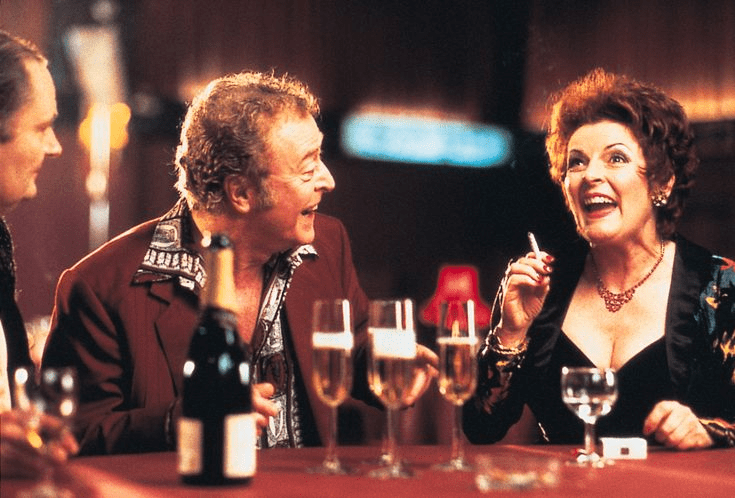
Meanwhile, Brenda Blethyn, Michael Caine, and Jim Broadbent give dark, powerhouse performances portraying desperate people in a declining, gritty, town in Yorkshire. But switching back and forth between gritty noir and Walt Disney-level fantasy is a bit of a wrench. I would have enjoyed watching the gentle romance film Little Voice sometimes is on its own, and even moreso the powerful drama Little Voice sometimes is on its own, but the mashup of the “two movies” was nowhere near as pleasing.

Categories
British Drama

Brideshead Revisited

I ventured that Tinker, Tailor, Solider, Spy is the best thing the BBC has ever put on television. If asked the same question for ITV, on most days I would plump for the 1981 mini-series Brideshead Revisited.

As everyone knows – or should know – the story is based on a semi-autobiographical novel by Evelyn Waugh. The plot is a series of recollections by Charles Ryder of his long, complicated, and life-changing relationship with a Catholic, aristocratic family who are the heriditary owners of a magnificant house and estate known as Brideshead. In the early 1920s, Charles (Jeremy Irons) is charmed by his eccentric, rich, and gorgeous Oxford classmate Lord Sebastian Flyte (Anthony Andrews). Despite their differences in religion and social class, an intimate friendship blossoms, to the point that Charles is eventually almost adopted into Sebastian’s family at Brideshead, which includes his glamorous sister Julia (Diana Quick).

But as the years roll by, Sebastian and Charles’ friendship founders on the former’s self-hatred, resentment of his family, and growing addiction to alcohol. Charles is pained by the loss of closeness with Sebastian, but comforted when Julia steps in to replace it. All of this unfolds as the country is enduring two tumultuous decades when old certanties were overturned and traditional hierarchies undermined.

All three leads sparkle throughout this sweeping series. Remarkably, Irons was originally cast as Sebastian, but agreed to switch roles at Andrews’ request. Their skills as actors is such that it’s now impossible to imagine the casting any other way. Remarkably, due to a technician’s strike bringing ITV to a halt in the middle of making the series, the original director (Michael Lindsay-Hogg) had to be replaced by Charles Sturridge, yet the acting and tone do not miss a beat across those episodes.

Appropriately for a multi-generational story, the cast includes leading lights of a prior era. Laurence Olivier appears as Lord Marchmain, though he isn’t given a great deal to do. Two other famous performers light up the proceedings much more. John Gielgud is both hilarious and a bit terrifying as Charles’ waspish father, who knows how to effortlessly and mercilessly inflict a withering remark. Claire Bloom (last seen on these pages in The Spy Who Came in From the Cold) is also quite effective as Lady Marchmane, the family matriarch. Bloom’s is a rich characterization, mixing virtues and vanities as she grapples with the decline of her son’s health, her religion, and her family’s fortunes.

The less-familiar cast members also shine, including Simon Jones as the stuffy family heir “Bridey”, Phoebe Nicholls as the compassionate youngest child Cordelia, and Nickolas Grace in an endearingly campy turn as Charles and Sebastian’s flamboyant friend Anthony Blanche.

Producer Derek Granger and his team at Granada Television also hit it for six with peerless sets, clothing, cars, makeup artistry, and locations. Geoffrey Burgon’s regal yet wistful baroque theme music is another asset.

What, in the end, is this 13-hour wonder about? Certainly more than one thing. In some respects it’s a nostalgic toff-a-logue like Downtown Abbey (except that it’s good). If you want sympathy for working people you will not find it here: the only mention of labor rights is when Charles helps put down a strike. The mini-series is also an exploration of Catholic life in Protestant-dominated England as well as a compelling narrative of how families change over time in response to marriages, deaths, and historical events.

Most of all, I consider Brideshead Revisited a story about friendship. You can read a pile of critical debates about whether Charles and Sebastian are lovers and indeed the series itself invites such discussion: a dance hall prostitute calls them gay and Lord Marchmain’s mistress (Stéphane Audran) delivers a speech about the English tradition of romantic but not sexual relationships between men. But it doesn’t in my opinion matter, because Irons and Andrews are so sympathetic and believeable as they illuminate how the friendships we make when we are young form and how they change us and then change themselves. And Quick dancing in and around their friendship while managing her love for both men feels utterly real.

Even with this longer than usual review, I really haven’t done complete justice to Brideshead Revisited. If you watch it yourself you will see more things to appreciate than I could cover here, and understand why it remains one of the most respected and beloved shows in British television history.

p.s. Were I asked what else in ITV’s history might compete for the top spot with Brideshead Revisited, I would include the superb mini-series Anthony Andrews starred in just before it: Danger UXB.

Categories
British Drama Mystery/Noir

This is Personal: The Hunt for the Yorkshire Ripper

It’s challenging to make compelling movies about crimes when almost everyone knows the culprit and many of the facts of the case from the beginning. Yet ITV and producer Jeff Pope took the risk in the aughts to make a trilogy of docudrama miniseries about notorious British murders, with great success. The first has the clunkiest title, but it’s aces in every other respect: This is Personal: The Hunt for the Yorkshire Ripper.

The plot is based on the multi-year effort to catch Peter Sutcliffe, a serial killer who attacked his female victims with bestial ferocity in the late 1970s. Unlike many movies of this genre, there is almost no focus on the killer. Instead, we see the reaction of the community (including the then-rising women’s movement, the families of victims, and the countless women who lived in fear) and even moreso the political, emotional, and practical demands on the police and how they handled and mishandled them in an environment of institutitional sexism and intense political pressure. And as in the real case, the police have to struggle whether the taunting letters and cassette tapes they keep receiving from “Wearside Jack” are from the killer or are a cruel hoax.

Viewers suckled on Dixon of Dock Green-style cinema and television will find the conduct of the police here unbelievable, but every blunder happened in the real case. Unlike carmelized portrayals of old-style British policing, Neil McKay’s script is unsparing about the lack of professionalism and lack of capacity that was widespread before some major reforms (some of which were inspired by the Yorkshire Ripper case). Most notably, the lack of computerization meant all leads were kept on a mountain of index cards that literally came close to collapsing the floor of the building, and vital connections between pieces of evidence were missed (in real life, Sutcliffe was interviewed by police 9 times before his was caught). Equally disturbing: the police at one point pressure a suspect with such ferocity that he confesses even though he is innocent.

I appreciated the chance to see Alun Armstrong headline a film. A stage trained actor from County Durham who’s augmented the quality of many films I enjoy (e.g., Get Carter, Braveheart, Our Friends Up North) he also had a wonderful late career revival as an extremely eccentric police detective on the TV Series New Tricks. Here he inhabits the role of the hard-smoking, hard-drinking, grief-wracked Assistant Chief Constable George Oldfield, whose health and life are consumed by the demands of leading the investigation. As his right hand man, Richard Ridings is also excellent at portraying a mixture of toughness and humanity. Under David Richards direction, the rest of the cast also acquit themselves well.

There are other touches to admire. Rather than show the Ripper’s handiwork, the camera only shows people looking at it and reacting to it. And we don’t see the killer’s face until the very end, where with the banality of evil he has no particular reaction to being confronted by Oldfield. Full marks as well to Peter Greenhalgh for appropriately moody cinematography that accentuates the emotional impact of this grim but engrossing mini-series.

p.s. This 2000 film ends with a post-script noting that while Sutcliffe was sent to prison, “Wearside Jack” was never identified. But thankfully, five years later he was identified, arrested, and sentenced to prison.

Categories
British Drama

The Damned United

I’ve only been to a few English football matches in my life, and like most people who didn’t grow up with it, I don’t find it as engaging as do the locals. Yet one of my all-time favorite sports movies is about English football, which is a testament to the skills of everyone involved in The Damned United.

The plot of this fact-based 2009 film: Brian Clough (Michael Sheen) is a cocky, quotable ex-football star who establishes his brilliance as a manager by leading the once pathetic Derby County club to greatness. Throughout his rise he makes no secret of his contempt of mighty Leeds United and of their legendary coach Don Revie (Colm Meaney) whom he believes snubbed him. In a shocking twist of fate, when Revie departs to coach England’s national team, Clough is tapped to manage the squad he has denigrated, and accepts with the goal of remaking the team in his image and proving that he is superior to Levie in every way. But his arrogance leads him to grossly overestimate how easy the task will be.

Frequent Sheen collaborator Peter Morgan was one of the producers and also wrote the script (They also also made another of my recommendations, The Special Relationship). Based on a novel that many people thought was scurrilous (author David Peace was successfully sued for libel), Morgan’s script makes Clough more sympathetic and integrates many choice quotes that Clough and those around him said at the time. Kudos to Morgan and to director Tom Hooper for their skills as storytellers, particularly in going back and forward in time while never losing narrative momentum. Hooper would win the directing Oscar for his next film, The King’s Speech, but he’s in just as fine form here.

Sheen again shows his facility for playing characters based on real people. He gets Clough’s mannerisms and almost sing-song Northern speech cadence right, and fleshes him out as a rounded person with clear defects and impressive strengths. The supporting performances are excellent, with Timothy Spall being particularly endearing as Assistant Manager Peter Taylor, whom Clough needs to succeed more than his ego can readily concede. Hats off as well to everyone involved in location scouting, set design, costuming, and art direction for visually transporting us convicingly back to the hard-scrabble period that was England in the 1970s.

As I mentioned, you don’t need to know anything about English football in general or the specific events portrayed to appreciate this movie. As long as you appreciate a well-acted, well-told story, with vivid characters, The Damned United is for you.

Categories
British Drama

The Deadly Affair

Alec Guinness so inhabited the role of John le Carré’s master spy George Smiley that even the author said he could no longer think of one without the other. But Guinness was not the only fine actor to essay the role. James Mason also had his turn, even though for copyright reasons the character was renamed Charles Dobbs. The resulting 1967 film has been almost completely forgotten, but it more than merits a revival: The Deadly Affair.

The plot: Put-upon and dutiful spook Charles Dobbs is given an assignment that seems a doddle. An anonymous letter has accused a recently promoted Foreign Office official named Samuel Fennan (Robert Flemyng) of being a security risk, based on his long ago flirtation with Communism as a university student. Dobbs’ discussion with Fennan raises no concerns and even seems enjoyable to both men. But Dobbs learns through his “Adviser” (Max Adrian) that Fennan apparently went home and shot himself! When Dobbs interviews Fennan’s widow (Simone Signoret), something strange happens that raises suspicions that things are not so simple, so Dobbs digs deeper with the aid of an aged but reliable copper (Harry Andrews). Meanwhile, on the home front, Dobbs tries to endure the many affairs of his wife Ann (Harriett Andersson), including one with an undercover operative he used to run that he still considers a friend (Maximilian Schell).

As you can gather from the above, there’s a great deal of talent in front of the camera here (And I didn’t even mention Roy Kinnear, who shines here as an underworld figure in a performance with superb physicality). Mason gives more fiery frustration to Smiley than did Guinness, both in his work and in his failing marriage. I also love his artful interactions with Signoret (as good here as I ever seen her) as he steadfastly uncovers the truth. Andrews, a gay man who ironically spent much of his career playing dead butch British military officers and other authority figures, is also terrific in support as a police officer in the twilight of his career but still retaining intelligence and toughness. Because his is probably the most relatable character in the story and his performance of it so assured, the audience is likely to end up caring about him more than anyone else.

The team behind the camera is equally impressive. The superb director Sidney Lumet loved actors and knew what to do with them. The script is by Paul Dehn, who won an Oscar co-writing another of my recommendations, Seven Days to Noon. Dehn made some plot simplifications in adapting le Carre’s novel Call for the Dead, which I imagine makes the film more comprehensible to viewers who haven’t read the novel. Dehn also added in subplots about Ann that make her a much more prominent part of the movie than the book. I thought this worked fairly well but le Carré purists may disagree. The other major virtue of the movie is Freddie Young’s cinematography, which used pre-exposed film to create the drab colors and shadowy streets that reinforce the emotional tone of le Carré’s world.

The only thing about this movie I actively disliked was, surprisingly, the score by the great Quincy Jones. Purely as music, its jazzy and memorable, but as a soundtrack, it simply doesn’t match the downbeat story and meditative visuals. Indeed, the disjunction at times is so jarring that it takes the viewer out of the story.

The Deadly Affair is not in the same league as the other le Carré based adaptations I have recommended, The Spy Who Came In From The Cold and Tinker, Tailor, Soldier, Spy. But those are two of the best spy films ever made, and a movie doesn’t need to ascend to such Olympian heights to be watchable and engrossing. The Deadly Affair definitely clears that bar as a grim, effective, translation of the work of a legendary espionage novel writer and a portrayal of his most famous character.