Categories
Drama

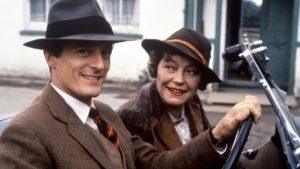
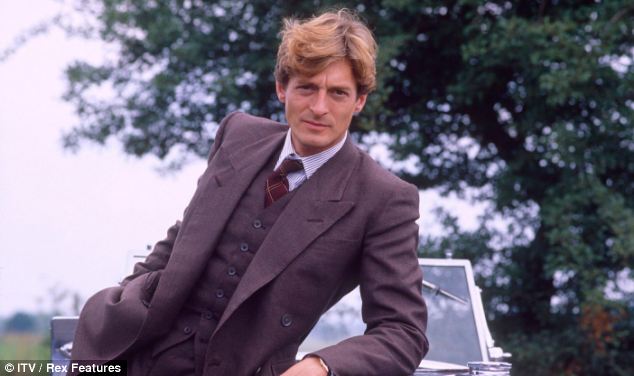
To Serve Them All My Days

The classic Dickens novels usually end with the central character finally finding a proper place in the world after years of hardship and misadventures. R.F. Delderfield’s To Serve Them All My Days takes the opposite approach of having a character with a tragic backstory find his proper place on the very first page, and spend the rest of his life realizing it. In 1980, BBC tapped Andrew Davies (later to pen another of my recommendations, House of Cards) to adapt the novel to the small screen, and the result is a fine 13 part miniseries that I recommend to you this week.

The series opens with shell-shocked, limping, wan, Welshman David Powlett-Jones (John Duttine) returning from the horrors of the trenches to apply for a teaching post at Bamfylde boarding school in Devon. The wily, gentle, headmaster Algy Herries (endearingly played by Frank Middlemass) sees potential in the traumatized young man and hires him as a teacher. Surrounded by better educated, better born, men, David initially struggles with that peculiarly Welsh working class admixture of pride and insecurity. But he slowly begins to find his footing, largely because he develops positive relationships with Algy as well as with a lonely, cynical, yet also compassionate senior housemaster (Alan MacNaughtan). He also grows to understand and be respected by the boys, despite not sharing their class background nor their politics.

David’s life is also shaped profoundly by three women he loves over the years, each of whom is emblematic of a different historical age. Beth Marwood is the perfect Victorian helpmate (indeed too perfect, she is the most flat character in the series unfortunately for Belinda Lang, who does her best). She is followed by the sexually liberated Julia, who has a flapper sensibility even though her horizons are limited by the social and occupational constraints placed on women in the 1920s. In the 1930s, Christine Forster arrives in a David’s life as a powerful person in her own right both psychologically and politically, facing down sexism while running for Parliament.

This series really grew on me episode by episode. In part that was due to Duttine’s layered performance as a lost, angry, and tentative person becoming over many years completely at home at Bamflyde, invested in life, and deservedly confident of his abilities. I also appreciated that some characters who started out as stereotypes, like Carter the failed soldier turned teacher (Neil Stacy) and the icy martinet headmaster Alcock (Charles Kay) became better-rounded over time. But the most rewarding feature of the series — as in virtually all drama — were the rich human relationships brought alive by a worthy script, directors, and cast.

The series isn’t perfect. The 12th episode features a subplot about anti-Semitism that is disappointingly carmelized and should have been dropped, one of the revelations in the final episode isn’t set up well enough in earlier episodes to have the desired impact, and throughout the series isn’t much to look at in terms of sets or camerawork. But it’s almost impossible to put 11 hours of film together and not have some weak spots.

To Serve Them All My Days is the sort of literate, solid entertainment upon which the BBC’s reputation for high quality drama rests. Make yourself a pot of tea and get watching.
Categories
British Drama

The Shooting Party

I have a weakness for British art that echoes French art, such as Anthony Powell’s Proust-esque Dance to the Music of Time. In a similar vein, allow me to recommend a British film that recalls Renoir’s Rules of the Game: 1985’s The Shooting Party.

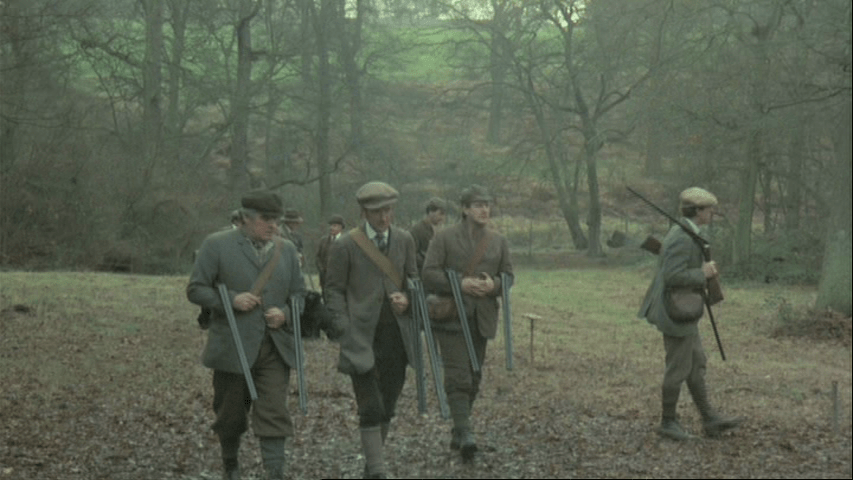
The plot: Not long before The Great War will descend upon Europe, the kindly, idealistic, yet somewhat world-weary Sir Randolph Nettleby (James Mason, in his final cinematic performance) hosts a weekend shooting party at his arcadian estate. The guests include the competitive and cold Lord Gilbert Hartlip (Edward Fox, as watchable as ever) and his amorous and unfaithful wife Lady Aline Hartlip (Cheryl Campbell, whose performance stands out even among all this talent). Another unfulfilled but better-behaved noble couple (Lord and Lady Liburn, well-played by Robert Hardy and Judi Bowker) join them, as do a number of not-quite-that-loftily-titled but still upper class types from England and abroad. Gossip, affairs, and philosophical discussions upstairs and downstairs ensue as countless pheasants and grouse meet their end.

The main pleasure here is seeing a large number of outstanding actors work their magic under the eye of a solid director (Alan Bridges). Julian Bond’s adaptation of Isabel Colegate’s novel includes many subplots involving the marriages and friendships of the characters, the dynamics between and among servants and gentry, and observations on how children interact with and understand adults. Some of these are amusing and heartwarming. But this is no comedy: the film has an undertone of violence which the shooting scenes symbolize. By the end the viewer appreciates the violence some upper class people are willing to casually commit against lower class people and also the mix of self-regard and misplaced romanticism that will facilitate much of the aristocracy of Europe wiping each other out in World War I.

Some of the dialogue is heavy-handed, as if Bond doesn’t trust the audience enough to understand the themes of the film unless he has a character state them explicitly. But the experienced cast is skillful enough to sell these awkward moments and make even more of the (thankfully more numerous) authentic exchanges in the film. As for the look of the movie, anyone who has seen an episode of Masterpiece Theater knows that the Brits can do the country house with wood-paneled rooms and roaring fireplaces stuff as well as anyone, and they don’t disappoint here, including Fred Tammes’ autumnal cinematography.

My favorite scene in the movie is I suspect almost everyone’s favorite scene in the movie because it brings together two British acting giants to play off each other beautifully. John Gielgud is an animal rights protester who disrupts one of the shoots, bringing him into Sir Randolph’s presence for an exchange that dissolves the tension between them. I close the recommendation with a clip (which will not spoil the film’s plot at all) to highlight the stellar acting you will see if you watch this fine drama.

Categories
British Drama Mystery/Noir

The Charmer

The movies have been good to British novelist and playwright Patrick Hamilton (1904-1962), who might otherwise not be remembered at all even though he produced some good work and claimed some significant admirers before depression and heavy drinking dissipated his gifts. Hitchcock’s Rope, two versions of Gaslight, and Hangover Square all remain eminently watchable today. But instead I am going to recommend what I believe is the most recent adaptation of Hamilton’s work, the six-part 1987 television mini-series The Charmer.

The plot: In 1930s Britain, Ralph Gorse is a suave chancer who desperately wants a life of ease, but has no interest in working honestly for it. Better to use his charm, wits, and ruthlessness to secure wealth and status. If some people — particularly women — are harmed or even killed along the way, so be it. Posing as a worldly ex-army officer with connections to high finance, he enchants and then mulcts Joan Plumleigh-Bruce (Rosemary Leach) an older, lonely, widow of means. This act enrages stolid businessman Donald Stimpson (Bernard Hepton) who had long been hoping for Joan to notice him. Even before Gorse has dumped Joan, he begins pursuing an upper class siren he actually cares about (Fiona Fullerton, at her pouty best) as well as some other women that he really doesn’t. As Gorse does increasingly horrible things to serve his sociopathic wants, Stimpson mercilessly follows his track, all the while frustrated that Gorse’s female victims continue to pine for him.

Women viewers swooned over the handsome Nigel Havers when this series was broadcast. Havers carries off Gorse’s aristocratic pretensions well, which is not surprising given that the actor is from a very posh background himself. The other elements of his performance are serviceable, but not in the league of the other leads. The late Rosemary Leach brings Plumleigh-Bruce alive as a woman caught between what her heart and head tell her about Gorse. She gives Joan an underlying strength such that even when she is conned and humiliated, she manages to retain some dignity. Bernard Hepton is just as good at slyly revealing Stimpson’s fundamental self-deception: He isn’t really a noble crusader, he’s just jealous as hell that Gorse gets all the things he himself yearns for but will never have.

The production mostly stays indoors, I presume out of need to recreate the period on a television mini-series budget. Those sets feel authentic, as do the clothes, cars, and music. I had not heard of Director Alan Gibson before, who sadly died young just after making this series, but his work here is solid. Finally, Alan Prior’s script is well-turned, even though he changed the ending in the source novel (Mr. Stimpson and Mr. Gorse). If you want to know what that change was, read on.

SPOILER ALERT STOP HERE IF YOU DON’T KNOW THE ENDING

In the book, rather than being spurned by Joan Plumleigh-Bruce at the end as in the television series, Stimpson dumps her and runs off with her housemaid. Because that fits with my read of Stimpson as a much worse person than he sees himself as being, I prefer the book ending. At the same time, Leach really nailed the ending in the series, so it has its own pleasures.

Categories
Drama Mystery/Noir

Hangover Square

Supplementing my recommendation of The Charmer, I offer another Patrick Hamilton adaptation, albeit one that departs more substantially from the original novel: 1945’s Hangover Square.

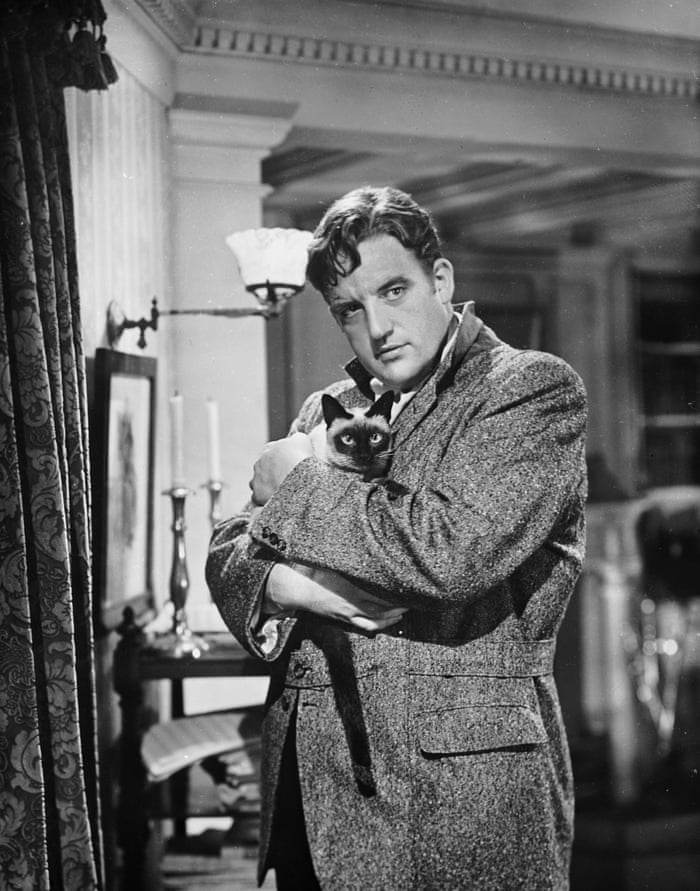
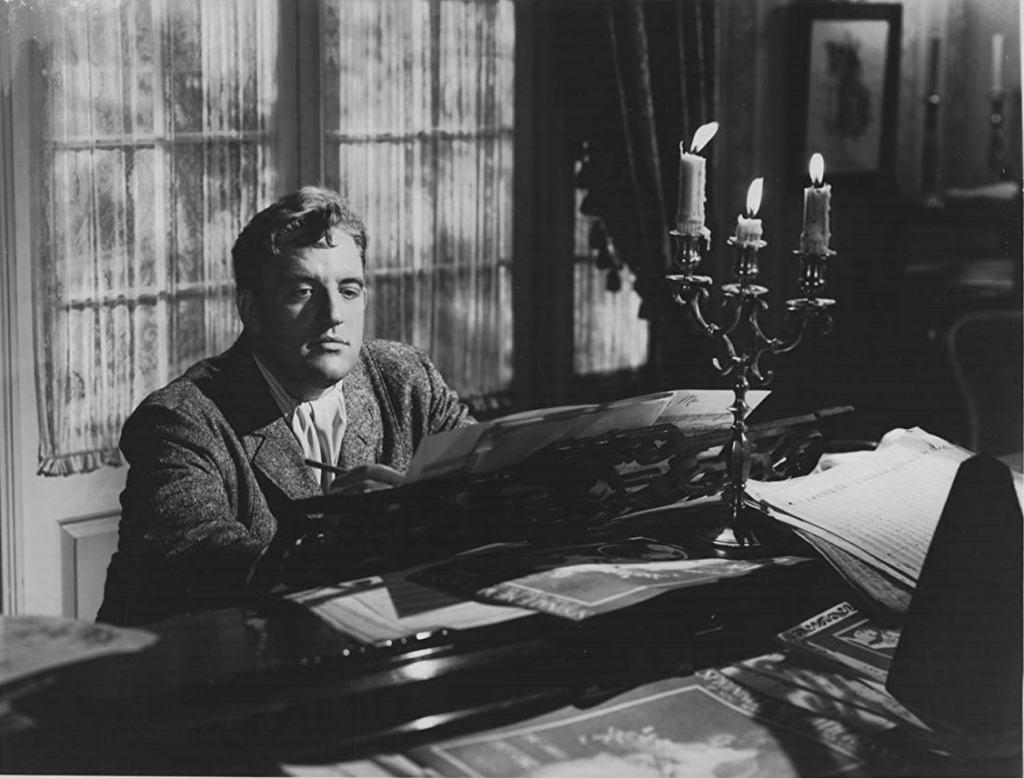
The plot: In Edwardian London, brilliant, troubled classical composer George Bone (Laird Cregar) suffers fugue states during which he commits violent acts which he cannot recall afterwards. As Bone attempts to hold his psyche together long enough to complete a concerto, a scheming, alluring dance hall tart named Netta Longdon (Linda Darnell) tempts him in every way to devote his talents instead towards producing popular songs that will catapult her to fame. When George finally realizes that Netta is manipulating him, his mind snaps once more, propelling forward this dark tale of suspense, crime, and emotional anguish.

I am going to start my analysis of this film by getting the unpleasant bit out straightaway. The middling script of Hangover Square was written by Alfred Edgar, under the pen name Barré Lyndon (Presumably he was a Thackeray fan). Edgar drained the trenchant political and psychological observations from Hamilton’s novel (which was set during Hitler’s rise to power), added some clunky expositional exchanges while leaving other important elements of the plot strangely unexplained, and concocted a character who makes little sense (Dr. Allan Middleton, played by George Sanders, who is a clinical psychiatrist but is also somehow a front-line police detective and also apparently a romantic rival of George Bone though this is dropped after a single needless scene). Edgar’s is by no means a terrible screenplay, but given the source material — Hangover Square is generally considered Hamilton’s best novel — it should have been better.

Patrick Hamilton's Hangover Square and a slide into the abyss ...

Fortunately, other elements of Hangover Square are so remarkable that they overcome the script’s flaws. The film is anchored by scintillating performances by two sadly short-lived talents: Cregar and Darnell. The character of George Bone might easily have repelled the audience, but Cregar conveys such vulnerability and ingenuousness that the audience sympathizes with him anyway. A talented musician in his own right, Cregar is also completely believable in his composing and performance scenes. Darnell, only 22 years old at he time, is just as good at being bad. She keeps every man in the movie dancing on a string with her lovely face, artful conversational dodges, and sexual ruthlessness. One central aspect of the book that the film does maintain are the scenes of love struck George letting Netta hurt him, disregard him, and demean him; Cregar and Darnell play these just right.

The visuals of the movie are as rewarding as the performances. The sets are handsome, the costumes expertly done, and the editing is spot on. On top of all that, the brilliant Joseph LaShelle (whose film noir work I have praised before) contributes gorgeously shadowy cinematography and a particularly superb tracking shot at the climax.

The other undeniable pleasure of Hangover Square is Bernard Herrmann’s score, one of the best in his storied career. Herrmann had to write not just the usual movie theme music, but also the piece that Bone is striving to compose and plays in the arresting final scene. The result — Concerto Macabre — is a knockout.

Hangover Square re-united much of the team that made another of my recommendations, The Lodger, the year before, but the second production was not a happy set. Stevens hated his closing line and got into a row about it with producer Robert Bassler that allegedly ended in fisticuffs. Cregar loved the novel and was angry about how it had been drastically changed in the script, and he and director John Brahm clashed throughout the production. Cregar was also struggling with health problems stemming from his attempts to dramatically reduce his weight, including through amphetamine use. He died two months before Hangover Square was released, but at least fate made his last scene on screen an unforgettable image that will stay with viewers of this film for many a moon.

Categories
Action/Adventure Drama Mystery/Noir

Across 110th Street

Blaxploitation films are often described as sloppily produced, overly violent, sexist, racist, and demeaning to their audiences. Those gibes definitely apply to many entries in the genre, but roses exist among the thorns, particularly when a film had a bit more budget than usual and drew on other genres in creative ways (e.g., Blacula, for which I have long had a soft spot). Accordingly, I am recommending a 1972 blaxpolitation-film noir blend which is usually remembered today only as a Bobby Womack song: Across 110th Street.

The plot: The long-entrenched Italian mob is struggling to maintain the upper hand over the rising African-American gangs who rule the underworld across 110th street (i.e., Harlem’s boundary). Some small-time black criminals execute — and I do mean execute — a bold robbery of both criminal organizations, netting a massive haul of cash. The big-time criminals set out for vengeance, led by an arrogant, racist, Mafioso (Anthony Franciosa). But the robbers’ leader (Paul Benjamin) is nobody’s fool, and also knows how to handle a machine gun. Meanwhile, an honest African-American police detective (Yaphet Kotto) and a much less honest old school Italian-American police captain (Anthony Quinn) spar with each other as they try to round up all three criminal gangs.

Probably the best thing about the blaxploitation genre is the opportunities it afforded African-American actors to strut their stuff. Paul Benjamin carries the emotional heart to what otherwise would have been a routine crime melodrama. He conveys the power of friendship in his scenes with his fellow thieves, and even moreso expresses quite movingly how the degrading life of being a black ex-con in America drove him to crime as his only apparent option. True to his character’s cynicism, Benjamin sadly never became a big star in white-controlled Hollywood despite his evident talent. Where Benjamin brings the passion, Yaphet Kotto radiates intelligence here, as he was always able to do even when cast in cardboard roles (e.g., the James Bond villain in Live and Let Die, for which he was recruited while making this movie). Quinn as usual gives a blowy performance trying to dominate the screen, but in those same scenes you can’t stop looking at Kotto quietly thinking about what the hell he’s going to do next to crack the case.

Although many of its plot elements are straight from noir (cops being as crooked as criminals, small time crooks robbing big-time mobsters), the film retains the action-packed, violent, sensibility of the blaxploitation genre. The sadism of Franciosa’s character is hard to watch, but it’s central to the plot rather than being gratuitous: He’s such a racist that he enjoys torturing black people even to the point that his murderous black criminal allies are repulsed by him.

Across 110th Street’s modest budget shows here and there. At a few points, the plot jumps forward as if an intervening scene were missing, and there are some visible goofs (including two howlers in the first 10 minutes that I won’t ruin for you). But for the most part the unadorned sets and Naked City veteran Jack Priestly’s unvarnished cinematography are assets for a grim, gripping, story set in the rotting big apple that was 1970s New York City.

p.s. After watching this film, you will laugh very hard seeing Antonia Fargas send up his character 16 years later in I’m Gonna Git You, Sucka.

p.p.s. I don’t have a lot of company on this recommendation. Wikipedia summarizes contemporary critical reaction thus: Roger Greenspun of  The New York Times wrote, “It manages at once to be unfair to blacks, vicious towards whites and insulting to anyone who feels that race relations might consist of something better than improvised genocide … By the time it is over virtually everybody has been killed—by various means, but mostly by a machine gun that makes lots of noise and splatters lots of blood and probably serves as the nearest substitute for an identifiable hero.” Variety wrote that “Those portions of it which aren’t bloody violent are filled in by the squalid location sites in New York’s Harlem or equally unappealing ghetto areas leaving no relief from depression and oppression. There’s not even a glamorous or romantic type character or angle for audiences to fantasy-empathize with.” Gary Arnold of The Washington Post slammed the film as “a crime melodrama at once so tacky and so brutal that one feels tempted to swear out a warrant for the arrest of the filmmakers.” Kevin Thomas of the Los Angeles Times wrote that the film “self-destructs by consistently selling out to stomach-churning displays of unrelieved violence.” Yet I stand by my recommendation, because I’m a complicated man and no one understands me but my woman.

Categories
Drama

Patterns

The popular and critically-lauded Mad Men demonstrated that television is becoming the new American cinema for mature viewers now that movies in the theater are pitched more towards teenagers and young adults, particularly those in other countries who are not fluent in English (i.e., explosions and CGI are in, character development and dialogue are out). This is actually a return to the norms of the early years of television in which TV owners were more educated and urban than Americans as a whole, and thirsted for the high-quality productions that appeared (sometimes live, sometimes taped) on anthology shows like Playhouse 90 and Hallmark Hall of Fame. Many of the primarily New York-based actors on these programs went on to become national stars, and many of the writers did as well, including the magnificent Rod Serling. In 1955, Serling and Director Fielder Cook staged a live performance of a Man Men-style drama (which the creator of Mad Men saw and was inspired by) on Kraft Television Theater that generated such an enormous audience reaction that they re-broadcast it on television (again, live) and then turned it the following year into a theatrical release: Patterns.

The plot: Junior executive Fred Staples (Van Heflin) has arrived in New York City at the behest of tyrannical CEO Walter Ramsey (Everett Sloane). Staples is mentored by Bill Briggs (Ed Begley), the last of the old guard who founded the company along with Ramsey’s now deceased father. Briggs believes in putting people above profit; Ramsey regards this as sentimental twaddle and repeatedly humiliates Briggs accordingly. Staples learns that the company never fires executives explicitly, only bullies them into resigning after their replacements have been hired…and he is the kindly Briggs’ replacement-to-be. Compelling office drama ensues.

Cook and his cast deserve roses for the electrifying acting in this film, which brings alive what could have been an overly cerebral or stagy production. This is probably the only significant movie role that stage and TV actor Sloane played outside of his collaborations with Orson Welles (Citizen Kane and The Lady from Shanghai), and he makes film lovers feel the loss with a powerhouse portrayal of a hard-nosed man with significant flaws and a few offsetting virtues as well. Begley, a treasure among character actors, draws pity but also respect from the audience in a finely tuned performance. Heflin, who was not in the television version, gives an anguished performance as Staples, and Beatrice Straight is equally strong as his perceptive wife. The rest of the cast is also terrific in parts large and small.

Cinematographer Boris Kaufman faced the challenge of how to avoid a television or play-like look in the theatrical version, and he hit it for six. He employs a number of low-angles that accentuate the height of the offices and buildings and the relative smallness of most of the drones who toil there. Because I don’t want to spoil the climactic moment, I will be vague about its details other than saying the decision by Cook and Kaufman to use a point of view shot was truly inspired.

The world portrayed here — all white male boardroom members with female secretaries in the office and wives at home in suburbia — may put some people off, but I take the success of Mad Men as a sign that most viewers can appreciate crackling drama even if it takes place amidst social arrangements that are today seen as retrograde. No matter what world it’s set in, Patterns is a first-rate movie that holds up beautifully a half century after its release.

p.s. Serling’s pungent script catapulted him deservedly to the status of hot new thing in screenwriting. He followed up Patterns immediately with another brilliant televised play, Requiem for a Heavyweight, which you can watch here. A few years later of course, he attained television immortality with The Twilight Zone.

Categories
British Drama

The Stars Look Down

The last remaining British coal mine recently closed, bringing a way of life to an end. My Welsh ancestors were among those who worked in this industry, giving movies about life in the pit a special power for me. The movie about British mining towns that Americans are most likely to recall is the John Ford classic How Green Was My Valley, but there’s a film of this sort I appreciate even more: The Stars Look Down.

Fans of my recommended film Night Train to Munich will be justifiably excited to watch The Stars Look Down, which was made immediately before it by the same director (Sir Carol Reed) and stars (Michael Redgrave and Margaret Lockwood). But the two films otherwise could not be more different. The Stars Look Down is a working class drama with fewer light moments and a more downbeat final act than Night Train to Munich, making it a much more weighty work.

The plot: In a grim Northern English town, miners toil in Scupper Flats, seeking to extract the coal from the earth without breaking through to the millions of tons of water that threatens their existence. The Fenwicks are like any other family in town, except that their elder son Davey (Redgrave) has earnt a scholarship. Davey hopes that a proper education will enable him to become an effective political advocate for exploited miners. But he is diverted from his plans by his love of a local lass named Jenny (Lockwood), whose desire to immediately escape the miserable trappings of working class life lead Davey to sacrifice his educational opportunities. Meanwhile, his erstwhile friend and Jenny’s former beau Joe Gowlan (Emlyn Williams) also tries to make his way in the world, but does so by betraying his roots, with disastrous consequences.

Redgrave and Lockwood are both terrific here, playing characters a million miles from the light-hearted lovers of Night Train to Munch (and before that, the charming couple in peril in another of my recommendations, The Lady Vanishes). I was particularly impressed by Atwood’s willingness to break away from being everyone’s sweetheart and instead play a petty, grasping human being who is at the same time sympathetic (after all, she is only what poverty made her). Emlyn Williams, remembered mainly as an author, gives one of his best performances, starting out as somewhat comic and then devolving into unmitigated avarice. Under Reed’s direction, the supporting performances are also strong, most affectingly Nancy Price’s portrayal of Davey’s hard-bitten mother.

A.J. Cronin adapted his own novel to co-write the script with J.B. Williams, and it’s appropriately unromantic about how cruel working class people can be to each other and how ambivalent they sometimes are about one of their own rising to a different class. The only weakness of the script is the opening and closing voiceover narration, something that worked very well in Reed’s best film, The Third Man, but seems heavy-handed here. But it’s an easily ignored flaw in an otherwise dramatic and powerful script.

Last but not least, the special effects and camerawork in the mining scenes are extraordinarily vivid. Reed knew how to draw the audience into the lives of his characters, even when their fear of the horrors of the pit would make them want to pull away. The result is a meaty working class drama with shattering emotional impact.

p.s. One person who experienced that impact was my one-time Reality Based Community co-blogger Michael O’Hare’s mother, the sculptor Berta Margoulies (1907-1996). Her 1942 piece, Mine Disaster, in the permanent collection of the Whitney Museum of American Art, was directly inspired by The Stars Look Down.

Image Courtesy of the Whitney Museum
Categories
Action/Adventure Drama Romance

To Have and Have Not

Star Wars: The Force Awakens was a good example of how recycling characters and plot from a wildly popular movie can led to tedious viewing. An infinitely more successful effort to rip-off a prior cinema classic is Howard Hawk’s To Have and Have Not.

Perhaps the greatest film ever produced via the old Hollywood studio system — Casablanca — was still playing in a few theaters when production began on To Have and Have Not. Although putatively based on a Hemingway novel, To Have and Have Not recycles Casablanca’s characters, plot, style and indeed some of its cast to tremendous effect. In the Ingrid Bergman role of a resourceful, beautiful woman with a past, the incomparable Lauren Bacall became an instant star as well as Bogart’s real-life bride.

The plot: Humphrey Bogart again plays an outwardly cynical man of the world who doesn’t want to get involved in World War II intrigue, despite the pleas of the idealists around him. But the better angels of his nature and an alluring stranger (Bacall) pull him into the fight on behalf of the Free French versus the hateful, corrupt Vichy regime that oversees the Island of Martinique. Nearly peerless entertainment ensues.

The movie has exciting moments of high tension as well as some laughs, but what positively sizzles here is the interaction between “Bogie and Baby”, who were soon to become an enduring Hollywood power couple beloved by millions. May-December romance in the movies can be unrealistic and even downright gross, but here it’s so deeply felt that it works. The two stars were in each other’s thrall, which puts spark and wit into their scenes together. Some immortal lines in the script (“You know how to whistle don’t you?”) enliven their exchanges, which is a credit to Jules Furthman and William Faulkner (Since the average Faulkner sentence runs about 50 pages, I lean towards crediting Furthman with the best one-liners).

The film also features one of Walter Brennan’s many memorable supporting actor turns, this time as Bogie’s alcoholic friend Eddie (See Carl Rollyson’s thoughtful take on Eddie here). Also on hand is the appealing actor-musician Hoagy Carmichael (for another fine Hoagy performance see my recommendation of Canyon Passage). He’s well-cast as the piano player at Rick’s Cafe, um, I mean, Frenchy’s bar. In one of the movie’s highlights, Hoagy and his band back up Bacall as she gives a sultry rendition of his song “How Little We Know”. The studio has originally planned to dub her, but she pulled off the musical number on her own.

I first saw To Have and Have Not as a teenager, and immediately fell in love with Lauren Bacall. I suppose it may reflect a lack of emotional development on my part that I am still just as enchanted by her four decades later…but what can you do?.

p.s. The film might have been the only high point in Lauren Bacall’s career if not for some luck and favorable Hollywood politics surrounding The Big Sleep.

p.p.s. Hollywood did eventually make a more faithful adaptation of Hemingway’s book under the title The Breaking Point.

Categories
Drama Romance

Carnal Knowledge

The period between the war and the sexual revolution was disorienting for many American men and women, as prior standards of sexual behavior lost their hold without a clear sense emerging of what would become the norms of the future. In this terrain, Jules Feiffer scripted an unproduced play about the sexual development and relationships of two male college friends. Director Mike Nichols saw potential in the project to become a movie, and the result was 1971’s Carnal Knowledge.

Though sometimes billed as a comedy, the film is actually a melancholy drama and exploration of an era. The central characters are Jonathan (Jack Nicholson), who sees women as sexual objects and pursues them aggressively, and his diffident best friend Sandy (Art Garfunkel) who puts women on a pedestal from which they cannot escape. The film charts their sexual course in three acts running through the 1950s to the early 1970s (kudos to the makeup artists for aging the cast convincingly). The plot centers on the relationships they both have with a college student (Candice Bergen) and Jonathan’s subsequent romance with a gorgeous model who longs for a conventional marriage and home life (Ann-Margret).

The story’s origin as a play is well-exploited by Nichols, who keeps the cast small and the emotional tension high. There is an unreality in much of the staging and shots (such as the above) with only a few characters appearing in camera view at a time. The film also plays with the fourth wall, with characters seemingly giving speeches to the audience until it is subsequently revealed that they are talking to each other. Such theatricality can backfire in film, but in Nichol’s hands, it’s golden.

Nichols’ talent as a director is also evident in his getting first-rate performances from Art Garfunkel, Ann-Margret and Candice Bergen, none of whom is a first-rate actor. If I were king, I would love to see this precise story told again from the women characters’ point of view. The two female leads leave the audience wanting more and guessing so much about their motives as they — like many women of the era –try to navigate a sexually changing world where they are ostensibly freer yet somehow end up even more trapped by convention and male chauvinism than ever before.

Nichols has a penchant for making movies in which none of the main characters are likable. In Closer and the wildly overrated Who’s Afraid of Virginia Woolf? this made for excruciating cinema. But in Carnal Knowledge, Jonathan and Sandy — and even moreso the times that make them — are consistently intriguing despite never being entirely pleasant.

p.s. Look sharp for Rita Moreno making the most of her one scene in this movie.

Categories
Comedy Drama

Everything Must Go

Raymond Carver penned a bleak, oblique, short story about an alcoholic husband whose possessions are scattered all over his front lawn, which leads passersby to assume mistakenly that he is conducting a yard sale. First time writer/director Dan Rush spun this unusual premise into a more extended story and turned it into a fine independent movie that too few people noticed: Everything Must Go.

The plot: The life of salesman Nick Halsey (Will Ferrell) is collapsing around him. His drunken misbehavior on a business trip leads to him being sued and fired. Returning home, he finds that his long-suffering wife has left him, locking him out of the house and having all his possessions dumped onto the front lawn on her way out. With his credit cards cancelled and his bank account locked, Nick only has the cash in his pocket, which he spends on cases of beer. He settles into his recliner and begins living amidst the wreckage on his front lawn, gulping Pabst Blue Ribbon, watching his neighbors, and interacting with a series of visitors to his new home.

Among the best moments in this film is one that could have been a disaster. A bike-riding teenage African-American boy (Christopher C.J. Wallace) engages with Nick beginning about 15 minutes in. When this scene started, I cringed thinking “Oh no, not another soulful, wise, Black character who helps a lost Caucasian protagonist find meaning again”. But Rush is too talented a writer to fall into that cliché. Instead we get a well-rounded, well-acted Black character named Kenny Loftus, a mass of undirected talent and low self-confidence whose weaknesses and strengths interlock perfectly with Nick’s.

Nick’s relationship with Kenny and with a pregnant, perhaps abandoned woman who is moving in across the street (Rebecca Hall) are the emotional heart of the movie, supplemented by Nick’s interactions with his AA sponsor (Michael Peña) and encounter with a woman he knew in high school (Laura Dern). With so much focus on the central character’s relationships and not much action in the story, this film lives or dies with Ferrell, and he rings true every time. Of course he is funny at the funny moments, but his vulnerability in the story’s painful moments is also achingly well-done. He turns Nick into a character that the audience roots for not because he will ever be a superhero, but because we just don’t want such a good-hearted but flawed human being to go on destroying himself.

The film’s second half has some structural flaws. A number of movies employ plot symmetry in which a character’s evolution is illustrated by having a series of encounters from the first half of the movie replayed in altered form in the second half. Sometimes this works (e.g., A Clockwork Orange), but here it feels forced, particularly Nick’s encounter near the end of the film with the boss who fired him in the first scene. Rush also gives in a bit too much to sentimentality in how he wraps up some of the relationships in the movie.

But the originality of the premise, the honest moments and the strong performances make Everything Must Go a promising debut for writer/director Dan Rush. I hope we see more from him.

I also hope we will see more dramatic performances from Will Ferrell. One of the foundational injustices of how people judge movies is the widespread lack of appreciation that giving a good comic performance is as hard or harder as giving a good dramatic performance. When a comedic actor crosses over to a dramatic role and does well at it, most people say “I didn’t realize s/he could act” when they should say “Maybe being a comic actor takes more acting ability than I realize”. Will Ferrell, like Robin Williams, Carol Burnett, Eddie Murphy, Bill Murray et al. have been good actors all along, we just don’t seem to notice it when we are laughing so hard.