Categories
Drama

The Bishop’s Wife

The only people who grow old were born old to begin with.

If you were asked to recall a 1947 Christmas movie that was nominated for a best picture Oscar, you would probably come up with the famous Miracle on 34th Street. But remarkably, it was only one of two Christmas films so honored that year. The other was The Bishop’s Wife.

Anglican Bishop Henry Brougham (A miscast but appealing David Niven) is under strain as he attempts to raise money for a new cathedral. Donations are not arriving, and the wealthiest woman in town (Gladys Cooper) will only help if the building is made into a tasteless monument to her late husband. Meanwhile, since becoming an Archbishop consumed with finances and grandiose plans, Henry has been drifting apart from his long-suffering wife Julia (the ever-luminous Loretta Young). He prays to God for aid and a friendly, dashing, sharply dressed fellow arrives at his office (Who else but Cary Grant?). Calling himself Dudley, the new arrival says he is here to help, which Henry takes to mean help raising money. But Dudley spends most of his time trying to restore Julia’s happiness instead, much to Henry’s irritation.

Some films live or die on the strength of a star’s charm, and this is an example of a film living, indeed thriving, on the charm of the inimitable Grant. Director Henry Koster seems to have instructed every female member of the cast to swoon upon meeting him, and it’s utterly believable given with warmth and gentleness that the handsome Grant radiates in ever scene. Loretta Young’s devout-and-goodly performance is perfectly matched to Grant’s, as the story requires their relationship to be intimate but at the same time innocent. She was at the peak of her powers in 1947, during which she not only garnered raves for her role in the Bishop’s Wife but also won a Best Actress Oscar for The Farmer’s Daughter.

Grant and Young get strong support from the rest of cast, particularly Monty Woolley as an atheistic retired college professor who is an old friend of Julia and Henry’s. The Robert Mitchell Boy Choir are also on hand for a mellifluous number in Henry’s former and very poor church, a symbol of the simpler faith and life that he has lost.

The Bishop’s Wife rewards the eye as well as the heart, thanks to Gregg Toland being behind the camera. The town looks lovely, peaceful and Christmassy as can be. And Toland gets to be Toland: in my favorite shot in the movie (above), the characters slowly accrue at different depths away from Grant, who is making an emotional and religious connection to Henry and Julia’s little girl (played by Karolyn Grimes, who essayed a similar role in It’s a Wonderful Life).

The Bishop’s Wife is not a film for the cynical nor for those hostile to religious messages. But if the Christmas spirit ever animates your heart, you will find much to love in this extraordinarily sweet movie.

I embed below the amusing “un-trailer” of the film, featuring the three leads and absolutely, positively no spoilers.

Categories
Action/Adventure British Drama Mystery/Noir

The Spy Who Came in From the Cold

What the hell do you think spies are? Moral philosophers measuring everything they do against the word of God or Karl Marx? They’re not! They’re just a bunch of seedy, squalid bastards like me: little men, drunkards, queers, hen-pecked husbands, civil servants playing cowboys and Indians to brighten their rotten little lives.

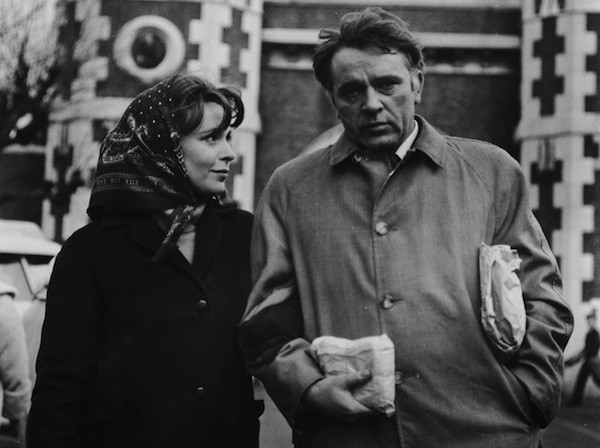
So says disillusioned British secret agent Alec Leamas (Richard Burton) in perhaps the best effort to adapt a John le Carré novel to the big screen: 1965’s The Spy Who Came in From the Cold. The serpentine plot concerns a burnt-out spook who enters a downward spiral of booze, self-hatred and lost faith after a disastrous mission in Berlin. But then it turns out that Leamas’ decline and despair is a ruse (?) play-acted at the behest of his superiors. As planned, he is recruited by the other side and ends up trying to discredit East German intelligence head Hans-Dieter Mundt (A cold, effective Peter van Eyck). Leamas undermines the ex-Nazi by feeding false (??) information to Mundt’s ambitious, Jewish deputy Fiedler (Oskar Werner, very strong here). It’s a difficult, high-risk mission, but Leamas knows that his boss back home is 100% behind him (???).

This may be the most magnificent performance in Richard Burton’s career, and will definitely please all fans of rotting charm. Drinking heavily in real life at the time, he was willing to expose his own capacity for ugliness and decay in a way that many glamorous stars of his era would not have dared to do. He exudes bone crunching hopelessness and isolation in shot after shot: Leamas alone on a park bench, alone in a bar, alone in his bed, alone chained in a cell. He’s devastated and devastating.

A 15 minute sequence of scenes in Britain is a masterclass in cinematic storytelling. It’s unsettling yet fascinating as Leamas repeatedly gets pissed and wanders through empty streets. Ultimately, he savagely beats an innocent man (Did the filmmakers cast for this part Bernard Lee — M from the flashy, unrealistic James Bond series — to make a point?). His copybook blotted, Leamas is judged “turnable” by the other side. After being released from jail, he is recruited by the Soviets in a sleazy men’s club by an unctuous businessman and a pathetic, gay procurer (Robert Hardy and Michael Hordern, respectively, terrific actors who clearly understood that there are no small roles).

The romantic aspects of the story also work well and become more important as le Carré’s ingenious plot unfolds. Claire Bloom is credible and sympathetic as the British would-be communist, who as Leamas puts it believes “in free love, the only kind I could afford at the time”. Leamas’ lacerating disdain for her naiveté reveals the depths of his own self-contempt: She may be immature in her politics but who after all is the one risking his life and doing horrible things in a struggle over the very same politics?

And Then There Were None, The Spy Who Came In from the Cold ...

Rarely has the look of a movie more perfectly captured its mood, and that’s a credit to Oswald Morris. Without any conscious intention, I think I have recommended more films shot by Morris than any other cinematographer. He was a remarkably unpretentious professional who maintained an astonishingly consistent quality in his work for 6 decades (He lived to age 98). It was a bold and brilliant choice to make this movie in black and white, which let Oswald create a washed out look that matches the bleak tone of the story. As much as the excellent acting, what stays with the viewer are Oswald’s shots of complete desolation both during Leamas’ alcoholic, putatively free, British wanderings and his time in East German captivity.

The other delight of this film is that it never condescends to the audience by over-explaining. With each double and triple cross, rather than clumsy exposition, director Martin Ritt simply gives us Burton’s face, as the mind behind it struggles frantically to make sense of the latest shift in the icy wind. A small example of the film’s understated, even at times cryptic, storytelling style is the scene where Fiedler asks for some paperwork from his underling Peters (Sam Wanamaker, memorably creepy). The seated, lame, Wanamaker extends his hand but not far enough. Rather than step forward, Fiedler waits until Peters struggles to his feet and hands it to him. Leamas chuckles derisively. The subtext which the film expects you to understand: Fiedler is the boss but as a Jew, he will never be fully respected by his German underlings. A small moment, a sly moment, a powerful moment, brought across with no comment other than Leamas’ mad laughter at Peters’ expense.

Touches like that are a key reason why The Spy who Came in from the Cold is completely engrossing. Fans of espionage films simply cannot miss this landmark movie.

p.s. If you like this movie, you might enjoy two of my other recommendations. Though not as good as this film The Deadly Affair is a solid effort to adapt le Carré’s first novel to the big screen. And the astoundingly brilliant Tinker, Tailor, Soldier, Spy is the best effort to adapt le Carré to television.

p.p.s. I also recommend Antonia Quirke’s elegiac FT essay on the battered, shattered Richard Burton and his iconic dingy overcoat.

Categories
Action/Adventure Drama Mystery/Noir

99 River Street

There are worse things than murder. You can kill a man one inch at a time.

Another of my recommendations, Kansas City Confidential, brought together Director Phil Karlson, Producer Edward Small and Actor John Payne in 1952. They re-teamed the following year to make another fine film: 99 River Street.

Payne is compelling as ultra-hard-luck Ernie Driscoll, a former boxer turned cab driver. In the opening scene, which is a pre-Raging Bull master class in how to convey the violence of boxing on film, Ernie is on the verge of becoming champion when he gets a bad break. And the bad breaks keep coming for the rest of the movie, in his marriage to his ice-cold beauty of a wife (Peggie Castle, at her best), in his friendship with a manipulative aspiring actress friend (Evelyn Keyes, on fire here), and in his battles with some ruthless jewel thieves who want to destroy him for reasons he can’t understand. His only consistent source of support is his former manager, a dispatcher at his cab company (played sympathetically by Frank Faylen, who played a cab driver in many Hollywood films and apparently got promoted).

If this film noir/gangster melodrama deserves one adjective it’s brutal. There are many scenes of physical violence, filmed with unusual realism (My favorite is Payne’s torture by and knock down drag out with a karate chopping jewel thief played by tough guy Jack Lambert). The emotional violence is even more pronounced, particularly in a long, gripping sequence in which Driscoll is played for a chump by a group of “theater people”. The tragedy of Payne’s character is that while he once was a master of his violent nature, frustrations and failures have led him to become a slave to it, preventing him from being happy in his achingly simple new life ambition of moving from hack work to becoming the owner of a filling station. Payne and Karlson are well up to the challenge of bringing across Driscoll’s emotional flaws and vulnerabilities, while at the same time making him completely credible in the many physical confrontations of the story.

The movie also gives the audience a fine bunch of criminals to root against. Brad Dexter (the guy from The Magnificent Seven whose name few people can recall) is both scary and smooth as the jewel thief who frames Payne for a terrible crime. Lambert exudes the menace that served him so well in his decades as a heavy in films and on television. Eddy Waller is even scarier in a different way as a criminal who has a kindly manner but in fact is a cold-blooded killer. The final, extended confrontation at 99 River Street of the protagonists versus the villains is thrilling and satisfying.

The only weakness of this movie is the final two minutes, a tacked on “where are they now?”-style epilogue that is too upbeat and pat given the tone and content of the rest of the film (The otherwise perfect Sideways had the same flaw). It was unlike Karlson and Small to pull a punch, but it doesn’t diminish 99 River Street as a gritty, gripping piece of cinema.

Categories
Drama Foreign Language

Behind the Sun (Abril Despedaçado)

Artistic concepts and projects can span the world. If Shirley Jackson’s classic American short story The Lottery could be said to have an Albanian parallel, it would be Ismail Kadare’s novel Broken April, which a French and Swiss production group, in alliance with some very talented Brazillians, turned into 2001’s Behind the Sun.

The story is extremely simple, almost an Aesop’s fable. In rural Brazil in 1910, a family of sugar cane cutters has been feuding for generations with a family of ranchers. The conflict began when some land was stolen and one member of one of the families killed a member of the other. In response, the victimized family took precise revenge, killing one but not more than one of the members of the perpetrating family. That family then responded in kind. Over the decades countless members of both clans have died, but no one seems interested in stopping — or even questioning — the tradition of violence other than a young boy in the cane cutting family who goes by the name “Kid”. Meanwhile, an alluring pair of circus performers appear on the scene, with the potential to change the life of the “Kid” and that of his beloved older brother Tonho (played with vulnerability by Rodrigo Santoro), who is next in line to be murdered.

This is a movie of staggering beauty photographed by Walter Carvalho, a superstar of Brazilian film of whom most Americans have never heard (Director Walter Salles is somewhat better-known outside of Brazil, but not as much as he deserves). The arresting visuals are often accompanied by stylized, amped up sound, with a murderous chase through the cane fields being particularly hard to forget.

The acting is uniformly fine, including by the young Ravi Ramos Lacerda as “Kid” (He acquires another name — Pacu — as the film progresses). The actors draw us into a world of brutal simplicity leavened by moments of magic and tender affection. These latter moments are critical because the humanity that the actors infuse into the characters is precisely what makes the unreasoning doom that hovers over all of them so terrifying and maddening.

If you are one those readers who finds the symbols and allegory in much of Latin American literature to be heavy-handed, you may have a similar reaction to aspects of this movie. But even if the Gabriel García Márquez-esque story touches put you off a bit, it should not blunt your appreciation for this powerful, poetic piece of cinema. The exquisite visuals and heartfelt performances are virtually impossible not to appreciate.

Behind the Sun wasn’t promoted effectively when it was released, and as a result did not receive the audience attention it deserved. But those who found it constitute a band of fierce admirers which you would be fortunate to join.

Categories
Drama Mystery/Noir

Chiefs

Chiefs was broadcast on CBS 30 years ago and like millions of other Americans I was glued to the set each night as its sprawling, multi-generational tale of law enforcement, small town life, racism and the hunt for a clever serial killer unfolded.

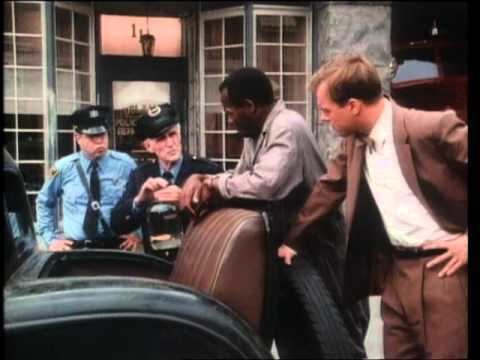
The mini-series centers on three police chiefs in the town of Delano, Georgia and a fourth man who is denied the chance to be the chief and is forever embittered. The story is narrated by the town’s leading citizen: Banker, investor and politician Hugh Holmes (Charlton Heston). In 1924, Holmes persuades the town council that Delano has grown big enough to have a police station. They hire gentle farmer Will Henry Lee (Wayne Rogers) as their first chief, enraging a WWI veteran who wanted the job (Keith Carradine). The choice of Lee is also disdained by good ol’ boy county sheriff Skeeter Willis (Paul Sorvino), who sees the responsibility of police mainly as keeping poor people and Blacks in line. Meanwhile, runaway boys begin disappearing around Delano, and Chief Lee comes to suspect that he is dealing with a sexually motivated serial killer. But tragic events intrude before Lee can apprehend the murderer.

The story then moves forward to the end of WWII, when a thuggish war veteran named Sonny Butts becomes Chief (Brad Davis). He uses the power of his office to terrorize Blacks, women, and anyone else he can get his hands on, to the point that Holmes is able to begin making moves to have him fired. Butts concludes that if he can solve the decades-long murder spree, which is still underway, he can save his job. He comes close but also fails, leaving the mystery to be attacked again by a different chief in 1962, Tyler Watts (Billy Dee Williams). But Watts has more than murder with which to contend. He is under great scrutiny and indeed threat as the town’s first Black chief, and he also must be careful not to endanger the political career of William Henry Lee’s son (Stephen Collins), who is running for governor as a racial moderate. There are many other clever ties between the stories of the three episodes, but revealing them would be a crime of its own.

The narrative structure of Chiefs, based on Stuart Woods’ novel, is inspired. With each generation we get to see the changes in Delano and in the South more generally, particularly with regards to race. Yet there is also continuity in the horrible murderer and the indirect partnership of three different men who do not know each other yet collaborate across the years to track down the killer.

The series features no bad performances and many strong ones, including by an agreeably restrained Heston. Paul Sorvino is also tremendous as Skeeter. Some actors think the way to play a racist realistically is to stamp around yelling epithets and dripping hatred. But Sorvino has it right: Most racists don’t repeatedly proclaim their racism any more than air breathers make repeated attestations to their love of oxygen. For Sorvino’s Skeeter, racism is just who he is and how life as he sees it is, and that makes him much scarier than the usual ranting bigot stereotype. Brad Davis, as the second chief, also tears up the screen. The actor had a brutal, short life but maybe that’s what gave him the remarkable ability he shows here to channel darkness. His Chief Sonny Butts is the pluperfect lustful, hateful bully. Keith Carradine is also creepily effective as Foxy Funderburk, the man who was denied the job of Chief and has been nursing a grudge ever since.

Chiefs (miniseries) - Alchetron, The Free Social Encyclopedia

Chiefs does suffer a bit from scattered flaws. At least one scene in each episode rings false, and some other dramatic moments that are ultimately effective nonetheless have contrived set-ups. Ageing a cast almost 40 years when of course not every actor is the correct chronological age when you start is a formidable challenge, and at times the makeup technicians don’t quite meet it. None of these peccadilloes are fatal to enjoyment, but collectively they keep Chiefs in the realm of excellent TV mini-series rather than letting it soar to Tinker, Tailor, Soldier Spy-level heights.

If you want to enjoy this high-quality production beware the many chopped up versions that are floating around (e.g., the 200 minute VHS release). The full-length version of course requires a bigger investment of time, but the compensation is handsome indeed.

Categories
Drama Mystery/Noir

The Web

When I was in graduate school, I shared an apartment with a fellow student who was also a film buff. One night we were watching television and saw a commercial announcing that our cable provider would soon start carrying a channel called “American Movie Classics”. We sat there mesmerized as the advertisement trumpeted that the new service would start with a series of films with Barbara Stanwyck, followed by a run of Cary Grant movies, and then a Gary Cooper retrospective.

We sat in stunned, dry-mouthed silence for a moment, until I said “Well, we’ve got to make a decision: do we cancel cable or drop out of graduate school so that we have more time for old movies?”.

My roommate responded immediately: “Totally drop out of graduate school”.

We resisted somehow, despite becoming AMC addicts and later TCM addicts. One joy of these channels was re-watching old favorites, but a distinct pleasure was viewing a quality film that had somehow been lost — not generally remembered, not listed in most film guides, but still able to entertain an audience if ever it were rediscovered. One such movie with which I had the latter experience is The Web.

This 1947 film, which is also shown under the title Black Velvet, is a nicely crafted noir featuring Edmond O’Brien as a dedicated, hard-charging young lawyer named Bob Regan. Regan falls under the spell of wealthy corporate powerhouse Andrew Colby (Vincent Price) and his sultry secretary/mistress Noel Farady (Ella Raines). He begins working for Colby on what seems a simple assignment, but it quickly takes a violent turn that draws him into a web of murder, intrigue and lies. He is meanwhile attracted to Noel, and she seems to reciprocate, but only to a point because Colby’s hold over her is strong. Meanwhile, hard-nosed police lieutenant D’Amico (William Bendix) watches over the developments with suspicion, and wavers between acting like Regan’s friend and his enemy.

The Web (1947) | It's a double-cross – a triple murder, with ...

Many people only know Vincent Price as “the King of the Grand Guignol”, but he had a fine career in Hollywood before all those scary movies. Otto Preminger’s excellent Laura is probably Price’s most widely-respected non-horror role, but he’s even better here: Silky smooth, handsome, assured and at the same time devious and dangerous.

Ella Raines is also at the top of her game, exuding a Bacall-esque sassy/tough sexuality as she is torn between the two leading men. O’Brien gives an appealing and believable performance as a man in way over his head, and Bendix plays the tough cop memorably as a sort of wiser older brother (and for once in a film noir, the cops are actually smarter than the hero!).

To be an all-time noir classic, The Web would have needed slightly tighter pacing and more quotable lines of dialogue, but it’s still an entertaining, well-made film that with the aid of cable classic movie channels (God Bless ’em) has been re-discovered by a new generation of viewers. Make yourself one of them.

p.s. Another too often forgotten film with a superb non-horror turn by Price is Samuel Fuller’s The Baron of Arizona.

Categories
Action/Adventure Drama Mystery/Noir

Bend of the River and The Naked Spur **Double Feature**

Caftan Woman: The James Stewart Blogathon: Bend of the River (1952)

Nobody can hate like a good man, and maybe that’s why Jimmy Stewart was so magnetic and moving in the hard-bitten Westerns he made with Anthony Mann after World War II. Stewart was a huge star at the outbreak of the war, during which he served with distinction. When the All-American, gee-whiz nice guy every dad hoped his daughter would bring home returned from military service, he was different, the country was different and his films didn’t do great box office. He might easily have appeared on a few TV shows and then drifted into retirement, as did many stars of his generation.

But two magnificent directors saw other qualities in Stewart, including a capacity for rage, bitterness, grief, longing, cynicism and violence. One of them remains famous (Hitchcock), the other, sadly, has mostly been forgotten. His name was Anthony Mann, and you could summarize much of his ouevre worse than saying it was “film noir goes west”.

Their first collaboration, the 1950 movie Winchester ’73, remains famous today because it was a massive hit that revived the then somnolent Western genre. It’s entertaining on any dimension, but for Stewart fans it’s particularly fascinating to see the darkness in his acting. When Stewart’s grief-ridden character (Lin McAdam) mashes Dan Duryea’s face into the bar and painfully twists Duryea’s gun arm, the rage in Stewart’s eyes is frightening; Duryea looks scared that Stewart is really going to hurt him.

The next two Mann-Stewart collaborations are somewhat less known today, which is too bad because they allow Stewart to go deeper into less seemly human emotions. They also both deliver thrilling action scenes. I offer them here as double feature recommendation: 1952’s Bend of the River and 1953’s The Naked Spur.

Western Noir: James Stewart in BEND OF THE RIVER (Universal ...

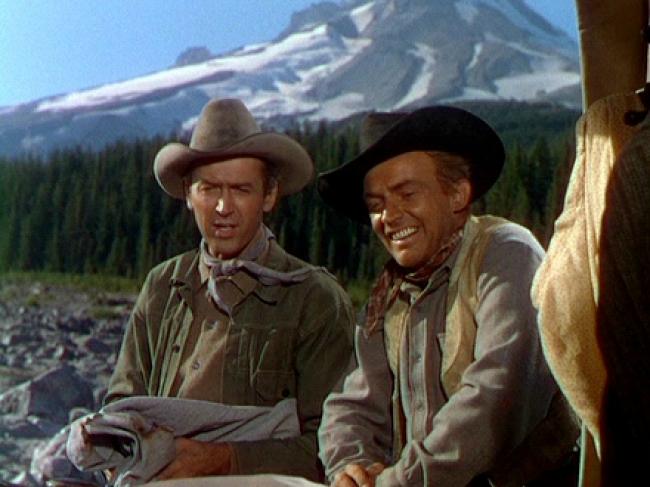
In Bend of the River, Stewart plays Glyn McLyntock, a former Kansas raider now helping a family of good-hearted pioneers settle in Oregon. They know nothing of his past, but slick gunman Emerson Cole (Arthur Kennedy) who becomes attached to their party, does. Cole too seems to want to go straight, and helps defend the party as they make their perilous journey. The pioneers warn McLyntock that a bad man is always bad, and therefore Cole cannot be trusted, but McLyntock knows that he himself needs redemption just as much as Cole does. Ultimately, the pioneers are betrayed by unscrupulous villains, and Stewart, with his old violent nature returning, must try to settle the score.

As foils, Kennedy and Stewart play off each other effectively, and Rock Hudson also does well as a (ahem) charming dandy from San Francisco (Rock liked to watch his own movies with gay friends and laugh at the subtext — they must have chuckled here when he tells a smitten young woman to go away because he wants to be with the men). The violence is extreme for the early 1950s, with dozens of people being wounded or killed on screen. What is unfortunately not out of place in the early 1950s are some mercifully brief but still off-putting scenes with Stepin Fechit as a stereotypical African-American character. But to close on a positive note, the scenery is gorgeous and everyone seems to know how to handle horses and guns, including during the climactic shootout.

The Naked Spur features another psychologically damaged Stewart character who cannot accept that what is lost is lost forever, no matter how much vengeance you take. With able assistance from Mann and two other noir icons (Ralph Meeker of Kiss Me Deadly and Robert Ryan of The Set-Up), Stewart delivers a cowboy movie with psychic weight. The film’s emotional dynamic is the reverse of Bend of the River. Instead of a once bad man trying to be accepted by good people by showing how good he is now, Stewart plays a once good man telling good people that they should not accept him anymore. That’s what makes Stewart and Janet Leigh’s heartfelt closing scene a knockout.

In addition to being a movie star and director, Clint Eastwood is a student of film history, and I am going to give him the last word on the multi-talented, multi-dimensional Jimmy Stewart:

Categories
Action/Adventure Drama Romance Science Fiction / Fantasy

Excalibur

As a filmmaker, John Boorman really goes for it. He has an idiosyncratic perspective on the diverse material he films, and carries it to the limit. Sometimes this has led to abject disaster (e.g., the incomprehensible, pretentious and unintentionally risible Zardoz). But more often than not Boorman’s courage as a filmmaker has resulted in fresh, exciting cinema, such as Point Blank, one of the very best films I have recommended on this site. 1981’s Excalibur is almost as strong and every bit as original as that classic.

Excalibur re-tells the hoary tale of King Arthur, his wizard/mentor Merlin, his knights of the round table and his tragic love triangle with Guinevere and Lancelot. Boorman keeps roughly to the classic Malory version of the story, but tells it in his own inimitable way, with bloody battles, plenty of sex, and even at times a bit of camp (some of the over-the-top moments may have drawn a few chuckles that Boorman didn’t intend). Excalibur illustrates beautifully how a talented artist can breathe new life into familiar material.

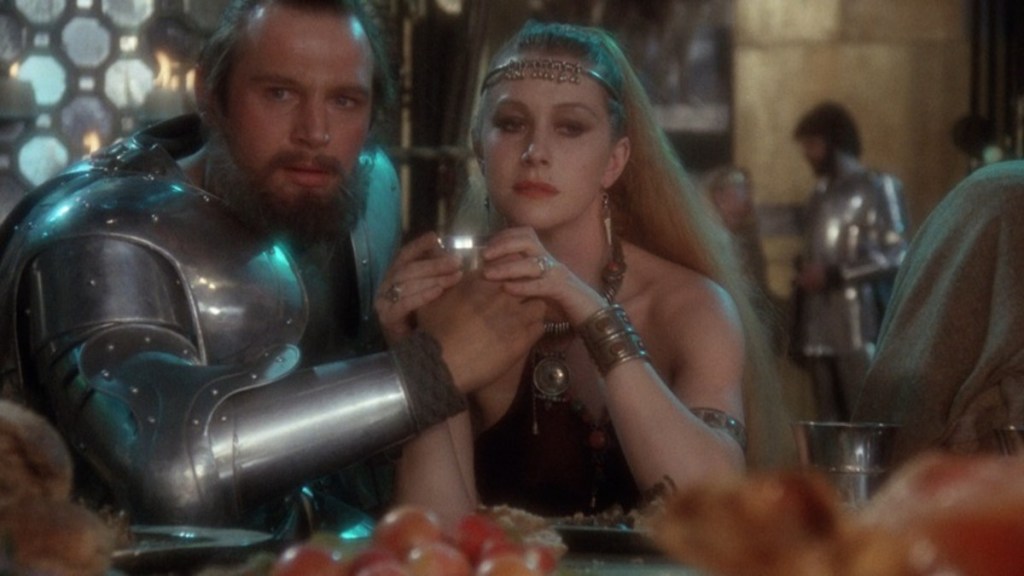
The most memorable character in the film is Merlin, played with gusto by Nicol Williamson, who gives the most eccentric portrayal of an Arthurian Wizard since John Cleese essayed Tim the Enchanter. His Merlin is a cranky, cryptic, wise and powerful oddball who alternates between helping his human charges (First Uther Pendragon and then his son Arthur) and upbraiding them for their frailties. The film develops his rivalry/romance with Morgana le Fay more than has any other Arthurian adaptation, which was a wise move given that the ageless and subtle actress Helen Mirren is on hand to play the enchantress who longs for King Arthur’s downfall.

The production values are spectacular and the battle scenes feel real. Rather than people leaping around in plate mail whilst nimbly fencing with longswords, the combat is often slow and clunky. Indeed, the actors visibly strain under the weight of their weapons and armor. Also to admire: Future superstars (Patrick Stewart, Liam Neeson) giving solid performances as knights. Cherie Lunghi and Nicholas Gray also register as the doomed lovers Guinevere and Lancelot, and it’s a shame their film careers didn’t take off after this movie was made.

Ultimately of course, this is Boorman’s movie, and whether it captivates you or not depends directly on whether you are willing to travel along with him as he develops his personal vision of Le Morte d’Arthur. Most viewers will find that while there are a few bumps on that journey, it’s an immensely rewarding trip with one of Britain’s great filmmakers.

Categories
British Drama

Scrooge

Scrooge is deservedly a beloved Christmas movie. Like the not dissimilar It’s a Wonderful Life, it came by its standing as a beloved film democratically: Long after it was released generations of people fell in love with it on television. And with very good reason.

The heart of this film is Alastair Sim, whose lack of a 1951 best actor Oscar nomination should make the Academy hang its head in perdurable shame. More than any other movie adaptation of Dickens’ novella, screenwriter Noel Langley’s treatment gives Scrooge a backstory that explains his nature and outlook, making him a more fully developed character. Sim must therefore portray powerful moments of grief, cruelty, pity, parsimony, regret, remorse and manic joy, and he does so in a profoundly effective way. He was so damn good in everything he did (e.g., Green for Danger, another of my recommendations) that it’s hard to say which is his greatest film performance, but this may well be it.

Categories
Comedy Drama

The Hospital

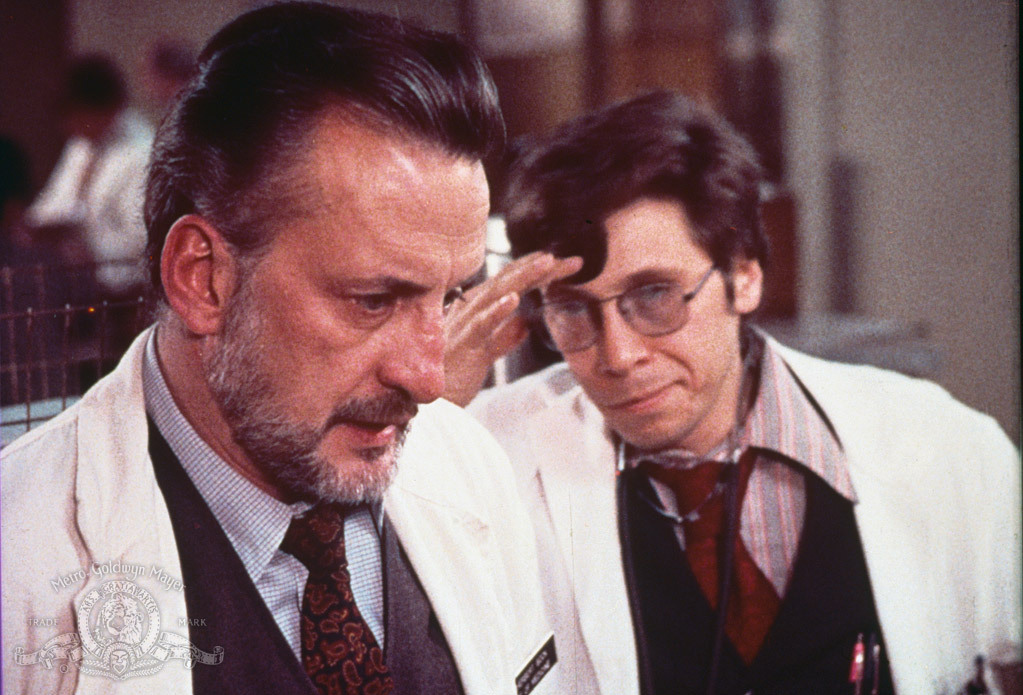
The Hospital (1971)

Over the decades I have worked in hospitals, I have seen countless movies that draw on the drama, humor, joy and frustration that happens every day in the medical world. It’s a tough call, but if pressed to choose my favorite of such films it would be 1971’s The Hospital.

The magnificence of the movie ultimately derives — as is so often the case with the best films — from a sterling script. Even though he died young and was not particularly prolific, Paddy Chayefsky was an extraordinarily influential screenwriter. He wrote unusually realistic, tightly constructed scripts for television plays in the 1950s that he later turned into superb films (Marty is the most famous, but I like The Bachelor Party even better). He went on to achieve two mammoth movie triumphs in the 1970s, of which Network is better remembered but The Hospital is every bit as impressive. He also delivers The Hospital’s pricelessly sardonic opening narration about the trials of a recently admitted patient who is subjected relentlessly to the benefits of modern medicine until he expires.

The heart of story is Dr. Herb Bock, Chief of Medicine, one-time wunderkind of immunology and now a hard-drinking, acutely depressed, and suicidal man who sees himself as a failure in every sphere of life. George C. Scott, an actor of great range (it’s hard to believe that the same man played General Patton, General Buck Turgidson and Dr. Bock), gives a bravura performance as the bearish, pained, raging and pitiable Dr. Bock. He is a classic hero/martyr type who works hard to help everyone else at great cost to himself, and is incapable of accepting the love and support he needs. I have known many Dr. Bock’s in my career, people who would say as he does that “love doesn’t triumph for the middle class — responsibility does”. The collision of an A-list actor with a beautifully-written character, as we have here, is one the most enduring delights of film watching.

On top of his considerable personal problems, Bock’s hospital is under great pressure from two directions. Angry activists are protesting the medical center’s alleged insensitivity to the local community (Chayefsky’s take on much of 1970s activism is bitter, but also hilarious). Meanwhile, why are so many people dropping dead…there couldn’t be a mad killer on the loose, could there? As Bock struggles against overwhelming challenges, he is emotionally upended by a loopy yet appealing hippy who seems to understand him better than he understands himself. Diana Rigg is perfect as said hippy, and she and Scott work together brilliantly, particularly in a long and emotionally complex scene involving suicidal and sexually violent longings.

The script has many laughs, almost all of which come with an undercurrent of anger. The foibles of hospitals and physicians are well-skewered, although in one poignant speech at the end, Scott gives a rejoinder to all the cynicism, which also hits home. The supporting players are very good indeed, including Barnard Hughes in two different parts (only one of which is credited), Nancy Marchand as Head Nurse Christie and Frances Sternhagen as “the bitch from the accounting department” (Sternhagen, whose work I have highlighted before, remains underappreciated as an actress).

The Hospital is one of the great black comedy/dramas of the 1970s and beyond that will resonate profoundly with anyone who has spent much time in a medical center as a staff member or as (the poor dears) a patient.