Categories
Comedy Musical

How to Succeed in Business (Without Really Trying)

An incisive take on the life of corporate suits and their sexy secretaries in 1960s Manhattan, with Robert Morse as the star. No, it’s not Mad Men, but 1967’s toe-tapping, uplifting and funny “How to Succeed in Business (Without Really Trying)”.

Based on the smash Broadway hit, the heart of the film is of course the music. The songwriter is the great Frank Loesser, and some of his most enjoyable pieces are rendered with energy and talent by the cast (“Brotherhood of Man”, “The Company Way”, “I Believe in You”). Bob Fosse’s choreography is consistently creative and the colourful costumes by Micheline enliven every scene.

The agreeably silly script tells the story of an ambitious window washer named J. Pierpont Finch (Robert Morse, whose bravura performance deserved an Oscar nomination) who climbs the corporate ladder with shocking speed, aided by the titular self-help book. He is pursued by Rosemary Pilkington (Cutely played by Michelle Lee), who is every bit as ambitious in love as he is in work. Many veterans of the stage production (including Rudy Vallee) contribute their comic and musical gifts.

David Swift, famous as a Disney animator and TV writer/director, seems an unlikely writer/producer/director for this film. In some ways, one could say it was an easy job because the choreography and cast had mostly been worked out already on Broadway. But on the other hand, adapting a beloved Broadway show to the screen is a big risk for a director because fans of the stage version can get upset at the inevitable changes in the film version. Here they were apparently delighted along with the rest of the movie-going population, so kudos to Swift for a smooth translation of play to screen, and congratulations on what was the high mark of his career as a film maker.

I am embedding one of my favorite numbers from the movie because it always picked me up when I was a lowly graduate student feeling stomped on and disrespected in a really demanding doctoral program. Enjoy.

Footnote: There are two continuity goofs in the opening minutes of the film. Finch pays for his newspaper but grabs the self-help book impulsively without paying for it and the guy running the booth doesn’t react. A few moments later, when he starts from the roof down on the window washing platform, there is another window washer working the other side. But that guy is played by a different actor by the time Finch has descended to the window. Yes…noticing these things means I have seen this movie perhaps too many times. But. Can’t. Stop. Re-Watching. So. So. Entertaining.

Categories
British Mystery/Noir

Green for Danger

If Lt. Columbo had been Scottish, he would have born a strong resemblance to Inspector Cockrill, as wonderfully played by Alastair Sim in 1946’s Green for Danger. In the film role that helped make him a huge star, Sim perfectly essays the role of the dowdy looking, socially clumsy police detective who has a razor sharp mind and a relentless desire to snag his prey.

The setting is a wartime British hospital, where doctors and nurses treat the victims of the German doodlebugs that are wreaking havoc throughout the countryside. When an injured local postman mysteriously dies on the operating table, everyone looks like a plausible suspect. Which member of the surgical team did it? Is the killer Mr. Eden (Leo Genn), the lothario head surgeon? Sister Bates (Judy Campbell), the woman he most recently discarded? Or perhaps it’s Dr. Barnes (Trevor Howard), the doctor with a stain on his medical record?

Particularly if you have the Criterion Collection version, this film is not just entertaining but very easy on the eyes. Much of it was shot indoors, but Cinematographer Wilkie Cooper makes the most of the exterior scenes to give us eye-catching and haunted-looking backdrops that maximize the tension of the story (He had Oswald Morris and Thelma Connell on the team, whose also collaborated on another of my recommendations). With all the wind, trees and shadows, the mood created is reminiscent of horror films in which a small group of desperate people are locked inside a remote and spooky mansion where violent events unfold.

Despite being a murder mystery, the film has many funny moments (especially Sim’s wry dialogue and voiceovers). Sidney Gilliat had already shown his gift for comic thrillers by co-scripting Hitchcock’s The Lady Vanishes. Here he also takes the director’s chair, from which he skillfully keeps the tone right as the story moves from hospital soap opera to murder investigation to amusingly Columbo-esque moments between Cockrill and the suspects. Gilliat gets solid performances from every member of his cast, who do a nice job humanizing characters that might otherwise lapse into stereotype. Gilliat’s script (co-written by Claude Guerney based on Christianna Brand’s novel) invokes a number of coincidences to make everyone look like a suspect and offers a somewhat rococo ultimate explanation for the crimes. But these are time-honored and enjoyable elements of the locked room mystery genre, right down to the climactic re-staging of the crime by Inspector Cockrill.

Categories
Action/Adventure British Drama

The Cruel Sea

To compliment my recommendation of The Long Arm, let me endorse an even better film featuring the wonderful Jack Hawkins. In the high point of his career as a star (although he would go on to have a career as a character actor in upmarket blockbusters such as Lawrence of Arabia, Zulu, and Ben-Hur), Hawkins turns in a powerful, weighty performance as Captain Ericson in 1953’s The Cruel Sea. Scripted by Eric Ambler and based on the well-regarded Nicholas Monsarrat novel of the same name, this is a realistic, exciting and emotionally affecting portrayal of the British Royal Navy’s efforts to protect convoys from the predations of German U-Boats.

As the story begins in 1939, Ericson is called from the merchant marine to captain a corvette with a crewful of amateurs. His second lieutenant, Bennett, is a martinet of questionable ability (Stanley Baker, who really registers here in an early role for which he campaigned after being impressed with the character’s possibilities in the novel), and the junior officers below him were only recently working as barristers, journalists and in other professions that are of no value in naval combat. Ericson must train and lead them while making the terrible life or death decisions that wartime demands (If you want a short, powerful take on the nature and challenges of leadership, the events about 40 minutes into this movie are hard to beat). He is at least encouraged that when Bennett suddenly departs the ship, one of his young officers, Lockhart (Donald Sinden), starts to grow into the kind of officer he can count on.

Meanwhile, the crew have to protect convoys from U-boats, which increasingly gain the upper hand as the war wears on. In these scenes, documentary footage is smoothly blended with shots of the actors to give us the feel of being at sea as storms rage and the terrible possibility of torpedoes is ever-present. There are moments that will have you gripping the armrests and hoping along with the men that they will survive each crisis in which they find themselves.

Categories
Blogs on Film Uncategorized

Establishing Character and Plot Elements in Film: The Prisoner

A remarkable number of films absolutely botch their opening moments by introducing way too much information/needless detail or by providing essential information in a clumsy fashion. The worst ever example in the movies was David Lynch’s Dune, which had such an incoherent opening narration that when it played in the cinema, audience members were given an explanatory handout sheet with their tickets (And it didn’t help. Very disappointing given the greatness of Frank Herbert’s book).

At the other end of the spectrum, In a Lonely Place (recommended here) takes less than 5 minutes to show who Bogart’s character is and what drives him, and you can’t help being pulled into the story by both lapels (for a more recent example, check out the first scene of the 2014 film Whiplash).

A television series that opens its story as well as any is Patrick McGoohan’s brilliant (if uneven and occasionally maddening), The Prisoner. I re-watched a number of these recently and greatly admire the creators for trusting the audience by using a 90 second opening with no dialogue. The images make clear what the series is about economically and cleverly. The next 90 seconds of the opening were substantially the same each week, but included some tailoring for the episode at hand. It’s an arresting and innovative way to begin telling a story and it has great background music as well.

Categories
Drama Horror/Suspense

A Christmas Carol

One of the most memorable adaptations of A Christmas Carol is a short, animated film of the same name. Made in 1971 by animation icons Richard Williams, Ken Harris and Chuck Jones, this is by far the most eerie and dark version of the much-filmed Dickens classic.

Despite being condensed to 25 minutes, this Oscar-winning film’s storytelling will be comprehensible even to people unfamiliar with the original. Adding immeasurably to the production are the voice talents of two actors from the best live action version of the old chestnut (Alastair Sim and Michael Hordern, who reprise their 1951 roles as Scrooge and Marley, respectively).

But the real star here is the animation, which was inspired by illustrations in early editions of the book (especially the Victorian era drawings of John Leech). The images are lugubrious and scary yet hard to look away from, not unlike Goya’s Pinturas Negras. I first saw this film as a child and the visual of “ignorance and want” haunted my imagination for years. The film makers accentuate the power of the animation by employing arresting pan and zoom shots that are extremely effective both as storytelling devices and as setters of mood.

The threnodic tone of the film does not stop the essentially positive message of the story from emerging brightly in the end. Ebenezer Scrooge’s transformation to a life of charity and decency remains uplifting, perhaps even moreso for the considerable terrors of the night before.

Categories
Action/Adventure British Drama

Hell Drivers

Having recommended the movie that gave Stanley Baker his first break (The Cruel Sea) and one he produced and starred in once established (Robbery), let me fill in the middle by recommending the thrilling film that made him a star in 1957: Hell Drivers.

The plot is agreeably simple. Baker plays Tom Yately, a tough but moral ex-con trying to go straight. He takes a job at a trucking firm managed by a ruthless boss (William Hartnell, who effectively plays the villain here, albeit of a different type than in Brighton Rock). The business would give OSHA a coronary. The truckers are assigned to ship gravel from a mine to a worksite many times a day, getting paid more money the more trips they make. They respond by driving like maniacs, at significant risk to themselves and others. And they all compete to topple the domineering, violent and reckless “Red” (Patrick McGoohan) as the top driver of the crew. Meanwhile, Tom befriends a kindly, devout Italian driver named Gino (a spot on Herbert Lom) whose girlfriend (Peggy Cummins) begins to put the moves on him.

The driving scenes in this movie are thrillingly shot by the justly revered Geoffrey Unsworth (I’ve praised his work in A Night to Remember, Superman and Unman, Wittering and Zigo). This includes the ultimate driving test from hell for Tom Yatley, in which he is accompanied by a perfectly droll Wilfrid Lawson as the firm’s mechanic. The final confrontation of the film, as Red and Tom have a trucking duel in an abandoned quarry, is particularly well-done and highly satisfying.

Categories
Comedy

My Favorite Year

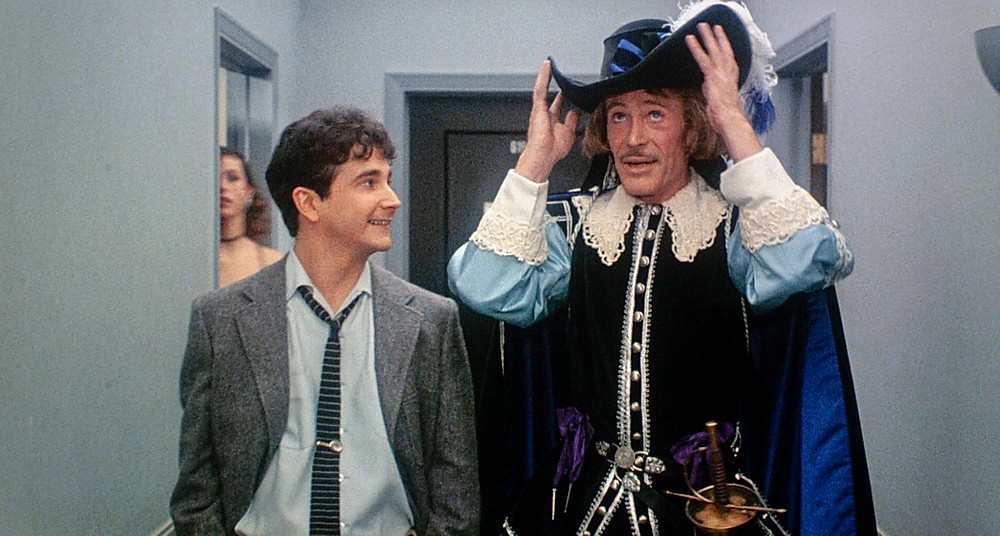
This 1982 star vehicle for Peter O’Toole (playing a drunken, rakish, movie star oddly reminiscent of Peter O’Toole) delivers big laughs as well as some acute observations on the nature of fame. The movie also opens a window into the world of 1950s live television comedy and the people who made it happen.

My Favorite Year – Classic for a Reason

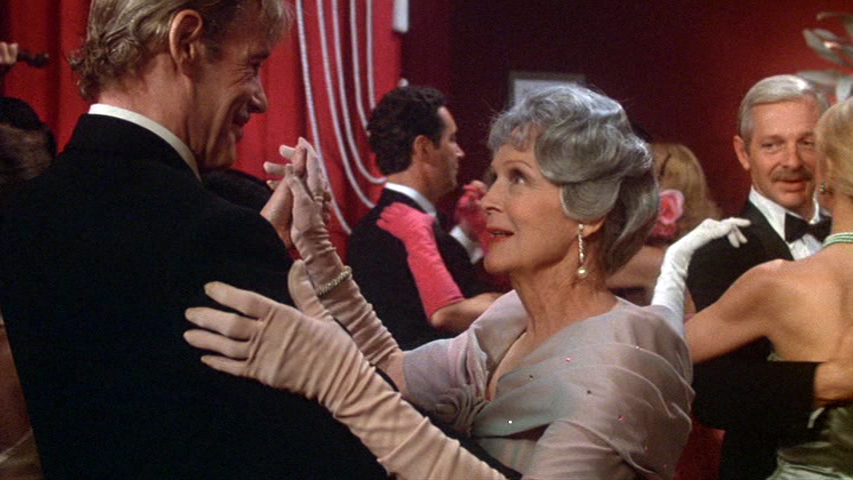
The supporting cast is filled with wily veterans who know how to get the most laughs out of the material. Bill Macy is perfect as the beleaguered head writer, and Joseph Bologna is almost as good as a Sid Caesaresque television star. Another treat: In the sweet scene in which O’Toole dances with an older woman on her wedding anniversary, the role is played by 1930s film star Gloria Stuart (two of her best are Prisoner of Shark Island and The Old Dark House).

My Favorite Year (1982) - A Review

This was Richard Benjamin’s first time out as a director, and it shows a bit. The tone and style of the film are not as consistent as what he would achieve in his films as he became more experienced. Norman Steinberg and Dennis Palumbo’s script, while funny most of the time, also includes some weak gags and slow spots. Can one extremely charming star leap over such weaknesses in a single bound and keep the audience laughing and cheering? In O’Toole’s case, the answer is clearly yes.

p.s. There is an oft-repeated story that this film was inspired by Executive Producer Mel Brooks’ recollections of Errol Flynn doing a guest spot on Your Show of Shows when Brooks was a writer. But as many of the tapes of that show are lost to us, no one to my knowledge has ever confirmed that such an event actually transpired.

Categories
Documentaries and Books

Hoop Dreams

Filmmakers Steve James and Peter Gilbert started with the idea of making a 30 minute TV show about kids playing basketball at an urban playground. Instead they got pulled into the lives of two remarkable families and you will be too by the astounding 1994 documentary Hoop Dreams.

The film follows two African-American basketball players for five years as they grow from boys to men in Chicago. Both have been scooped up as potential basketball stars by an ambitious coach at a white suburban high school (Is this an opportunity or just exploitation? The film doesn’t flinch from this question.). When one of them, Arthur Agee, doesn’t do well academically (or is it just that his white coach thought he wasn’t a good enough player?) he is sent back to his local high school where his sports career prospers in new ways. The other, William Gates, fares better in the burbs at first but then his life takes some turns that I will not ruin for you by telegraphing them.

Among the things that amaze about Hoop Dreams is the access everyone gave to the filmmakers. The boys themselves, the coaches and their friends are all remarkably candid in the interviews. And the Agee and Gates families open up their personal lives to an almost unbelievable extent. The amount of intimacy they let the viewer have at some of the most critical moments of their lives is a true gift.

The other impressive thing about Hoop Dreams is that despite an almost three hour running time (edited down from a reported more than 250 hours of footage!) it holds your interest at every moment. Personally, I tend to be pretty hard on movies that run more than two hours without an exceptional reason. Here, I was riveted throughout and indeed would have loved more.

Hoop Dreams is sometimes referred to as a great film about inner-city existence or low-income Black Americans. Yes, it is those wonderful things but it’s also more than that, it’s a film about life, family and growing up with which anyone with a heart and a mind can connect emotionally. That’s why it’s not just one of best documentaries of my lifetime; it’s a great work of art.

Finally, just as a comment on inner city life, which this film so well captures, it is quite sad that a number of people in this film have been murdered since the film’s release, including William’s older brother and Arthur’s father-in-law.

p.s. Even some fans of this film sometimes underestimate its worth. They are angry that it wasn’t nominated for a best documentary Oscar. That was indeed an outrage, but in a year when Forrest Gump won Best Picture, the nominators in that category should have hung their heads too. Props to Siskel and Ebert for using their platform to boost this movie and to blast the Academy for their disgraceful decision.

Categories
British Comedy

Local Hero

Local Hero streaming: where to watch movie online?

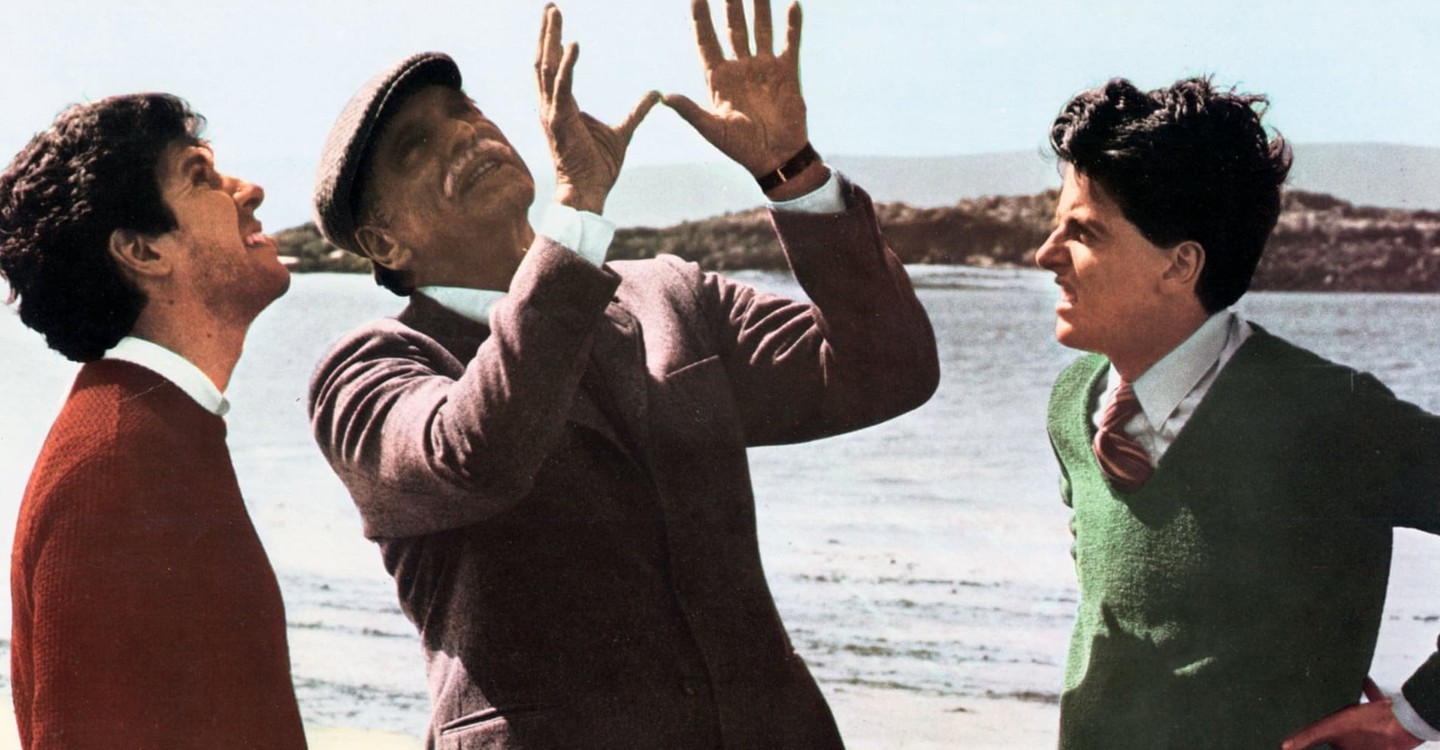
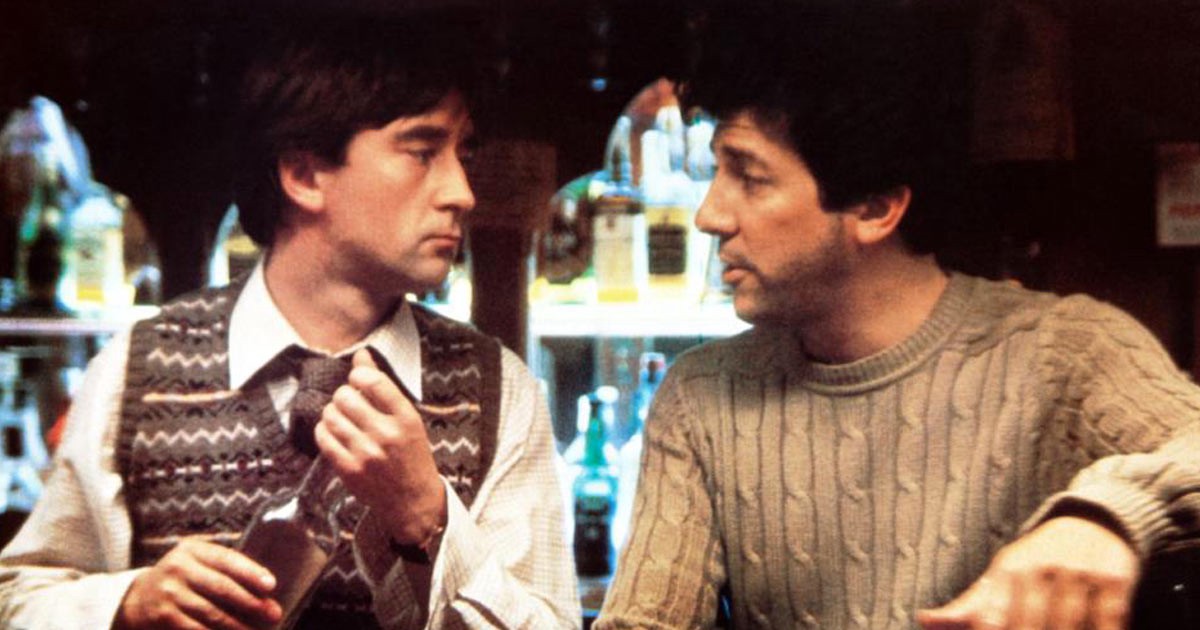
Following the success of his low-budget films That Sinking Feeling and Gregory’s Girl, Scottish film maker Bill Forsyth had the adjective “quirky” hung on him by critics, and it stuck. But there’s a nicer way to describe this talented writer-director’s output: Sweet, original and offbeat. For me, no film in Forsyth’s career better illustrates those qualities than 1983’s Local Hero.

On its face, the plot is simple. Knox Petroleum needs to buy an entire Scottish seaside town in order to further its oil empire, so its all powerful and extremely eccentric President Felix Happer (Burt Lancaster) dispatches a guy named MacIntyre (Peter Riegert) to close the sale, because, well, with a name like that he must understands Scottish people. In a more clichéd film, the quietly noble and down-to-earth townspeople would resist the heartless tyrants of capitalism. I will not spoil the film for you but rest assured that Forsyth is far too creative to follow that tired line of plot, either for MacIntyre and Happer or for the people of the village.

Under Forsyth’s direction, the cast sparkles throughout. Burt Lancaster, like Sean Connery and Clint Eastwood, was wise enough in late life to transition from swashbuckling roles to more age-appropriate fare. His turn as an isolated, slightly daft, stargazing corporate titan is hilarious, particularly his scenes with one of the most abusive psychotherapists in film history.

Criterion Review: Get Ready to Cheer for LOCAL HERO | by Brendan ...

Peter Riegert is very good at playing people who are present in some respects but completely absent in others. Outwardly, his MacIntyre is a financially successful oil acquisitions man. On the inside, he is a lonely person with a bitter break-up behind him and, the film hints, more romantic disappointments to come. His last name is Scottish but even that isn’t real; he no more belongs in Scotland than he does anywhere else. What pulls on his emotions the most about the Scottish town is the wildly satisfying (in every respect) marriage of his hosts at the local B&B. It’s the life he longs for but simply doesn’t know how to create.

Peter Capaldi as Danny Oldsen and Jenny Seagrove as Marina in ...

The charming Jenny Seagrove, whose success in UK film and television unfortunately never translated across the pond, hits the right notes as a scientist with whom Peter Capaldi’s character falls in love (Capaldi, later so good as a thoroughgoing bastard on The Thick of It and In the Loop, is completely different here in the film that first brought him notice). Kudos also to the set designers for Felix Happer’s bizarre and palatial office suite, and to Mark Knopfler of Dire Straits fame for an understated and memorable score.

Like most of Forsyth’s films, there are a few big laughs and many more small ones. Wistful in some ways, joyful in others, this quiet gem of a movie will bring a smile to your face.

Categories
Drama Romance

Flirting

Adolescence includes aches (loneliness, alienation from adults, sexual longing) and joys (first love, treasured friendship and music). Few films have portrayed both classes of teenage experience as warmly and intelligently as the 1991’s Flirting.

Due to an execrable U.S. advertising campaign, which misrepresented the film as a sniggering teen sex comedy from “those crazy blokes down under” (I cannot bring myself to post the trailer) this Australian gem barely opened in the U.S. and when it did mostly the wrong people saw it. But a precious handful of people outside of Oz have found this excellent film and continue quite properly to point others to it. Having been so blessed by a friend some years ago, I wish to pay it forward here with the strongest possible recommendation that you give this excellent movie a look.

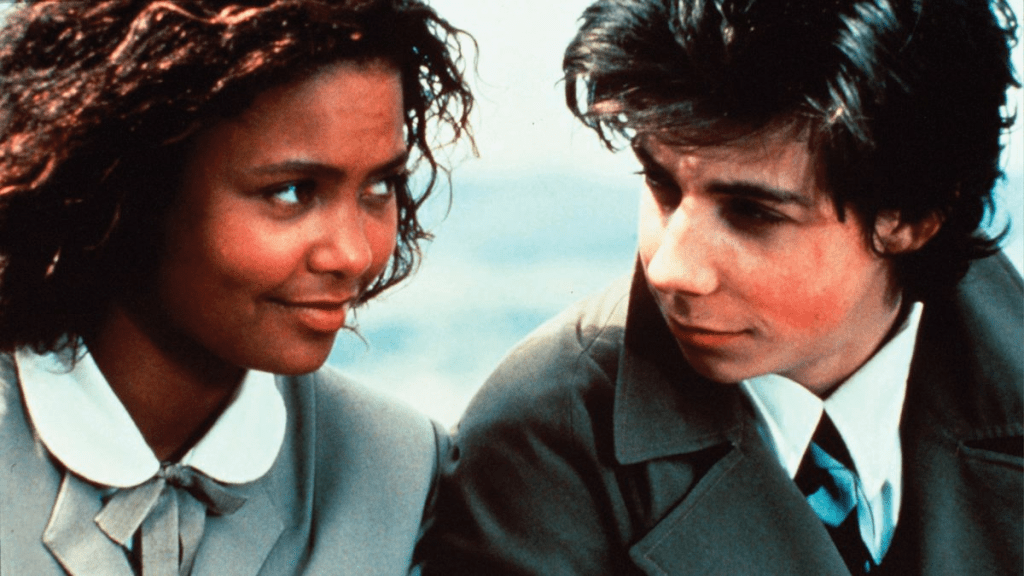
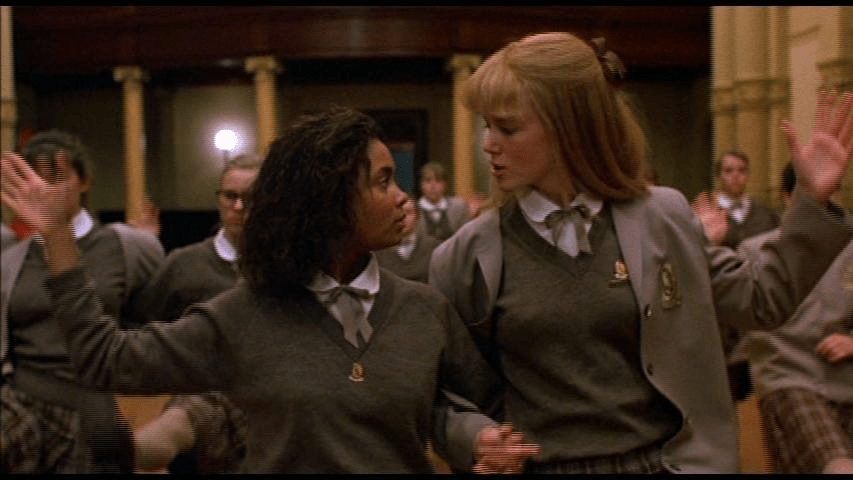
Writer-Director John Duigan sets his story in two boarding schools that stare at each other (like their residents) across a lovely lake. In the boys’ school, anxious, stammering Danny Embling (sweetly played by Noah Taylor) is being ground down by sadistic masters and bullying classmates. Meanwhile, a student from Uganda, Thandiwe Adjewa (the luminous star-to-be Thandie Newton), is getting a cold welcome at the girls’ school. Yet as is so often the case, the underdogs attract a stout friend or two, and are also drawn irresistibly to each other. Taylor and Newton have great chemistry on screen, and you will be rooting for their budding romance from the very first.

The other central character is the alpha girl of Thandiwe’s school, played to perfection by a pre-fame Nicole Kidman. Initially imperious and frosty, she eventually reveals more accessible layers beneath, particularly in the superb scene after she catches Thandiwe sneaking back into the school after a rendezvous with Danny.

Many of the plot elements and themes here are familiar (Rebel Without a Cause is one a zillion films to tread similar ground). But it wasn’t fresh plots that made Shakespeare the Immortal Bard, it was what he did with them. With its wisdom, sensitivity and wit, Flirting turns the usual coming-of-age story into an fresh and inspiring experience that is not to be missed.