Alfred Hitchcock had a successful directing career in Britain that preceded his American super-stardom. Hitchcock fans rightfully consider the 1935 comedy-romance-thriller The 39 Steps among the very best works of the Master’s “British period”.
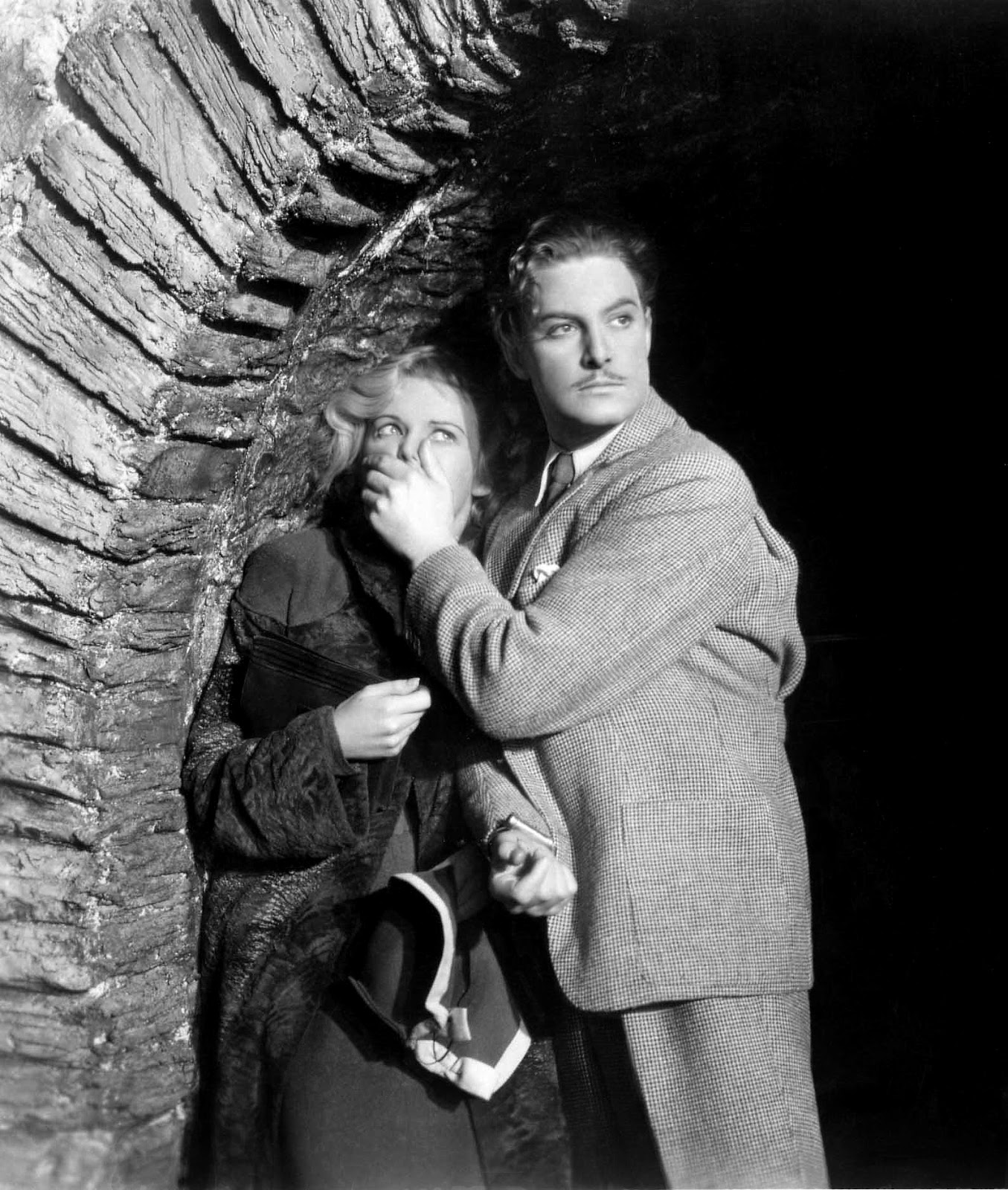
Robert Donat cuts a dash as Mr. Hannay, the hero of the film, who tries to save England from the threat of nefarious and crafty foreign agents. As in other Hitchcock films (e.g., North by Northwest, The Wrong Man, The Man Who Knew Too Much,), the central character is an innocent who is pulled into a web of intrigue and danger which he doesn’t understand. But unlike in those darker films, it doesn’t seem to bother him a jot.
“Did this beautiful woman just fire a gun in a crowded theater to evade her pursuers and then tell me that she is an international spy for hire? Well then, let’s go back to my flat for a large whiskey and soda and I’ll cook her up some haddock while she tells me all about it.”
“I seem to have walked into a political rally focused on I know not what and I have been mistaken for the distinguished guest speaker. Well then, jolly good, I’ll give it a go.”
“Am I really handcuffed to yet another beautiful woman as I run through the Scottish Highlands with people trying to shoot me? Well then, I wonder if she’s married or at least broad-minded.”
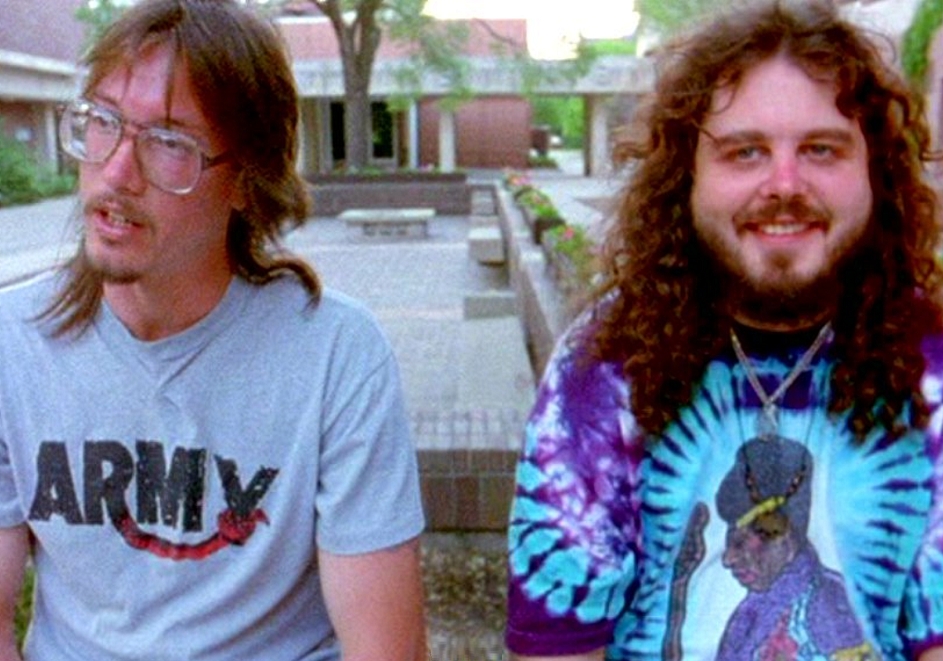
Chris Smith was an unknown would-be director attending film school in Milwaukee when he met a fellow would-be filmmaker named Mark Borchardt, whose career could not have looked very promising. Smith wisely made the decision to make Borchardt the subject of a documentary, and the result is a movie that succeeded artistically and financially more than either of them could have imagined: 1999’s American Movie (sometimes listed as “American Movie: The Making of Northwestern”).
The documentary follows Borchardt’s painfully unsuccessful effort to make “Northwestern”, which he envisions as a cinematic masterpiece. As the shoestring production collapses around him, Borchardt decides instead to resurrect his half-finished horror film “Coven”, the proceeds of which he hopes will finance his dream project. With money from his dotty Uncle, and, volunteer acting and production by his family and aspiring local actors, Coven fitfully begins to turn into something of which Borchardt hopes he can be proud. Meanwhile, the rest of his life is a mess. He is unemployed, lives at home with his parents, drinks too much, and is estranged from his children. The emotional anchor of his life is less so his family than his best friend Mike Schank, a recovering alcoholic with a taste for gambling and a peaceful stoner/Buddhist-esque demeanor.
Never mocking or exploitative, the movie takes its subjects seriously just as they take themselves and their art seriously. As with Hoop Dreams, the families involved gave a remarkable level of access to the documentary makers. The affecting result is a true slice of American life, as lived by white lower middle class people in Milwaukee.
And remember, “Coven” does not rhyme with oven. Should’ve kept the umlaut….
The 2010 remake of Brighton Rock got mixed reviews, so I recommend discovering instead the 1947 original, which is both a fine character study and a solid piece of British film noir. Made just after the war by the Boulton Brothers, this story of razor-wielding gangsters was considered shocking in its day. Though a bit dated, it remains worth watching for its strong acting, emotional impact and truly memorable visuals (particularly during some jolting violence).
Scripted by two lions of British cinema, Graham Greene and Terence Rattigan, the plot centers on a small criminal gang led by the cold hearted Pinkie Brown (A genuinely chilling Richard Attenborough). The former boss of the gang has just been murdered and Pinkie is struggling to revenge the loss while fending off internal and external threats to his control. A saintly, pretty young girl named Rose (a pitch perfect Carol Marsh in her film debut) has evidence that can put Pinkie away for a killing, but also, strangely enough, seems to be falling in love with him. Meanwhile he grapples with Catholic guilt at the life he is leading.
As in many British dramas of the era, highly experienced actors take every advantage of the smaller roles in this movie. A pre-Dr. Who William Hartnell plays a complicated criminal who is heartless when committing violence yet develops a paternal protectiveness towards Rose. Veteran stage actor Harcourt Williams steals scene after scene as a Shakespeare quoting shyster.
Only quibble: In trying to contrast “carefree tourist Brighton” with the seedy underbelly, the film makers go overboard early in the film with annoyingly upbeat music that detracts from the mood of menace. But that trope fades out after the first 20 minutes or so, leaving the viewer plenty of time to be both fascinated and repulsed by Pinkie Brown and the criminal world which he inhabits.
Every election season, I revisit R.J. Cutler and David Van Taylor’s revealing 1996 documentary A Perfect Candidate. The setting is the 1994 Virginia Senate race between incumbent Chuck Robb and challenger Oliver North, which one voter likens to a choice between “the flu and the mumps”. The principal players in the movie are Washington Post report Don Baker and North’s campaign manager Mark Goodin (a Lee Atwater mentee). Their candor and insight are nothing less than disturbing, as this set of clips with Goodin shows.
As the movie unfolds, both campaigns lurch from the trivial to the ugly, and no one comes out looking very good at the end. The fact that the outcome of the election is known in advance by the audience does nothing to limit the fascination this movie generates as it documents how campaigns operate. There is nothing inspiring here about the electoral process, unless it is to inspire us to change it. But that’s why A Perfect Candidate is an outstanding documentary: It shows life unvarnished and in an emotionally compelling way. It’s a raw, remarkable must-see film for political junkies and for anyone who wonders why we get the candidates we do in our elections.
There is an above average Jimmy Stewart movie called No Time for Comedy, in which he is cast as Gaylord Esterbrook. Gaylord writes hilariously funny plays yet feels he should write dramatic productions of greater weight in order to be a “serious writer”…but his effort to do so is disastrous. The movie always makes me think of Neil Simon. When he tries to be dramatic he is often manipulative, soppy, boring or pretentious. Films like “California Suite” make me ape Homer Simpson’s reaction to watching Garrison Keillor (Homer beats the idiot box yelling “Stupid TV! BE MORE FUNNY!”).
But when Simon gets over himself and just tries to be funny, he can be absolutely, rib-ticklingly, delightfully enjoyable. This double feature recommendation highlights Simon at his gutbusting best in two loosely linked comedies directed by Robert Moore: Murder by Death (1976) and The Cheap Detective (1978).
Both films are affectionate parodies of fictional detectives from the movies. Nick and Nora Charles, Charlie Chan, Sam Spade, Miss Marple and Hercule Poirot are sent up in Murder by Death. The Cheap Detective focuses only on Sam Spade (renamed Lou Peckinpaugh) as he works his way through the plots of many Humphrey Bogart classics, including the Maltese Falcon, the Big Sleep and Casablanca. There is murder and intrigue in both films and a plot as well, but who cares?: The purpose is laughter and laugh you will if you have a funny bone in your body.
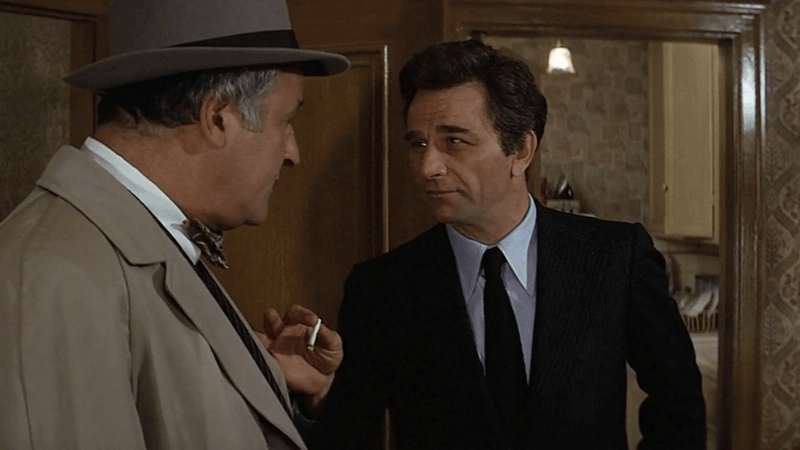
The cast is gold, a simply stunning array of talent (some of whom appear in both movies): Peter Falk, Eileen Brennan, James Coco, David Niven, Maggie Smith, Alec Guiness, Louise Fletcher, Peter Sellers, Marsha Mason, James Cromwell, Nancy Walker, Elsa Lanchester, Sid Caesar and many more. Everyone knows what they are doing and gets every conceivable laugh out of Simon’s scripts.
My favorite bits are hard to choose from such an embarrassment of comedy riches, but I will try. In Murder by Death: The best ever update of “Who’s on First”, featuring a butler named JamesSir Bensonmum and his father Howodd Bensonmum. In the Cheap Detective: Betty DeBoop’s stage number and first encounter with Lou Peckinpaugh (“You made me swallow my gum”).
If you are one of the many admirers of the 1968 American classic Bullitt starring Steve McQueen (my recommendation here), you will almost certainly enjoy the British film Robbery. Released the year before Bullitt, it’s a partly fictionalized account of the astonishing 1963 heist of a British mail train by a gang of bold and crafty thieves.
Like many heist films, this one begins with a smaller job that introduces us to the characters and sets up the big score to come. The gang upon which the movie centers is led by criminal mastermind Paul Clifton (Stanley Baker, who also produced). Baker was one of a number of rough-hewn leading men who captivated British audiences in the 1960s. One wonders if we would have ever heard of a similar actor — Sean Connery — had Baker not turned down the offer to play a secret agent named James Bond (Side note: It is nothing less than eerie to see how much an older Baker looks like an older Connery in later projects such as the ITV mystery special Who killed Lamb?). In all his roles, Baker radiates power, even as in this case when his character is intellectual and non-violent. Credit him here also with first-rate production values on a film was no doubt good practice for the studio that would go on to make The Italian Job.
The gang escape their first job after a harrowing, thrilling car chase through London, but they don’t spend the money. They need the swag to fund something much bigger that Clifton is planning. The actors playing Clifton’s crew all turn in good performances, as does James Booth as the Police Inspector who doggedly pursues them. We don’t get detailed back stories on any of the characters, but it doesn’t matter because the actors are talented enough to bring them to life and make them distinct.
It was the amazing car chase, much of it shot with handheld cameras by the great Douglas Slocombe, that made Steve McQueen chose Peter Yates as the Director for Bullitt. But that isn’t the only parallel between the two films. Unusually for a director gifted at action films, Yates is comfortable with long silences and seems to encourage his actors to underplay their parts. It creates a distinctive mood that is somewhat melancholy, which fits the many of Yates’ characters who are driven to do things that seem very unlikely to satisfy them in the end.
The bulk of the film is devoted to the painstaking preparations of the gang to pull off the crime of the century, and then the heist itself. As in the actual great train robbery, a number of things go wrong, giving the police a chance to track down the gang and its crafty leader. The resolution of the film is perhaps a bit sudden, and there are a few draggy spots, but overall it’s a solid caper film that will please fans of the genre.
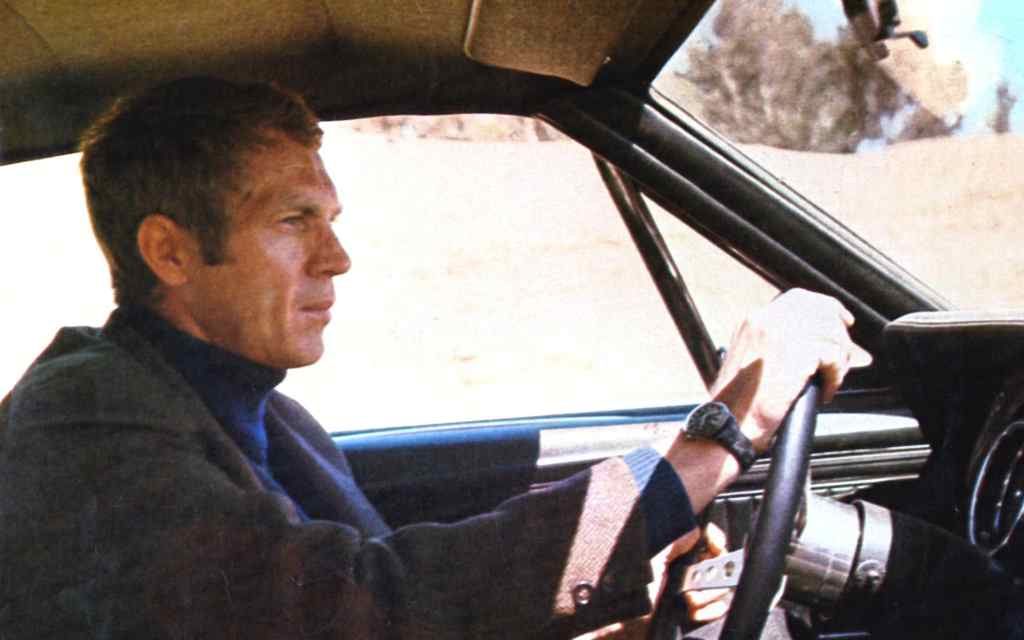
Steve McQueen had an incredible run of hits in the 1960s, which put him in position to start his own production company. Solar Production’s original six film deal with Warner Brothers eventually fell apart and only resulted in one film, but what a film: Bullitt.
The first time through, what stays with most people about this film is the legendary car chase. If you watch carefully, you will notice how cleverly and economically the sequence was filmed. The slow-driving green VW bug that keeps appearing is the tip-off: The same incredible driving stunt was filmed from many different angles and then seamlessly edited to look like a series of death-defying maneuvers.
But the thing to watch in the film is Steve McQueen, in one of his very best roles (the completely original Junior Bonner, which Solar Productions made later, is my other favorite). He is a man detached. With loud, free and colorful 1968 San Francisco all around him he is quiet, controlled and dark. Bullitt has closed himself off emotionally to cope with the horrible things he sees as a police officer. As a result he is almost completely alone in the world,
As a Senator hoping to make his political name as a crime buster, Robert Vaughn is also excellent and almost seems to compete with McQueen over who can underplay his part more. Vaughn, along with Simon Oakland as the police captain who supervises Bullitt, embody Hollywood’s traditional portrayal of the law enforcement establishment which McQueen can react against, allowing him to create something new in cinema: a left-wing coded police officer who was hip and counter-cultural. Jacqueline Bisset, in addition to being easy on the eyes, delivers the goods in her dramatic scenes as the one person to whom Bullitt is willing to be somewhat vulnerable. And the ambience of the film is magnificently enhanced by the visuals of the the City by the Bay and the super-cool score of Lalo Schifrin.
Director Peter Yates, then little known outside Britain, got the job of the strength of his breathtaking car chase sequence in the fine 1967 caper film Robbery. But he obviously had skills well beyond that, including the ability to sprinkle high-octane action sequences into crime films that are more often meditative and character driven. A trilogy of my recommendations, namely this film, Robbery, and The Friends of Eddie Coyle, which Yates made over a fruitful 5-year period, illustrate his talent for smoothly weaving high-key moments into fundamentally low-key movies.
Bullitt works as a detective story, as an action film, and as a character study all at once. And it holds up very well under repeated viewings, so even if you’ve seen it before you can treat yourself again to a classic piece of American cinema.
My knowledge of recent pop culture does not go much beyond being excited about this Bob Bailey guy who recently took over from John Lund in the lead part of Yours Truly, Johnny Dollar. Most of my film recommendations can thus sometimes be hard to find. When I was writing for Washington Monthly magazine, some people would write me and ask for suggestions about where to find older movies. Let me offer a few ideas.
First, although I do not myself watch television, I am given to understand that there are channels that regularly feature older films. One of them is Turner Classic Movies (TCM), which also has a website packed with reviews and commentary on the films the channel shows. Another, American Movie Classics, has broken away from exclusive reliance on showing old films but still includes hours a days of classic film programming. A third possibility is IFC, which shows a mix of classic films as well as arty, offbeat and independent productions, including a number I have recommended.
Third, there are services on line that show films either in exchange for watching a few ads, or, charge an annual entry free that gives you unlimited access to their library. Examples include Hulu.com, Imdb.com, and Crackle.com. I personally sign up each year for Amazon Prime, which has let me discover or re-watch many films that I have recommended or plan to recommend here. Netflix doesn’t seem to carry as many older films, as far as I can tell.
Fourth, consider buying DVD amalgamations of old movies. Here is one of many examples: 100 mystery movies for twelve bucks! Sure, some of them are stinkers, but if even only a third of them are good you are gaining fine movie viewing for less than a buck a film.
When sifting through old films that you purchase in this way or see scheduled on TV or a pay for service website, how do you pick the ones you will like? Rotten Tomatoes is one of many sites that provides useful guidance at no charge, as can a used movie guidebook (e.g., by Leonard Maltin or Roger Ebert) which you can usually find in bookstores for a couple bucks. Also of course, you can go through this site’s list of recommendations for ideas.
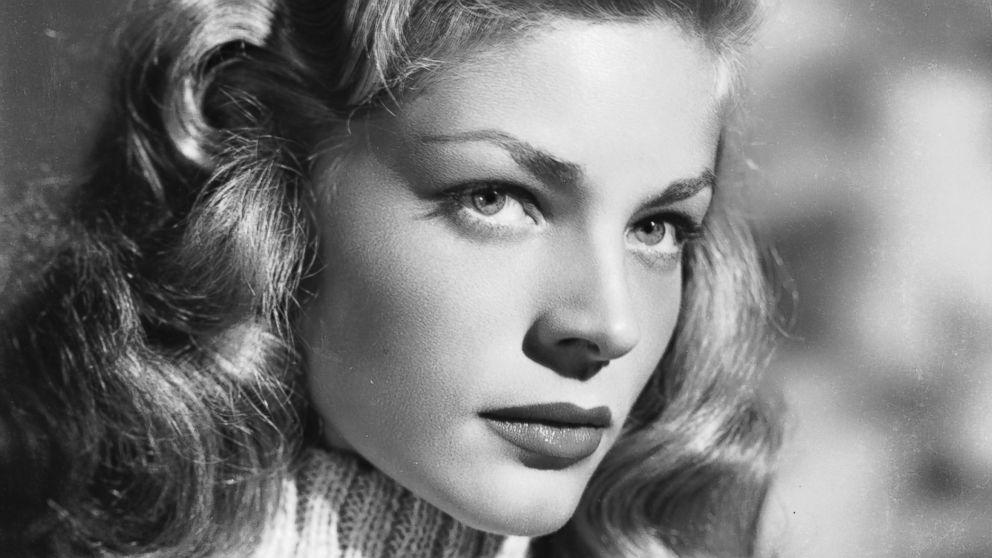
Of the notable Hollywood people who died in 2014, Lauren Bacall is the one I will miss the most. Most of the obituaries about her left out something quite important about the evolution of her career. The typical account noted that her triumphant debut film with Bogart, To Have and Have Not , was followed by glorious success the following year in The Big Sleep. But what happened is more complex than that.
The Big Sleep was completed on January 12, 1945 and was shown to troops on U.S. military bases. To Have and Have Not was released to American audiences a few weeks after that. Normally, the Big Sleep would have been released to U.S. audiences immediately after or even concurrently with the big hit debut film of a star. That would have dampened Bacall’s career because in the original version (a good but not great movie), she just doesn’t have the sass and zing on display in To Have and Have Not. Coupled with the poor reviews she received for Confidential Agent later that year, she could easily have ended up as a one hit wonder.
But the war of course was ending in 1945, and Warner Brothers realized it had to rush all its war-related films into theaters right away. As a result, The Big Sleep was set aside and American stateside audiences did not see it in 1945. Bacall’s agent, Charles Feldman, used his considerable muscle in the interim to have major rewrites and reshoots done on The Big Sleep. Some scenes without her were cut, some were redone to be sexier and more fun, and this entirely new scene was created. It works even better than it might otherwise have because the two stars were by then madly in love and newly married. Bacall here shows off the sultry persona that entranced countless men, including me. What a woman! She will be greatly missed.
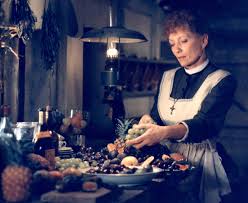
In the well-loved art film Babette’s Feast, the central character spends her entire lottery winnings to make one spectacular meal for her guests. It is portrayed as an act of marvelous generosity by a poor person who loves to cook and loves to give.
But Alan Jacobs points out the surprising fact that Isak Dinesen’s book rejects munificence as a motive. When her sated sisters thank her for giving up the chance the escape poverty for their sake, Babette is withering in response:
Babette gave her mistress a deep glance, a strange glance. Was there not pity, even scorn, at the bottom of it?
“For your sake?” she replied. “No. For my own.”
She rose from the chopping block and stood up before the two sisters.






 All Good Movies