Categories
Action/Adventure British Drama

49th Parallel

Calling a movie “propaganda” is usually an insult. But making quality propaganda is a skill, and one well worth deploying when you are fighting the Nazis. In 1941, the British War Ministry approached Michael Powell and Emeric Pressburger for support of the then-failing war effort. Wanting to tempt the neutral U.S. into the fight, the emerging superstar duo of British cinema set the story of a deadly team of Nazi invaders in Canada (The film’s US title was “Invasion”). As it happened, Japan bombed Pearl Harbor before the film opened in The States, so whether it would have helped tipped the balance will never be known. But there’s no doubt that 49th Parallel is a brilliant illustration of how wartime films can persuade even as they entertain.

Plot: After sinking defenseless cargo ships, a German U-Boat tries to hide in Hudson Bay. But the Canadian military closes in, forcing the resourceful, ruthless, true-believing Lieutenant Ernst Hirth (Eric Portman, convincing as usual) to lead his crew in a desperate dash across Canada. Thrills and human drama ensue, as does effective illustration of what precisely Nazism entailed and why all free peoples had to resist it.

Review: 49th Parallel - Slant Magazine

Pressburger’s story is reminiscent of the legendary western Winchester ’73 with the overarching narrative arc being a cross-country chase involving core characters, but the underlying structure being episodic. In each episode, new characters and settings provide an opportunity for the audience to see some of their favorite stars (e.g., Laurence Olivier, Leslie Howard, Raymond Massey) and to comprehend a different aspect of Nazism, be it racism, religious intolerance, imperialism, contempt for the vulnerable, and even hatred of “decadent” art. It could easily have been heavy-handed but with this filmmaking team and cast, it’s supremely credible and stirring.

My favorite episode is the Nazis hiding out with a German Hutterite community. Its very much to the filmmakers’ credit that in 1941, when German immigrants were objects of suspicion and hostility in North America, the Hutterites are portrayed positively. The scene where Lt. Hirth attempts to rally them to the cause of the Fatherland and the Hutterites reject him is particularly powerful. Subplots about a German crew member (Niall MacGinnis) who is taken by the Hutterite way of life and is punished for it by Hirth, and a Hutterite youth (Glynis Johns) whose faith is tested to the breaking point, are also powerful. The episode involving Howard as (what else?) an eccentric English scholar is nearly as fine. Kudos are also in order for multiple episodes showing First Nations people in a more humanizing light than was the norm in this era.

I’m not sure any country has had as much cinematic talent as densely packed as did Britain in the 1930s and 1940s. So much so that even after all this writing, I am just now getting around to mentioning how beautifully shot and perfectly edited the movie is, courtesy of Freddie Young and David Lean respectively. Five well-earned lifetime Academy Awards between those chaps; you can see why again here.

All in all, 49th Parallel is both crackerjack entertainment, affecting drama, and a compelling reason to stand up and sing O Canada!

p.s. Leslie Howard, whom the Nazis would murder in 1943, also did excellent work in my recommendation The Scarlet Pimpernel and Pygmalion, as did Niall MacGinnis in another of my recommended movies, Curse of the Demon.
Categories
British Horror/Suspense

The Devil Rides Out

If you have a chance to make a deal with Satan, you might consider asking for Dennis Wheatley’s book sales and film royalties. Among Wheatley’s many best sellers were a series of thrillers featuring the Duke de Richleau and his three loyal friends Simon Aaron, Rex Van Ryn, and Richard Eaton (Wheatley loosely modelled them on Dumas’ Musketeers). In a number of their adventures, the Duke employed his knowledge of the occult to battle diabolical supernatural forces. Fortunately, Hammer Films smelled an opportunity and in 1968 brought together some of its best talent to adapt Wheatley’s chilling and exciting tale The Devil Rides Out.

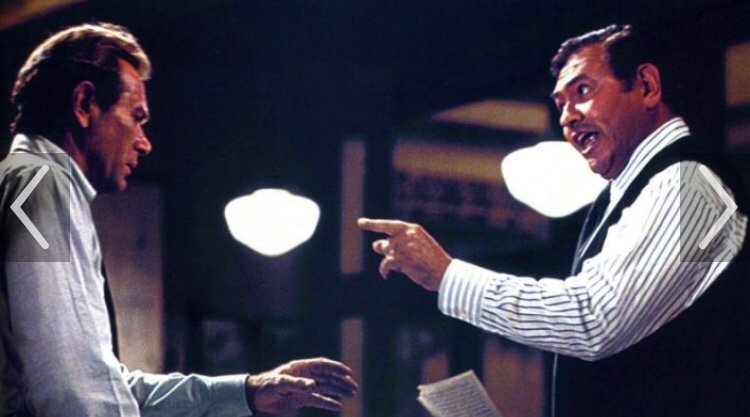
As I’ve mentioned in many of my recommendations, I like films that get right down to story telling without a lot of needless expository set up and context setting. The Devil Rides Out is a model of the form, opening with The Duke (Christopher Lee) and Rex (Leon Greene, though dubbed by Patrick Allen) dropping by unannounced at the home of their friend Simon (Patrick Mower) and discovering to their alarm that he’s fallen in with a group of Satanists! Investigation soon reveals that the sinister cultists are led by a hypnotic menace named Mocata (Charles Gray) and have designs not only on Simon, but also on a young woman named Tanith (Niké Arrighi) with whom Rex is enamored. The brave heroes seek help from The Eatons (Rosalyn Landor and Paul Eddington) and this redoubtable foursome commit to saving Simon and Tanith in the face of mounting threats summoned from Hell itself. Chills, suspense, and excitement follow.

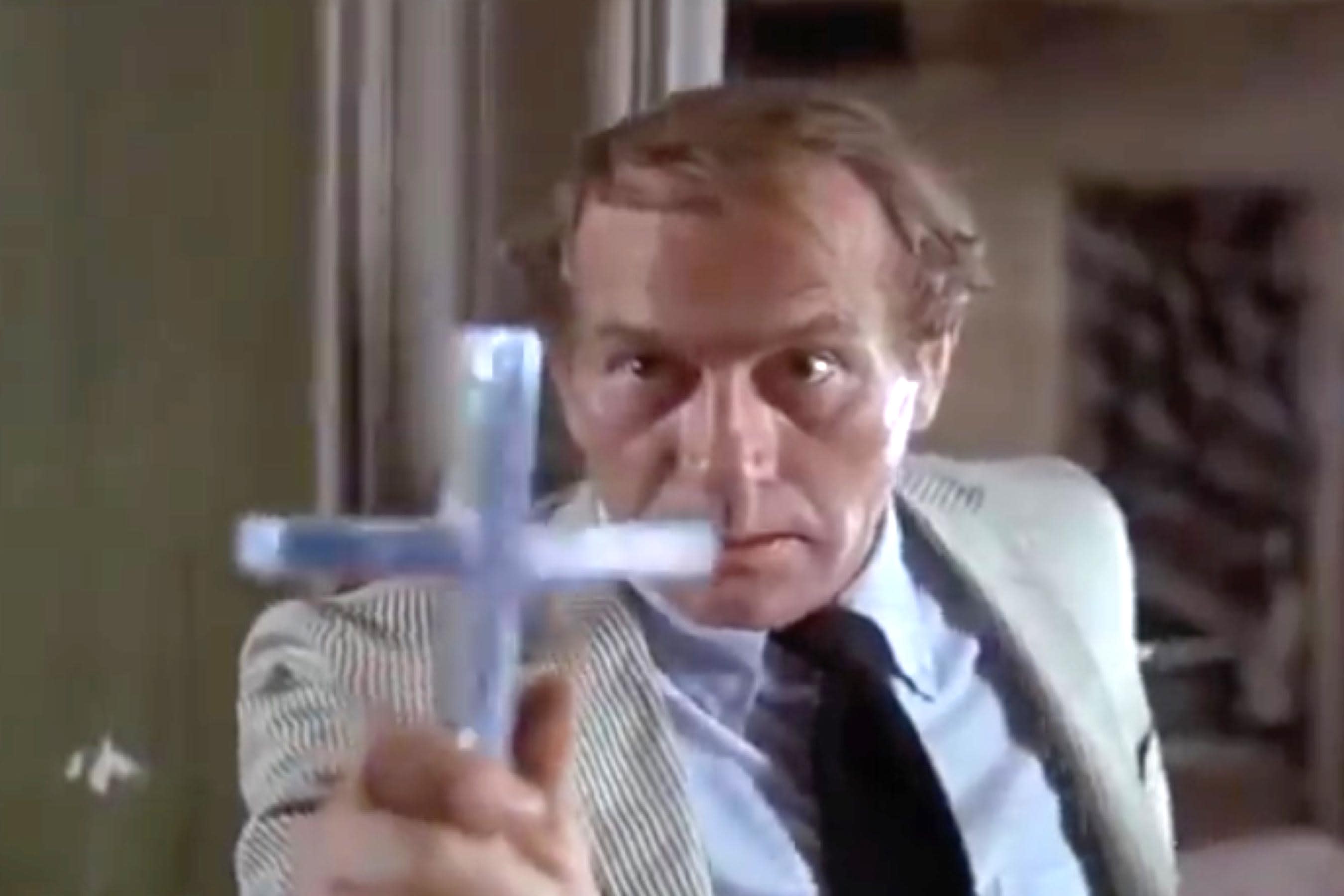
Terence Fisher was Hammer’s best director, and he’s on his usual crisp and intelligent form here. Some horror directors accentuate supernatural goings on with melodrama and splatter. Fisher had an opposing, more British style: his characters are thoughtful, their relationships nuanced, and the demeanor remarkably restrained given the proceedings around them (down to all of them wearing suits and ties in virtually every scene even as they battle Satanists with fist and cross). Fisher had a fine script with which to work, by the great Richard Matheson, whose work I have touted in more than a half dozen other movie recommendations. He paces the story masterfully, doling out action sequences and character development at just the right rate. Matheson throws together Druidic, Pagan, Egyptian, Christian, and Masonic traditions fairly haphazardly along the way, but this is entertainment, not a theology course.

Image for post

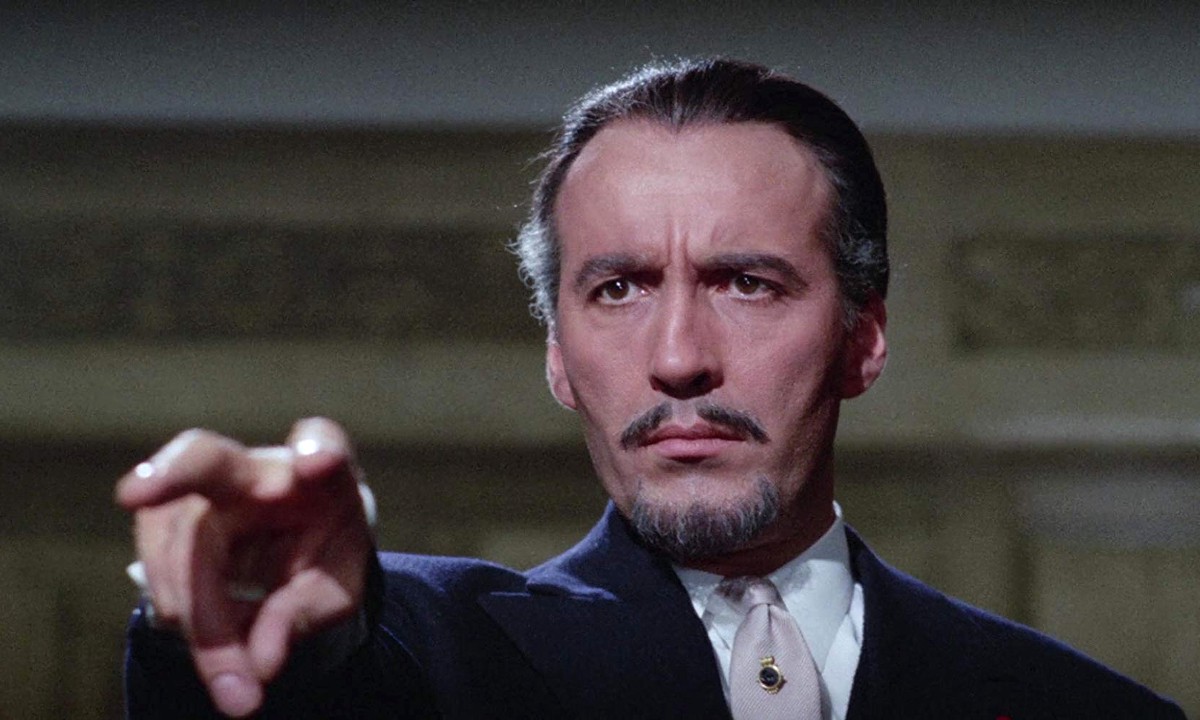
This movie gave Christopher Lee a rare chance to anchor a picture in a thoroughly heroic role. Hammer Studios would normally have cast his friend Peter Cushing in role like the Duke. Cushing was always good, but Lee surely deserved this role after being wrapped in mummy bandages, sucking blood, shambling around with bolts in his neck, and all the rest of it in all those Hammer monster movies. He’s appropriately commanding as an aristocratic do-gooder, while also conveying enough humanity to make his character likable and the core relationships in the movie believable.

In a sturdy cast, Charles Gray makes a strong, frightening, impression as Mocata (which allegedly landed him the subsequent role of James Bond’s enemy, Ernst Bloefeld, in Diamonds are Forever). Patrick Mower, who had a recurring part in the Callan series (my recommendation here) is solid in his debut role, and Paul Eddington shows the developing talent that would later make him such a joy in Yes, Minister. Rosalyn Landor also registers as the brave Peggy Eaton, including through some unusual character developments that I won’t spoil.

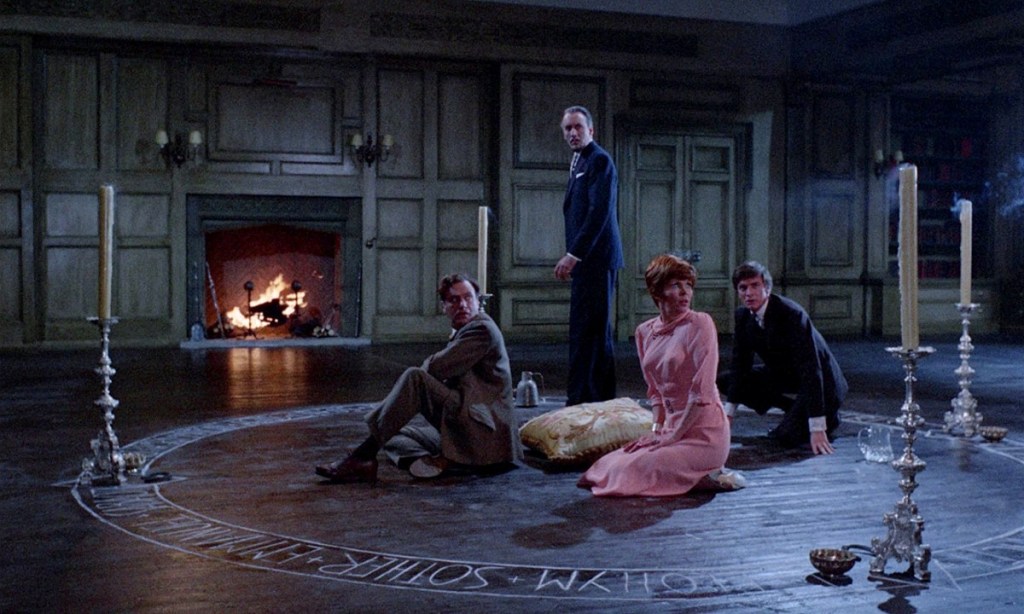
Modern viewers may find the special effects cheap and unconvincing by today’s standards, which they are. I found the dated effects kind of charming (much as I do the sets in classic Universal monster pictures), and their limitations in no way reduced the tension during the heroes’ extended face off with the enemy in a Satanic circle. Overall, The Devil Rides Out is one of Hammer’s best movies in the horror/thriller vein, and that’s definitely saying something.

p.s. I suppose one could say this about many British films, but I couldn’t help noticing how many people associated with this film ended up in Sherlock Holmes adaptations. Christopher Lee played Sherlock Holmes multiple times, including under Fisher’s direction, and played Mycroft Holmes in Billy Wilder’s magnificent The Private Life of Sherlock Holmes. Charles Gray played Mycroft both in The Seven Percent Solution and Granada’s television series starring Jeremy Brett. The Granada series also featured Patrick Allen as Professor Moriarty’s right-hand man, Rosalyn Landor as the heroine of The Speckled Band, and, at the age I believe of 100, Gwen Ffrangcon Davies, who has a small part as a Satanist here.

Categories
Musical

Stormy Weather

Stormy Weather — how Harold Arlen's song shifted with the times — FT.com

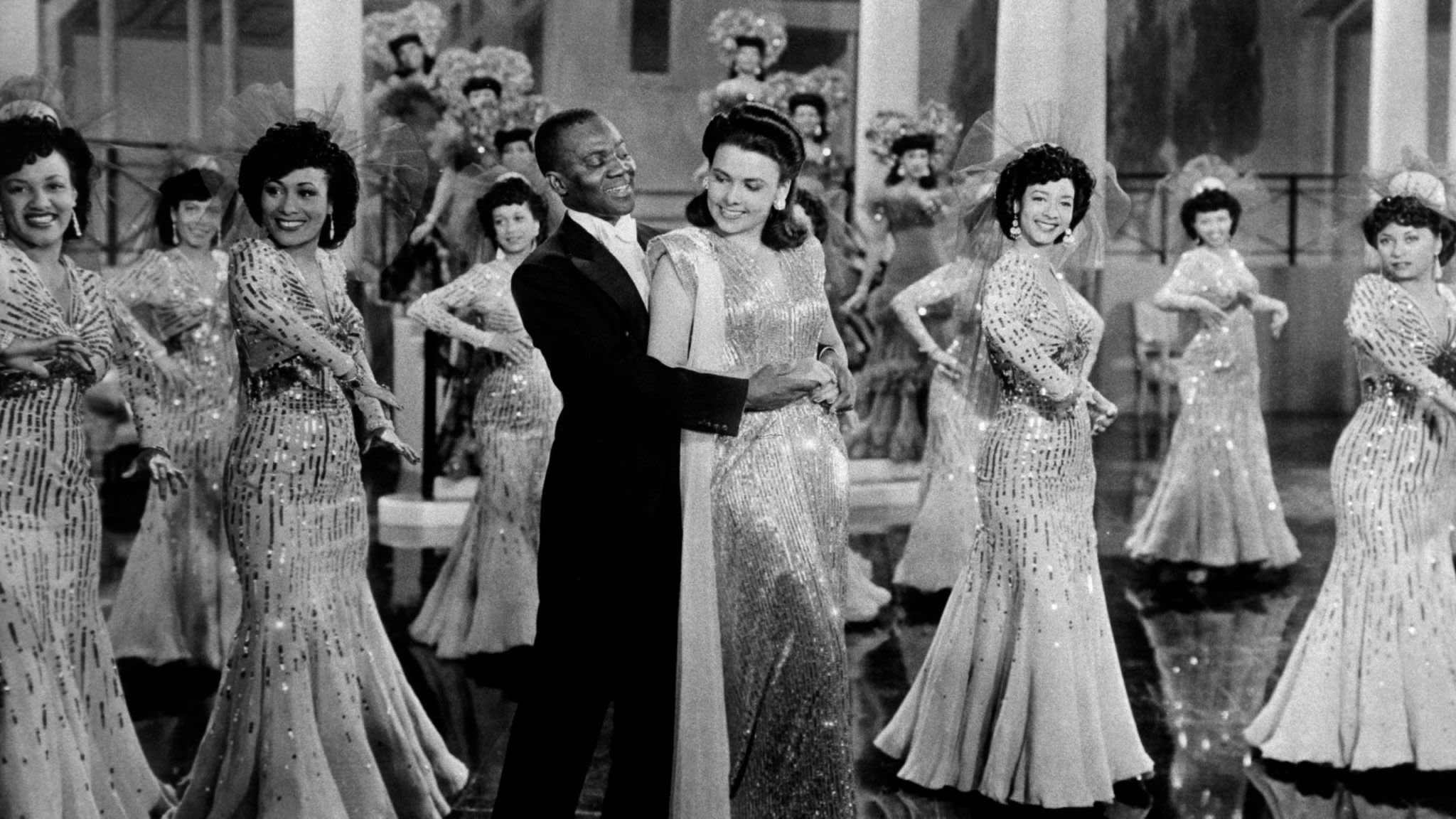
Should we watch old movies that have racist elements? I thought about that question before recommending Stormy Weather. I answer in the affirmative in this case because this 1943 movie is one of biggest explosions of African-American talent on screen in the first half of the 20th century.

The plot: Well, there isn’t much of one, really. The film is loosely structured around the legendary Bill “Bojangles” Robinson reminiscing about his life, but there’s no real driving narrative, developed characters, or acting of note (except for Dooley Wilson, who is hilarious as a slippery but ultimately good-hearted friend of Robinson). Although the movie is often called a musical, it’s more in the tradition of the music revues initially popular on stage that Hollywood began turning out as soon as talkies emerged in the late 1920s. Revues have a series of scenes in which a performer appears and does their thing (e.g., singing, dancing, jokes), and then with minimal set up or continuity, another performer appears and does theirs. Stormy Weather would have been just as entertaining if they had just had a host between numbers saying things like “Wasn’t Lena Horne fantastic ladies and gentlemen? Next up, put your hands together for Cab Calloway”. Feel free therefore to ignore all the interstitial material and focus your attention on the priceless performances by the stars.

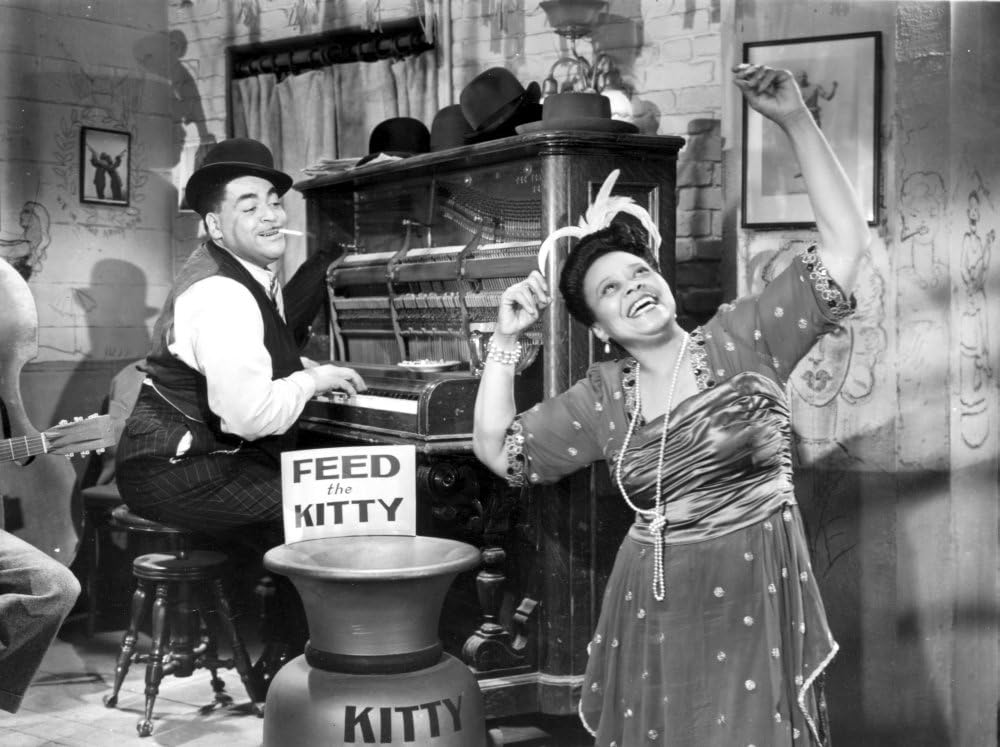
Amazon.com: Fats Waller in Black and White Portrait Photo Print (10 x 8):  Home & Kitchen

A movie that contains Robinson, Wilson, Horne, Calloway, Ada Brown, Fats Waller, Katherine Dunham, Dizzy Gillespie, F.E. Miller, Coleman Hawkins, The Nicholas Brothers and more is going to provoke arguments over which is the best number. My choice is Waller and his band’s Ain’t Misbehavin’ but you could make a case for many others, include Dunham and Horne’s rendition of the title song. Not every musical star is made for film, but everyone here has extra dimensions to their performance that wouldn’t come out on their records, great as those are (e.g., I had no idea before this movie of Waller’s hilarious non-verbals).

Despite the wartime-imposed budget limits, the trappings around the performances also look fantastic. This includes some lavish Busby Berkeley-style numbers directed with panache by Andrew Stone and arresting camerawork by the revered cinematographer, Leon Shamroy.

All that said, there’s racist aspects of this movie that will put most viewers off some of the time and some viewers all of the time. It’s a white-produced film from the 1940s and minstrelry hangs in the air in several numbers, as do stereotyped characters. Lena Horne is gorgeous and talented, but the odds that a major Hollywood studio would have cast her as one of the leads if she weren’t relatively light skinned are surely close to zero. I can respect people who find the racist realities of the period so toxic that it ruins the movie for them today. Personally, I think of it from the performers’ point of view: They didn’t put that crap on screen, they were there to take advantage of a too rare chance to show off their enormous talent, and they succeeded. And if not for this film, we wouldn’t have visual records of some of these superstars, so I’m grateful for that as well. All of that tips me firmly in favor of this film being watched and appreciated today, but to each their own.

There’s no better way to close this review that by embedding what Fred Astaire said was the best dance number ever filmed: Jumpin’ Jive.

Categories
Blogs on Film

Conversations in Cars and Elevators

If you watch many movies you will see a disproportionate number of conversations set in elevators and cars. Of course people converse in such settings sometimes in real life, but why is it so common in the movies?

Both cinematically and in terms of acting, the ordinary way people talk to each other — face to face — often isn’t ideal for film. Audiences don’t want to look at the back of an actor’s head, so the director usually cuts back and forth between the two actors or shoots the two actors in profile. The former approach doesn’t let the audience see the reactions of both characters at the same time. The latter gives the audience more of this, but if the characters are far apart it can be distracting for the audience to switch attention back and forth as in a tennis match, and even worse when such conversations are shown on television with pan and scan rather than keeping the original aspect ratio, sometimes the back of each character’s head gets cut off to fit everything in the same shot.

Directors try to work around this by having both actors face the camera, particularly during critical conversations. Otto Preminger and his frequent cinematographer Joseph LaShelle did many such shots. Here is one from Where the Sidewalk Ends. This can work to a point, but risks take the audience out of a scene if they start to think “If someone was facing my back and proposing marriage/confessing to murder/revealing the secret of King Tut’s tomb, wouldn’t I, you know, turn around and look at them?”. In the generally good film noir The Big Combo for example, Joseph Lewis staged so many of the film’s key conversations with both actors looking at the camera that the artificiality worked against the grittiness of the story.

The easiest way to resolve this problem is to shoot dialogue scenes in the few places where human beings have conversations while they face the same direction in real life: when they are driving, seat belted in and looking at the road, and, when they are in an elevator looking at the door/floor indicator. The tight physical location means that it’s easy for the viewer to take in each participant and all their actorly non-verbals.

Scene Deconstruction - Drive - Elevator
Categories
Drama Romance

Room at the Top

Room at the Top | The Soul of the Plot

Theodore Dreiser’s novel An American Tragedy was adapted into a 1951 hit movie called A Place in the Sun directed by George Stevens and starring Montgomery Clift and Elizabeth Taylor. The tale of a young man trying to rise from the working class to wealth in both his career and his romantic aspirations was hailed by Charlie Chaplin as “The greatest movie ever made about America”. Yet these sorts of stories are hardly culturally bound, as demonstrated by the groundbreaking 1959 British film Room at the Top.

Neil Paterson’s brilliant, Oscar-winning screenplay adaptation of John Braine’s novel tells the story of working class striver Joe Lampton (Laurence Harvey, in a star-making performance). Joe is from such a small, depressing Yorkshire town that moving to the mid-sized Yorkshire city of Warnley (think Bradford, where some exteriors were filmed) feels to him like arriving in cosmopolitan heaven. He works as a humble civil servant, but immediately announces that he intends to woo the lovely, upscale, Susan Brown (Heather Sears), daughter of the richest factory owner in town. Despite the objections of her snobbish parents (Ambrosine Phillpotts and Donald Wolfit) and a romantic rival (John Westbrook, who makes a very effective condescending bastard), Susan takes a shine to Joe, even though he’s N.O.C. But strangely, Joe finds himself more drawn to Alice Aisgill (Simone Signoret), an older woman trapped in a loveless marriage with a philandering upper-class heel (Allan Cuthbertson). Sensual desires, painful choices, human ugliness, and class conflict ensue.

A remarkable achievement for first time director Jack Clayton (his next film was another of my recommendations, The Innocents), Room at the Top kicked off the “angry young man” cycle of films that were central to the British New Wave. Signoret instantiates the French influence on British cinema in this era, including in the frank portrayal of sex, which at the time earned this film an X rating. Because of its gritty working class settings (strikingly photographed by Freddie Francis), and its blue collar resentments, this film is sometimes said to have kicked off “kitchen sink” drama, but if you have seen my review of It Always Rains on Sunday, you know that tradition was present in British film already.

There are many good performances in the movie, but Simone Signoret towers over all with her Academy Award-winning turn as a woman who met Joe just a bit too late. She was only 7 years older than Harvey, but she was made up to look older (how many famous actresses would have been scared to do this?) and in her attitude, tone, and presence, she makes the audience believe she is the sadder and wiser woman to love and to guide the immature, un-self-aware Joe. The two of them have palpable screen chemistry, both sexually and romantically, which is precisely what gives this shattering story of love versus material ambition so much power.

Categories
Horror/Suspense Mystery/Noir

The Night Stalker and The Strange Case of Dr. Jekyll & Mr. Hyde **Double Feature**

The Night Stalker: A tribute to the 1972 TV movie that influenced The  X-Files

I’m a fan of the horror and science fiction work of writer Richard Matheson and Producer/Director Dan Curtis, including films on which they collaborated, like the electrifying Amelia segment of Trilogy of Terror (My recommendation here) Their admirers could argue forever about which of their films were the most entertaining, but purely in terms of enduring impact, the obvious choice is their 1972 TV movie The Night Stalker.

Working from an unpublished novel by Jeffrey Grant Rice, Matheson brilliantly met the two challenges of modern vampire movies, namely doing something new, and, having characters behave in sensible ways given that the characters would themselves have all seen vampire movies. The fresh angle to the story is provided by centering the narrative on a crusty yet charming journalist on a downward career slope: Carl Kolchak (Darren McGavin, who’s damn near perfect). When bodies of young women drained of blood start littering the streets of Las Vegas, Kolchak and the cops (e.g., a gruff sheriff played by Claude Akins) initially make the assumption that works for modern audiences, namely that a mentally unstable killer thinks he is a vampire. But as the cynical Kolchak investigates the ghoulish crimes and follows the police manhunt, he finds himself believing the seemingly impossible.

There’s much to cherish in the movie, which drew a massive audience and launched a cult TV series whose descendants include The X-Files and Buffy the Vampire Slayer. With seasoned television director John Llewellyn Moxley at the helm, the story unfolds with the right mix of suspense leavened with humor (black humor and horror are cousins, but it still takes artistry to mix them in a fashion that isn’t jarring). Although Kolchak is in a romantic relationship (with a prostitute played by Carol Lynley, because it’s a 1970s film set in Las Vegas) the most dynamic interaction comes between McGaven and Simon Oakland as editor Tony Vincenzo. Together they have the chemistry of an old married couple, with amusing bickering leavened with underlying respect. Film noir fans will also be glad to see Ralph Meeker and Elisha Cook Jr again in supporting parts as friends of Kolchak. And props to Barry Atwater, for being suitably unnerving in a part that gave him no lines.

Classic Movie Hub on Twitter: "Born Today, Aug 28, in 1915, Character Actor Simon  Oakland - 145+ roles; lots of TV; I Want to Live, Psycho, Bullitt, West  Side Story... https://t.co/tvpFsloqDl… https://t.co/OPrCcVBPWu"

You have probably heard of The Night Stalker, but you will probably not have heard of another Dan Curtis film which I suggested as a second feature on this double bill: his 1968 adaptations of Robert Louis Stevenson’s oft-filmed tale, The Strange Case of Dr. Jekyll & Mr Hyde. Curtis produced this version for ABC television, which was directed by Charles Jarrott.

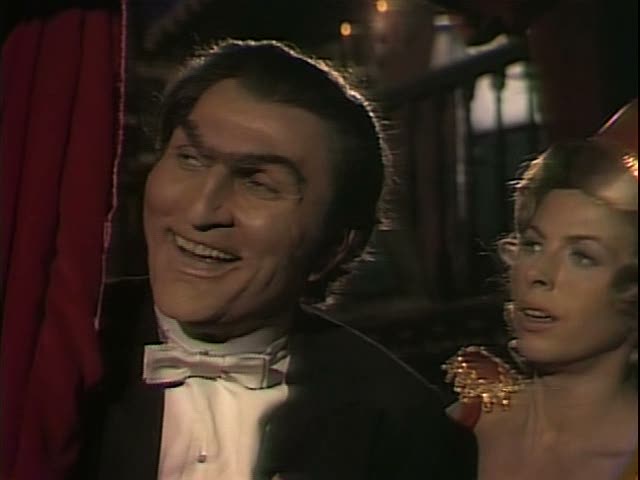
The plot is too familiar to be worth summarizing, so I will concentrate on the unique aspect, which is how the transformation of Jekyll to Hyde is handled. As with the 1973 Curtis/Matheson Dracula I have recommended, the star here is Jack Palance, and he carries the whole film (no disrespect to Denholm Elliott, who is sturdy as his friend, but that part just isn’t as intriguing). Only modest changes in the makeup of literature’s most famous split personality were employed, with the film relying instead on Palance’s acting talent to differentiate the shy, bookish, respectable Dr. Henry Jekyll from the lusty and violent Mr. Hyde. Palance is up to the challenge, including given the audience at least some sympathy with the generally awful Hyde; at least he’s a lot more fun than his stuffy alter ego. The other thing that Curtis fans will appreciate is that the style, settings, tone, and music come straight out of his long-running television series Dark Shadows.

March Hyde Madness: The Strange Case of Dr. Jekyll and Mr. Hyde (1968) |  Monster Movie Kid

The film has some weaknesses. The adapted screenplay was written by Ian McKellan Hunter, perhaps most famous for fronting Dalton Trumbo’s Oscar-winning script of Roman Holiday (If you want to know more about fronting, see my recommendation of, well, The Front). Hunter’s script is okay, but you have to imagine Matheson would have done a better job bringing Stevenson to the screen. Also, the television sized budget shows at times. It’s a bit too obvious that some scenes are shot with a single stationary camera and in the medical school scenes there’s also what looks like not entirely successful rear-screen projection, though it could be a not entirely successful matte work (either way, it’s distracting). All of that puts the film in the good category rather than the all time TV horror classic category in which The Night Stalker belongs.

If you want to learn more about how Dan Curtis made these films, including how his relationship with Matheson evolved, this interview is really worth watching.

Categories
Action/Adventure Science Fiction / Fantasy

WarGames

In 1983, tensions between the US and The Soviet Union were high, and fear of nuclear war was in the air. Meanwhile, American life was being changed by the rise of the personal computer, with nerds of all ages in the vanguard. Director John Badham weaves these two strands together with excellent results in WarGames.

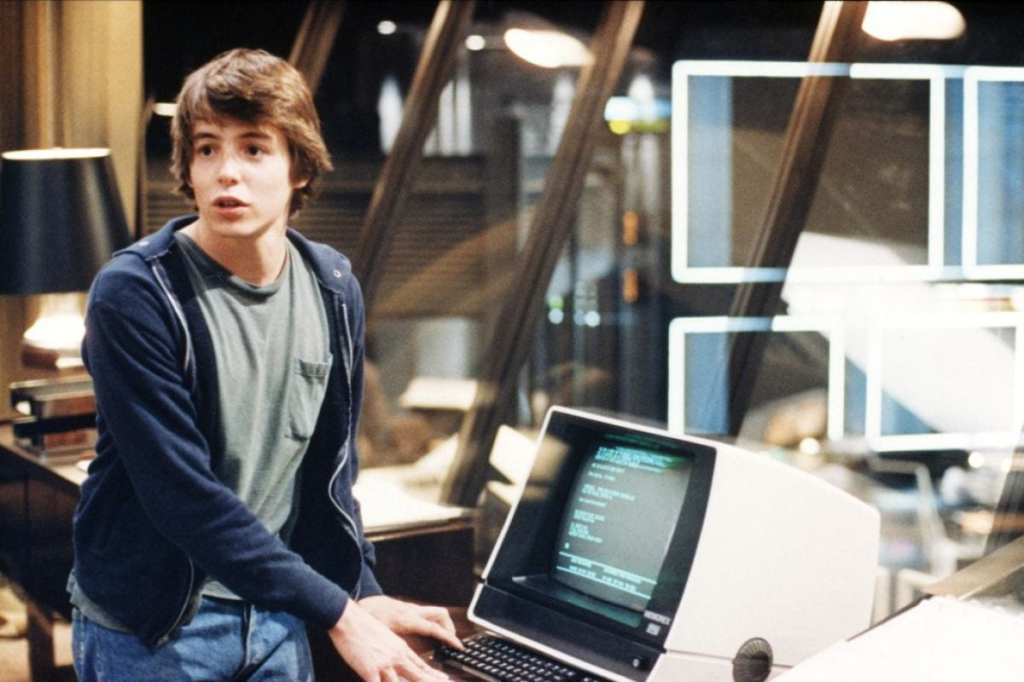
Lawrence Lasker and Walter F. Parkes’ clever script centers on teenager David Lightman (Matthew Broderick). David is an archetype: Someone who underachieves in all areas except that for which he has a genius, namely computers, video games, and electronics. Out of nerdly mischief and a desire to impress a girl from school (Ally Sheedy), David hacks into a computer system that he thinks is run by a software company, and starts playing a game called “Global Thermonuclear War”. But unbeknownst to David, he’s actually penetrated a computer system built by a different order of geek within the U.S. military (Dabney Coleman and John Wood) which has the autonomy to launch nuclear weapons. Adventure, suspense, and a useful lesson in game theory ensue.

Let’s get one thing out of the way up front: This film is as 1980s as it gets. 80s hair, 80s computers, 80s video games, 80s nuclear fears, and Ally Sheedy too. Although “powerful” computers with modems into which you plug your rotary telephone handset may provoke some chuckles today, the story is as relevant as ever and maybe, with the rise of artificial intelligence, even moreso. And if you lived through this time, 1980s-ness of everything in WarGames may be an appealing exercise in nostalgia for the era.

The key to this film’s success is Matthew Broderick, in a performance that showcased why he would soon become a star. Despite the extraordinary proceedings around him, Broderick consistently makes David into an utterly believable teenager, with the jumble of ideas, emotions, and capacities that are common at that age. He has particularly good byplay with Shakespearean actor John Wood, who plays a computer scientist who has lost his son and his hope for humanity, and achieves a measure of restoration on both fronts from David.

The plot developments could have been credibility-straining, but the script is smart enough and Badham is skilled enough to sell everything to the audience. The film is particularly good at giving the audience just enough of a technical explanation to make plot points credible without ever turning into impenetrable nerdspeak. Some of the adult authority figure characters are a bit cartoonish, reflecting I assume the studio aiming for a teenaged audience. That said, I enjoyed re-watching WarGames in mid-life as much as I did when I was an adolescent. This film is superb entertainment, including its nail-biting and satisfying conclusion.

p.s. Look fast for Maury Chaykin as one of Broderick’s circle of turbonerds.

Categories
Action/Adventure Musical Mystery/Noir

Peter Gunn

Peter Gunn Theme by Ray Anthony | Daily Doo Wop

I haven’t owned a television for a quarter century, and almost never recommend television shows because I don’t know enough to judge them. But I am happy to make an exception for a trendsetting, utterly fresh, and cool as all get out TV series that ran from 1958-1961: Peter Gunn.

Blake Edwards, prior to his fame for making the Pink Panther movies, 10, Victor Victoria, and other big screen fare, invented Peter Gunn whole cloth. Never before had a detective character been expressly invented for television versus adapted from books, pulp magazines, or radio. And unlike the hard bitten, rumpled PIs of yore, Peter Gunn (Craig Stevens) was stylish, smooth, and also a romantic, particularly in his flirtatious banter with chanteuse Edie Hart (Lola Albright), his gorgeous girlfriend. Edwards also broke new ground by infusing his love of jazz in every aspect of the show. Gunn works out of a jazz bar, and jazz musicians figure prominently in some of the scripts. It also serves as the default instrumental music, giving the whole series of a midnight to dawn vibe. This is all a credit to Henry Mancini, whose dynamic theme song became one of the most covered in television history.

As Gunn’s police detective friend, Herschel Bernardi gives the best performance of the series, in a part that adds some grit and gravity to what otherwise might have been overly light storytelling. Other recurring actors score with colorful parts reminiscent of Pick Up on South Street, including Billy Barty as a pool shark who knows the word on the street. The film noir look and camerawork of the series — more like what one would see in a movie that a 1950s television show — further accentuates the smoky allure of the proceedings. Also fun: An army of future stars have guest turns on the series, allowing the viewer to play “Hey, isn’t that….?”.

Peter Gunn | Linnet Moss

Yet what impresses me the most about this show is the economy of the scripts. In about 25 minutes, a new mystery is introduced, investigated, and resolved, despite the fact that almost every episode has stand alone jazz numbers or comic/romantic scenes that don’t advance the plot at all. Villains on this show don’t have lengthy trials, they either confess or shoot it out in the final minute, wrapping up each episode as a standalone adventure. On a few occasions, the storytelling is too telegraphic and thereby causes some confusion, but generally it works exceedingly well. I would recommend this show to anyone who aspires to be an screenwriter or editor because it shows how fat-free storytelling can be elevated to an art form with no loss of characterization or entertainment value.

Even though Peter Gunn has been off the air for decades, it’s fairly easy to find in DVD collections, streaming on various channels (e.g., Amazon Prime), or on YouTube. Rather than close this recommendation with a trailer, I instead embed the immortal music of a groundbreaking show. Fun trivia: The piano part on the album was played by “Little Johnny Love Williams” who went on to mega-fame as the composer of the scores of mega-hit movies.

Categories
Comedy Drama

The Front

Hollywood has always been fascinated with itself, so it’s not surprising how many movies address the “blacklisting” of suspected communists in the 1950s (Guilty by Suspicion, Trumbo, and Hail, Caesar! to name only a few). Among the best of these is a 1976 film made by a director (Martin Ritt), screenwriter (Walter Bernstein), and actors (Zero Mostel, Herschel Bernardi, Lloyd Gough) who were blacklisted themselves: The Front.

The plot: An underachieving, improvident, but essentially decent nobody named Howard Prince (Woody Allen) is approached by an old friend (Michael Murphy) who can no longer sell his scripts because he’s been blacklisted. Howard agrees to front the scripts as if they were his own in exchange for a 10% take. Howard gets cockier as “his” scripts are well received and result in romantic attention from a television producer (Andrea Marcovicci). Seeking more glory and more cash, he recklessly volunteers to take on fronting scripts from even more blacklisted writers. Meanwhile, Prince forms a friendship with Hecky Brown (Zero Mostel), a once big star whose career is declining based on some extremely tenuous connections to communists in the past. As the feds start investigating the increasingly famous Howard Prince, lives, careers, and morals, are imperiled.

The film is simultaneously a comedy and a drama. Most of the comedy comes from Allen, who plays within his usual range and is amusing doing so. The drama comes mainly from Zero Mostel, in a performance with psychic weight. Hecky is not a serious man. He likes to make people laugh. He only flirted with communism to impress a woman he was lusting after. Yet the feds treat his alleged subversiveness with deadly seriousness, resulting in him being ground to pieces bit by humiliating bit.

The Front (1976) Martin Ritt | Twenty Four Frames

In a solid supporting cast, I would single Herschel Bernardi out for praise. Bernardi isn’t much-remembered today, but he was a very fine actor who was the best thing about Blake Edwards’ superb television show Peter Gunn (recommended here). He has a lighter role here as the producer of the show for which Prince writes. As a man who wants to stand up for what’s right but can’t quite do it, he’s believable and appealing.

Mixing comedy and serious drama effectively takes directorial skill, and Ritt, a real pro, is up to the task. Walter Bernstein’s polished script is an asset in this regard even though his portrayal of blacklisted writers is unrealistically saintly (though one appreciates the origin of his bias!).

The Front was underappreciated by critics at the time and to a lesser extent that’s still true today. Many felt that unrelentingly grim, hard-hitting drama was the only appropriate tone for stories about the blacklist. But if the people who actually went through it can appreciate the absurdity of it, can find black humor in the mockery of it, perhaps these critics can stop getting their undies in a wad over The Front being entertaining, rather than merely earnest, eat your peas moral instruction.

p.s. Look fast for Danny Aiello as a fruit seller who into gambling on the side, or perhaps the other way around.

Categories
Drama

Margin Call

Underrated Masterpieces: Margin Call (2011) – Play it Again, Dan

Of the Wall Street movies made in the wake of the financial crisis, Martin Scorsese’s The Wolf of Wall Street, drew the most attention, awards, and audience receipts. But I think The Magnificent Martin was outshone by a low budget film of a first-time writer/director: Margin Call.

Made in 17 breathless days by J.C. Chandor in 2011, the film documents 24 insane hours at an unnamed Wall Street firm. The story opens with casual brutality: traders and managers being professionally and publicly fired and marched out of the building while their colleagues continue working around them. Revealingly, the only people who are perturbed by the inhumanity are the newer employees; everyone else learned the hard truth a long time ago. But it is a moment of humanity on which the story turns. As long-serving risk management expert Eric Dale (Stanley Tucci) is cruelly cut loose, a whiz kid analyst named Peter Sullivan (Zachary Quinto) thanks him warmly for his mentorship. Eric is touched, his armor drops for a moment, and he hands Peter a thumb drive and says: “Be careful”. The thumb drive contains a partially completed statistical model which Peter quickly perfects, revealing that the firm has enormous risk exposure that could bankrupt it at any moment. As panic sets in, higher and higher levels of management are brought in to save the firm by any means necessary. High-powered acting and drama ensue.

Margin Call - NYT Watching

The cast is star-studded, with Paul Bettany as a mid-level trading manager who wonders why he never breaks into the higher echelons of the firm, Kevin Spacey as a world-weary survivor of decades on The Street, and Simon Baker as an ice cold executive. The role of the CEO — one of those “let’s write a colorful small part for a prestige actor” roles — is played with just the right touch of theatricality by Jeremy Irons. Irons is particularly effective at conveying one of the script’s principal messages: The higher up you go, the more sociopathic and substantively ignorant people become.

Demi Moore also gives an excellent performance as the one woman in authority within the firm. She projects power laced with the underlying brittleness and fear of someone who is smashed flat against the glass ceiling. The script offers no sentimental dreck about corporate women being nicer the men: She after all is the one who cans the long serving Eric Dale after failing to listen to his warnings. Yet we also feel sorry for her because it’s obvious that when the boys’ club pins the blame on someone for the catastrophe, it will be a fall girl and not a fall guy.

Yet with all that star talent, the real star here is J.C. Chandor, in one of the most promising cinematic debuts in quite some time. His script and direction make for brisk pacing without sacrificing nuance. A story about the corrupting influence of money on both the best and the worst of us could easily have been preachy or heavy-handed, but here it’s artful and wise. Most notably, Chandor humanizes the characters while not forgiving them. A few more lines of quotable dialogue, including a moment or two with some comic relief, might have made it even better, but that’s a small complaint about a polished and multi-layered script. Hats off to Chandor as director as well, for clearly not being intimidated by his stellar cast, and for offering a compelling vision of the people, motives, and actions that wrecked the global economy.

p.s. This film makes an excellent double feature with a differently styled but still excellent film about the financial crisis, The Big Short.