Categories
British Drama

Parade’s End

Many movies have attempted to tell sweeping narratives about historical and cultural change combined with an intimate love story to which the audience can more easily relate. Most of such ambitious films fail because they are attempting something very difficult, but when they get everything right, like, say, Dr. Zhivago, we remember them forever. That’s how I feel about the 2012 mini-series Parade’s End.

Based on a tetralogy of novels by Ford Maddox Ford, the story was adapted for television by the estimable Sir Tom Stoppard. The protagonist is a well-born, brilliant, kind, and rigid Englishman named Christopher Tietjens (Benedict Cumberbatch) who is firmly committed to the fading morality of the Edwardian Period. Unfortunately for him, the story’s antagonist is his wife Sylvia (Rebecca Hall), a vain, selfish and impulsive woman he married to save from disgrace when she fell pregnant, even though the child is almost certainly not his own. The two circle each other in endless combat, with Sylvia at times making efforts to live up to Christopher’s values, but more often torturing him with infidelity and other indignities. Christopher meanwhile evidences superhuman tolerance which irritates Sylvia all the more. Into this stalemate comes a spirited, intelligent suffragette named Valentine Wannop (Adelaide Clemens) who falls in love with Christopher. He shares her feelings but feels honor-bound not to act on them. Mutual heartache, trembling upper lips, and World War I ensue.

This series compels attention because it does not oversimplify its central characters. Sylvia is sometimes thought of as one of English literature’s most contemptable females, but with Stoppard’s script, Susanna White’s direction, and an exquisitely balanced performance by Hall, she is a fully rounded person. Not someone you’d likely want to spend time with, but capable of love, and longing to better herself even though she never quite gets there.

Christopher Tietjens is also agreeably complex, and beautifully played by a highly talented actor. Thematically, Christopher’s story parallels Dostoevsky’s The Idiot, a book that Ford Maddox Ford knew well. The people around Christopher repeatedly assume that he is less trustworthy, decent, public-spirited, and loving than he in fact is because they no longer accept the moral framework under which he lives. Cumberbatch movingly conveys the loneliness of doing the right thing when no one sees value in it, or even recognizes that you are doing it because you believe it is right not because you expect some advantage. But this isn’t simple-minded nostalgia or a jeremiad because it makes clear the terrible human cost of Christopher being unwilling to let go of traditional morals: Keeping an awful marriage together and preventing what would be a much happier and loving one from forming (and it is a nice touch that Sylvia appreciates this more than Christopher).

The bravura performances of the two leads are complimented by Clemens as the third point in the story’s love triangle. Many of the smaller roles are also acted exceptionally well, including Rufus Sewell as a sexually obsessed, barmy churchman and Anne-Marie Duff as his distressed and ever-scheming wife. And what is it about Rupert Everett that no matter how immoral or callous his character is, he somehow manages, like Claude Rains before him, to leave the audience charmed?

BBC and HBO also deserve credit for the production values, particularly the World War I trench combat scenes which are hard to make credible on a TV film and budget. The costumes and sets are also as expertly assembled as you would expect from BBC.

In sum, Parade’s End is a brilliantly written, acted and directed mini-series that sets a high bar for itself and clears it with room to spare. As both a grand historical narrative and a love story it’s a triumph for everyone involved and an absolute pleasure to watch

Categories
Action/Adventure Drama Mystery/Noir

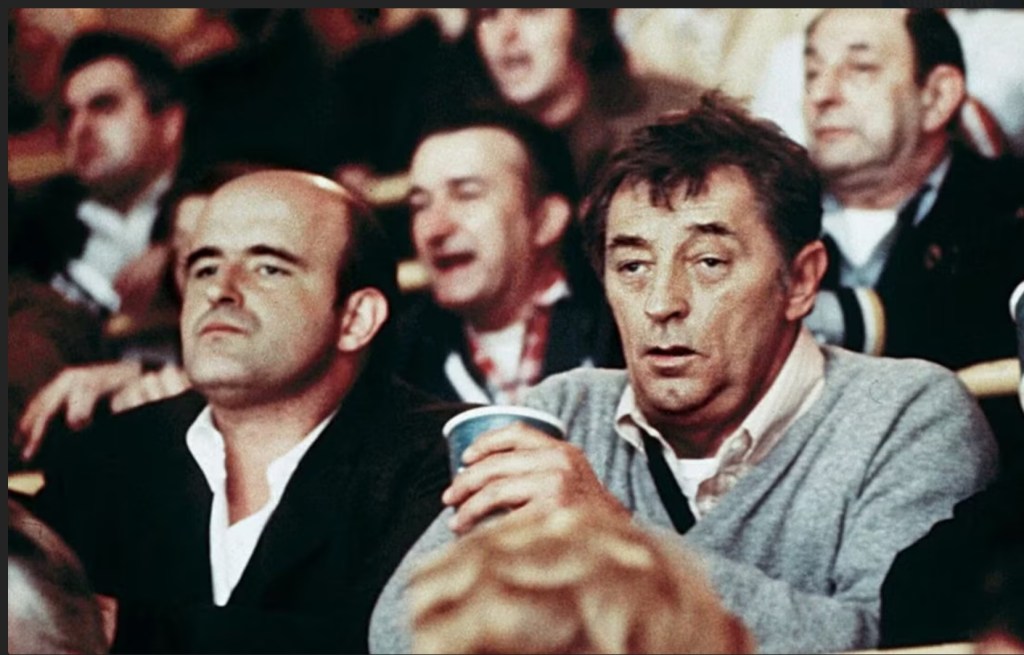
The Friends of Eddie Coyle

Burt Lancaster, Kirk Douglas, and Robert Mitchum were born within a few years of each other and found great success in Hollywood in the decades immediately after World War II. They were often cast in similar roles: If you see an American movie from that period featuring a tough as nails cop or PI, a brawny cowboy slugging it out in a saloon, or a strong-jawed soldier saving his platoon or battleship, one or more of them was probably on screen. But by the end of the 1960s when they were all in late middle age, Mitchum had fewer films that would be remembered as classics (Out of the Past and Night of the Hunter being the strongest candidates) to his credit than did his contemporaries, perhaps because he never took his job that seriously (He famously noted that acting can’t be that hard given that Hollywood’s biggest star in its early days was a dog). With a few exceptions, Mitchum’s work in the 1940s-1960s was overall simply not at the level of Douglas or Lancaster (or for that matter Peck or Wayne).

But as he got old, Mitchum got more interesting. His tired eyes began to match the shambling body that carried them, his air of disinterest became more melancholy than insolent. Mitchum’s world-weary Phillip Marlowe in Farewell, My Lovely (my recommendation here) is one of my favorite performances of the mid-1970s, and I would argue that he reached his greatest height just before that in the 1973 movie The Friends of Eddie Coyle.

The plot of the film closely follows the novel by George V. Higgins, who as an Assistant U.S. Attorney in Boston knew the terrain he was describing. Under grey Beantown skies, a gang is pulling off a string of bank robberies using handguns supplied by minor league criminal Eddie Coyle (Mitchum). Coyle purchases the weapons from a better-connected gunrunner (Steven Keats) who also traffics in machine guns. Because Coyle is facing a sentencing hearing for smuggling a truckload of whiskey for his shady bartender (Peter Boyle), he is tempted to give information about the machine guns to an ATF agent (Richard Jordan) in the hopes of a lighter sentence. Coyle doesn’t want to go to prison again at his age, for his own sake and for that of his wife and kids, but he also doesn’t want to be a rat nor accept the risk of harsh punishment if the mob finds out he dropped a dime.

Director Peter Yates follows the compelling formula he established in my recommendations Robbery and Bullitt, namely one exciting scene with cars (in this case an inventive chase in a parking lot) and a lot of low-key atmosphere and acting everywhere else. Sporting a haircut and clothing that looks like it ran him a ten spot all in, Mitchum quietly commands the screen without a whiff of movie star about him. Eddie Coyle is not a particularly good man, but he some sense of duty to his friends and family, and Mitchum makes the audience care about him, defects and all, not least by portraying more vulnerability than toughness.

The supporting cast members all give excellent naturalistic performances that make a life of crime look gritty, unglamorous and even a bit tedious. Combined with ideal use of Boston locations, the movie at times takes on the tone of a docudrama about real world cops and robbers. It’s superb slice of life cinema anchored by the best work of Mitchum’s career.

p.s. This movie lost money but has become a cult favorite among film buffs. I assume Quentin Tarantino is one of them given that Steven Keats’ character is named Jackie Brown.

Categories
Drama Mystery/Noir

Murder by Contract

I rarely write reviews of zillion dollar blockbusters because there is little to say that hasn’t already been said, and even fewer people who haven’t already heard it. In contrast, I exploit opportunities to highlight B-pictures of which you may not have heard, but which are very much worth seeking out (e.g., see my reviews of My Name is Julia Ross, Cash on Demand, Tarantula, Plunder Road, and The Narrow Margin). An excellent example is a low-budget 1958 film noir that was shot in just 7 days: Murder by Contract.

The story opens with a handsome, self-possessed, and intelligent man approaching a mobster and blandly asking to be hired as an assassin. Claude (Vince Edwards) has a stable job with a pension, but, he explains matter-of-factly, wants to buy a $28,000 house by the river and doesn’t want to wait 30 years to get there. After being made to wait two weeks for a call in his apartment as a test, he is hired and begins professionally and coldly carrying out contracts, recording his earnings and his progress towards homeownership in a notebook Eventually he is hired for a bigger, higher-risk contract to execute a prosecution witness who is under police protection. Flanked by two mafia minders (Herschel Bernardi and Phillip Pine), he lays his plans carefully, but fate and his own psychological quirks start to work against him.

You will note that isn’t a particularly complex plot, but the story is only half of what this movie offers. The other half is a character study of a philosophical loner who is at times utterly ruthless and at others considerate beyond measure. That he can turn on a dime makes Claude both beguiling and frightening. Edwards’ movie career never really went anywhere (though he later became a television star as Dr. Ben Casey) but it’s a credit to his acting and Irving Lerner’s direction that the audience can have some sympathy for him despite his psychopathic predilections.

The spare style and look of this film feel more akin to the cinema of France and Italy than the U.S.. That reflects the craft of Lerner and also cinematographer Lucien Ballard, who had no choice but to shoot on simple sets and in natural locations with no adornment. Perry Botkin’s simultaneously cool yet suspenseful score is also essential to the mood.

The script, by Ben Simcoe and an uncredited Ben Maddow, paints Claude as having the single-mindedness and female-focused psychological hang-ups of Travis Bickel from Taxi Driver, but with much better clothes and manners. I was therefore not surprised to learn that the legendary Martin Scorsese saw Murder by Contract as the second feature when he went to the theater as a 14-year old. The movie had a major impact on him, and he later hired Lerner to help make New York, New York.

I believe this suspenseful, fascinating B-movie treasure is now in the public domain, so I put it here for you to enjoy.

p.s. Herschel Bernardi, who is so good here in a half-comic, half-dtamatic role, was a stalwart on another one of my recommendations: the Peter Gunn television series.

Categories
Drama Mystery/Noir

The Harder They Fall

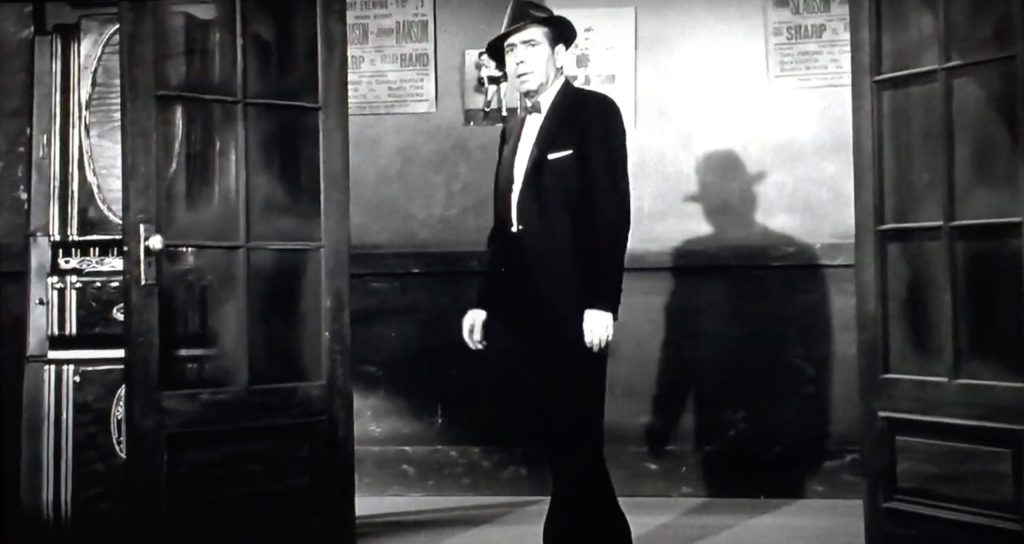
Humphrey Bogart has a secure place on the Mount Rushmore of Hollywood actors. I’ve recommended movies where he plays unpretentious heroes (Sahara and To Have and Have Not) and figures of genuine menace (In a Lonely Place) but like most of his fans I cherish Bogie most for his world weary, cynical idealists who haven’t quite given up hope. As morally compromised sportswriter Eddie Willis in 1956’s The Harder They Fall, Bogart ended his career by nailing such a role for us a final time.

Columbia promoted this movie as a sort of sequel to its commercial and critical 1954 mega-smash On The Waterfront based on the shared presence of Budd Schulberg’s writing, Rod Steiger’s acting, and a story about a boxer and mobsters. But the novel The Harder They Fall (adapted for the screen by Philip Yordan) was actually written by Schulberg first and the film’s subject matter is the boxing industry itself rather than a hard-luck longshoreman whose pugilistic career is behind him.

The plot is loosely based on the career of Primo Carnera, an Italian strongman who became world heavyweight boxing champion after winning a series of suspect “victories” that were fixed by the mob. In the movie, the central character is a big, clumsy Argentinian mountain of a man named Toro Moreno (Mike Lane), whose sleazy manager Nick Benko (Steiger) needs Moreno to get positive press from a trusted source like the Eddie Willis (Bogart). Eddie can see that Moreno is a lousy boxer, but he’s financially desperate enough to become corrupted by Benko. The entourage begins touring the country winning fixed fights and showering Moreno with enough misleading publicity to make him a challenger for a lucrative (for Benko) title bout.

Morally, Eddie Wilson is much farther gone than, say Rick Blaine in Casablanca. He sells out almost immediately and exploits colleagues and friends to spread lies about Moreno’s boxing prowess. Bogart brings his growing self-loathing across with furtive looks and tired movements, and that he was manfully making this film while dying of esophageal only amplifies the effect of his acting (He had to do some reshoots of scenes in which his eyes were watering from the pain of his disease). Coming from a completely different style of acting (“The method” which Bogart apparently found a bit amusing), Steiger is a superb foil for Bogart as a man who behaves just as badly but feels no compunction about doing so.

Little known Mike Lane, a former circus wrestler, brings across the central tragedy of the story: Toro Moreno really believes he’s a great boxer and that the people around him have his best interests at heart. He is a physically huge man, but psychologically his character is a naive, tender-hearted little boy. His exploitation by Benko eats at the audience’s conscience just as it does Eddie’s.

The strong performance by Lane as well as by real-life boxers Jersey Joe Walcott, Max Baer, Pat Comiskey, and Joe Greb, is a credit to the fine director Mark Robson, who made actors out of all of them. And the legendary cinematographer Burnett Guffey is in top form, contributing arresting visuals outside the ring and even moreso in it.

The Harder They Fall has as bleak of view of humanity as any of the noirish dramas of the period. It paints a world where most people are heartless and those who trust are victims. And who better to play someone caught between such amorality and decency than one of the greatest movie stars of the 20th century?

p.s. Two somewhat different endings were shot and are still in circulation, one with Eddie calling for boxing to be banned (reflecting Robson’s distaste of it) and the other with him only demanding an investigation into corruption within the sport (reflecting Schulberg’s taste for it, warts and all).

Categories
British Drama Horror/Suspense

Cash on Demand

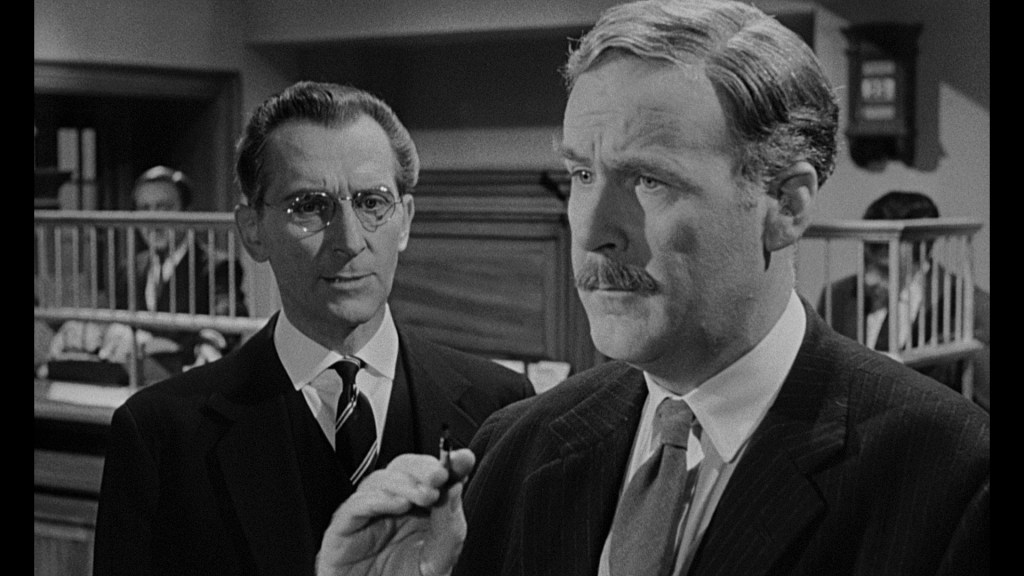
Hammer Studios sometimes ventured out of the horror genre with impressive results, as I described in my recommendation of Taste of Fear, Another fine example, which ranks as one of the best B-movies in British history in any genre, is the suspenseful bank heist picture Cash on Demand.

Made as cheaply as chips in 1961, the story centers on small town British bank manager Harry Fordyce (Peter Cushing). Harry is tight as wax in his work, and cold and demanding towards his staff. His only evident humanity is his love for his wife and young son. When the smooth, well-dressed Colonel Gore Hepburn (André Morell) of the bank’s insurer visits to conduct a surprise security inspection just before Christmas, Harry is initially confident that his operation will pass with flying colors. But he could not be more wrong about what is to unfold, both for the bank and also for himself and his family.

Hammer benefited from the British tradition of actors taking seriously small parts in low-budget films in a way Hollywood stars often would not. Cushing digs into his role with professionalism, allowing us to care about and eventually even to feel sorry for someone who at first seems hard to take. The rest of the cast is also very good, and it’s a particular pleasure to see Richard Vernon, usually slotted into one-dimensional Establishment roles (at which he excelled, including in Goldfinger and A Hard Day’s Night), essay a character with more depth. As Fordyce’s underling Pearson, Vernon is still of course playing a respectable type, but his junior bank manager has vulnerability and dignity, particularly in his loyalty to his co-workers.

Consistent with its modest budget and origins as a TV play, the entire movie is shot in just a few rooms of the bank. But the cast and little known director Quentin Lawrence use the claustrophobia to amp up the tension as a clever and malicious plot unfolds. It’s another fine demonstration that you don’t need a hundred millions dollars to make a good movie: In the case of this superb film, it was less than 40,000 pounds.

Categories
British Drama

Prime Suspect

Not everything we love the first time we see it holds up over time. But I recently rewatched an ITV series I first enjoyed when it debuted in 1991 and it was every bit as suspenseful, and compelling as I remembered: Prime Suspect.

The first episode introduces us to Jane Tennison, one of British television’s immortal characters. Played by the estimable Dame Helen Mirren, at the opening of the series Tennison is a Detective Chief Inspector who is crushed against the glass ceiling. Neither the men above and below her in the hierarchy take her seriously, so much so that when a male DCI suddenly is unable to continue a murder investigation, she still has to fight her skeptical boss (John Benfield) not to be skipped over in favor of a male investigator from outside the nick.

On its face, the case she is assigned to crack looks a straightforward investigation of a prostitute murdered by a punter. When Tennison begins to suspect that there is more here than meets the eye, her male colleagues resist her conclusions. She is particularly challenged, undermined and mocked by Detective Sergeant Utley (a very credible Tom Bell), who at first seems motivated only by misogyny but things become more complex from there. As Tennison works relentlessly to solve the case and win over her male doubters, her romantic relationship with a divorced father (a pre-fame Tom Wilkinson) begins to suffer.

Prime Suspect is the work of many talented people, but its greatness derives mainly from two phenomenally talented women, namely Mirren and writer Lynda La Plante. Mirren shows enormous range as she brings across Tennison’s toughness, intelligence, ambition, vulnerability and isolation. Tennison is a flawed person, but Mirren makes you pull for her with all your might.

This is also a credit a course to La Plante, who created the character (based on real-life copper Jackie Malton) and the grim and twisty mystery that Tennison tries to solve. La Plante’s script is painfully realistic about what it’s like for the first women who venture into all-male preserves. Notably, she is too talented a writer to give us a Hollywoodized fairy tale of policework adopting a female-friendly work culture to accommodate Tenison. Rather, what happens over the course of the story is that Tennison becomes more like the men around her: ruthless, hard-bitten, neglectful of family and most crucially a heavy boozer (which takes an increasing toll in future episodes). La Plante knows that big organizations change the individuals within them far more the reverse. The development of that theme over the series is one of many reasons why Prime Suspect is widely regarded as a classic of British television.

p.s. This review focuses on the debut episode, but the series ultimately produced 6 more episodes over the next 15 years. All of the follow-up episodes are very good, with my favorite being The Scent of Darkness. In contrast, the spin-off 2017 prequel can’t hold a candle to the original.

p.p.s. Look fast for a pre-fame Ralph Fiennes as an ex-boyfriend of the deceased.

Categories
Action/Adventure Drama Mystery/Noir

Gun Crazy

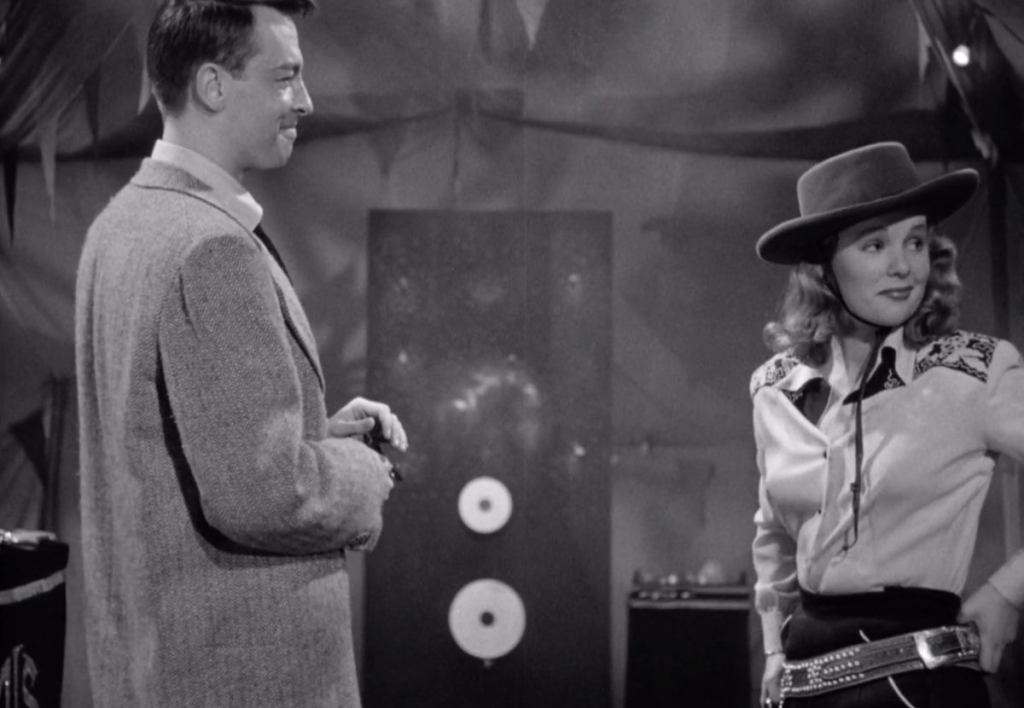
The excellent film Trumbo includes a colorful performance by John Goodman as the real-life raffish independent movie producer Frank King. King and his brothers (whose real family name was Kozinsky) were never respected by Establishment Hollywood but were daring in way the big studio suits were not. In what at first might have been an effort to move into prestige pictures, they purchased the rights to a story by MacKinlay Kantor, who had written the source material for the massively popular and Oscar-laden 1947 classic The Best Years of Our Lives. But Kantor proved unable to turn his story into a solid screenplay, leading the King Brothers to fall back on their common practice of secretly using blacklisted writers, in this case a prison-bound Dalton Trumbo. He turned Kantor’s draft script into the sexually-charged and violent cinematic miracle that is 1950’s Gun Crazy.

The plot: Bart Tare (John Dall) has been gun-obsessed from boyhood, which eventually lands him in reform school after he can’t resist committing a smash and grab robbery of a gun shop. After a tour in the army, where he thrives as a firearms instructor, he visits a travelling circus and is enthralled by the trick shooting show of the alluring Annie Starr (Peggy Cummins). Mutually besotted, they run away together, quickly burning through all of Bart’s savings. Annie suggests they turn their formidable skills to a career in armed robbery. Bart is scared someone will get hurt…Annie, not so much. But he can’t say no to her, leading to a Bonnie and Clyde-esque crime spree with shattering consequences.

In my recommendation of My Name is Julia Ross, I noted how that film’s 12-day shooting schedule was actually a luxury for Poverty Row veteran Joseph Lewis. Imagine how happy he must have been to have a whole month to direct this movie on a budget almost a third as big as a typical Hollywood film! He coached his compelling lead actors to express, as much as one could in 1950, wanton hunger for each other as well as, in Cummins’ case, a nearly orgasmic delight in violence.

Lewis and cinematographer Russell Harlan pursue a breathless, arresting style throughout this film. This includes, among other inspired camera placements, a deservedly legendary extended take with the camera in the back seat as the lovers commit and flee a bank robbery. As the audience, we are pulled along with the criminals by a fast-moving stream of images, wanting to pause for breath but afraid to let them out of our sight. It’s tough competition, but shot for shot, Gun Crazy ranks with the most visually stunning works in film noir history.

The story’s evolution and resolution turns on an implicit question: why are the two characters fundamentally different in their morals, despite their shared fascination with firearms? The early scenes of the film suggest that while Bart appears never to have had a relationship with his parents, he was at least raised by a loving older sister (Anabel Shaw) and had two childhood friends (Harry Lewis and Nedrick Young). Annie’s backstory is never told, leaving the audience to wonder if even that little love is more than she ever experienced on this earth. The movie never makes this femme fatale explain or justify her motivations, and in film noir that’s a feature, not a bug.

p.s. The black beret Faye Dunaway wears in another of my recommendations, Bonnie and Clyde, is a tribute to Gun Crazy by director Arthur Penn.

Categories
British Drama

A Night to Remember

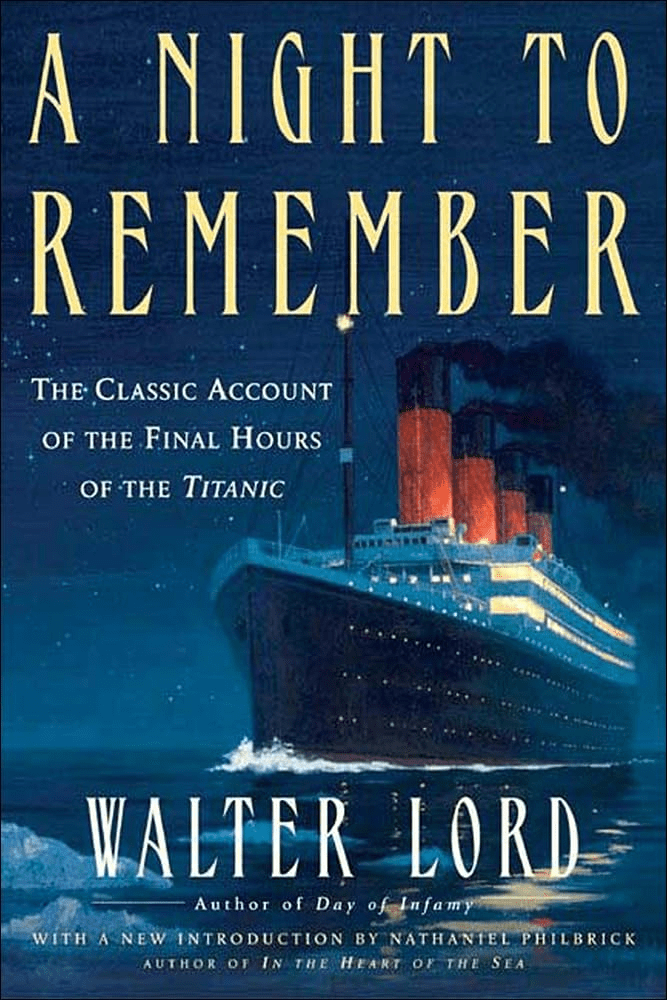
The story of the Titanic is so well-known today (not least due to James Cameron’s mega-budget mega-hit 1997 movie) that the The Onion could run the headline “World’s largest metaphor hits iceberg” confident that everyone would get the joke. But the modern cultural obsession with Titanic goes back less than 70 years. The liner’s sinking was worldwide news in 1912, but two world wars and four decades later, it had faded in popular memory. This changed in 1955, when a virtually unknown advertising copywriter named Walter Lord published a riveting minute by minute account of the disaster based on historical archives and interviews with survivors. A Night to Remember quickly became an international best-seller and has never been out of print since. Producer William MacQuitty, who had seen the launch of the mighty ship as a child, knew an opportunity when he saw it, and with input from Lord made one of the greatest films in British cinema history, 1958’s A Night to Remember.

This would normally be the part of the review where I summarize the plot, but that would be supererogatory here. How the story unfolds in the excellent script by Eric Ambler (who also wrote the script for another of my seagoing recommendations, The Cruel Sea) is however worthy of description. Setting the template for countless subsequent disaster films, the movie intersplices the main event with small moments of human drama, brilliantly carried off by an army of British actors under the direction of Roy Ward Baker, who never rose to a greater height.

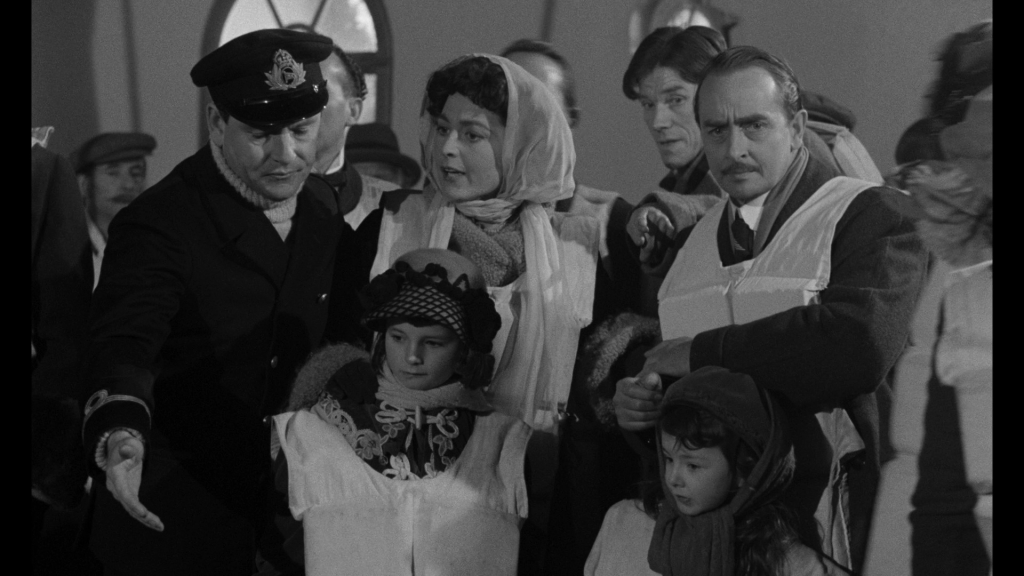
Kenneth More, perhaps Britain’s biggest movie star at the time, convincingly leads a matchless cast as the resourceful, brave, and dutiful Second Officer Lightoller (who was like most of the characters in this docudrama film, was a real person). I also admired Laurence Naismith’s turn as the captain of the doomed ship, particularly how much emotion and thought he conveys without words. Of the character parts, John Merivale as Robbie Lucas saying goodbye to his wife Liz (Honor Blackman) and their little children with false assurances that he will see them ripped my heart out. Another unforgettable moment: Ronald Allen leading fellow working class passengers from steerage in a desperate run for the boats until all of them stop in their tracks, dazzled by the sight of the opulent first-class dining room.

Of course a movie like this needs visual spectacle to work, and a Night to Remember is a huge success on that front. The budget was well-spent on lavish, realistic sets, including some that tilted with such convincing groans from their machinery that these sounds were left in the film to convey the heaving of the ship. The special effects are out of date of course, but still credible. And Geoffrey Unsworth, soon to become one of Britain’s most respected cinematographers, is in fine form (I have highlighted his other work here, here, and here) N.B. Be sure to see the Criterion Collection restored version and not one of the battered prints that circulated for decades.

A Night to Remember was a hit in Britain, but didn’t draw much of an audience in the United States, perhaps because it’s so very British in sensibility and also because it gave the American passengers little attention (the most visible being the Unsinkable Molly Brown, who is played by Tucker McGuire mainly as comic relief). But its critical reception was very warm indeed and it is today justly appreciated internationally as a cinematic masterwork.

p.s. Trivia for spy film fans: this film is packed with future espionage stars including Blackman (The Avengers and Goldfinger), David McCallum (The Man from U.N.C.L.E.) and no less than 4 men who went on to play Q in James Bond films.

Categories
Drama

The Rapture

For decades, Hollywood movies that took Christianity seriously were nearly guaranteed to make money and to receive reverent reviews as well (sometimes deservedly so, e.g., Black Narcissus, Song of Bernadette). But in our more secular age, they often divide audiences and critics. Ebert and Siskel exemplified the split when they reviewed the 1991 film The Rapture. The former put it on his 10 best films of the year list, while the latter said he considered it “more preachy than provocative”. I am much more inclined to Ebert’s view of Michael Tolkin’s directorial debut.

The film opens with a Metropolis-level portrayal of soul-killing work: an evocative shot of a bevy of telephone operators who looked caged in their cubicles as they near-mindlessly answer request after request for directory assistance. One of them is named Sharon (none of the film’s characters have a last name). Sharon’s (Mimi Rogers) dreary daytime existence stands in sharp contrast to her nights, which she spends cruising hotels for group sex with her friend Vic (Patrick Bachau). One of the men she encounters, Randy, (a then little known David Duchovny) takes an enduring interest in her and they start to share their regrets and hopes.

Meanwhile, Sharon becomes aware of coworkers who, unlike her, seem happy, and learns they are involved in a religious community that dreams (literally) of the coming rapture in which the faithful will be raised to heaven. In a superbly executed scene, two door-knocking Christians also begin to shake her lack of faith. Like Augustine, she abandons her sexually wanton ways and begins praying and worshipping until she too is convinced that the end of the world is nigh. This precedes further astounding plot developments that you will turn over in your mind long after the final credits roll.

Tolkin has made a challenging movie that is absolutely not for all tastes, but I admire his courage for unflinchingly following a theme out to its conclusion. This is not an evangelical film: Tolkin portrays what it would it mean if people who believe a certain theology are in fact correct, but he neither endorses nor condemns it. His dialogue is searching and at times even searing as his characters struggle with what life means, whether God exists, and if so what he expects of humanity. His film weakens a bit in its unique concluding act, which was almost inevitable given his limited budget, but overall this is one of the most impressive debuts by a writer-director in recent decades.

Mimi Rogers deservedly received universal acclaim for her no holds barred performance. She is by turns sensual, sad, yearning, inspiring, frightening, damaged, and defiant. Taking the role of Sharon was a big risk and it pays off artistically in an Oscar-caliber performance. Sadly, it did not pay off in terms of box office receipts or wider recognition that she is much more than just another Hollywood sex bomb.

To return to where I began, let me close this review by quoting Roger Ebert: “Movies are often so timid. They try so little, and are content with small achievements. The Rapture is an imperfect and sometimes enraging film, but it challenges us with the biggest idea it can think of, the notion that our individual human lives do have actual meaning on the plane of the infinite.

p.s. Tolkin also wrote the story and co-wrote the screenplay of another of my recommendations, Deep Cover.

Categories
British Drama

Brideshead Revisited

I ventured that Tinker, Tailor, Solider, Spy is the best thing the BBC has ever put on television. If asked the same question for ITV, on most days I would plump for the 1981 mini-series Brideshead Revisited.

As everyone knows – or should know – the story is based on a semi-autobiographical novel by Evelyn Waugh. The plot is a series of recollections by Charles Ryder of his long, complicated, and life-changing relationship with a Catholic, aristocratic family who are the heriditary owners of a magnificant house and estate known as Brideshead. In the early 1920s, Charles (Jeremy Irons) is charmed by his eccentric, rich, and gorgeous Oxford classmate Lord Sebastian Flyte (Anthony Andrews). Despite their differences in religion and social class, an intimate friendship blossoms, to the point that Charles is eventually almost adopted into Sebastian’s family at Brideshead, which includes his glamorous sister Julia (Diana Quick).

But as the years roll by, Sebastian and Charles’ friendship founders on the former’s self-hatred, resentment of his family, and growing addiction to alcohol. Charles is pained by the loss of closeness with Sebastian, but comforted when Julia steps in to replace it. All of this unfolds as the country is enduring two tumultuous decades when old certanties were overturned and traditional hierarchies undermined.

All three leads sparkle throughout this sweeping series. Remarkably, Irons was originally cast as Sebastian, but agreed to switch roles at Andrews’ request. Their skills as actors is such that it’s now impossible to imagine the casting any other way. Remarkably, due to a technician’s strike bringing ITV to a halt in the middle of making the series, the original director (Michael Lindsay-Hogg) had to be replaced by Charles Sturridge, yet the acting and tone do not miss a beat across those episodes.

Appropriately for a multi-generational story, the cast includes leading lights of a prior era. Laurence Olivier appears as Lord Marchmain, though he isn’t given a great deal to do. Two other famous performers light up the proceedings much more. John Gielgud is both hilarious and a bit terrifying as Charles’ waspish father, who knows how to effortlessly and mercilessly inflict a withering remark. Claire Bloom (last seen on these pages in The Spy Who Came in From the Cold) is also quite effective as Lady Marchmane, the family matriarch. Bloom’s is a rich characterization, mixing virtues and vanities as she grapples with the decline of her son’s health, her religion, and her family’s fortunes.

The less-familiar cast members also shine, including Simon Jones as the stuffy family heir “Bridey”, Phoebe Nicholls as the compassionate youngest child Cordelia, and Nickolas Grace in an endearingly campy turn as Charles and Sebastian’s flamboyant friend Anthony Blanche.

Producer Derek Granger and his team at Granada Television also hit it for six with peerless sets, clothing, cars, makeup artistry, and locations. Geoffrey Burgon’s regal yet wistful baroque theme music is another asset.

What, in the end, is this 13-hour wonder about? Certainly more than one thing. In some respects it’s a nostalgic toff-a-logue like Downtown Abbey (except that it’s good). If you want sympathy for working people you will not find it here: the only mention of labor rights is when Charles helps put down a strike. The mini-series is also an exploration of Catholic life in Protestant-dominated England as well as a compelling narrative of how families change over time in response to marriages, deaths, and historical events.

Most of all, I consider Brideshead Revisited a story about friendship. You can read a pile of critical debates about whether Charles and Sebastian are lovers and indeed the series itself invites such discussion: a dance hall prostitute calls them gay and Lord Marchmain’s mistress (Stéphane Audran) delivers a speech about the English tradition of romantic but not sexual relationships between men. But it doesn’t in my opinion matter, because Irons and Andrews are so sympathetic and believeable as they illuminate how the friendships we make when we are young form and how they change us and then change themselves. And Quick dancing in and around their friendship while managing her love for both men feels utterly real.

Even with this longer than usual review, I really haven’t done complete justice to Brideshead Revisited. If you watch it yourself you will see more things to appreciate than I could cover here, and understand why it remains one of the most respected and beloved shows in British television history.

p.s. Were I asked what else in ITV’s history might compete for the top spot with Brideshead Revisited, I would include the superb mini-series Anthony Andrews starred in just before it: Danger UXB.