Categories
Comedy Drama

The Matador

Because James Bond is one of the world’s most long-running and successful film franchises, any actor who essays agent 007 is to at least some extent stuck with the image for the rest of his career. Of all the ways to cope with this, Pierce Brosnan’s is my favorite: Playing parts that riff on the famous role. In The Tailor of Panama — a film I really must write a recommendation of someday — Brosnan gave a dark, sleazy, and unsentimental portrayal of the life of a foreign espionage agent (as you would expect in a John le Carré story). Even more fun is his brilliantly bizarre turn as a down at the heels hitman in writer/director Richard Shepard’s 2005 film, The Matador.

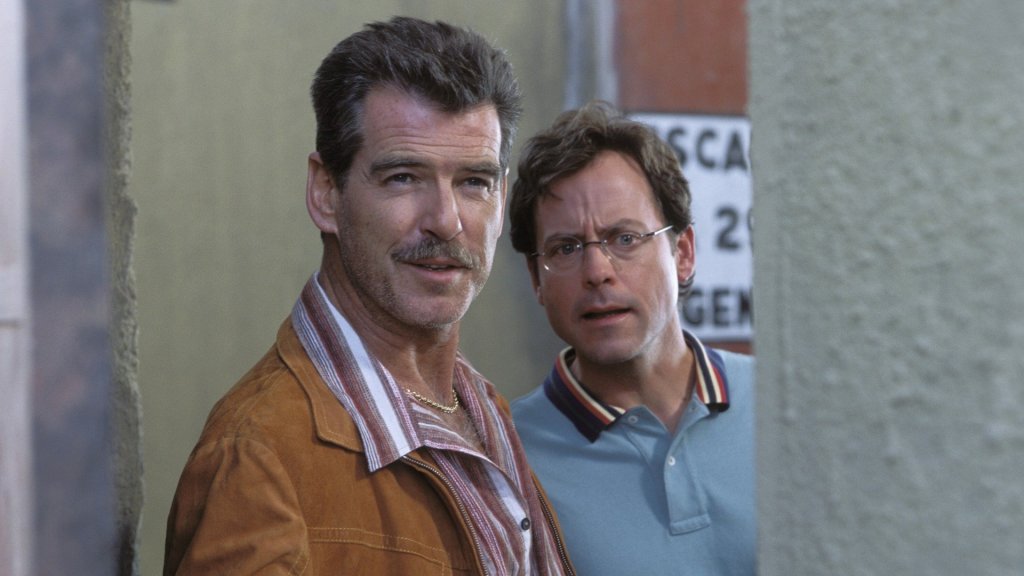
The plot: Two men who are on the surface completely different meet at bar in Mexico City. Danny Wright (Greg Kinnear) is a straight-laced, boring American suburbanite businessman whereas Julian Noble (Brosnan) is a once-dashing but now scruffy, dissolute contract killer whose only hobbies are visiting prostitutes and alcoholism. Yet both are similar in their desperation. Danny is still grieving the loss of his son, his marriage to his high school sweetheart (Hope Davis, perfect in a small but important part) is stressed, and this business trip is make or break for him financially. Julian, after years of globe-trotting wet work, is mentally and physically shaky, emotionally isolated from other people and himself, and losing the confidence of his boss Mr. Randy (Philip Baker Hall, good as ever). At first the men connect, but at a critical moment in the conversation (and arguably the critical moment of the film) Danny shows some vulnerability and Julian proves himself incapable of responding in a humane fashion. Danny stalks off and our story would seem at an end…but there’s so much more to come with these two characters which it would be a sin to spoil.

If Brosnan has to argue for his place in heaven, I would suggest he make his case with his portrayal of Julian Noble. At one level, he’s a terrifyingly cold killing machine. But simultaneously, he’s like a socially rejected school kid trying but failing to form a genuine human connection with anyone else. When he visits the Wrights’ home and sees how in love the couple is, he is visibly unable to understand what they experience together. But rather than conveying resentment or rivalry, Brosnan looks like a puppy who’s just been adopted from the pound.

Brosnan’s role is the showier of the lead parts, but don’t make the mistake of overlooking how effective Kinnear is here, in some ways also twisting his own screen image for comic and dramatic effect. He’s particularly good at bringing across the ambivalence we feel when we drive by a horrible traffic accident: We know it’s wrong to stare but we desperately want to…that’s his relationship with Julian in a nutshell.

The Matador is also a outstanding-looking movie. Along with top-flight work by cinematographer David Tattersall, the production and set designers outdo themselves across a range of eye-catching locations around the world.

Richard Shepard mainly works in television, and this is the first of his movies I have seen. Viewers might argue about whether Shepard is going mainly for black comedy, off-kilter drama, or character study here, but regardless of where you come down on that, you should agree that he’s created an utterly original movie and secured superb performances from his cast including career-best work from ex-Bond Pierce Brosnan.

Categories
Drama

Shattered Glass

Before Johann Hari, before Jayson Blair, there was a journalistic fraud named Stephen Glass who conned readers and fellow journalists at multiple respected outlets, most notably The New Republic. Buzz Bissinger wrote an sterling account of Glass’ rise and fall for Vanity Fair magazine which writer/director Billy Ray subsequently translated to the screen in 2003: Shattered Glass.

The plot: Stephen Glass (Hayden Christensen) is the hottest staff writer at The New Republic as well as a frequent contributor to many other respected outlets. Glass’ interpersonal manner is humble — even obsequious — as well as ingratiating to the point of seeming desperate to please. His editor Mike Kelly (Hank Azaria) and his fellow writers, including his friend Caitlin Avey (based on journalist Hanna Rosin and played by Chloë Sevingy) are all under his spell, with the exception of another writer, Chuck Lane (Peter Sarsgaard), who becomes the editor when Kelly is fired. Things almost immediately start to come undone as Lane grows suspicious when a rival publication finds holes in Glass’ latest story. Glass scrambles to offer evidence in his defense, while also trying to turn the staff against Lane for not backing him up. Superb journalistic drama ensues.

Of the many things to appreciate in this movie, most people will fixate on Christensen’s tremendously jittery, whiny, scheming portrayal of Glass. But in the less showy leading role, Sarsgaard matches Christensen step for step as an ethical person who is slowly disabused of his expectation that his colleague has anything like the same values. Azaria, Sevigny and Steve Zahn are also solid in supporting roles.

The overriding triumph is Ray’s both for getting such strong performances from his cast and also for maintaining pace and tension in a story largely composed of journalists having conversations with each other. Ray uses each lie, each seeming exposure, and each subsequent lie which starts the cycle again as the engine of the drama, and it works very well, as does the internal dynamic within the magazine’s staff over whom everyone will ultimately believe (the only weakness of the script was that the final scene wrapped that storyline up a bit abruptly, but it’s still a strong close).

Sadly, this fine movie did not do well at the box office. But it deservedly wowed the critics. Having seen it when it came out and again 20 years later, I consider it one of the great films about journalism, as well as an intriguing character study of a creative but destructive person.

p.s. The film leaves open the question of whether Glass was simply a pathetic, needy person who wanted approval so much that he lied compulsively to get it, or, a calculating sociopath who took delight in fooling those around him. If you want more insight into the answer, Glass’s interview years after the scandal is must see.

p.p.s. If you are wondering what happened to Jonathan Chait, Glass’ friend and colleague at TNR, Ray turned him into a female character named Amy Brand (played by Melanie Lynskey) for the movie.

Categories
Drama

The Little Foxes

It’s challenging to engage moviegoers in stories in which most of the characters are awful people. Even directorial talents like Mike Nichols and Martin Scorsese can’t consistently pull it off. But it’s a superlative cinematic experience when it works, as evidenced by William Wyler’s 1941 classic The Little Foxes.

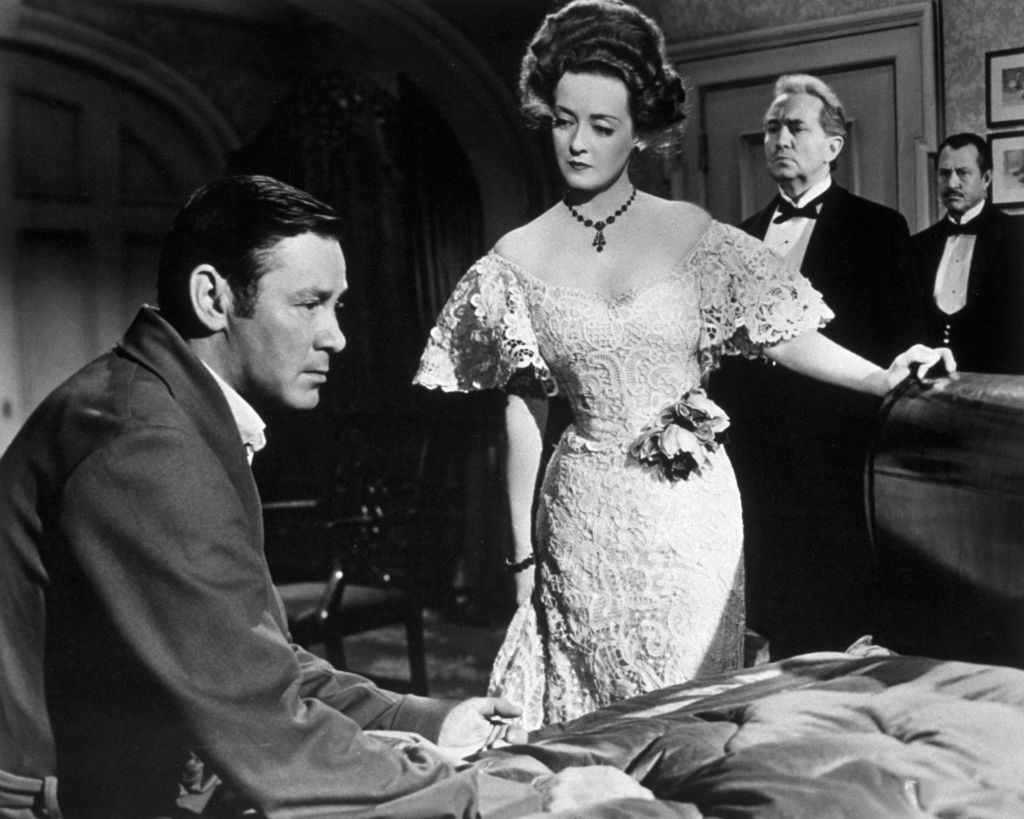
The plot: As the 20th century dawns in the Deep South, the Hubbard clan are scheming to entice a Chicago businessman to enrich them by building a cotton mill in their town (“lowest wages in the country!”). But they are already squabbling about the division of their investment and the profits thereof. Brothers Ben (Charles Dingle) and Oscar (Carl Benton Reid) already have money inherited from their father, while their sister Regina (Bette Davis) is financially dependent on her wealthy, ailing, and unloved husband Horace (Herbert Marshall). Oscar is also in a loveless, transactional marriage with his gentle, browbeaten wife Birdie (Patricia Collinge), whom he married solely to gain control of her family’s plantation. And Oscar has more cold-hearted plans, namely to have his wastrel son Leo (Dan Duryea) marry Horace and Regina’s sweet-natured daughter Alexandra (Teresa Wright) to gain control of Horace’s money when he dies. Genteel nastiness and double crosses ensue.

Lillian Hellman’s literary reputation has declined significantly over time, as evidence has mounted that she lied so often that she makes Johann Hari look honest. But her Little Foxes largely holds up today, both as a play and a movie. In addition to some quotable lines (most of them delivered acidly by Davis) Hellman is particularly acute at portraying the different ways that women react to oppression. Birdie responds to her husband’s exploitation and denigration of her by becoming fragile and alcohol-addicted, whereas Regina reacts to being cut out of her father’s will by becoming ruthless and avaricious. The story shows that despite her flaws, Regina’s not unsympathetic in that, had she been male, she would have inherited some of her father’s estate and not need to manipulate and battle men to survive.

On the other hand, the deferent Black servants of the Hubbard family are all flatly drawn. Hellman’s script thus doesn’t extend compassion to those underfoot across racial lines.

Made up as deathly pale, Davis delivers one of her career-defining performances. Most of the movie’s cast came from the stage version, but Tallulah Bankhead was replaced as Regina by Davis due to the latter being seen as a bigger box office draw. Davis’ Regina is tougher and nastier than Bankhead’s apparently was, and is a joy for her many fans. The rest of the cast also sparkle, particularly Dingle and Collinge.

Early in his legendary career, William Wyler had to make movies quickly and on the cheap (He directed 19 films in 1927!), but with growing reputation and budgets he transformed into the meticulous “40-take Wyler”. His actors — certainly including Davis who fought him throughout this production– were sometimes exasperated. But they also knew that their best performances were likely to emerge under his direction.

Wyler’s craft is evident here not only in the sterling performances by the entire cast, but also in the blocking and staging of each scene. Most directors direct the viewers’ gaze to a particularly point, but Wyler was comfortable with audiences choosing where to look. Sometimes the most interesting actor to watch in a Wyler film is the one who isn’t speaking (no wonder an incorrigible scene stealer like Davis put up with him).

Of course all that marvelous blocking and staging and opportunities to choose where to direct your eyes work enormously better because of Gregg Toland being behind the camera. In another of my recommendations, The Bishop’s Wife, I analyzed how deep focus opened up new possibilities in film beginning in the 1940s. That reality is even more on display here. The set is so, well, deep, with Hubbards huddling and repositioning themselves physically just as they are doing so emotionally and tactically throughout this delightfully vicious family drama.

Categories
British Drama Mystery/Noir

This is Personal: The Hunt for the Yorkshire Ripper

It’s challenging to make compelling movies about crimes when almost everyone knows the culprit and many of the facts of the case from the beginning. Yet ITV and producer Jeff Pope took the risk in the aughts to make a trilogy of docudrama miniseries about notorious British murders, with great success. The first has the clunkiest title, but it’s aces in every other respect: This is Personal: The Hunt for the Yorkshire Ripper.

The plot is based on the multi-year effort to catch Peter Sutcliffe, a serial killer who attacked his female victims with bestial ferocity in the late 1970s. Unlike many movies of this genre, there is almost no focus on the killer. Instead, we see the reaction of the community (including the then-rising women’s movement, the families of victims, and the countless women who lived in fear) and even moreso the political, emotional, and practical demands on the police and how they handled and mishandled them in an environment of institutitional sexism and intense political pressure. And as in the real case, the police have to struggle whether the taunting letters and cassette tapes they keep receiving from “Wearside Jack” are from the killer or are a cruel hoax.

Viewers suckled on Dixon of Dock Green-style cinema and television will find the conduct of the police here unbelievable, but every blunder happened in the real case. Unlike carmelized portrayals of old-style British policing, Neil McKay’s script is unsparing about the lack of professionalism and lack of capacity that was widespread before some major reforms (some of which were inspired by the Yorkshire Ripper case). Most notably, the lack of computerization meant all leads were kept on a mountain of index cards that literally came close to collapsing the floor of the building, and vital connections between pieces of evidence were missed (in real life, Sutcliffe was interviewed by police 9 times before his was caught). Equally disturbing: the police at one point pressure a suspect with such ferocity that he confesses even though he is innocent.

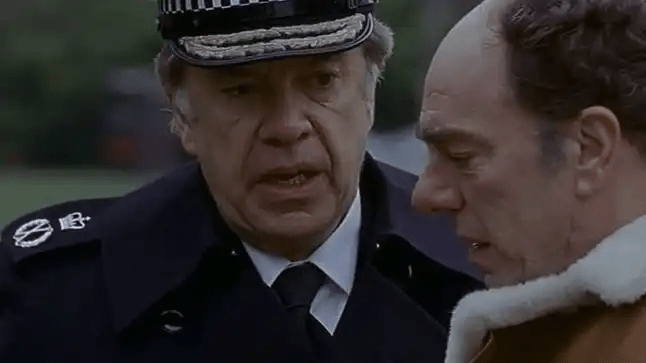
I appreciated the chance to see Alun Armstrong headline a film. A stage trained actor from County Durham who’s augmented the quality of many films I enjoy (e.g., Get Carter, Braveheart, Our Friends Up North) he also had a wonderful late career revival as an extremely eccentric police detective on the TV Series New Tricks. Here he inhabits the role of the hard-smoking, hard-drinking, grief-wracked Assistant Chief Constable George Oldfield, whose health and life are consumed by the demands of leading the investigation. As his right hand man, Richard Ridings is also excellent at portraying a mixture of toughness and humanity. Under David Richards direction, the rest of the cast also acquit themselves well.

There are other touches to admire. Rather than show the Ripper’s handiwork, the camera only shows people looking at it and reacting to it. And we don’t see the killer’s face until the very end, where with the banality of evil he has no particular reaction to being confronted by Oldfield. Full marks as well to Peter Greenhalgh for appropriately moody cinematography that accentuates the emotional impact of this grim but engrossing mini-series.

p.s. This 2000 film ends with a post-script noting that while Sutcliffe was sent to prison, “Wearside Jack” was never identified. But thankfully, five years later he was identified, arrested, and sentenced to prison.

Categories
British Drama

The Damned United

I’ve only been to a few English football matches in my life, and like most people who didn’t grow up with it, I don’t find it as engaging as do the locals. Yet one of my all-time favorite sports movies is about English football, which is a testament to the skills of everyone involved in The Damned United.

The plot of this fact-based 2009 film: Brian Clough (Michael Sheen) is a cocky, quotable ex-football star who establishes his brilliance as a manager by leading the once pathetic Derby County club to greatness. Throughout his rise he makes no secret of his contempt of mighty Leeds United and of their legendary coach Don Revie (Colm Meaney) whom he believes snubbed him. In a shocking twist of fate, when Revie departs to coach England’s national team, Clough is tapped to manage the squad he has denigrated, and accepts with the goal of remaking the team in his image and proving that he is superior to Levie in every way. But his arrogance leads him to grossly overestimate how easy the task will be.

Frequent Sheen collaborator Peter Morgan was one of the producers and also wrote the script (They also also made another of my recommendations, The Special Relationship). Based on a novel that many people thought was scurrilous (author David Peace was successfully sued for libel), Morgan’s script makes Clough more sympathetic and integrates many choice quotes that Clough and those around him said at the time. Kudos to Morgan and to director Tom Hooper for their skills as storytellers, particularly in going back and forward in time while never losing narrative momentum. Hooper would win the directing Oscar for his next film, The King’s Speech, but he’s in just as fine form here.

Sheen again shows his facility for playing characters based on real people. He gets Clough’s mannerisms and almost sing-song Northern speech cadence right, and fleshes him out as a rounded person with clear defects and impressive strengths. The supporting performances are excellent, with Timothy Spall being particularly endearing as Assistant Manager Peter Taylor, whom Clough needs to succeed more than his ego can readily concede. Hats off as well to everyone involved in location scouting, set design, costuming, and art direction for visually transporting us convicingly back to the hard-scrabble period that was England in the 1970s.

As I mentioned, you don’t need to know anything about English football in general or the specific events portrayed to appreciate this movie. As long as you appreciate a well-acted, well-told story, with vivid characters, The Damned United is for you.

Categories
British Drama

The Deadly Affair

Alec Guinness so inhabited the role of John le Carré’s master spy George Smiley that even the author said he could no longer think of one without the other. But Guinness was not the only fine actor to essay the role. James Mason also had his turn, even though for copyright reasons the character was renamed Charles Dobbs. The resulting 1967 film has been almost completely forgotten, but it more than merits a revival: The Deadly Affair.

The plot: Put-upon and dutiful spook Charles Dobbs is given an assignment that seems a doddle. An anonymous letter has accused a recently promoted Foreign Office official named Samuel Fennan (Robert Flemyng) of being a security risk, based on his long ago flirtation with Communism as a university student. Dobbs’ discussion with Fennan raises no concerns and even seems enjoyable to both men. But Dobbs learns through his “Adviser” (Max Adrian) that Fennan apparently went home and shot himself! When Dobbs interviews Fennan’s widow (Simone Signoret), something strange happens that raises suspicions that things are not so simple, so Dobbs digs deeper with the aid of an aged but reliable copper (Harry Andrews). Meanwhile, on the home front, Dobbs tries to endure the many affairs of his wife Ann (Harriett Andersson), including one with an undercover operative he used to run that he still considers a friend (Maximilian Schell).

As you can gather from the above, there’s a great deal of talent in front of the camera here (And I didn’t even mention Roy Kinnear, who shines here as an underworld figure in a performance with superb physicality). Mason gives more fiery frustration to Smiley than did Guinness, both in his work and in his failing marriage. I also love his artful interactions with Signoret (as good here as I ever seen her) as he steadfastly uncovers the truth. Andrews, a gay man who ironically spent much of his career playing dead butch British military officers and other authority figures, is also terrific in support as a police officer in the twilight of his career but still retaining intelligence and toughness. Because his is probably the most relatable character in the story and his performance of it so assured, the audience is likely to end up caring about him more than anyone else.

The team behind the camera is equally impressive. The superb director Sidney Lumet loved actors and knew what to do with them. The script is by Paul Dehn, who won an Oscar co-writing another of my recommendations, Seven Days to Noon. Dehn made some plot simplifications in adapting le Carre’s novel Call for the Dead, which I imagine makes the film more comprehensible to viewers who haven’t read the novel. Dehn also added in subplots about Ann that make her a much more prominent part of the movie than the book. I thought this worked fairly well but le Carré purists may disagree. The other major virtue of the movie is Freddie Young’s cinematography, which used pre-exposed film to create the drab colors and shadowy streets that reinforce the emotional tone of le Carré’s world.

The only thing about this movie I actively disliked was, surprisingly, the score by the great Quincy Jones. Purely as music, its jazzy and memorable, but as a soundtrack, it simply doesn’t match the downbeat story and meditative visuals. Indeed, the disjunction at times is so jarring that it takes the viewer out of the story.

The Deadly Affair is not in the same league as the other le Carré based adaptations I have recommended, The Spy Who Came In From The Cold and Tinker, Tailor, Soldier, Spy. But those are two of the best spy films ever made, and a movie doesn’t need to ascend to such Olympian heights to be watchable and engrossing. The Deadly Affair definitely clears that bar as a grim, effective, translation of the work of a legendary espionage novel writer and a portrayal of his most famous character.

Categories
Action/Adventure Drama

The Gunfighter

Westerns became darker after the war, in some cases translating aspects of the urban film noir mood and style to the wide-open spaces. The signature westerns of this type were the eight that director Anthony Mann made starring Jimmy Stewart, including my recommendations Bend of the River and the Naked Spur. But other filmmakers also made major contributions to the rise of the moody oater, including the talented team behind the 1950 classic The Gunfighter.

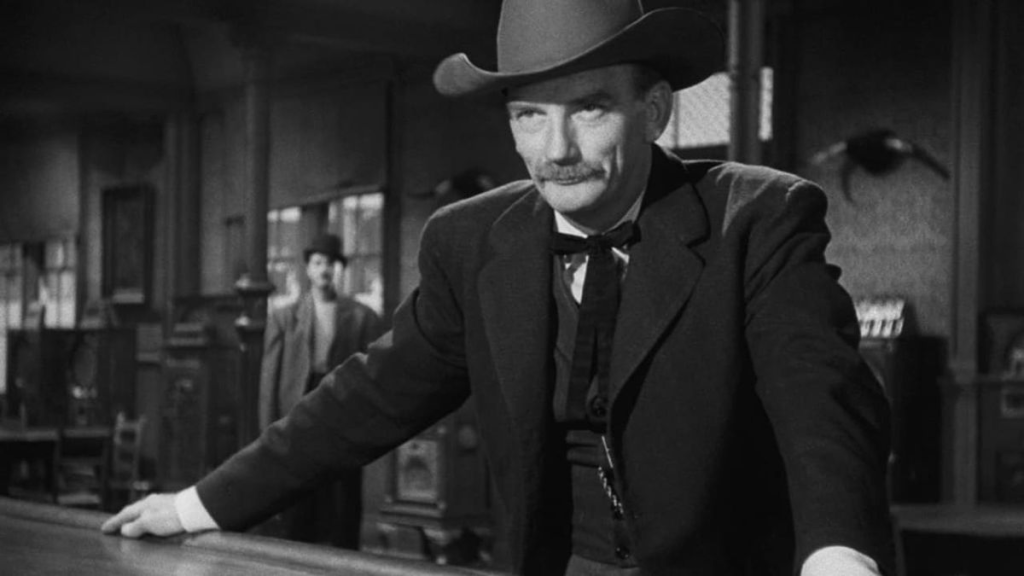
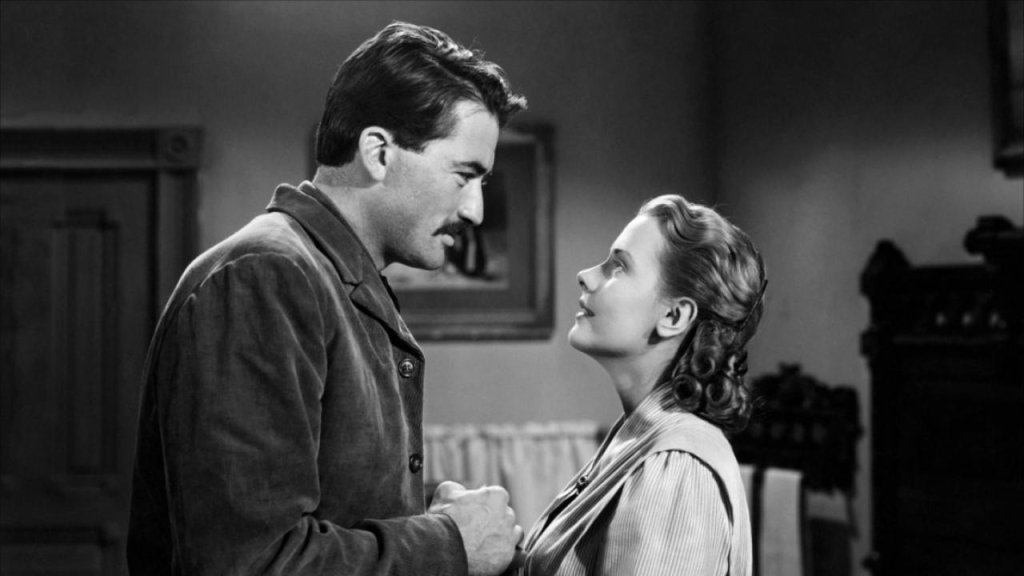
Written by William Bowers and William Sellers based on a story by the noir-experienced director Andre de Toth, the plot centers on world-weary gunhand Jimmy Ringo (Gregory Peck). He’s lived a life of violence that he can’t seem to escape. Every town he visits seems to include either a young “squirt” who wants to become the man who outdraws the legendary Jimmy Ringo, or, a vengeful relative of one of the many men he’s killed. But what Ringo wants is to retreat into a peaceful, domestic world by reuniting with his ex-lover Peggy Walsh (Helen Wescott) and their young son (B.G. Morgan). Ringo travels to a small town to reunite with his estranged family, where he camps out at a bar watched over by two other figures from his past, a chatty bartender who seems enchanted by Ringo’s exploits (Karl Malden) and an old running buddy who has gone straight and become a Marshall (Millard Mitchell). As Ringo waits and waits on Peggy’s decision, a crowd grows outside the bar, observing him like a circus animal. And as ever, men with guns are on his trail.

There are some action sequences in this film, but the energy here comes mainly from the excruciation of waiting, much like in another classic western of the period, 3:10 to Yuma (The original, not the disappointing 2007 remake). As Ringo’s penitent wait goes on and danger closes in, the viewer is increasingly, nervously, riveted. And like many of the best noirs, the movie dangles hope for redemption in front of the audience while undermining it with a cynical undercurrent of inevitable doom. The Gunfighter is about the isolating effects of living a violent life, which Arthur C. Miller, one of the most garlanded cinematographers of the period, conveys artfully through deep focus shots in interior settings (like the one at the top of this post) and shadowy wide screen shots in the desolate outdoors.

Director Henry King never quite ascended into the pantheon of all-time great directors, but he was a very good one for a very long time. King was an effective storyteller in multiple genres. And he particularly knew how to make the best use of Peck, whom he directed half a dozen times. As for the star himself, this is one of his greatest performances. He is cold and tough at one moment, vulnerable and warm the next, without making the transitions seem affected. And he makes the audience root for a man who is, let’s face it, a serial killer, even if he never shoots an unarmed man. Peck is well-supported by the rest of the cast, particularly Mitchell and Wescott in the biggest supporting roles (credit to King here too).

This remarkable film includes a few light moments, but an air of sadness prevails. As desperately as Jimmy Ringo wants to escape the life his choices have created, a line of other men desperately want it for themselves. Sometimes we can’t make good our mistakes and are equally helpless at stopping other people from making the same ones. That bleak view of human existence was central to film noir, and gives this noirish western enormous psychic weight

p.s. Intriguing historical note: different sources says that John Wayne either turned down the lead role and regretted it, or was denied the role and resented it. In any event, late in his life he visited quite similar dramatic territory in The Shootist.

p.p.s. William Bowers later wrote a hilarious spoof of the Western genre, which I recommend: Support Your Local Sheriff.

Categories
Drama Mystery/Noir

Scandal Sheet

The directors whose work I have praised repeatedly on this site are all household names except for Phil Karlson. He rarely got decent budgets and spent much of his career at studios and in positions that weren’t worthy of his talent. Yet he managed over the years to make some highly compelling movies that conveyed his bleak and brutal perspective on the human condition. I have recommended two of his collaborations with producer Edward Small that starred John Payne Kansas City Confidential and 99 River Street. Let me add to those a recommendation of another Karlson-Small collaboration, this one with a bigger budget and a bigger star than the director usually had to hand: The 1952 noir Scandal Sheet.

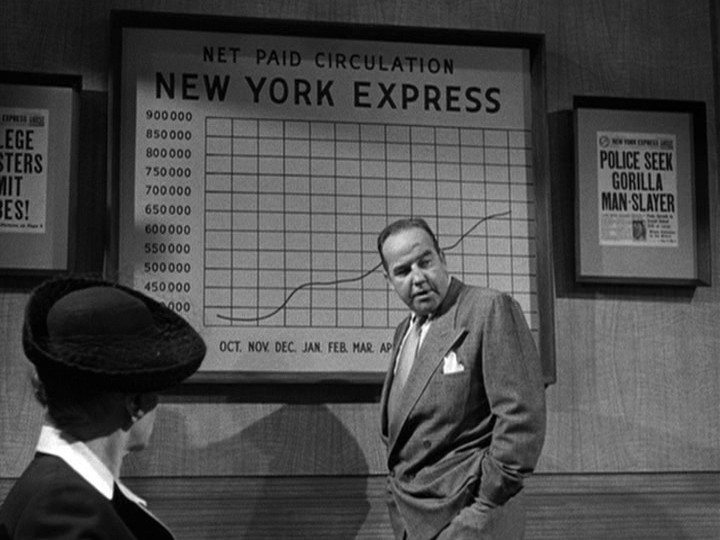
The plot: Circulation at the New York Express has been soaring since an editor named Mark Chapman (or is he???) converted it into a tabloid full of sensationalist stories, ruffling the feathers of the bluenoses on the board as well as idealistic features writer Julie Allison (Donna Reed). Said editor (Broderick Crawford) is aided in his work by ace newshound Steve McCleary (John Derek), who digs up dirt for his mentor while failing to successfully romance June. But Chapman’s world is upended when a woman from his past re-appears, and he embarks on a series of desperate, violent, actions that McCleary begins to investigate. Noirish themes of moral compromise and inevitable doom ensue.

This film echoes the summit of Crawford’s career, namely the 1949 Best Picture winner All The King’s Men. Again Crawford effectively portrays a domineering yet vulnerable man and again he has a father-son style relationship with a character played by John Derek, although in this case Derek is his mentee rather than literally his son, and the relationship is much warmer. Indeed, the art in Crawford’s performance is how he simultaneously conveys his rising panic that his secrets could come out and his admiration and pride that his protégé is so effectively hunting him down. The other echo of ATKM is the magnificent Burnett Guffey’s cinematography, which combines the look of urban realism (despite this being filmed on the Columbia back lot and using some stock shots of New York City) with a dash of film noir-style camerawork. The opening shot of this movie, as the camera moves over a cluster of fire escapes filled with onlookers and a murder witness, is a clinic by Karlson and Guffey on how to pull an audience in the particular world of a movie right from the first.

John Derek was irresistible to women, but was not a particularly good actor. The quality supporting work here comes instead from Reed, who shows she could do more than be the wholesome All-American mom who serves milk and cookies. Henry O’Neil is also affecting as an unemployed, alcoholic, Pulitzer Prize winning journalist looking for a way back.

Karlson’s serves up a bracing dose of cynicism leavened with glimmers of hope, and manages to maintain tension throughout the story despite the fact that under the conventions of noir, the ending is never really in doubt. The only person who didn’t like Karlson’s adaptation of the 1944 novel The Dark Page was Samuel Fuller, who wrote it. Perhaps it was just vanity that made Fuller resent anyone other than himself adapting his own work, but movie fans were the winner because it inspired him to start making his own films, including classics like Pickup on South Street (my recommendation here).

p.s. Sadly, Crawford’s alcohol addiction kept him from building on his cinematic successes of the late 1940s and early 1950s. But he did have a late-career revival on television, including starring on Highway Patrol and, bizarrely enough, hosting an early episode of Saturday Night Live.

Categories
Drama Horror/Suspense

The Man Who Laughs

Blu-ray Review: THE MAN WHO LAUGHS (1928) - cinematic randomness

A woman has seen my face, and yet may love me.

When people recall Universal Studio’s famous run of monster movies, they generally think of the fine films that began appearing in the 1930s (e.g., Dracula, Frankenstein, et al). But those talkies are actually the second generation of what producer Carl Laemmle began in the silent era. The opulent Lon Chaney classics The Hunchback of Notre Dame and The Phantom of the Opera did huge box office telling the stories of disfigured, lovestruck, scary, yet also sympathetic monsters. Laemmle wanted to return to the well one more time with a different Victor Hugo novel as source material. Chaney was tied up at MGM, so Laemmle recruited a German actor (Conrad Veidt) and director (Paul Leni) steeped in that nation’s expressionist film tradition to create a unique treasure of the genre: The Man Who Laughs.

The plot of this 1928 gem: When an English nobleman refuses to submit to the King, he is put to death and his only child, Gwynplaine, is turned over to a horrific gypsy clan (For which Victor Hugo created the term “Comprachicos”) that mutilates the young to turn them into profitable circus freaks. Gwynplaine’s face is carved into a permanent, ghastly, grin and he is abandoned. As he walks alone on a wintry night (This is my favorite expressionist shot in the movie, see below) he discovers a blind baby girl in the arms of her dead mother. Miraculously, the starving and half-frozen children are taken in by a kindly travelling entertainer named Ursus (Cesare Gravina). Grown to adulthood, the lovely, gentle, Dea (Mary Philbin) and Gwynplaine (Veidt) perform in Ursus’ plays, in which Gwynplaine becomes famous as “The Man Who Laughs”. The two also fall in love, but Gwynplaine cannot believe that Dea would want to marry him if she could see his bizarre visage. Meanwhile, a royal advisor (Brandon Hurst in a wonderfully wicked performance) finds out that Gwynplaine is the last surviving heir of a Lord, which presents threats and possibilities for court intrigue, particularly regarding a lustful, wayward Duchess (Olga Baclanova).

the man who laughs

This is a visually stunning film, because of the haunted camerawork of Gilbert Warrenton, the art direction of Charles Hall, Thomas O’Neill, and Joseph Wright, the expressionist sensibilities of Leni, Jack Pierce’s make-up wizardry, and Laemmle’s willingness to open the checkbook for sets, props, and a cast of thousands just as did on his Lon Chaney films. Released at the end of the silent era, this film could easily have been a talkie, except that with his prosthetic teeth and grin, Veidt could not speak clearly. The filmmakers compromised by adding a synched soundtrack with rich music, some sound effects, and a love song to accompany the visuals.

As in another of my recommendations, The Cabinet of Dr. Caligari, Conrad Veidt demonstrates that a great actor does not need words to convey a range of emotions. But that understates his achievement, because Veidt makes the audience feel Gwynplaine’s sadness, love, fear, and self-hatred despite having only half of his face available to him. Of many good performances in the film, many of them delivered by veterans of the Lon Chaney films, the other that stands out for me is Olga Baclanova’s. Her role as a sexually assertive aristo is a reminder that prior to the Hayes Code and the rise of domestic dramas after World War II, movies dealt with women’s sexuality far more candidly than they did for decades afterwards.

A couple of the plot developments aren’t motivated quite convincingly, but J. Grubb Alexander’s adaptation of Hugo’s novel more than makes up for it with its humanity. This is particularly true in a heartrending scene in which the circus performers go to extraordinary lengths to try to convince Dea that Gwyneplaine is still near her when in fact he is imprisoned.

I will close by sharing two other wonderful things to know about The Man Who Laughs. First, it has been beautifully restored. Second, it is in the public domain and you can watch it for free right here.

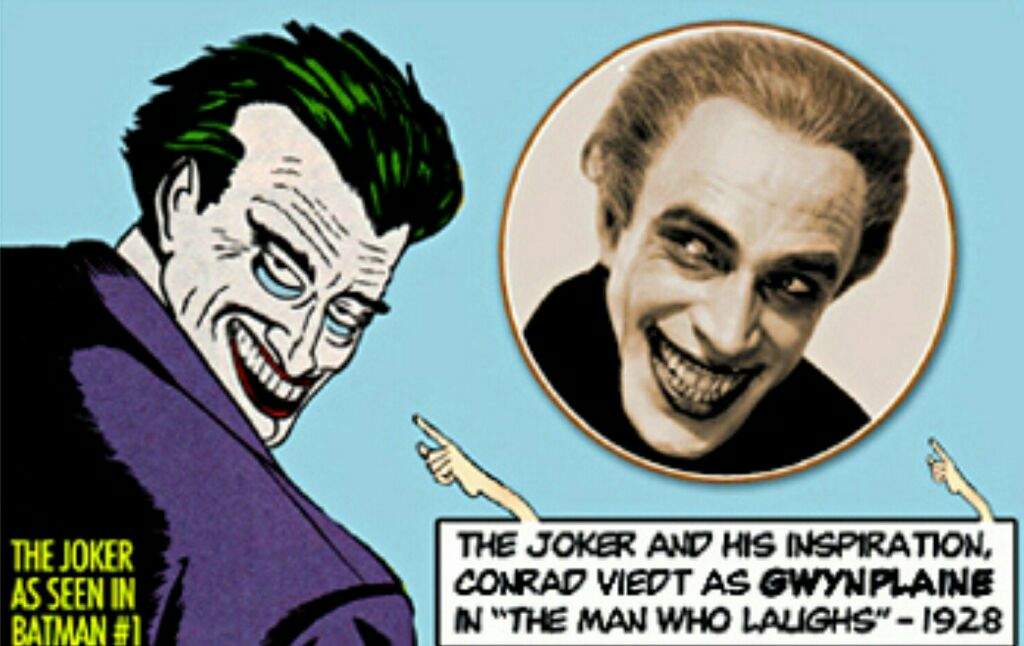
p.s. One person who took inspiration from this movie was Bob Kane, creator of Batman.

user uploaded image

p.p.s. I wonder if when this film was shown in Britain in 1928, the audience laughed at one character’s expressed outrage at the thought of the House of Lords admitting a clown.

Categories
Drama Mystery/Noir

Sweet Smell of Success

Many films deservedly flop at the box office because they simply aren’t any good. But a subset of gems meet the same fate because they are too far ahead of their time, violate audience expectations, or both. On the honorable list of the highest quality box office failures of all time, an unforgettable 1957 movie has a strong argument for top slot: Sweet Smell of Success.

The plot: J. J. Hunsecker (Burt Lancaster) is an all powerful, Walter Winchell-esque columnist who can make or destroy lives and careers at his whim. Every Big Apple press agent wants Hunsecker to boost their clients and spread their gossip, none moreso than the amoral, ambitious Sidney Falco (Tony Curtis). But J. J. refuses to carry Falco’s items unless he breaks up the romantic relationship between a clean cut musician (Martin Milner) and J.J.’s sheltered, brow-beaten, younger sister Susan (Susan Harrison). When the young lovers prove determined to stay together, J.J. and Sidney realize that even more ruthless actions will be needed. This comes naturally to both of them, though only Sidney has the self-knowledge to admit it to himself.

sweet-smell-of-success-movie-seven - Vague Visages

Alexander Mackendrick, known for classic Ealing Studio comedies like The Man in the White Suit seems on paper to have been a bizarre directorial choice. But he triumphed with this unfunny, un-British, material including persuading his tempestuous movie star-producer (Lancaster) that the film should end with a confrontation not between the male leads, but between J.J. and his sister Susan, the one person J.J. cared about enough to be damaged by. Mackendrick also cleverly smeared Vaseline on Lancaster’s glasses to prevent him from focusing, giving the actor a terrifying, wall-eyed stare. Lancaster was furious at Mackendrick for the film’s poor box office performance and refused to work with him again, which may have contributed to the rapid decline of the fine director’s career after Sweet Smell of Success. But at least Mackendrick went out on top with his work here.

Mackendrick also had input into the wood-alcohol cocktail script, which was mainly the work of Ernest Lehman and Clifford Odets. It’s a endlessly quotable work of art in itself; even without the actors’ fine delivery the lines would be brutally effective. The plotting is equally so, most particularly the hard-to-watch scene in which Sidney pimps out a cocktail waitress who needs a favor and becomes an bargaining chip in his dirty game.

Josh Olson Presents SWEET SMELL OF SUCCESS - American Cinematheque

Lancaster is effectively malicious here, both in his dealings with Curtis and also with Harrison as his cringing sister (if Sweet Smell of Success has a weakness, it’s that the relationship between Milner and Harrison is the least interesting one in the movie). But Curtis, viewed at the time as a lightweight pretty boy, is a revelation. In his walk, his physical deference to Lancaster, his furtive looks, his desperate patter, and his surface smoothness over underlying panic, he creates one of cinema’s indelible characters. Grasping ambition has rarely been so vividly captured by a movie performer. Lancaster said that Curtis deserved an Oscar for his performance, but the Academy didn’t even grant him a nomination. More fool them.

There is yet more to praise! Elmer Bernstein contributes an energetic jazz score and the Chico Hamilton Quintet not only sound fantastic in their scenes, but also effectively cover over the fact that Milner couldn’t play guitar at all. But even more than the superb music, this movie will always be remembered for its look.

Picking a favorite cinematographer is tough for any film buff, but for me it’s James Wong Howe, in significant part because New York City has never been shot with such luminous darkness as in Sweet Smell of Success. Howe’s shots crackle with the energy of bustling, anonymous, humanity and bring alive the combined menace and thrill that arrives when night falls on a great city. Howe’s photography here is a genius-level blend of the stylized look of film noir and the more realistic urban photography of such films as The Naked City. Howe and Mackendrick also uses camera positioning expertly to convey character and relationships, for example by using low shots to make the massive Lancaster look even more intimidating or coming in close at just the point when someone sells out morally so that you can see it on their face and right down into their soul (presuming they have one).

Sweet Smell of Success | The Soul of the Plot

Why did such a tremendous work of cinematic art not find an audience? After the financial success of the prior year’s Trapeze, which had Lancaster and Curtis swinging through the air in tights (and screen siren Gina Lollabrigida swinging between them), their fans were expecting a chance to swoon again at their gorgeous heroes. Instead, they got a couple of throughgoing bastards in suits in a dialogue-driven story. Tony Curtis’ female fans haunted the set hoping for a chance to glimpse their idol and can’t have been pleased to see him play a character who treats women like garbage. The unremitting cynicism of the movie may also have turned audiences off in 1957, coming a few years after the post-war film noir boom had faded. In the decades that followed, the magnificence of this movie — including the against-type performances of Lancaster and even moreso Curtis — became widely appreciated, including by inclusion in the National Film Registry of the Library of Congress.

Instead of the trailer, I will close by posting this “three reasons” promotional film put out by Criterion Collection when they wisely reissued a remastered edition of Sweet Smell of Success. Even at a single minute long, it makes clear why you simply must see this classic movie.