Categories
Drama Mystery/Noir

Boomerang!

The duty of the prosecutor is to seek justice, not merely to convict.

1947’s Boomerang!, based on a real-life murder case that was never solved, stands out among Hollywood’s many courtroom dramas due to its excellent acting, unusual plot structure and creative storytelling style.

The crime that provides the basis for the movie occurred in Bridgeport, Connecticut in 1924, but because the town refused to allow Boomerang! to be filmed there, nearby Stamford was used instead. The basic facts of the original case are all present in the film. A priest is publicly executed by a gunshot to the head and the killer escapes before shocked witnesses can react. A manhunt and tremendous pressure on the police and local politicians ensue. Eventually the police arrest a drifter, a war veteran familiar with firearms and in possession of a .32 caliber handgun such as was used in the murder. He initially asserts his innocence but confesses to the crime after an extended pre-Miranda Era grilling by police detectives. The pressure is on for a quick conviction and sentencing, but the state’s attorney (in real life, future Attorney General of the United States Homer Cummings) begins to doubt the guilt of the accused.

The film is an early effort of Elia Kazan, and shows the flowering inventiveness of a young filmmaker on his way to a glittering career. Montage sequences are skillfully employed both to move the story along and also to provide local color. We don’t just see the usual newspaper headlines “Murder Suspect Arrested!” racing across the screen. Instead the montages also cut between little moments: Woman gossiping about the crime on the back stoop, men who vaguely match the description of the killer being arrested by police, ordinary people eyeing each other suspiciously on the street. Combined with shooting on location, these sequences do much to deepen the film’s realistic style.

Richard Murphy’s script, based on Fulton Oursler’s Reader’s Digest article about the real case, adds some elements that are uniquely suspenseful. Through an early scene with the priest followed by some meaningful closeups later, viewers are signaled about the true identity of the murderer. Thus, unlike in films where the audience is on the edge of their seats wondering if someone is guilty, the tension is focused instead on whether mob pressure will result in the conviction of an innocent man. Further, by inventing context about local machine politics, including giving the defendant an attorney who wants him to be convicted, the script shifts attention away from what will happen when the case is tried and centers its conflict on the morality of one character: When absolutely everyone is rooting for a conviction and the consequences of not securing it could be personally disastrous, what should a state’s attorney do when he thinks the police have the wrong man?

Dana Andrews was born to play characters like the state’s attorney, and this is one of his best roles. When he meets the accused (Arthur Kennedy, very good as usual) in jail, he expects a perfunctory post-confession meeting. But when he begins to learn the other side of his story, the doubt and sympathy subtly and irresistibly grow on Andrews’ face. He was so good at calibrating his reactions that you could imagine everyone in the audience thinking they were the one person who noticed that something was roiling beneath the surface polish. Kazan was of the method school and wanted more histrionics from the naturalistic Andrews, which goes to show that even A-list directors are wrong some of the time.

An actor more to Kazan’s liking, Lee J. Cobb, makes a big impression here as a gruff, tough yet ethical police detective. There are a few scenes when Kazan lets the camera linger on him for a few moments after the dialogue has ended, and each time Cobb gives some look or non-verbal gesture that nicely conveys his thoughts and feelings. Jane Wyatt, as Andrews’ wife, has the right touch in the domestic scenes: They are absolutely credible as a loving, long-married couple. Ed Begley is also compelling as a slimy local businessman with a selfish interest in a quick conviction, and Karl Malden makes a good cop, just as he would again with Andrews in Where the Sidewalk Ends (Recommendation here).

The last act of the film, which takes place in a packed courtroom, shows how a superstar can dominate the screen (if you want a similar, more recent example, check out Paul Newman’s courtroom closing argument in The Verdict). Standing center stage and looking devastating in a natty dark suit (WHY WHY WHY did American men ever stop dressing this way?), Andrews has 95% of the dialogue, with the other actors mainly being window dressing. It could have been stagy, but Andrews sells it with invincible credibility, giving the audience an exciting and satisfying wrap-up of every loose end in the story.

Categories
British Drama

House of Cards

Francis Urquhart - Wikipedia

After a gold-plated bollocking by Margaret Thatcher, political advisor Michael Dobbs had more than a few drinks and scribbled down two letters: F.U.. That experience planted the seeds of what became his acclaimed political novel about vile British politician Francis Urquhart, which was later adapted by BBC television: 1990’s House of Cards.

Andrew Davies’ scintillating script makes many changes to Dobb’s novel, but the structure of the plot is similar: Thatcher is gone and the resulting leadership fight is won by the well-meaning but ineffectual Henry Collingridge (David Lyon). Our guide to these events is Chief Whip Francis Urquhart (Ian Richardson, who frequently speaks directly to the audience with seductive effect). Promised a cabinet post, F.U. is enraged when he is not promoted. He decides to destroy Collingridge by any means necessary, and “puts a bit of stick about” with a vengeance. His devious plan pays off, spurring a new leadership fight, but this time around, with the encouragement of his ambitious and equally ruthless wife, he realizes that the top job is within his own grasp.

BBC hit it for six on this series, with inspired casting, acting, direction and production. Despite a 3 1/2 hour running time it’s easy to gobble up House of Cards in one or two sittings.

Bina007 Movie Reviews: HOUSE OF CARDS (UK) - part three

Dobbs worked for Thatcher, and therefore clearly didn’t have a problem with strong women. That is reflected in multiple complex, powerful female characters in the story. Susannah Harker is very good as Mattie Storin, an ambitious journalist on a Telegraph-like newspaper (which is owned by a Murdoch parody well-played by Kenny Ireland). Storin is manipulated by Urquhart and manipulates him back, struggling with one hell of a father complex along the way. Diane Fletcher is even better as Urquhart’s wife Elizabeth, played less so as a Lady MacBeth than as an equal partner in crime. I also liked Alphonsia Emmanuel (known to American audiences mainly for another of my recommendations, Peter’s Friends) as the clever-in-work-but-foolish-in-love assistant to the cocaine-addicted ex-footballer who runs the political party’s publicity operation (Miles Anderson, in a believable and sympathetic performance).

But the heart of this movie is Ian Richardson, whose work I have praised many times (see for example here, here, here and here). You could almost call House of Cards “Dracula goes to Westminster” for he gives a vampiric performance mixing surface charm and urbanity with a bloodthirsty, remorseless drive for dominance. Many people who watched this mini-series on BBC wondered how they ended up rooting at times for such an awful person; that is the genius of Richardson at work.

Categories
British Drama Mystery/Noir

The Offence

The James Bond films made Sean Connery an international superstar, but presented him few challenges as an actor. In the midst of Bondmania, desperate to avoid typecasting and to take on more substantial roles, Connery began collaborating with Director Sidney Lumet. This resulted in one financially successful and entertaining film (The Anderson Tapes), but more importantly led to Connery turning in two critically-praised, Oscar-worthy performances that hardly anyone saw. The first was one of my recommendations, The Hill. The second gets roses from me too: The Offence.

The back story of this far-too-rarely-seen 1972 movie reveals much of Connery’s psychology at the time, as well as his star power. He had walked away in disgust from the Bond enterprise, and his replacement (George Lazenby, not as bad an actor as reputed but also no Connery) had not had the same box office draw. United Artists was so desperate for their superstar’s return to Bondage that they offered him whatever he wanted. He could have insisted on the world’s biggest paycheck, but instead he demanded that United Artist support two low-budget art house films! One was to be a Connery-directed adaptation of Macbeth, which would have been a Scottish treat and was unfortunately never made. The other was The Offence, which everybody concerned made for art’s sake because they knew there was no way in the world this film would garner even 1% of the box office receipts of the Bond films. The modestly-paid cast and crew worked like dogs to complete the entire shoot in less than a month (Connery himself allegedly put in up to 20 hours a day). The resulting labor of love is a shattering cinematic experience.

The plot centers on disillusioned, angry and unstable Detective Sergeant Johnson (Connery). In the visually distorted, almost dissociative opening sequence that reflects the tortured workings of his mind, the audience sees that Johnson has just beaten a suspected child molester. He snaps out of his rage and realizes what he has done, but it’s too late. The suspect is being taken to hospital and may well die. We then learn the background: A monster has been victimizing little girls and getting away with it time and again despite the efforts of the police. Another girl is kidnapped and raped, but ultimately found by DS Johnson. But rather than regard him as a rescuer, she reacts in terror to him, leading something inside him to snap. The smug, posh suspect who is eventually brought in gets under Johnson’s skin even more, causing him to lose control, although we do not learn the reasons why until the film’s devastating final act.

After this opening, the movie then turns into a three-act play, with each act being a two-hander (This staginess is the film’s only flaw; given more time and money I suspect Lumet could have escaped the story’s playhouse origins as he did in other films adapted from the stage). First is Connery and his long-suffering wife (Vivien Merchant), then Connery and the investigating senior officer (Trevor Howard), and finally Connery with the suspect (Ian Bannen).

The acting in these three scenes is a revelation. Vivien Merchant absorbs Connery’s brutality but is unable to reach her husband, making him even more rageful but also more pathetic. In a scene of fewer than 15 minutes the two actors let the viewer grasp everything about the long agonies of this unhappily married couple and how they have disappointed and torn at each other over the years. The scene with Howard is almost as good, but is topped by the astounding concluding act with Ian Bannen (who was also brilliant alongside Connery in The Hill). Bannen and Connery play off each other magnificently in a cat-and-mouse game during which each experiences fear of, hatred for and yet also some identification with the other.

Categories
Action/Adventure Drama

The Untouchables

The Untouchables: A Search for Period Flavor - The American ...

Many classic TV shows have been made into dreadful movies, but Brian De Palma came up aces in 1987 when he made The Untouchables.

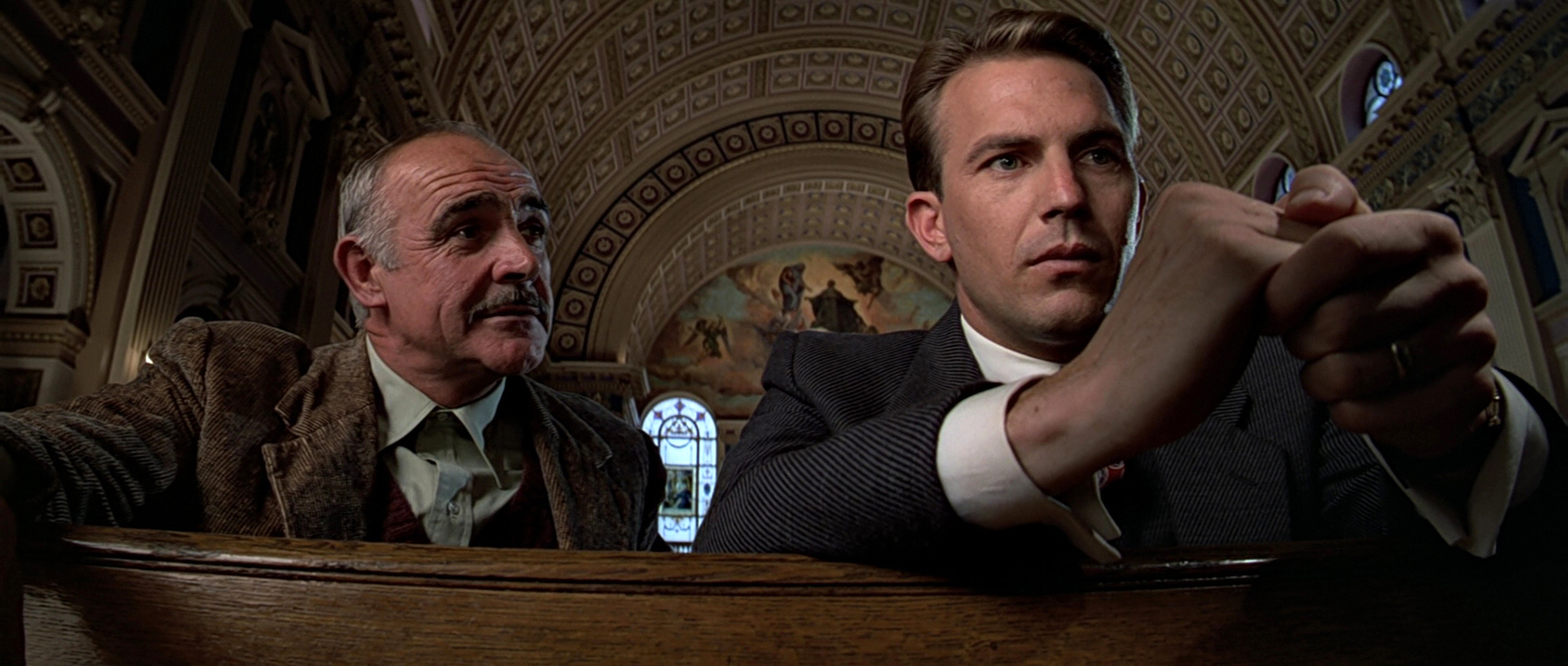
The plot: Naive treasury agent Elliot Ness (Kevin Costner) comes to Prohibition-era Chicago to do battle with bootlegger, murderer and king of the gangsters Al Capone (Robert De Niro). Realizing that the police and politicians are all corrupted by Capone, Ness assembles his own team of “untouchable” agents who can’t be bought. His squad is anchored by a cynical, over-the-hill beat cop named Jim Malone (Sean Connery), who teaches him how the game is played in The Windy City. The two of them and their fellow untouchables embark on an epic confrontation with powerful, violent mobsters and a legal system that is rotten from top to bottom.

The key theme of the film is voiced by Connery, in one of the many scenes where he virtually acts the bland Costner right off the screen: What are you prepared to do? The basic tension of David Mamet’s crackerjack script derives from the fact that the good guys can’t win without breaking the rules they have sworn to uphold. This adds moral weight to a story that is also packed with thrilling action sequences and powerful dramatic moments.

De Palma often echoes classic films in his movies, and The Untouchables is no exception. A spectacularly executed shoot-out sequence in Union Station is an homage to the equally brilliant Odessa Steps sequence in Battleship Potemkin. Although I don’t know for sure, I believe the first scene of the movie, in which a terrified barber reacts to having nicked Capone’s face while shaving him, is an echo of one of the opening scenes of another of my recommendations, The Chase. De Palma makes these allusions is such a way that you don’t have to get them to enjoy the film, but if you do it’s even more fun.

This was a big budget Hollywood film and it shows in every scene. The set design and art direction are darbs, and the period cars, clothes and architecture are the cat’s meow. Producer Art Linson is a Chicago native, and clearly knew where to spend money to bring the Prohibition Era alive. To top it all off, Ennio Morricone contributes one of the most memorable and evocative scores of the 1980s.

Other than Costner, who is painfully weak here, the entire cast explodes. But even in that field, Connery and De Niro tower over everyone with powerhouse performances. Capone has been portrayed many times on film, but never in such a scary fashion. In De Niro’s hands, he is a man who can go from mirth and charm to murderous rage with no warning, and the viewer fully appreciates why all of his underlings tiptoe around him.

Connery, who won a long-overdue Oscar for playing Malone, also tears up the screen. His Malone is world-weary and tough yet also capable of wit and even a sort of gentleness (His big brother-little brother relationship to Andy Garcia’s rookie cop is perfectly played by the two actors). Because he became famous playing James Bond, it took Connery a long time to convince people that he really is a fine actor. I have commended his strong performances in my recommendations many times, including in The Hill, The Offence, and Outland. He triumphs again in The Untouchables, one of many reasons to see this near-perfect update of classic cops-versus-gangsters television shows and movies.

Categories
Action/Adventure British Drama

Callan: The Richmond Files

Many Americans know Edward Woodward only as The Equalizer from television, but his career started long before that. Woodward was an extraordinarily gifted actor who was equally comfortable with classic Shakespeare plays, light comedies and grim dramas. Unlike some stage-trained actors, his dramatic skills didn’t wane when he made the move first to television and then to the movies. Beyond all that, he was even an outstanding singer! (Check him out on this Morecambe & Wise clip, he starts crooning about two minutes in and he’s bloody marvelous).

Woodward became a star playing David Callan, a tough, moody and smart British espionage agent from a working class background who tussled with his plummy superiors as often as he did his Soviet counterparts. I recommend here The Richmond Files, the three-part conclusion to the Callan television series.The mood of the series was set by an evocative set of images and guitar notes:

The glum tone and stark themes of Callan put it squarely in the cynical Le Carre camp of British spy stories, which funnily enough co-existed easily in the 1960s with James Bond-mania. The writing was consistently strong (more so than on the Callan-inspired TV series The Equalizer, which was made in America decades later) and the acting and direction were effulgent. The budget was clearly not large but this was well-used to convey the show’s point of view: Callan and his colleagues were doing dirty, unglamourous work. It made sense that the entire suite of offices of “The Section” looked like they cost less than M’s desk.

Categories
Action/Adventure Drama

Breaker Morant

The Clear Eyed Cynicism of Breaker Morant | The Curb

Arguably the best movie of Australia’s New Wave is 1980’s Breaker Morant. As the title character in Director Bruce Beresford’s movie, Woodward delivers a performance with such psychic weight and that it will stay in your mind and heart long afterwards.

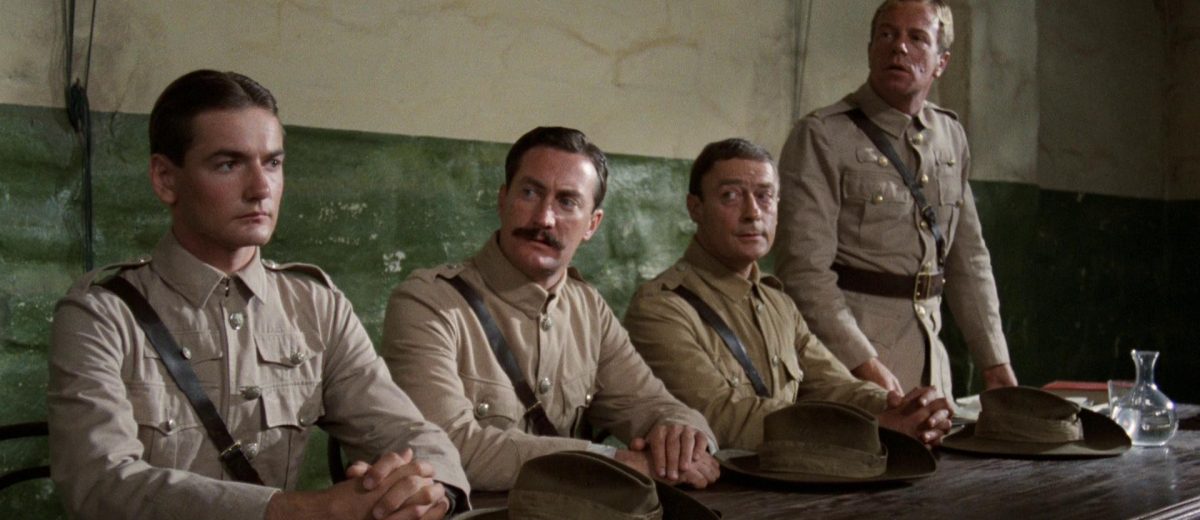
The story takes place in the waning days of the Boer War, where the battered but still undefeated Dutch immigrant guerrillas continue to resist a much larger British force. To face down the remaining renegades and their ungentlemanly military tactics, the British create an unconventional counter-insurgency force called the Bushveldt Carbineers. The Carbineers are mainly colonials, and include the poetry-writing, cynical and heroic Lt. Morant (Woodward), the free-spirited and lusty Lt. Hancock (Bryan Brown), and idealistic junior officer George Witton, who believes in the goodness of The Empire (Lewis Fitz-Gerald). As the film opens, these three Australians are being court-martialled for shooting Boer prisoners. That they committed the act is never in doubt, but they claim they were following orders from the British high command. Meanwhile, because the British see a conviction as essential for facilitating a peace settlement, they deny complicity and stack the proceedings against the defendants in every way possible.

This is the movie that brought Bruce Beresford to the attention of Hollywood, where he later directed Tender Mercies and Driving Miss Daisy. There are a few overly theatrical moments in the film, but overall this is highly accomplished directorial work by Beresford. He also contributed to the superb screenplay, along with Kenneth Ross (who wrote the play), Jonathan Hardy and David Stephens.

Under Beresford’s watchful eye, the entire cast is riveting, including the three actors playing the accused and Jack Thompson as their initially unpromising but ultimately crafty defense counsel. The smaller parts are also well-turned, with not a weak performance anywhere.

Woodward, though British by birth, had a long lasting affinity for Australia and could claim many fans there (including from his music hall tours as a singer) before he made this film. He deservedly expanded that fan base with his bravura performance in Breaker Morant, not just in Australia but world wide. His acting here recalls Michael Kitchen’s style in that he is the most magnetic when he is not speaking. Sadness, pain and well-earned disillusionment are visible in his gestures, his eyes, and his weather-beaten mien. Foreknowledge of doom hangs over his every scene in this film.

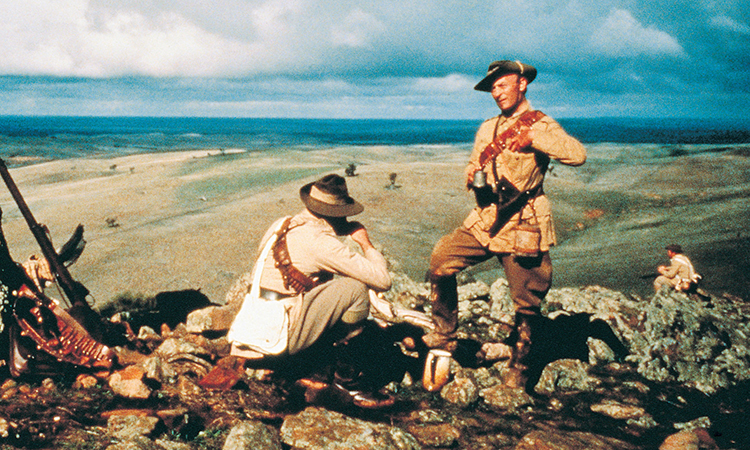
Donald McAlpine’s cinematography, with Australia standing in for South Africa, is also a major asset. Shooting in lovely physical terrain, he did everything he could with lenses, filters and exposures to emphasize its bleakness. Lush and colorful outdoor scenes would have otherwise contrasted too much with the downbeat tone of the story.

The film also contains intriguing historical nuggets about the Boer War, the conflict that opened the bloodiest century of military conflict in human history. The war gave us the word “commando” and the term “concentration camp”. The Carbineers were the first special forces unit to employ COIN tactics. And the court-martial portrayed actually happened, although the film is based on a book (“Scapegoats of the Empire”) which told the story entirely from the side of the accused and therefore may not be completely accurate.

Breaker Morant is a devastating, brilliant piece of cinema, a Caine Mutiny of its time. Australia cinema has clearly arrived on the world stage.

Categories
Drama Mystery/Noir

Gilda

Rita Hayworth was a big singing and dancing star of musicals in the early 1940s, but the film that made her an international sex bomb (literally) wasn’t released until 1946: Gilda.

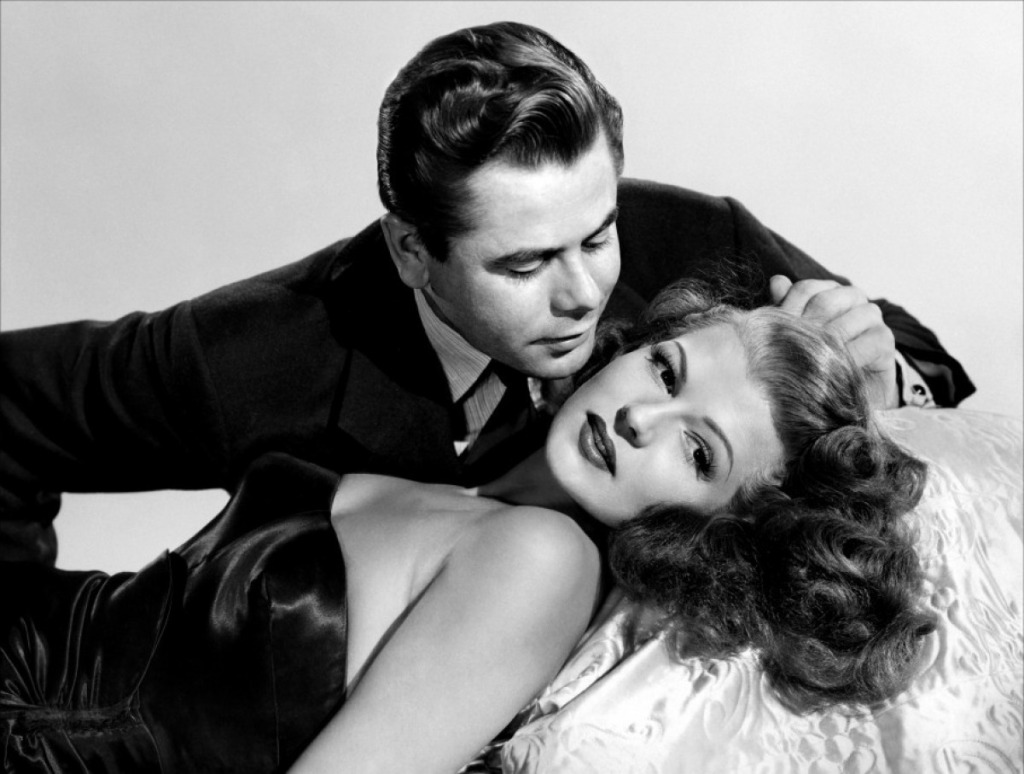
The plot, which echoes Casablanca in a number of respects, concerns a love triangle in a faraway land, in this case, Argentina. Johnny Farrell (Glenn Ford) is a cocky grifter who is on his uppers. He is saved from a mugging by a mysterious and rather menacing casino owner named Ballin Mundson (George Macready) whom he subsequently manages to talk into hiring him as an aide-de-camp. All is well for a time, though Johnny suspects that the casino is only a front for Mundson’s other, more shady, business. But before you can say cherchez la femme, their relationship changes for the worse when Mundson marries a sizzling beauty named Gilda (Hayworth), with whom Johnny has an unhappy history. Thus commences a love-hate-love relationship in which Johnny and Gilda torment each other while Ballin begins to suspect the truth about their former relationship. Meanwhile, both the police and Ballin’s criminal associates are closing in on his other lucrative but illegal line of work.

This is a star vehicle for Hayworth from the famous moment she first appears on screen with a sensual toss of her hair. She gets to sing and dance as well as act, most legendarily in her striptease style number “Put the Blame on Mame”. Countless American men (and no doubt some women) were sexually enthralled with her forever after.

I know too much about Hayworth to have such an uncomplicated reaction. I feel sorry for Margarita Cansino, the pudgy Hispanic girl and incest victim whom Hollywood turned — at the cost to her of physical and emotional pain — into Rita Hayworth. She never got to be who she really was and virtually every man in her life, starting with her father, exploited her. It’s a credit to her strength that despite understandable, significant emotional troubles she managed to always pull things together on screen throughout the 1940s and be a terrific movie star. Gilda is generally considered her finest hour, and with good reason.

Even though it’s Hayworth’s film, two other aspects of it are extremely compelling. The first is Glenn Ford. He’s kinetic on screen, a man always appraising every angle in search of some advantage. He also manages, despite not having classically handsome Hollywood-type features, to convey enough sexual attractiveness that Hayworth’s desire for him is entirely believable.

The other thing I adore about this movie is Rudolph Maté’s camerawork, which is completely arresting beginning with the opening, rising shot of those big rolling dice. I have praised him before for his work on Vampyr, but the tools of cinematography came a long way technically since that early film. And boy, does Maté take advantage. Perfect use of light and shadow, deep focus shots, close-ups at critical moments, it’s all here in the hands of a master. And thank you again UCLA Preservation team for this crystal clear, gorgeous restoration of the print.

The performances and the cinematography help make up for an uneven script, which may simply have had too many cooks. There are some lines to die for, and some sharp dialogue, but the plot structure of the last third is unnecessarily clunky in some respects and too pat in others. Still, Gilda is a very fine film noir that completely holds up almost 70 years later.

p.s. The conventional take on Bosley Crowther’s career as a NYT film reviewer is that he lost touch with modern tastes in the late 1960s (His repeated trashing of Bonnie and Clyde being the death-knell) after a long and distinguished career. But if you read his obtuse, inept review of Gilda twenty years earlier, you will see that he never really knew what he was talking about.

Categories
Drama

The Bishop’s Wife

The only people who grow old were born old to begin with.

If you were asked to recall a 1947 Christmas movie that was nominated for a best picture Oscar, you would probably come up with the famous Miracle on 34th Street. But remarkably, it was only one of two Christmas films so honored that year. The other was The Bishop’s Wife.

Anglican Bishop Henry Brougham (A miscast but appealing David Niven) is under strain as he attempts to raise money for a new cathedral. Donations are not arriving, and the wealthiest woman in town (Gladys Cooper) will only help if the building is made into a tasteless monument to her late husband. Meanwhile, since becoming an Archbishop consumed with finances and grandiose plans, Henry has been drifting apart from his long-suffering wife Julia (the ever-luminous Loretta Young). He prays to God for aid and a friendly, dashing, sharply dressed fellow arrives at his office (Who else but Cary Grant?). Calling himself Dudley, the new arrival says he is here to help, which Henry takes to mean help raising money. But Dudley spends most of his time trying to restore Julia’s happiness instead, much to Henry’s irritation.

Some films live or die on the strength of a star’s charm, and this is an example of a film living, indeed thriving, on the charm of the inimitable Grant. Director Henry Koster seems to have instructed every female member of the cast to swoon upon meeting him, and it’s utterly believable given with warmth and gentleness that the handsome Grant radiates in ever scene. Loretta Young’s devout-and-goodly performance is perfectly matched to Grant’s, as the story requires their relationship to be intimate but at the same time innocent. She was at the peak of her powers in 1947, during which she not only garnered raves for her role in the Bishop’s Wife but also won a Best Actress Oscar for The Farmer’s Daughter.

Grant and Young get strong support from the rest of cast, particularly Monty Woolley as an atheistic retired college professor who is an old friend of Julia and Henry’s. The Robert Mitchell Boy Choir are also on hand for a mellifluous number in Henry’s former and very poor church, a symbol of the simpler faith and life that he has lost.

The Bishop’s Wife rewards the eye as well as the heart, thanks to Gregg Toland being behind the camera. The town looks lovely, peaceful and Christmassy as can be. And Toland gets to be Toland: in my favorite shot in the movie (above), the characters slowly accrue at different depths away from Grant, who is making an emotional and religious connection to Henry and Julia’s little girl (played by Karolyn Grimes, who essayed a similar role in It’s a Wonderful Life).

The Bishop’s Wife is not a film for the cynical nor for those hostile to religious messages. But if the Christmas spirit ever animates your heart, you will find much to love in this extraordinarily sweet movie.

I embed below the amusing “un-trailer” of the film, featuring the three leads and absolutely, positively no spoilers.

Categories
Action/Adventure British Drama Mystery/Noir

The Spy Who Came in From the Cold

What the hell do you think spies are? Moral philosophers measuring everything they do against the word of God or Karl Marx? They’re not! They’re just a bunch of seedy, squalid bastards like me: little men, drunkards, queers, hen-pecked husbands, civil servants playing cowboys and Indians to brighten their rotten little lives.

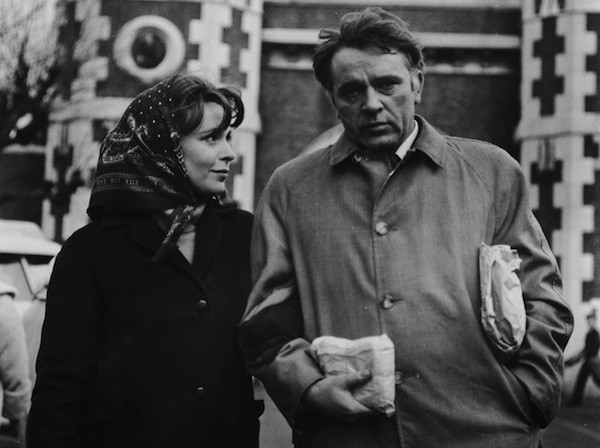
So says disillusioned British secret agent Alec Leamas (Richard Burton) in perhaps the best effort to adapt a John le Carré novel to the big screen: 1965’s The Spy Who Came in From the Cold. The serpentine plot concerns a burnt-out spook who enters a downward spiral of booze, self-hatred and lost faith after a disastrous mission in Berlin. But then it turns out that Leamas’ decline and despair is a ruse (?) play-acted at the behest of his superiors. As planned, he is recruited by the other side and ends up trying to discredit East German intelligence head Hans-Dieter Mundt (A cold, effective Peter van Eyck). Leamas undermines the ex-Nazi by feeding false (??) information to Mundt’s ambitious, Jewish deputy Fiedler (Oskar Werner, very strong here). It’s a difficult, high-risk mission, but Leamas knows that his boss back home is 100% behind him (???).

This may be the most magnificent performance in Richard Burton’s career, and will definitely please all fans of rotting charm. Drinking heavily in real life at the time, he was willing to expose his own capacity for ugliness and decay in a way that many glamorous stars of his era would not have dared to do. He exudes bone crunching hopelessness and isolation in shot after shot: Leamas alone on a park bench, alone in a bar, alone in his bed, alone chained in a cell. He’s devastated and devastating.

A 15 minute sequence of scenes in Britain is a masterclass in cinematic storytelling. It’s unsettling yet fascinating as Leamas repeatedly gets pissed and wanders through empty streets. Ultimately, he savagely beats an innocent man (Did the filmmakers cast for this part Bernard Lee — M from the flashy, unrealistic James Bond series — to make a point?). His copybook blotted, Leamas is judged “turnable” by the other side. After being released from jail, he is recruited by the Soviets in a sleazy men’s club by an unctuous businessman and a pathetic, gay procurer (Robert Hardy and Michael Hordern, respectively, terrific actors who clearly understood that there are no small roles).

The romantic aspects of the story also work well and become more important as le Carré’s ingenious plot unfolds. Claire Bloom is credible and sympathetic as the British would-be communist, who as Leamas puts it believes “in free love, the only kind I could afford at the time”. Leamas’ lacerating disdain for her naiveté reveals the depths of his own self-contempt: She may be immature in her politics but who after all is the one risking his life and doing horrible things in a struggle over the very same politics?

And Then There Were None, The Spy Who Came In from the Cold ...

Rarely has the look of a movie more perfectly captured its mood, and that’s a credit to Oswald Morris. Without any conscious intention, I think I have recommended more films shot by Morris than any other cinematographer. He was a remarkably unpretentious professional who maintained an astonishingly consistent quality in his work for 6 decades (He lived to age 98). It was a bold and brilliant choice to make this movie in black and white, which let Oswald create a washed out look that matches the bleak tone of the story. As much as the excellent acting, what stays with the viewer are Oswald’s shots of complete desolation both during Leamas’ alcoholic, putatively free, British wanderings and his time in East German captivity.

The other delight of this film is that it never condescends to the audience by over-explaining. With each double and triple cross, rather than clumsy exposition, director Martin Ritt simply gives us Burton’s face, as the mind behind it struggles frantically to make sense of the latest shift in the icy wind. A small example of the film’s understated, even at times cryptic, storytelling style is the scene where Fiedler asks for some paperwork from his underling Peters (Sam Wanamaker, memorably creepy). The seated, lame, Wanamaker extends his hand but not far enough. Rather than step forward, Fiedler waits until Peters struggles to his feet and hands it to him. Leamas chuckles derisively. The subtext which the film expects you to understand: Fiedler is the boss but as a Jew, he will never be fully respected by his German underlings. A small moment, a sly moment, a powerful moment, brought across with no comment other than Leamas’ mad laughter at Peters’ expense.

Touches like that are a key reason why The Spy who Came in from the Cold is completely engrossing. Fans of espionage films simply cannot miss this landmark movie.

p.s. If you like this movie, you might enjoy two of my other recommendations. Though not as good as this film The Deadly Affair is a solid effort to adapt le Carré’s first novel to the big screen. And the astoundingly brilliant Tinker, Tailor, Soldier, Spy is the best effort to adapt le Carré to television.

p.p.s. I also recommend Antonia Quirke’s elegiac FT essay on the battered, shattered Richard Burton and his iconic dingy overcoat.

Categories
Action/Adventure Drama Mystery/Noir

99 River Street

There are worse things than murder. You can kill a man one inch at a time.

Another of my recommendations, Kansas City Confidential, brought together Director Phil Karlson, Producer Edward Small and Actor John Payne in 1952. They re-teamed the following year to make another fine film: 99 River Street.

Payne is compelling as ultra-hard-luck Ernie Driscoll, a former boxer turned cab driver. In the opening scene, which is a pre-Raging Bull master class in how to convey the violence of boxing on film, Ernie is on the verge of becoming champion when he gets a bad break. And the bad breaks keep coming for the rest of the movie, in his marriage to his ice-cold beauty of a wife (Peggie Castle, at her best), in his friendship with a manipulative aspiring actress friend (Evelyn Keyes, on fire here), and in his battles with some ruthless jewel thieves who want to destroy him for reasons he can’t understand. His only consistent source of support is his former manager, a dispatcher at his cab company (played sympathetically by Frank Faylen, who played a cab driver in many Hollywood films and apparently got promoted).

If this film noir/gangster melodrama deserves one adjective it’s brutal. There are many scenes of physical violence, filmed with unusual realism (My favorite is Payne’s torture by and knock down drag out with a karate chopping jewel thief played by tough guy Jack Lambert). The emotional violence is even more pronounced, particularly in a long, gripping sequence in which Driscoll is played for a chump by a group of “theater people”. The tragedy of Payne’s character is that while he once was a master of his violent nature, frustrations and failures have led him to become a slave to it, preventing him from being happy in his achingly simple new life ambition of moving from hack work to becoming the owner of a filling station. Payne and Karlson are well up to the challenge of bringing across Driscoll’s emotional flaws and vulnerabilities, while at the same time making him completely credible in the many physical confrontations of the story.

The movie also gives the audience a fine bunch of criminals to root against. Brad Dexter (the guy from The Magnificent Seven whose name few people can recall) is both scary and smooth as the jewel thief who frames Payne for a terrible crime. Lambert exudes the menace that served him so well in his decades as a heavy in films and on television. Eddy Waller is even scarier in a different way as a criminal who has a kindly manner but in fact is a cold-blooded killer. The final, extended confrontation at 99 River Street of the protagonists versus the villains is thrilling and satisfying.

The only weakness of this movie is the final two minutes, a tacked on “where are they now?”-style epilogue that is too upbeat and pat given the tone and content of the rest of the film (The otherwise perfect Sideways had the same flaw). It was unlike Karlson and Small to pull a punch, but it doesn’t diminish 99 River Street as a gritty, gripping piece of cinema.