Categories
British Horror/Suspense

Masque of the Red Death

Low budget film genius Roger Corman once said the two films he was proudest of were The Intruder (a searing film about racism and civil rights which I recommended here) and the superb horror movie Masque of the Red Death.

Corman had been enchanted by Edgar Allen Poe stories since reading The Fall of the House of Usher at age 11. After directing a number of schlock black-and-white films made in 10 day shoots, he persuaded James Nicholson and Samuel Z. Arkhoff to let him do a Poe adaptation and to make it a “big budget” movie: Not only would it be in color, but he would have 15 whole days to shoot it! With his usual brilliance at spotting affordable talent, Corman cast as the lead Vincent Price, an actor who otherwise might have faded into obscurity along with his youthful good looks. The Fall of the House of Usher proved a big money maker, and an enduring cinematic collaboration was born (Corman, Price and Poe, often joined by other terrific horror actors and writers).

I have recommended the Corman-Price-Poe film Tales of Terror, which while a lot of fun is not as impressive cinematically as Masque of the Red Death. The latter was filmed in the United Kingdom because the government at the time had a film production subsidy policy, giving Corman more to work with financially than usual. The film also benefited from the cinematographer being the gifted Nicholas Roeg, one of the many soon to be famous film artists who was nurtured in the university of Roger Corman. Couple those virtues with Corman’s scrounging ability — he recycled much of the opulent set of Becket here — and you have the best looking of any of the Corman-Price-Poe films.

The plot of this 1964 release comes from the Poe story of the same name, with a subplot drawn from Poe’s Hop-Frog. The story opens in a foggy forest in Medieval Italy, where a mysterious figure cloaked in red foretells of a coming plague (His face is never seen, and I assumed his wonderfully sonorous voice was provided by the late Christopher Lee, but it turns out to be John Westbrook). Meanwhile, the rich, cruel, Satan-worshiping Prince Prospero terrorizes the peasants, and casts a lustful eye in particular on a lovely, impoverished lass named Francesca (played by Paul McCartney’s one-time beau Jane Asher). As the plague spreads through the land, Prospero’s castle fills up with both his greedy courtiers and his unwilling prisoners. Debauchery and nastiness ensue, coupled with ample surrealism and existential dread for good measure.

Corman was utterly in command of his material by this penultimate entry of his Poe cycle, and benefited from a strong script by R. Wright Campbell and the legendary Charles Beaumont (co-creator of the Twilight Zone). The almost hallucinatory ambiance of the film makes it both uniquely unnerving and a foreshadowing of the more experimental film style that would flower as the 1960s went along (including the moments when Corman strains for artiness a bit too much). As for the actors, this may be Vincent Price’s most impressive horror performance: he dominates every one of his scenes. Of the many good supporting performances, particular praise is in order for the little-known Skip Martin. As Hop-Toad, a wronged dwarf who seeks revenge, Martin conveys impressive emotional power. He had the bad luck to work in the pre-Peter Dinklage era where good parts for little people were virtually never written into films, but at least he made the most of his opportunity to shine here.

Masque of the Red Death succeeds as a horror film and also as an art house drama. Congratulations to Corman and his crew, as well of course to the magnificent Edgar Allen Poe.

Categories
Drama Mystery/Noir

The Sniper

Edward Dmytryk was a talented filmmaker whose career and life were severely damaged during Hollywood’s red scare. As one of the Hollywood Ten, he refused to testify to the House of Un-American Activities Committee and was sentenced to jail. He fled to England, where he made some high quality films including another of my recommendations, Obsession. When the Brits kicked him out he came back to the U.S. and was incarcerated. He then decided to testify against his communist associates, meaning that Hollywood was divided between those who hated him as a communist and those who hated him for naming names. However, in 1952 his career got back on track when Stanley Kramer hired him to direct The Sniper, a brooding B-picture about a serial killer that gave Dmytryk a chance to express his alienation and isolation on screen.

The story opens with psychologically disturbed veteran Eddie Miller (Arthur Franz) struggling against his impulse to gun down a woman in his neighborhood, right at the moment she is kissing her lover on the stoop. As Miller walks the streets, his chance encounters illuminate how he has felt scarred by women from childhood through his adult life, filling him with a mixture of misogyny and sexual frustration. After his efforts to seek help for his psychiatric problems are met with incompetence and indifference by the health care system, this ticking time bomb of a man is stung when a women to whom he is attracted (Marie Windsor) does not reciprocate his feelings. In a rage, he comes unraveled and goes on a fearsome, guilt-wracked hunt for the women whom he believes have wronged him.

For the period in which it was made, The Sniper was startling stuff, particularly the scenes of Miller stalking and then executing his victims. In style and structure, the film draws a good deal from the the police procedurals that became popular after the war (see my recommendations He Walked by Night and The Naked City) as well as from film noir. It also has a pronounced streak of urban alienation and rage that prefigures later films like Taxi Driver (I was not surprised to learn that Martin Scorcese admires The Sniper).

Other than Adolphe Menjou, who plays the police detective who tries to track Miller down, the cast of this low-budget picture are unknowns with unremarkable faces, which works well with the underlying message that horrors such as the film portrays have become everyday, ordinary events. Harry Brown’s script, which is based on a story by Edna and Edward Anhalt, underscores this point even more by having the city in which the crimes occur have no name. It could, implictly, be anywhere.

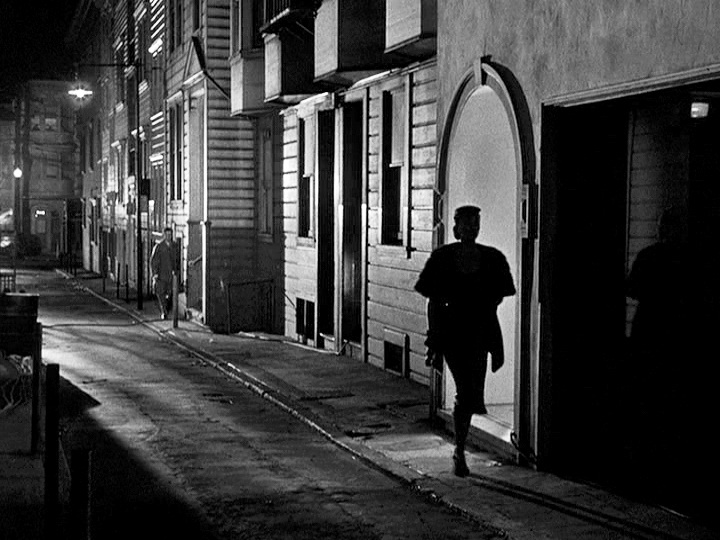
Most of the film was shot in San Francisco, which has rarely looked as moody or lonely. When Miller stalks his first victim, the shadows are surreal as is the lack of any other person on the street. Burnett Guffey, a number of whose films I have recommended here, contributes effective photography and Dmytryk worked with him to create excellent camera set ups throughout. I particularly liked the scene where Miller, who has a menial job delivering dry cleaning, is being upbraided by his boss (another women who makes him feel weak and worthless). Rather than shooting the scene in an open space, the film makers put the camera in the front of Eddie’s parked van looking back at him as he crouches in the cramped, dark space surrounded by hanging dresses. His boss on the loading deck is visible because the van’s back door is open, making her tower over him as if he were a worm under her heel.

The only significant weakness of the film is something characteristic of many Stanley Kramer productions (Judgement at Nuremberg, The Wild One, Guess Who’s Coming to Dinner): It needlessly makes some of its points with a sledgehammer. Starting a film with a printed message telling the audience how shocking and serious the subject is and including a scene where some authority-figure gives a pious speech about how society-is-to-blame are the sort of things that earned Kramer a reputation as the kind of sanctimonious and self-satisfied liberal who drives away more people from his causes than he draws in. Some of that cringeworthy stuff is on display here, and it just doesn’t work.

But let that flaw go and this tautly directed, disturbing film will get under your skin. My belief is that The Sniper is in the public domain, so I offer this link as a place where you can watch it for free.

p.s. Trivia: The bar where Eddie’s first victim sings is the Paper Doll Club, famous in real life as one of America’s first lesbian bars even though it isn’t portrayed that way in the movie.

Categories
Action/Adventure Foreign Language

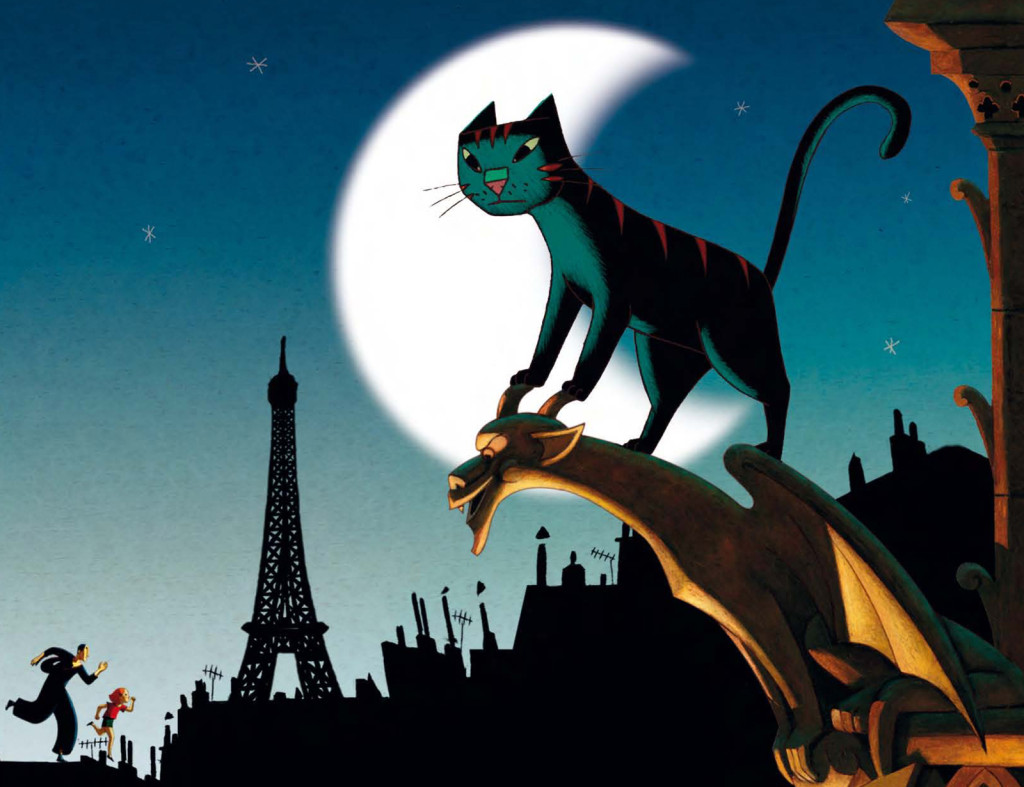
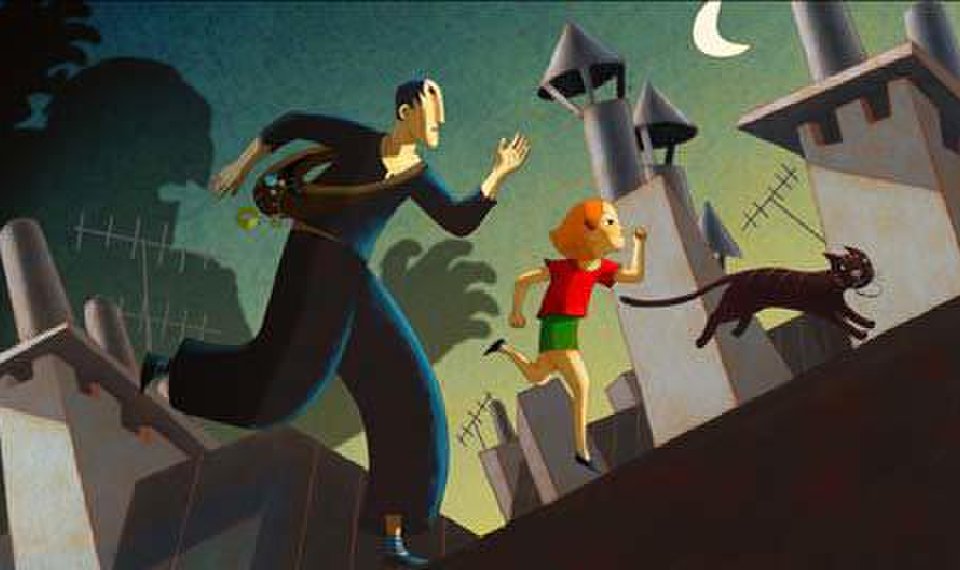
A Cat in Paris (Une Vie de Chat)

I like to recommend films for kids every now and then. Accordingly, allow me to point you to a charming 2010 Oscar-nominated French animated film originally titled Une Vie de Chat that was subsequently re-voiced using English language actors as A Cat in Paris.

The titular cat of the film is Dino, who lives a double life. By day he is the beloved pet of a little girl named Zoe. But at night he makes a daring (and amusing) journey across the neighborhood to the flat of Nico, who is a (what else?) cat burglar. The two conduct daring robberies until dawn, when Dino races back to Zoe’s bed. Zoe very much needs Dino because she has been so traumatized by the murder of her policeman father that she has lost the ability to speak. This frustrates her grieving mother Jeanne, who is a senior police detective. Jeanne is trying to track down her husband’s fearsome killer as well as the burglar who is stealing precious jewels across the city. She has no idea that the two mysteries will become interwoven. The stage is set for suspense and excitement, as well as the possibility of healing both for Zoe and Jeanne.

The snazzy, jazzy animation is somewhat impressionistic but not so much that children will be confused. Nico’s movements and figure show that he is at heart as much a cat as Dino. Through some artful drawing and script writing, Jeanne, initially seeming to be on the steely side, is revealed in a scene where she practices martial arts to have a bit of the cat in her as well, albeit hidden under emotional scar tissue. This feline connection ties Dino, Zoe, Nico and Jeanne together thematically and artistically in a way that makes the resolution of the story highly satisfying (even if you are more of a dog person).

I watched this movie with three little boys who enjoyed it as an exciting story, but I think I would recommend it even more for little girls. The struggles to understand each other that mothers and daughters can have are well brought out, and Jeanne (voiced by the great Marcia Gay-Harden in the English language verson) is a terrific role model as a wounded but also strong and brave woman. Jeanne chides her daughter at times but when the chips are down, she protects her with inspiring ferocity.

Roses to Jean-Loup Felicioli and Alain Gagnol for their artistry and for their ability to craft a film that parents and children can enjoy together. A Cat in Paris delivers drama, excitement, sweetness and laughter in a pleasing combination that will put a smile on your little one’s face and quite probably yours as well.

Categories
Action/Adventure Drama Mystery/Noir

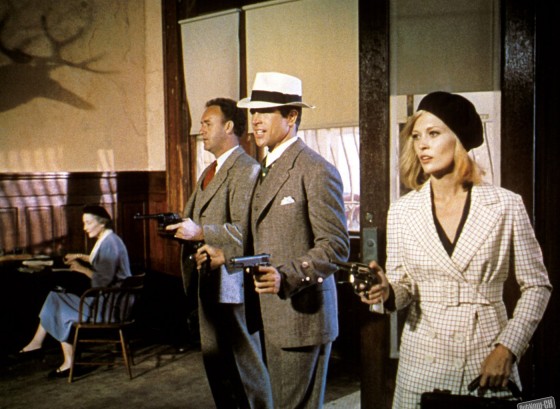
Bonnie and Clyde

Hollywood studios were in a rut in the late 1950s and early 1960s, struggling to cope with the rise of television, the loss of control of movie theaters after the Paramount case, and a widening cultural chasm between modern audience tastes and studio traditions. In desperation, the studio chiefs opened up filmmaking to a wave of young actors, directors, producers and writers who re-energized American movies, making them arguably the world’s trendsetters from the late 1960s through mid-1970s. One of the pivotal movies from this fertile period in American cinema is 1967’s Bonnie and Clyde.

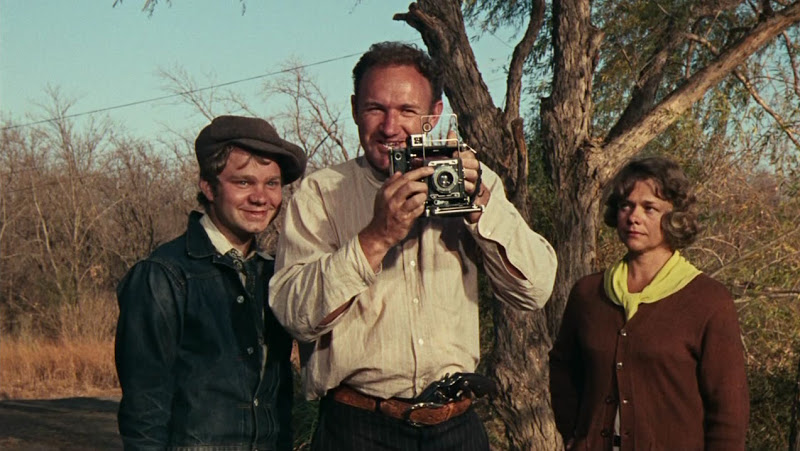
The story opens with a bored, sexually frustrated small town girl (Faye Dunaway) meeting a charming bad boy (Warren Beatty). She questions his courage and masculinity, and he shows off by drawing a gun and committing a robbery. They flee her backwards hometown together, intoxicated by freedom, danger and each other. More daring robberies follow, and with it growing fame for Bonnie and Clyde. Soon they gather other people around them, including a slow witted ne’er do well (Michael Pollard), Clyde’s older brother Buck (Gene Hackman) and Buck’s prim, God-fearing wife Blanche (Estelle Parsons). The law of course comes after them, spurring epic gun fights and a wild cross-country chase sparked with episodes that are surreal (the mesmerizing family reunion scene, which was shot by putting a window pane in front of the camera) and comic (the best of which features Gene Wilder, in his first movie). The story’s conclusion, which I will not spoil, is justifiably one of the most famous scenes in the history of American cinema.

The sexuality and graphic violence on display here was beyond anything Hollywood films had done since the Hays Code came into force in 1934. This is one of the first movies to use squibs and to show bullet wounds spouting blood. The impact of the violence is further amplified through use of the choppy editing style that been popularized by the French New Wave. Also, in a striking reversal of the typical gender roles of films in the 1950s, the woman is the confident sexual aggressor and the man is sexually timid and indeed non-functional (in early drafts of the script, Clyde was in a gay relationship with one of the men in his gang, but in the final version he instead is impotent). The point of view of the story was also novel and in keeping with the rebellious spirit of the times: The heroes are murderers who mow down police officers without compunction.

But it is not just the sexual and violent themes that make Bonnie and Clyde a landmark American film, it is also the movie’s meditation on fame. The criminals’ exhilaration in their notoriety, their self-conscious pursuit of increased publicity and the way they are hero-worshiped by strangers highlight the absurdity of American celebrity culture in supremely effective fashion.

As for the acting, under Arthur Penn’s direction, the entire cast explodes off the screen. Parsons won an Academy Award for her performance but any of the leads and supporting players would also have been worthy choices. Last but certainly not least, Burnett Guffey’s “flat style” camerawork — a complete inversion of his remarkable work in films I have recommended like My Name is Julia Ross, In a Lonely Place,  and The Sniper — is one of the lasting achievements in Hollywood cinematography. That Guffey could early in his career thrive in the deep focus, shadowy, stylized world of film noir yet later became a leading exponent of unadorned, naturalistic cinematography shows that he was truly one of the giants of his profession.

The backstory to this film has also become part of its legend. Clyde Barrow and Bonnie Parker were of course real-life bank robbers in Depression-Era America. The Oscar-winning script of this film was brilliantly adapted from their exploits by David Newman and Robert Benton, with uncredited help from Robert Towne. (All of whom, like so many of the people associated with the film, went on to notable success in American cinema). The writers tried unsuccessfully to recruit a French New Wave director to make the movie, but none of them were ultimately interested. Fortunately, Warren Beatty saw the potential of the story and bought production rights, eventually signing Penn as the director. As a sign of how out of touch studio executives were with 1960s filmgoers, the suits at Warner Brothers had so little confidence in the film’s audience appeal that they were comfortable promising Beatty 40% of the gross receipts. They barely released and minimally promoted the picture, and were not surprised when establishment movie critics sneered at it. But it hit audiences like a thunderbolt, becoming a massive box office hit. Remarkably, some chastened film critics went so far as to publicly apologize for their dismissive reviews and to write new reviews praising the movie (except for the New York Times’ insufferable Bosley Crowther, who campaigned against the film so vigorously that his bosses finally realized that it was time to find a more discerning critic). Many years later, this initially unwanted, disregarded and disrespected film became one of the first movies selected for preservation by the National Film Registry.

p.s. If any film prefigures Bonnie and Clyde in American cinema, I think it’s Joseph Lewis’ extraordinary 1950 movie Gun Crazy. If you have time for a double feature, that’s the film to pair with this one. And if you have time for a triple feature, throw in Lewis’ My Name is Julia Ross to appreciate the incredible range of cinematographer Burnett Guffey.

Categories
Action/Adventure Romance

The Adventures of Robin Hood

If your life is giving you some family time, you and your kids can together enjoy a rollicking tale of derring do set in Merry Olde England: 1938’s The Adventures of Robin Hood. Famous as the film that transformed swashbuckling Errol Flynn from a movie star into a global sensation, it’s also historically important as Warner Brothers’ first foray into glorious Technicolor.

The plot is of course familiar and has been adapted dozens of times: When King Richard the Lionhearted leaves the country, his heartless brother John begins terrorizing the peasantry. The courageous noble Robin of Locksley voluntarily leaves his comfortable life to fight for the oppressed, becoming a daring outlaw who along with his Merry Men takes a personalized approach to progressive taxation. Along the way Robin wins the love of Lady Marian, who becomes a brave advocate for the downtrodden despite her blue blood.

This was a big budget film, with lavish costumes and sets designed to show off the possibilities of Technicolor photography. It’s also big in other ways: Huge battles, extended sword fights, heroic stunt work and full-blooded performances by the whole cast. For raw entertainment value alone, this is a Hollywood studio system classic, and was deservedly selected for preservation in the National Film Registry.

Despite being wracked with numerous health problems in real life (He died at 50 with the body of an old man), on screen Flynn is the apotheosis of the virile, roguishly charming man of action. He was working with his frequent collaborator Michael Curtiz (Who also directed him in my recommendations Captain Blood and The Sea Hawk), who clearly knew how to get the most out of Flynn. Flynn gets outstanding support from the rest of the cast, including Claude Rains as a fey Prince John and Basil Rathbone as the dastardly Sir Guy of Gisbourne. Olivia de Havilland, who worked with Flynn on eight films, was cast more for her looks than talent in her early career, but she became a better actress over time. She’s good enough here at portraying Marian’s growing awareness of the plight of the poor and her own love of Robin. The actors in the smaller parts also do well, especially Eugene Pallette as Friar Tuck.

This is a particularly good film for kids, not only because the exciting story is easy to follow but also because it embodies admirable values. I love all the ethical shading of film noir, but there is also a place for movies that teach uncomplicated moral lessons: The rich have an obligation to the poor, and good people must fight back when the strong exploit the weak. Roger Ebert, who loved this movie, said it beautifully: “In these cynical days when swashbucklers cannot be presented without an ironic subtext, this great 1938 film exists in an eternal summer of bravery and romance”.

Before closing my recommendation of this rousing classic, I leave you with two notes of trivia (1) The 1922 Douglas Fairbanks Sr. version of Robin Hood was filmed in Bidwell Park in Chico, California, and the Flynn version returned there for some of its shoot. (2) Much of the film was hilariously parodied in another of my recommendations, The Court Jester, with Rathbone sending up his own performance.

Categories
Action/Adventure Foreign Language Horror/Suspense Mystery/Noir

Män Som Hatar Kvinnor

image

The left-wing Swedish author Stieg Larsson had a strange and remarkable life. As a teenager, he witnessed some of his friends commit gang rape, and was haunted thereafter both by guilt about his failure to intervene and the omnipresence of violence against women. As a journalist he was unknown outside of Sweden when he died suddenly at the age of 50, but soon became one of the most widely read authors on Earth when his Millenium triology was posthumously published. The first filmed adaptation of Larsson’s crime novels is the unforgettable 2009 Swedish television mini-series Män Som Hatar Kvinnor.

Though known as “The Girl with the Dragon Tattoo” to Americans, the original Swedish title actually translates as “Men who Hate Women”, which better describes what this film is about: a ferocious, unforgettable, superheroine battling some of the slimiest and scariest misogynists in film history (which is saying something).

Noomi Rapace knocked the film world on its ear with her four-barreled performance as Lisbeth Salander, a social misfit with a history of trauma, a genius for computer hacking, and an invincible survival instinct. Events bring Salander together with crusading journalist Mikael Blomkvist (Michael Nyqvist, nicely underplaying his part), who is attempting to solve the long-ago disappearance of a little girl in a remote Swedish village that is icy in more ways than one. Along the way they encounter enormous human ugliness (almost all of it male), perplexing clues, and life-threatening risk.

Having not read Larsson’s books, I cannot evaluate the faithfulness of Rasmus Heisterberg and Nikolaj Arcel’s screenplay to the original story. But I certainly aver that it’s a fine bit of writing, rounding out each character and having them bounce off each other in ways that advance the story. The relationship between Salander and Blomkvist is particularly refreshing because it completely reverses the gender role conventions of the genre. The mystery/thriller elements are also fairly well-done, keeping the audience puzzling over the solution at times and on the edge of their seat at others.

MV5BMTYwMTg1OTU5Nl5BMl5BanBnXkFtZTcwNTU4NDAyMw@@._V1_SX640_SY720_

As photographed by Eric Kress, Northern Sweden is a bleak and lonely physical environment populated by bleak and lonely people, amongst whom some true monsters can easily hide. The film could easily have been a downer if not for the breathtaking power of Salander’s character and Rapace’s performance. Multi-layered female roles are sadly uncommon in movies; the worldwide embrace of Lisbeth Salander shows that audiences are hungry for more.

p.s. This review is based on the 180 minute version that played on Swedish television (later edited down into a shorter film for release in theaters). The 2011 English-language remake has a bigger budget with bigger stars (including a miscast Daniel Craig as Blomkvist) and is certainly a polished piece of work, but not quite as effective as the original.

Categories
Action/Adventure Comedy Drama

The Stunt Man

If God could do the tricks that we can do, he’d be a happy man.

The late Peter O’Toole signed on to many over the top, unconventional films (no small number of them when he was intoxicated). This resulted in him headlining some legendary stinkers (e.g., Caligula). But it also landed him plum roles in off-beat masterworks such as The Ruling Class (recommended here) and The Stunt Man.

The film was released to only a handful of theaters in 1980 (In O’Toole’s words, “it wasn’t released, it escaped”) because the studios had no faith in it. Some critics found the film pretentious, manipulative and tiresome, yet it ended up on other critic’s best of the year lists and landed three Oscar nominations. Over time it has attracted a cult following, which it very much deserves, despite its flaws.

The Stunt Man is a film that messes with the minds of the characters — and with the audience’s as well — by relentlessly mixing movie fantasy with reality. The unreality is embedded in the plot from the first. An alienated Viet Nam veteran named Cameron (Steve Railsback) is wanted for an unknown crime and flees the police, only to find himself in what seems to be World War I. But it’s actually a war movie being directed by Eli Cross (O’Toole). Cameron has a run in with a man he thinks is trying to kill him, but who turns out to be a stunt man shooting a scene. The stunt man dies, and Cameron may or may not be responsible: only the film shot of the event by Cross could reveal the truth. As the police close in, Cross makes Cameron a bizarre offer: to hide within the movie company as a replacement stunt man so that Cross can complete the movie! Cameron agrees, and from then on is manipulated, tricked and exploited while simultaneously trying to romance the lovely starlet Nina Franklin (Barbara Hershey), who seems to have genuine feelings for him…or is that just a manipulation too?

Yes, it’s one hell of a set up. But then again, the script is adapted from a novel in which all the lead characters are insane. The writer/director was Richard Rush, an eccentric, talented but ultimately unsuccessful Hollywood figure whose erratic career path is probably worth a novel of its own. If everyone has one great movie in him, this is Rush’s, and he went for broke, mixing black comedy, action, romance, suspense and satire with largely successful results.

The best thing about the film is Peter O’Toole, who turns in another of his unrestrained, arch performances as Eli Cross. His part is written to be larger than life, and he plays it to the hilt. They say the best roles for British actors are kings and drunks. O’Toole played many of both in his career, and was in real life a King among Drunks. It wasn’t happenstance that he was nominated for an acting Oscar 8 times yet could never quite seal the deal with Academy Award voters (The Stunt Man was one of those disappointments). His distinctive style and obvious talent draws most of us in, but at the same time his flamboyant performances put a significant minority of people off because they feel that he is just playing Peter O’Toole again.

Other strengths of the film are the memorable score by Dominic Frontiere and some vivid supporting performances which help compensate for Railsback being rather one-note as the film’s hero. Also, true to its name, this film is full of jaw-dropping stunts.

The script, with its movie-in-a-movie, riddle-in-a-riddle structure is a matter of taste. I found it a work of near-genius, but I can understand why other viewers consider it exhausting and even alienating. This scene from the film gives a sense of the proceedings, and the compelling nature of O’Toole’s appropriately theatrical portrayal of a mad genius filmmaker. Give this unusual film a chance and make your own judgement.

Categories
British Drama Mystery/Noir

Seance on a Wet Afternoon

Fleabag & Killing Eve Director Helming Seance on a Wet Afternoon ...

Most movies fit into particular genres, with plots that in at least some respects are recycled. There is nothing inherently wrong with this: The same thing could after all be said of almost all of Shakespeare’s plays. But just as The Tempest is refreshing because of its novelty, so too are films with unique stories that one can’t really analogize or trace back to any earlier films, or even to a cinematic genre. Love and Death on Long Island and Junior Bonner are two of my favorite movies of this highly original kind. Another is this week’s film recommendation: Seance on a Wet Afternoon.

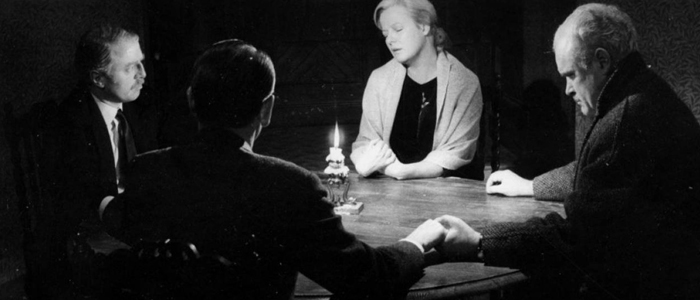
The film opens as a two-handed play about a strange and strangely compelling married couple. Myra (Kim Stanley) holds seances for her credulous neighbors and is convinced that she has remarkable psychic gifts. Her asthmatic husband Billy (Richard Attenborough) seems afraid to disagree with her. It soon becomes apparent that the two are hatching some sort of bizarre kidnapping and ransom plot, though it would be better said that Myra has hatched it and Billy is too uxorious to resist. Despite the ransom demand, the motive for the planned crime is nothing so simple as money. Many twists of story and anguished human psychology follow, taking the audience on a journey that is suspenseful, dramatic, and ultimately, quite sad.

This 1964 film is the most artistically impressive product of the highly successful, long-running collaboration between British cinema worthies Richard Attenborough and Bryan Forbes. The two men took on different roles in their various films; in this case Forbes wrote and directed and Attenborough acted and shared producer duties with Forbes.

rideau-de-brume-1964-02-g

As producers, the team’s masterstroke was reaching across the pond to cast Kim Stanley, who was then a stage and television actress barely known outside of New York City. As Myra, Stanley gives one of the outstanding performances of the 1960s as the sort of person who is deeply disturbed and fragile yet at that same time exerts enormous power over those around her. Stanley was dubbed The Female Brando by her biographer and she puts on a method acting clinic here in what sadly turned out to be one of few opportunities movie audiences got to see her masterful work. After being nominated for an Oscar for Seance on a Wet Afternoon, she returned to the stage and virtually disappeared from films until 1982, when she garnered another Oscar nomination for Frances.

Forbes’ direction and Stanley and Attenborough’s performances are truly above reproach. The way Billy is lacerated by Myra’s every critical remark and disapproving look, yet also clearly loves her and feels protective of her, is beautifully, painfully brought out. Their marriage is not quite a folie à  deux because Billy retains some grip on reality and decency, which serves to create tension in the relationship and the plot that propels the film forward.

Though the script could have been slightly tightened, every line of dialogue rings true and the plot is consistently compelling. Gerry Turpin’s photography is also a virtue, both in the interiors of Myra and Billy’s house but also in, around, and underneath bustling 1960s London. Overall, one gets the sense of a production in which every professional in front of and behind the camera knew exactly what they were doing.

Billy and even moreso Myra will haunt your imagination after you see this movie. Don’t miss it.

Categories
Drama Mystery/Noir

The Prowler

This week’s film recommendation is an unusual, disturbing film noir that has enjoyed a renaissance in recent years: 1951’s The Prowler. Made by left-wing artists who were being harassed by the House Un-American Activities Committee, it’s a dark take on class resentment, sexual repression, and the ruthless pursuit of the American dream.

Many film noirs feature cops who are half-witted or on the take, but The Prowler is the only one I know where the central character is both a police officer and a calculating, manipulative psychopath. Van Heflin is mesmerizing as Webb Garwood, a flatfoot who is called to investigate a report of a prowler in a wealthy neighborhood. The call comes from Susan Gilvray, played with vulnerability by Evelyn Keyes (I also raved about her work in 99 River Street). Webb lusts for Susan immediately, not just physically but also for her and her husband’s obvious status in society.

Susan is both flattered and scared by Webb. Sensing her ambivalence, he pays her several more visits until the lonely and repressed Susan — who wants a baby — gives in to his advances. Eerily, their liaisons are accompanied by the sound of her husband’s voice, a radio announcer who works at night. Webb now has the wealthy man’s wife that he wanted, but he knows he doesn’t possess her completely, nor does he have access to the money he wants to buy his own place in the world. But if her husband were out of the way, who knows what might be possible?

In terms of establishing character and framing the plot elements, the script of The Prowler is one of the best in noir. The screen credit went to Hugo Butler, but Dalto Trumbo wrote much of the script. He was blacklisted and couldn’t be acknowledged publicly as a screenwriter, but in what was probably an inside joke at the expense of the McCarthyites, he provides the voice of Susan’s husband on the radio (again, uncredited). Anyone who wants to learn how to write strong scripts should watch the scene early in the movie in which Webb and Susan discuss their experiences growing up in Indiana. As Webb explains how he blew his chance to get a college education, the audience understands immediately his smallness as a human being and his entitled rage towards people whom he tells himself have denied him what he deserves.

The film also demonstrates something many producers forget: Characters don’t have to be likable, they just have to be interesting. Neither of the principals are people you’d want as your neighbors, but it’s extremely compelling to follow the tenebrous twists of their relationship.

The direction, by the soon to be blacklisted Joseph Losey (probably best known for the thematically similar The Servant), is unusual and effective. He structures the scenes in play-like fashion, with long takes in just a few key, evocative sets. Those locations each have their own vivid bleakness, especially the ghost town in which the third act occurs (memorably shot by the great Arthur C. Miller). Congratulations are due to Art Director Boris Leven and Set Designer Jacques Mapes for tremendous work on a small budget.

The film suffers slightly from a lull between the first and third acts as well as some plotting improbabilities, but it’s still a bit surprising that it wasn’t more of critical and popular hit upon release. It may have been a bit ahead of what a 1951 U.S. audience wanted to see in a story focused on a police officer. It was however very popular in Europe, where Losey was soon to flee to escape political persecution. Later, the film was reappraised by U.S. film noir devotees and its reputation has deservedly grown.

The Prowler is in public domain, and has been remastered version by UCLA’s vaunted restoration team (with financial support from The Stanford Theater Foundation).

Categories
Action/Adventure Horror/Suspense Mystery/Noir

The Parallax View


The horrifying assassinations of the 1960s generated countless conspiracy theories that continued to rattle about in the 1970s, particularly after Watergate further damaged the public’s faith in once-respected institutions. During this period, Alan J. Pakula was arguably the film maker who most effectively translated the public’s anxieties onto the screen. The two best known of his “paranoia triology” are the Oscar winners Klute and All the President’s Men. But don’t overlook the less commonly recalled but very fine member of the troika: 1974’s unnerving The Parallax View.

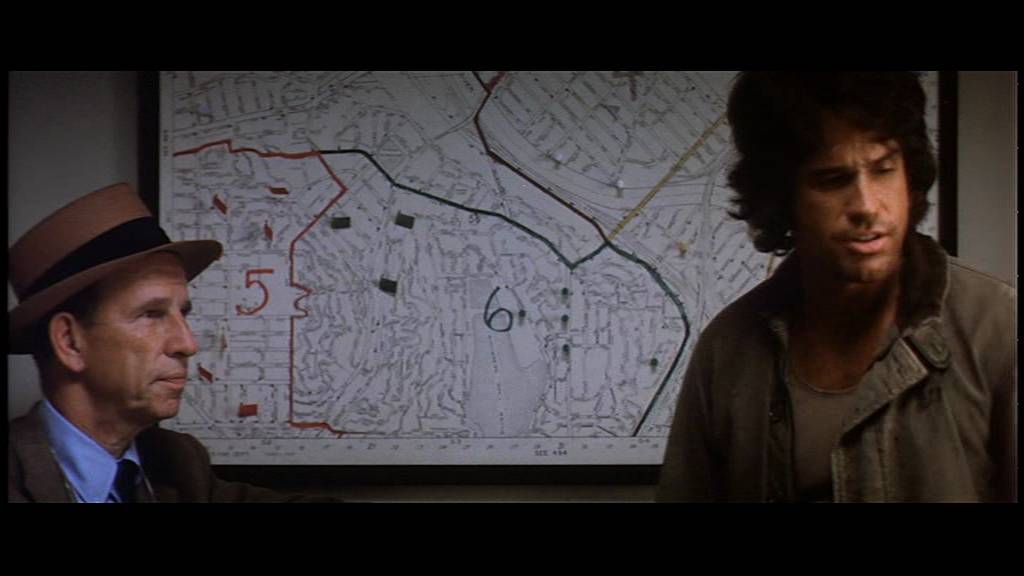
The film’s opening sequence, set at the top of Seattle’s space needle, grabs viewers by the throat. What seems a banal political event suddenly turns violent, and through a series of rapid cuts the audience is as disoriented as the terrified characters on screen as they wonder what exactly they just saw. In the ensuing months, many of the witnesses come to premature ends, leading raffish journalist Joe Frady (Warren Beatty) to investigate, against the advice of his hard-headed, fatherly editor (Hume Cronyn, effortlessly at home in his role). Frady discovers that a mysterious corporation is recruiting sociopathic killers and goes undercover to investigate. He seems to be making progress in infiltrating the nefarious cartel, but is he really just walking into the web of a hungry spider who is spinning all the strands?

Alan J. Pakula's “The Parallax View” | Wonders in the Dark

The Parallax View provides moments of high suspense and also carries off well that essential of paranoia films: The exchanges between the lead character and the trusted friend who thinks the “conspiracy” is all imagined (Nice touch: Cronyn’s office is crammed with memorabilia from his work with the Boy Scouts). The performances are believable throughout, which helps the film survive its more credibility-straining moments.

The late Gordon Willis, one of the most respected cinematographers of the 1970s, gives the film a distinctive look appropriate to its tone. There are many long, lonely shots taken far from the action, along with Willis’ signature fondness for shadows. The opening and closing shots, of government investigatory commissions proclaiming “nothing to see here, move along, there’s no conspiracy” as the camera moves in and out, ultimately arriving at a dark, distorted anamorphic image, are perfect bookends for the film. Combined with the movie’s minimalist use of sound, Willis’ superb work suffuses the movie with a sense of unease.

The film is not without shortcomings. As in some other Pakula films (e.g., Consenting Adults), certain plot elements can’t survive strict logical scrutiny. How can second-rate journalist Joe Frady drive like a NASCAR champion and fight like James Bond? Why doesn’t he ever have deadlines at his newspaper and why, beyond the needs of the script, does his editor keep handing him piles of cash to pursue his story? Another potential weakness: Joe Frady is not that appealing of a person, so if you really don’t like Warren Beatty as a star, you may not feel much sympathy for the protagonist.

Flaws notwithstanding, Parallax View is an effective, disturbing piece of cinema. Its perspective is ultimately gloomy, but that doesn’t diminish its entertainment value or emotional impact one iota. This is a movie that stays with you, like a microphone the CIA has attached to your cell phone.

p.s. For those of you who are not old enough to remember and therefore might find one key scene of this film unbelievable: In the 1970s, you really could board an airplane without a ticket and check luggage onto a flight on which you were not yourself a passenger. Also, there was good service in coach. Really.