Categories
Comedy Romance

The Mating Season

If I told you I was going to recommend a funny 1951 movie about class differences, you would naturally expect something British. But The Mating Season shows that post-war Americans too could also mine the comic possibilities of people from different economic strata rubbing shoulders.

The plot of this mistitled little gem: Ellen McNulty (Thelma Ritter) is a widow whose hamburger stand has gone bankrupt. She embarks on a long journey to visit her son Val, whom she and her hardworking husband were able to put through college. Val is a low level white collar manager (John Lund) trying to impress the big boss so that he can get ahead. After Val meets cute with the ravishing Maggie Carleton (Gene Tierney), daughter of a wealthy ambassador, the two fall in love and a wedding is quickly arranged, coincidentally on the day that Ellen is to arrive. Before you can say “screwball comedy” the young bride mistakes her dowdy, working class new mother-in-law for a maid, and the mother decides to play along, moving in to the new couple’s apartment!

This is a film about how working class people can be both proud of their origins yet ashamed of them at the same time, particularly as conveyed through Lund’s character. Val both loves his mother and is embarrassed of her (His chemistry with Ritter is so natural it’s hard to believe they weren’t actually mother and son). Similarly, he both despises his rich, crummy boss yet also can’t resist the impulse to tug his forelock in front of him.

The movie is also wise about how wealth makes some people generous and turns others into snobs. I don’t know if it was in the filmmaker’s minds or not, but it’s also intriguing to watch in terms of gender roles: Even though Val has little money and Maggie is rich, they both assume he will be the sole provider and the couple end up in debt as a result.

But despite all that, this isn’t A Place in the Sun; the film’s accent is on laughs rather than dark drama and The Mating Season is delightful on those terms. Miriam Hopkins is hilariously over-dramatic as Tierney’s pampered and entitled mother, and Ritter, as she showed in so many other films (including my recommendation Pickup on South Street), can deliver a wisecrack out of the side of her mouth with the best of them. She was so good at being a character actor that Hollywood didn’t seem able to see her in any other light: Despite being the star here, she was nominated for a Best Supporting Actress Oscar.

Roger Ebert used to point out how few Hollywood films take work and household budgets seriously. In the movies, single mom cocktail waitresses have huge apartments in Manhattan, architects are obligated only to look at a drafting board in their den in the evening rather than go into an office, and no one is ever shown paying their electric bill or doing their taxes. The Mating Season is a welcome exception to this rule, as Ellen works out how to deal with her failing hamburger stand, hitchhikes to save on travel expenses, scrambles for the money to pay her bills (including having to work for two days as an office temp for “Mr. Pinchbottom”), finds affordable-but-tatty lodgings and otherwise scrimps and saves. Throughout Ellen’s struggles, the film appropriately portrays as noble her and her husband’s ability to have afforded college for their son despite their modest means, rather than being condescending toward the aspirations that millions of post-war working class Americans shared.

Director Mitchell Leisen was not a consistently strong artist, but he was good enough when, as here, he had a strong script from which to work. The Mating Season’s is by Walter Reisch, Richard Breen and Charles Brackett (Billy Wilder’s frequent collaborator). In addition to some memorable zingers, the trio’s script also has some funny 1950s style sexual innuendo. This team went on to win an Academy Award for screenwriting together two years later for Titanic, but they could just as deservedly won for The Mating Season.

The Mating Season is American in style, but stands shoulder to shoulder with all the Ealing Studio comedies that alternated between having the audience laugh about class differences and nod their heads in recognition of the truths we so often don’t openly discuss.
Categories
Action/Adventure

Purgatory **With Star Interview **

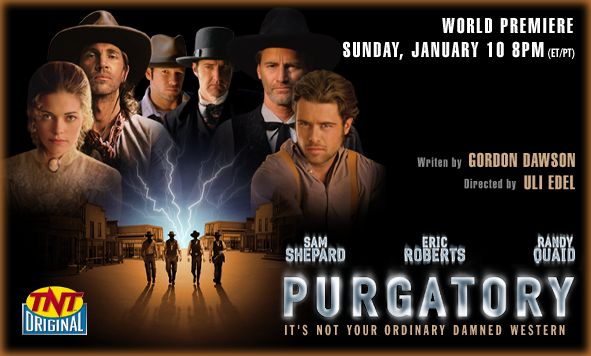
1 purgatoryOne of the happy outcomes of the cable television revolution was that more stations were competing to brand themselves with audiences, and one method some of them chose was to start making their own films. The budgets were not as large as what Hollywood might provide, but the results were often more original. Such is the case with Uli Edel’s unconventional western Purgatory, which debuted in 1999 on Turner Network Television and has attracted a growing base of fans ever since.

Purgatory opens as a classic oater, with glorious vistas, exciting gunfights, noble sheriffs and vicious outlaws. But then the film takes an entirely novel, Twilight Zone-eque turn as a group of bank robbers gets lost in a sandstorm and arrives in the strangely peaceful town of Refuge, where a sheriff who doesn’t even carry a gun (Sam Shepard) unhesitatingly welcomes them to stay. The town has a saloon that no one enters, a church that every single resident attends every day, and some strangely familiar-looking locals, all of whom are watched over by a wizened Native American medicine man. I am not going to tell you more than that for two reasons. First, I don’t want to spoil this fine film for you and second, I need the space for a special treat: An interview with the star.

BradBrad Rowe is the emotional center of the film as “Sonny” the one member of the pack of snarling bad guys who is a decent, vulnerable human being to whom the audience can relate. Brad has since gone on to become an expert in drug and crime policy, working with Mark Kleiman’s BOTEC consulting firm. I am grateful for him for taking the time to talk about Purgatory.

Brad, you’ve been in many movies and television shows, but say that this film was probably the most fun you ever had as an actor. What was so enjoyable about it?

First of all I was a very young actor and had hardly been around the block. Uli Edel was kind enough to have me come in to read for one of the lead roles in a project that already had Sam Shepard, Eric Roberts and Randy Quaid attached. After getting the role, when I arrived for the cast read through, my eyes were as big as saucers. These guys were legends to me and it was really endearing that they all took me under their collective wing. And then we got to the work of training, which included riding professional stunt horses, learning how to quick draw guns, staging screen fist fights and perfecting our cowboy swagger in period clothes. Lots of down time too where the other actors and crew would share fun stories about the countless projects and people they had experienced over the decades. I was in heaven. There was something magical to the story telling as well. Gordon Dawson had written a solid screenplay and TNT was really invested in making that story come to life. I think we all knew we were working on something special. As it turned out the project was well produced and promoted, so it found an audience. It wasn’t until I had been around for a while that I truly appreciated how many wonderful professionals had come together for a few months to make some movie magic. And of course the genre of the Western has become more of a scarcity recently so that time holds a bit of additional nostalgia for me.

I could imagine an actor first reading Dawson’s script and thinking This strange plot may just not work for an audience expecting a traditional western”. Did you have that worry or did the story hook you right away?

I personally didn’t have any reservations. It felt like the super-western with a cast of characters that spanned the storied history of the wild west. The supernatural twist was an essential tool for exposing everyone in the story’s true character — warts and all in some cases. What resonated for me was how close that character was to me at that point in my life. I was new to Hollywood and eager to learn and in many cases found myself swimming with sharks. Sonny was doing his best throughout the story to stay true to his values but finding mentors who shared the same compass was nearly impossible.

Do you think of Purgatory as a religious film?

I do. There are both themes of spiritual redemption and rigid religious observance. Churchgoing is a central to community life in Refuge and it is the place where individuals who have lived characteristically sinful lives get a shot at redemption through faithful observance of a very strict protocol. It is the adherence to that difficult path that causes the biggest challenge for several of the main characters. Forgiveness, selflessness, and sacrifice all play heavy in the story as well. I don’t want to make the movie seem overtly fire and brimstone but it hits the audience pretty squarely. Thankfully Purgatory is the uplifting kind of spiritual journey though.

Shepard“Larger than life” is an overused phrase, but it applies to the playwright-actor-director Sam Shepard. What is he like in person?

Categories
Horror/Suspense

Trilogy of Terror – Amelia

“Doll horror” is almost its own cinematic sub-genre. Villains like the murderous clown doll in Poltergeist, the knife-wielding Chucky, and the ventriloquist’s dummy in Dead of Night, all scared the pants off of audiences. Let me recommend another triumph of the subgenre: The Amelia segment of the 1975 movie Trilogy of Terror.

Trilogy of Terror was an entry in a high-quality ABC Movie of the Week series. The series was a playground for rising directors and future stars as well as a chance for some old pros to enjoy a last hurrah. I have recommended multiple films from this series of made for television films: Seven in Darkness, Night Slaves, and The Screaming Woman. But Trilogy of Terror is better remembered than any of those films, probably because of the nightmares a generation of Americans experienced about “that doll”.

The movie comprises three distinct stories, all starring Karen Black. The first two are about as good as any average-quality episode of Night Gallery, Twilight Zone or Outer Limits, i.e., serviceable but unremarkable entertainment. But the third, titled Amelia, is a grab-you-by-the-throat masterpiece. The plot is simple: A young woman has purchased a Zuni hunting fetish which is alleged to contain the spirit of a savage warrior who will be contained as long as the gold chain around the doll is never removed. Guess what happens!

Karen Black’s acting gifts are essential to making this segment of the trilogy work. In a single phone call to her mother, she reveals Amelia to be a woman who has trouble asserting herself, is easily bullied and wants to avoid confrontations. Black’s establishment of her character makes what happens next more emotionally intense. Black also does an excellent job selling the physical confrontations with her foe, which very easily could have been too campy to be scary.

The segment was made by horror masters Dan Curtis and Richard Matheson, many of whose works I have recommended (e.g., Dracula). As a director-writer team they were consistently creative yet simple in their artistic goals: They aspired only to scare and entertain people, and they were very good at it. Amelia also benefits enormously from creative camerawork by Paul Lohmann and terrific editing by Les Green, which never lets the audience catch its breath.

Amelia is 16 minutes of tension and a bloody scary good time. I embed this minor classic of the horror genre below for you to enjoy.

Categories
British Horror/Suspense

Night of the Eagle

Fritz Leiber Jr. was a talented fantasy, science fiction and horror writer who is mainly remembered for the Fafhrd and the Gray Mouser books, which surprisingly have never been adapted for the cinema. In contrast, Leiber’s Conjure Wife has served as the basis of multiple movies, including the fine 1962 film Night of the Eagle (later re-titled Burn Witch Burn).

Peter Wyngarde stars as a hard-headed college professor who thinks that the supernatural is bunk. Imagine his surprise when he discovers that his wife (Janet Blair) has been a practicing witch for years, and claims that her magic has been advancing his career and protecting the couple’s well-being! He makes her promise to abandon her childish hobby, and almost immediately regrets it when a series of horrifying happenings befall the two of them. Could witchcraft be real, and is another witch in the college community out to get them?

The script is by two masters of economical, intelligent, unpretentious horror: Richard Matheson (who also wrote my recommended film Amelia) and Charles Beaumont (who also penned my recommendations The Intruder and Masque of the Red Death). They pace the plot and the scares professionally, and slyly weave a feminist subtext into the proceedings.

I have to admit that I can’t name another movie of director Sidney Hayers, but his low profile wasn’t due to lack of talent. He keeps things suspenseful and crisp, gets solid performances from all the actors and brings in the good-for-the-time special effects at just the right moments. The pleasing result recalls Roger Corman’s many solid low budget horror films, such as those he adapted from Edgar Allen Poe stories (including my recommended film Tales of Terror). Not surprisingly, Night of the Eagle was released by Anglo-Amalgamated, the British partner of Corman’s company AIP.

This suspenseful sleeper is available to watch for free at the Internet Archive, just click here. As a taster, I embed the trailer below.

p.s. This film would make a fine double feature with an ever better film based on the same themes: Curse of the Demon. My recommendation of that film is here.

Categories
British Horror/Suspense

Masque of the Red Death

Low budget film genius Roger Corman once said the two films he was proudest of were The Intruder (a searing film about racism and civil rights which I recommended here) and the superb horror movie Masque of the Red Death.

Corman had been enchanted by Edgar Allen Poe stories since reading The Fall of the House of Usher at age 11. After directing a number of schlock black-and-white films made in 10 day shoots, he persuaded James Nicholson and Samuel Z. Arkhoff to let him do a Poe adaptation and to make it a “big budget” movie: Not only would it be in color, but he would have 15 whole days to shoot it! With his usual brilliance at spotting affordable talent, Corman cast as the lead Vincent Price, an actor who otherwise might have faded into obscurity along with his youthful good looks. The Fall of the House of Usher proved a big money maker, and an enduring cinematic collaboration was born (Corman, Price and Poe, often joined by other terrific horror actors and writers).

I have recommended the Corman-Price-Poe film Tales of Terror, which while a lot of fun is not as impressive cinematically as Masque of the Red Death. The latter was filmed in the United Kingdom because the government at the time had a film production subsidy policy, giving Corman more to work with financially than usual. The film also benefited from the cinematographer being the gifted Nicholas Roeg, one of the many soon to be famous film artists who was nurtured in the university of Roger Corman. Couple those virtues with Corman’s scrounging ability — he recycled much of the opulent set of Becket here — and you have the best looking of any of the Corman-Price-Poe films.

The plot of this 1964 release comes from the Poe story of the same name, with a subplot drawn from Poe’s Hop-Frog. The story opens in a foggy forest in Medieval Italy, where a mysterious figure cloaked in red foretells of a coming plague (His face is never seen, and I assumed his wonderfully sonorous voice was provided by the late Christopher Lee, but it turns out to be John Westbrook). Meanwhile, the rich, cruel, Satan-worshiping Prince Prospero terrorizes the peasants, and casts a lustful eye in particular on a lovely, impoverished lass named Francesca (played by Paul McCartney’s one-time beau Jane Asher). As the plague spreads through the land, Prospero’s castle fills up with both his greedy courtiers and his unwilling prisoners. Debauchery and nastiness ensue, coupled with ample surrealism and existential dread for good measure.

Corman was utterly in command of his material by this penultimate entry of his Poe cycle, and benefited from a strong script by R. Wright Campbell and the legendary Charles Beaumont (co-creator of the Twilight Zone). The almost hallucinatory ambiance of the film makes it both uniquely unnerving and a foreshadowing of the more experimental film style that would flower as the 1960s went along (including the moments when Corman strains for artiness a bit too much). As for the actors, this may be Vincent Price’s most impressive horror performance: he dominates every one of his scenes. Of the many good supporting performances, particular praise is in order for the little-known Skip Martin. As Hop-Toad, a wronged dwarf who seeks revenge, Martin conveys impressive emotional power. He had the bad luck to work in the pre-Peter Dinklage era where good parts for little people were virtually never written into films, but at least he made the most of his opportunity to shine here.

Masque of the Red Death succeeds as a horror film and also as an art house drama. Congratulations to Corman and his crew, as well of course to the magnificent Edgar Allen Poe.

Categories
Drama Mystery/Noir

The Sniper

Edward Dmytryk was a talented filmmaker whose career and life were severely damaged during Hollywood’s red scare. As one of the Hollywood Ten, he refused to testify to the House of Un-American Activities Committee and was sentenced to jail. He fled to England, where he made some high quality films including another of my recommendations, Obsession. When the Brits kicked him out he came back to the U.S. and was incarcerated. He then decided to testify against his communist associates, meaning that Hollywood was divided between those who hated him as a communist and those who hated him for naming names. However, in 1952 his career got back on track when Stanley Kramer hired him to direct The Sniper, a brooding B-picture about a serial killer that gave Dmytryk a chance to express his alienation and isolation on screen.

The story opens with psychologically disturbed veteran Eddie Miller (Arthur Franz) struggling against his impulse to gun down a woman in his neighborhood, right at the moment she is kissing her lover on the stoop. As Miller walks the streets, his chance encounters illuminate how he has felt scarred by women from childhood through his adult life, filling him with a mixture of misogyny and sexual frustration. After his efforts to seek help for his psychiatric problems are met with incompetence and indifference by the health care system, this ticking time bomb of a man is stung when a women to whom he is attracted (Marie Windsor) does not reciprocate his feelings. In a rage, he comes unraveled and goes on a fearsome, guilt-wracked hunt for the women whom he believes have wronged him.

For the period in which it was made, The Sniper was startling stuff, particularly the scenes of Miller stalking and then executing his victims. In style and structure, the film draws a good deal from the the police procedurals that became popular after the war (see my recommendations He Walked by Night and The Naked City) as well as from film noir. It also has a pronounced streak of urban alienation and rage that prefigures later films like Taxi Driver (I was not surprised to learn that Martin Scorcese admires The Sniper).

Other than Adolphe Menjou, who plays the police detective who tries to track Miller down, the cast of this low-budget picture are unknowns with unremarkable faces, which works well with the underlying message that horrors such as the film portrays have become everyday, ordinary events. Harry Brown’s script, which is based on a story by Edna and Edward Anhalt, underscores this point even more by having the city in which the crimes occur have no name. It could, implictly, be anywhere.

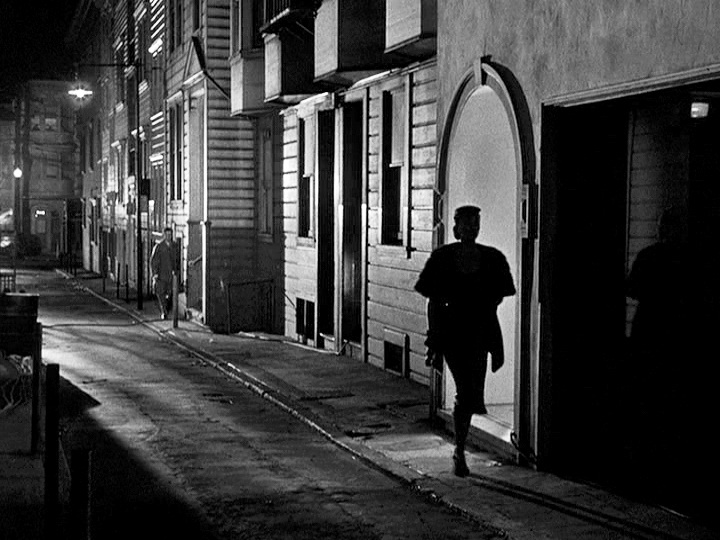
Most of the film was shot in San Francisco, which has rarely looked as moody or lonely. When Miller stalks his first victim, the shadows are surreal as is the lack of any other person on the street. Burnett Guffey, a number of whose films I have recommended here, contributes effective photography and Dmytryk worked with him to create excellent camera set ups throughout. I particularly liked the scene where Miller, who has a menial job delivering dry cleaning, is being upbraided by his boss (another women who makes him feel weak and worthless). Rather than shooting the scene in an open space, the film makers put the camera in the front of Eddie’s parked van looking back at him as he crouches in the cramped, dark space surrounded by hanging dresses. His boss on the loading deck is visible because the van’s back door is open, making her tower over him as if he were a worm under her heel.

The only significant weakness of the film is something characteristic of many Stanley Kramer productions (Judgement at Nuremberg, The Wild One, Guess Who’s Coming to Dinner): It needlessly makes some of its points with a sledgehammer. Starting a film with a printed message telling the audience how shocking and serious the subject is and including a scene where some authority-figure gives a pious speech about how society-is-to-blame are the sort of things that earned Kramer a reputation as the kind of sanctimonious and self-satisfied liberal who drives away more people from his causes than he draws in. Some of that cringeworthy stuff is on display here, and it just doesn’t work.

But let that flaw go and this tautly directed, disturbing film will get under your skin. My belief is that The Sniper is in the public domain, so I offer this link as a place where you can watch it for free.

p.s. Trivia: The bar where Eddie’s first victim sings is the Paper Doll Club, famous in real life as one of America’s first lesbian bars even though it isn’t portrayed that way in the movie.

Categories
Action/Adventure Foreign Language

A Cat in Paris (Une Vie de Chat)

I like to recommend films for kids every now and then. Accordingly, allow me to point you to a charming 2010 Oscar-nominated French animated film originally titled Une Vie de Chat that was subsequently re-voiced using English language actors as A Cat in Paris.

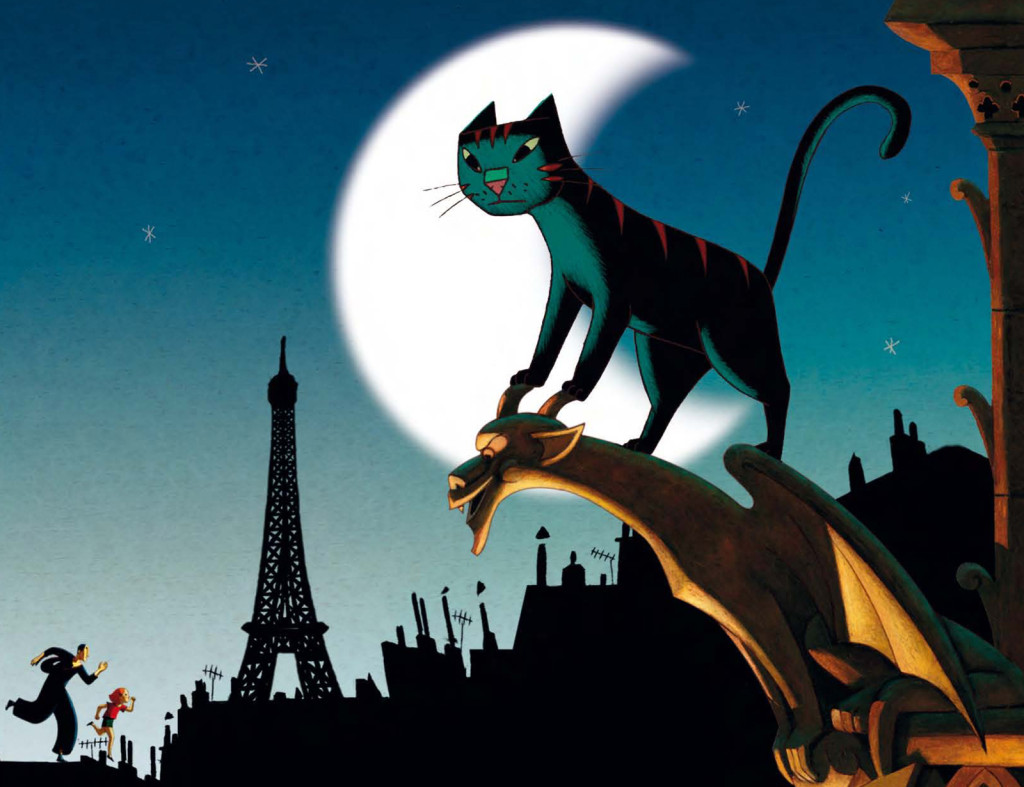
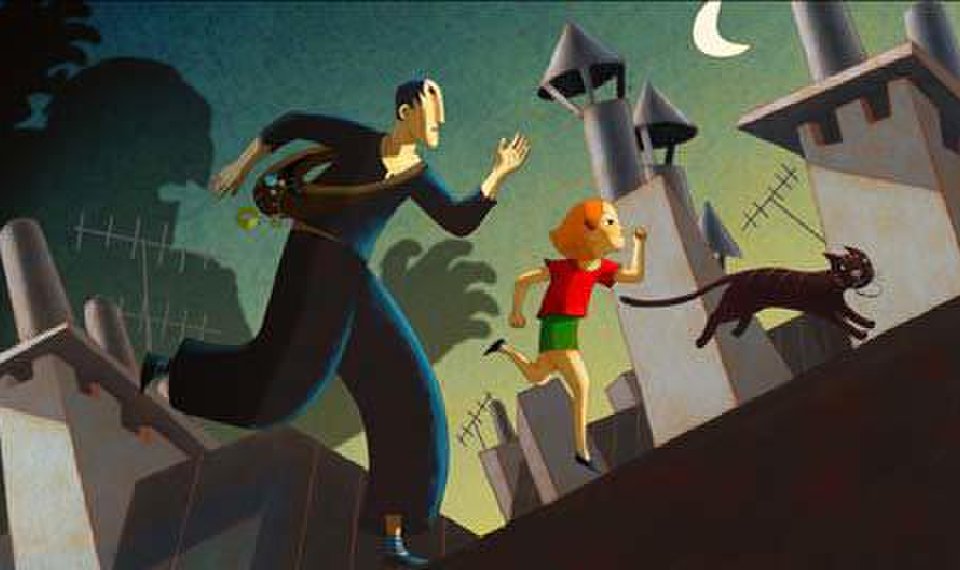
The titular cat of the film is Dino, who lives a double life. By day he is the beloved pet of a little girl named Zoe. But at night he makes a daring (and amusing) journey across the neighborhood to the flat of Nico, who is a (what else?) cat burglar. The two conduct daring robberies until dawn, when Dino races back to Zoe’s bed. Zoe very much needs Dino because she has been so traumatized by the murder of her policeman father that she has lost the ability to speak. This frustrates her grieving mother Jeanne, who is a senior police detective. Jeanne is trying to track down her husband’s fearsome killer as well as the burglar who is stealing precious jewels across the city. She has no idea that the two mysteries will become interwoven. The stage is set for suspense and excitement, as well as the possibility of healing both for Zoe and Jeanne.

The snazzy, jazzy animation is somewhat impressionistic but not so much that children will be confused. Nico’s movements and figure show that he is at heart as much a cat as Dino. Through some artful drawing and script writing, Jeanne, initially seeming to be on the steely side, is revealed in a scene where she practices martial arts to have a bit of the cat in her as well, albeit hidden under emotional scar tissue. This feline connection ties Dino, Zoe, Nico and Jeanne together thematically and artistically in a way that makes the resolution of the story highly satisfying (even if you are more of a dog person).

I watched this movie with three little boys who enjoyed it as an exciting story, but I think I would recommend it even more for little girls. The struggles to understand each other that mothers and daughters can have are well brought out, and Jeanne (voiced by the great Marcia Gay-Harden in the English language verson) is a terrific role model as a wounded but also strong and brave woman. Jeanne chides her daughter at times but when the chips are down, she protects her with inspiring ferocity.

Roses to Jean-Loup Felicioli and Alain Gagnol for their artistry and for their ability to craft a film that parents and children can enjoy together. A Cat in Paris delivers drama, excitement, sweetness and laughter in a pleasing combination that will put a smile on your little one’s face and quite probably yours as well.

Categories
Action/Adventure Drama Mystery/Noir

Bonnie and Clyde

Hollywood studios were in a rut in the late 1950s and early 1960s, struggling to cope with the rise of television, the loss of control of movie theaters after the Paramount case, and a widening cultural chasm between modern audience tastes and studio traditions. In desperation, the studio chiefs opened up filmmaking to a wave of young actors, directors, producers and writers who re-energized American movies, making them arguably the world’s trendsetters from the late 1960s through mid-1970s. One of the pivotal movies from this fertile period in American cinema is 1967’s Bonnie and Clyde.

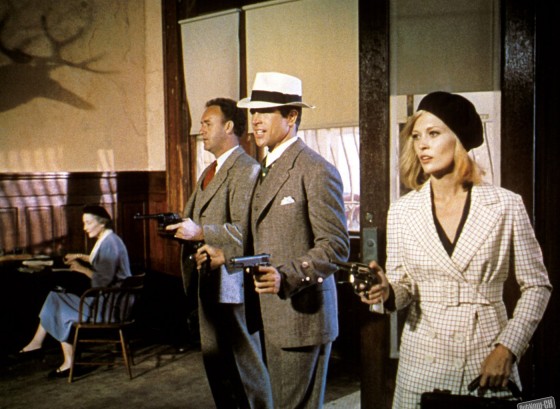
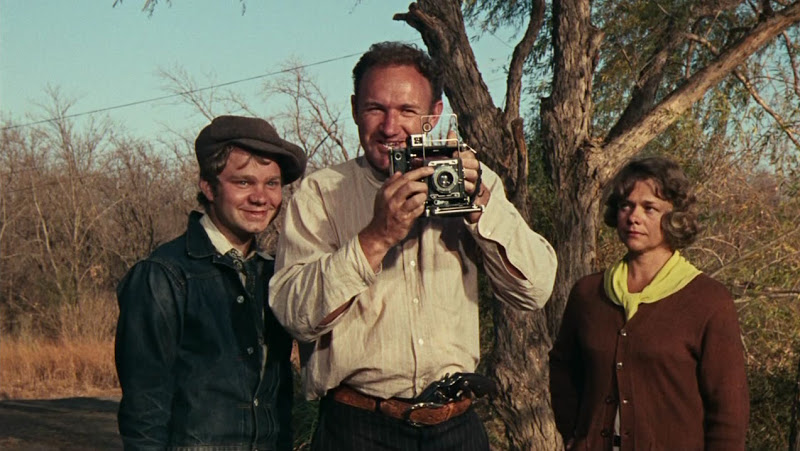
The story opens with a bored, sexually frustrated small town girl (Faye Dunaway) meeting a charming bad boy (Warren Beatty). She questions his courage and masculinity, and he shows off by drawing a gun and committing a robbery. They flee her backwards hometown together, intoxicated by freedom, danger and each other. More daring robberies follow, and with it growing fame for Bonnie and Clyde. Soon they gather other people around them, including a slow witted ne’er do well (Michael Pollard), Clyde’s older brother Buck (Gene Hackman) and Buck’s prim, God-fearing wife Blanche (Estelle Parsons). The law of course comes after them, spurring epic gun fights and a wild cross-country chase sparked with episodes that are surreal (the mesmerizing family reunion scene, which was shot by putting a window pane in front of the camera) and comic (the best of which features Gene Wilder, in his first movie). The story’s conclusion, which I will not spoil, is justifiably one of the most famous scenes in the history of American cinema.

The sexuality and graphic violence on display here was beyond anything Hollywood films had done since the Hays Code came into force in 1934. This is one of the first movies to use squibs and to show bullet wounds spouting blood. The impact of the violence is further amplified through use of the choppy editing style that been popularized by the French New Wave. Also, in a striking reversal of the typical gender roles of films in the 1950s, the woman is the confident sexual aggressor and the man is sexually timid and indeed non-functional (in early drafts of the script, Clyde was in a gay relationship with one of the men in his gang, but in the final version he instead is impotent). The point of view of the story was also novel and in keeping with the rebellious spirit of the times: The heroes are murderers who mow down police officers without compunction.

But it is not just the sexual and violent themes that make Bonnie and Clyde a landmark American film, it is also the movie’s meditation on fame. The criminals’ exhilaration in their notoriety, their self-conscious pursuit of increased publicity and the way they are hero-worshiped by strangers highlight the absurdity of American celebrity culture in supremely effective fashion.

As for the acting, under Arthur Penn’s direction, the entire cast explodes off the screen. Parsons won an Academy Award for her performance but any of the leads and supporting players would also have been worthy choices. Last but certainly not least, Burnett Guffey’s “flat style” camerawork — a complete inversion of his remarkable work in films I have recommended like My Name is Julia Ross, In a Lonely Place,  and The Sniper — is one of the lasting achievements in Hollywood cinematography. That Guffey could early in his career thrive in the deep focus, shadowy, stylized world of film noir yet later became a leading exponent of unadorned, naturalistic cinematography shows that he was truly one of the giants of his profession.

The backstory to this film has also become part of its legend. Clyde Barrow and Bonnie Parker were of course real-life bank robbers in Depression-Era America. The Oscar-winning script of this film was brilliantly adapted from their exploits by David Newman and Robert Benton, with uncredited help from Robert Towne. (All of whom, like so many of the people associated with the film, went on to notable success in American cinema). The writers tried unsuccessfully to recruit a French New Wave director to make the movie, but none of them were ultimately interested. Fortunately, Warren Beatty saw the potential of the story and bought production rights, eventually signing Penn as the director. As a sign of how out of touch studio executives were with 1960s filmgoers, the suits at Warner Brothers had so little confidence in the film’s audience appeal that they were comfortable promising Beatty 40% of the gross receipts. They barely released and minimally promoted the picture, and were not surprised when establishment movie critics sneered at it. But it hit audiences like a thunderbolt, becoming a massive box office hit. Remarkably, some chastened film critics went so far as to publicly apologize for their dismissive reviews and to write new reviews praising the movie (except for the New York Times’ insufferable Bosley Crowther, who campaigned against the film so vigorously that his bosses finally realized that it was time to find a more discerning critic). Many years later, this initially unwanted, disregarded and disrespected film became one of the first movies selected for preservation by the National Film Registry.

p.s. If any film prefigures Bonnie and Clyde in American cinema, I think it’s Joseph Lewis’ extraordinary 1950 movie Gun Crazy. If you have time for a double feature, that’s the film to pair with this one. And if you have time for a triple feature, throw in Lewis’ My Name is Julia Ross to appreciate the incredible range of cinematographer Burnett Guffey.

Categories
Action/Adventure Romance

The Adventures of Robin Hood

If your life is giving you some family time, you and your kids can together enjoy a rollicking tale of derring do set in Merry Olde England: 1938’s The Adventures of Robin Hood. Famous as the film that transformed swashbuckling Errol Flynn from a movie star into a global sensation, it’s also historically important as Warner Brothers’ first foray into glorious Technicolor.

The plot is of course familiar and has been adapted dozens of times: When King Richard the Lionhearted leaves the country, his heartless brother John begins terrorizing the peasantry. The courageous noble Robin of Locksley voluntarily leaves his comfortable life to fight for the oppressed, becoming a daring outlaw who along with his Merry Men takes a personalized approach to progressive taxation. Along the way Robin wins the love of Lady Marian, who becomes a brave advocate for the downtrodden despite her blue blood.

This was a big budget film, with lavish costumes and sets designed to show off the possibilities of Technicolor photography. It’s also big in other ways: Huge battles, extended sword fights, heroic stunt work and full-blooded performances by the whole cast. For raw entertainment value alone, this is a Hollywood studio system classic, and was deservedly selected for preservation in the National Film Registry.

Despite being wracked with numerous health problems in real life (He died at 50 with the body of an old man), on screen Flynn is the apotheosis of the virile, roguishly charming man of action. He was working with his frequent collaborator Michael Curtiz (Who also directed him in my recommendations Captain Blood and The Sea Hawk), who clearly knew how to get the most out of Flynn. Flynn gets outstanding support from the rest of the cast, including Claude Rains as a fey Prince John and Basil Rathbone as the dastardly Sir Guy of Gisbourne. Olivia de Havilland, who worked with Flynn on eight films, was cast more for her looks than talent in her early career, but she became a better actress over time. She’s good enough here at portraying Marian’s growing awareness of the plight of the poor and her own love of Robin. The actors in the smaller parts also do well, especially Eugene Pallette as Friar Tuck.

This is a particularly good film for kids, not only because the exciting story is easy to follow but also because it embodies admirable values. I love all the ethical shading of film noir, but there is also a place for movies that teach uncomplicated moral lessons: The rich have an obligation to the poor, and good people must fight back when the strong exploit the weak. Roger Ebert, who loved this movie, said it beautifully: “In these cynical days when swashbucklers cannot be presented without an ironic subtext, this great 1938 film exists in an eternal summer of bravery and romance”.

Before closing my recommendation of this rousing classic, I leave you with two notes of trivia (1) The 1922 Douglas Fairbanks Sr. version of Robin Hood was filmed in Bidwell Park in Chico, California, and the Flynn version returned there for some of its shoot. (2) Much of the film was hilariously parodied in another of my recommendations, The Court Jester, with Rathbone sending up his own performance.

Categories
Action/Adventure Foreign Language Horror/Suspense Mystery/Noir

Män Som Hatar Kvinnor

image

The left-wing Swedish author Stieg Larsson had a strange and remarkable life. As a teenager, he witnessed some of his friends commit gang rape, and was haunted thereafter both by guilt about his failure to intervene and the omnipresence of violence against women. As a journalist he was unknown outside of Sweden when he died suddenly at the age of 50, but soon became one of the most widely read authors on Earth when his Millenium triology was posthumously published. The first filmed adaptation of Larsson’s crime novels is the unforgettable 2009 Swedish television mini-series Män Som Hatar Kvinnor.

Though known as “The Girl with the Dragon Tattoo” to Americans, the original Swedish title actually translates as “Men who Hate Women”, which better describes what this film is about: a ferocious, unforgettable, superheroine battling some of the slimiest and scariest misogynists in film history (which is saying something).

Noomi Rapace knocked the film world on its ear with her four-barreled performance as Lisbeth Salander, a social misfit with a history of trauma, a genius for computer hacking, and an invincible survival instinct. Events bring Salander together with crusading journalist Mikael Blomkvist (Michael Nyqvist, nicely underplaying his part), who is attempting to solve the long-ago disappearance of a little girl in a remote Swedish village that is icy in more ways than one. Along the way they encounter enormous human ugliness (almost all of it male), perplexing clues, and life-threatening risk.

Having not read Larsson’s books, I cannot evaluate the faithfulness of Rasmus Heisterberg and Nikolaj Arcel’s screenplay to the original story. But I certainly aver that it’s a fine bit of writing, rounding out each character and having them bounce off each other in ways that advance the story. The relationship between Salander and Blomkvist is particularly refreshing because it completely reverses the gender role conventions of the genre. The mystery/thriller elements are also fairly well-done, keeping the audience puzzling over the solution at times and on the edge of their seat at others.

As photographed by Eric Kress, Northern Sweden is a bleak and lonely physical environment populated by bleak and lonely people, amongst whom some true monsters can easily hide. The film could easily have been a downer if not for the breathtaking power of Salander’s character and Rapace’s performance. Multi-layered female roles are sadly uncommon in movies; the worldwide embrace of Lisbeth Salander shows that audiences are hungry for more.

p.s. This review is based on the 180 minute version that played on Swedish television (later edited down into a shorter film for release in theaters). The 2011 English-language remake has a bigger budget with bigger stars (including a miscast Daniel Craig as Blomkvist) and is certainly a polished piece of work, but not quite as effective as the original.