Categories
Action/Adventure Drama Mystery/Noir

The Friends of Eddie Coyle

Burt Lancaster, Kirk Douglas, and Robert Mitchum were born within a few years of each other and found great success in Hollywood in the decades immediately after World War II. They were often cast in similar roles: If you see an American movie from that period featuring a tough as nails cop or PI, a brawny cowboy slugging it out in a saloon, or a strong-jawed soldier saving his platoon or battleship, one or more of them was probably on screen. But by the end of the 1960s when they were all in late middle age, Mitchum had fewer films that would be remembered as classics (Out of the Past and Night of the Hunter being the strongest candidates) to his credit than did his contemporaries, perhaps because he never took his job that seriously (He famously noted that acting can’t be that hard given that Hollywood’s biggest star in its early days was a dog). With a few exceptions, Mitchum’s work in the 1940s-1960s was overall simply not at the level of Douglas or Lancaster (or for that matter Peck or Wayne).

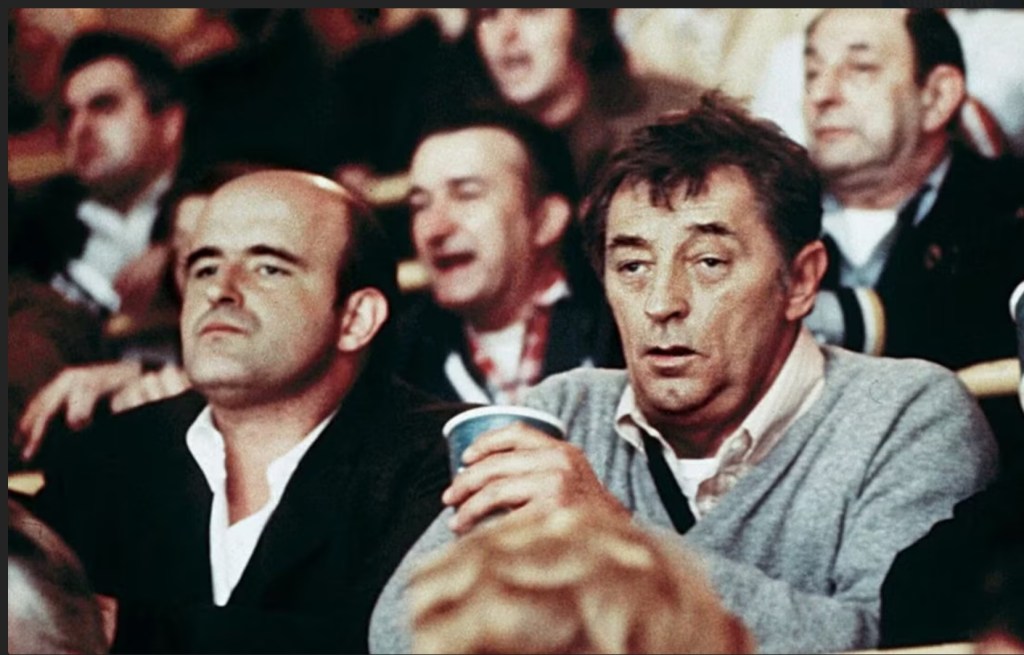
But as he got old, Mitchum got more interesting. His tired eyes began to match the shambling body that carried them, his air of disinterest became more melancholy than insolent. Mitchum’s world-weary Phillip Marlowe in Farewell, My Lovely (my recommendation here) is one of my favorite performances of the mid-1970s, and I would argue that he reached his greatest height just before that in the 1973 movie The Friends of Eddie Coyle.

The plot of the film closely follows the novel by George V. Higgins, who as an Assistant U.S. Attorney in Boston knew the terrain he was describing. Under grey Beantown skies, a gang is pulling off a string of bank robberies using handguns supplied by minor league criminal Eddie Coyle (Mitchum). Coyle purchases the weapons from a better-connected gunrunner (Steven Keats) who also traffics in machine guns. Because Coyle is facing a sentencing hearing for smuggling a truckload of whiskey for his shady bartender (Peter Boyle), he is tempted to give information about the machine guns to an ATF agent (Richard Jordan) in the hopes of a lighter sentence. Coyle doesn’t want to go to prison again at his age, for his own sake and for that of his wife and kids, but he also doesn’t want to be a rat nor accept the risk of harsh punishment if the mob finds out he dropped a dime.

Director Peter Yates follows the compelling formula he established in my recommendations Robbery and Bullitt, namely one exciting scene with cars (in this case an inventive chase in a parking lot) and a lot of low-key atmosphere and acting everywhere else. Sporting a haircut and clothing that looks like it ran him a ten spot all in, Mitchum quietly commands the screen without a whiff of movie star about him. Eddie Coyle is not a particularly good man, but he some sense of duty to his friends and family, and Mitchum makes the audience care about him, defects and all, not least by portraying more vulnerability than toughness.

The supporting cast members all give excellent naturalistic performances that make a life of crime look gritty, unglamorous and even a bit tedious. Combined with ideal use of Boston locations, the movie at times takes on the tone of a docudrama about real world cops and robbers. It’s superb slice of life cinema anchored by the best work of Mitchum’s career.
p.s. This movie lost money but has become a cult favorite among film buffs. I assume Quentin Tarantino is one of them given that Steven Keats’ character is named Jackie Brown.
Categories
Action/Adventure Drama Mystery/Noir

Gun Crazy

The excellent film Trumbo includes a colorful performance by John Goodman as the real-life raffish independent movie producer Frank King. King and his brothers (whose real family name was Kozinsky) were never respected by Establishment Hollywood but were daring in way the big studio suits were not. In what at first might have been an effort to move into prestige pictures, they purchased the rights to a story by MacKinlay Kantor, who had written the source material for the massively popular and Oscar-laden 1947 classic The Best Years of Our Lives. But Kantor proved unable to turn his story into a solid screenplay, leading the King Brothers to fall back on their common practice of secretly using blacklisted writers, in this case a prison-bound Dalton Trumbo. He turned Kantor’s draft script into the sexually-charged and violent cinematic miracle that is 1950’s Gun Crazy.

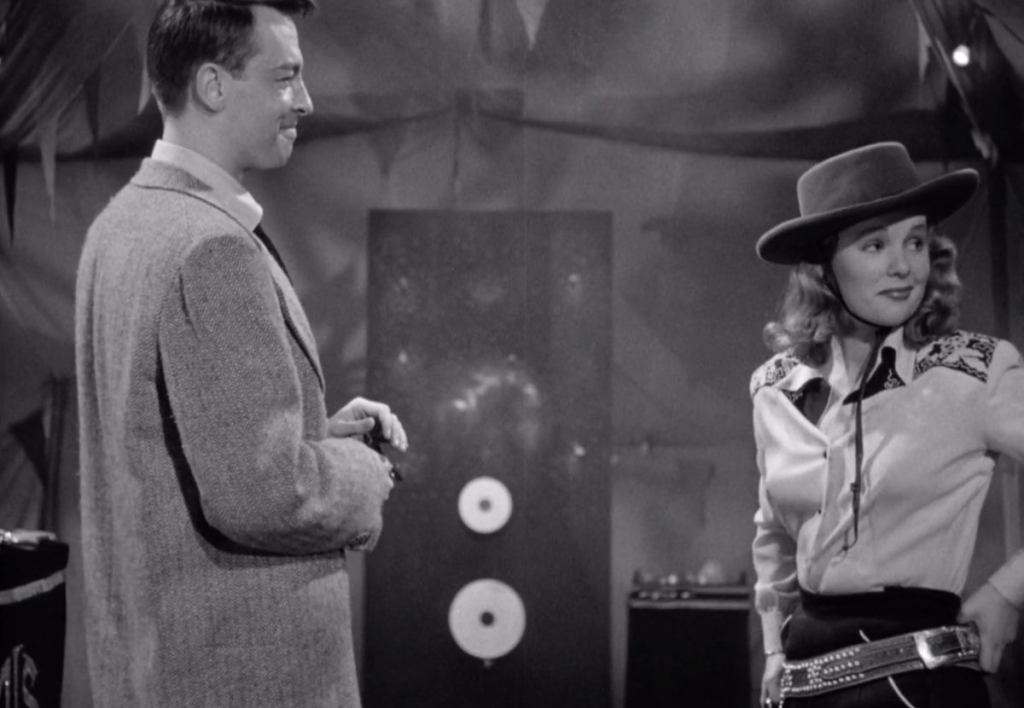
The plot: Bart Tare (John Dall) has been gun-obsessed from boyhood, which eventually lands him in reform school after he can’t resist committing a smash and grab robbery of a gun shop. After a tour in the army, where he thrives as a firearms instructor, he visits a travelling circus and is enthralled by the trick shooting show of the alluring Annie Starr (Peggy Cummins). Mutually besotted, they run away together, quickly burning through all of Bart’s savings. Annie suggests they turn their formidable skills to a career in armed robbery. Bart is scared someone will get hurt…Annie, not so much. But he can’t say no to her, leading to a Bonnie and Clyde-esque crime spree with shattering consequences.

In my recommendation of My Name is Julia Ross, I noted how that film’s 12-day shooting schedule was actually a luxury for Poverty Row veteran Joseph Lewis. Imagine how happy he must have been to have a whole month to direct this movie on a budget almost a third as big as a typical Hollywood film! He coached his compelling lead actors to express, as much as one could in 1950, wanton hunger for each other as well as, in Cummins’ case, a nearly orgasmic delight in violence.

Lewis and cinematographer Russell Harlan pursue a breathless, arresting style throughout this film. This includes, among other inspired camera placements, a deservedly legendary extended take with the camera in the back seat as the lovers commit and flee a bank robbery. As the audience, we are pulled along with the criminals by a fast-moving stream of images, wanting to pause for breath but afraid to let them out of our sight. It’s tough competition, but shot for shot, Gun Crazy ranks with the most visually stunning works in film noir history.

The story’s evolution and resolution turns on an implicit question: why are the two characters fundamentally different in their morals, despite their shared fascination with firearms? The early scenes of the film suggest that while Bart appears never to have had a relationship with his parents, he was at least raised by a loving older sister (Anabel Shaw) and had two childhood friends (Harry Lewis and Nedrick Young). Annie’s backstory is never told, leaving the audience to wonder if even that little love is more than she ever experienced on this earth. The movie never makes this femme fatale explain or justify her motivations, and in film noir that’s a feature, not a bug.

p.s. The black beret Faye Dunaway wears in another of my recommendations, Bonnie and Clyde, is a tribute to Gun Crazy by director Arthur Penn.

Categories
Action/Adventure

Sahara

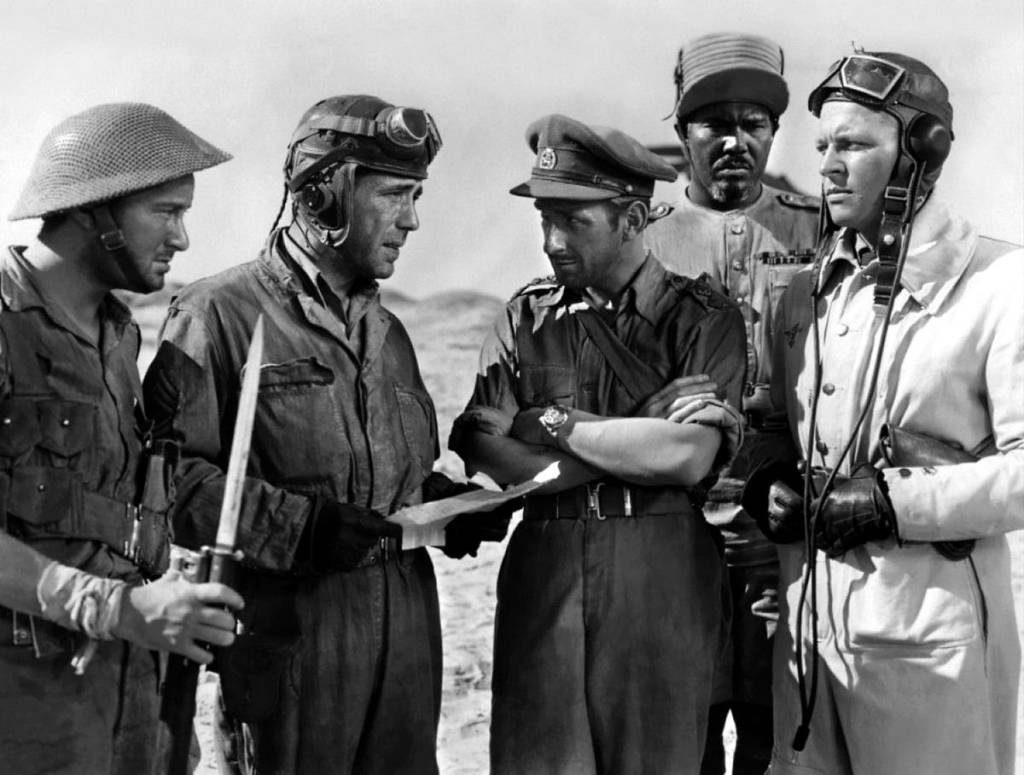
I recommend many famous films on this site, but I also try to call attention to high-quality films that have been largely forgotten.  A good example is Zoltan Korda’s desert combat classic Sahara. Lauded upon release, over time it has been eclipsed in most people’s memory by that other North Africa-set Humphrey Bogart movie that was also released in 1943 (Casablanca of course, the best movie produced by the Hollywood studio system – my analysis of its most important line is here).  But even in today’s time of a relative peace, this World War II story retains power to entertain and inspire viewers.

The plot: The allies are taking it on the chin in Libya, and a lone surviving tank from a destroyed batallion chugs south across the blazing desert, trying to avoid the Germans and link up with Western forces. The American tank crew is headed by Sergeant Joe Gunn (Bogart), and becomes internationalized as British, French, South African, and Sudanese soldiers separated from their units hitch a ride. The crew also take on an Italian prisoner who, being Italian, is thinking of switching sides (J. Carrol Naish, in an Oscar-nominated performance). Like the Germans who are all around them, this motley crew seeks not just military success but precious water.  They set out to find a ancient well, which a dramatically larger, equally parched German force also craves.  An electrifying, protracted siege composes the final act.

Part of the greatness of Sahara is how many ways there are to enjoy it. Sahara works as a thrilling combat film with soldiers slugging it out in harsh conditions. Like another or my recommendations, In Which We Serve, it also succeeds as propaganda, with both the dialogue and the performances conveying what was at stake in the war and why the Allies were the good guys and the Nazis were the bad guys (I know there is a school of thought that asks “really, weren’t they all equally bad?”…if that’s you, please go away forever as you are too stupid to appreciate my website). Finally, despite multiple characters bordering on stereotype, Sahara also delivers strong dramatic moments between people under pressure.

In the mid-20th century, when studio executives wanted to make a film about “an American everyman called to heroism by circumstance” they called Bogart. Sahara shows yet again the wisdom of that call. I was particularly moved by Bogart’s delivery of the “big speech before battle”, an absolutely un-King Henry V at Agincourt speech ungirded by democracy, decency, and courage. The rest of the cast, which is all-male (unless you count Lulubelle, the tank) is also strong, and includes several performers who would go on to impressive careers in movies and television (e.g., Lloyd Bridges, Dan Duryea)

I was also pleasantly surprised at the film having a Black hero (well-played by Rex Ingram). Like Casablanca, Sahara presents a world where democracies embrace cross-racial friendship and respect. In the 1940s, this was of course an idealized sentiment…but it’s good to have ideals, and they were certainly different than those of Nazi Germany. Not incidentally, if you listen carefully, you will hear a Nazi that our heroes take prisoner (Kurt Kreuger) refer to Ingram’s character with a racial slur.  If you aren’t cheering for Ingram in his final confrontation with Kreuger (which was so realistic that one of the actors was almost knocked unconscious) you don’t have a heart in your chest.

Plaudits go as well to James O’Hanlon, Korda and the soon to be blacklisted John Howard Lawson who wrote the taut, gritty script based on Phillip MacDonald’s novel. Also to love: one of my favorite cinematographers (see here and here), Rudolf Maté, again creates stunning visuals, including cascading sand dunes in bright yet bleak light.

Sahara is a melodramatic movie, but I have to say it got to me.  And of course its potency would have been much greater during the war when Americans were fighting and dying alongside Allied soldiers around the world. A beloved film in its era, it deserves broad viewership today.

p.s. This film is partly inspired by a Soviet movie The Thirteen, and has subsequently inspired other films including Last of the Comanches.

Categories
Action/Adventure Drama

The Gunfighter

Westerns became darker after the war, in some cases translating aspects of the urban film noir mood and style to the wide-open spaces. The signature westerns of this type were the eight that director Anthony Mann made starring Jimmy Stewart, including my recommendations Bend of the River and the Naked Spur. But other filmmakers also made major contributions to the rise of the moody oater, including the talented team behind the 1950 classic The Gunfighter.

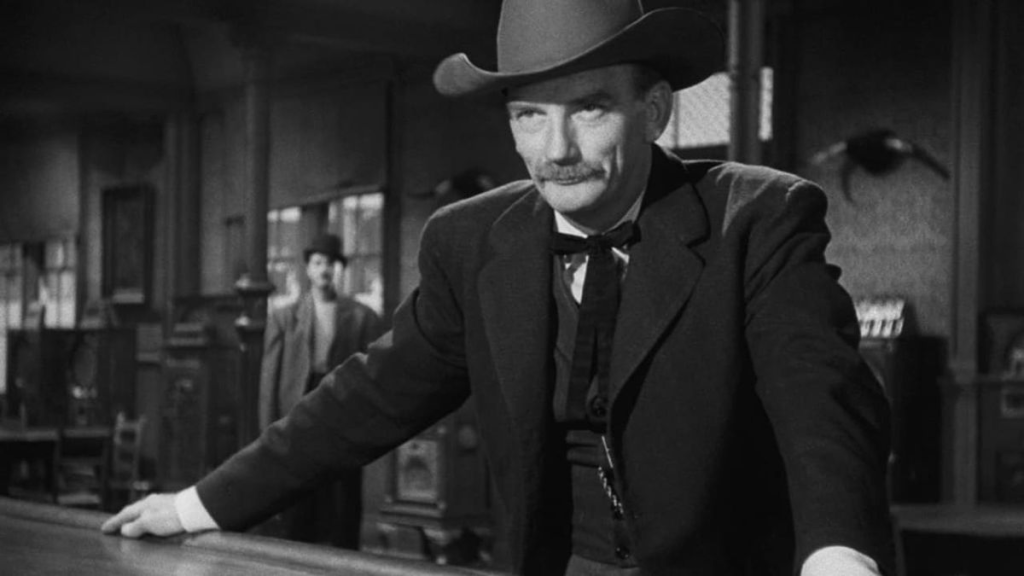
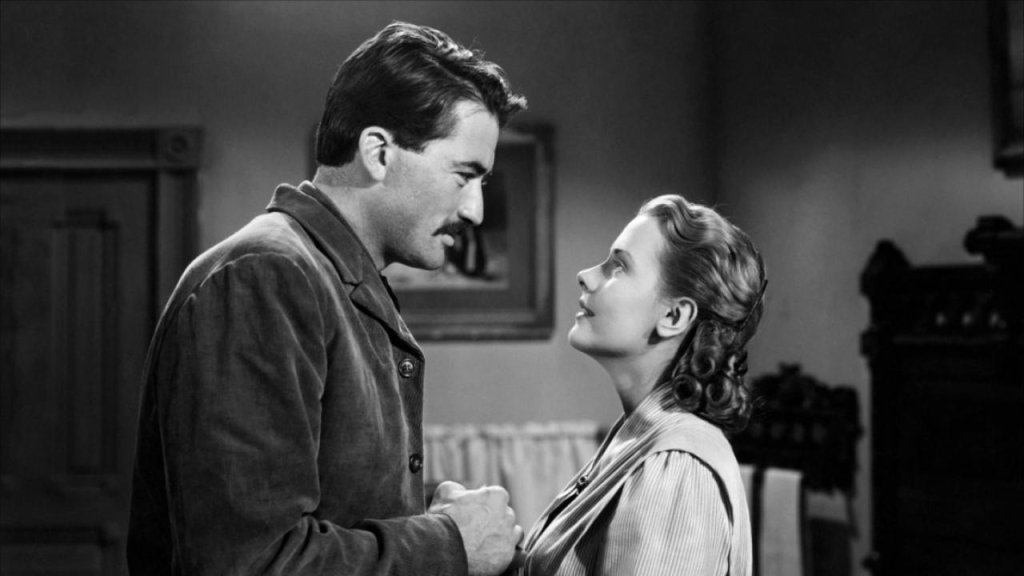
Written by William Bowers and William Sellers based on a story by the noir-experienced director Andre de Toth, the plot centers on world-weary gunhand Jimmy Ringo (Gregory Peck). He’s lived a life of violence that he can’t seem to escape. Every town he visits seems to include either a young “squirt” who wants to become the man who outdraws the legendary Jimmy Ringo, or, a vengeful relative of one of the many men he’s killed. But what Ringo wants is to retreat into a peaceful, domestic world by reuniting with his ex-lover Peggy Walsh (Helen Wescott) and their young son (B.G. Morgan). Ringo travels to a small town to reunite with his estranged family, where he camps out at a bar watched over by two other figures from his past, a chatty bartender who seems enchanted by Ringo’s exploits (Karl Malden) and an old running buddy who has gone straight and become a Marshall (Millard Mitchell). As Ringo waits and waits on Peggy’s decision, a crowd grows outside the bar, observing him like a circus animal. And as ever, men with guns are on his trail.

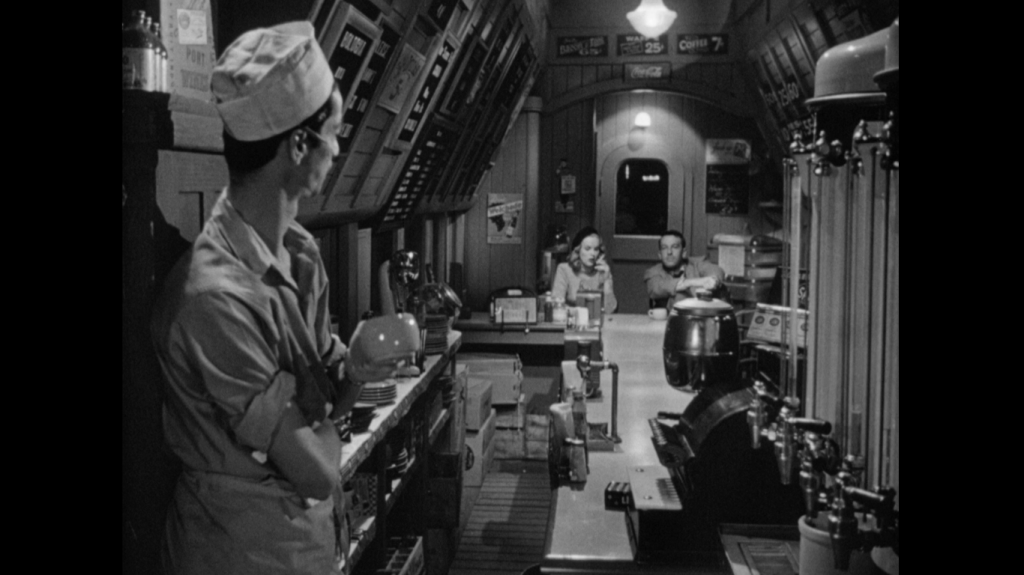
There are some action sequences in this film, but the energy here comes mainly from the excruciation of waiting, much like in another classic western of the period, 3:10 to Yuma (The original, not the disappointing 2007 remake). As Ringo’s penitent wait goes on and danger closes in, the viewer is increasingly, nervously, riveted. And like many of the best noirs, the movie dangles hope for redemption in front of the audience while undermining it with a cynical undercurrent of inevitable doom. The Gunfighter is about the isolating effects of living a violent life, which Arthur C. Miller, one of the most garlanded cinematographers of the period, conveys artfully through deep focus shots in interior settings (like the one at the top of this post) and shadowy wide screen shots in the desolate outdoors.

Director Henry King never quite ascended into the pantheon of all-time great directors, but he was a very good one for a very long time. King was an effective storyteller in multiple genres. And he particularly knew how to make the best use of Peck, whom he directed half a dozen times. As for the star himself, this is one of his greatest performances. He is cold and tough at one moment, vulnerable and warm the next, without making the transitions seem affected. And he makes the audience root for a man who is, let’s face it, a serial killer, even if he never shoots an unarmed man. Peck is well-supported by the rest of the cast, particularly Mitchell and Wescott in the biggest supporting roles (credit to King here too).

This remarkable film includes a few light moments, but an air of sadness prevails. As desperately as Jimmy Ringo wants to escape the life his choices have created, a line of other men desperately want it for themselves. Sometimes we can’t make good our mistakes and are equally helpless at stopping other people from making the same ones. That bleak view of human existence was central to film noir, and gives this noirish western enormous psychic weight

p.s. Intriguing historical note: different sources says that John Wayne either turned down the lead role and regretted it, or was denied the role and resented it. In any event, late in his life he visited quite similar dramatic territory in The Shootist.

p.p.s. William Bowers later wrote a hilarious spoof of the Western genre, which I recommend: Support Your Local Sheriff.

Categories
Action/Adventure Comedy

Support Your Local Sheriff

As you may have gathered from my hearty endorsement of Airplane! I enjoy movies that make fun of movies, particularly when they star people who are staples of the genre being mocked. If Airplane! is the king of disaster movie parodies, its western sibling is director Burt Kennedy’s 1969 laughfest Support Your Local Sheriff.

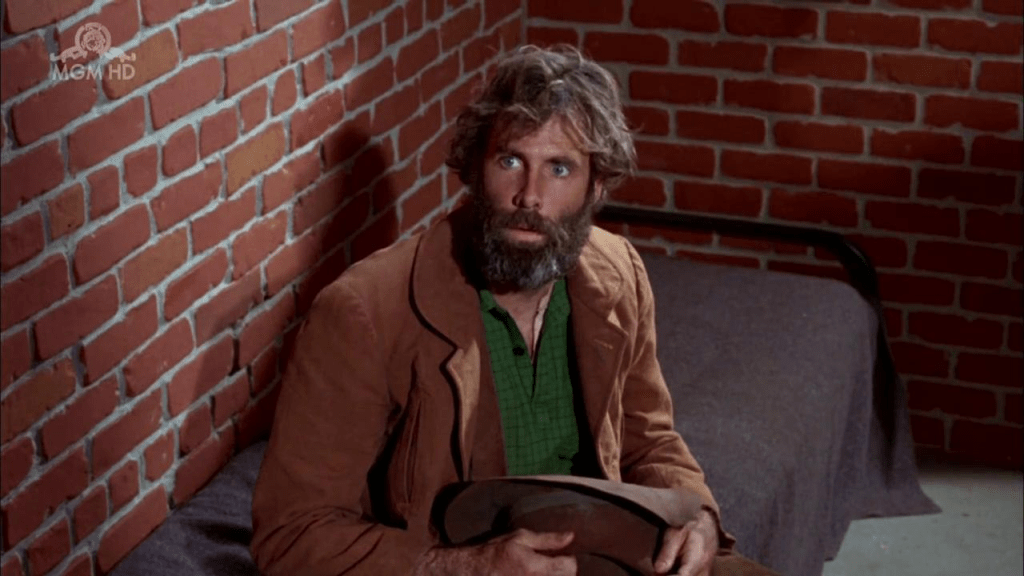
As is appropriate for a parody, especially one written by a man (William Bowers) who received an Oscar nomination for co-writing The Gunfighter (my recommendation here) the plot is recycled from a thousand other oaters. A lawless gold rush town is afflicted with vice and violence until a handsome stranger named James McCullough (James Garner) rides in and shows some facility with firearms. Mayor Perkins (Harry Morgan) sees a man crazy, er, brave enough to become the town sheriff, including facing down the patriarch of the powerful Danby family (Walter Brennan). And would you believe Perkins has a strong-willed Calamity Jane-esque daughter (Joan Hackett) who takes a shine to our hero? Skewering of every trope of the genre ensues.

James Garner’s easygoing charm is an enormous asset here. Watching him you realize (as he did) that he was so much more made for this kind of role than dead serious westerns like Hour of the Gun (which I don’t recommend) Garner’s tough enough to bring the action scenes across and romantic enough to make his scenes with Hackett endearing. But most importantly, his resolute unwillingness to take himself entirely seriously makes this movie really funny. He gets superb comic support from the usually intense Bruce Dern as one of the dull-witted Danby clan (as the father befuddled by his many disappointing offspring, Brennan is also a joy).

You will recognize almost all of the supporting players (certainly including Morgan) from other cowboy films. But the cast member with perhaps the most cred to make this movie is Jack Elam. Indeed, it would be a tough trivia challenge to name a TV western in which Elam never appeared (Gunsmoke!, Bonanza, The Virginian, High Chaparral, Wild Wild West, Temple Houston, Laramie, Cheyenne, Lawman, and Rawhide are among the many wrong answers available). Here, he turns his usually-menacing bug eyes and thick eyebrows into comic jewels in the well-worn role of “drunken wretch who redeems himself through law enforcement”. He mugs a bit, but like when Leslie Nielsen does it in the Airplane and Naked Gun films, it generally works.

The movie is not quite as funny as Airplane!, in part because the script isn’t as consistently hilarious and in part because of the passage of time. If you’ve never seen classic movies like My Darling Clementine, Rio Bravo, and Winchester ’73 (and sadly, most people these days haven’t) some of the jokes don’t land as well. But that won’t stop this film from being fun for western-naive viewers, because it’s just too good-naturedly silly not to like.

p.s. Most of the same people got together again to make another film in this vein with new characters (so strictly speaking, not a sequel), which is nearly as entertaining: Support Your Local Gunfighter.

Categories
Action/Adventure Romance

The Prisoner of Zenda

I am fond of the big budget adaptations of popular stories of adventure and romance that Hollywood made in the 1930s, like my recommendations Count of Monte Cristo, The Adventures of Robin Hood, and The Scarlet Pimpernel. Among my favorites is the 1937 adaptation of Anthony Hope’s novel Prisoner of Zenda. Hope’s work has been adapted many times before and since, but never in such thrilling, entertaining, and inspiring fashion.

The story is set in a small, obscure European country called Ruritania (Hope spawned so many imitators that there is now a recognized subgenre of literature called Ruritanian romance). An unpretentious, upright Englishman played by Ronald Colman meets the local prince and discovers he looks a lot like…Ronald Colman! Due to some “fishing in forbidden waters” by a shared ancestor, the two are distant cousins who could pass for identical twins. This comes in handy when the prince’s scheming brother Black Michael (Raymond Massey) and his henchman Rupert of Hentzau (Douglas Fairbanks, Jr.), drug and kidnap the prince in order to stop his coronation as king. But two of the prince’s loyal retainers (C. Aubrey Smith and David Niven) realize that ye olde switcheroo could save the day, provided the replacement doesn’t mind pretending to fall in love with the glamorous Princess Flavia (Madeleine Carroll)…which it turns out he can do very convincingly indeed. Meanwhile our heroes plot to rescue the prince, with the aid of a noble woman (Mary Astor) who just wants to settle down with Black Michael and be done with it. Palace intrigue, derring-do, star-crossed love, and gallantry ensue.

David O. Selznick was producer (United Artists distributed), and he wrote checks worthy of his contemporaries making costume dramas at MGM and Warner Brothers. The sets are lavish, the costumes are perfect, and the cast is a candy store. A handsome original score by Alfred Newman is also on offer, which netted him the first of his eye popping 45 Oscar nominations.

Colman had more of an acting challenge in his marvelous A Double Life, but the golden voiced actor does well here, taking the material seriously enough to sell it but with notes of humor that make it much more fun. It’s particularly enjoyable for fans of these sorts of movies to see him cross swords with that swashbuckling rogue son of a swashbuckling rogue, Douglas Fairbanks Jr. And Carroll, one of the highest paid actresses in the world at this time, shows why she deserved every penny. Not only is she achingly beautiful, but she also has substance, particularly in the scene where the film shows a highly moral unwillingness to value individual romantic feelings over public duty (shades of Casablanca here, except this time the woman has Rick Blaine’s part and the man has Ilsa Lund’s). The supporting players also sparkle under John Cromwell’s direction, further contributing to making The Prisoner of Zenda an all-time classic of Saturday matinee fare.

p.s. Massey and Niven, who also co-starred in another of my recommendations, A Matter of Life and Death also bowed out together, both passing away on July 29, 1983.

p.p.s. C. Aubrey Smith played the lead(s) of Prisoner of Zenda on stage four decades prior to this movie.

Categories
Action/Adventure Horror/Suspense

The Silent Partner

Among bank heist movies are some gems that inject a clever plot twist or perspective that livens up the otherwise familiar contours of the subgenre, including Inside Man, Charley Varrick, and JCVD. In 1978, a small Canadian film earned a place among such worthies by crafting a story that is as much a character study as a caper film: The Silent Partner.

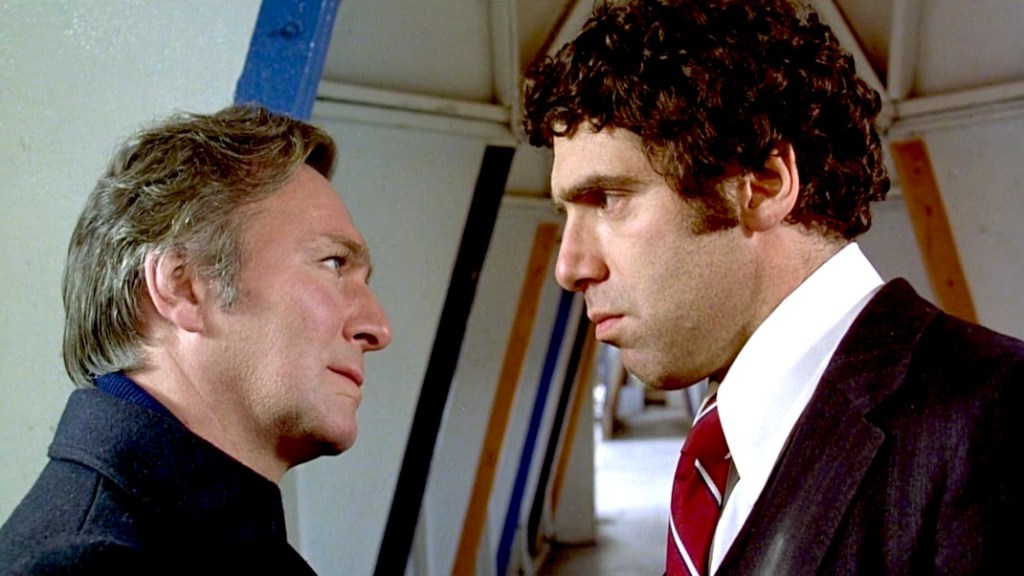
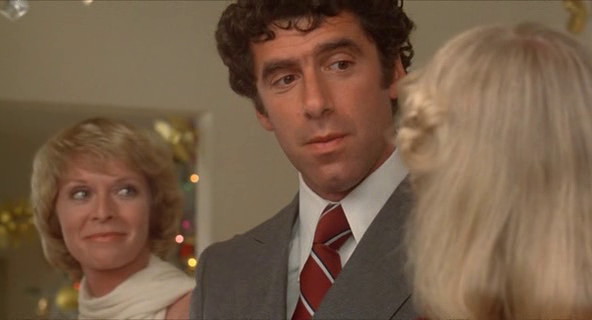
Like Charley Varrick, The Silent Partner features a bank robbery that hides another crime. In this case, that crime is pulled off by a seemingly mild-mannered bank clerk named Miles Cullen (Elliot Gould). When a hardened criminal Harry Reikle (Christopher Plummer) attempts a stick up, Miles gives the robber a pittance and secretly pockets most of the bank’s money himself! But the sadistic Harry doesn’t take kindly to being duped, commencing a tense and dangerous battle of wits between the two men.

Elliot Gould is in good form here playing a man who is continually underestimated by others. Gould makes credible Miles’ increasing confidence in his criminality and also his sexuality. He is matched by Plummer’s disturbingly good turn as a slightly fey yet clearly vicious sociopath. Susannah York, as a co-worker who is both romantically interested in yet confused by Miles, and Céline Lomez as a sexy woman of intrigue, add erotic sparks to the story. Indeed, there is a lot of sex laced throughout the film — including, Plummer makes us sense — some sexual fascination with Miles by Harry.

sunset gun: Elliott Gould on The Silent Partner

There’s a lot of talent around these actors. Daryl Duke, mainly a television director, makes the most of his chance to helm a motion picture. I felt he let the pace slacken a bit too much about 2/3 of the way through, but his storytelling skills and ability to establish tone are impressive. Screenwriter Curtis Hanson and cinematographer Billy Williams showcase the talent that would eventually bring them Oscars (For L.A. Confidential and Gandhi, respectively). Jazz legend Oscar Peterson provides a fine score.

It all adds up to one of most original and gripping bank heist movies ever made. The Silent Partner succeeds both as a thrilling crime film and also as a portrait of how an “ordinary” person can summon remarkable reserves when pushed to the limit.

p.s. Look closely for John Candy as a bank employee who pursues the office floozie.

p.p.s. There is one extremely violent scene in this movie (you will know it when you see it) that Daryl Duke hated so much that he refused to shoot, but the producers put it in anyway without him.

Categories
Action/Adventure Horror/Suspense Science Fiction / Fantasy

Them!

Before Aliens, before Starship Troopers, before The Swarm, even before Tarantula (my recommendation here), Hollywood discovered that bigging up bugs into a threat to humanity could translate a prevalent human anxiety into a nerve-jangling cinematic experience. The year was 1954 and the movie has since became revered as a trendsetting sci-fi classic: Them!

As I have said many times on the site, I love films that put the audience immediately into the story without ponderous context-setting. Them! is a master class in the art. The film opens with a little girl (Sandy Descher), visibly in shock, walking mutely across the New Mexico desert. She is rescued by police, led by the brave and compassionate Sgt. Ben Peterson (James Whitmore). The cops investigate, finding homes torn open, people dead or missing, and a suspicious quantity of spilled sugar. When the horrifying nature of their atomically-charged adversary becomes apparent, the authorities call in a stout FBI agent (James Arness), an eccentric, elderly myrmecologist (Edmund Gwenn), and his equally scientifically gifted daughter, who is also a dish (Joan Weldon). A thrilling humanity vs. super-insect war ensues.

48. Them! (1954) | Wonders in the Dark

Hollywood has always had prestige directors who make big budget, A-list films. But in the era when many people went to the movies every week, the studios also needed competent, no name directors who could efficiently deliver movies of all forms on a tight schedule. Gordon Douglas was cut from that cloth: he directed 27 films for Warner Brothers in the 1950s alone, most of which were modestly budgeted films destined to be second features in theaters for a couple weeks and then be forgotten. But he could make a very good movie when he was given the tools, as was here courtesy of original story writer George Worthing Yates, adapter Russell Hughes, and screenwriter Ted Sherdeman. His artistically outstanding decision was to direct the first 30 minutes of this movie like a ghost story set in the eerie expanses of sand-swirled desert. After one of the most famous big reveals in sci-fi film history, the story then becomes a more conventional “bug hunt”, but Douglas handles that form well enough to bring the audience along with him.

Them! (1954)

Whitmore and Arness’s characters don’t make much sense, in that they start out as a highway patrolman and FBI agent and end up practically running the U.S. military’s anti-ant operations. But they are strong-jawed enough to be upstanding and believable action heroes. As a daffy but brilliant professor, Gwenn adds some welcome humor, and Weldon is credible as a confident and intelligent woman (not many of those in movies of this period) who catches Arness’ eye while also helping save our species.

The other attraction here are the Oscar-nominated special effects. By modern CGI standards, they are of course laughable. But at the time, they were pathbreaking. And in any event, part of appreciating old monster movies is finding the charm of the craft of SPFX creators in a pre-high-tech environment.

Categories
Action/Adventure Comedy

To Be Or Not To Be

Long before Mel Brooks got everyone laughing at Nazis, a Hungarian-born producer (Alexander Korda) and German-born director (Ernst Lubitsch) somehow persuaded Hollywood to take a major risk at the height of World War II: Combine an espionage thriller with screwball comedy! The resulting film met a decidedly mixed reception in 1942, but over time has become recognized as one of the great movies of the 20th century: To Be Or Not To Be.

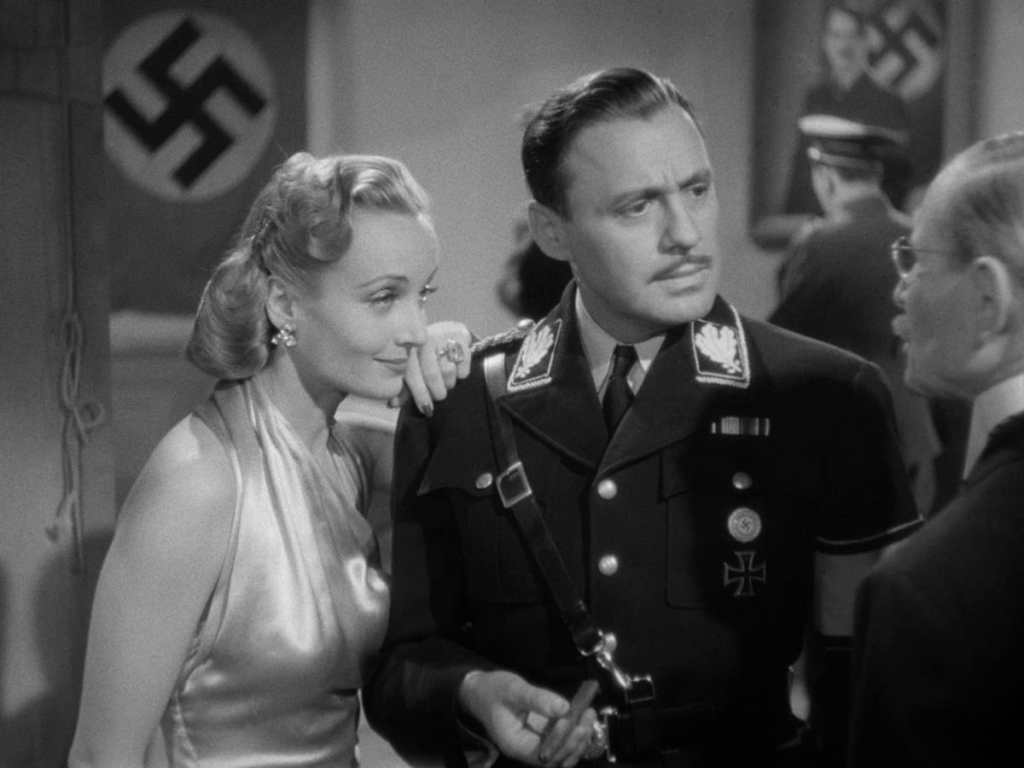
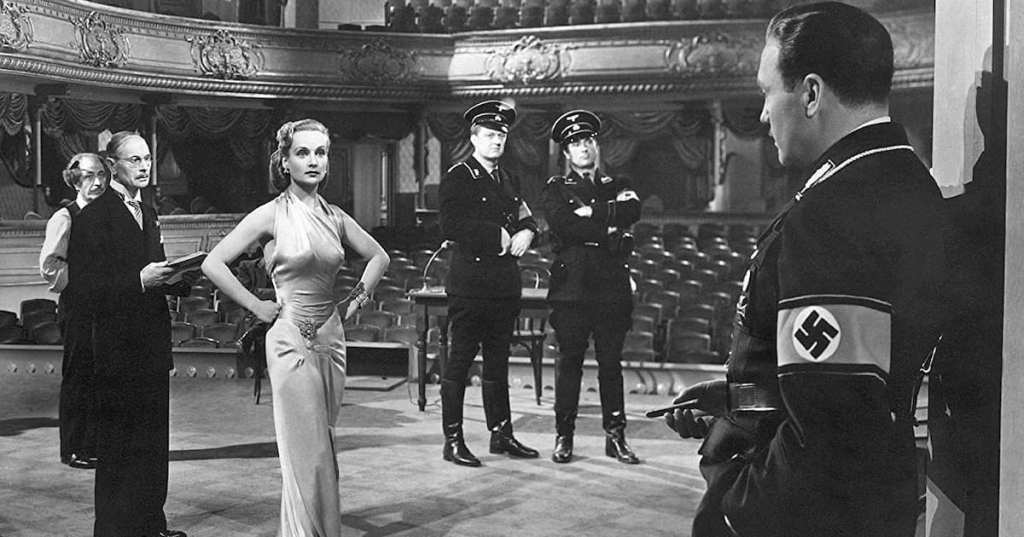
The plot: A Polish acting troupe anchored by Maria Tura (Carole Lombard) and her hammy husband Joseph (Jack Benny) have little to concern them other than Shakespeare and ardent fans — too ardent for Joseph in the case of a handsome young admirer of Maria’s (Robert Stack, in his film debut). But their lives, like the film itself, turn gravely serious when the Nazis invade Poland. When the Polish underground is threatened with exposure by a clever double agent (Stanley Ridges), they realize that their theatrical abilities must be called upon to pull off the deceptive performance of a lifetime. Can they fool the Nazis to save the underground, even if one of them has to impersonate you know who? An utterly original combination of adventure and laughter ensue.

This movie could have been a disaster, even offensive, given how it switches from farce to suspense to lightness to moral gravity and back. That it works so brilliantly is a powerful testament to Edwin Justus Mayer’s superb screenplay, a uniformly stellar cast, and Lubitsch’s directorial magic.

Lubitsch died suddenly in 1947 and had less enduring artistic impact than one might expect, perhaps because his comedic and romantic style were seen by post-war filmmakers as dated. But he was remarkably talented (His friend Billy Wilder has a charming explanation here of “the Lubitsch touch”) and his best films remain highly entertaining today. To Be Or Not To Be is particularly impressive because effectively combining such emotionally different tones would challenge a director in any era, but even moreso at a time of national peril (and indeed, some critics and audiences were put off by this film in 1942). I admire how Lubitsch slams down the gas pedal without fear. In particular, I have mentioned a number of times on this site that I appreciate films that don’t dawdle and explain too much at the beginning; on that principle I admire the outrageous, ludicrous, gut busting way Lubitsch starts To Be Or Not To Be.

I can’t end this review without paying tribute to another Hollywood legend. With all the world’s women throwing themselves at him, why did Clark Cable marry Carole Lombard? Asked no one ever. In her last film, she is luminous in her beauty, style, wit, and intelligence. The script gave Benny most of the explicitly funny lines and a tailor-made part, and he’s does well with it. Yet Lombard somehow outshines him just the same. Hollywood lost one of best performers of the era when she tragically died serving the war effort, but she’s still triumphing over her enemies today every time someone else watches this classic film and guffaws at a Nazi’s expense.

Categories
Action/Adventure Horror/Suspense

Assault on Precinct 13

Review: John Carpenter's Assault on Precinct 13 - Slant Magazine

I went through an enjoyable spate of watching early John Carpenter movies. Dark Star is an endearing ultra-low budget movie which highlights the emerging talent of Carpenter and Dan O’Bannon and will likely always have a place in college sci-fi film festivals. But it’s too unpolished and uneven for me to recommend. In contrast, his next movie, made in 1976 with a larger (if still small in absolute terms) budget, is taut, thrilling, and well-acted from end to end: Assault on Precinct 13.

The spare plot is a stripped-down of version of Rio Bravo, with 40% less running time and a focus on action more than the relationships between the characters (Carpenter is clearly a fan of the legendary Howard Hawks, echoing him here as well as in The Thing). Highway Patrol Lieutenant Ethan Bishop (Austin Stoker) is given the ostensibly ho-hum assignment of overseeing the closure of a near-abandoned police station. But of course it couldn’t be that easy: a vicious, well-armed street gang converges on the station to avenge the killing of some of their members by the police as well as by an enraged civilian whose family they victimized. After the gang’s initial assault kills the few remaining police officers, Stoker can only rely on a worldly secretary (Laurie Zimmer) and two prisoners (Darwin Joston and Tony Burton) to hold off the horde. Superb action and suspense follow.

Assault On Precinct 13 – Collector's Edition (Blu-ray Review) at Why So Blu?

Carpenter boils everything down to the essentials here: the desperate human will to survive, how danger can draw out courage in some and fear in others, and how shared risks can make enemies learn to trust each other. He matches that thematic simplicity with a no-nonsense visual style and fat-free storytelling. And he draws effective performances from his no name cast, further attesting to his talents as a director.

The excruciating tension of the siege on the station comes in part from the zombie-like nature of the gang members (Indeed, Carpenter has acknowledged the influence of George Romero’s Night of the Living Dead on his script). The gang members barely speak in this movie, being a mindless, remorseless, deadly mob akin to those Carpenter summoned up so well in The Fog, Ghosts of Mars, and They Live. Their intended victims, like the audience, want to know why the villains are they way they are, but there is no sensible or reassuring answer: they want to kill, they will not stop, and that is all.

Carpenter really did it all here, writing a tight script with solid dialogue, crisp plot lines and some moments of black humor (including the now legendary “ice cream” scene). His characters aren’t well-developed, but are real enough so that you root for them. Also worthy of comment: Carpenter made an intriguing and I think productive decision to bend reality by making the street gang multi-racial, as are the defenders of precinct 13, thus avoiding what might have been ugly overtones if the dueling sides had been racially monotone. He also composed one of his best scores and even, under the stage name John T. Chance (John Wayne’s character in Rio Bravo) did the editing, which not incidentally is terrific, particularly in the actions scenes. Like Roger Corman, Carpenter was underappreciated for many years before being recognized as a masterful filmmaker. Assault on Precinct 13 shows that his talent was evident from the earliest days of his career.

Assault on Precinct 13 (1976) - IMDb

p.s. I didn’t see the 2005 remake of this film and based on reviews I don’t want to.