Categories
Action/Adventure Drama Mystery/Noir

The Friends of Eddie Coyle

Burt Lancaster, Kirk Douglas, and Robert Mitchum were born within a few years of each other and found great success in Hollywood in the decades immediately after World War II. They were often cast in similar roles: If you see an American movie from that period featuring a tough as nails cop or PI, a brawny cowboy slugging it out in a saloon, or a strong-jawed soldier saving his platoon or battleship, one or more of them was probably on screen. But by the end of the 1960s when they were all in late middle age, Mitchum had fewer films that would be remembered as classics (Out of the Past and Night of the Hunter being the strongest candidates) to his credit than did his contemporaries, perhaps because he never took his job that seriously (He famously noted that acting can’t be that hard given that Hollywood’s biggest star in its early days was a dog). With a few exceptions, Mitchum’s work in the 1940s-1960s was overall simply not at the level of Douglas or Lancaster (or for that matter Peck or Wayne).

But as he got old, Mitchum got more interesting. His tired eyes began to match the shambling body that carried them, his air of disinterest became more melancholy than insolent. Mitchum’s world-weary Phillip Marlowe in Farewell, My Lovely (my recommendation here) is one of my favorite performances of the mid-1970s, and I would argue that he reached his greatest height just before that in the 1973 movie The Friends of Eddie Coyle.

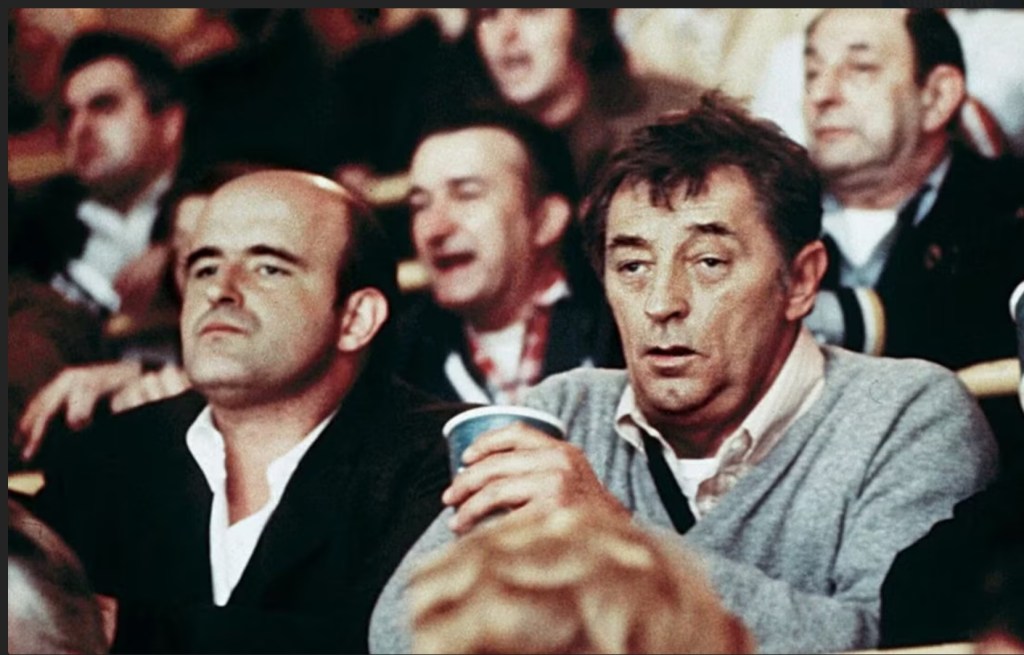
The plot of the film closely follows the novel by George V. Higgins, who as an Assistant U.S. Attorney in Boston knew the terrain he was describing. Under grey Beantown skies, a gang is pulling off a string of bank robberies using handguns supplied by minor league criminal Eddie Coyle (Mitchum). Coyle purchases the weapons from a better-connected gunrunner (Steven Keats) who also traffics in machine guns. Because Coyle is facing a sentencing hearing for smuggling a truckload of whiskey for his shady bartender (Peter Boyle), he is tempted to give information about the machine guns to an ATF agent (Richard Jordan) in the hopes of a lighter sentence. Coyle doesn’t want to go to prison again at his age, for his own sake and for that of his wife and kids, but he also doesn’t want to be a rat nor accept the risk of harsh punishment if the mob finds out he dropped a dime.

Director Peter Yates follows the compelling formula he established in my recommendations Robbery and Bullitt, namely one exciting scene with cars (in this case an inventive chase in a parking lot) and a lot of low-key atmosphere and acting everywhere else. Sporting a haircut and clothing that looks like it ran him a ten spot all in, Mitchum quietly commands the screen without a whiff of movie star about him. Eddie Coyle is not a particularly good man, but he some sense of duty to his friends and family, and Mitchum makes the audience care about him, defects and all, not least by portraying more vulnerability than toughness.

The supporting cast members all give excellent naturalistic performances that make a life of crime look gritty, unglamorous and even a bit tedious. Combined with ideal use of Boston locations, the movie at times takes on the tone of a docudrama about real world cops and robbers. It’s superb slice of life cinema anchored by the best work of Mitchum’s career.
p.s. This movie lost money but has become a cult favorite among film buffs. I assume Quentin Tarantino is one of them given that Steven Keats’ character is named Jackie Brown.
Categories
Documentaries and Books Mystery/Noir

The Mask of Dimitrios (plus an appreciation of Eric Ambler)

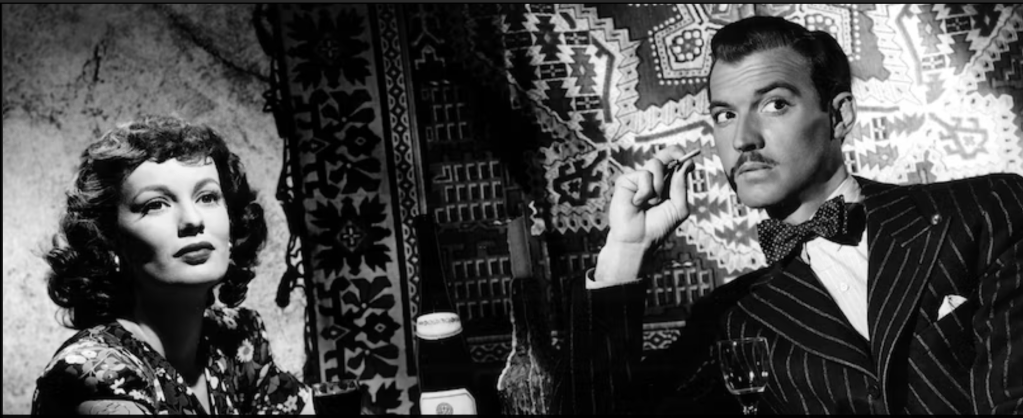
I had the recent pleasure of discovering the once-famous novels of Eric Ambler. Although many people think of writers like Graham Greene and John le Carré as the creators of English language thriller/espionage novels, those giants themselves would point to Ambler as the font from which it all flowed. His crisply-paced books employ what later became a staple of Alfred Hitchcock’s films (Ambler knew Hitch and indeed married his secretary): creating suspense by putting an ordinary person into perilous only half-understood situations swarming with secret agents and international conspiracies. His best-remembered book, 1939’s The Mask of Dimitrios (aka A Coffin for Dimitrios), is a pluperfect example. In 1944, Warner Brothers did film noir lovers a favor by turning it into a fine film of the same name.

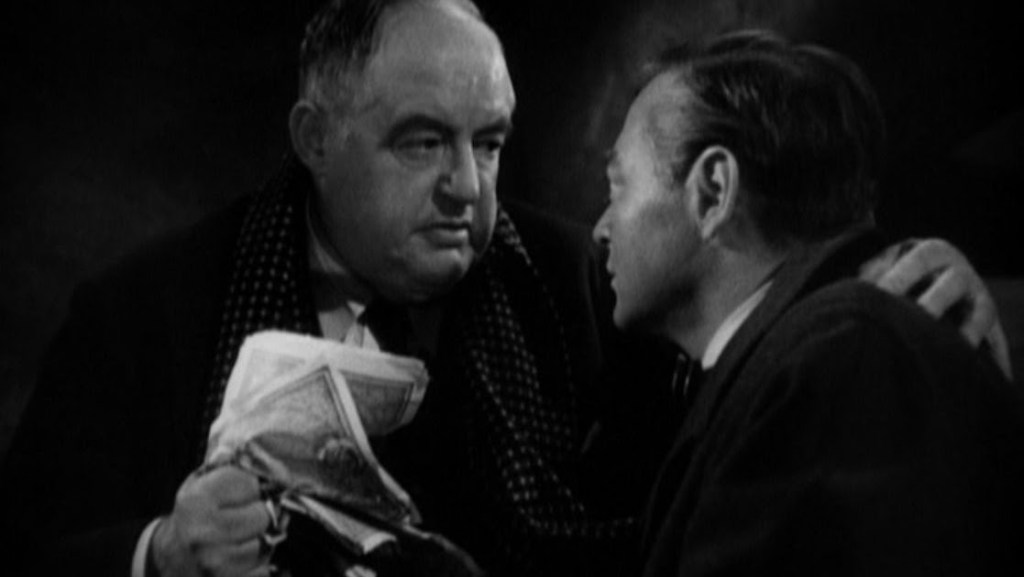
The plot: Cornelius Lyden (Peter Lorre) is an academic turned thriller writer who while travelling in Istanbul is befriended by secret police chief Colonel Haki (Kurt Katch, more compelling than Orson Welles was playing the same character in Journey Into Fear). Haki tells Lyden the story of a Basil Zarahoff-type villain named Dimitrios Makropoulos (Zachary Scott, in his debut role) that the authorities had been pursuing for years until his murdered body washed up on the beach. Lyden is intrigued by someone who might well have appeared as the bad guy in one of his books, and embarks, Citizen Kane-style to uncover the true life story of the shadowy Dimitrios. Along the way he meets the mysterious Mr. Peters (Sydney Greenstreet) who seems to know more about Dimitrios and Lyden than he is telling.

The movie in one sense lacks a big name star, but in another sense it doesn’t. Although audiences saw Lorre and Greenstreet as character actors as individuals, they could not get enough of the “Little Pete-Big Syd” double act that began when John Huston paired them in The Maltese Falcon. The Mask of Dimitrios is the mid-point of their nine movie run, and between them is a chemistry on par with a world class gin and tonic.

Screenwriter Frank Gruber should be grateful that he was paid well for easy work, because his script follows Ambler’s novel almost point for point, with a significant amount of dialogue adapted verbatim. Surely, Ambler could have done that himself. Ambler did eventually become a superb screenwriter, including of two of my most heartfelt recommendations: The Cruel Sea and A Night to Remember. But in any event, Gruber delivers here a fine, suspenseful script about human frailty and ugliness, leavened by a main character who tries mightily to do the right thing.

This movie was director Jean Negulesco’s big break, and he makes the most of it, getting strong performance from actors in parts large and small. His background as a painter shows in his keen visual sense about set dressing, camera angles, and lighting (hat tip also here to cinematographer Arthur Edeson, who had established his noir chops on The Maltese Falcon).

Many film buffs would argue that if I were going to highlight a movie based on an Ambler novel, I should have picked 1943’s Journey Intro Fear. It’s an above average movie, but I think it was strange for Welles and Cotten to throw out a script by the legendary Ben Hecht and do their own instead. Particularly, they moved away from the emotional driver of Ambler’s book, namely the main character’s repeatedly thinking he can trust someone and then having it all go pear-shaped such that he is eventually whittled down to trying desperately to save himself. Cotten and Welles did make two small improvements to Ambler’s story (SPOILER ALERT): Having the main character being witnessed by the villains being handed a gun explained how they knew to steal it from his cabin, and making the ship’s captain alcoholic helped explain better why he would not listen to reason. In terms of acting, Welles is a bit hammy, but I did love the wordless, menacing performance of Jack Moss (Welles’ agent rather than a professional actor) as one of the killers. Like many of Welles’ projects, he either didn’t or couldn’t finish Journey Into Fear himself and it was chopped up by studio editors, in this case to a badly rushed (no pun intended) 71 minutes. It’s definitely still worth a look, but if you want a film with Welles, Cotten and other Mercury theater stalwarts about a moral and somewhat naive American intoxicated by a European beauty while coping with international intrigue and ever present danger, I would recommend instead the genuinely magnificent The Third Man.

Back to Ambler. I am glad he eventually got to do some screenwriting, though disappointed his collaborations with Hitchcock were limited to an episode of the latter’s TV show. His most famous novels, including The Mask of Dimitrios and Journey Into Fear remain fresh, exciting, and full of endlessly quotable dialogue (“I am old and have the luxury of despair”). He deserves an audience today. Reading and then watching The Mask of Dimitrios — or the other way round, if you like — is an excellent way to introduce yourself to Ambler’s oeuvre.

p.s. In an effort to cash in on the huge success of Casablanca, Warner Brothers quickly and cheaply cranked out another Lorre-Greenstreet film based on the Ambler novel Uncommon Danger in 1943 (The most slavish element being an opening montage that nearly copies Casablanca’s, including having the same director and narrator). Background to Danger was undone by star George Raft, who with the boneheaded judgment for which he was famous, insisted on changing Ambler’s everyman protagonist into a tough, streetwise federal agent! The screenwriter, W.R. Burnett said he worried about running into Ambler after the movie came out. Lorre and Greenstreet are both fine as usual, but it’s a forgettable film that is a million miles from the spirit of the novel on which it is based. Would avoid.

Categories
Drama Mystery/Noir

Murder by Contract

I rarely write reviews of zillion dollar blockbusters because there is little to say that hasn’t already been said, and even fewer people who haven’t already heard it. In contrast, I exploit opportunities to highlight B-pictures of which you may not have heard, but which are very much worth seeking out (e.g., see my reviews of My Name is Julia Ross, Cash on Demand, Tarantula, Plunder Road, and The Narrow Margin). An excellent example is a low-budget 1958 film noir that was shot in just 7 days: Murder by Contract.

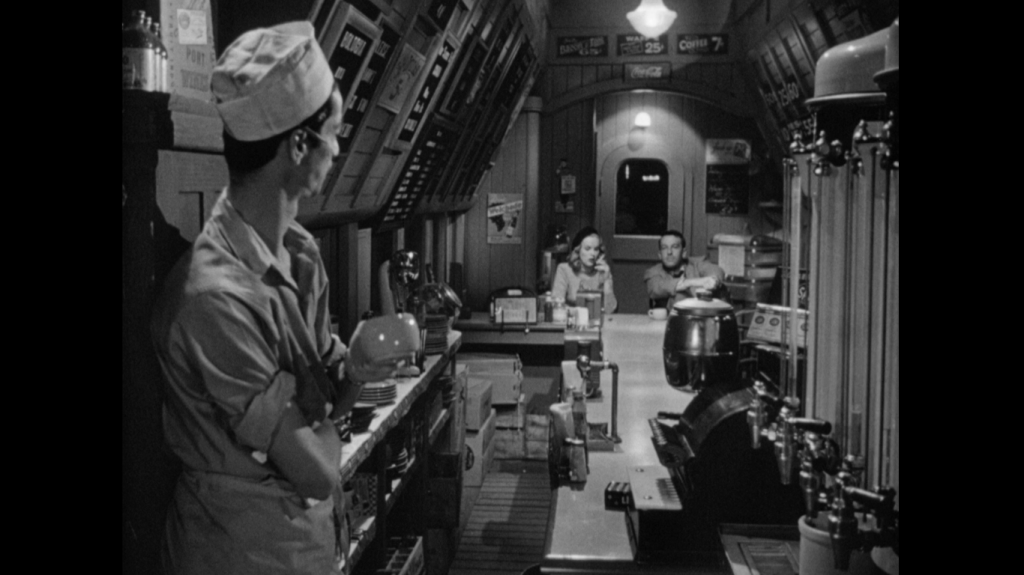
The story opens with a handsome, self-possessed, and intelligent man approaching a mobster and blandly asking to be hired as an assassin. Claude (Vince Edwards) has a stable job with a pension, but, he explains matter-of-factly, wants to buy a $28,000 house by the river and doesn’t want to wait 30 years to get there. After being made to wait two weeks for a call in his apartment as a test, he is hired and begins professionally and coldly carrying out contracts, recording his earnings and his progress towards homeownership in a notebook Eventually he is hired for a bigger, higher-risk contract to execute a prosecution witness who is under police protection. Flanked by two mafia minders (Herschel Bernardi and Phillip Pine), he lays his plans carefully, but fate and his own psychological quirks start to work against him.

You will note that isn’t a particularly complex plot, but the story is only half of what this movie offers. The other half is a character study of a philosophical loner who is at times utterly ruthless and at others considerate beyond measure. That he can turn on a dime makes Claude both beguiling and frightening. Edwards’ movie career never really went anywhere (though he later became a television star as Dr. Ben Casey) but it’s a credit to his acting and Irving Lerner’s direction that the audience can have some sympathy for him despite his psychopathic predilections.

The spare style and look of this film feel more akin to the cinema of France and Italy than the U.S.. That reflects the craft of Lerner and also cinematographer Lucien Ballard, who had no choice but to shoot on simple sets and in natural locations with no adornment. Perry Botkin’s simultaneously cool yet suspenseful score is also essential to the mood.

The script, by Ben Simcoe and an uncredited Ben Maddow, paints Claude as having the single-mindedness and female-focused psychological hang-ups of Travis Bickel from Taxi Driver, but with much better clothes and manners. I was therefore not surprised to learn that the legendary Martin Scorsese saw Murder by Contract as the second feature when he went to the theater as a 14-year old. The movie had a major impact on him, and he later hired Lerner to help make New York, New York.

I believe this suspenseful, fascinating B-movie treasure is now in the public domain, so I put it here for you to enjoy.

p.s. Herschel Bernardi, who is so good here in a half-comic, half-dtamatic role, was a stalwart on another one of my recommendations: the Peter Gunn television series.

Categories
Drama Mystery/Noir

The Harder They Fall

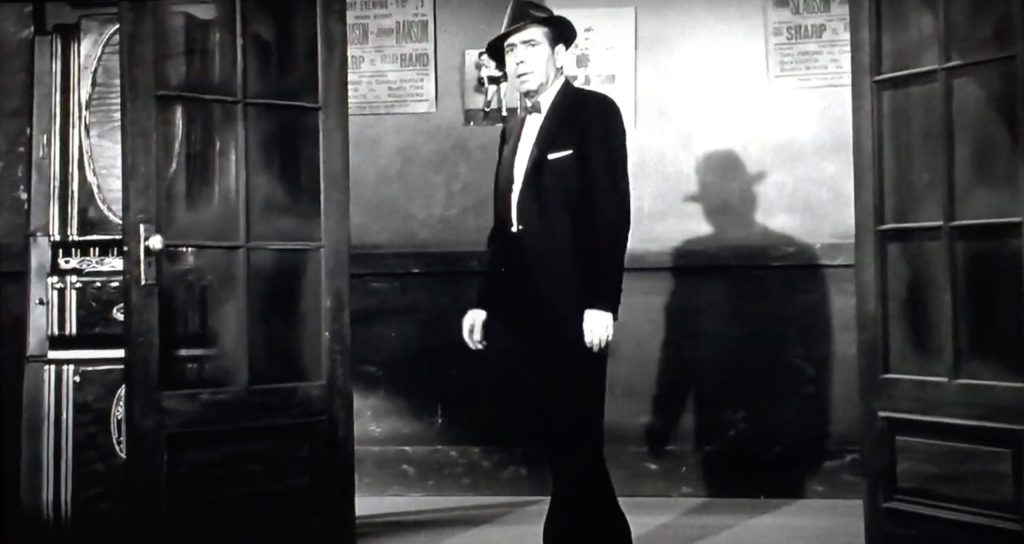
Humphrey Bogart has a secure place on the Mount Rushmore of Hollywood actors. I’ve recommended movies where he plays unpretentious heroes (Sahara and To Have and Have Not) and figures of genuine menace (In a Lonely Place) but like most of his fans I cherish Bogie most for his world weary, cynical idealists who haven’t quite given up hope. As morally compromised sportswriter Eddie Willis in 1956’s The Harder They Fall, Bogart ended his career by nailing such a role for us a final time.

Columbia promoted this movie as a sort of sequel to its commercial and critical 1954 mega-smash On The Waterfront based on the shared presence of Budd Schulberg’s writing, Rod Steiger’s acting, and a story about a boxer and mobsters. But the novel The Harder They Fall (adapted for the screen by Philip Yordan) was actually written by Schulberg first and the film’s subject matter is the boxing industry itself rather than a hard-luck longshoreman whose pugilistic career is behind him.

The plot is loosely based on the career of Primo Carnera, an Italian strongman who became world heavyweight boxing champion after winning a series of suspect “victories” that were fixed by the mob. In the movie, the central character is a big, clumsy Argentinian mountain of a man named Toro Moreno (Mike Lane), whose sleazy manager Nick Benko (Steiger) needs Moreno to get positive press from a trusted source like the Eddie Willis (Bogart). Eddie can see that Moreno is a lousy boxer, but he’s financially desperate enough to become corrupted by Benko. The entourage begins touring the country winning fixed fights and showering Moreno with enough misleading publicity to make him a challenger for a lucrative (for Benko) title bout.

Morally, Eddie Wilson is much farther gone than, say Rick Blaine in Casablanca. He sells out almost immediately and exploits colleagues and friends to spread lies about Moreno’s boxing prowess. Bogart brings his growing self-loathing across with furtive looks and tired movements, and that he was manfully making this film while dying of esophageal only amplifies the effect of his acting (He had to do some reshoots of scenes in which his eyes were watering from the pain of his disease). Coming from a completely different style of acting (“The method” which Bogart apparently found a bit amusing), Steiger is a superb foil for Bogart as a man who behaves just as badly but feels no compunction about doing so.

Little known Mike Lane, a former circus wrestler, brings across the central tragedy of the story: Toro Moreno really believes he’s a great boxer and that the people around him have his best interests at heart. He is a physically huge man, but psychologically his character is a naive, tender-hearted little boy. His exploitation by Benko eats at the audience’s conscience just as it does Eddie’s.

The strong performance by Lane as well as by real-life boxers Jersey Joe Walcott, Max Baer, Pat Comiskey, and Joe Greb, is a credit to the fine director Mark Robson, who made actors out of all of them. And the legendary cinematographer Burnett Guffey is in top form, contributing arresting visuals outside the ring and even moreso in it.

The Harder They Fall has as bleak of view of humanity as any of the noirish dramas of the period. It paints a world where most people are heartless and those who trust are victims. And who better to play someone caught between such amorality and decency than one of the greatest movie stars of the 20th century?

p.s. Two somewhat different endings were shot and are still in circulation, one with Eddie calling for boxing to be banned (reflecting Robson’s distaste of it) and the other with him only demanding an investigation into corruption within the sport (reflecting Schulberg’s taste for it, warts and all).

Categories
Action/Adventure Drama Mystery/Noir

Gun Crazy

The excellent film Trumbo includes a colorful performance by John Goodman as the real-life raffish independent movie producer Frank King. King and his brothers (whose real family name was Kozinsky) were never respected by Establishment Hollywood but were daring in way the big studio suits were not. In what at first might have been an effort to move into prestige pictures, they purchased the rights to a story by MacKinlay Kantor, who had written the source material for the massively popular and Oscar-laden 1947 classic The Best Years of Our Lives. But Kantor proved unable to turn his story into a solid screenplay, leading the King Brothers to fall back on their common practice of secretly using blacklisted writers, in this case a prison-bound Dalton Trumbo. He turned Kantor’s draft script into the sexually-charged and violent cinematic miracle that is 1950’s Gun Crazy.

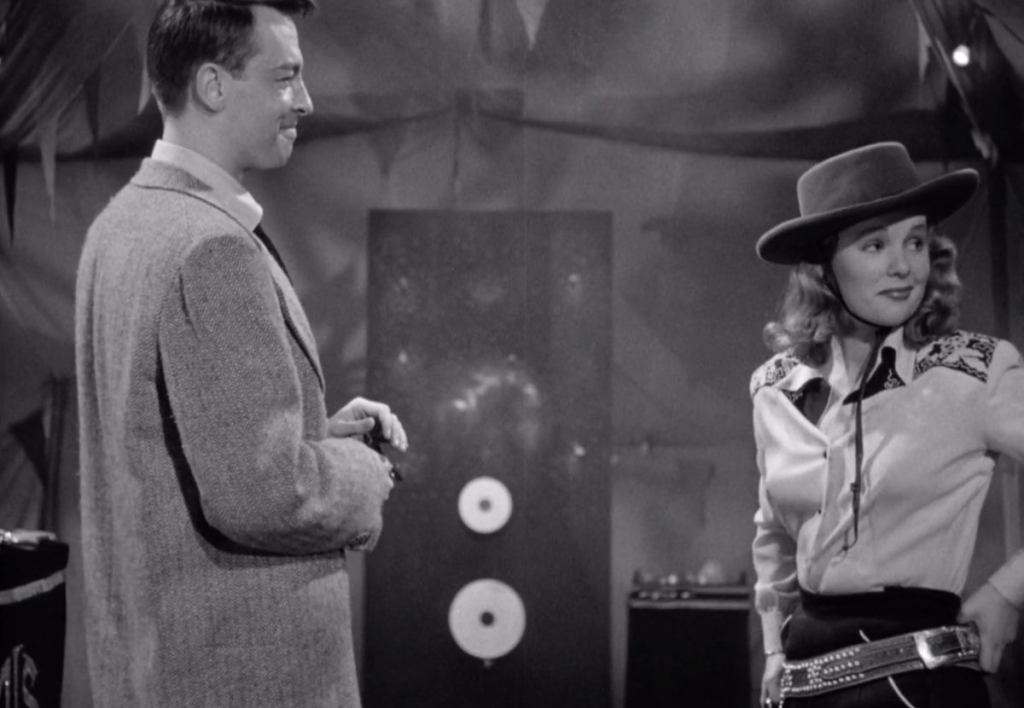
The plot: Bart Tare (John Dall) has been gun-obsessed from boyhood, which eventually lands him in reform school after he can’t resist committing a smash and grab robbery of a gun shop. After a tour in the army, where he thrives as a firearms instructor, he visits a travelling circus and is enthralled by the trick shooting show of the alluring Annie Starr (Peggy Cummins). Mutually besotted, they run away together, quickly burning through all of Bart’s savings. Annie suggests they turn their formidable skills to a career in armed robbery. Bart is scared someone will get hurt…Annie, not so much. But he can’t say no to her, leading to a Bonnie and Clyde-esque crime spree with shattering consequences.

In my recommendation of My Name is Julia Ross, I noted how that film’s 12-day shooting schedule was actually a luxury for Poverty Row veteran Joseph Lewis. Imagine how happy he must have been to have a whole month to direct this movie on a budget almost a third as big as a typical Hollywood film! He coached his compelling lead actors to express, as much as one could in 1950, wanton hunger for each other as well as, in Cummins’ case, a nearly orgasmic delight in violence.

Lewis and cinematographer Russell Harlan pursue a breathless, arresting style throughout this film. This includes, among other inspired camera placements, a deservedly legendary extended take with the camera in the back seat as the lovers commit and flee a bank robbery. As the audience, we are pulled along with the criminals by a fast-moving stream of images, wanting to pause for breath but afraid to let them out of our sight. It’s tough competition, but shot for shot, Gun Crazy ranks with the most visually stunning works in film noir history.

The story’s evolution and resolution turns on an implicit question: why are the two characters fundamentally different in their morals, despite their shared fascination with firearms? The early scenes of the film suggest that while Bart appears never to have had a relationship with his parents, he was at least raised by a loving older sister (Anabel Shaw) and had two childhood friends (Harry Lewis and Nedrick Young). Annie’s backstory is never told, leaving the audience to wonder if even that little love is more than she ever experienced on this earth. The movie never makes this femme fatale explain or justify her motivations, and in film noir that’s a feature, not a bug.

p.s. The black beret Faye Dunaway wears in another of my recommendations, Bonnie and Clyde, is a tribute to Gun Crazy by director Arthur Penn.

Categories
British Drama Mystery/Noir

This is Personal: The Hunt for the Yorkshire Ripper

It’s challenging to make compelling movies about crimes when almost everyone knows the culprit and many of the facts of the case from the beginning. Yet ITV and producer Jeff Pope took the risk in the aughts to make a trilogy of docudrama miniseries about notorious British murders, with great success. The first has the clunkiest title, but it’s aces in every other respect: This is Personal: The Hunt for the Yorkshire Ripper.

The plot is based on the multi-year effort to catch Peter Sutcliffe, a serial killer who attacked his female victims with bestial ferocity in the late 1970s. Unlike many movies of this genre, there is almost no focus on the killer. Instead, we see the reaction of the community (including the then-rising women’s movement, the families of victims, and the countless women who lived in fear) and even moreso the political, emotional, and practical demands on the police and how they handled and mishandled them in an environment of institutitional sexism and intense political pressure. And as in the real case, the police have to struggle whether the taunting letters and cassette tapes they keep receiving from “Wearside Jack” are from the killer or are a cruel hoax.

Viewers suckled on Dixon of Dock Green-style cinema and television will find the conduct of the police here unbelievable, but every blunder happened in the real case. Unlike carmelized portrayals of old-style British policing, Neil McKay’s script is unsparing about the lack of professionalism and lack of capacity that was widespread before some major reforms (some of which were inspired by the Yorkshire Ripper case). Most notably, the lack of computerization meant all leads were kept on a mountain of index cards that literally came close to collapsing the floor of the building, and vital connections between pieces of evidence were missed (in real life, Sutcliffe was interviewed by police 9 times before his was caught). Equally disturbing: the police at one point pressure a suspect with such ferocity that he confesses even though he is innocent.

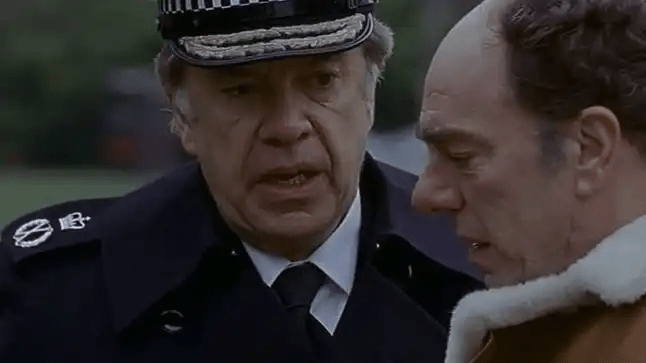
I appreciated the chance to see Alun Armstrong headline a film. A stage trained actor from County Durham who’s augmented the quality of many films I enjoy (e.g., Get Carter, Braveheart, Our Friends Up North) he also had a wonderful late career revival as an extremely eccentric police detective on the TV Series New Tricks. Here he inhabits the role of the hard-smoking, hard-drinking, grief-wracked Assistant Chief Constable George Oldfield, whose health and life are consumed by the demands of leading the investigation. As his right hand man, Richard Ridings is also excellent at portraying a mixture of toughness and humanity. Under David Richards direction, the rest of the cast also acquit themselves well.

There are other touches to admire. Rather than show the Ripper’s handiwork, the camera only shows people looking at it and reacting to it. And we don’t see the killer’s face until the very end, where with the banality of evil he has no particular reaction to being confronted by Oldfield. Full marks as well to Peter Greenhalgh for appropriately moody cinematography that accentuates the emotional impact of this grim but engrossing mini-series.

p.s. This 2000 film ends with a post-script noting that while Sutcliffe was sent to prison, “Wearside Jack” was never identified. But thankfully, five years later he was identified, arrested, and sentenced to prison.

Categories
Mystery/Noir

Phantom Lady

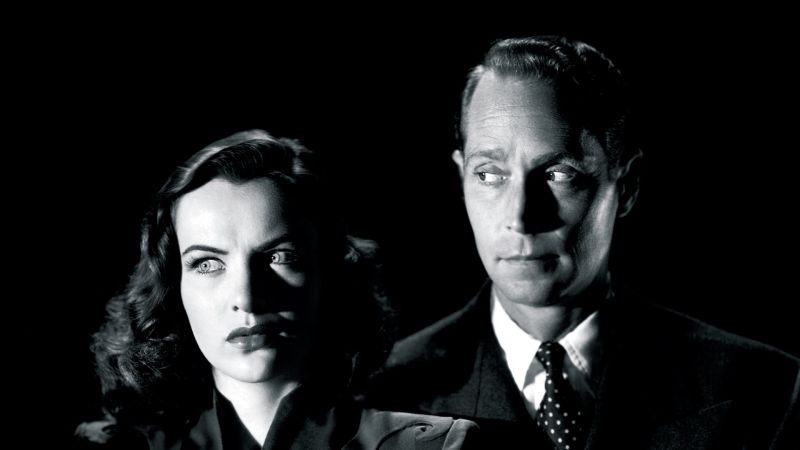
Some Hollywood films today make a painfully self-conscious effort to have a “strong woman” character. The screenwriter gives her some dialogue with the male lead in which she says something cringeworthy like “You don’t have to take care of me, I’m a strong woman!”, the actress mentions in her press interviews that she “was drawn to the chance to play a strong woman”, and the director avows at the awards ceremony that, “as a feminist and ally, I wanted to have a strong woman character for a change”. In film noir, in contrast, women characters were routinely tough, smart, ruthless, lusty, or violent not because anyone was trying to make a statement, break the mold, or virtue signal for critics, but because that’s just the way it was. A fine example of this principle, as well as all the other core elements of classic noir, is Robert Siodmak’s Phantom Lady.

Based on a Cornell Woolrich novel, this 1944 film tells the story of an innocent man named Scott Henderson (Alan Curtis) who is convicted of murder because his only alibi is a “phantom lady” (Fay Helm). He meets her at a bar, impulsively takes her to the theater, and parts with her afterwards, all of which interaction is witnessed by many people. Yet when Police Inspector Burgess (Thomas Gomez) investigates Henderson’s story, no one remembers her, and Henderson himself says that he never asked her name. Henderson looks guilty and perhaps out of his mind as well, but Carol Richman (Ella Raines) who loves him, believes his story and embarks on a perilous effort to find out the truth. She hits several very dead ends, but then Henderson’s mysterious old friend Jack Marlow (Franchot Tone) returns to town and pledges to help find the real killer.

Robert Siodmak's Phantom Lady (1944): Summer of Noir GIFs, Day 23 | Nitrate  Diva

Ella Raines owns this movie, outshining the male leads with presence and verve (Not to diminish the solid supporting work by Gomez, who was also in another film noir I recommend, Ride the Pink Horse, and by noir staple Elisha Cook Jr.). She’s credibly tough and smart, and in the justifiably famous drumming scene with Cook and a hot jazz combo, sexually potent as well. Raines had a terrific 1944, with five films in theaters, including another excellent Siodmak work (The Suspect with Charles Laughton). She was much in demand until not long after she made another of my recommendations, The Web, in 1947, at which point she transitioned to only occasional movie and TV work. I believe this was because she married and started a family, but from the purely selfish viewpoint of a film fan, it was a loss.

The other key presence here, unsurprisingly, is Siodmak, who with the possible exception of Anthony Mann did the most over his career to define the film noir genre. Siodmak is most remembered for Burt Lancaster’s legendary debut film The Killers, but he made many other excellent films, my favorites being this one and the noirish thriller The Spiral Staircase.

Shelf Life: Phantom Lady (Robert Siodmak, 1944) | Movie Mezzanine | Noir  movie, Old hollywood movies, Film noir

Siodmak’s German Expressionist artistic roots serve him well here, including in his compositions and lighting choices (e.g., of Tone’s hands). I also love his offbeat decision to show Henderson’s murder trial entirely through the reactions of the courtroom audience, with the participants being only off-screen voices.

Siodmak is aided immeasurably in his efforts by cinematographer Elwood “Woody” Bredell, who also worked with him on The Killers. Bredell is not well-known, but he was a key contributor to noir style. Credit for the memorable look of the film should go as well to the art directors (Robert Clatworthy, John B. Goodman) and set decorators (Russell A. Gausman, Leigh Smith), particularly for Marlow’s surrealistic sculpting studio.

Phantom Lady has a few implausible elements in its plot, but they are no match for the assured stylishness of Siodmak’s direction and Raines’ performance. Even in what was a powerhouse year for film noir, Phantom Lady stands out as a must-see of the genre.

Phantom Lady (1944) | Screenshots taken from the film Phanto… | Flickr

Categories
Drama Mystery/Noir

Scandal Sheet

The directors whose work I have praised repeatedly on this site are all household names except for Phil Karlson. He rarely got decent budgets and spent much of his career at studios and in positions that weren’t worthy of his talent. Yet he managed over the years to make some highly compelling movies that conveyed his bleak and brutal perspective on the human condition. I have recommended two of his collaborations with producer Edward Small that starred John Payne Kansas City Confidential and 99 River Street. Let me add to those a recommendation of another Karlson-Small collaboration, this one with a bigger budget and a bigger star than the director usually had to hand: The 1952 noir Scandal Sheet.

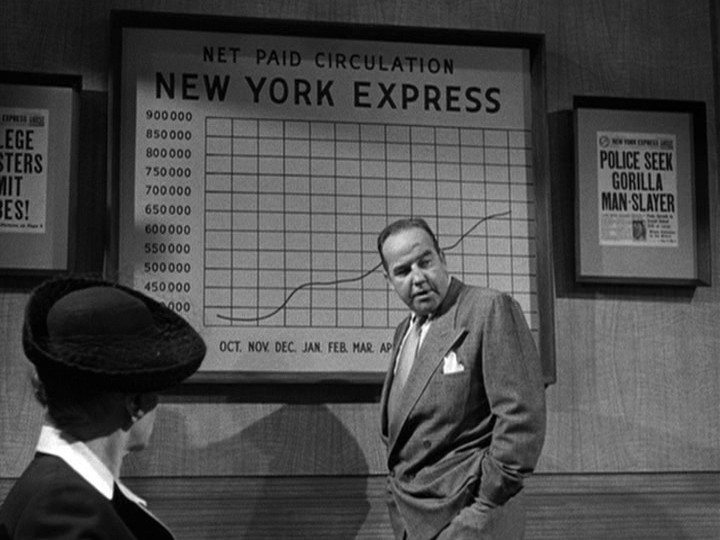
The plot: Circulation at the New York Express has been soaring since an editor named Mark Chapman (or is he???) converted it into a tabloid full of sensationalist stories, ruffling the feathers of the bluenoses on the board as well as idealistic features writer Julie Allison (Donna Reed). Said editor (Broderick Crawford) is aided in his work by ace newshound Steve McCleary (John Derek), who digs up dirt for his mentor while failing to successfully romance June. But Chapman’s world is upended when a woman from his past re-appears, and he embarks on a series of desperate, violent, actions that McCleary begins to investigate. Noirish themes of moral compromise and inevitable doom ensue.

This film echoes the summit of Crawford’s career, namely the 1949 Best Picture winner All The King’s Men. Again Crawford effectively portrays a domineering yet vulnerable man and again he has a father-son style relationship with a character played by John Derek, although in this case Derek is his mentee rather than literally his son, and the relationship is much warmer. Indeed, the art in Crawford’s performance is how he simultaneously conveys his rising panic that his secrets could come out and his admiration and pride that his protégé is so effectively hunting him down. The other echo of ATKM is the magnificent Burnett Guffey’s cinematography, which combines the look of urban realism (despite this being filmed on the Columbia back lot and using some stock shots of New York City) with a dash of film noir-style camerawork. The opening shot of this movie, as the camera moves over a cluster of fire escapes filled with onlookers and a murder witness, is a clinic by Karlson and Guffey on how to pull an audience in the particular world of a movie right from the first.

John Derek was irresistible to women, but was not a particularly good actor. The quality supporting work here comes instead from Reed, who shows she could do more than be the wholesome All-American mom who serves milk and cookies. Henry O’Neil is also affecting as an unemployed, alcoholic, Pulitzer Prize winning journalist looking for a way back.

Karlson’s serves up a bracing dose of cynicism leavened with glimmers of hope, and manages to maintain tension throughout the story despite the fact that under the conventions of noir, the ending is never really in doubt. The only person who didn’t like Karlson’s adaptation of the 1944 novel The Dark Page was Samuel Fuller, who wrote it. Perhaps it was just vanity that made Fuller resent anyone other than himself adapting his own work, but movie fans were the winner because it inspired him to start making his own films, including classics like Pickup on South Street (my recommendation here).

p.s. Sadly, Crawford’s alcohol addiction kept him from building on his cinematic successes of the late 1940s and early 1950s. But he did have a late-career revival on television, including starring on Highway Patrol and, bizarrely enough, hosting an early episode of Saturday Night Live.

Categories
Drama Mystery/Noir

Sweet Smell of Success

Many films deservedly flop at the box office because they simply aren’t any good. But a subset of gems meet the same fate because they are too far ahead of their time, violate audience expectations, or both. On the honorable list of the highest quality box office failures of all time, an unforgettable 1957 movie has a strong argument for top slot: Sweet Smell of Success.

The plot: J. J. Hunsecker (Burt Lancaster) is an all powerful, Walter Winchell-esque columnist who can make or destroy lives and careers at his whim. Every Big Apple press agent wants Hunsecker to boost their clients and spread their gossip, none moreso than the amoral, ambitious Sidney Falco (Tony Curtis). But J. J. refuses to carry Falco’s items unless he breaks up the romantic relationship between a clean cut musician (Martin Milner) and J.J.’s sheltered, brow-beaten, younger sister Susan (Susan Harrison). When the young lovers prove determined to stay together, J.J. and Sidney realize that even more ruthless actions will be needed. This comes naturally to both of them, though only Sidney has the self-knowledge to admit it to himself.

sweet-smell-of-success-movie-seven - Vague Visages

Alexander Mackendrick, known for classic Ealing Studio comedies like The Man in the White Suit seems on paper to have been a bizarre directorial choice. But he triumphed with this unfunny, un-British, material including persuading his tempestuous movie star-producer (Lancaster) that the film should end with a confrontation not between the male leads, but between J.J. and his sister Susan, the one person J.J. cared about enough to be damaged by. Mackendrick also cleverly smeared Vaseline on Lancaster’s glasses to prevent him from focusing, giving the actor a terrifying, wall-eyed stare. Lancaster was furious at Mackendrick for the film’s poor box office performance and refused to work with him again, which may have contributed to the rapid decline of the fine director’s career after Sweet Smell of Success. But at least Mackendrick went out on top with his work here.

Mackendrick also had input into the wood-alcohol cocktail script, which was mainly the work of Ernest Lehman and Clifford Odets. It’s a endlessly quotable work of art in itself; even without the actors’ fine delivery the lines would be brutally effective. The plotting is equally so, most particularly the hard-to-watch scene in which Sidney pimps out a cocktail waitress who needs a favor and becomes an bargaining chip in his dirty game.

Josh Olson Presents SWEET SMELL OF SUCCESS - American Cinematheque

Lancaster is effectively malicious here, both in his dealings with Curtis and also with Harrison as his cringing sister (if Sweet Smell of Success has a weakness, it’s that the relationship between Milner and Harrison is the least interesting one in the movie). But Curtis, viewed at the time as a lightweight pretty boy, is a revelation. In his walk, his physical deference to Lancaster, his furtive looks, his desperate patter, and his surface smoothness over underlying panic, he creates one of cinema’s indelible characters. Grasping ambition has rarely been so vividly captured by a movie performer. Lancaster said that Curtis deserved an Oscar for his performance, but the Academy didn’t even grant him a nomination. More fool them.

There is yet more to praise! Elmer Bernstein contributes an energetic jazz score and the Chico Hamilton Quintet not only sound fantastic in their scenes, but also effectively cover over the fact that Milner couldn’t play guitar at all. But even more than the superb music, this movie will always be remembered for its look.

Picking a favorite cinematographer is tough for any film buff, but for me it’s James Wong Howe, in significant part because New York City has never been shot with such luminous darkness as in Sweet Smell of Success. Howe’s shots crackle with the energy of bustling, anonymous, humanity and bring alive the combined menace and thrill that arrives when night falls on a great city. Howe’s photography here is a genius-level blend of the stylized look of film noir and the more realistic urban photography of such films as The Naked City. Howe and Mackendrick also uses camera positioning expertly to convey character and relationships, for example by using low shots to make the massive Lancaster look even more intimidating or coming in close at just the point when someone sells out morally so that you can see it on their face and right down into their soul (presuming they have one).

Sweet Smell of Success | The Soul of the Plot

Why did such a tremendous work of cinematic art not find an audience? After the financial success of the prior year’s Trapeze, which had Lancaster and Curtis swinging through the air in tights (and screen siren Gina Lollabrigida swinging between them), their fans were expecting a chance to swoon again at their gorgeous heroes. Instead, they got a couple of throughgoing bastards in suits in a dialogue-driven story. Tony Curtis’ female fans haunted the set hoping for a chance to glimpse their idol and can’t have been pleased to see him play a character who treats women like garbage. The unremitting cynicism of the movie may also have turned audiences off in 1957, coming a few years after the post-war film noir boom had faded. In the decades that followed, the magnificence of this movie — including the against-type performances of Lancaster and even moreso Curtis — became widely appreciated, including by inclusion in the National Film Registry of the Library of Congress.

Instead of the trailer, I will close by posting this “three reasons” promotional film put out by Criterion Collection when they wisely reissued a remastered edition of Sweet Smell of Success. Even at a single minute long, it makes clear why you simply must see this classic movie.

Categories
Drama Mystery/Noir

The Limey

Fresh off his success adapting the Elmore Leonard novel Out of Sight, Steven Soderbergh partnered with screenwriter Lem Dobbs in 1999 to produce another strong film that feels like an Elmore Leonard story: The Limey.

The plot: A greying but tough as nails Cockney career criminal known only as Wilson (Terence Stamp) finishes his latest stay in the Big House and comes to sun-soaked Los Angeles to investigate how his daughter Jennifer died (Melissa George). He is guilt-stricken over his considerable failures as a parent but loved Jennifer intensely, so much so that he can’t accept that her death was really due to an unremarkable automobile accident. Wilson’s charm is considerable, and he soon secures the assistance of two of Jennifer’s friends, an ex-con who’s gone straight (Luis Guzmán) and a modestly successful actress (Leslie Anne Warren). From them he learns that Jennifer was in a relationship with a hot shot record producer named Valentine (Peter Fonda), who has a sleazy side hiding behind his perfect tan and aggressively whitened teeth. As Wilson starts to investigate, he finds himself tangling with Valentine’s head of security (Barry Newman), assorted thugs, and federal agents who are also on Valentine’s trail. A noirish tale of vengeance and regret follows.

Steven Soderbergh on the 20th Anniversary of 'The Limey' - Rolling Stone

The Limey can be enjoyed simply as a professionally produced and performed rendition of a familiar movie story line. It includes exciting action scenes and some good dramatic moments. There are also some laughs, the biggest of which comes from Stamp’s theatrical Cockney slang-filled speech delivered to a calmly befuddled Bill Duke (the director of one of my recent recommendations, Deep Cover). There’s nothing wrong with making a purely entertaining movie, but many people, including me, see something more in this film.

What is The Limey “really about”? After Gene Siskel died, Roger Ebert tried out a number of co-hosts on his television show At The Movies, my favorite of whom was B. Ruby Rich (who alas, did not get the job permanently). In their discussion here, Rich sees the movie as being a father-daughter story, whereas Ebert says its about the contrast between the genuinely tough central character and soft Californians who think they’re tough, but aren’t. Those are intriguing takes; personally I saw The Limey as being about the lingering remains of the 1960s.

Stamp and Fonda were both 1960s icons, and seeing them duel it out here in their declining years and come to terms with the harm they did along the way, makes a mournful statement on that era, particularly when Valentine says the 1960s “were just 66 and early 67 — that’s all it was”. Newman, of Vanishing Point fame, another cult figure from that era (There was also a scene with sex kitten Ann-Margret that was cut from the final film) adds to the throwback feel, as does Soderbergh splicing in flashback scenes of Stamp from the 1967 film Poor Cow. Stylistically, the adventurous editing, repetition of key images, and violation of linear chronology recalls the experimentalism of cinema in that era (Even though Soderbergh didn’t add all that in until post-production when he saw that a more conventional structure didn’t work). It all gives the film an elegiac meta-theme on top of that of the main story, making it stick with you for much longer than other films of its genre.

p.s. The DVD release of includes in its special features menu an audio commentary track that is legendary among film buffs. Rather than do the usual dull nodding along saying how great each scene and actor was, Soderbergh and Dobbs argue intensely and intelligently about how the film turned out. It’s fascinating both for what it reveals about them as people and also about how directors and screenwriters think.