Categories
Drama Mystery/Noir

The Sniper

Edward Dmytryk was a talented filmmaker whose career and life were severely damaged during Hollywood’s red scare. As one of the Hollywood Ten, he refused to testify to the House of Un-American Activities Committee and was sentenced to jail. He fled to England, where he made some high quality films including another of my recommendations, Obsession. When the Brits kicked him out he came back to the U.S. and was incarcerated. He then decided to testify against his communist associates, meaning that Hollywood was divided between those who hated him as a communist and those who hated him for naming names. However, in 1952 his career got back on track when Stanley Kramer hired him to direct The Sniper, a brooding B-picture about a serial killer that gave Dmytryk a chance to express his alienation and isolation on screen.

The story opens with psychologically disturbed veteran Eddie Miller (Arthur Franz) struggling against his impulse to gun down a woman in his neighborhood, right at the moment she is kissing her lover on the stoop. As Miller walks the streets, his chance encounters illuminate how he has felt scarred by women from childhood through his adult life, filling him with a mixture of misogyny and sexual frustration. After his efforts to seek help for his psychiatric problems are met with incompetence and indifference by the health care system, this ticking time bomb of a man is stung when a women to whom he is attracted (Marie Windsor) does not reciprocate his feelings. In a rage, he comes unraveled and goes on a fearsome, guilt-wracked hunt for the women whom he believes have wronged him.

For the period in which it was made, The Sniper was startling stuff, particularly the scenes of Miller stalking and then executing his victims. In style and structure, the film draws a good deal from the the police procedurals that became popular after the war (see my recommendations He Walked by Night and The Naked City) as well as from film noir. It also has a pronounced streak of urban alienation and rage that prefigures later films like Taxi Driver (I was not surprised to learn that Martin Scorcese admires The Sniper).

Other than Adolphe Menjou, who plays the police detective who tries to track Miller down, the cast of this low-budget picture are unknowns with unremarkable faces, which works well with the underlying message that horrors such as the film portrays have become everyday, ordinary events. Harry Brown’s script, which is based on a story by Edna and Edward Anhalt, underscores this point even more by having the city in which the crimes occur have no name. It could, implictly, be anywhere.

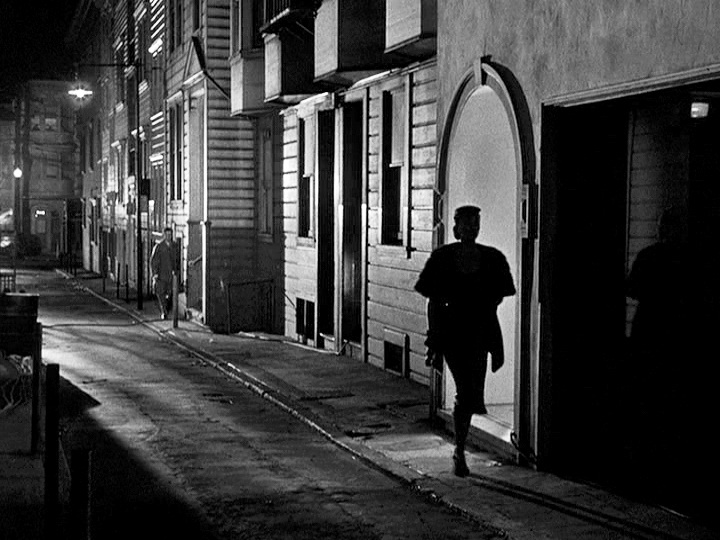
Most of the film was shot in San Francisco, which has rarely looked as moody or lonely. When Miller stalks his first victim, the shadows are surreal as is the lack of any other person on the street. Burnett Guffey, a number of whose films I have recommended here, contributes effective photography and Dmytryk worked with him to create excellent camera set ups throughout. I particularly liked the scene where Miller, who has a menial job delivering dry cleaning, is being upbraided by his boss (another women who makes him feel weak and worthless). Rather than shooting the scene in an open space, the film makers put the camera in the front of Eddie’s parked van looking back at him as he crouches in the cramped, dark space surrounded by hanging dresses. His boss on the loading deck is visible because the van’s back door is open, making her tower over him as if he were a worm under her heel.

The only significant weakness of the film is something characteristic of many Stanley Kramer productions (Judgement at Nuremberg, The Wild One, Guess Who’s Coming to Dinner): It needlessly makes some of its points with a sledgehammer. Starting a film with a printed message telling the audience how shocking and serious the subject is and including a scene where some authority-figure gives a pious speech about how society-is-to-blame are the sort of things that earned Kramer a reputation as the kind of sanctimonious and self-satisfied liberal who drives away more people from his causes than he draws in. Some of that cringeworthy stuff is on display here, and it just doesn’t work.

But let that flaw go and this tautly directed, disturbing film will get under your skin. My belief is that The Sniper is in the public domain, so I offer this link as a place where you can watch it for free.

p.s. Trivia: The bar where Eddie’s first victim sings is the Paper Doll Club, famous in real life as one of America’s first lesbian bars even though it isn’t portrayed that way in the movie.
Categories
Action/Adventure Drama Mystery/Noir

Bonnie and Clyde

Hollywood studios were in a rut in the late 1950s and early 1960s, struggling to cope with the rise of television, the loss of control of movie theaters after the Paramount case, and a widening cultural chasm between modern audience tastes and studio traditions. In desperation, the studio chiefs opened up filmmaking to a wave of young actors, directors, producers and writers who re-energized American movies, making them arguably the world’s trendsetters from the late 1960s through mid-1970s. One of the pivotal movies from this fertile period in American cinema is 1967’s Bonnie and Clyde.

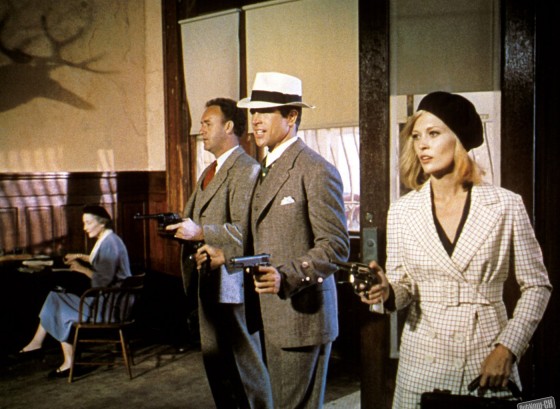
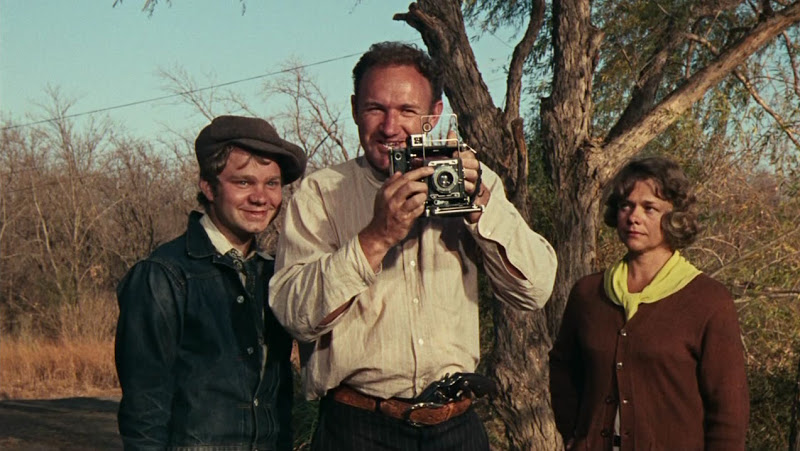
The story opens with a bored, sexually frustrated small town girl (Faye Dunaway) meeting a charming bad boy (Warren Beatty). She questions his courage and masculinity, and he shows off by drawing a gun and committing a robbery. They flee her backwards hometown together, intoxicated by freedom, danger and each other. More daring robberies follow, and with it growing fame for Bonnie and Clyde. Soon they gather other people around them, including a slow witted ne’er do well (Michael Pollard), Clyde’s older brother Buck (Gene Hackman) and Buck’s prim, God-fearing wife Blanche (Estelle Parsons). The law of course comes after them, spurring epic gun fights and a wild cross-country chase sparked with episodes that are surreal (the mesmerizing family reunion scene, which was shot by putting a window pane in front of the camera) and comic (the best of which features Gene Wilder, in his first movie). The story’s conclusion, which I will not spoil, is justifiably one of the most famous scenes in the history of American cinema.

The sexuality and graphic violence on display here was beyond anything Hollywood films had done since the Hays Code came into force in 1934. This is one of the first movies to use squibs and to show bullet wounds spouting blood. The impact of the violence is further amplified through use of the choppy editing style that been popularized by the French New Wave. Also, in a striking reversal of the typical gender roles of films in the 1950s, the woman is the confident sexual aggressor and the man is sexually timid and indeed non-functional (in early drafts of the script, Clyde was in a gay relationship with one of the men in his gang, but in the final version he instead is impotent). The point of view of the story was also novel and in keeping with the rebellious spirit of the times: The heroes are murderers who mow down police officers without compunction.

But it is not just the sexual and violent themes that make Bonnie and Clyde a landmark American film, it is also the movie’s meditation on fame. The criminals’ exhilaration in their notoriety, their self-conscious pursuit of increased publicity and the way they are hero-worshiped by strangers highlight the absurdity of American celebrity culture in supremely effective fashion.

As for the acting, under Arthur Penn’s direction, the entire cast explodes off the screen. Parsons won an Academy Award for her performance but any of the leads and supporting players would also have been worthy choices. Last but certainly not least, Burnett Guffey’s “flat style” camerawork — a complete inversion of his remarkable work in films I have recommended like My Name is Julia Ross, In a Lonely Place,  and The Sniper — is one of the lasting achievements in Hollywood cinematography. That Guffey could early in his career thrive in the deep focus, shadowy, stylized world of film noir yet later became a leading exponent of unadorned, naturalistic cinematography shows that he was truly one of the giants of his profession.

The backstory to this film has also become part of its legend. Clyde Barrow and Bonnie Parker were of course real-life bank robbers in Depression-Era America. The Oscar-winning script of this film was brilliantly adapted from their exploits by David Newman and Robert Benton, with uncredited help from Robert Towne. (All of whom, like so many of the people associated with the film, went on to notable success in American cinema). The writers tried unsuccessfully to recruit a French New Wave director to make the movie, but none of them were ultimately interested. Fortunately, Warren Beatty saw the potential of the story and bought production rights, eventually signing Penn as the director. As a sign of how out of touch studio executives were with 1960s filmgoers, the suits at Warner Brothers had so little confidence in the film’s audience appeal that they were comfortable promising Beatty 40% of the gross receipts. They barely released and minimally promoted the picture, and were not surprised when establishment movie critics sneered at it. But it hit audiences like a thunderbolt, becoming a massive box office hit. Remarkably, some chastened film critics went so far as to publicly apologize for their dismissive reviews and to write new reviews praising the movie (except for the New York Times’ insufferable Bosley Crowther, who campaigned against the film so vigorously that his bosses finally realized that it was time to find a more discerning critic). Many years later, this initially unwanted, disregarded and disrespected film became one of the first movies selected for preservation by the National Film Registry.

p.s. If any film prefigures Bonnie and Clyde in American cinema, I think it’s Joseph Lewis’ extraordinary 1950 movie Gun Crazy. If you have time for a double feature, that’s the film to pair with this one. And if you have time for a triple feature, throw in Lewis’ My Name is Julia Ross to appreciate the incredible range of cinematographer Burnett Guffey.

Categories
Action/Adventure Foreign Language Horror/Suspense Mystery/Noir

Män Som Hatar Kvinnor

image

The left-wing Swedish author Stieg Larsson had a strange and remarkable life. As a teenager, he witnessed some of his friends commit gang rape, and was haunted thereafter both by guilt about his failure to intervene and the omnipresence of violence against women. As a journalist he was unknown outside of Sweden when he died suddenly at the age of 50, but soon became one of the most widely read authors on Earth when his Millenium triology was posthumously published. The first filmed adaptation of Larsson’s crime novels is the unforgettable 2009 Swedish television mini-series Män Som Hatar Kvinnor.

Though known as “The Girl with the Dragon Tattoo” to Americans, the original Swedish title actually translates as “Men who Hate Women”, which better describes what this film is about: a ferocious, unforgettable, superheroine battling some of the slimiest and scariest misogynists in film history (which is saying something).

Noomi Rapace knocked the film world on its ear with her four-barreled performance as Lisbeth Salander, a social misfit with a history of trauma, a genius for computer hacking, and an invincible survival instinct. Events bring Salander together with crusading journalist Mikael Blomkvist (Michael Nyqvist, nicely underplaying his part), who is attempting to solve the long-ago disappearance of a little girl in a remote Swedish village that is icy in more ways than one. Along the way they encounter enormous human ugliness (almost all of it male), perplexing clues, and life-threatening risk.

Having not read Larsson’s books, I cannot evaluate the faithfulness of Rasmus Heisterberg and Nikolaj Arcel’s screenplay to the original story. But I certainly aver that it’s a fine bit of writing, rounding out each character and having them bounce off each other in ways that advance the story. The relationship between Salander and Blomkvist is particularly refreshing because it completely reverses the gender role conventions of the genre. The mystery/thriller elements are also fairly well-done, keeping the audience puzzling over the solution at times and on the edge of their seat at others.

As photographed by Eric Kress, Northern Sweden is a bleak and lonely physical environment populated by bleak and lonely people, amongst whom some true monsters can easily hide. The film could easily have been a downer if not for the breathtaking power of Salander’s character and Rapace’s performance. Multi-layered female roles are sadly uncommon in movies; the worldwide embrace of Lisbeth Salander shows that audiences are hungry for more.

p.s. This review is based on the 180 minute version that played on Swedish television (later edited down into a shorter film for release in theaters). The 2011 English-language remake has a bigger budget with bigger stars (including a miscast Daniel Craig as Blomkvist) and is certainly a polished piece of work, but not quite as effective as the original.

Categories
British Drama Mystery/Noir

Seance on a Wet Afternoon

Fleabag & Killing Eve Director Helming Seance on a Wet Afternoon ...

Most movies fit into particular genres, with plots that in at least some respects are recycled. There is nothing inherently wrong with this: The same thing could after all be said of almost all of Shakespeare’s plays. But just as The Tempest is refreshing because of its novelty, so too are films with unique stories that one can’t really analogize or trace back to any earlier films, or even to a cinematic genre. Love and Death on Long Island and Junior Bonner are two of my favorite movies of this highly original kind. Another is this week’s film recommendation: Seance on a Wet Afternoon.

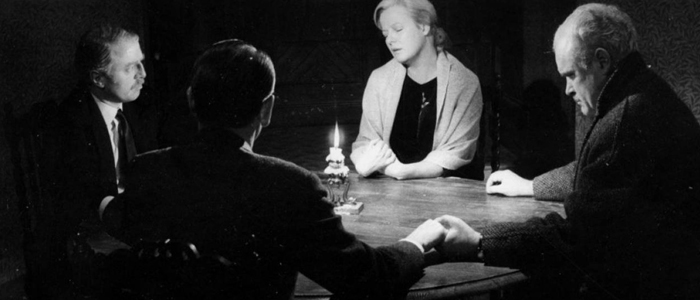
The film opens as a two-handed play about a strange and strangely compelling married couple. Myra (Kim Stanley) holds seances for her credulous neighbors and is convinced that she has remarkable psychic gifts. Her asthmatic husband Billy (Richard Attenborough) seems afraid to disagree with her. It soon becomes apparent that the two are hatching some sort of bizarre kidnapping and ransom plot, though it would be better said that Myra has hatched it and Billy is too uxorious to resist. Despite the ransom demand, the motive for the planned crime is nothing so simple as money. Many twists of story and anguished human psychology follow, taking the audience on a journey that is suspenseful, dramatic, and ultimately, quite sad.

This 1964 film is the most artistically impressive product of the highly successful, long-running collaboration between British cinema worthies Richard Attenborough and Bryan Forbes. The two men took on different roles in their various films; in this case Forbes wrote and directed and Attenborough acted and shared producer duties with Forbes.

rideau-de-brume-1964-02-g

As producers, the team’s masterstroke was reaching across the pond to cast Kim Stanley, who was then a stage and television actress barely known outside of New York City. As Myra, Stanley gives one of the outstanding performances of the 1960s as the sort of person who is deeply disturbed and fragile yet at that same time exerts enormous power over those around her. Stanley was dubbed The Female Brando by her biographer and she puts on a method acting clinic here in what sadly turned out to be one of few opportunities movie audiences got to see her masterful work. After being nominated for an Oscar for Seance on a Wet Afternoon, she returned to the stage and virtually disappeared from films until 1982, when she garnered another Oscar nomination for Frances.

Forbes’ direction and Stanley and Attenborough’s performances are truly above reproach. The way Billy is lacerated by Myra’s every critical remark and disapproving look, yet also clearly loves her and feels protective of her, is beautifully, painfully brought out. Their marriage is not quite a folie à  deux because Billy retains some grip on reality and decency, which serves to create tension in the relationship and the plot that propels the film forward.

Though the script could have been slightly tightened, every line of dialogue rings true and the plot is consistently compelling. Gerry Turpin’s photography is also a virtue, both in the interiors of Myra and Billy’s house but also in, around, and underneath bustling 1960s London. Overall, one gets the sense of a production in which every professional in front of and behind the camera knew exactly what they were doing.

Billy and even moreso Myra will haunt your imagination after you see this movie. Don’t miss it.

Categories
Drama Mystery/Noir

The Prowler

This week’s film recommendation is an unusual, disturbing film noir that has enjoyed a renaissance in recent years: 1951’s The Prowler. Made by left-wing artists who were being harassed by the House Un-American Activities Committee, it’s a dark take on class resentment, sexual repression, and the ruthless pursuit of the American dream.

Many film noirs feature cops who are half-witted or on the take, but The Prowler is the only one I know where the central character is both a police officer and a calculating, manipulative psychopath. Van Heflin is mesmerizing as Webb Garwood, a flatfoot who is called to investigate a report of a prowler in a wealthy neighborhood. The call comes from Susan Gilvray, played with vulnerability by Evelyn Keyes (I also raved about her work in 99 River Street). Webb lusts for Susan immediately, not just physically but also for her and her husband’s obvious status in society.

Susan is both flattered and scared by Webb. Sensing her ambivalence, he pays her several more visits until the lonely and repressed Susan — who wants a baby — gives in to his advances. Eerily, their liaisons are accompanied by the sound of her husband’s voice, a radio announcer who works at night. Webb now has the wealthy man’s wife that he wanted, but he knows he doesn’t possess her completely, nor does he have access to the money he wants to buy his own place in the world. But if her husband were out of the way, who knows what might be possible?

In terms of establishing character and framing the plot elements, the script of The Prowler is one of the best in noir. The screen credit went to Hugo Butler, but Dalto Trumbo wrote much of the script. He was blacklisted and couldn’t be acknowledged publicly as a screenwriter, but in what was probably an inside joke at the expense of the McCarthyites, he provides the voice of Susan’s husband on the radio (again, uncredited). Anyone who wants to learn how to write strong scripts should watch the scene early in the movie in which Webb and Susan discuss their experiences growing up in Indiana. As Webb explains how he blew his chance to get a college education, the audience understands immediately his smallness as a human being and his entitled rage towards people whom he tells himself have denied him what he deserves.

The film also demonstrates something many producers forget: Characters don’t have to be likable, they just have to be interesting. Neither of the principals are people you’d want as your neighbors, but it’s extremely compelling to follow the tenebrous twists of their relationship.

The direction, by the soon to be blacklisted Joseph Losey (probably best known for the thematically similar The Servant), is unusual and effective. He structures the scenes in play-like fashion, with long takes in just a few key, evocative sets. Those locations each have their own vivid bleakness, especially the ghost town in which the third act occurs (memorably shot by the great Arthur C. Miller). Congratulations are due to Art Director Boris Leven and Set Designer Jacques Mapes for tremendous work on a small budget.

The film suffers slightly from a lull between the first and third acts as well as some plotting improbabilities, but it’s still a bit surprising that it wasn’t more of critical and popular hit upon release. It may have been a bit ahead of what a 1951 U.S. audience wanted to see in a story focused on a police officer. It was however very popular in Europe, where Losey was soon to flee to escape political persecution. Later, the film was reappraised by U.S. film noir devotees and its reputation has deservedly grown.

The Prowler is in public domain, and has been remastered version by UCLA’s vaunted restoration team (with financial support from The Stanford Theater Foundation).

Categories
Action/Adventure Horror/Suspense Mystery/Noir

The Parallax View


The horrifying assassinations of the 1960s generated countless conspiracy theories that continued to rattle about in the 1970s, particularly after Watergate further damaged the public’s faith in once-respected institutions. During this period, Alan J. Pakula was arguably the film maker who most effectively translated the public’s anxieties onto the screen. The two best known of his “paranoia triology” are the Oscar winners Klute and All the President’s Men. But don’t overlook the less commonly recalled but very fine member of the troika: 1974’s unnerving The Parallax View.

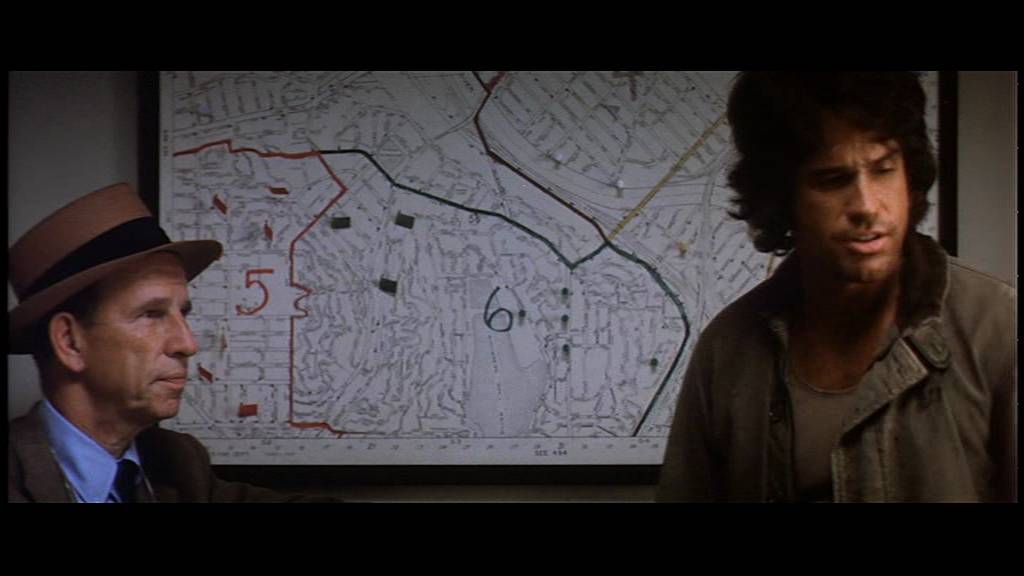
The film’s opening sequence, set at the top of Seattle’s space needle, grabs viewers by the throat. What seems a banal political event suddenly turns violent, and through a series of rapid cuts the audience is as disoriented as the terrified characters on screen as they wonder what exactly they just saw. In the ensuing months, many of the witnesses come to premature ends, leading raffish journalist Joe Frady (Warren Beatty) to investigate, against the advice of his hard-headed, fatherly editor (Hume Cronyn, effortlessly at home in his role). Frady discovers that a mysterious corporation is recruiting sociopathic killers and goes undercover to investigate. He seems to be making progress in infiltrating the nefarious cartel, but is he really just walking into the web of a hungry spider who is spinning all the strands?

Alan J. Pakula's “The Parallax View” | Wonders in the Dark

The Parallax View provides moments of high suspense and also carries off well that essential of paranoia films: The exchanges between the lead character and the trusted friend who thinks the “conspiracy” is all imagined (Nice touch: Cronyn’s office is crammed with memorabilia from his work with the Boy Scouts). The performances are believable throughout, which helps the film survive its more credibility-straining moments.

The late Gordon Willis, one of the most respected cinematographers of the 1970s, gives the film a distinctive look appropriate to its tone. There are many long, lonely shots taken far from the action, along with Willis’ signature fondness for shadows. The opening and closing shots, of government investigatory commissions proclaiming “nothing to see here, move along, there’s no conspiracy” as the camera moves in and out, ultimately arriving at a dark, distorted anamorphic image, are perfect bookends for the film. Combined with the movie’s minimalist use of sound, Willis’ superb work suffuses the movie with a sense of unease.

The film is not without shortcomings. As in some other Pakula films (e.g., Consenting Adults), certain plot elements can’t survive strict logical scrutiny. How can second-rate journalist Joe Frady drive like a NASCAR champion and fight like James Bond? Why doesn’t he ever have deadlines at his newspaper and why, beyond the needs of the script, does his editor keep handing him piles of cash to pursue his story? Another potential weakness: Joe Frady is not that appealing of a person, so if you really don’t like Warren Beatty as a star, you may not feel much sympathy for the protagonist.

Flaws notwithstanding, Parallax View is an effective, disturbing piece of cinema. Its perspective is ultimately gloomy, but that doesn’t diminish its entertainment value or emotional impact one iota. This is a movie that stays with you, like a microphone the CIA has attached to your cell phone.

p.s. For those of you who are not old enough to remember and therefore might find one key scene of this film unbelievable: In the 1970s, you really could board an airplane without a ticket and check luggage onto a flight on which you were not yourself a passenger. Also, there was good service in coach. Really.

Categories
Action/Adventure British Mystery/Noir

Defence of the Realm

David Drury’s thriller Defence of the Realm is a taut British conspiracy tale set on Fleet Street. This 1986 film embodies the left-wing paranoia of the Thatcher years, with its deep scepticism of nuclear weapons, the US-British alliance, and grey men in dark suits secretly controlling society from their Whitehall back offices and private gentleman’s clubs (It’s of a piece with A Very British Coup, The Whistle Blower, and Edge of Darkness in all those respects).

The story begins somewhat obliquely, with two juvenile delinquents fleeing the police until they come to a British airbase used by the American military (Presumably RAF Lakenheath, hint hint). One of them clambers over the fence, triggering an unexplained event that leads to an evacuation. An investigation is announced by Dennis Markham, MP, who is played by Ian Bannen (An actor I praise here, and here and here). But before Markham can pursue his enquiry, he is forced to resign over a Profumo-esque sex scandal. Coincidence? Brash young investigative journalist Nick Mullen (Gabriel Byrne) begins to pull at the threads of the story, despite the warnings of his shrewd, if crapulous, senior colleague (Denholm Elliott). Pretty soon, Nick becomes aware that powerful forces do not want the truth to come out and will do anything to keep it quiet.

The movie’s perspective is pretty bleak and in that sense one could consider it a British cousin of another of my recommendations, The Parallax View. Byrne, with his dark looks and demeanor, is almost a physical expression of the film’s outlook, which is only further enhanced by the moody cinematography and music.

In addition to its suspenseful and exciting moments, this film has two towering virtues. The first is the performance of Elliott, who steals the movie as a wiser, sadder journalist with a core of integrity. It’s as good as anything this fine actor has carried off in his impressive career. The movie’s other principal pleasure is its evocation of a now-vanished Fleet Street culture, with heavy drinking at lunch, late nights at the office, and some peculiar and charming traditions (e.g., the scene where an ink-stained wretch’s retirement is marked by the sound of pounding printing blocks).

This isn’t a perfect movie. Greta Scacchi, in the sort of role that seemed intended to have critics say “See she’s not just a sex symbol, she can really act!”, is in fact pretty flat as Markham’s assistant and there is zero chemistry between her and Byrne. Also, some viewers may find the film too confusing or downbeat at least some of the time.

That said, Defence of the Realm is a worthy entry into the political paranoia genre that improves with repeated viewing. It will not make you trust your government more, but it will command your attention and keep you on the edge of your seat.

A final trivial note on the film: Prior to the big showdown with nefarious forces, Byrne walks through the same club library in which Daniel Craig and Michael Gambon made a drug deal in another of my recommendations, Layer Cake, which is also the room where I wrote that recommendation and this one too.

Categories
British Mystery/Noir Romance

The Lady Vanishes

As the British phase of his magnificent career was winding down, Alfred Hitchcock turned in a film as entertaining as anything he would make in America: 1938’s The Lady Vanishes.

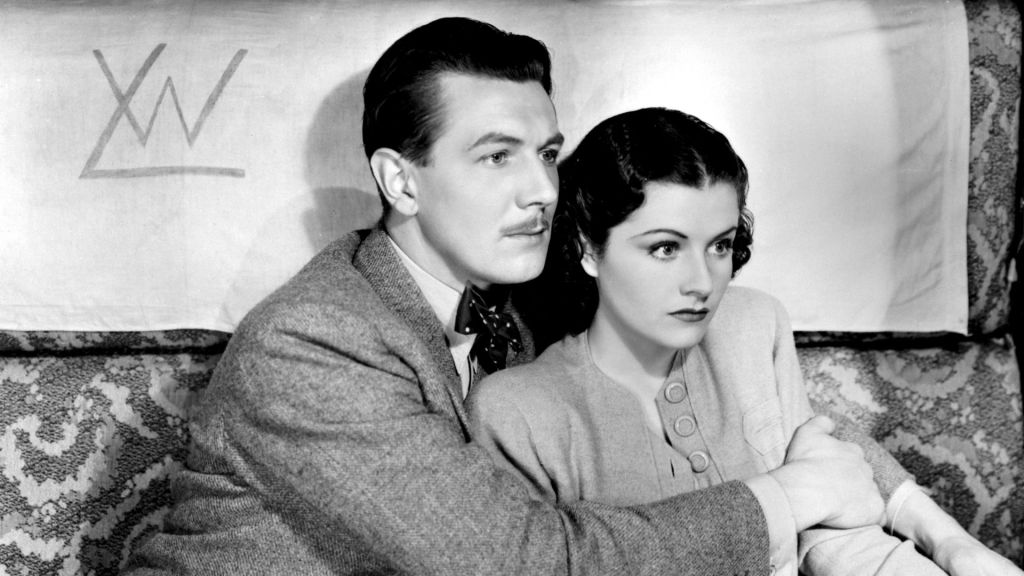
For the first 25 minutes, the movie is a light-hearted romantic comedy featuring an utterly charming Margaret Lockwood and Michael Redgrave as, respectively, a wealthy American heiress bound for a loveless marriage with a penurious but titled aristo and a footloose music scholar manqué who clearly has some growing up to do. That they will fall in love is never in doubt, but intrigue and murder intrude as they make a train journey across the fictional central European country of Mandrika. An elderly, kindly, British-as-Sunday-roast governess named Miss Froy (Dame May Whitty, effortlessly fine) is at the center of events. After our heroine is coshed on the head by a falling flower pot, Miss Froy befriends her. But soon Miss Froy vanishes without trace and everyone denies that she ever existed! As in so many other films of this sort, the central character must struggle with whether her fears are real or are imagined (as everyone around her keeps saying).

As you might guess from the above description, the plot contrivances in this film are many, even by Hitchcockian standards. Most notably, if you watch the final few scenes carefully, you may wonder why the film wasn’t titled “The gun-toting bad guy vanishes”. But Hitchcock was aiming for a romp, not a piece of cinéma vérité, and a tremendously entertaining romp it is. Even some of the wonderful visual effects seem as much intended to invoke mirth as tension (e.g., the opening miniature shot).

The film is based officially on a fine, popular mystery novel called The Wheel Spins by Ethel Lina White. But Screenwriters Frank Launder and Sidney Gilliat (who also scripted another of my recommendations, Green for Danger) changed it significantly. In the process, they produced a pearl of a script, with laugh out loud humor, cleverly constructed comic bits and suspenseful situations, cute late 1930s style sexual innuendo, and some lovely character sketches.


The most famous of the latter are Caldicott and Charters (who did not appear in the novel). Naunton Wayne and Basil Radford were born to play the parts of the two cricket-obsessed, faintly barmy Englishmen abroad and they just about made a career of it from here on out, both in movies and television. Their timing is on the same level as Bob and Ray, but their sensibility is unmistakably English (not British mind you, English). It’s a testament to the actors and the writers that they were able to create characters that audiences could laugh at even though they were themselves being mocked to some extent (Decades later, The Simpsons would pull off the same trick on American television).

Hitchcock fans argue over whether this film or another of my recommendations, The 39 Steps represents his best British work. I tend toward the latter by an eyelash, but why choose when both hold up so well three-quarters of a century after they were made? If you like one, you will like the other as the plot elements are similar and in both cases, the heroes have none of the darker shades that Hitchcock favored more as he aged. Lockwood and Redgrave are uncomplicated young people who are brave, smart, funny and in love.

The Lady Vanishes was such a success that the same writing team and a number of the actors were reunited to make another movie of the same sort, this time directed by Carol Reed. My recommendation of that movie is here.

The Lady Vanishes is in the public domain, and there is a a perfectly nice print from The Internet Archive you can watch here. The Criterion Collection version, available for purchase, looks even better and also includes some wonderful extras.

Categories
Horror/Suspense Mystery/Noir

My Name is Julia Ross and Dead of Winter **Double Feature**

The 1941 novel The Woman in Red has been used as the basis of a film twice, with a four-decade gap between versions. As a special double feature, I recommend both adaptations: 1945’s My Name is Julia Ross and 1987’s Dead Of Winter.

My Name is Julia Ross was a modestly budgeted Columbia production with a 12-day shooting schedule. But at that point in his career, director Joseph Lewis was used to churning out a C-picture a week on Poverty Row. To have a B-movie budget was for Lewis a major upgrade in resources that allowed him to show how much talent he had. Clocking in at just over an hour, the film serves up noirish gothic suspense and a career-best performance by Nina Foch as the title character. She’s an American living in London who answers a job advertisement placed by a seemingly gentle old woman (a deliciously evil Dame May Whitty). Julia thinks she will be working as a personal assistant, but instead is promptly drugged, kidnapped and moved to a remote mansion on the Cornwall coast where everyone calls her by a different name and acts as if she’s married to a knife-obsessed weirdo (George Macready, who was made for these sorts of roles)! But the villains have not figured on how brave and resourceful is their prey…

My Name is Julia Ross is often cited by critics as being the perfect demonstration that you can make a fine movie on a low budget. The script and performances are solid and the brisk pacing keeps the viewer engaged throughout. Burnett Guffey, a future Academy Award winner, contributes moody and at times even eerie photography, and Lewis’ influence on shot selection is also easily evident (He loved to shoot actors through wagon wheels and fences, here there are shots through the newels of a staircase and the iron bars of a secured window). It is not surprising that the movie more than returned its modest budget and put Lewis on the path to even greater successes (Most notably, the simply amazing Gun Crazy, which features a central character with a fetish that resembles Macready’s here).

Many years after My Name is Julia Ross was released, Marc Shmuger and Mark Malone re-imagined the story considerably in Dead of Winter, making the lead character an actress desperate for work (Mary Steenburgen, who has fun playing three different characters). She is interviewed for a role by an inordinately polite and at the same time somehow disturbing assistant (Roddy McDowell, who steals the film) to an alleged film producer (Jan Rubes). In the midst of a raging, isolating winter storm, they bring her to a remote New England mansion and ask her to shoot a scene in which she impersonates Julie Rose, an actress whom they claim has had a nervous breakdown and needs to be replaced on a major film production currently underway. But as the audience we know that Julie has been murdered, and our heroine is falling into a web of danger.

Some of the plot twists and shocks in the film are anticipatable, but others are complete, effective surprises. As you would expect from a modern film, there is more graphic violence than in the original, but it’s not at all overdone. As in the original, it’s rewarding to see a strong, smart female lead character and also have a few moments of black humor. The one significant weakness of Dead of Winter is its length. If director Arthur Penn had to work with Joseph Lewis’ budget, I suspect he would have cut the first 11 minutes of set-up and character backstory and opened the film instead with the Steenburgen’s first meeting with McDowell. That would have made a better movie because the film as made can’t keep the audience in suspense throughout its 100 minute running time, even though the climax is truly nail-biting.

As a set, the two versions of this story make an entertaining and suspenseful double feature. Also, for film buffs, watching these films back to back is a chance to appreciate how the production of movies has changed over the decades.

p.s. Some trivia for you: Gene Wilder’s 1984 film The Woman in Red was based not on the book but a French movie).

p.p.s. Steenburgen’s husband in Dead of Winter (William Russ) is apartment bound because his broken leg is in a cast, but he can at least look out his window and take photos with his high-end camera…I think we know to which classic movie this is an allusion!

Categories
British Horror/Suspense Mystery/Noir

Obsession

In my recommendation of Dear Murderer, I described my fondness forBritish films in which brutal people say awful things with perfect manners and diction. Another fine example of the “Terribly sorry old chap, but I’m afraid I’m going to have to kill you” school of Brit Noir is 1949’s Obsession.

Like Dear Murderer, the film revolves around a beautiful, faithless wife (Sally Gray) whose urbane, intelligent cuckold (Robert Newton) seeks indirect vengeance by trying to kill one of her lovers in a fashion that the police will never uncover. Gray is at her most alluring…and her most cold. If there were any doubt as the film progresses, the final scene makes clear her character’s utter selfishness, and she puts it over in a manner worthy of noir’s most memorable femme fatales.

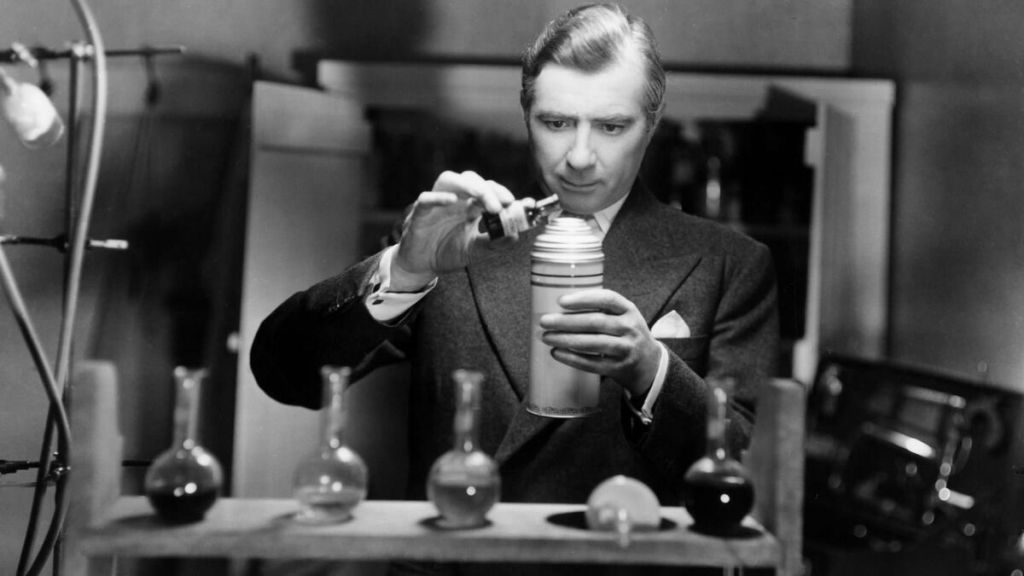
Robert Newton, as a calculating, vindictive psychiatrist plotting the perfect murder, is even better. It’s hard to believe that his suave, perfectly tailored character is the creation of the same actor who made “Arrrrhhh!” the byword of would be pirates everywhere (see my recommendation Treasure Island for details). Because he is ostensibly the victim of his wayward wife and conducts himself so politely, it’s possible to feel sorry for him until about half way through the film, when a critical scene with a little dog makes you realize that he is, like his spouse, a thoroughly nasty piece of work.

Obsession (1949) British Politeness, A Hot Water Bottle & A ...

Phil Brown, remembered today only as Luke Skywalker’s Uncle Owen in Star Wars, is serviceable as the doomed lover, though a stronger actor might have been able to do more in the many face-offs he has with Newton. Naunton Wayne — for once not co-cast with Basil Radford — comes off better as a dogged Columbo-type detective, and also skillfully injects some comic relief into the otherwise grim story.

The other key presence here is director Edward Dmytryk, who was essentially exiled to Britain during the McCarthy witch hunts. He had a smaller budget to work with than what he was no doubt used to in Hollywood, but he gets everything possible out of the small cast and few sets as the film unfolds.

If you have trouble finding a copy of Obsession, look for it under an alternate title that was adopted at some point after its release: The Hidden Room. Any required extra hunting effort on your part will be well-rewarded by this finely-crafted piece of cruel and suspenseful entertainment.

p.s. Look fast for Stanley Baker (whose films I recommended here, here and here) as a cop on the beat.