Categories
British Comedy

School for Scoundrels

Film - School For Scoundrels - Into Film

As an ex-academic, BBC comedy writer, and member of The Savile Club, Stephen Potter had ample opportunity to observe all the ways British culture provided to “win without cheating”: the perfectly timed cough when your golf opponent is about to tee off, the lightly dismissive remark that flusters a fellow diner in the midst of his lengthy anecdote, the artful humblebrag that reduces listeners to simpering admiration. It’s all part of what we now call “gamesmanship”, a neologism Potter popularized in 1947 in the first of several best-selling parodies of self-help books. In 1960, Hal Chester, Patricia Moyes, Frank Tarloff, and Peter Ustinov (the latter two uncredited) fashioned Potter’s works into the script for a quintessentially British comedy: School for Scoundrels.

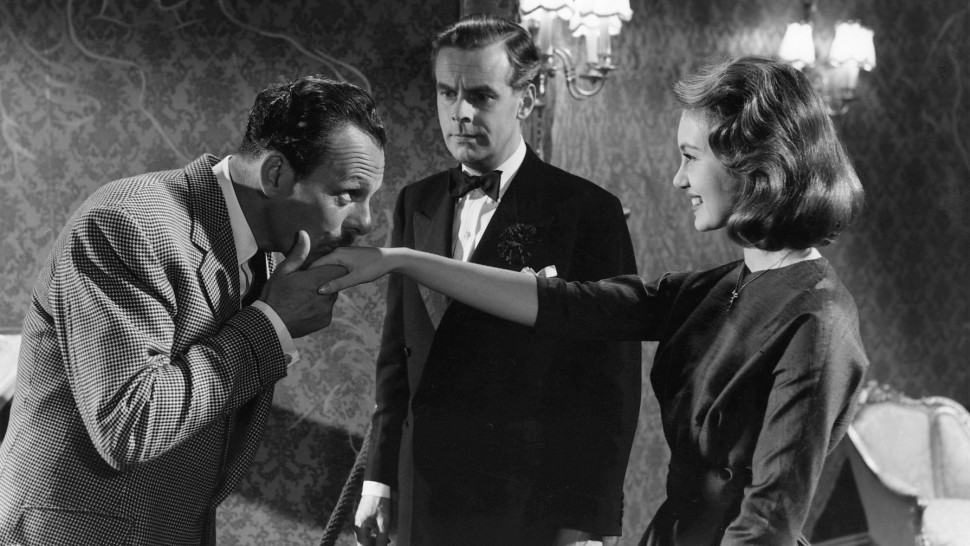
The plot: Henry Palfrey (Ian Carmichael, made for these sorts of roles) is the ineffectual inheritor of his father’s company. Though Henry is ostensibly the boss, his employees do not respect him, and neither for that matter does anyone else. His life as a polite doormat takes a sudden turn when something very good literally falls into his path: the utterly charming April Smith (a winsome Janette Scott). But he soon has a romantic rival in the form of ultra-smooth cad Raymond Delauney (Terry-Thomas, made for those sorts of roles), who dazzles April and consistently gets the better of Henry. In desperation, Henry enrolls in a “School of Lifemanship” overseen by Headmaster S. Potter (ahem). This cynical, crafty instructor (Alastair Sim, always a joy) teaches Henry gamesmanship, oneupmanship, and woomanship. Thus fortified, he returns to seek revenge on Raymond and win April’s heart.

A British Cinema Blog | William hartnell, Sims, Scoundrel

The director’s credit for this little comic gem reads Robert Hamer, who made two of my other recommendations, the hilarious dark comedy Kind Hearts and Coronets and the trend-setting noirish kitchen sink drama It Always Rains on Sunday. Unfortunately, by 1960 his alcoholism was out of control and he was fired in the middle of this film. He never directed again and died a few years later. Hal Chester and Cyril Frankel are said to have to directed the remaining scenes.

Having three directors would ruin most movies. But the professionalism and experience of the cast shines through despite at all, with all the leads doing well, especially Terry-Thomas in perhaps the best performance of his career. The talented supporting players include many staples of British comedy such as John Le Mesurier, Hattie Jacques, Irene Handl, Dennis Price, and Peter Jones.

The other enormous virtue is the mordant script which sets up numerous funny scenes in which characters find ingenious ways to get the edge on each other. The humor is sometimes farcical and at other times subtle, a mix that may not be to all tastes but that I found most pleasing. If not at the level of the most lauded British post-war comedies, School for Scoundrels still delivers many laughs as well as a surprisingly sweet romantic resolution.

p.s. Janette Scott is the daughter of British television legend Dame Thora Hird.

Categories
Action/Adventure Romance

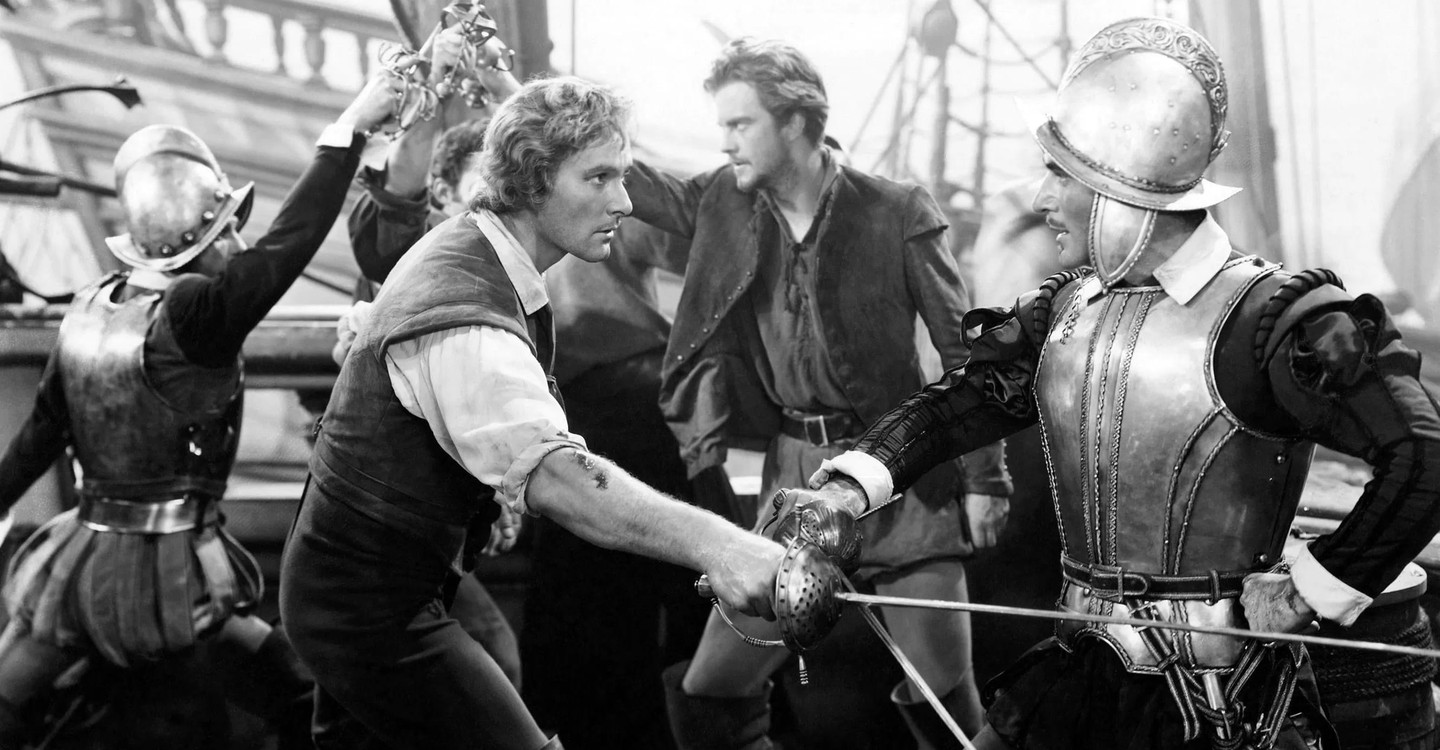
The Sea Hawk

The Sea Hawk (1940) - Turner Classic Movies

There’s an old jibe that “They don’t make movies in Hollywood, they remake them”. But sometimes they remake them so bloody well that audiences can’t help but stand up and cheer (see for example my recommendation of the Casablanca recycle job To Have and Have Not). A pluperfect example is the 1940 swashbuckler The Sea Hawk.

Let me clarify what was really being remade. Rafael Sabatini’s novel had been filmed before under the same name in 1924. That silent classic featured purpose built, full size replicas of battling sailing ships that were so realistic that they were spliced into many subsequent movies, including this one. But the origin of the 1940 adaptation of The Sea Hawk lies with a 1935 adaptation of a different Sabatini book, Captain Blood (my recommendation here). That film made Errol Flynn a superstar and Warner Brothers a mint, so they immediately planned to rework roughly the same story elements into a new pirate movie again starring Flynn, co-starring Basil Rathbone (though he declined the role), and directed by Michael Curtiz. The studio had a script draft as early as 1936, but Flynn was committed to a long line of films at that point, a number of them directed by Curtiz (including my recommendation The Adventures of Robin Hood). It was thus several years before Flynn and Curtiz could make The Sea Hawk, but it was well worth the wait.

The Sea Hawk streaming: where to watch movie online?

The plot: Unlike Captain Blood, in which Flynn starts out as a slave, becomes a notorious pirate, and then has a climactic tussle with his enemies, in this film he starts out as a notorious pirate, becomes a slave, and then has a climactic tussle with his enemies. Also unlike Captain Blood, in which he had an achingly unconsummated extended flirtation with a beautiful, high-born, English woman, in this film the woman is only half-English. You get the idea.

More seriously, there is one big difference between the two films, which resulted from the start of World War II. In the Sea Hawk, Hitler is thinly veiled as the King of Spain, a ruthless seeker of global domination. And in the movie’s best performance, Dame Flora Robson as Queen Elizabeth gives a rousing speech about defending freedom that could have come out of Churchill’s mouth.

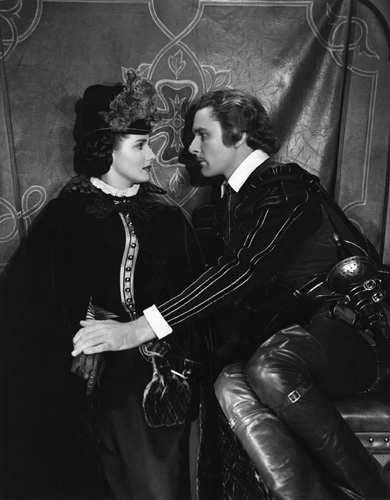
The Sea Hawk (1940) - Photo Gallery - IMDb

Brenda Marshall plays the love interest this time around, but the film didn’t launch her to stardom as did Olivia De Havilland’s pairings with Flynn (Though one of Hollywood’s most eligible bachelors, William Holden, clearly took notice: they married the following year). Marshall isn’t given a lot to do beyond looking lovely. If you want to see a movie where she gets a chance to show off her acting ability, check out my recommendation Strange Impersonation.

Claude Rains and Henry Daniell fare better as a couple of rotters, each played in their signature style, more charming for the former and more menacing for the latter. In the part that Rathbone declined, Daniell is just as good except that he couldn’t fence at all (Rathbone was a master swordsman). A double was smoothly spliced in for his extended duel with Flynn and it works just fine.

As for Flynn, he’s okay here but seems a tad less energetic than he was only a few years before; perhaps his health, never as good as the publicity machine made Americans believe, was starting to fade. But he certainly has enough gusto to keep the audience engaged, and he gets expert supporting help from many solid character actors, including Alan Hale, Una O’Connor, and Gilbert Roland.

Of course a swashbuckler lives and dies by its action scenes, and The Sea Hawk’s are epic in scope and brilliantly executed. The big budget shows as does the ability of the autocratic Curtiz to get armies (er, navies) of actors to do his bidding. Cannons boom, swords flash, buccaneers swarm, and ships cavort on the high seas. The Sea Hawk is a ripsnorting adventure, the fact that it was another trip to the same well notwithstanding.

p.s. My recommendation is based on the 127 minute version. Shorter versions sometimes appear on television.

p.p.s. In case you are tempted to adjust your screen settings, the sepia tint in the scenes in Panama was in the original film.

Categories
British Comedy

I’m All Right Jack

I'm All Right Jack (1959) - Photo Gallery - IMDb

The hit British comedies of the 1950s and 1960s don’t age consistently well. Just about everything from Ealing Studios holds up today, but outside of that, it’s hit or miss. I don’t doubt that the The Knack…and How to Get it and the comedy-drama Billy Liar made audiences roar with laughter at the time (at least to the extent British audiences ever roar with laughter), but for me at least, they don’t generate more than the occasional smile. In contrast, I laughed out loud repeatedly while watching the film that was number one at the British box office in 1959: I’m All Right Jack.

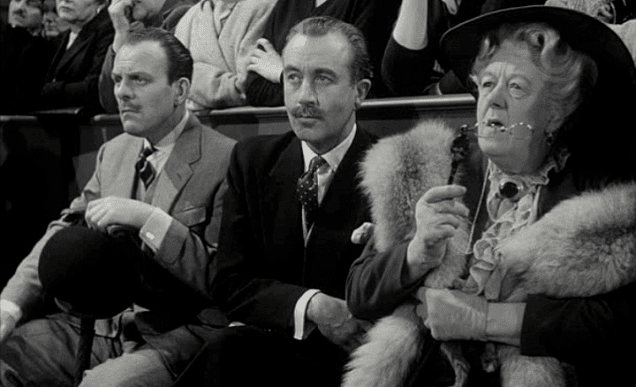
Based on Alan Hackney’s comic novel, the film stars Ian Carmichael effectively playing (what else?) a well-meaning innocent baffled by the people and world around him. His Stanley Windrush is a kind but rather useless upper-class chap who longs for a meaningful job after his father (Miles Malleson) retires to a nudist colony. Following a series of amusingly disastrous job enquiries, Stanley’s uncle and two old army friends (Charming rogues Dennis Price, Richard Attenborough, and Terry-Thomas) get him a factory job. His Aunt Dolly (that acting treasure, Dame Margaret Rutherford) is none too keen on Stanley mingling with the working class, but he enthusiastically plows forward nonetheless. His work ethic at the factory, far from being appreciated, generates a furious reaction from shop steward Fred Kite (Peter Sellers) and his fellow work-to-rule layabouts. Stanley is not sure he’s cut out for life in a unionized workplace, until he meets Fred’s curvaceous daughter Cynthia (Liz Fraser) who toils in the plant as (cough) a spindle polisher. Hilarious machinations by slimy corporate executives, soft-headed labor activists, and a romantically inclined Stanley ensue.

Carry On Blogging!: Carry On Faces in Different Places: I'm All Right Jack

In the 1950s, Peter Sellers was a radio star from The Goon Show, but had only played small parts in movies (e.g., The Lavender Hill Mob). At the decade’s close his cinematic career suddenly went into orbit with the release of The Mouse That Roared and I’m All Right Jack. Verbally and visually, he’s as funny as you would expect here, but he also creates a complete character. His Fred Kite is forceful and confident outside the home but lost and helpless within it, with a wife (Irene Handl) and daughter who run rings around him. Sellers also appears as Sir John in a funny opening bit unrelated to the main story, presaging a number of other films in which he skillfully played multiple parts.

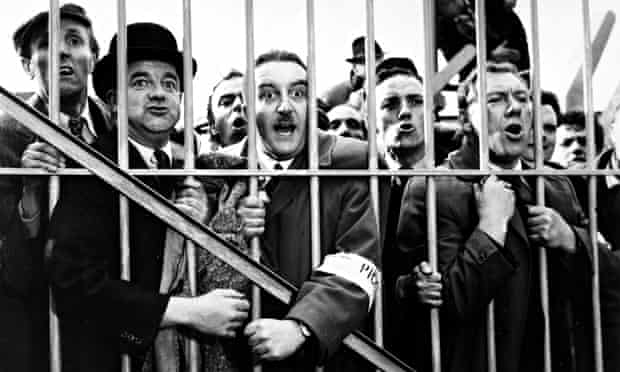
I'm All Right Jack review – Philip French on the Boulting brothers' biting  state-of-the-nation satire | DVD and video reviews | The Guardian

This light-hearted film was made by the Boulton Brothers, and is a million miles from their famously nasty 1947 noir Brighton Rock (my recommendation here). Beginning in the 1950s, they made a series of popular comedies lampooning the British Establishment (e.g., academia, the military, the legal profession). The brothers were committed socialists, but clearly not of the pious and scowling sort: I’m All Right Jack satirizes trade unions as effectively as any movie in British cinema history (not that management is spared a skewering). With lines like “We can’t concede the principal that a worker should be fired for incompetence, that’s victimization” this film feels a bit like a precursor to Monty Python’s immortal People’s Front of Judea. The Boultons were particularly gifted at overtly lionizing institutions while implicitly making them ridiculous, as in the sequences here that mime the self-serious “British industry leads the way!” style narration used in newsreels of the period.

p.s. This is actually a sort of sequel to Private’s Progress, a prior Boulton Brothers adaptation of Alan Hackney’s writings in which Carmichael, Price, Thomas, Malleson, and Attenborough all played the same characters. It’s an entertaining flick, but I’m All Right Jack surpasses it.

Categories
Drama

Body and Soul

Body and Soul (1947) John Garfield , Anne Revere, Film Noir, | Film noir,  John garfield, Iconic movies

Many fine movies have been set in and around the boxing ring. Most of them borrow from the subgenre’s touchstone: Body and Soul.

The hero of this 1947 classic is up-from-nothing Charley Davis (John Garfield), a scrappy boxer looking for a shot at the championship. Unfortunately, that means throwing in with the criminals who control the whole rotten enterprise and exploit everyone in it. As celebrity and money go to his head, Charley is drawn away from the decent values and people from his old neighborhood and towards the glamorous but amoral people who spend their lives in society’s upper echelons. Charlie thinks he is on top of the world. But then the bosses order him to throw a big fight so that they can cash in by betting against him, pushing Charlie to the point of emotional and ethical crisis.

This movie suffers a bit in the same way as many of Alfred Hitchcock’s films: Its elements have been aped so many times in subsequent movies that they may come across to modern viewers as clichéd. But try to get past that unfair but understandable reaction and feast yourself on a sharply-written, unforgettably photographed and acted piece of cinema.

The rewards for viewers are many. Garfield is superb as Charley, bringing alive his character’s mix of toughness and boyish vulnerability. It’s a complex performance of impressive maturity from a fairly young actor (who unfortunately never got to become an old one, he died just a few years later). Abraham Polonsky’s memorable script creates a triangle around Charley, with the other two points being strong, well-rounded female characters: Charley’s long suffering fiance Peg and his mother, Anna. These roles are brilliantly essayed by Lili Palmer and Anna Revere, respectively. In particular, the scenes of the three of them together in Anna’s house are absolutely riveting. These confrontations are also beautifully blocked and lit as the three performers move from the kitchen in the foreground to the small bedroom in the background which has a window where there really ought to be a wall (Unrealistic architecture, but the effect is so striking that you will not care).

Wrap Shot: Body and Soul - The American Society of Cinematographers

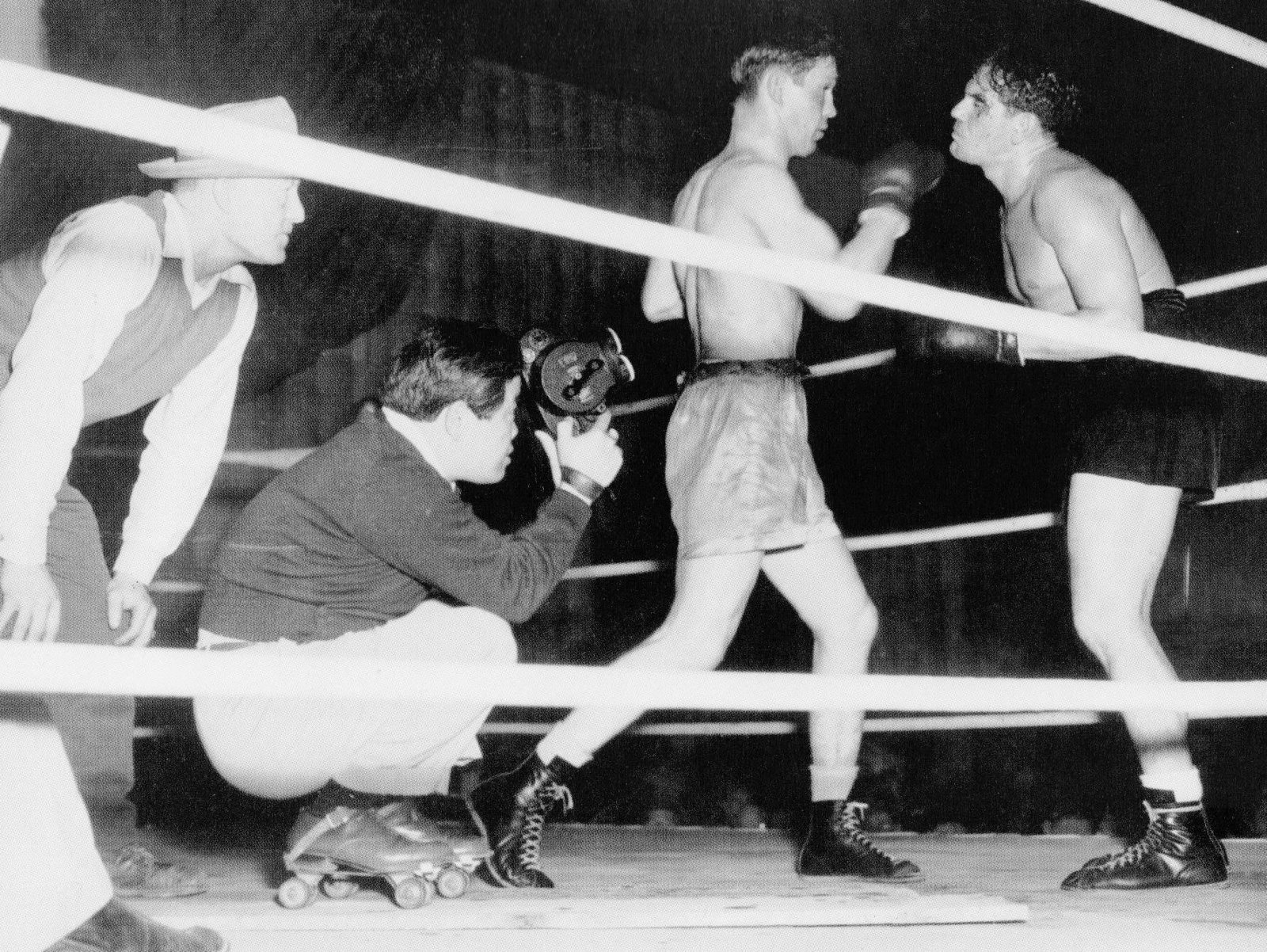
This film is also justly legendary as a showcase for my favorite cinematographer, James Wong Howe. The boxing scenes are astonishing in their vividness (Robert Parrish and Francis Lyon’s Oscar-winning editing is priceless). Until I saw the above photo I wondered if it were just a Hollywood legend that Howe shot them on rollerskates! Howe also shines outside the ring, given the viewer a gritty, realistic cityscape in which this dark story unfolds.

Although on the surface this movie is of course about pugilism, at a deeper level it’s about low-income outgroups (Jews and Blacks) trying to make good in a corrupt, oppressive and money-grubbing system. Virtually everyone involved in the production were members of the hard left and would soon be persecuted by McCarthyites as a result. But they had a free hand here for their pro-underdog politics, and they pulled no punches.

Categories
Horror/Suspense Mystery/Noir

Tightrope

Tightrope (1984) - Moria

Long before Louisiana started offering massive tax credits to attract Hollywood productions, the state was a popular setting for crime dramas. Some played off the haunting atmosphere of the bayous (e.g., the mediocre adaptations of James Lee Burke’s Dave Robicheaux novels, Heaven’s Prisoners and In the Electric Mist) whereas others were built around New Orleans’ pervasive corruption (e.g., The pretty good Dennis Quaid-Ellen Barkin romance/thriller, The Big Easy). The underappreciated 1984 Clint Eastwood vehicle Tightrope effectively exploits (in every sense) a different local cultural feature, namely the sleazier side of the sex trade that has existed in New Orleans long before Storyville because a synonym for a red light district.

The plot: Police detective Wes Block (Clint) has been unmoored since his wife abandoned him and his daughters (Jenny Beck and Clint’s real life daughter, Alison). Loving and attentive with his daughters by day, at night Block has for reasons that he can’t fully understand begun visiting prostitutes that he can sexually dominate. Block’s psychological turmoil takes on new dimensions when he is assigned to catch a serial killer who takes his fetish to deadly extremes. Meanwhile, a brave, intelligent, women’s rights advocate (Geneviève Bujold) pressures Block to respond more effectively to the threat the killer poses, and unnerves him in other ways as well. A brutal crime story and descent into emotional darkness follow.

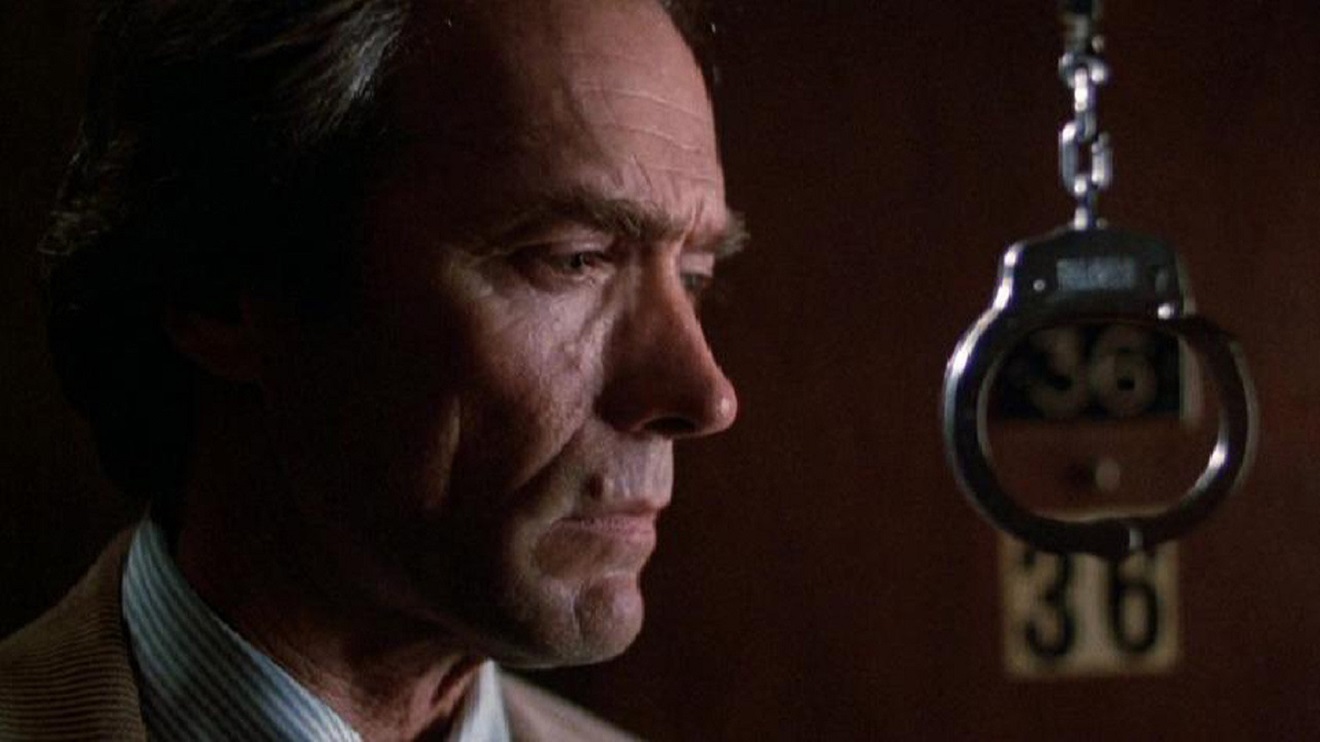
The “cop in crisis” has been done a million times before, and is usually short-handed in a fashion that will not alienate the audience, most commonly by showing him drinking too much. “We are not so very different, you and I” is another movie staple, for example showing that both the lead police investigator and the master criminal are both smart, obsessive people. If that’s all this film had done, it would have been a serviceable but unremarkable crime drama. What makes Tightrope special is Clint Eastwood’s willingness to challenge his millions of fans by having his character wallow in muck: He’s not just drinking too much, he’s handcuffing prostitutes so that he can control them during sex. And he’s not similar to the killer only because both are smart and obsessive, but because both of their heads are psychosexual snake pits. The only parallel level of risk taking by a major international star I know of along these lines is Sean Connery’s stellar work in another of my recommendations, The Offence.

The legendary William Goldman said that a basic rule of screenwriting was that “stars will not play weak and they will not play blemished.” But every rule has exceptions. Going as far back as the flawed but intriguing 1971 film The Beguiled continuing through the multi-Oscar winning Unforgiven and up to the present day (e.g., Gran Torino, The Mule) Eastwood has never been afraid to “play blemished.” That’s a key reason why his career has been so much more artistically varied and impressive than all those Hollywood actors who only portrayed strong-jawed paladins.

Tightrope (1984) – 80's Movie Guide

The other thing that raises this film about countless other police thrillers are the female characters and the high level at which they are written and performed. Alison Eastwood isn’t just the star’s kid, she’s a fine actress and her scenes with her father have authentic emotional power. They also fill out the character of Wes Block by showing that while he’s not different from the killer in having hostile feelings towards women, he is quite different in also experiencing more tender emotions towards them. Bujold, who appeared in too few films for an actress of her talent, is also excellent here. Because she is strong enough to vulnerable with Block, and sees his own fear of being hurt, she gets under his skin in a way nothing else does. I also love that rather than portraying her as a damsel in distress, the script makes her heroic in her direct confrontation with the killer.

Richard Tuggle’s script has a few missteps here and there but is generally first-rate, putting a fresh spin on the tropes of the genre. He also got the screen credit for director, but this sure looks and feels like an Eastwood film. According to Richard Shickel’s biography of Eastwood, Tuggle had never directed a movie before and was extremely tentative on set, leading Tuggle and Eastwood to amicably work out a co-directing arrangement. Whatever precisely happened in that regard, the result is compelling.

Reaction to Tightrope was mixed when it played in theaters, with some people finding it too seedy and dark (literally and figuratively) but others appreciating the strong acting and neo-noir tone. I am very much in the latter camp, and would put Tightrope up there with Bronco Billy as Eastwood’s best work of the 1980s.

Categories
British Drama Romance Science Fiction / Fantasy

A Matter of Life and Death

A Matter of Life and Death (1946) | BFI

Many film buffs love to rank order films in best ever lists, straining and debating to argue which is #4 versus #3 or #7. I do not put myself through that agony, but am comfortable with more fungible judgments. In that spirit, I am quite sure than any creditable list of the ten best ever British films would somewhere include A Matter of Life and Death.

As World War II was winding down, Michael Powell and Emeric Pressburger were firmly established as cinematic superstars after turning out one gem after another (including my recommendations 49th Parallel and The Life and Death of Colonel Blimp). The UK Government, recognizing that the two most important things in the world are love and Anglo-American relations, approached The Archers (as the team styled themselves) about making a movie that would diffuse tensions between American and British people. The Archers might have accomplished this with a simple story of international romance, but they went well beyond that modest ambition to create one of the most original and beloved works in cinema history.

The film opens with the camera taking the viewer through the cosmos accompanied with lyrical, wry, narration, setting up a damn-near perfect opening scene down on earth. Piloting a shattered, burning, Lancaster bomber trying to return to England, lone survivor Peter Carter (David Niven) calls out desperately on the radio and reaches a lovely, loving American WAAF named June (An achingly endearing Kim Hunter). Peter has heroically told his crew to bail out without revealing that his own parachute is destroyed. He’s going to die and just wants to say goodbye to someone and to life. Their connection emotionally overwhelms Peter and June (and the audience), and they are spiritually a couple for a precious moment before Peter, not wanting to burn alive, leaps to his death.

Criterion Collection Celebrates Powell & Pressburger's A Matter of Life and  Death | TV/Streaming | Roger Ebert

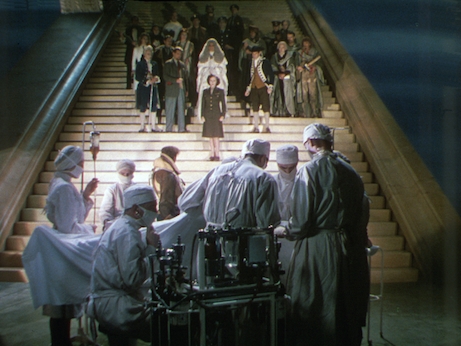
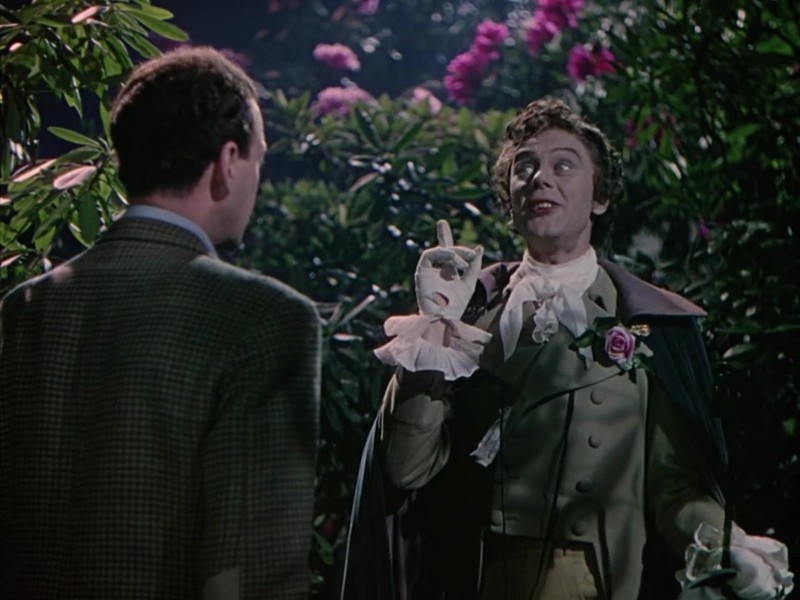
Or does he? Peter’s assigned heavenly “conductor” (a funny, flamboyant, Marius Goring) misses the lucky Englishman in the heavy fog! Having miraculously survives what seemed certain death, he meets June in person, to their mutual joy. But the lovers face a grave challenge when heaven seeks to correct the procedural irregularity. Peter demands a right to trial for his life, where he is represented by a kindly physician (that charmer Roger Livesey) against an American prosecutor (Raymond Massey, effectively menacing) who has a deep distaste for John Bull (Understandable in a man who was shot to death by Redcoats 175 years ago).

The Archer’s utterly original story is just one virtue of the script, which also includes fulfilling moments of romance, friendship, humor, and meaning. This is combined with gorgeous set design and Jack Cardiff’s unforgettable cinematography. The scenes on earth are a riot of Technicolor, and the scenes in heaven were shot in uncolored Technicolor, producing a stylized look reminiscent of the best of German expressionism.

Michael Powell's A Matter of Life and Death (1946): Criterion Blu-ray  review | Cagey Films

David Niven was not, by his own admission, a great actor, but he was an infinitely charming movie star. He nobly derailed a successful movie career to defend his country during the war; this mega-hit restored his stardom in one go after his years of military service. In the starring role, he’s effective enough and he’s surrounded by a sparkling cast in top form, many of whom were Powell and Pressburger favorites. They sell the fantasy elements credibly while giving the story the emotional weight it deserves.

This whole movie must have sounded utterly crazy in the pitch meeting. Cinema was moving towards the dark, realistic, themes of film noir, and this is an uplifting, heart-warming, fantasy. The otherworldly sets could have been a visual disaster, a mechanical impossibility, or unintentionally farcical. But the magnificence of Michael Powell and Emeric Pressburger is inseparable from their artistic risk taking. They never played it safe and never repeated themselves. It is precisely because they made the seemingly impossible possible over and over that masters like Martin Scorsese recognize them as fellow giants. A Matter of Life and Death was Powell’s favorite of his films and it’s easy to see why he was proud of this piece of pure cinematic magic.

p.s. The American distributor was so scared that a film with “death” in the title wouldn’t attract war-weary moviegoers, that the US title was changed to “Stairway to Heaven”.

Categories
Action/Adventure British Drama

49th Parallel

Calling a movie “propaganda” is usually an insult. But making quality propaganda is a skill, and one well worth deploying when you are fighting the Nazis. In 1941, the British War Ministry approached Michael Powell and Emeric Pressburger for support of the then-failing war effort. Wanting to tempt the neutral U.S. into the fight, the emerging superstar duo of British cinema set the story of a deadly team of Nazi invaders in Canada (The film’s US title was “Invasion”). As it happened, Japan bombed Pearl Harbor before the film opened in The States, so whether it would have helped tipped the balance will never be known. But there’s no doubt that 49th Parallel is a brilliant illustration of how wartime films can persuade even as they entertain.

Plot: After sinking defenseless cargo ships, a German U-Boat tries to hide in Hudson Bay. But the Canadian military closes in, forcing the resourceful, ruthless, true-believing Lieutenant Ernst Hirth (Eric Portman, convincing as usual) to lead his crew in a desperate dash across Canada. Thrills and human drama ensue, as does effective illustration of what precisely Nazism entailed and why all free peoples had to resist it.

Review: 49th Parallel - Slant Magazine

Pressburger’s story is reminiscent of the legendary western Winchester ’73 with the overarching narrative arc being a cross-country chase involving core characters, but the underlying structure being episodic. In each episode, new characters and settings provide an opportunity for the audience to see some of their favorite stars (e.g., Laurence Olivier, Leslie Howard, Raymond Massey) and to comprehend a different aspect of Nazism, be it racism, religious intolerance, imperialism, contempt for the vulnerable, and even hatred of “decadent” art. It could easily have been heavy-handed but with this filmmaking team and cast, it’s supremely credible and stirring.

My favorite episode is the Nazis hiding out with a German Hutterite community. Its very much to the filmmakers’ credit that in 1941, when German immigrants were objects of suspicion and hostility in North America, the Hutterites are portrayed positively. The scene where Lt. Hirth attempts to rally them to the cause of the Fatherland and the Hutterites reject him is particularly powerful. Subplots about a German crew member (Niall MacGinnis) who is taken by the Hutterite way of life and is punished for it by Hirth, and a Hutterite youth (Glynis Johns) whose faith is tested to the breaking point, are also powerful. The episode involving Howard as (what else?) an eccentric English scholar is nearly as fine. Kudos are also in order for multiple episodes showing First Nations people in a more humanizing light than was the norm in this era.

I’m not sure any country has had as much cinematic talent as densely packed as did Britain in the 1930s and 1940s. So much so that even after all this writing, I am just now getting around to mentioning how beautifully shot and perfectly edited the movie is, courtesy of Freddie Young and David Lean respectively. Five well-earned lifetime Academy Awards between those chaps; you can see why again here.

All in all, 49th Parallel is both crackerjack entertainment, affecting drama, and a compelling reason to stand up and sing O Canada!

p.s. Leslie Howard, whom the Nazis would murder in 1943, also did excellent work in my recommendation The Scarlet Pimpernel and Pygmalion, as did Niall MacGinnis in another of my recommended movies, Curse of the Demon.

Categories
British Horror/Suspense

The Devil Rides Out

If you have a chance to make a deal with Satan, you might consider asking for Dennis Wheatley’s book sales and film royalties. Among Wheatley’s many best sellers were a series of thrillers featuring the Duke de Richleau and his three loyal friends Simon Aaron, Rex Van Ryn, and Richard Eaton (Wheatley loosely modelled them on Dumas’ Musketeers). In a number of their adventures, the Duke employed his knowledge of the occult to battle diabolical supernatural forces. Fortunately, Hammer Films smelled an opportunity and in 1968 brought together some of its best talent to adapt Wheatley’s chilling and exciting tale The Devil Rides Out.

As I’ve mentioned in many of my recommendations, I like films that get right down to story telling without a lot of needless expository set up and context setting. The Devil Rides Out is a model of the form, opening with The Duke (Christopher Lee) and Rex (Leon Greene, though dubbed by Patrick Allen) dropping by unannounced at the home of their friend Simon (Patrick Mower) and discovering to their alarm that he’s fallen in with a group of Satanists! Investigation soon reveals that the sinister cultists are led by a hypnotic menace named Mocata (Charles Gray) and have designs not only on Simon, but also on a young woman named Tanith (Niké Arrighi) with whom Rex is enamored. The brave heroes seek help from The Eatons (Rosalyn Landor and Paul Eddington) and this redoubtable foursome commit to saving Simon and Tanith in the face of mounting threats summoned from Hell itself. Chills, suspense, and excitement follow.

Terence Fisher was Hammer’s best director, and he’s on his usual crisp and intelligent form here. Some horror directors accentuate supernatural goings on with melodrama and splatter. Fisher had an opposing, more British style: his characters are thoughtful, their relationships nuanced, and the demeanor remarkably restrained given the proceedings around them (down to all of them wearing suits and ties in virtually every scene even as they battle Satanists with fist and cross). Fisher had a fine script with which to work, by the great Richard Matheson, whose work I have touted in more than a half dozen other movie recommendations. He paces the story masterfully, doling out action sequences and character development at just the right rate. Matheson throws together Druidic, Pagan, Egyptian, Christian, and Masonic traditions fairly haphazardly along the way, but this is entertainment, not a theology course.

Image for post

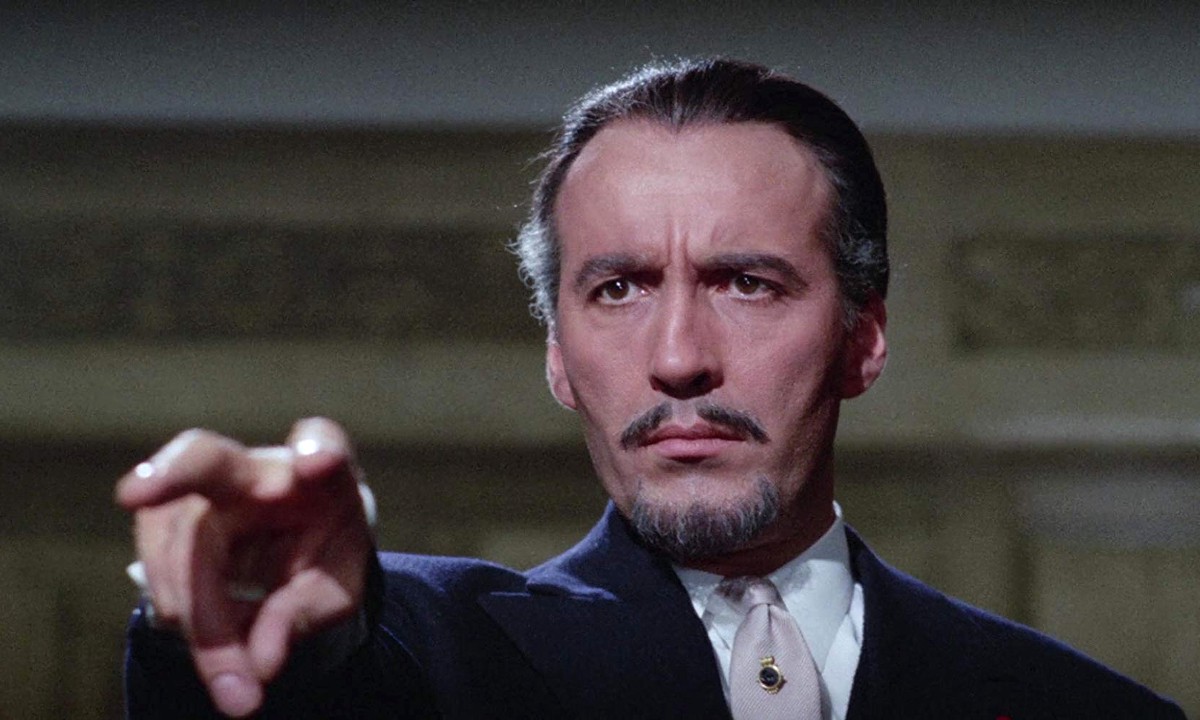
This movie gave Christopher Lee a rare chance to anchor a picture in a thoroughly heroic role. Hammer Studios would normally have cast his friend Peter Cushing in role like the Duke. Cushing was always good, but Lee surely deserved this role after being wrapped in mummy bandages, sucking blood, shambling around with bolts in his neck, and all the rest of it in all those Hammer monster movies. He’s appropriately commanding as an aristocratic do-gooder, while also conveying enough humanity to make his character likable and the core relationships in the movie believable.

In a sturdy cast, Charles Gray makes a strong, frightening, impression as Mocata (which allegedly landed him the subsequent role of James Bond’s enemy, Ernst Bloefeld, in Diamonds are Forever). Patrick Mower, who had a recurring part in the Callan series (my recommendation here) is solid in his debut role, and Paul Eddington shows the developing talent that would later make him such a joy in Yes, Minister. Rosalyn Landor also registers as the brave Peggy Eaton, including through some unusual character developments that I won’t spoil.

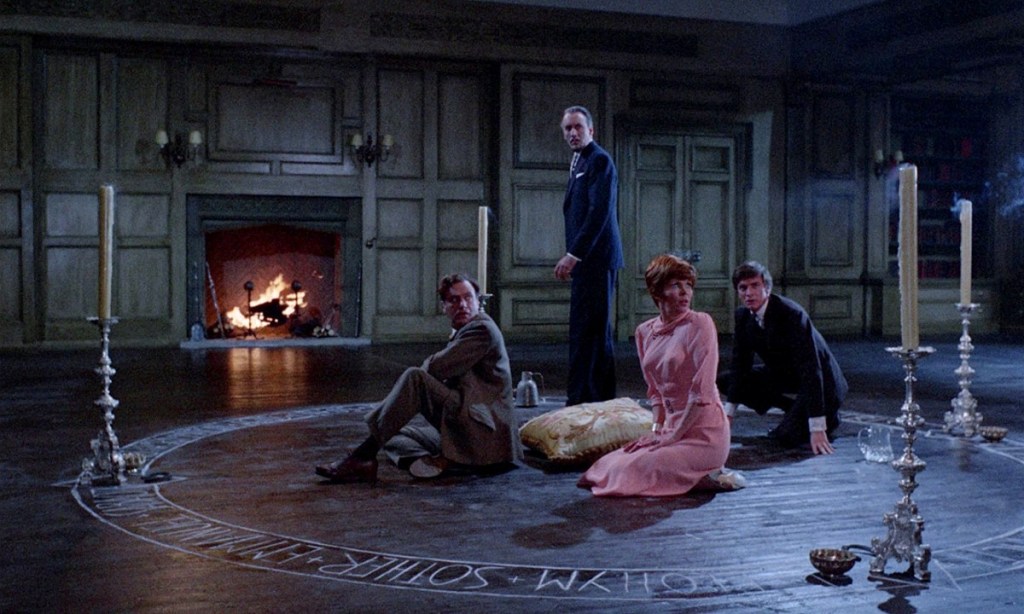
Modern viewers may find the special effects cheap and unconvincing by today’s standards, which they are. I found the dated effects kind of charming (much as I do the sets in classic Universal monster pictures), and their limitations in no way reduced the tension during the heroes’ extended face off with the enemy in a Satanic circle. Overall, The Devil Rides Out is one of Hammer’s best movies in the horror/thriller vein, and that’s definitely saying something.

p.s. I suppose one could say this about many British films, but I couldn’t help noticing how many people associated with this film ended up in Sherlock Holmes adaptations. Christopher Lee played Sherlock Holmes multiple times, including under Fisher’s direction, and played Mycroft Holmes in Billy Wilder’s magnificent The Private Life of Sherlock Holmes. Charles Gray played Mycroft both in The Seven Percent Solution and Granada’s television series starring Jeremy Brett. The Granada series also featured Patrick Allen as Professor Moriarty’s right-hand man, Rosalyn Landor as the heroine of The Speckled Band, and, at the age I believe of 100, Gwen Ffrangcon Davies, who has a small part as a Satanist here.

Categories
Musical

Stormy Weather

Stormy Weather — how Harold Arlen's song shifted with the times — FT.com

Should we watch old movies that have racist elements? I thought about that question before recommending Stormy Weather. I answer in the affirmative in this case because this 1943 movie is one of biggest explosions of African-American talent on screen in the first half of the 20th century.

The plot: Well, there isn’t much of one, really. The film is loosely structured around the legendary Bill “Bojangles” Robinson reminiscing about his life, but there’s no real driving narrative, developed characters, or acting of note (except for Dooley Wilson, who is hilarious as a slippery but ultimately good-hearted friend of Robinson). Although the movie is often called a musical, it’s more in the tradition of the music revues initially popular on stage that Hollywood began turning out as soon as talkies emerged in the late 1920s. Revues have a series of scenes in which a performer appears and does their thing (e.g., singing, dancing, jokes), and then with minimal set up or continuity, another performer appears and does theirs. Stormy Weather would have been just as entertaining if they had just had a host between numbers saying things like “Wasn’t Lena Horne fantastic ladies and gentlemen? Next up, put your hands together for Cab Calloway”. Feel free therefore to ignore all the interstitial material and focus your attention on the priceless performances by the stars.

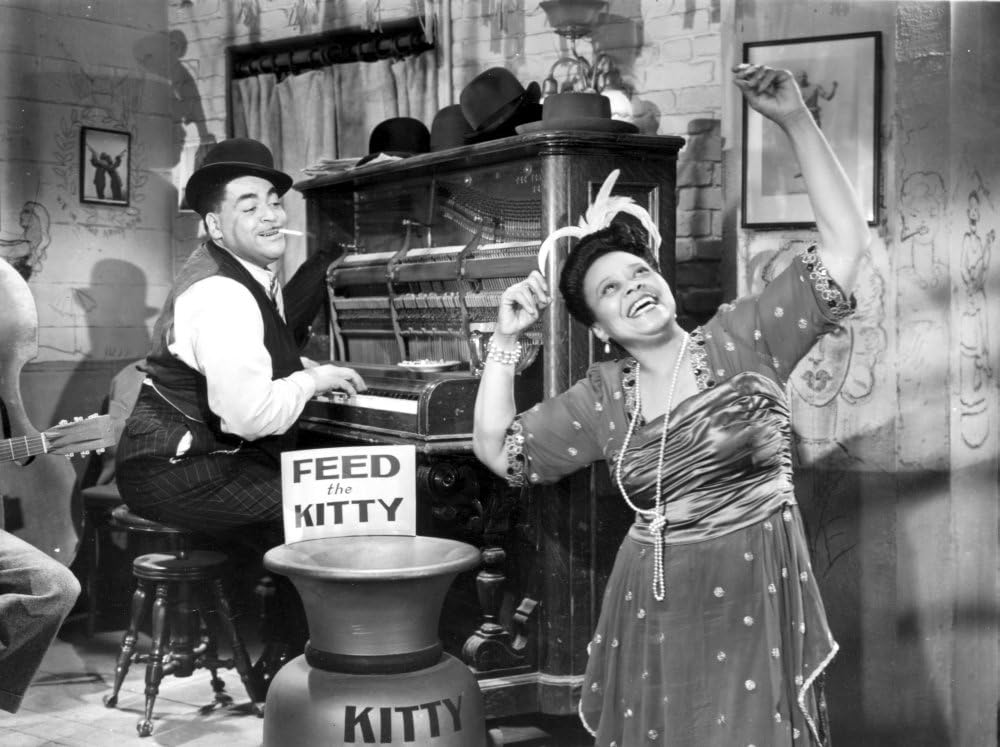
Amazon.com: Fats Waller in Black and White Portrait Photo Print (10 x 8):  Home & Kitchen

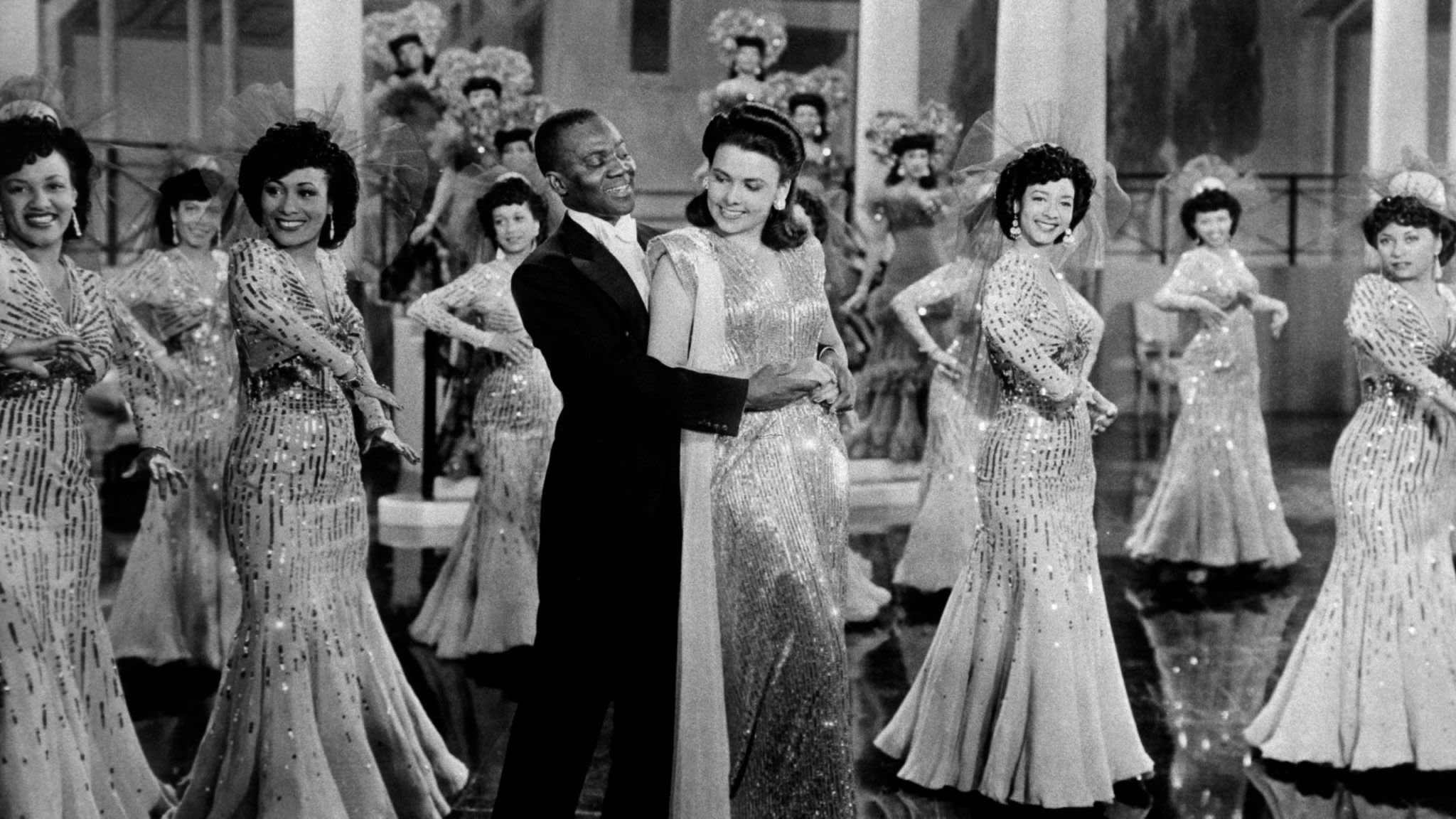
A movie that contains Robinson, Wilson, Horne, Calloway, Ada Brown, Fats Waller, Katherine Dunham, Dizzy Gillespie, F.E. Miller, Coleman Hawkins, The Nicholas Brothers and more is going to provoke arguments over which is the best number. My choice is Waller and his band’s Ain’t Misbehavin’ but you could make a case for many others, include Dunham and Horne’s rendition of the title song. Not every musical star is made for film, but everyone here has extra dimensions to their performance that wouldn’t come out on their records, great as those are (e.g., I had no idea before this movie of Waller’s hilarious non-verbals).

Despite the wartime-imposed budget limits, the trappings around the performances also look fantastic. This includes some lavish Busby Berkeley-style numbers directed with panache by Andrew Stone and arresting camerawork by the revered cinematographer, Leon Shamroy.

All that said, there’s racist aspects of this movie that will put most viewers off some of the time and some viewers all of the time. It’s a white-produced film from the 1940s and minstrelry hangs in the air in several numbers, as do stereotyped characters. Lena Horne is gorgeous and talented, but the odds that a major Hollywood studio would have cast her as one of the leads if she weren’t relatively light skinned are surely close to zero. I can respect people who find the racist realities of the period so toxic that it ruins the movie for them today. Personally, I think of it from the performers’ point of view: They didn’t put that crap on screen, they were there to take advantage of a too rare chance to show off their enormous talent, and they succeeded. And if not for this film, we wouldn’t have visual records of some of these superstars, so I’m grateful for that as well. All of that tips me firmly in favor of this film being watched and appreciated today, but to each their own.

There’s no better way to close this review that by embedding what Fred Astaire said was the best dance number ever filmed: Jumpin’ Jive.

Categories
Blogs on Film

Conversations in Cars and Elevators

If you watch many movies you will see a disproportionate number of conversations set in elevators and cars. Of course people converse in such settings sometimes in real life, but why is it so common in the movies?

Both cinematically and in terms of acting, the ordinary way people talk to each other — face to face — often isn’t ideal for film. Audiences don’t want to look at the back of an actor’s head, so the director usually cuts back and forth between the two actors or shoots the two actors in profile. The former approach doesn’t let the audience see the reactions of both characters at the same time. The latter gives the audience more of this, but if the characters are far apart it can be distracting for the audience to switch attention back and forth as in a tennis match, and even worse when such conversations are shown on television with pan and scan rather than keeping the original aspect ratio, sometimes the back of each character’s head gets cut off to fit everything in the same shot.

Directors try to work around this by having both actors face the camera, particularly during critical conversations. Otto Preminger and his frequent cinematographer Joseph LaShelle did many such shots. Here is one from Where the Sidewalk Ends. This can work to a point, but risks take the audience out of a scene if they start to think “If someone was facing my back and proposing marriage/confessing to murder/revealing the secret of King Tut’s tomb, wouldn’t I, you know, turn around and look at them?”. In the generally good film noir The Big Combo for example, Joseph Lewis staged so many of the film’s key conversations with both actors looking at the camera that the artificiality worked against the grittiness of the story.

The easiest way to resolve this problem is to shoot dialogue scenes in the few places where human beings have conversations while they face the same direction in real life: when they are driving, seat belted in and looking at the road, and, when they are in an elevator looking at the door/floor indicator. The tight physical location means that it’s easy for the viewer to take in each participant and all their actorly non-verbals.

Scene Deconstruction - Drive - Elevator