Categories
Horror/Suspense Science Fiction / Fantasy

The Incredible Shrinking Man

The Incredible Shrinking Man (1957) - Midnite Reviews

Of all the talented people I mention on this website, I don’t think any name appears more often than Richard Matheson. Working almost entirely within the science-fiction/horror genre, this prolific writer managed to tell stories that entertained a broad audience while also being consistently intelligent and in some cases also conveying considerable psychic weight. No adaptation of his work illustrates better than the classic 1957 movie The Incredible Shrinking Man.

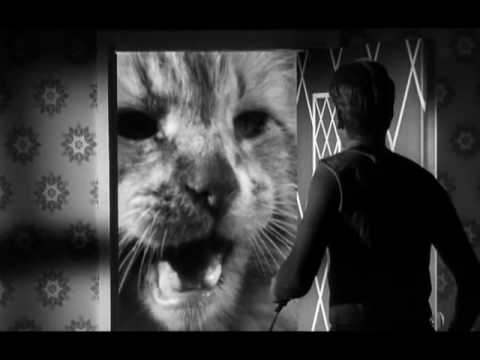
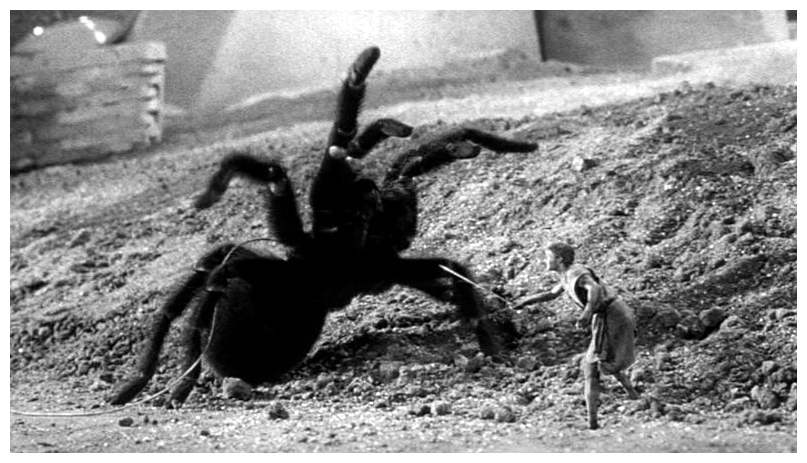
The plot: The Careys, an attractive, happy, married couple are out boating when a mysterious fog on the water scatters a strange, shimmering material on Scott (Grant Williams). Six months later, after being exposed to some pesticide, his body begins to shrink, inch by inch. Doctors conclude that some sort of chemical or radiological malady has afflicted Scott; they can slow it down but not stop it. Helplessly and bitterly, Scott becomes smaller physically as well as in other respects: he can no longer hold a job, becomes resentful and controlling of his wife Louise (Randy Stuart), and is widely mocked. His resentment turns to terror when he is left alone in the house with the family cat and subsequently trapped in a dank basement with one of the scariest spiders in screen history.

There’s much to admire in this film both technically and thematically. The production design and special effects are trend-setting, and six decades later still impress and unnerve modern audiences. Williams and Stuart, whose subsequent careers surprisingly did not flower, deliver strong performances as ordinary people coping with extraordinary stress on themselves and their marriage. And director Jack Arnold turns in the best effort of his career.
321) The Incredible Shrinking Man (1957) - YouTube

But what really makes the movie is Matheson’s story, which he published as a novel and then co-adapted with Richard Allen Simmons for the screenplay (although Matheson did not value Simmons’ changes and refused to share an on screen credit with him). The story’s strengths include a highly original premise, believable dialogue, crisp plotting, and engaging philosophic themes.

Many people read this film as being about threatened post-war masculinity, seen for example in Scott’s anxiety over becoming smaller than Louise, his inability to provide financially for her, and him eventually being forced to live in a dollhouse she sets up for him. Although it’s never made explicit, the couple’s sexual relationship also ends, and there’s something pathetic yet touching in the protagonist going from being a virile, confident, 6 footer in the opening scene to showing sudden, desperate interest in a pretty, pint-sized circus performer (April Kent)….until he shrinks below her size too. Yet the film works just as well as a more general reflection on the human search for meaning in the face of our trivial place in the universe and the inevitability of death. There is no dialogue during the closing third of the movie, only Scott narrating his existential predicament, which ultimately is surprisingly profound, even moving.

I have also a recommended Jack Arnold’s comparatively lightweight but quite entertaining B-movie Tarantula, about a giant spider who terrorizes a town (There’s a movie legend that Arnold used the same tarantula in this film, which seems implausible). It’s thought-provoking to reflect on why a giant tarantula chasing normal sized people in that movie is less scary than a normal sized tarantula chasing a miniaturized man here. Partly it’s the camerawork, which makes the audience see the spider and everything else in the basement from Scott Carey’s vulnerable perspective. The other part is the extreme isolation of the character. In Tarantula, there are many people who are towered over by the spider, whereas here Carey is utterly alone not only in the battle but in the universe, a recurring theme in the work of the legendary Richard Matheson.
Film Review: The Incredible Shrinking Man (1957) | HNN
Categories
Action/Adventure Horror/Suspense

Assault on Precinct 13

Review: John Carpenter's Assault on Precinct 13 - Slant Magazine

I went through an enjoyable spate of watching early John Carpenter movies. Dark Star is an endearing ultra-low budget movie which highlights the emerging talent of Carpenter and Dan O’Bannon and will likely always have a place in college sci-fi film festivals. But it’s too unpolished and uneven for me to recommend. In contrast, his next movie, made in 1976 with a larger (if still small in absolute terms) budget, is taut, thrilling, and well-acted from end to end: Assault on Precinct 13.

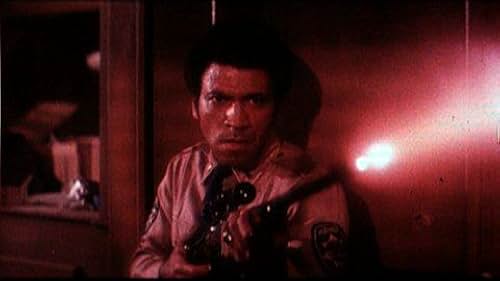
The spare plot is a stripped-down of version of Rio Bravo, with 40% less running time and a focus on action more than the relationships between the characters (Carpenter is clearly a fan of the legendary Howard Hawks, echoing him here as well as in The Thing). Highway Patrol Lieutenant Ethan Bishop (Austin Stoker) is given the ostensibly ho-hum assignment of overseeing the closure of a near-abandoned police station. But of course it couldn’t be that easy: a vicious, well-armed street gang converges on the station to avenge the killing of some of their members by the police as well as by an enraged civilian whose family they victimized. After the gang’s initial assault kills the few remaining police officers, Stoker can only rely on a worldly secretary (Laurie Zimmer) and two prisoners (Darwin Joston and Tony Burton) to hold off the horde. Superb action and suspense follow.

Assault On Precinct 13 – Collector's Edition (Blu-ray Review) at Why So Blu?

Carpenter boils everything down to the essentials here: the desperate human will to survive, how danger can draw out courage in some and fear in others, and how shared risks can make enemies learn to trust each other. He matches that thematic simplicity with a no-nonsense visual style and fat-free storytelling. And he draws effective performances from his no name cast, further attesting to his talents as a director.

The excruciating tension of the siege on the station comes in part from the zombie-like nature of the gang members (Indeed, Carpenter has acknowledged the influence of George Romero’s Night of the Living Dead on his script). The gang members barely speak in this movie, being a mindless, remorseless, deadly mob akin to those Carpenter summoned up so well in The Fog, Ghosts of Mars, and They Live. Their intended victims, like the audience, want to know why the villains are they way they are, but there is no sensible or reassuring answer: they want to kill, they will not stop, and that is all.

Carpenter really did it all here, writing a tight script with solid dialogue, crisp plot lines and some moments of black humor (including the now legendary “ice cream” scene). His characters aren’t well-developed, but are real enough so that you root for them. Also worthy of comment: Carpenter made an intriguing and I think productive decision to bend reality by making the street gang multi-racial, as are the defenders of precinct 13, thus avoiding what might have been ugly overtones if the dueling sides had been racially monotone. He also composed one of his best scores and even, under the stage name John T. Chance (John Wayne’s character in Rio Bravo) did the editing, which not incidentally is terrific, particularly in the actions scenes. Like Roger Corman, Carpenter was underappreciated for many years before being recognized as a masterful filmmaker. Assault on Precinct 13 shows that his talent was evident from the earliest days of his career.

Assault on Precinct 13 (1976) - IMDb

p.s. I didn’t see the 2005 remake of this film and based on reviews I don’t want to.

Categories
Action/Adventure Drama Foreign Language Romance

Napoléon

Napoleon: 10 unmissable highlights from Abel Gance's five-and-a-half-hour  masterpiece | BFI

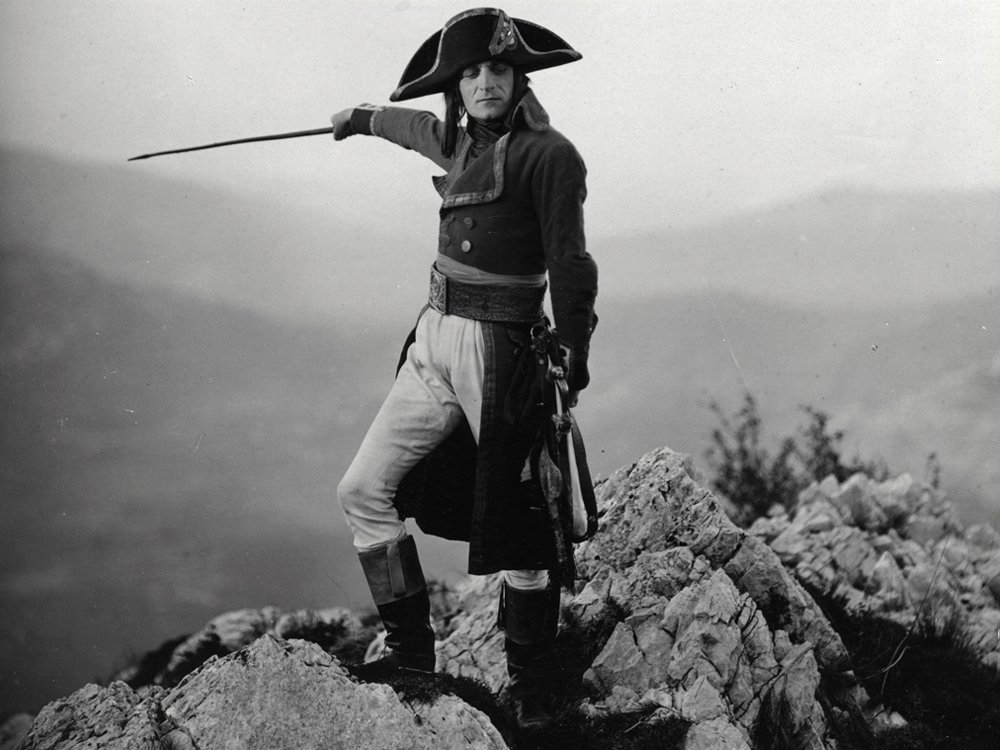
In 1927, the days of silent film were coming to an end, but some brilliant directors sent it out in style. William Wellman’s Wings and F. W. Murnau’s Sunrise landed the first-ever Academy Awards, while in The Soviet Union Sergei Eisenstein’s October hit the screens. But a French film towered even over that mighty company in ambition, scope, and enduring fascination: Writer/Director/Producer Abel Gance’s Napoléon.

The plot: Well, take a deep breath, because this 5 1/2 hour epic covers a lot of ground (and incredibly, Gance wanted to make it only the first of a series of six movies!). The story begins when young Napoleon (Vladimir Roudenko) is an eccentric, bullied schoolboy, already brilliant at strategy and tactics as shown by his triumph at a massive, extended, snowball fight. He grows into an impecunious, unappreciated young man (Albert Dieudonné), with little to comfort him other than his loving family of origin in Corsica. The French Revolution erupts, and Danton (Alexandre Koubitzky), Robespierre (Edmond Van Daële), and Marat (Antonin Artaud) try to guide its fractious, passionate supporters, while Napoleon’s life is turned upside down by political events, forcing him into a dramatic escape from Corsica. But fate finally smiles on Napoleon when he is given command of the artillery at the Siege of Toulon, defeating the British and becoming a hero of the revolution. Returning to Paris and enmeshed in political intrigue as The Revolution devolves into The Terror, he finds time to romance the bewitching Joséphine de Beauharnais (Gina Manès), before being promoted to head the French Army in Italy, leading to a spectacular final battle against his country’s enemies. (Insert sound of reviewer pausing to catch his breath). But those are just the highlights of this mammoth cinematic event.

The Many Lives of Abel Gance's 'Napoleon' - The New York Times

Everything about this movie is on an epic scale, the performances, the battles, the artistry, and the themes. And yet it’s in no way ponderous or pretentious; indeed it’s tremendously fun to watch, containing thrilling action sequences, delightful moments of comic relief, and eye-catching eroticism. The best way to see this film if ever you get the chance is on a big screen with a live orchestra. But though I suppose it’s a sin, you can still appreciate many of its virtues on a smaller screen.

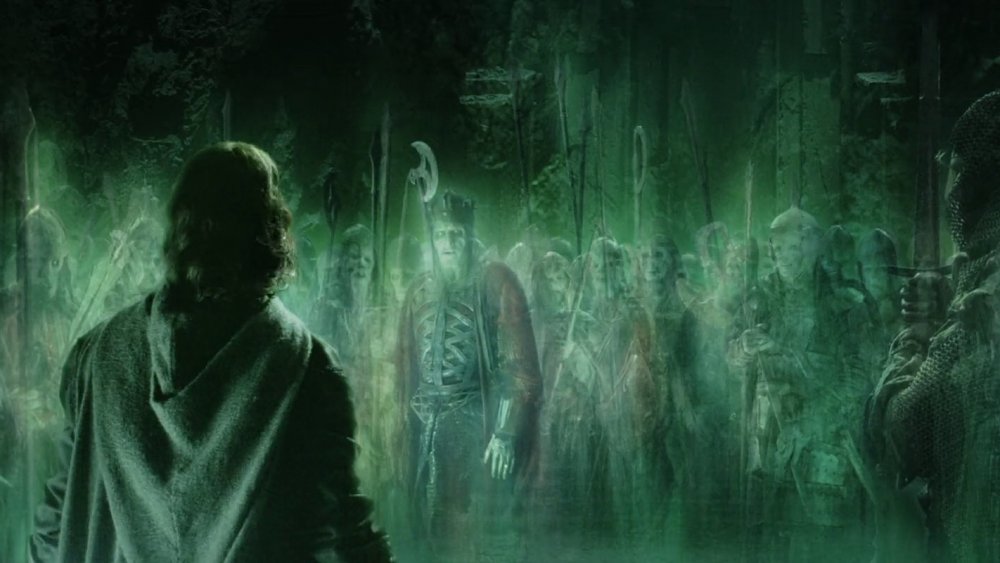
The movie is also unforgettable because of Gance’s creativity as a filmmaker, as he fluidly shows off innovation after innovation in multiple exposure, triptych photography, fast cutting, special effects, cameras strapped to horses, and more. He was such an influential filmmaker that you will many times recognize moments that were echoed or consciously copied in subsequent films. My own favorite of these is the scene in which before a life or death battle, Napoleon confronts the ghosts of The Revolution, which almost perfectly prefigures Aragorn doing the same in the Paths of the Dead scene in The Two Towers.

Napoleon (1927) | The ominous ghosts of Saint-Just, Robespie… | Flickr
The Lord Of The Rings' Army Of The Dead Explained

Gance cut and re-cut Napoléon many times over the years. The original Paris release was 4 hours (which I suspect is about the right length as the 5 1/2 hour version has some slow spots). In one of the most astonishing feats ever in cinematic restoration, historian Kevin Brownlow painstakingly reassembled the film with input from Gance and financial support from Francis Ford Coppola. That preserved this treasure of the silent era for future generations, earning Brownlow an honored place in film buff heaven.

Categories
Documentaries and Books

I Am Not Your Negro

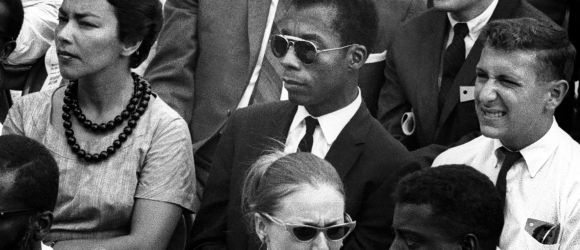
Late in his life, James Baldwin began writing a book about three of his friends, all of whom had been assassinated: Medgar Evers, Martin Luther King Jr., and Malcolm X. The book, entitled Remember This House, was to be a reflection both on their remarkable lives as well as on the nature of America. Baldwin unfortunately never got very far with the project, leaving behind at his death only a 30-page draft. Thankfully, a talented filmmaker named Raoul Peck picked up the pieces by using the draft and assorted filmed interviews of and lectures by Baldwin to weave together I Am Not Your Negro.

Effectively narrated with the right touch of anguish by Samuel L. Jackson, this 2006 Academy Award-nominated documentary could not have had a better screenwriter. The words are almost entirely those of Baldwin himself, an acknowledged master of the language. The film also helps the viewer appreciate Baldwin’s comparable facility with silence. Whether giving a prepared talk or speaking off the cuff, Baldwin’s cadence is a thing of beauty: a devastating insight, an memorable phrase, and then just long enough of a pause (never with an “um” or an “uhhh”, just silence) to let it sink in before his next powerhouse observation.

The documentary also illuminates the content of Baldwin’s thoughts about race and America, and obviously, it’s not frothy and uplifting. Baldwin is angry at, yet in his way, also loving of, his country. He is weighed down by the burden of American racial oppression, yet says “I am an optimist, because I’m alive”. And he’s in my opinion undeniably correct in seeing the fate of Blacks, Whites, and the nation as fundamentally tied together. As my Baldwin-quoting collaborator Ekow Yankah once wrote “A furnace fed by racism eventually consumes us all“.

This could have easily been a talky and boring film, but Peck never forgets that he’s making a movie rather than a book. The editing is crisp, the images well-chosen, and the pacing is exactly right. Some of the juxtapositions between newsreels, movie clips, and the like with Baldwin’s words are a bit overdrawn (e.g., the Doris Day movie clips), but overall Peck masterfully uses the power of cinema to give Baldwin’s words even more impact.

Some of the putatively positive reviews of this film contained dreadful comments like “All of White America should have to watch this movie”, as if Peck had assembled a fourth-rate implicit bias training that was a punishment to be endured rather than a skillfully made, compulsively watchable film. To listen to James Baldwin is to be in the presence of greatness, and Peck shows greatness of his own in translating the writer, thinker, and advocate so effectively to the screen.

Categories
Mystery/Noir

Blood and Wine

My endorsement of Twilight should be sufficient warning that I have a weakness for slightly flawed noirs that are rescued by old hands. In that honorable club, I would also place Bob Rafelson’s 1996 movie Blood and Wine.

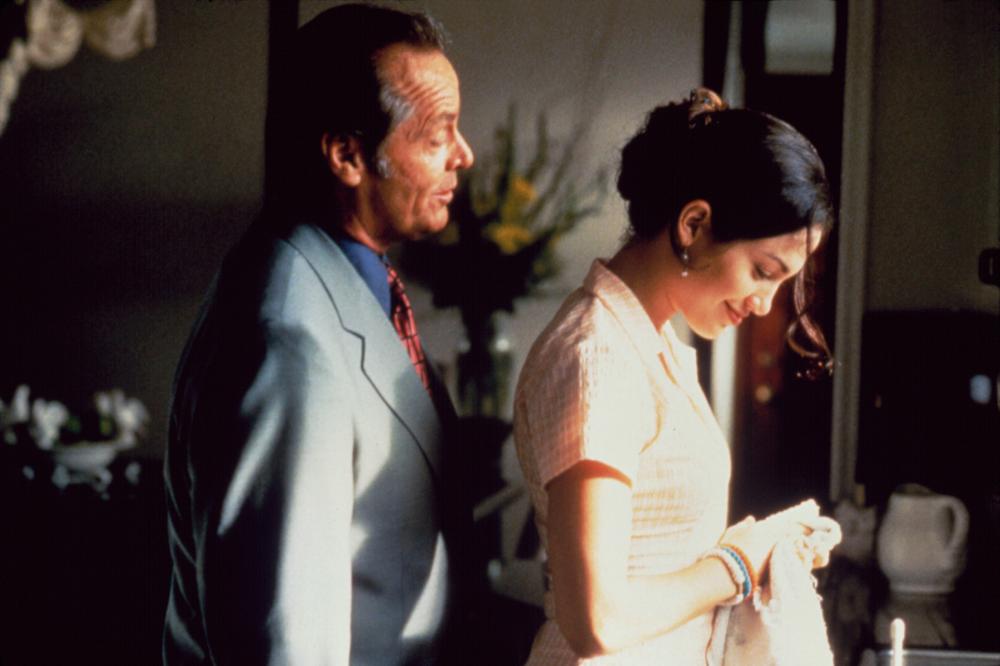
The plot: Alex Gates (Jack Nicholson) is a failed wine shop owner, serial philanderer and aspiring thief. He is on thin ice with his long-suffering wife (Judy Davis) and has fallen through it entirely in the eyes of his stepson (Stephen Dorff). Alex wants to get back on top by stealing a diamond necklace from one of his wealthy clients with the aid of his beautiful young mistress (Jennifer Lopez) and an ailing professional thief (Michael Caine). But noir being noir, no sooner does Alex get the necklace in his hands than a twisty sinkhole of violence, envy, and betrayal opens up underneath his feet.

Let’s get the unpleasant stuff out of the way first. Nick Villiers and Allison Cross’ screenplay has too many slow spots (especially at first), Judy Davis is miscast (Mimi Rogers, who was considered for the role, would have been better), Dorff’s performance is only so-so, and while Lopez is undeniably pretty she at this point in her young career didn’t have the acting chops to register like the femme fatales of yore. These weaknesses help explain this film’s poor box office performance and mixed critical reaction. Why then do I recommend it? Let me tell you a story.

By the mid 1990s, the legendary Sir Michael Caine was no longer getting many lead roles, and was contemplating retirement. He bought a restaurant in Miami and stopped reading scripts. But then a fellow aging giant, Jack Nicholson, reached out and said that he should re-invent himself as a character actor, starting with Blood and Wine. That Nicholson was persuasive was fortunate for movie goers more generally, and it was particularly so for this movie.

As soon as Caine comes on screen as a tubercular, bitter, cynical, dangerous, yet somehow sympathetic wreck of a man, Blood and Wine takes off. And Nicholson lights up along with him, allowing the two of them and Judy Davis (strong as usual despite this being an odd role for her) to carry us through this dark and complex tale.

There’s a certain type of ugliness that descends on some people in middle-age when they feel that life has unfairly not abided by their plans. All three of these top-rank actors gives us different shadings on this experience, be it rageful hurt (Davis), moral decay (Nicholson), or some admixture thereof (Caine). It also powers one exciting, extended sequence that ranks with the best in noir history. I won’t ruin it for you, but suffice it to say that it starts with a faked flirtation in a bar room and ends with Nicholson pawing through dying people’s pockets for loot rather than love, utterly reduced to his basest instincts.

The veteran actors’ weaving of gold from straw, coupled with Rafelson’s ability to give the viewer the sense that violence is always just around the corner, surmount the weaknesses of Blood and Wine. It’s a worthy entry in the noir genre, as well as a nice coda to Rafelson and Nicholson’s long cinematic partnership.

p.s. Years after making this movie, Lopez said that Rafelson shot a sex scene with her and Dorff that didn’t make the final edit. Rafelson’s characteristically un-Hollywood decision was a wise one artistically, because it puts the audience in the same emotional spot as Nicholson, being suspicions of a liaison but not really knowing if it happened.

Categories
Action/Adventure Mystery/Noir

The Narrow Margin

Image result for 1952 the narrow margin

In an era of hundred-million dollar movies that suck, I increasingly appreciate the craft and inventiveness of filmmakers who quickly turned out high-quality films on a tight budget. To supplement my recommendations of B-movie gems like My Name is Julia Ross and Plunder Road, I hereby endorse a nail-biting noir with a no-name cast that was shot in two breathless weeks in 1950: The Narrow Margin.

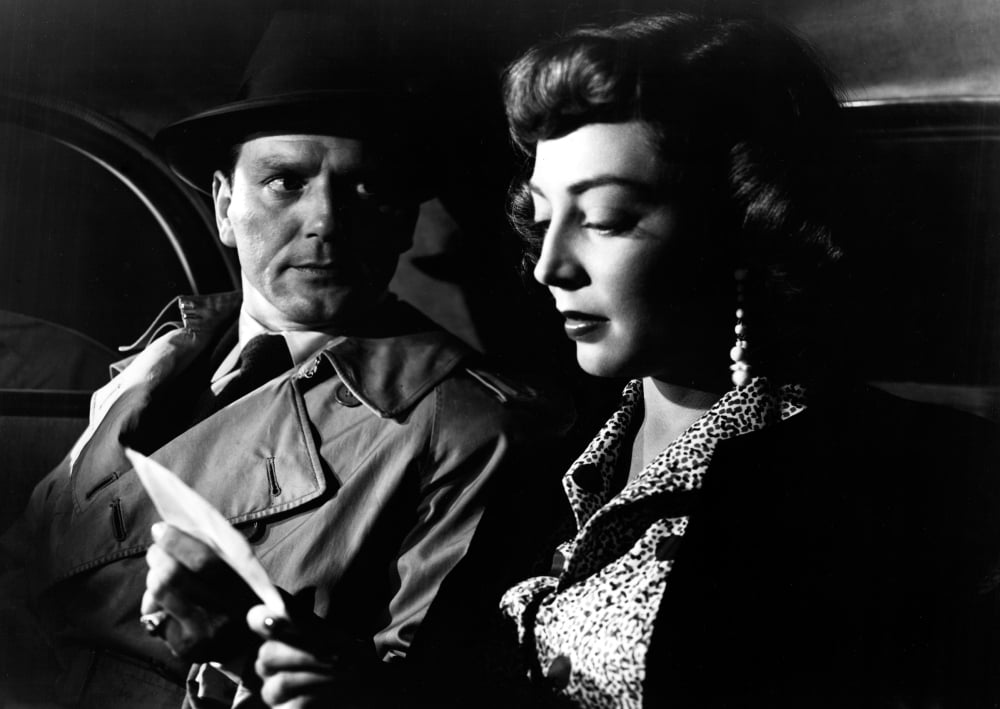
Based on a story by Martin Goldsmith and Jack Leonard, with a screenplay by Earl Fenton, the movie has a simple, much copied plot premise: Police detective Walter Brown (Charles McGraw) has to make a perilous journey while protecting a former gun moll named Frankie Neall (Marie Windsor) so that she can testify against the mob. Far from being grateful, she’s mouthy, sleazy, and denigrating…why can’t she be more like the goodly wife and mother in the next train car who catches Brown’s eye (Jacqueline White)? And how will he manage the heavies on board who offer him silver or lead?

This film is a triumph for then unknown director Richard Fleischer, who pulled off two impressive feats at once. First, no real budget meant no real stars, yet he got strong performances from the cast end to end. Second, despite 90% of the film being set on a train, it’s consistently kinetic and arresting when it could easily have been stagy or dull.

Of the main performers, Marie Windsor, soon to be known as “The Queen of the Bs” makes the strongest impression as a sexy, tough, bad girl. On the surface her character is reminiscent of Vera as played by Ann Savage in another famous low-budget noir that Goldsmith wrote, Detour. But Frankie has more dimensions to her nature than did Vera, as revealed in an intriguing plot development well into the movie. Of the smaller parts, Peter Brocco stands out as a businesslike gangster.

George Diskant masterfully handles the technical challenges of shooting a picture in tight spaces (I also liked his work during the tense opening sequence as Frankie and Walter encounter an assassin before they get on board). Diskant spent his career almost entirely in television and never photographed an A-movie, which is too bad given his fine work here as well as in another well-shot low budget film, Kansas City Confidential (My recommendation here).

After completing this movie so quickly for RKO in 1950 (a once-legendary studio in decline), it drove Fleischer crazy that legendary weirdo mogul Howard Hughes became obsessed with it and would not at first release it as shot. Hughes’ proposed changes included reshooting the whole movie over again with bigger stars in the lead parts! He finally relented in 1952. Well-received upon release, The Narrow Margin’s reputation has only grown since, earning the film a place in every discussion of the best movies ever made on a shoestring.

Image result for 1952 the narrow margin

p.s. Peter Hyams’ 1990 remake is an above-average film, but still a comedown from the original.

Categories
Comedy

The Castle

Image result for the castle 1997

The Australian coat of arms has an emu and a kangaroo upon it because neither animal ever takes a backwards step. That Australian spirit suffuses Director/Co-Writer Rob Sitch’s hilarious 1997 film The Castle.

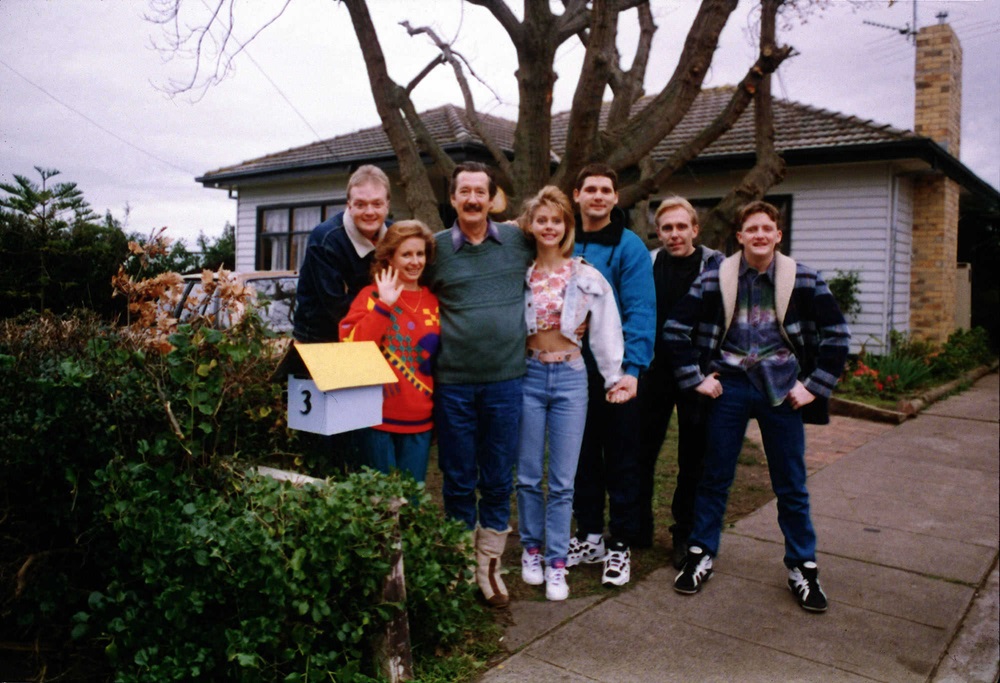
The plot: Daryl Kerrigan (Michael Caton) is an honest, happy, tow truck driver who heads a close-knit family. He adores his wife Sal (Anne Tenney) and four children and takes tremendous pride in the rambling, partially completed house he built next to the airport, underneath power lines, and on top of some toxic waste. The Kerrigans’ serenity is shattered when the airport authority announces plans to expand the runway, forcing all the families in their neighborhood to sell their properties. Outraged by the threat to his home and family, Daryl teams with a third-rate lawyer (Tiriel Mora) to fight back, on the grounds that the forced sale violates “the whole vibe” of the Australian Constitution. It’s an uphill struggle against wealth and power, but before you can say deus ex machina, Daryl befriends a retired, kindly constitutional scholar (Bud Tingwell) who sees in the Kerrigans a cause worth fighting for.

No movie I watched during a year of COVID-inspired lockdown more thoroughly banished the blues than The Castle. In part it was how hard and loud and often it made me laugh. It was also the way it made me laugh. It’s pretty easy to make an audience laugh with a surprisingly funny line. What Caton is so good at here is harder: Making the audience laugh even though it’s obvious what his funny line will be. If you saw Last Cab to Darwin, you know Caton can do heavyweight drama too, but here he shows comic timing and delivery at the Redd Foxx/Jeanne Stapleton/Bob Newhart level. Under Sitch’s direction, the rest of the cast acquits themselves nearly as well.

Abundant humor is only part of what makes this film so delightful: it’s also endearingly warm and upbeat. Daryl and his clan are inspiring in their ability to derive joy from simple things: a day trip to Bonnie Doon, their favorite television show, a bargain in the classified ads, or a decent meal. And most of all, they unreservedly love and admire each other. You’d have to have a heart of stone not to root for this family as they fight for what’s right.

The Castle is for many Australians the quintessential expression of their culture, and some national catchphrases flowed from the witty script. But it’s in no way culture-bound: I’ve spent less than 2 months of my life in Australia, and I appreciated every moment of this winning movie.

p.s. The Kerrigans would have appreciated the business aspects of this film. Shot in less than 2 weeks on a small budget, it was a smash hit in Australia that returned more than ten-fold its investment. What a bargain, and I’m not dreamin’.

p.p.s. Keep your eyes peeled for Bryan Dawe, half of the brilliant satirical team Clarke and Dawe.

Categories
British Drama

Last Orders

Last Orders (2001) - Photo Gallery - IMDb

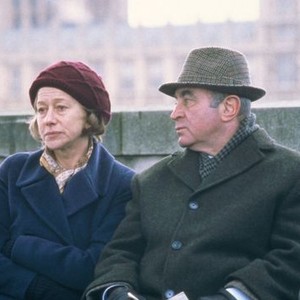
How many movies have featured a group of old friends coming together and reflecting on their lives because one of their circle has died (e.g., The Big Chill, Husbands)? And how many times have Michael Caine, Tom Courtenay, Bob Hoskins, and David Hemmings portrayed British blokes like themselves who weren’t born with a silver spoon in their mouths? And how many times has Hellen Mirren played an intelligent, sensual woman with a mixture of strength and vulnerability? Did writer/director Fred Schepisi really think audiences would fall for a movie that recycles all that for the umpteenth time? Bless his cotton socks, he did, and the result is a quiet cinematic gem from 2001 that deserved a bigger audience than it got: Last Orders.

The plot: Three long-time friends gather in their Bermondsey pub with the cremated ashes of their mutual friend Jack (Michael Caine). Jack was a butcher and the son of a butcher, who leaves behind his wife Amy (Helen Mirren) and his adopted son Vince (Ray Winstone), who refused to follow Jack into the family business and instead opened a car dealership. Amy and Jack’s also have another child, June (Laura Morelli), who was born with profound intellectual disabilities. Jack refused contact with her, but Amy has been dutifully visiting her daughter at a group home once a week for 50 years. Jack left instructions for his ashes to be scattered into the ocean at Margate. Amy doesn’t wish to go, so his three mates set off without her, with Vince driving them in a Mercedes from his lot. The friends are Ray (Bob Hoskins) who served with Jack in World War II and has a talent for picking horses, Vic (Tom Courtenay) who runs a funeral home with his sons, and Lenny (David Hemmings) a boozy and somewhat irascible ex-boxer whose daughter Sally (Claire Harman) was long ago wooed and then abandoned by Vince. As the men travel to fill Jack’s last request, we learn about their lives through their interchanges at various stops along their journey as well as from flashback scenes of their younger selves.

Schepisi did a remarkable job fashioning this script from Graham Swift’s novel, incorporating just enough remembered and experienced action and conflict to keep this from becoming dull and overly talky. He was aided immeasurably by his experienced acting ensemble, who evidence that characteristic British willingness to share the stage that American movie stars often lack. Each uses the time Schepisi gives them to create a believable character with defects and virtues. The younger performers in the flashback scenes are also fine; casting director Patsy Pollock deserves credit for finding newcomers who look remarkably like the older stars. Brian Tufano’s cinematography and Paul Grabowsky’s music are also significant assets.

Last Orders (2002) - Rotten Tomatoes

Schepisi delves into existential questions about love, family, trust, betrayal, grief, and friendship but to his credit he doesn’t offer pat answers. Some people’s lives (e.g. Vic’s) work out pretty well for them and theirs, others (e.g., Lenny’s) far less so, and in the end we don’t really know why. Marriages can be terribly disappointing in some ways and extremely enriching in others. People can love each sincerely yet also let each other down. And through it all, we have to keep buggering on.

I appreciated this movie as an affecting drama, but also admired it as a piece of sociological history: it’s a vivid adumbration of how a particular generation of British men of a particular social class travelled through life. And who better to bring this across than Caine, Courtenay, Hemmings, and Hoskins, who opened up British acting to lads who weren’t born to the purple?

p.s. Some Americans to whom I have recommended this film struggled to make out some of the accented dialogue, so if that’s likely to be a challenge for you, you may wish to stream it with English subtitles.

Categories
Action/Adventure British Horror/Suspense

Seven Days to Noon

I make no secret of my disdain for flabby filmmaking. Many modern movies (e.g., almost every superhero movie of recent years) would be significantly better with a merciless edit of tiresome exposition, distracting subplots, saggy scenes, wordy dialogue, soulless CGI, and other forms of artistic bloat. I can hear the whines already “But I need that 30 minutes to show how the hero’s motivation goes back to his childhood trauma, to explain that his energy blaster works on the principle of microwave amplification by stimulated emission of radiation, and to have the authority figure character explain what the film is really about in his closing speech”. Stuff and nonsense. When films had smaller budgets and shorter shooting schedules, their makers were more economical in their storytelling by necessity, but the result was better rather than worse cinema. If you want a demonstration of that principle as well as an utterly gripping cinematic experience, check out the 94 thrilling minutes of fat-free brilliance in Seven Days to Noon.

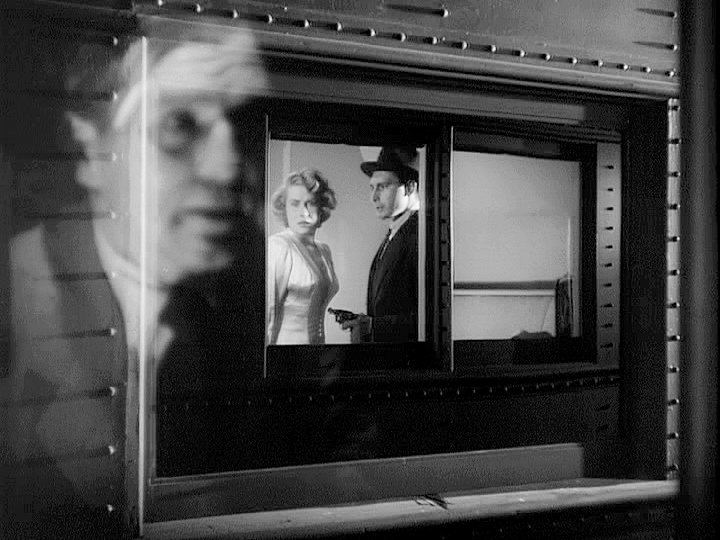
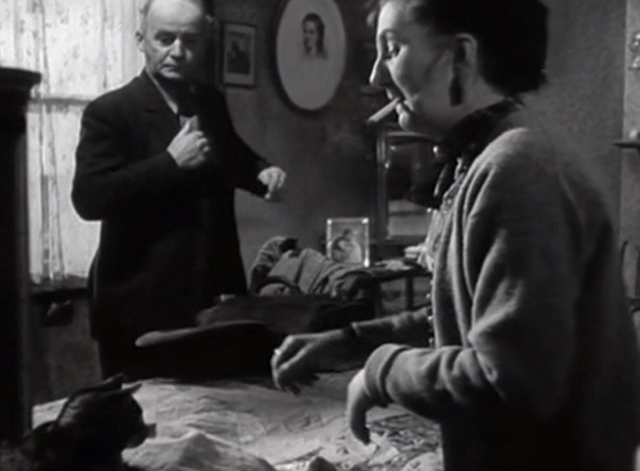
Based on an Oscar-winning story by Paul Dehn and James Bernard, this 1950 film has a simple and terrifyingly realistic premise: a once-reliable military scientist could lose his head and decide to steal a powerful weapon. Said scientist, Professor Willingdon (Barry Jones, offering a compelling mix of threat and vulnerability), believes he can promote world peace by threatening to set off a powerful bomb in the heart of London in seven days if the government doesn’t renounce weapon building. A dedicated member of Special Branch (the ever sturdy Andre Morell) recruits Willingdon’s daughter Ann (Sheila Manahan) to aid him as he coordinates a national manhunt. But Willingdon is a crafty adversary, and hides in plain sight by taking rooms under an assumed name with a brassy London actress (a terrific Olive Sloane). Nail biting suspense and existential themes follow.

Seven Days to Noon (1950) - Cinema Cats

Roy Boulting and Frank Harvey’s tight script combined with the Brothers’ Hitchcock-level use of pure cinema, make this a truly breathless thriller, one of many that would channel post-war nuclear anxieties. The hero has no backstory because he doesn’t need one. The precise mechanics of the McGuffin are never laid out – it’s a bomb and we all know what a bomb is, so why bother? Willingdon doesn’t really explicit his motives until 75 minutes in, and even then there’s not an excess word in them. And many plot developments unfold entirely through a series of images or through effective quoting of superstar composer-to-be John Addison’s first score. At times it feels like watching the best of the silents, and I mean that as the highest of compliments.

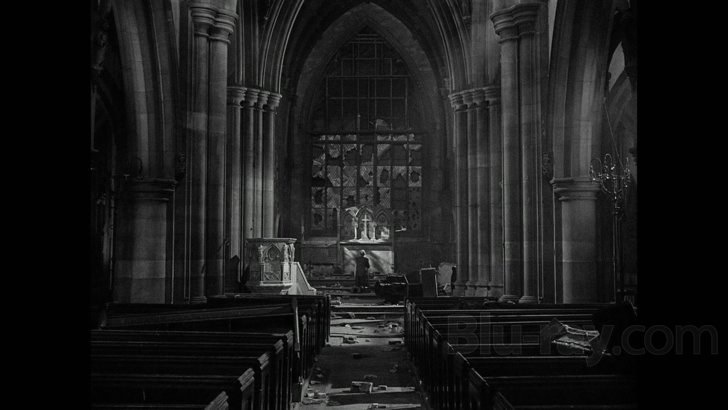
The Boultings avoided casting big stars, used some real locations, included colorful snippets of Londoners, and did not tart up the sets to look like anything more than battered, post-war London (Similar to what Sir Carol Reed had done the year before in Vienna while making The Third Man). This at times gives the movie, particularly the daytime scenes, the feel of Italian neorealism or an American police docudrama. But with its air of impending doom and Gilbert Taylor’s night time cinematography, it at other times has a more stylized, film noir feel. Of Taylor’s many arresting visuals, I will not forget any time soon the shots of Willingdon praying alone on his knees in a bomb-shattered cathedral. The realistic and stylized elements work together beautifully, recalling another brilliant “dangerous man on the run” movie from this period, He Walked by Night (recommended here).

I have recommended the Boulting Brothers’ tough film noir Brighton Rock and their sidesplitting I’m All Right Jack, but for me, their most remarkable achievement remains Seven Days to Noon. This film riveted me and at other times made me say “Wow” out loud. That the Boultings could make such different movies so skillfully is why they, while less famous than the legendary Powell and Pressburger, rank among the best British filmmaking partnerships of the 20th century.

Seven Days to Noon Blu-ray Release Date November 5, 2019

p.s. Gilbert Taylor lived to be nearly 100 and nearly three decades after this, was the cinematographer for Star Wars.

Categories
Action/Adventure

Tarzan’s Greatest Adventure

Many film critics, directors, and actors have been asked in interviews to discuss their “guilty pleasures” meaning movies they liked but “really shouldn’t have” because they didn’t raise deep existential questions, explore morally elevated themes, or break new technical or artistic ground. Pretentious codswallop, that. No one should feel guilty about having a good time watching a movie whose sole purpose is to make two hours of life more pleasant. In that spirit, I once recommended the giant spider sci-fi flick Tarantula and will now endorse another think-free Saturday afternoon matinee: Tarzan’s Greatest Adventure.

Little-known producer Sy Weintraub had a penchant for breathing new life into classic adventure series. In the 1980s, he made worthy television adaptations of Sherlock Holmes stories starring the magnificent Ian Richardson (The Sign of Four and The Hound of the Baskervilles). Prior to that, he made a sustained, largely successful effort to class up the hoary Tarzan movie franchise with bigger budgets, better scripts, first-rank actors, and on location filming. This included letting Tarzan do something he did in the books but not in films of the 1930s and 1940s: speak in complete sentences! Tarzan’s Greatest Adventure, made in 1959, was the first of Wentraub’s tarted up Tarzan films and is arguably the best.

Tarzan's Greatest Adventure | Trailers From Hell

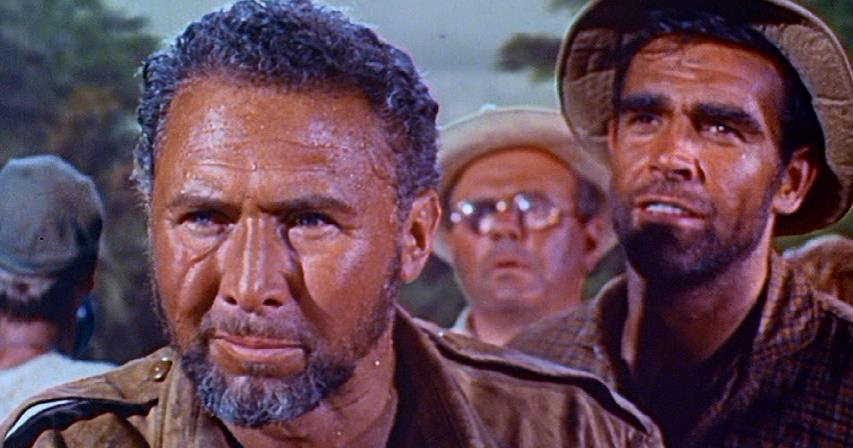
The very simple plot: Kenyan villages are being terrorized by a ruthless gang of British and German diamond seekers led by a tough career criminal named Slade (Anthony Quayle). After a violent raid during which Slade’s men steal gelignite, Tarzan (Gordon Scott) bravely sets out alone to bring them to justice. Under pressure from The Ape Man as well as their own greed and envy, the gang tries to stop feuding with each other long enough to defeat our hero. A chase up a mighty river, well-staged action sequences, and intrigue ensue.

Realism is obviously not at a premium here. Diamond mines are strangely well-lighted, the stock footage of African animals will not fool anyone, and everyone’s hair stylist is apparently just off-camera. But you came for thrills, not cinéma vérité, and director/co-writer John Guillermin’s movie consistently delivers on that score. The sequences where Tarzan traps the villains’ boat with falling trees as well as the climactic battle between him and Slade are particularly well constructed and executed. And devotees of the series get their full quota of Tarzania, e.g., vine swinging, crocodile wrestling, and jungle tracking. It’s also welcome that the bad guys are white Europeans out to rape the continent of its resources instead of being backward, violent, African stereotypes as in some of the earlier movies.

GREAT OLD MOVIES: TARZAN'S GREATEST ADVENTURE

Weintraub’s investment in name actors paid off particularly well in the case of Quayle, who is physically imposing enough to be a believable combatant for Tarzan while also being intelligent enough to create a rounded character. Slade is domineering in some respects, but overly lenient in others, and the revelation of his complex motives helps keep the viewer engaged. As an ex-Nazi, Niall MacGinnis gives a strong supporting performance (as usual, see my recommendations 49th Parallel and Curse of the Demon) as he artfully stirs up conflict among the gang for his own purposes.

The film also benefits from embracing the erotic vibe of the series, which has been present from its pre-Hays Code commencement. Boys in the 1930s fantasized about being Tarzan, but their sisters and mothers were thinking their own thoughts about sweating, loin cloth wearing beefcakes like Johnny Weissmuller and Buster Crabbe, while, according to Michael Caine’s autobiography, Maureen O’Sullivan cast her own lust-inducing spell on the audience. Without ever lapsing into tastelessness, Tarzan’s Greatest Adventure follows in that tradition, with the physical powerhouse Gordon Scott as Tarzan, a young Sean Connery as the villainous O’Bannion, the exotic Scilla Gabel as Slade’s lover, and the elegant Sara Shane as Angie Loring, a spunky aviatrix who wants to monkey around.

So throw away your thinking cap, relax in your easy chair, and enjoy this exciting, entertaining film, which could leave you yelling “Aahuaaa uaaa uaaaaaaaa!”

Tarzan's Greatest Adventure | Trailers From Hell